WB(WB)

Search documents
美股三大指数集体高开,百度涨超10%
Feng Huang Wang Cai Jing· 2026-01-02 14:44
Market Performance - The US stock market opened higher on January 2, with the Dow Jones up 0.19%, the S&P 500 up 0.58%, and the Nasdaq up 1.03% [1] - Chinese concept stocks also opened higher, with the Nasdaq Golden Dragon China Index rising 3.55% [1] Chinese Stocks - Notable gains among Chinese stocks include Baidu up over 10%, Futu Holdings up 6.84%, and Bilibili up 6.87% [1] - Other significant increases include Netease up 6.77%, Tiger Brokers up 5.54%, and Alibaba up 4.55% [1] Semiconductor Sector - The semiconductor sector saw broad gains, with ASML rising over 5%, Micron Technology up over 3%, and TSMC up over 2% [1] South Korean Market - Samsung Electronics and SK Hynix both reached all-time highs, with Samsung up 7.17% and SK Hynix up 3.99% [2] - The Kospi index in South Korea surpassed 4,300 points for the first time, driven by large tech stocks and investor optimism regarding artificial intelligence [2] AI Investments - Samsung SDS announced an investment of 427.3 billion KRW to build a new AI data center in Gumi City [3] OpenAI Developments - OpenAI is reportedly enhancing its audio AI models in preparation for the launch of its first AI-driven personal hardware device [4] - The device is expected to focus on audio interaction, with improvements being made to the audio model's accuracy and response speed [4]





港股异动丨微博一度涨超7%,拟回购最多2亿美元
Xin Lang Cai Jing· 2026-01-02 07:01
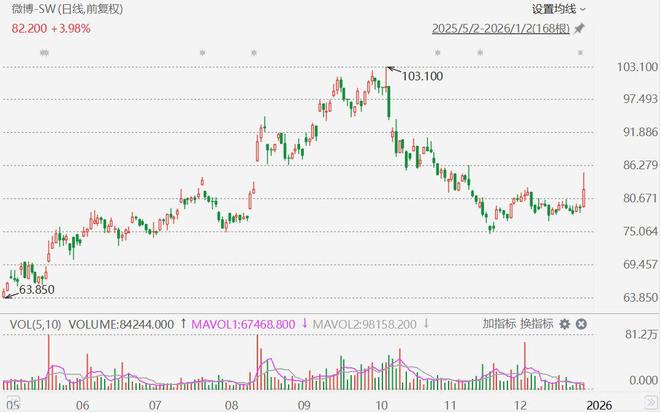
Core Viewpoint - The company maintains confidence in its long-term strategy and is committed to creating long-term value for shareholders, as evidenced by the approval of a stock repurchase plan [1] Group 1: Stock Performance - The company's stock price rose by 7.5% during trading, reaching a high of 85 HKD, the highest level since November 13 of the previous year [1] Group 2: Stock Repurchase Plan - The board has approved a stock repurchase plan, authorizing the company to buy back up to 200 million USD (approximately 1.56 billion HKD) worth of shares, including American Depositary Shares, over the next 12 months [1] - The company anticipates using existing cash for the repurchase [1]

微博:2026年拟回购不超2亿美元股份
Xin Lang Cai Jing· 2025-12-31 11:44
12月31日,微博在港交所公告,公司董事会已批准一项股票回购计划,授权公司可在于2026年12月31日 截止的未来12个月内回购总额不超过2亿美元的股份(包括美国存托股份)。股票回购将依据市场状况 开展,可不时于公开市场按现行市价、通过私下磋商交易、大宗交易及/或通过其他法律许可方式进 行,并将根据适用规则及法规执行。公司预期使用现有现金进行回购。 ...
微博:拟在未来一年内回购不超过2亿美元股份
Di Yi Cai Jing· 2025-12-31 11:35
Core Viewpoint - The company, Sina, has received an unfavorable ruling regarding its privatization valuation process under Section 238 of the Cayman Islands Companies Law, and it has appealed this decision [2] Group 1: Legal Proceedings - Sina has filed an appeal to the Cayman Islands Court of Appeal against the unfavorable ruling [2] - The appeal court has granted a stay on the execution of the ruling and related orders until the appeal outcome is determined [2] - The result of the Section 238 appeal is still uncertain [2] Group 2: Share Buyback Authorization - The company's board has approved a share buyback program, allowing for the repurchase of up to $200 million worth of shares, including American Depositary Shares [2] - The buyback program is set to be executed within the next 12 months, ending on December 31, 2026 [2]
微博-SW(09898.HK):未来12个月内回购总额不超过2亿美元的股份
Ge Long Hui· 2025-12-31 11:27
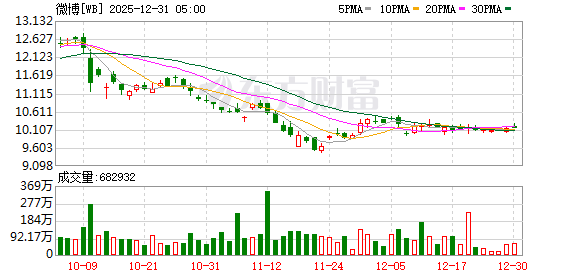
Core Viewpoint - The company remains confident in its long-term strategy and is committed to creating long-term value for shareholders through a stock repurchase plan [1] Group 1: Stock Repurchase Plan - The board of directors has approved a stock repurchase plan, authorizing the company to repurchase up to $200 million worth of shares, including American Depositary Shares, within the next 12 months, ending on December 31, 2026 [1] - The stock repurchase will be conducted based on market conditions and may occur in the open market at current market prices, through private negotiations, block trades, and/or other legally permitted methods [1] - The company expects to use existing cash for the repurchase [1]
微博(09898) - 内幕消息 - 新浪诉讼及通过股票回购计划
2025-12-31 11:22
香港交易及結算所有限公司及香港聯合交易所有限公司對本公告的內容概不負責,對其準確性 或完整性亦不發表任何聲明,並明確表示概不會就本公告全部或任何部分內容而產生或因倚賴 該等內容而引致的任何損失承擔任何責任。 Weibo Corporation 微博股份有限公司 (於開曼群島註冊成立以不同投票權控制的有限責任公司) (股份代號:9898) 內幕消息 新浪訴訟及通過股票回購計劃 本公告乃由微博股份有限公司(「本公司」)根據香港聯合交易所有限公司證券上 市規則(「上市規則」)第13.09及13.10B條及香港法例第571章證券及期貨條例第 XIVA部項下內幕消息條文(定義見上市規則)刊發。 本公司獲悉其控股股東新浪公司(「新浪」)在根據開曼群島公司法第238條所進行 涉及其私有化的估值程序(「s.238案件」)中收到不利判決。新浪已就該判決向開曼 群島上訴法院提出上訴,上訴法院已批准暫緩執行該判決及相關命令,直至得出 上訴結果。 本公司董事會正透過由獨立董事組成的特別委員會持續監察s.238案件的進展,並 在得出上訴結果前評估對本公司的潛在影響,包括對本公司與新浪之間的股權和 其他關係以及交易的影響,並考慮採取任何 ...
【品牌】雷军跨年直播推迟 微博抽送15台小米17Ultra
Sou Hu Cai Jing· 2025-12-31 08:48
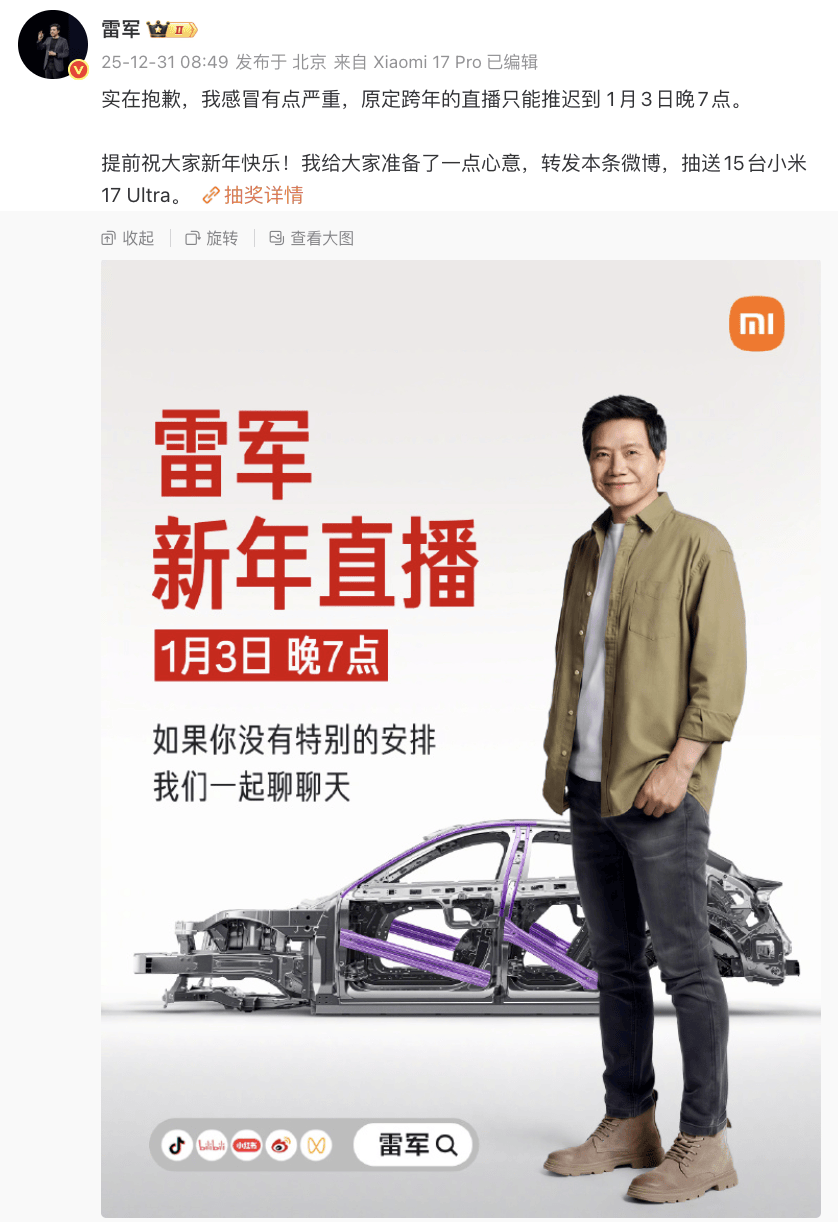
Group 1 - The original New Year's Eve live stream by Xiaomi's Lei Jun has been postponed to January 3 at 7 PM due to his severe cold [1][3][6] - The live stream was intended to discuss memorable moments from 2025 and look forward to 2026, featuring a live car disassembly by engineers [1][6] - As a gesture for the audience, Xiaomi will be giving away 15 units of the Xiaomi 17 Ultra to participants who share the announcement on social media [3][6]

平台赋能 生态共建:2025微博焕新非遗盛典探索非遗产业融合新范式
Yang Guang Wang· 2025-12-26 05:39
Core Insights - The 2025 Weibo Revitalization Intangible Cultural Heritage (ICH) Gala and related events successfully concluded in Chengdu, focusing on the theme "New Vitality of ICH, Empowering the Future" [1] - The event gathered over 600 representatives from government, media, academia, enterprises, and ICH inheritors, aiming to bridge ICH with various industries and create a high-value platform for ICH [1][3] Event Highlights - The gala featured nine annual ICH honors awarded to individuals and organizations making significant contributions to the field [3] - Keynote speeches emphasized the role of youth as core transmitters and innovators of ICH in the internet era [3] - Weibo's commitment to building an open and collaborative ICH communication system was highlighted, focusing on deep integration and cross-industry empowerment [3][12] Awards and Recognitions - Eight projects received the "Annual ICH Local Newborn Model Project" honor, showcasing diverse media efforts in promoting ICH [4] - Various organizations and individuals were recognized for their contributions, including "Annual ICH Youth Power Model" and "Annual ICH Charm Performance Figure" awards [6][7] Technological Integration - The event showcased the potential of AI technology in enhancing ICH transmission, with interactive demonstrations highlighting its capabilities [7] - Experts discussed the synergy between intangible and tangible cultural heritage, emphasizing the importance of storytelling in engaging younger audiences [7] Future Initiatives - The launch of the "Weibo ICH Resident Program" aims to invite influential content creators to collaborate with local governments, enhancing cultural transmission and economic development [11] - A report on the integration of ICH and industry was released, focusing on sustainable development and the dual empowerment of ICH and industry [14][15]

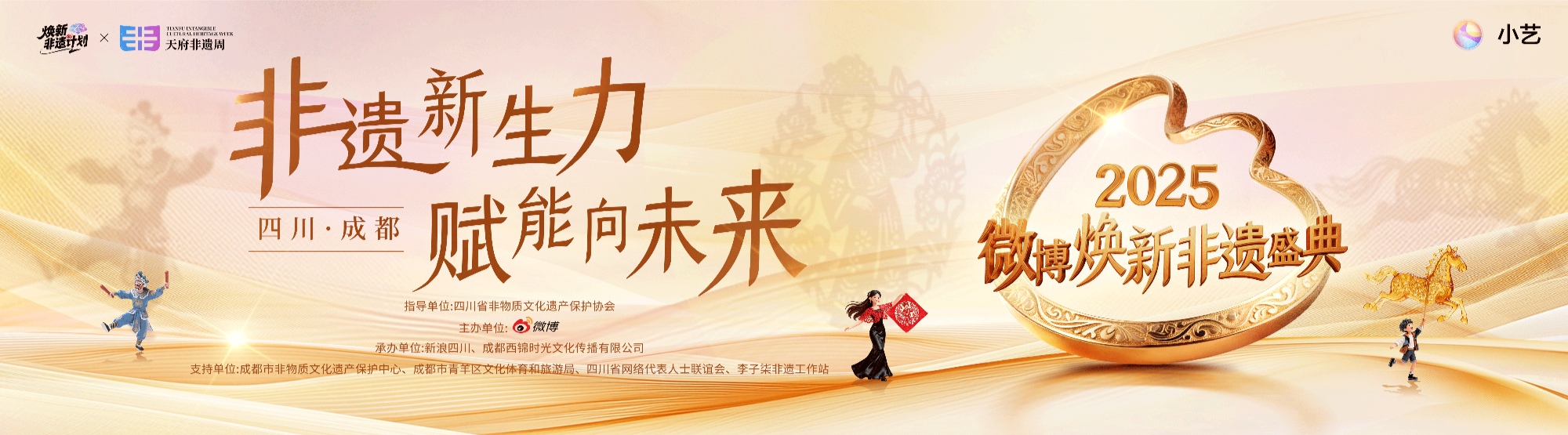
平台赋能,生态共建:2025微博焕新非遗盛典探索非遗产业融合新范式
Xin Lang Cai Jing· 2025-12-25 14:16
Core Insights - The 2025 Weibo Revitalization Intangible Cultural Heritage Ceremony and the Weibo Intangible Cultural Heritage and Industry Integration Development Exchange Conference successfully concluded in Chengdu, with over 600 attendees from various sectors [1][23] - The event aimed to connect multiple resources, including government, media, and cultural heritage practitioners, to create a high-value platform for the intangible cultural heritage industry, promoting the integration of intangible cultural heritage into various industries [1][23] Group 1: Event Highlights - The theme of the event was "New Vitality of Intangible Cultural Heritage, Empowering the Future," featuring speeches, honor awards, and online discussions [1][23] - Nine annual honors were awarded to individuals and organizations for their outstanding contributions to the field of intangible cultural heritage [2][24] Group 2: Youth and Media Engagement - The president of the China Intangible Cultural Heritage Protection Association emphasized the role of youth as key transmitters and innovators of intangible cultural heritage in the internet age [2][24] - Weibo's vice president highlighted the platform's commitment to building an open and collaborative system for the dissemination of intangible cultural heritage, moving from one-way promotion to deep integration [2][24] Group 3: Awards and Recognitions - Eight projects received the "Annual Intangible Cultural Heritage Local Newborn Model Project" honor, showcasing diverse media forms that bridge the gap in heritage transmission [3][25] - Various organizations and individuals, including media outlets and cultural practitioners, were recognized for their contributions to the promotion and innovation of intangible cultural heritage [5][27] Group 4: Technological Integration - The event showcased the potential of AI technology in the transmission of intangible cultural heritage, with interactive demonstrations highlighting its capabilities [6][28] - The collaboration between Weibo and various cultural institutions aims to explore innovative paths for integrating intangible cultural heritage with modern life and local economic development [10][32] Group 5: Industry Dialogue and Future Directions - The exchange conference focused on innovation and integration, aiming to break down barriers between industries and create a win-win ecosystem for intangible cultural heritage [12][34] - A report was released discussing the dual empowerment of intangible cultural heritage and industry, emphasizing the importance of cultural heritage in enhancing urban cultural identity and driving innovation in cultural tourism products [14][36] Group 6: Sustainable Development Initiatives - Weibo's initiatives aim to create a sustainable ecosystem for intangible cultural heritage, transitioning from visibility to experience and ultimately to necessity [19][41] - The "Weibo Intangible Cultural Heritage Resident Program" was launched to invite influential content creators to collaborate with local governments, enhancing the visibility and sustainability of local cultural heritage [10][32][42]

网友在小红书、微博狂晒征信
Di Yi Cai Jing Zi Xun· 2025-12-24 14:22
央行一次性个人信用修复政策落地后,社交平台迅速掀起讨论热潮。 近两日,在小红书、微博上,大量网友晒出自己的征信报告,希望通过在线求助的方式,求广大网友帮 忙鉴定自己的逾期记录是否能享受到这波政策利好。 2025.12.24 本文字数:3566,阅读时长大约6分钟 作者 |第一财经 杜川 第一财经记者浏览发现,网友晒出的征信报告情况各不相同。比如,有的逾期记录年份太久,超出了政 策限定的时间范围;有的单笔逾期金额直接突破1万元限定标准;也有网友非常幸运,逾期情况完全符 合此次政策的适用条件。 诸多讨论中,几个核心问题被反复提及,即自己到底符不符合政策的修复条件?"单笔逾期1万元以 下"的界定标准是什么?分期贷款的逾期又该怎么认定?怎么才算足额偿还逾期债务? 社交平台晒征信求鉴定 梳理来看,网友们的核心关切主要集中在政策适用细节与实操问题两大方面。 从政策规定的逾期条件看,逾期信息需同时满足三项核心要求:一是时间范围,逾期信息产生于2020年 1月1日至2025年12月31日期间;二是金额限制,单笔逾期金额不超过1万元人民币;三是还款时限,个 人需于2026年3月31日(含)前足额偿还逾期债务。满足上述条件的,央 ...