Wells Fargo(WFC)

Search documents
全球系统重要性银行的机遇与挑战
Sou Hu Cai Jing· 2025-10-10 02:31
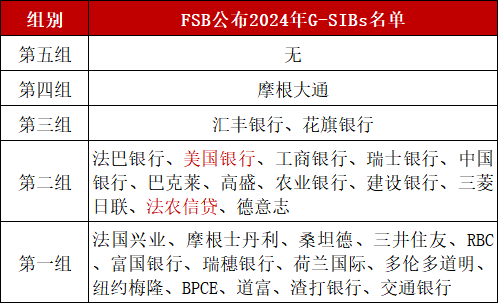
Core Insights - Global systemically important banks (G-SIBs) are undergoing a critical transformation, driven by industrialization and middle-class expansion in emerging markets, which present new opportunities in retail, corporate, and cross-border businesses. Financial technology is enhancing digital risk control and customer acquisition. However, challenges such as stagflation risks, geopolitical conflicts, and interest rate differentiation are intensifying pressure on interest margins and asset quality. The application of artificial intelligence also brings challenges related to model interpretability and compliance. Capturing the emerging market dividend and completing digital upgrades will be key to determining the future competitive advantage of G-SIBs [1]. Background - The 2008 global financial crisis highlighted the "too big to fail" issue of large international financial institutions. In 2011, the Financial Stability Board (FSB) released regulatory measures for G-SIBs, publishing the first list of G-SIBs, which included most global systemically important banks. According to the FSB's 2024 G-SIBs list, there are 29 banks globally [2][3]. Current Operations - In the current interest rate cut cycle, financial services have become the main revenue driver for banks. Since the Federal Reserve began lowering rates, traditional lending has faced pressure, leading to significant revenue growth in investment banking, financial markets, and wealth management. In Q1 2025, revenues from financial services for JPMorgan, Citigroup, and Bank of America grew by 12.0%, 10.0%, and 7.1%, respectively, with contributions exceeding 50% of total revenues, an increase of 3-6 percentage points from pre-rate cut levels [5]. - Investment banking has cooled down, with uncertainty in the market due to aggressive policy changes under the Trump administration. In Q1 2025, the growth rate of investment banking revenues for the four major U.S. banks dropped from an average of around 40% to less than 10%. Bank of America saw a year-on-year decline of -0.35% in investment banking revenue, while JPMorgan's growth slowed to 2.4% [5]. - Trading business has emerged as a new revenue driver, with significant increases in trading revenues for major U.S. banks in Q1 2025, attributed to heightened market volatility and geopolitical tensions. Trading revenues for JPMorgan, Citigroup, and Bank of America grew by 21%, 12%, and 11%, respectively, with stock trading revenues increasing by 48%, 23%, and 17% [6]. - Payment and settlement services have shown weak performance, with revenues for JPMorgan, Citigroup, Bank of America, and Wells Fargo growing by only 2.2%, 3.6%, 0.5%, and -10.9%, respectively, contrasting sharply with the growth in investment banking and trading revenues [6]. Opportunities - Expansion in emerging markets presents significant opportunities, particularly in retail banking, as the growing middle class demands diverse financial services. G-SIBs can meet these needs by offering various savings products and consumer loans. Additionally, the rising high-net-worth population increases demand for wealth management services [7]. - The demand for cross-border financial services is increasing, driven by globalization. G-SIBs can provide efficient cross-border payment solutions, financing, and risk management services to support businesses in their international activities [7]. - Regulatory changes may create potential opportunities, as the new U.S. administration's policies could support the cryptocurrency and digital asset markets, allowing G-SIBs to explore new business areas [8]. - Financial technology is enabling digital transformation, allowing G-SIBs to innovate in cross-border services and enhance customer experiences through personalized financial products [8]. Challenges - The uncertain macroeconomic environment in 2025 poses risks, with geopolitical tensions and trade protectionism affecting global economic activity. The U.S. government's tariff policies may lead to a new round of global trade disputes, increasing external risks for G-SIBs [9]. - The potential return of laissez-faire financial policies under the Trump administration could elevate systemic financial risks, as regulatory changes may reduce banks' liquidity requirements, impacting their ability to absorb potential losses [10]. - The application of AI in banking faces challenges, including the reliability and accuracy of AI outputs, which may conflict with the low tolerance for error in banking services [11]. Strategies and Recommendations - To address the challenges posed by low interest rates and regulatory costs, G-SIBs should build a multi-layered governance framework. This includes meeting total loss-absorbing capacity (TLAC) requirements and optimizing capital structures through asset securitization and diversifying capital tools [15][16]. - Business transformation and revenue diversification are crucial for balancing regulatory costs and profitability. G-SIBs should focus on expanding light-capital businesses and enhancing non-interest income through wealth management and advisory services [16]. - Governance and technology should work in tandem to improve risk management and operational resilience, including the implementation of real-time monitoring platforms for cross-border risks [16][17].


美股三大股指集体收跌;以色列政府批准加沙停火协议,以军将撤至新防线
Di Yi Cai Jing Zi Xun· 2025-10-10 01:21
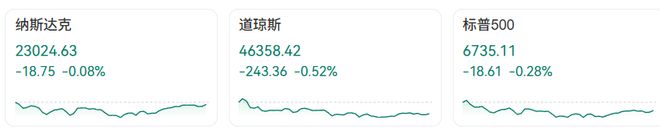
Market Overview - US stock indices closed lower on Thursday, with the Dow Jones Industrial Average recording its largest single-day drop in a month, down 243.36 points to 46358.42, a decline of 0.52% [1] - The S&P 500 index fell 18.61 points to 6735.11, down 0.28%, while the Nasdaq Composite dropped 18.75 points to 23024.63, a decrease of 0.08% [1] - Among the 11 sectors of the S&P 500, the materials sector saw the largest decline, while the consumer staples sector was the only one to rise [1] Earnings Season Insights - The upcoming earnings season is anticipated to show whether corporate profits can continue the stable growth seen in the past two quarters, with analysts expecting an 8.8% year-over-year increase in S&P 500 earnings for Q3, down from 13.8% in the previous quarter [2] - Major banks including JPMorgan Chase, Goldman Sachs, Citigroup, and Wells Fargo are set to report their earnings next week [2] Economic Indicators - The yield on the US 10-year Treasury rose by 1.7 basis points to 4.15%, while the 2-year Treasury yield increased by 1.3 basis points to 3.60% [3] - The futures market indicates a 94.6% probability of a 25 basis point rate cut by the Federal Reserve in October, as the job market may weaken further [2] Commodity Prices - International oil prices fell, with WTI crude oil futures down 1.66% to $61.51 per barrel, and Brent crude down 1.55% to $65.22 per barrel [3] - Gold prices also retreated, with spot gold down 1.62% to $3976.76 per ounce, and COMEX gold futures down 1.96% to $3990.9 per ounce [3] Corporate Developments - Delta Air Lines reported stronger-than-expected Q3 earnings and raised its guidance for the current quarter, resulting in a 4.3% increase in its stock price [2] - The Keator Group's partner noted that the market is adjusting due to a lack of new economic data and clear policy signals, which is a natural occurrence [2]




Wells Fargo (WFC) Q3 Earnings on the Horizon: Analysts' Insights on Key Performance Measures
ZACKS· 2025-10-09 14:15
Core Viewpoint - Analysts forecast Wells Fargo (WFC) to report quarterly earnings of $1.54 per share, reflecting a year-over-year increase of 1.3%, with revenues expected to reach $21.17 billion, a 4% increase compared to the previous year [1]. Earnings Estimates - Over the last 30 days, the consensus EPS estimate has been revised upward by 2.2%, indicating a collective reassessment by analysts [2]. - Revisions to earnings projections are crucial for predicting investor behavior and are strongly linked to short-term stock price performance [3]. Key Financial Metrics - The 'Efficiency Ratio' is expected to be 63.4%, down from 64.0% a year ago [5]. - 'Average Balance - Total interest-earning assets' is projected at $1781.03 billion, up from $1754.07 billion in the same quarter last year [5]. - 'Return on equity (ROE)' is anticipated to be 12.2%, compared to 11.7% in the same quarter of the previous year [6]. - 'Book value per common share' is expected to be $51.70, up from $49.26 a year ago [6]. Asset Quality and Capital Ratios - 'Total nonperforming assets' are estimated at $8.16 billion, down from $8.38 billion in the same quarter last year [7]. - 'Net loan charge-offs' are projected to reach $1.12 billion, slightly up from $1.11 billion a year ago [7]. - 'Tier 1 Leverage Ratio' is expected to be 7.9%, down from 8.3% a year ago [8]. - 'Total nonaccrual loans' are estimated at $8.01 billion, down from $8.17 billion in the same quarter last year [8]. - 'Common Equity Tier 1 (CET1)' is projected to be 11.1%, compared to 11.3% a year ago [8]. - 'Tier 1 Capital Ratio' is expected to be 12.2%, down from 12.8% in the same quarter last year [9]. Income Projections - 'Total Noninterest Income' is forecasted to reach $9.10 billion, up from $8.68 billion a year ago [9]. - 'Net interest income (on a taxable-equivalent basis)' is expected to be $12.08 billion, compared to $11.77 billion in the previous year [10]. Stock Performance - Over the past month, Wells Fargo shares have recorded a return of -0.7%, while the Zacks S&P 500 composite has increased by 4% [10].
Wells Fargo Earnings Are Imminent; These Most Accurate Analysts Revise Forecasts Ahead Of Earnings Call - Wells Fargo (NYSE:WFC)
Benzinga· 2025-10-09 13:58
Core Insights - Wells Fargo & Company is set to release its third-quarter earnings results on October 14, with analysts expecting earnings of $1.54 per share, an increase from $1.42 per share in the same period last year [1] - The company projects quarterly revenue of $21.11 billion, up from $20.37 billion a year earlier [1] - Wells Fargo filed for a mixed shelf offering of up to $110 million on August 26 [1] Stock Performance - Wells Fargo shares experienced a decline of 1.7%, closing at $79.73 [2] Analyst Ratings - UBS analyst Erika Najarian maintained a Buy rating but reduced the price target from $95 to $93 [4] - Evercore ISI Group analyst John Pancari maintained an Outperform rating and raised the price target from $94 to $98 [4] - Truist Securities analyst John McDonald maintained a Buy rating and increased the price target from $86 to $88 [4] - Citigroup analyst Keith Horowitz maintained a Neutral rating and raised the price target from $85 to $90 [4] - Goldman Sachs analyst Richard Ramsden maintained a Buy rating but cut the price target from $92 to $91 [4]
[Earnings]Upcoming Earnings: Financials and Tech Giants Take Center Stage
Stock Market News· 2025-10-09 13:13
Group 1 - Major financial institutions such as JPMorgan Chase & Co., Wells Fargo & Company, Goldman Sachs Group Inc., BlackRock Inc., and Citigroup Inc. are set to report earnings next Tuesday pre-market [1] - Following the major financials, Bank of America Corporation and Morgan Stanley will report earnings next Wednesday [1] - Taiwan Semiconductor Manufacturing Company Ltd., a key player in the tech sector, will report earnings next Thursday pre-market [1] Group 2 - Significant earnings reports earlier in the week include PepsiCo Inc. on Thursday before the market opens and Johnson & Johnson next Tuesday pre-market [1] - ASML Holding N.V. is also expected to release important technology earnings next Wednesday pre-market, alongside healthcare leader Abbott Laboratories [1]



Will Wells Fargo Stock Rise On Its Q3 Earnings?
Forbes· 2025-10-09 12:25
Core Insights - Wells Fargo is set to announce its earnings on October 14, 2025, marking the first complete quarterly report since the Federal Reserve lifted the bank's $1.95 trillion asset cap in May 2025, which is expected to have minimal impact on Q3 results as the bank needs time to expand its operations [2] - The anticipated earnings for Q3 2025 are $1.53 per share, up from $1.42 per share in the same quarter last year, with projected revenues of approximately $21.1 billion, reflecting a 3% increase year-over-year [2] - The bank is expected to see improvements in investment banking and deal-making revenues for Q3 2025, driven by declining inflation that has restored confidence and deal flows in the U.S. market [2] Financial Metrics - Wells Fargo currently has a market capitalization of $261 billion, with revenue over the past twelve months reported at $81 billion and net income at $21 billion [3] - Historical trends indicate that positive one-day post-earnings returns have occurred approximately 45% of the time over the past five years, with a median positive return of 4.0% and a median negative return of -3.3% [5] Trading Strategies - Two approaches are suggested for event-driven trading: understanding historical probabilities to set positions before earnings announcements or assessing correlations between immediate and medium-term returns to adjust positions post-announcement [4] - A lower-risk strategy involves examining the correlation between short-term and medium-term returns following earnings, allowing traders to execute trades based on the strongest correlations observed [6]
下周财报季开锣,大摩预期北美银行“稳中有升”
Zhi Tong Cai Jing· 2025-10-09 11:02
Core Viewpoint - Morgan Stanley has adjusted its model for North American large banks' Q3 2025 performance forecasts, indicating a mild impact on EPS growth of 0-1% and a median EPS estimate 3% higher than market consensus [1][2] Group 1: Earnings Forecasts - The median EPS forecast for North American banks in Q3 2025 is 3% above market consensus, with the largest increases expected for money center banks and State Street Bank (STT.US) [1] - Citigroup (C.US) is projected to have an EPS of $1.99, exceeding the market consensus of $1.83 by 9% [1] - Bank of America (BAC.US) is expected to report an EPS of $1.01, which is 7% higher than the consensus of $0.94 [1] - State Street Bank's EPS is forecasted to be 6% above consensus, while Northern Trust (NTRS.US) is expected to be 3% higher [1] - Most super-regional banks are projected to be 1-3% above consensus, with Truist Financial (TFC.US) and Wells Fargo (WFC.US) both expected to be 3% higher [1] Group 2: Key Financial Metrics - The model incorporates a macro assumption of an additional 125 basis points rate cut by the end of 2026, with a focus on Citigroup, Bank of America, Goldman Sachs, and JPMorgan Chase (JPM.US) due to expected outperformance in investment banking fees and trading income [2] - Money center banks are expected to lead in asset growth, with JPMorgan Chase's average total assets projected to reach $4.43 trillion, an 8.4% year-over-year increase, and Bank of America expected to reach $3.47 trillion, a 5.5% increase [2] - The deposit structure shows a gradual decline in non-interest-bearing deposits, with Bank of America projected to have 26.0% in 2025, down from 26.7% in 2024 [2] - The net interest margin (NIM) is expected to remain stable, with a median estimate of 2.50% for 2025, while super-regional banks are projected to have higher NIMs [2] Group 3: Revenue Growth Drivers - Fee income is a core growth driver, with M&A fees expected to grow 30% year-over-year, significantly above the consensus growth of 11% [3] - Equity Capital Markets (ECM) fees are projected to increase by 41%, compared to a consensus of 30%, while Debt Capital Markets (DCM) fees are expected to grow by 4% against a consensus of 3% [3] - Money center banks like JPMorgan and Goldman Sachs are expected to see over 9% year-over-year growth in fee income for 2025 [3] Group 4: Capital Returns - The median dividend payout ratio for banks in 2025 is expected to be around 30%, with money center banks showing a slight decrease from 27% to 29% [3] - JPMorgan is projected to pay $5.80 per share in dividends, while Citigroup is expected to pay $2.32 per share [3] - Stock buybacks are anticipated to increase significantly, with JPMorgan expected to repurchase $38.01 billion in 2025, up from $18.84 billion in 2024, and Citigroup expected to repurchase $13.47 billion, a substantial increase from $2.5 billion in 2024 [3] Group 5: Overall Outlook - The report maintains a cautiously optimistic view on North American large banks, suggesting that money center banks will outperform due to investment banking and trading income, while super-regional banks show stable asset quality [4] - Trust banks are expected to face pressure on net interest margins but still demonstrate resilience supported by fee income [4]


Wells Fargo & Company (NYSE:WFC) Q3 2025 Earnings Preview
Financial Modeling Prep· 2025-10-09 11:00
Core Viewpoint - Wells Fargo is set to release its third-quarter 2025 earnings on October 14, with analysts estimating an EPS of $1.54 and projected revenue of approximately $21.1 billion, reflecting a 4% year-over-year revenue increase [1][6]. Revenue and Income Projections - The upcoming earnings report is expected to show a 4% increase in revenues compared to the previous year, supported by a projected net interest income (NII) of $12.03 billion, marking a 2.9% year-over-year rise [2][6]. - Non-interest income is anticipated to grow by 4.5% year-over-year, driven by higher fees and robust investment banking gains [3][6]. Financial Metrics - The company's price-to-earnings (P/E) ratio is approximately 12.52, and the price-to-sales ratio stands at about 2.09, reflecting the market's valuation of its earnings and revenue [4]. - The enterprise value to sales ratio is around 3.47, providing insight into the company's overall valuation relative to its sales [4]. - The debt-to-equity ratio is about 2.01, indicating financial leverage, while the current ratio is relatively low at 0.25, suggesting potential liquidity concerns [5]. Earnings Yield and Management Discussion - The earnings yield is approximately 7.99%, indicating the return generated from earnings [5]. - The management's discussion during the earnings call will be crucial in assessing the sustainability of any immediate price changes and future earnings projections [5].
Wells Fargo was reeling from scandal. Jamie Dimon protégé Charlie Scharf bet his career on saving the 173-year-old bank
Yahoo Finance· 2025-10-09 09:10
Core Insights - The article discusses the challenges faced by Wells Fargo under CEO Charlie Scharf, highlighting the significant regulatory and political pressures he encountered while attempting to turn around the bank's fortunes [1][2][3]. Group 1: Regulatory Challenges - Wells Fargo was under intense regulatory scrutiny due to a scandal involving the creation of fake accounts, leading to a Federal Reserve-imposed asset cap that restricted its growth [3][15]. - The bank's market capitalization plummeted from $322 billion in February 2018 to $88 billion by December 2020, reflecting a two-thirds drop in share price during this period [2]. - Scharf faced harsh criticism from regulators and Congress, with calls for the bank to be broken up due to its inability to manage risks effectively [2][16]. Group 2: Leadership and Management Changes - Scharf implemented a comprehensive turnaround plan consisting of 3,162 pages and 6,000 tasks, involving 28,000 employees to address the bank's issues [4]. - He emphasized accountability within the management team, demanding regular updates on progress and corrective actions from underperforming executives [2][16]. - Scharf recruited a new team, with most of the operating committee being his hires, to instill the necessary controls and discipline within the organization [16]. Group 3: Financial Performance and Strategy - The asset cap led to an estimated loss of $600 billion in potential deposits, while competitors like J.P. Morgan and Bank of America grew their balance sheets significantly during the same period [17]. - Scharf focused on diversifying revenue streams by increasing fee income to offset stagnant interest revenues due to the asset cap [18]. - Under Scharf's leadership, Wells Fargo's return on tangible common equity (ROTCE) improved, reaching 14.4% in the first two quarters of 2025, approaching the goal of 15% [24]. Group 4: Operational Efficiency - Scharf initiated significant cost-cutting measures, reducing the bank's global footprint from 87 million square feet to 60.3 million square feet and decreasing the number of office buildings from 650 to 400 [23]. - The workforce was reduced by nearly 25%, from 280,000 to 210,000 employees, as part of efforts to streamline operations and eliminate redundancies [23]. - Investments were made in risk management, with an increase of $2.5 billion annually in spending, and the number of risk managers doubled to enhance oversight [16]. Group 5: Future Outlook - The lifting of the asset cap in June 2023 marked a significant milestone for Wells Fargo, allowing the bank to pursue growth opportunities that had been previously restricted [25]. - Analysts suggest that while the bank has made substantial progress, it now needs to focus on building its operational strength and market position [26]. - Scharf's leadership has been praised for navigating the bank through its challenges, with expectations for continued improvement in performance and shareholder returns [29].
The Q3 Earnings Season Gets Underway: A Closer Look
ZACKS· 2025-10-09 00:11
Core Insights - The upcoming earnings reports from JPMorgan, Wells Fargo, and Citigroup are anticipated to provide valuable insights into the economic landscape, with these banks showing strong performance despite recent weaknesses [2][3] - There is optimism regarding loan demand and a decline in delinquencies, alongside a robust capital market and trading activity, contributing to a positive outlook for major banks [3][4] Financial Performance Expectations - For Q3 2025, total S&P 500 index earnings are projected to increase by +5.5% year-over-year, driven by +6.2% higher revenues [6][10] - Excluding the Tech sector, earnings growth for the rest of the S&P 500 is expected to be only +2.7% [6] - The "Magnificent 7" group is forecasted to see a +12.0% increase in earnings on +14.8% higher revenues for Q3 [6] Earnings Estimates for Major Banks - JPMorgan is expected to report earnings of $4.79 per share on revenues of $44.66 billion, reflecting year-over-year growth rates of +9.6% and +4.7% respectively [8] - Estimates for Citigroup and Wells Fargo have shown positive revisions, although not as significant as those for JPMorgan [8] Sector-Wide Earnings Trends - The Zacks Finance sector is projected to experience a +10.7% increase in Q3 earnings compared to the previous year, with revenues expected to rise by +6.1% [9][10] - Positive Q3 results and management commentary are crucial for sustaining the favorable revisions trend observed recently [10][14]