中国卫星

Search documents
商业航天动态跟踪系列(二):太空经济前景广阔,商业航天生机勃发
Ping An Securities· 2026-02-11 09:36
Investment Rating - Industry investment rating: Outperform the market (expected to outperform the market by more than 5% in the next 6 months) [36] Core Insights - The space economy has a broad outlook, with commercial aerospace becoming a vital engine for economic growth and technological advancement, forming a competitive landscape among major global economies [4][9] - The global commercial aerospace market is expected to reach USD 500 billion by 2025, with a year-on-year growth of 4.1%, driven by low Earth orbit satellite networks, reusable rockets, and space economy derivative businesses [4][9] - China has submitted an application for 203,000 low Earth orbit satellite frequency resources, indicating a competitive race for orbital resources, with a consensus that the safe deployment limit is approximately 100,000 satellites [15][4] - The global rocket launch service market reached USD 16.45 billion in 2023, with a projected compound annual growth rate (CAGR) of 13% from 2023 to 2032, driven by large satellite constellation projects [26][4] Summary by Sections Market Overview - The global commercial aerospace market is entering a phase of "scale deployment, commercial deepening, and global competition," with significant growth expected in low Earth orbit satellite networks and reusable rockets [4][9] - The domestic commercial aerospace industry is optimizing resource allocation and expanding market applications, with a focus on satellite constellation construction [4][9] Industry Chain - The commercial aerospace industry chain includes multiple segments from research and development, manufacturing, launching, to application services, with upstream focusing on satellite and rocket components, midstream on rocket assembly and launch services, and downstream on satellite operations [10][4] Investment Recommendations - Companies in the aerospace industry are expected to benefit from the ongoing growth, with key players identified including Aerospace Power, Aerospace Hongtu, China Satellite, and others [34][4]
视频丨载人月球探测取得重要进展 长征十号火箭与梦舟飞船完成关键试验
Yang Shi Xin Wen Ke Hu Duan· 2026-02-11 07:47
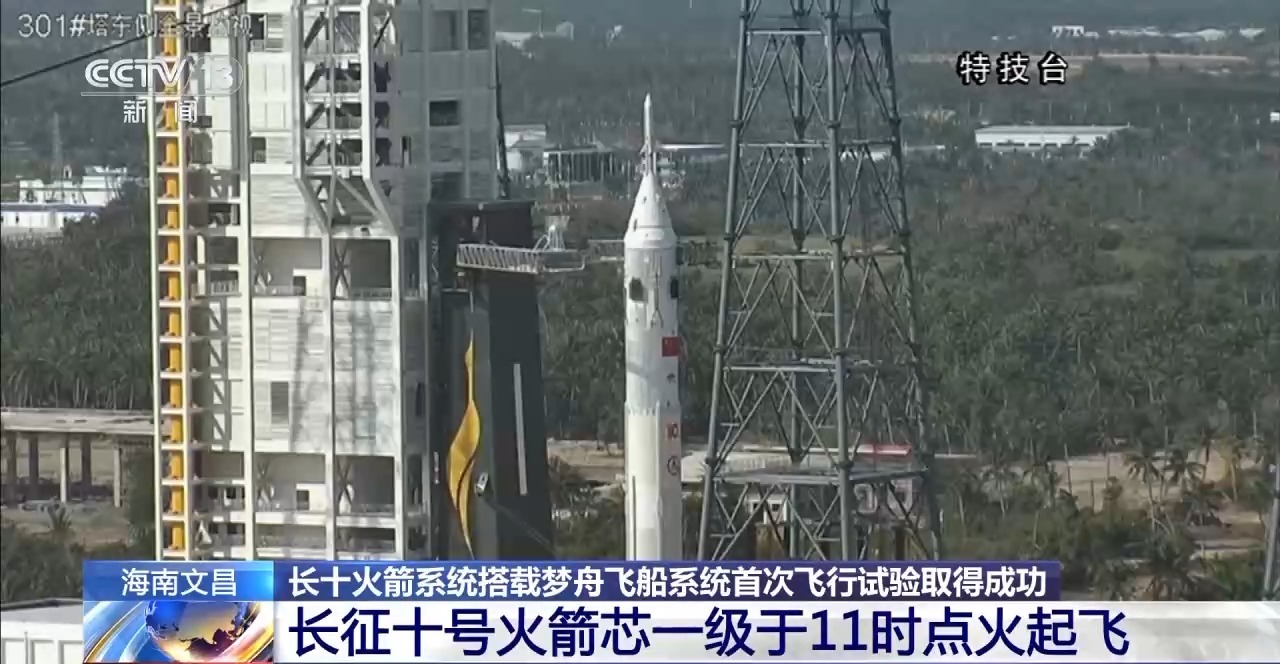
Core Viewpoint - China's successful implementation of the Long March 10 rocket system low-altitude demonstration test and the maximum dynamic pressure escape flight test of the Dream Boat manned spacecraft marks a significant breakthrough in the country's manned lunar exploration program [1]. Group 1: Test Details - The Long March 10 rocket, carrying the Dream Boat spacecraft, conducted its first flight test at the Wenchang Space Launch Site [3]. - During the test, five out of seven engines in the first stage of the rocket were ignited, initiating the low-altitude demonstration verification [3]. - The maximum altitude reached by the first stage of the rocket was approximately 105 kilometers, which is consistent with normal flight missions, although it is termed "low-altitude" due to the absence of the second stage [6]. Group 2: Technical Challenges - The maximum dynamic pressure escape test was designed to evaluate the spacecraft's ability to escape safely in the event of an emergency failure during ascent near the maximum dynamic pressure point [12]. - Key challenges included ensuring safe separation during high-speed ascent, maintaining stability during the escape phase, and ensuring all procedures were tightly coordinated throughout the flight [12]. Group 3: Technological Breakthroughs - The test assessed the reliability of multiple engine ignitions and high-altitude ignitions, as well as high-precision navigation control during the return phase [15]. - The successful completion of this test signifies a critical breakthrough in China's reusable rocket technology [15].


我国载人月球探测工程研制工作取得阶段性突破 创下多个国内、国际“首次”
Huan Qiu Wang Zi Xun· 2026-02-11 07:08
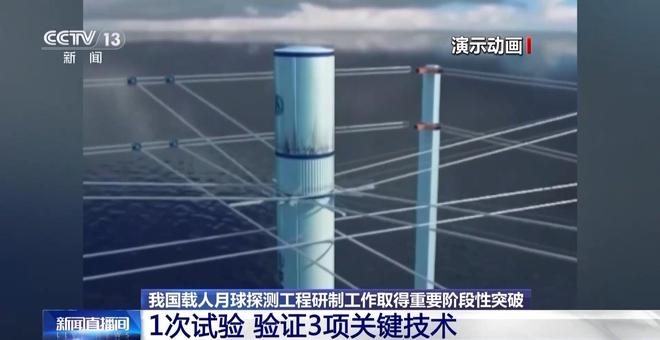
Core Viewpoint - The successful test of the Long March 10 rocket system and the Dream Boat manned spacecraft marks a significant milestone for China's manned lunar program, achieving multiple key technology validations and setting several domestic and international "firsts" [1][4][5]. Group 1: Key Technology Validation - The test successfully validated three core technologies: emergency escape under maximum dynamic pressure, networked collaborative assessment, and the real profile return flight of the rocket's first stage [4][5]. - This flight test is described as a crucial safety verification for the manned lunar mission, demonstrating real flight conditions [4][5]. Group 2: Challenges and Innovations - The complexity of the flight profile and high precision control requirements posed unprecedented challenges, leading to the achievement of three "firsts" in both domestic and international contexts [5][7]. - The test included the first-ever maximum dynamic pressure escape test in China's manned rocket development, validating the world's first networked recovery method [7]. Group 3: Flight Profile and Dynamics - The test flight reached a maximum altitude of approximately 105 kilometers, which is consistent with future actual flight heights, although termed "low-altitude" [9]. - The maximum dynamic pressure, a critical test point during the rocket's ascent, was reached at around 11 kilometers, allowing for the escape of the spacecraft under conditions that are still manageable for future missions [10][12]. Group 4: Detailed Flight Process - The entire test process lasted approximately 470 seconds, starting with the ignition of five engines and culminating in the successful separation of the spacecraft from the rocket [13]. - The rocket ascended to about 105 kilometers, followed by a series of maneuvers including a glide phase and a powered descent to prepare for re-entry [15][17]. Group 5: Recovery and Safety Measures - In future missions, the first stage of the rocket will be recovered on a sea-based platform, with safety measures ensuring a 200-meter distance from the recovery ship during the test [19]. - This approach aims to prevent any potential mishaps during the return phase, ensuring the safety of both the rocket and the recovery vessel [21].
载人月球探测重要进展 长征十号火箭与梦舟飞船完成关键试验
Yang Shi Xin Wen· 2026-02-11 06:50
Core Viewpoint - China's successful implementation of the Long March 10 rocket system low-altitude demonstration test and the maximum dynamic pressure escape flight test for the Mengtian crewed spacecraft marks a significant breakthrough in the country's crewed lunar exploration program [1] Group 1: Test Overview - The Long March 10 rocket, carrying the Mengtian crewed spacecraft, conducted its first flight test at the Wenchang Space Launch Site [1] - The rocket's first stage ignited five out of seven engines, initiating the low-altitude demonstration verification [1] Group 2: Low-Altitude Flight Explanation - The term "low-altitude flight" refers to the test's lack of a second stage, resulting in a maximum altitude of approximately 105 kilometers, which is consistent with normal flight missions [2] Group 3: Engine Ignition Details - Two engines were not ignited to maintain consistent acceleration during the ascent due to the rocket's lighter weight without the second stage [3] Group 4: Maximum Dynamic Pressure - The maximum dynamic pressure occurs when the rocket experiences peak aerodynamic resistance during ascent, which is influenced by increasing speed and altitude [4] Group 5: Purpose of Maximum Dynamic Pressure Escape Test - The test aims to evaluate the spacecraft's ability to escape safely in the event of an emergency near the maximum dynamic pressure point during ascent, focusing on three main challenges: safe separation during high-speed ascent, stability during the escape phase, and precise program matching throughout the flight [5] Group 6: Technological Breakthroughs and Significance - The successful test assessed the reliability of multiple engine ignitions and high-altitude ignition, as well as high-precision navigation control during re-entry, marking a key breakthrough in China's reusable rocket technology [6]
航天再迎重大突破,航空航天ETF(159227)连续5日净流入,规模稳居同类第一
Mei Ri Jing Ji Xin Wen· 2026-02-11 06:07
Group 1 - The A-share market showed mixed performance on February 11, with the aerospace sector experiencing a pullback, as evidenced by the aerospace ETF (159227) declining by 1.09% and achieving a trading volume of 212 million yuan, maintaining its position as the top in its category [1] - The aerospace ETF has seen a continuous net inflow of funds for five consecutive days, totaling 126 million yuan, with the latest fund size reaching 3.472 billion yuan, also ranking first among its peers [1] - A significant milestone was achieved in China's space program with the successful implementation of the maximum dynamic pressure escape flight test of the Mengtian manned spacecraft, marking the first time a manned spacecraft recovery operation was conducted at sea, which is crucial for future space station applications and manned lunar missions [1] Group 2 - The aerospace ETF (159227) ranks first in size among its peers, closely tracking the National Aerospace Index, with constituent stocks covering the entire industry chain, including fighter jets, aircraft engines, rockets, missiles, satellites, and radars, aligning perfectly with the "integrated aerospace" strategic direction [2] - The ETF has a high commercial aerospace content of 69.65%, with its top ten holdings including leading companies such as Aerospace Development, China Satellite, Aerospace Electronics, AVIC Aircraft, and AVIC High-tech [2]
圆满成功!中国载人登月取得重要突破
Huan Qiu Wang Zi Xun· 2026-02-11 05:49
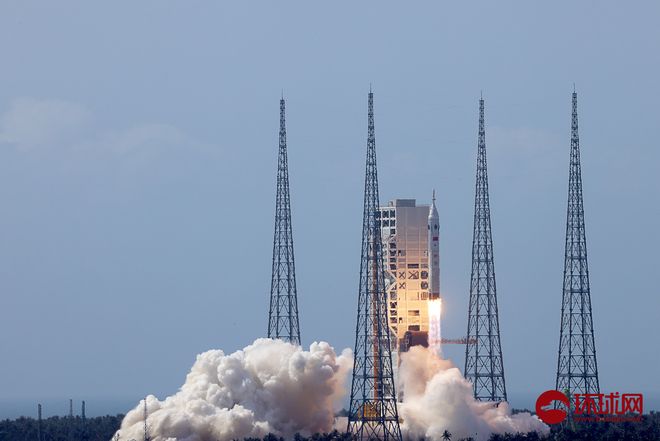
来源:环球时报-环球网 【环球时报-环球网报道 记者 樊巍】据中国载人航天工程办公室消息,北京时间2026年2月11日,我国 在文昌航天发射场成功组织实施长征十号运载火箭系统低空演示验证与梦舟载人飞船系统最大动压逃逸 飞行试验。此次试验是继长征十号运载火箭系留点火、梦舟载人飞船零高度逃逸飞行、揽月着陆器着陆 起飞综合验证等试验后,组织实施的又一项研制性飞行试验,标志着我国载人月球探测工程研制工作取 得重要阶段性突破。 "载人航天,人命关天",而载人飞船逃逸救生系统是航天员的"生命之盾",当火箭在发射上升段出现紧 急故障时,该系统可迅速将航天员带离危险区域。据了解,不同于此前的神舟载人飞船在火箭发生故障 时,由火箭负责逃逸救生系统,我国面向载人登月任务新研制的梦舟载人飞船则是由飞船负责逃逸救生 系统,梦舟飞船逃逸塔,就是飞船的一部分。 《环球时报》记者2月11日在文昌航天发射场看到,参与最大动压逃逸试验的梦舟载人飞船在随长征十 号火箭芯一级点火升空后,火箭上升飞行约一分钟左右,便在距离海平面10千米左右的高空中开始逐步 实施服务舱和返回舱分离、发动机点火、姿态调整、逃逸塔和返回舱分离等关键动作。根据计划,最终 ...
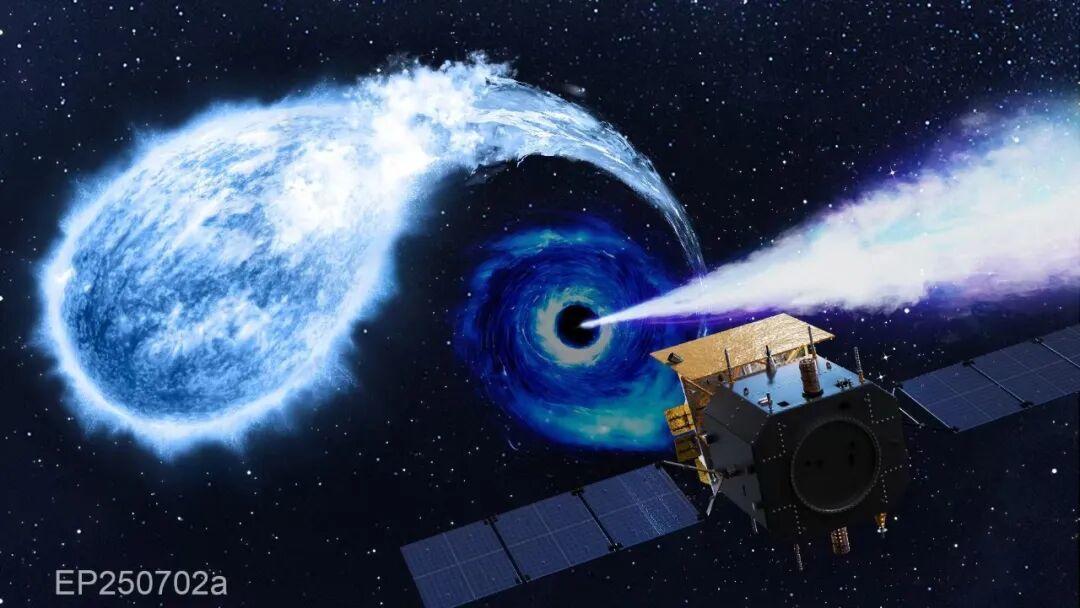
非常罕见!黑洞“干饭”现场,被中国卫星捕捉
Ke Ji Ri Bao· 2026-02-11 03:50
Core Insights - The "Tian Guan" satellite may have captured a rare event of a medium-mass black hole tearing apart and consuming a white dwarf star, which, if confirmed, would be the first clear observation of such an extreme cosmic phenomenon, significantly enhancing the understanding of black hole activity and high-energy astrophysical mechanisms [1][3] Group 1 - The "Tian Guan" satellite's wide-field X-ray telescope, "Wan Xing Tong," discovered an exceptionally bright and rapidly changing X-ray source, designated EP250702a, on July 2, 2025, in the outskirts of a distant galaxy [1] - Observations indicated that X-ray radiation was present at the location approximately one day before a significant gamma-ray burst, suggesting that the physical engine of the explosion was activated much earlier than traditional gamma-ray bursts [1] - The characteristics of the event, including its high brightness and rapid evolution, could not be explained by common astrophysical explosion models, leading the scientific team to propose that a medium-mass black hole was involved in the disruption of a white dwarf star [1][3] Group 2 - The research team noted that the rapid decay and high brightness of the event imply that the consumed celestial body had a very high density, which aligns with the characteristics of a white dwarf star [3] - The estimated mass of the black hole involved is less than approximately 75,000 times that of the Sun, based on gamma-ray data from the Fermi satellite, and the event's location in the outskirts of the galaxy rules out the possibility of a supermassive black hole [3] - Only a medium-mass black hole would possess the capability to tear apart a dense body like a white dwarf, resulting in the observed brief, intense, and high-energy jets [3]
AI与机器人深度结合,太空探索:进入无人化时代
Tou Bao Yan Jiu Yuan· 2026-02-10 13:41
Investment Rating - The report indicates a positive investment outlook for the aerospace robotics industry, highlighting its transition from auxiliary exploration to core support in space missions [17]. Core Insights - The aerospace robotics sector is experiencing significant growth, with the global market projected to expand from approximately $5 billion in 2023 to $10.9 billion by 2033, reflecting a compound annual growth rate (CAGR) of 8.10% from 2024 to 2030 [21]. - The report emphasizes the increasing role of autonomous and semi-autonomous robots in space exploration, capable of performing complex tasks in extreme conditions, thereby reducing risks and costs associated with human astronauts [8][9]. - Key technological advancements such as AI integration, autonomous navigation, and edge computing are driving the evolution of space robots, enabling them to operate independently and efficiently in space environments [4][14]. Summary by Sections Industry Overview - Aerospace robots are designed for tasks in space environments, including satellite maintenance, space station construction, and planetary exploration [4][8]. - These robots exhibit strong environmental adaptability, capable of withstanding extreme temperatures and radiation, and are equipped with advanced sensors and AI for autonomous decision-making [9][10]. Market Dynamics - The global aerospace robotics market is transitioning towards a more integral role in space missions, with increasing demand for automation and intelligent equipment [21]. - The report forecasts a robust growth trajectory for the market, driven by the rising number of space exploration missions and the need for automated solutions in satellite servicing and space debris management [22]. Technological Trends - Key technological trends include enhanced autonomy through AI, modular designs for flexible task execution, and collaborative capabilities among multiple robots to tackle complex missions [27][26]. - The report highlights the importance of advancements in materials and sensor technologies to improve the reliability and efficiency of space robots [14][29]. Future Directions - Future developments in the aerospace robotics industry will focus on deep space exploration, in-orbit servicing, and the construction of space infrastructure, which will require high-performance, multifunctional robots [22][24]. - The report outlines a roadmap for the evolution of space robots, emphasizing the shift from mechanical assistance to intelligent, autonomous partners in space missions [25][24].

宇航机器人行业创新发展:行业洞察-AI与机器人深度结合,太空探索进入无人化时代
Tou Bao Yan Jiu Yuan· 2026-02-10 12:24
Investment Rating - The report does not explicitly state an investment rating for the aerospace robotics industry Core Insights - The aerospace robotics industry is transitioning from "auxiliary exploration" to "core support," driven by increasing demand for automation and intelligent equipment in space exploration tasks [17][21] - The global market for aerospace robots is projected to grow from approximately $5 billion in 2023 to $10.9 billion by 2033, with a compound annual growth rate (CAGR) of 8.10% from 2024 to 2030, indicating strong growth potential [21][22] - The report highlights the critical role of aerospace robots in various applications, including satellite maintenance, space exploration, and in-orbit services, emphasizing their ability to operate in high-risk environments [21][23] Summary by Sections Industry Overview - Aerospace robots are designed for tasks in space environments, capable of performing complex operations such as satellite maintenance, space station construction, and planetary exploration [4][8] - These robots exhibit strong environmental adaptability, able to withstand extreme temperatures ranging from -150°C to +120°C, vacuum conditions, and high radiation levels [9][10] Technological Advancements - Key technologies in aerospace robotics include autonomous navigation, edge computing, computer vision, reinforcement learning, and remote operation, which enhance the robots' capabilities in space [4][9] - The integration of AI technologies allows for improved decision-making and operational efficiency, enabling robots to adapt to dynamic space environments [14][26] Market Trends - The aerospace robotics market is expected to expand significantly, with a focus on deep space exploration, in-orbit services, and space manufacturing, which will require high-performance, multifunctional robots [22][24] - The report identifies three main growth areas: ongoing deep space exploration missions, the rapid rise of in-orbit service markets, and the emergence of orbital construction and space manufacturing applications [22][24] Development Path - The evolution of aerospace robots is characterized by a shift from "mechanical arm assistance" to "intelligent exploration" and "human-robot collaboration," positioning them as core components in space operations [24][26] - Future developments will focus on enhancing autonomy, modular design, and collaborative capabilities among multiple robots to tackle complex space tasks [27][28]


电科蓝天上市飙涨596%,中一签最高赚近3.6万
3 6 Ke· 2026-02-10 09:58
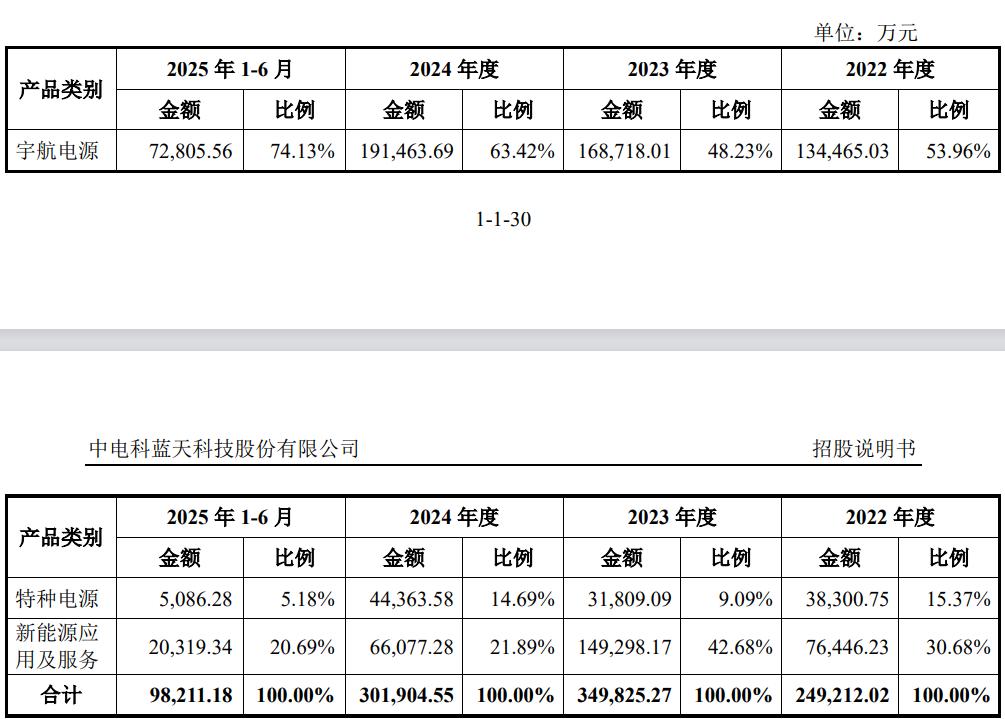
Core Viewpoint - The successful IPO of Electric Science and Technology Blue Sky (688818.SH) on the STAR Market received a positive market response, with the stock price surging over 750% on its debut day, indicating strong investor interest and confidence in the company's future prospects [1][2]. Company Overview - Electric Science and Technology Blue Sky, formerly known as Tianjin Blue Sky Power Company, specializes in aerospace power, special power, and new energy applications and services, providing reliable power products for over 700 satellites, spacecraft, and space stations involved in major national and defense projects [2][4]. - The company is positioned as a leading player in the domestic aerospace power sector, benefiting from its affiliation with China Electronics Technology Group Corporation [4]. Financial Performance - The projected revenue for Electric Science and Technology Blue Sky from 2022 to the first half of 2025 is approximately 24.92 billion, 34.98 billion, 30.19 billion, and 9.82 billion yuan respectively, with the aerospace power segment contributing significantly to these figures [2][3]. - The company anticipates a revenue growth of 0.35% to 9.85% for the full year of 2025, driven by the rapid development of China's aerospace industry, particularly in the commercial space sector [6]. Market Position and Client Base - The aerospace power industry has high barriers to entry due to the complexity of product technology and stringent supply chain management, with Electric Science and Technology Blue Sky holding a market share of approximately 50.5% in the domestic aerospace power market [3][4]. - The company has a high customer concentration, with sales to its top five clients accounting for 76.44% to 81.53% of total revenue from 2022 to the first half of 2025, indicating reliance on key clients such as the China Aerospace Science and Technology Corporation [4][5]. Future Plans - The company plans to raise 1.5 billion yuan through its IPO to fund the industrialization of aerospace power systems, which includes expanding production capacity and enhancing testing capabilities [7].