
华润微

Search documents
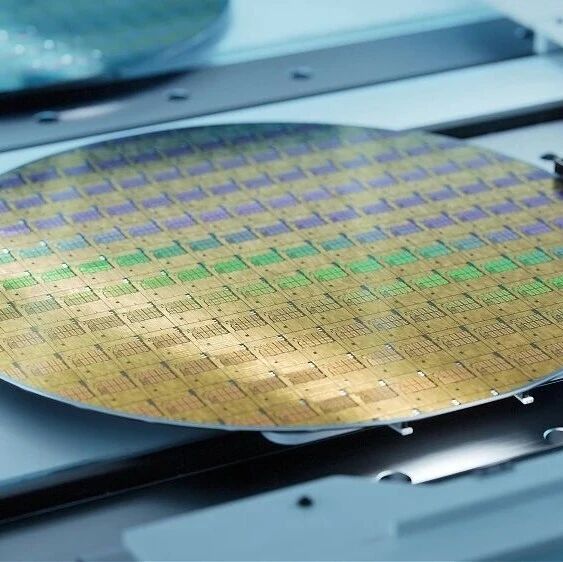
晶圆巨头,“放弃”八英寸
半导体行业观察· 2026-01-19 01:54
Core Viewpoint - The global foundry market is witnessing a shift as leading companies like TSMC and Samsung Electronics reduce traditional processes such as 8-inch wafer production, focusing instead on advanced nodes. This presents an opportunity for Chinese foundries like SMIC and Hua Hong Semiconductor to capture market share, especially with the rising demand for power semiconductors driven by the AI industry [1][2]. Group 1: Market Dynamics - TSMC has announced plans to close its 6-inch and 8-inch wafer production lines next year, while Samsung is also expected to cut some of its 8-inch wafer capacity. TrendForce predicts a 2.4% decline in global 8-inch wafer production this year due to these reductions [1]. - Despite lower single-chip output from 8-inch processes compared to the mainstream 12-inch processes, 8-inch production is favored for small-batch, multi-variety manufacturing, making it a key focus for smaller foundries [1]. - The demand for power semiconductors, primarily produced on 8-inch lines for home appliances, automotive, and data centers, is increasing due to the growth of AI, leading to a projected price increase of 5% to 20% for older process nodes this year [1]. Group 2: Chinese Foundries' Position - Chinese foundries are emerging as alternatives for 8-inch chip production, with companies like SMIC, Hua Hong Semiconductor, and Huazhong Microelectronics providing these services. Due to surging demand, Chinese foundries have raised 8-inch chip prices by approximately 10% [2]. - Hua Hong Semiconductor's 8-inch production lines are nearing full utilization, largely due to orders from leading automotive chip manufacturers like Infineon and ON Semiconductor [2]. - Analysts note that as the U.S. imposes restrictions on advanced semiconductors in China, Chinese firms are strengthening their capabilities in older nodes, solidifying their position in the 8-inch wafer foundry market [2]. Group 3: Industry Outlook - TSMC plans to invest between $52 billion to $56 billion in capital expenditures this year to meet AI market demands, exceeding market expectations by over 20%. The company has also raised its revenue growth target for 2029 from an annual average of 20% to 25% [2]. - Samsung is accelerating the production of 3nm and below process technologies to cater to the orders from major global tech clients [2]. - Ongoing semiconductor industry conflicts between the U.S. and China may pose risks, as global automakers are hesitant to rely on Chinese foundries for semiconductor production to mitigate dependency on Chinese components [2].



中资芯片的绝境反击之路
Guan Cha Zhe Wang· 2026-01-19 00:44
Core Viewpoint - The global semiconductor industry is facing unprecedented fractures, particularly affecting Chinese investments in overseas semiconductor companies due to geopolitical tensions and national security concerns [1]. Group 1: Investment and Acquisition - In December 2021, a Chinese investment firm, Jian Guang Asset, acquired 80.2% of FTDI for $414 million, marking a significant step for China's semiconductor industry to fill its technology gaps [3]. - FTDI, a leader in USB bridge chips, holds nearly 20% of the global market share and serves various sectors including automotive electronics and medical devices [3]. - The UK government initiated a retrospective investigation into this acquisition under the National Security and Investment Act, citing vague national security risks despite FTDI's civilian focus [4][5]. Group 2: Legal and Regulatory Challenges - The UK government set a deadline of December 2025 for the forced sale of FTDI shares, which could lead to significant financial losses for Jian Guang Asset due to a lack of competitive bidding [5]. - Jian Guang Asset attempted to challenge the UK government's order in court, but the court upheld the government's decision, emphasizing the importance of national security [5][6]. - The situation reflects a broader trend of using legal frameworks as tools for geopolitical maneuvering, particularly against Chinese investments in advanced technologies [6][8]. Group 3: Broader Implications for the Semiconductor Industry - The ongoing geopolitical tensions are leading to a fragmentation of the semiconductor supply chain, which could increase costs and hinder innovation across the industry [8][9]. - The case of Nexperia in the Netherlands illustrates the unintended consequences of government interventions, which can disrupt entire supply chains and affect numerous downstream customers [9][10]. - China's response to these challenges includes accelerating domestic production capabilities and seeking alternative supply chains to mitigate geopolitical risks [11][12]. Group 4: Future Outlook and Strategies - Chinese companies are exploring international arbitration to challenge governmental interventions, aiming to set precedents for future cases [11]. - The trend of "decoupling" from international supply chains is becoming more pronounced, as companies seek to ensure production continuity amid geopolitical uncertainties [10][11]. - The semiconductor industry is at a crossroads, with the need for transparent and predictable international rules becoming increasingly critical to avoid further fragmentation and to foster cooperation [15].


品牌工程指数 上周涨0.6%
Zhong Guo Zheng Quan Bao· 2026-01-18 21:37
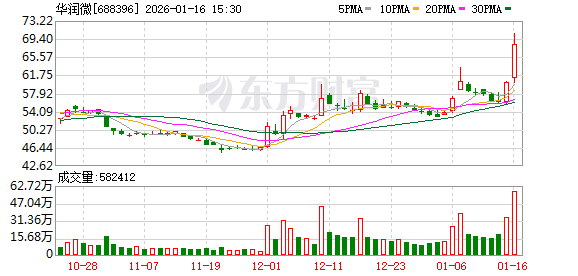
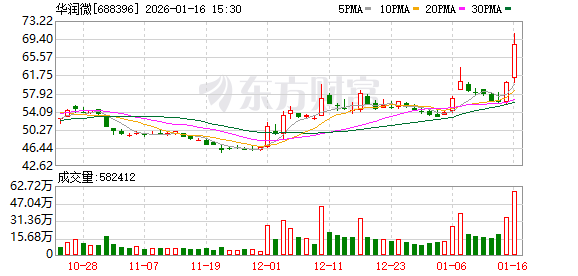
Core Viewpoint - The market experienced fluctuations last week, but the overall trend remains positive with a low probability of systemic risks in 2026, driven by favorable macro policies and industry factors [1][4]. Market Performance - The China National Brand Index rose by 0.60% to 2059.78 points last week, while the Shanghai Composite Index fell by 0.45% and the Shenzhen Component Index increased by 1.14% [2]. - Notable performers included Changdian Technology, which surged by 17.51%, and Huazhong Microelectronics, which rose by 17.36% [2]. Year-to-Date Performance - Year-to-date, Anji Technology has increased by 38.85%, leading the gains, followed by Zhongwei Company at 38.29% and Changdian Technology at over 30% [3]. - Other significant gainers include Huazhong Microelectronics and Keda Xunfei, which rose by 29.02% and 26.67%, respectively [3]. Investment Strategy - Market sentiment has shown considerable volatility, but the impact on liquidity is minimal, primarily affecting short-term emotions [4]. - As annual performance forecasts begin to be disclosed, sectors with strong earnings support are expected to attract more attention from investors [4]. - The investment strategy emphasizes structural selection as key, with expectations of more industries entering a performance realization phase due to domestic policy support [4].



品牌工程指数上周涨0.6%
Zhong Guo Zheng Quan Bao· 2026-01-18 20:45
Group 1 - The core index of the National Brand Engineering Index rose by 0.60% last week, closing at 2059.78 points, with strong performances from stocks like Changdian Technology, China Resources Microelectronics, and Glodon [1][2] - The market experienced fluctuations, with the Shanghai Composite Index down by 0.45%, while the Shenzhen Component Index and the ChiNext Index rose by 1.14% and 1.00% respectively [1] - Year-to-date, stocks such as Anji Technology and Zhongwei Company have shown significant gains, with Anji Technology up by 38.85% and Zhongwei Company up by 38.29% [2] Group 2 - Market sentiment has been volatile, with regulatory policies leading to a decrease in speculative trading, but the actual impact on market liquidity is minimal [2] - Starstone Investment indicates that there are still many opportunities in the market, particularly as domestic policies drive supply-demand balance and price recovery, leading to more industries entering the performance realization phase [3] - Looking ahead to 2026, the overall market is expected to trend upwards due to positive macroeconomic policies and industry factors, although increased volatility and operational challenges are anticipated [3]
华润微:2026年第一次临时股东会决议公告
Zheng Quan Ri Bao· 2026-01-16 15:23
Core Viewpoint - China Resources Microelectronics announced the approval of three proposals at its first extraordinary general meeting of shareholders in 2026, including the expected daily related party transactions for the year [2] Group 1 - The company held its first extraordinary general meeting of shareholders in 2026 on January 16 [2] - The meeting approved the proposal regarding expected daily related party transactions for 2026 [2] - The meeting also approved three proposals related to the revision of certain systems [2]
华润微:关于公司高级管理人员职务调整的公告
Zheng Quan Ri Bao· 2026-01-16 15:20
Core Viewpoint - Huazhong Microelectronics announced the resignation of Vice President Ma Weiqing due to work adjustments, effective immediately upon delivery to the board, while he will continue to serve as a senior chief expert and remain a core technical personnel of the company [2] Group 1 - The company’s board received a resignation report from Ma Weiqing [2] - Ma Weiqing will transition to the role of senior chief expert within the company [2] - The resignation is effective from the date it was delivered to the board [2]
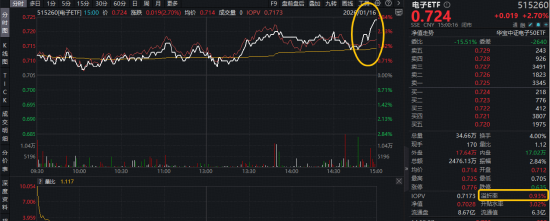
ETF复盘资讯|沪指险守4100点!半导体逆市狂飙,电子ETF翘尾收涨2.7%!AI应用概念股全线回调,159363回踩5日线
Sou Hu Cai Jing· 2026-01-16 13:53
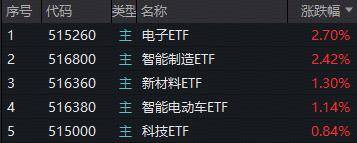
Core Viewpoint - The A-share market experienced a slight pullback on January 16, with the Shanghai Composite Index barely holding above the 4100-point mark, while the electronic sector showed resilience, leading gains in the market [1][4]. Market Performance - The Shanghai Composite Index closed down 0.26% at 4101.91 points, the Shenzhen Component Index fell 0.18%, and the ChiNext Index decreased by 0.20% [1]. - The total trading volume in the Shanghai, Shenzhen, and Beijing markets reached 30,568 billion yuan, an increase of 1,180 billion yuan compared to the previous day [1]. Sector Highlights - The electronic sector was the standout performer, with the electronic ETF (515260) rising by 2.7%, and the smart manufacturing ETF (516800) increasing by 2.42% [1][2]. - The new materials and new energy sectors also saw some individual stocks perform well, with the new materials ETF (516360) and the smart electric vehicle ETF (516380) both gaining over 1% [1]. Downward Trends - The AI medical concept continued to cool off, with the largest medical ETF (512170) dropping by 2.6% [1]. - AI application stocks experienced a broad pullback, with the ChiNext AI ETF (159363) declining by 1.81% [1]. Capital Inflows - The electronic sector attracted a net inflow of 30.511 billion yuan, leading all 31 first-level industries in terms of capital absorption [8]. - Key stocks within the electronic ETF, such as Zhaoyi Innovation and Changdian Technology, attracted significant capital inflows of 4.538 billion yuan and 3.181 billion yuan, respectively [8][9]. Policy Support - The central bank implemented a series of measures to support high-quality economic development, including a 0.25 percentage point reduction in re-lending and rediscount rates, and an increase in the re-lending quota for small and medium-sized enterprises by 500 billion yuan [2][3]. Future Outlook - Analysts predict that A-shares may see considerable incremental capital by 2026, potentially sustaining a slow bull market [3]. - The focus is expected to shift towards verifying economic conditions and performance, with active funds reinforcing a dual-line strategy of "technology + resource products" [3].



华润微:公司具有新型铁电材料存储器技术(VFRAM)
Zheng Quan Ri Bao Wang· 2026-01-16 11:41
证券日报网讯1月16日,华润微在互动平台回答投资者提问时表示,公司具有新型铁电材料存储器技术 (VFRAM),未来会结合公司发展战略,对于相关领域进行布局。 ...
台积电业绩远超预期!半导体逆市狂飙,电子ETF(515260)翘尾收涨2.7%,尾盘溢价飙升!兆易创新等4股涨停
Xin Lang Ji Jin· 2026-01-16 11:27
Core Viewpoint - The electronic sector is leading the A-share market, with the electronic ETF (515260) showing strong performance, closing up 2.7% and achieving a premium rate of 0.93% at the end of the trading day, indicating strong buying interest [1] Group 1: Market Performance - The electronic sector received a net inflow of 30.511 billion, ranking first among all 31 Shenwan primary industries [2][3] - Major stocks in the electronic ETF, including Zhaoyi Innovation and Changdian Technology, attracted 4.538 billion and 3.181 billion respectively, topping the A-share inflow rankings [2][3] - Semiconductor leaders such as Changdian Technology, Zhaoyi Innovation, and Tongfu Microelectronics hit the daily limit, while Huazhong Microelectronics rose over 13% [4] Group 2: Industry Trends - TSMC's recent earnings report for Q4 2025 exceeded expectations, marking the seventh consecutive quarter of double-digit growth, and raised its 2026 capital expenditure guidance to 52-56 billion USD, reflecting strong and sustainable demand in the AI industry chain [5] - The U.S. government's recent imposition of a 25% tariff on specific semiconductors may create a stronger "accelerated replacement" window for domestic equipment amid increasing supply chain uncertainties [5] - The trend of "self-control and AI resonance" is expected to strengthen further in 2026, with a focus on domestic computing power and semiconductor equipment [5] Group 3: Investment Tools - The electronic ETF (515260) and its linked funds are designed to passively track the electronic 50 index, heavily investing in semiconductor and consumer electronics sectors, including AI chips, automotive electronics, and PCB [5] - The ETF serves as an efficient tool for investors to gain exposure to core assets in the electronic sector [5]

1月16日国企改革(399974)指数跌0.43%,成份股金风科技(002202)领跌
Sou Hu Cai Jing· 2026-01-16 10:16
Group 1 - The core index of state-owned enterprise reform (399974) closed at 1984.5 points, down 0.43%, with a trading volume of 254.11 billion yuan and a turnover rate of 1.24% [1] - Among the constituent stocks, 34 companies saw an increase, with China Resources Microelectronics leading with a 13.04% rise, while 64 companies experienced a decline, with Goldwind Technology leading the drop at 9.99% [1] Group 2 - The net outflow of main funds from the constituent stocks of the state-owned enterprise reform index totaled 5.94 billion yuan, while the net outflow of speculative funds was 430 million yuan [2] - Retail investors contributed a net inflow of 6.37 billion yuan into the constituent stocks [2]

