
极飞科技

Search documents
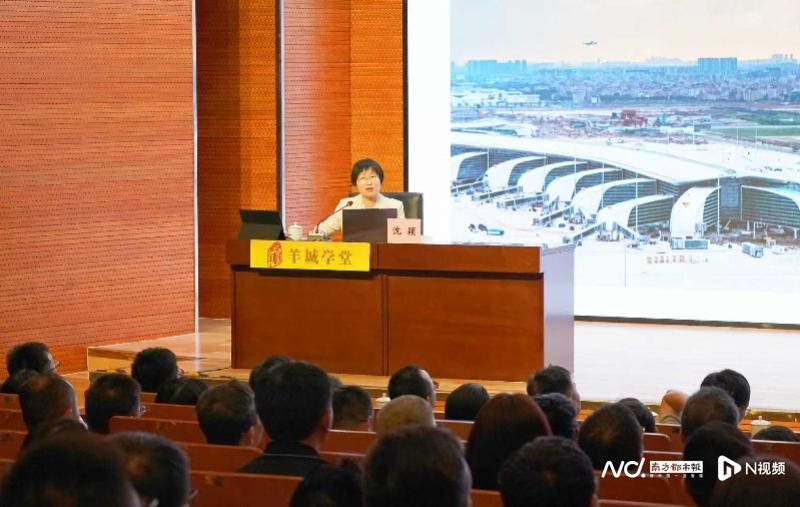
小汽车保有量403万辆!这场讲座披露广州交通多项数据
Nan Fang Du Shi Bao· 2025-08-25 14:44
Core Insights - The lecture titled "Integrating the World, Facilitating Travel: Guangzhou's Transportation Supports a Better Journey" was delivered by the Director of Guangzhou Transportation Bureau, showcasing the current state and future outlook of Guangzhou's transportation development [1][3] - Guangzhou aims to enhance its transportation system through public welfare, autonomous driving, and low-altitude economy, promoting a vision of "people enjoying their travel and goods flowing smoothly" [1][11] Transportation Development - Guangzhou has established a comprehensive transportation network integrating air, land, sea, and rail, with Baiyun International Airport serving 71 airlines and 236 domestic and international passenger routes, achieving an annual passenger throughput of 76.36 million, ranking 12th globally and 2nd nationally [5] - The Guangzhou Port connects 400+ ports in 120 countries and regions, with 180 international routes, enhancing its status as a global shipping hub [5] - The high-speed rail network in Guangzhou allows for a 3-hour reach to major cities in South China and an 8-hour connection to national city clusters, with a projected passenger volume of 145 million by 2024 [5][7] Urban Connectivity - Guangzhou has built a robust highway network of 1,268 kilometers, facilitating a one-hour living circle within the Greater Bay Area [7] - The city has achieved "district-to-district" metro connectivity, with over 1,000 kilometers of intercity and urban rail networks, including 338 kilometers of intercity rail and 777.1 kilometers of urban rail, ranking third in daily passenger flow nationally [7] Public Transportation Initiatives - The city has opened 12 autonomous driving bus routes, transporting over 1.19 million passengers and covering more than 2.3 million kilometers [13] - Guangzhou's parking supply and demand ratio has improved from 1.06 in 2019 to nearly 1.09, with a total of 4.38 million parking spaces available for 4.03 million vehicles [11] Future Outlook - The transportation department of Guangzhou is committed to enhancing its role in the modernization of China, focusing on building a world-class port cluster and a comprehensive road network [15] - The vision of "people enjoying their travel and goods flowing smoothly" is being actively pursued through strategic initiatives [15]

突破卡脖子!这个赛道即将诞生龙头企业!
Xin Lang Cai Jing· 2025-08-23 08:27
Core Insights - The first International Low Altitude Economy Expo held in Shanghai showcased nearly 300 leading companies and over 19 global product launches, reflecting the robust development of the low altitude economy [1] - Wang Yiming from the China Internet Information Low Altitude Economy Research Institute emphasized that the low altitude economy, as a strategic emerging industry, will create a virtuous cycle through the collaboration with traditional manufacturing [1][3] Industry Trends - The hardware manufacturing in the low altitude economy is evolving from "toy-level" to "tool-level" and then to "transportation-level," driven by the logic of defining products by scenarios, reconstructing supply chains, and creating new business models [3] - The collaboration between low altitude economy and traditional manufacturing represents an upgrade of the industrial system, transitioning from ground manufacturing to "integrated air-ground-space manufacturing" [4] Competitive Landscape - Leading companies in the drone manufacturing sector have established a differentiated competitive landscape across consumer, industrial, and eVTOL (electric vertical takeoff and landing) segments [5] - DJI dominates the consumer drone market with over 70% global market share, while companies like XAG and EHang are leading in agricultural and eVTOL sectors respectively [5][6] Technological Advancements - The low altitude economy is experiencing a shift from single product innovation to competition across the entire industrial chain, with leading companies building "moats" through vertical integration and technology reuse [6] - The development of power systems for eVTOLs is critical, with solid-state batteries being viewed as the optimal solution due to their high energy density and safety [7][8] Ecosystem Development - The low altitude economy is forming a "low altitude + multiple industries" ecosystem, with clear trends in consumer drones transitioning to tool usage, industrial drones upgrading with AI, and eVTOLs accelerating certification processes [9] - The government is encouraged to support policy and standardization, while enterprises should lead industry collaboration and ecosystem building [10] Market Opportunities - The integration of low altitude economy with traditional industries presents significant potential for transformation and upgrading, with applications ranging from logistics to emergency rescue [13][14] - The establishment of a market-oriented pricing mechanism is suggested to attract social capital for infrastructure development, promoting the prosperity of the low altitude economy [14]

长春农博会观察:中国智能农机推广进入新阶段
Zhong Guo Xin Wen Wang· 2025-08-17 03:22
Group 1 - The 24th China Changchun International Agricultural and Food Expo serves as a significant platform showcasing the latest trends in China's agricultural transformation towards smart, green, and low-carbon practices [1] - The expo features a large smart agricultural machinery section with over 200 domestic and foreign companies presenting advanced technologies such as hydrogen fuel autonomous tractors and laser weeding machines, indicating the future direction of the agricultural machinery industry [1] - The first "5G + hydrogen fuel" autonomous tractor in China is highlighted at the expo, capable of automatic driving and remote operation in complex terrains, showcasing advancements in agricultural technology [1] Group 2 - The cost of operation for new low-carbon agricultural machinery is approximately 2 yuan per mu, significantly lower than traditional diesel engines, reflecting the growing interest in clean energy applications in agriculture [2] - Innovations such as the carbon dioxide laser weeding machine, which uses AI vision systems to identify and eliminate weeds without chemical herbicides, align with the increasing demand for environmentally friendly agricultural solutions [2] - The exhibition demonstrates a wide range of smart agricultural products, some of which are already implemented in smart agricultural parks across China, indicating a new phase in the promotion of intelligent agricultural machinery [2]
不输“老把式” 机器人重构农业DNA
Bei Jing Shang Bao· 2025-08-10 16:34
Core Insights - The agricultural robotics market in China is projected to reach 12.8 billion yuan in 2024, with a year-on-year growth of 67%, and is expected to exceed 20 billion yuan by 2025 [1] - The integration of technology in agriculture is transforming traditional farming practices, allowing for more efficient and precise operations [1][6] Industry Developments - New agricultural robots, such as crop inspection robots, can autonomously identify diseases and pests, improving efficiency by 75% compared to manual inspections and covering up to 500 acres [2] - The "pollination robot," developed by a collaboration between the Beijing Academy of Agriculture and the Haidian District Agricultural Bureau, boasts a fruit set rate greater than 98% and reduces pollination costs by 30% compared to traditional methods [4][6] - A new apple-picking robot can harvest 1,600 apples per hour, with development costs exceeding 1 million yuan but expected to drop below 100,000 yuan with wider adoption [6] Policy and Market Trends - The penetration rate of agricultural robots in China has increased from 3.2% in 2020 to 15.7% in 2024, with a target of 30% by 2026 as outlined in the national smart agriculture action plan [6][7] - The Chinese government has allocated 4.5 billion yuan in special funds for agricultural robot research, with subsidies for individual devices reaching up to 40% [6] - The agricultural robotics sector saw a financing amount of 4.7 billion yuan in 2024, with leading companies like XAG and Fengjiang Intelligence valued over 10 billion yuan [6] Future Outlook - The agricultural robotics market in China is expected to surpass 100 billion yuan by 2030, driven by factors such as an aging population and accelerated land transfer [7] - The vision for future agriculture includes a shift from traditional farming to data-driven practices, with real-time data collection and analysis becoming standard [7]

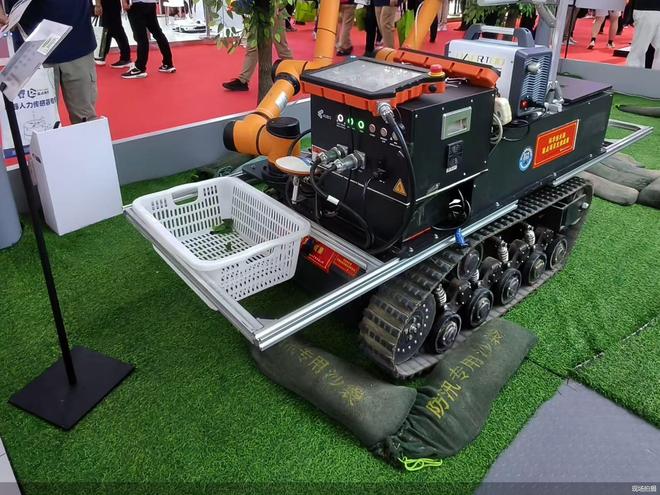
2025世界机器人大会|不输“老把式” 机器人重构农业DNA
Bei Jing Shang Bao· 2025-08-10 13:47
Core Insights - The agricultural robotics market in China is projected to reach 12.8 billion yuan in 2024, with a year-on-year growth of 67%, and is expected to exceed 20 billion yuan by 2025 [1] - The penetration rate of agricultural robots in China has increased from 3.2% in 2020 to 15.7% in 2024, but still lags behind countries like the Netherlands and Japan [7] Group 1: Agricultural Robotics Innovations - A dual-arm robot showcased at the World Robot Conference can pick apples in under 5 seconds, demonstrating advanced automation in agriculture [1] - New inspection robots can autonomously identify and analyze crop diseases, improving efficiency by 75% compared to manual inspections and covering up to 500 acres [3] - A visual perception and diagnosis system for pests and diseases is being developed, capable of processing over 50 frames per second to accurately identify issues [5] Group 2: Pollination and Harvesting Technologies - The "Greenhouse Bumblebee" robot, designed for pollination, achieves a fruit set rate greater than 98% and reduces costs by 30% compared to traditional bumblebee pollination [6] - An apple-picking robot can harvest 1,600 apples per hour, with expectations to reduce its market price from over 1 million yuan to below 100,000 yuan as it becomes more widely adopted [6] Group 3: Policy and Market Dynamics - The Chinese government has allocated 4.5 billion yuan in special funds for agricultural robot research, with various provinces offering subsidies of up to 40% for equipment [7] - The agricultural robotics sector saw a financing amount of 4.7 billion yuan in 2024, with leading companies achieving valuations exceeding 10 billion yuan [7] - Projections indicate that the agricultural robotics market in China could surpass 100 billion yuan by 2030 due to factors like population aging and land transfer [7]
外滩老冰棍的“冷”与“热”
Jing Ji Ri Bao· 2025-08-10 00:19
Group 1 - The core idea emphasizes the importance of addressing consumer pain points and differentiating products in a competitive market [1][2] - Companies that effectively solve immediate consumer needs can command higher prices, as seen with the ice cream vendors catering to hot tourists [1] - The rise of ride-hailing services illustrates how addressing pain points like difficulty in hailing taxis and opaque pricing transformed the transportation industry [1] Group 2 - Differentiation becomes crucial when many companies are focused on solving similar pain points, as demonstrated by DJI's leadership in consumer drones through advanced technology and innovation [2] - Companies like XAG have successfully carved out niches by focusing on specific applications, such as agricultural drones, showcasing the effectiveness of a differentiation strategy [2] - The essence of business competition lies in value creation, where addressing basic consumer needs is foundational, while differentiation creates unique value that stands out in the market [2]
种地像打游戏,智慧农业“so easy”
21世纪经济报道· 2025-08-09 06:06
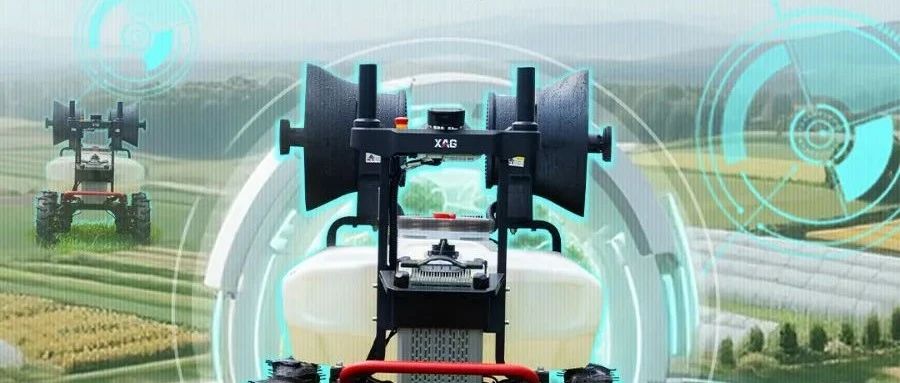
Core Viewpoint - The article discusses the transformative impact of technology on agriculture, particularly through the use of autonomous vehicles and smart farming solutions, highlighting the advancements made in Guangdong's agricultural sector under the "Hundred Million Project" [1]. Group 1: Technological Advancements in Agriculture - The introduction of the R100 unmanned vehicle by XAG is revolutionizing pest control in agriculture, allowing for remote operation and reducing the need for on-site labor during high-temperature conditions [3][4]. - The R100 unmanned vehicle features advanced capabilities such as real-time monitoring through FPV cameras and the ability to create detailed maps of operational areas, enhancing precision in agricultural tasks [4][5]. - The vehicle's design includes a lightweight aluminum body and a four-wheel independent motor system, enabling it to navigate challenging terrains effectively [4]. Group 2: Efficiency and Productivity - The R100 can spray up to 8 liters per minute and cover 10 acres per hour, equivalent to the work of four laborers, significantly increasing operational efficiency [5]. - With a 120-liter smart tank, the R100 can cover 40 to 100 acres in a greenhouse, showcasing its capacity to outperform traditional vehicles [5]. - The integration of smart technology in farming practices is redefining traditional agricultural methods, leading to enhanced productivity and efficiency in crop management [5]. Group 3: Broader Implications for the Industry - The article emphasizes the shift towards smart agriculture, where technology plays a crucial role in the entire farming process, from planting to harvesting [5]. - XAG's solutions are already being implemented in 466 farms across over 70 countries, indicating a global trend towards the adoption of smart farming technologies [5]. - The ongoing technological transformation in agriculture is expected to contribute significantly to rural revitalization efforts in Guangdong and beyond [5].
“服务+科技” 保险护航低空经济“飞起来”“飞得稳”
Jin Rong Shi Bao· 2025-08-08 08:01
Core Insights - The development of low-altitude economy is becoming a significant part of China's new productive forces, integrating general aviation and drone services, and is seen as a key area for fostering new productive forces in the country [1][2][8] - Ping An Property & Casualty Insurance is actively providing customized insurance products and services for the low-altitude economy, covering various scenarios from large aviation fleets to drones, with total risk coverage exceeding 90 billion yuan [1][2] Group 1: Low-altitude Economy Applications - In Henan Province, a drone successfully delivered packages to remote villages, solving the "last mile" delivery issue for residents [1] - In Hunan Province, a drone equipped with a smart temperature-controlled box is used to transport blood products quickly to hospitals, establishing a vital medical supply route [1] Group 2: Insurance Services and Innovations - Ping An Property & Casualty has developed a multi-layered, comprehensive insurance and service system for the low-altitude economy, addressing various risks including professional liability and cybersecurity [2][3] - The company has partnered with drone manufacturers to create a rapid claims process, allowing for quick repairs and direct payments to service providers, enhancing customer experience [4][5] Group 3: Industry Collaboration and Development - The insurance sector is collaborating with technology firms to innovate and adapt to the evolving low-altitude economy, focusing on smart risk control and new opportunities [6][7] - Ping An Property & Casualty announced the establishment of a research institute for emerging risks in the low-altitude economy, aiming to develop tailored insurance products and services [6][7] Group 4: Impact on Daily Life - The integration of low-altitude economy services into daily life is transforming how people access goods and services, with insurance playing a crucial role in ensuring stability and safety [8]

低调天河“领飞”广州低空产业:营收超50亿,专利数量全市第一
2 1 Shi Ji Jing Ji Bao Dao· 2025-08-01 07:05
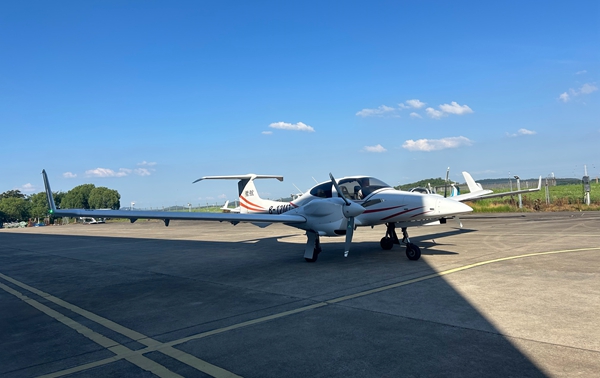
38度太阳直照的下午,广州成至智能机器科技有限公司研发林区,无人机在"飞手"操作下快速平稳抵达 指定空中坐标。"砰"的一声,烟雾弹精准落于正下方空地,彩色烟雾扩散开来。 像这样用于应急救援的无人机只是低空经济应用场景的冰山一角。作为新质生产力的代表之一,低空经 济将成万亿级产业新赛道,各地加紧布局基础设施与场景创新,推动低空交通、物流、应急等应用落 地。 广州"12218"现代化产业体系中,低空经济是重要发力点。其中,天河区展现出强劲势头:集聚50余家 产业链企业,2024年营收超50亿元,两家企业(极飞科技、南方测绘)去年全市低空经济营收前三,相 关专利数量占全市50%以上,居全市第一。 在天河,既有亿航智能、极飞科技等龙头企业引领,也分布着广州南方测绘科技股份有限公司、大道科 技(广州)有限公司、广州合利创兴智能科技有限公司、成至智能等专精企业,逐渐形成低空经济 的"雁阵队形"。近日,南方财经记者随调研团深入一线,实地探访这股方兴未艾的产业力量。 厚积薄发,差异化发展 从物流到测绘,从应急救援到自然资源,天河区的不同企业正发挥着各自的优势,共同描绘出低空经济 蓬勃发展的火热图景。 天河区发展改革局相关负责 ...
低空经济万亿蓝海起航 向城市天空要生产力
2 1 Shi Ji Jing Ji Bao Dao· 2025-07-31 13:05
Core Insights - The low-altitude economy is experiencing significant growth, with substantial capital inflows and advancements in technology and regulatory approvals [1][2][3] - Major eVTOL companies are shifting focus from large-scale financing to obtaining airworthiness certifications and commercial orders, indicating a maturation of the industry [3][5] - Local governments are playing a crucial role in promoting the low-altitude economy through funding, policy support, and infrastructure development [3][4][8] Capital and Investment - In the first half of 2025, there were 78 financing events in the low-altitude economy sector, reflecting strong interest from the capital market [2] - Notable financing events include Sichuan Aosi Technology's nearly 200 million yuan C round financing and XPeng Heitech's 250 million USD B round financing, the largest in the sector this year [2] - Five low-altitude economy companies made it to the Hurun Global Unicorn List, showcasing the sector's potential [2] Regulatory Environment - The implementation of the "Interim Regulations on the Flight Management of Unmanned Aerial Vehicles" marks a significant milestone in the management of the low-altitude economy [8][9] - The new regulations provide a legal framework for the design, production, registration, and operation of drones, fostering a healthier industry environment [9][10] - Ongoing legislative efforts, such as the revision of the Civil Aviation Law, aim to further support the development of the low-altitude economy [10][11] Industry Applications and Challenges - The low-altitude economy encompasses various applications, including agricultural drone services, industrial inspections, and urban air mobility (UAM) [5][6] - Despite advancements, profitability remains a challenge, with many drone operations still in the investment phase [5][6] - UAM is seen as a promising area for future growth, with China making strides in technology and market demand [6][7] Future Outlook - The combination of capital market participation and supportive policies is expected to drive rapid development in the low-altitude economy [11] - The expansion of the Sci-Tech Innovation Board's listing standards is anticipated to facilitate easier access to funding for startups in the low-altitude sector [11] - The eVTOL industry is positioned for a critical transition, with potential for China to capture a significant share of the global air transportation market [11]
