
ASML

Search documents
The New Year Could Bring Massive Upside for These Semiconductor Stocks
Yahoo Finance· 2025-12-24 18:05
Core Viewpoint - TSMC is poised for accelerated growth in 2026, driven by increased production capacity and strong demand for its advanced chips [1][3]. TSMC's Growth Potential - TSMC's production capacity for the 2-nanometer node is expected to double, with the entire capacity for 2026 already sold out [1]. - Analysts predict a 30% revenue increase for TSMC by the end of 2025, with earnings per share expected to rise by nearly 48% to $10.41 [2]. - TSMC holds a 72% market share in the foundry sector, having improved its share by six percentage points year-over-year [3]. Semiconductor Industry Outlook - The semiconductor industry is on track to reach $1 trillion in revenue much earlier than the previously anticipated 2030 timeline, largely due to the demand from AI applications [4]. - The PHLX Semiconductor Sector index has seen a 42% increase this year, with revenue forecasted to rise by 26.3% to $975.4 billion in 2026 [5]. - Semiconductor sales are projected to grow by 22.5% in 2025, reaching over $772 billion [6]. Pricing and Earnings Growth - TSMC's 2nm chips will be priced at a premium of 10% to 20% over the 3nm node, potentially leading to earnings growth exceeding the 20% forecast for 2026 [7]. - TSMC's current earnings multiple of 30 times is lower than the Nasdaq-100 index's 32 times, suggesting room for stock price appreciation [8]. ASML's Position - ASML is expected to benefit from increased semiconductor sales, with its shares up nearly 50% in 2025 [9]. - The demand for semiconductor equipment is anticipated to rise, driven by AI investments, which could lead to higher earnings growth for ASML than the currently forecasted 5% for 2026 [11]. AI's Impact on the Market - AI spending is projected to significantly boost the semiconductor market, with AI server spending expected to increase by 45% to $312 billion in 2026 [13]. - Nvidia has a backlog of $275 billion in its data center business for next year, with growth prospects enhanced by new market opportunities in China [14]. Nvidia's Earnings Potential - If Nvidia achieves earnings of $7.49 per share in 2026 and trades at 32 times earnings, its stock price could rise to $240, indicating a potential 33% increase from current levels [15].
Tim Seymour talks his 2026 'MIGA' play
CNBC Television· 2025-12-23 22:59
Market Outlook & Investment Strategy - A weaker dollar generally supports buying assets in foreign currencies, with some expected to outperform others [1] - Emerging markets are typically sensitive to Fed rate hikes; a weaker Fed and benign rate outlook create a favorable environment for growth countries [1][2] - The industry anticipates Europe to deliver surprising EPS (Earnings Per Share) growth [2] - The industry suggests focusing on developed markets, with a mix of 75% developed and 25% emerging markets for investment [5] - The industry believes there's no need to take excessive risk to find strong growth and superior dividend growth opportunities [6] Specific Company & Sector Recommendations - European money center banks and European staples like Imperial and British tobaccos are highlighted as potential investments [2] - Siemens is favored, including for the data center trade [3] - ASML is favored due to strong order book [3][4] - Taiwan Semiconductor is considered a crucial semiconductor company [4][5] Macroeconomic Factors - Above-trend growth coupled with benign Fed dynamics creates a positive backdrop [5] - A 4.3% growth print indicates a strong economic environment [2]


iShares ACWX ETF Throws Out US Companies And Somehow Still Doubled The S&P 500 Returns
Yahoo Finance· 2025-12-22 12:27
Core Viewpoint - The iShares MSCI ACWI ex U.S. ETF (NASDAQ:ACWX) has experienced significant performance in 2025, benefiting from a resurgence in international stocks despite excluding U.S. companies from its portfolio [1]. Group 1: Fund Overview - ACWX tracks the MSCI ACWI ex USA Index, providing exposure to approximately 2,000 stocks across developed and emerging markets outside the United States, including companies like Tencent, SAP, ASML, and Samsung [2]. - The fund has $7.3 billion in assets, a 0.32% expense ratio, and a 2% dividend yield, with only 12% of its portfolio concentrated in the top 10 holdings, indicating a more balanced risk profile compared to U.S.-focused funds [4][7]. Group 2: Performance Drivers - The performance of international equities has been significantly influenced by the movement of the U.S. dollar; a weaker dollar enhances returns for U.S.-based investors when converting foreign currency returns back to dollars [3]. - In 2025, ACWX's gains were amplified by U.S. dollar weakness, which provided a favorable environment for international stocks [4]. Group 3: Sector Exposure and Diversification - ACWX offers more balanced sector exposure compared to the S&P 500, which has a 34% weight in technology stocks; ACWX diversifies risk across financials, industrials, healthcare, and consumer sectors, leading to different return characteristics [5]. Group 4: Future Considerations - Monitoring the U.S. dollar's stability or strength in 2026 is crucial, as a resurgent dollar could diminish the currency boost for U.S. investors, potentially compressing international equity returns even if foreign stocks perform well locally [6].
全球半导体市值TOP100,中国表现几何?
半导体行业观察· 2025-12-22 01:49
Core Viewpoint - The semiconductor secondary market is experiencing significant fluctuations, with key manufacturers successfully launching IPOs, notable mergers failing, and the market capitalization of a few giants repeatedly reaching new heights. This article emphasizes the need to analyze the current industry landscape and the role of Chinese companies within the global semiconductor market [1]. Group 1: Market Capitalization Overview - As of mid-December 2025, there are 35 companies from China (17 from mainland China, 16 from Taiwan, and 2 from Hong Kong) in the global top 100 semiconductor companies by market capitalization, accounting for approximately 35% of the total [1]. - Notably, companies like Moore Threads and Muxi, which recently completed their IPOs, have market capitalizations of approximately 470 billion USD and 440 billion USD respectively, indicating their potential to rank among the top 25 globally [2]. Group 2: Major Players and Their Market Dynamics - The top three companies, Nvidia, Broadcom, and TSMC, have market capitalizations exceeding 1 trillion USD, reflecting their significant control over the semiconductor industry [5]. - Nvidia's market capitalization is approximately 4.26 trillion USD, marking it as the highest in the semiconductor sector and the world, driven by its pivotal role in AI computing [5]. - Broadcom's market capitalization is around 1.7 trillion USD, supported by its strategic positioning in custom AI ASICs and networking chips [5]. - TSMC holds a market capitalization of about 1.5 trillion USD, recognized for its advanced manufacturing capabilities [6]. Group 3: Storage and Memory Sector - The market capitalization of major memory companies has surged, with SK Hynix at approximately 258.6 billion USD (up 218%), Micron at about 271.4 billion USD (up nearly 175%), and Samsung at around 475.5 billion USD (almost doubling) [7]. - This growth indicates a shift in the value logic of DRAM, as high-bandwidth memory (HBM) becomes essential for high-performance computing systems [7]. Group 4: Equipment and Measurement Companies - Equipment and measurement companies are experiencing significant growth, with ASML at approximately 419.5 billion USD (up nearly 50%), and both Applied Materials and Lam Research surpassing 200 billion USD [8]. - The increasing complexity of manufacturing processes in the AI era is driving demand for advanced equipment and measurement solutions [9]. Group 5: Design Companies and Market Differentiation - Design companies are showing varied performance, with AMD at approximately 343.1 billion USD (up nearly 69%), while Qualcomm's growth is more modest at around 192.4 billion USD (up about 10%) [10]. - This differentiation reflects the varying market expectations and growth potential across different segments of the semiconductor design landscape [10]. Group 6: Chinese Semiconductor Landscape - Chinese companies are diversely positioned within the semiconductor industry, with 17 companies from mainland China primarily focused on manufacturing, equipment, and design [14]. - Taiwan's companies, such as TSMC and MediaTek, play a central role in the global semiconductor supply chain, while mainland China's companies are increasingly establishing their presence in critical segments [13][14]. - The recent IPOs of Moore Threads and Muxi highlight the growing importance of AI computing capabilities within China's semiconductor sector [15]. Group 7: Hong Kong's Role in the Semiconductor Market - Companies from Hong Kong, such as ASMPT and Silicon Motion, serve as connectors between global supply chains and capital markets, playing a stabilizing role in the semiconductor ecosystem [16].



VXUS vs. VT: Global Exposure With Major Differences
Yahoo Finance· 2025-12-21 21:55
Core Insights - The article discusses the differences between two Vanguard ETFs: VT (Vanguard Total World Stock ETF) and VXUS (Vanguard Total International Stock ETF), highlighting their investment strategies and sector allocations. Group 1: Investment Strategy - VT invests in both U.S. and foreign companies, with a significant allocation to technology (28%), followed by financial services (16%) and industrials (11%) [1] - VXUS aims to replicate the FTSE Global All Cap ex US Index, holding 8,663 stocks primarily in non-U.S. markets, with a sector mix leaning towards financial services (22%), industrials (16%), and technology (15%) [2] - VT has a 63% exposure to U.S. stocks, making it suitable for investors seeking both international and U.S. equity exposure [7] Group 2: Performance and Cost - VXUS is noted for having a slightly lower expense ratio and a higher dividend yield compared to VT, which may attract cost-conscious or income-focused investors [3][6] - Over the past twelve months, VXUS has outperformed VT, making it potentially more attractive for investors [6] Group 3: Portfolio Composition - VT's global approach results in a different sector blend and performance profile compared to VXUS, which exclusively invests outside the U.S. [4][8] - Each ETF serves a specific role in a portfolio, and the choice between them should consider individual investment goals beyond just performance and yield [9]


中美硬碰硬较量后,美国开始反思,美智库承认:搞砸对华科技战
Sou Hu Cai Jing· 2025-12-19 13:21
Group 1 - The U.S.-China tech rivalry has intensified since 2018, with the U.S. implementing export controls to hinder China's high-tech supply chain, particularly targeting companies like Huawei [1][3] - Despite U.S. efforts, China has accelerated its advancements in key sectors such as semiconductors and electric vehicles, with companies like BYD and CATL leading the charge [1][5] - The U.S. semiconductor industry has reported significant losses due to these export restrictions, with estimates of hundreds of billions in damages and reduced factory utilization rates [3][5] Group 2 - China's electric vehicle sector has thrived under U.S. sanctions, transitioning from reliance on imports to developing a robust domestic supply chain, capturing half of the global market share by 2024 [5] - The U.S. has increased tariffs on Chinese electric vehicles and batteries, aiming to protect its domestic industry, but this has led to retaliatory measures from China, including sanctions on U.S. defense companies [7] - Analysts suggest that the U.S. needs to reassess its confrontational policies, as the current approach may lead to greater economic isolation and a loss in the tech competition with China [9][11]


半导体设备ETF(159516)盘中净流入1.4亿份,近10日净流入近10亿元,国产替代迎来奇点时刻
Mei Ri Jing Ji Xin Wen· 2025-12-19 07:24
Group 1 - The core viewpoint of the article highlights the significant inflow of capital into the semiconductor equipment ETF (159516), amounting to 140 million shares, indicating strong market interest and investment in the sector [1] - According to Huachuang Securities, the confluence of demand, policy, and external environment is creating a critical window for domestic substitution in the semiconductor industry, with China projected to become the largest market for photolithography machine procurement in 2024, contributing 41% to ASML's revenue [1] - Currently, high-end photolithography machines in China are heavily reliant on imports, making the progress of domestic production essential. The "02 Special" policy has revealed a systematic layout for core areas such as optics, dual-stage platforms, and immersion systems, which is expected to accelerate the iteration of domestic technology [1] Group 2 - Companies like Shanghai Micro Electronics and Huazhu Precision have achieved breakthroughs in 90nm ArF models and dual-stage platforms, indicating advancements in domestic photolithography technology [1] - The semiconductor equipment ETF (159516) tracks the semiconductor materials and equipment index (931743), which focuses on the materials and equipment sectors within the semiconductor industry, selecting listed companies involved in semiconductor material supply and equipment manufacturing as index samples [1] - The index constituents possess high technical barriers and growth characteristics, serving as an important indicator of the overall health of the semiconductor industry [1]
US Shouldn’t Underestimate China: Substrate’s Proud
Bloomberg Technology· 2025-12-18 21:25
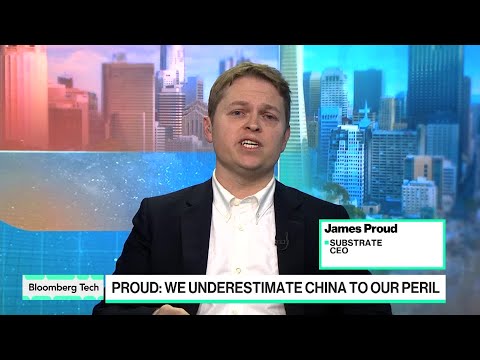
What I really want to get your perspective on is China's domestic supply right now and how much you've long been concerned about our exposure in the US to Taiwan and the like. How much is China making strides. Yeah, well, I think when we talk about China's ability to have an advanced semiconductor sector, the question is, can China make fabs.Can they make equipment. The question has always been, will they have access to EUV lithography tools or be able to make their own. And the reporting that came out yest ...
X @Nick Szabo
Nick Szabo· 2025-12-18 08:00
RT arctotherium (@arctotherium42)China got around this the obvious way: by recruiting Chinese engineers who worked for ASML. Do people understand real life isn't a Paradox game and a pop crossing borders doesn't make them "yours"? ...
恒指升233點,滬指升45點,標普500跌78點
宝通证券· 2025-12-18 04:07
Market Performance - The Hang Seng Index (HSI) rose by 233 points or 0.9%, closing at 25,468 points, driven by gains in the mainland market[1] - The Shanghai Composite Index increased by 45 points or 1.2%, closing at 3,870 points, with a total turnover of 766.8 billion yuan[2] - The total market turnover in Hong Kong decreased to 183.141 billion yuan[1] Currency and Monetary Policy - The RMB/USD central parity rate was adjusted up by 29 points to 7.0573[2] - The People's Bank of China conducted a 468 billion yuan reverse repo operation at a rate of 1.4%, resulting in a net withdrawal of 143 billion yuan for the day[2] Real Estate Financing - In November, the total bond financing in the real estate sector reached 62.04 billion yuan, a year-on-year increase of 28.5%[3] - The average bond financing interest rate was 2.66%, down by 0.07 percentage points year-on-year[3] Technology Development - Chinese scientists have built a prototype extreme ultraviolet lithography (EUV) machine, aiming to produce operational chips by 2030[4] Strategic Partnerships - Minth Group announced a strategic cooperation agreement with a leading Chinese robotics company to develop intelligent robots in Europe over three years[5] - China Duty Free Group won the operating rights for duty-free shops at Shanghai Pudong and Hongqiao airports for a period of 5+3 years starting in 2026[5]