Perplexity

Search documents
美国“黑五”销售额同比增4.1%,AI流量暴增600%,通胀和“K型经济”依旧是主题
Hua Er Jie Jian Wen· 2025-11-30 01:25
Core Insights - The resilience of American consumers during this year's Black Friday exceeded market expectations, leading to a robust growth in retail sales, but this growth masks the reality of limited purchasing power and increasing economic disparity under high inflation [1][2] - The spending behavior of affluent and low-income groups has shown a significant "K-shaped" divergence, with inflation anxiety and price sensitivity becoming core variables driving market sentiment [1][2] Retail Sales Performance - According to SpendingPulse, retail sales in the U.S. (excluding automobiles) increased by 4.1% year-on-year during Black Friday, surpassing last year's growth of 3.4% [1] - Adobe Analytics reported that online shoppers spent $11.8 billion, reflecting a 9.1% increase year-on-year, while Mastercard data indicated a 10.4% growth in online sales, significantly outpacing the 1.7% increase in physical store sales [3] Impact of AI on E-commerce - This year marked the first significant involvement of generative AI in consumer shopping decisions, with AI-related traffic to U.S. e-commerce sites surging by 600% compared to last year [2][3] - Approximately 48% of surveyed consumers indicated plans to use AI to assist in online shopping during the holiday season [3] Economic Disparity - The U.S. economy is exhibiting a clear "K-shaped" trend, with low and middle-income consumers reducing spending while high-income individuals continue to spend lavishly on luxury goods and travel [4] - Experts suggest that the nominal spending growth of 4.1% may translate to a real growth of only around 1% when accounting for the current inflation rate of approximately 3% [4] Consumer Behavior and Price Sensitivity - Price remains a decisive factor influencing consumer choices, with 85% of consumers anticipating further price increases due to potential tariffs under President Trump's policies [6] - Retailers that emphasize value for money, such as Walmart and TJ Maxx, have reported strong sales performance, while others like Target face challenges with lower foot traffic [6] Credit Pressure and Future Outlook - The usage of "Buy Now, Pay Later" payment options has significantly increased, with projected transaction volumes reaching $20.2 billion from November 1 to December 31, indicating cash flow pressures among some consumers [7] - Despite cost-of-living pressures, consumers still demonstrate spending capacity, with expectations for Cyber Monday sales to reach $14.2 billion, a 6.3% increase year-on-year [7]


贝索斯、杨立昆纷纷“出山”创业:AI黄金十年还是泡沫前夜?
Sou Hu Cai Jing· 2025-11-28 15:03
Core Insights - The return of Jeff Bezos and Yann LeCun to the AI sector marks a significant shift in the industry, with their contrasting approaches aiming to address the real bottlenecks in AI technology and its application in creating tangible value [1][3][4] Group 1: Major Players Re-entering the AI Arena - Jeff Bezos has taken on a leadership role in the AI startup "Project Prometheus," securing $6.2 billion in funding, making it one of the best-funded early-stage AI companies globally [4][5] - Yann LeCun, a Turing Award winner, is establishing a new company focused on Advanced Machine Intelligence (AMI), with Meta as a strategic partner, emphasizing foundational research over immediate commercialization [5][6] Group 2: Diverging Paths in AI Development - Bezos's "physical AI" approach targets the optimization of engineering manufacturing in sectors like hardware, automotive, and aerospace, aiming to reduce production cycles significantly [5][7] - LeCun's focus on AMI seeks to address the fundamental challenges of AI, such as understanding the physical world and developing reasoning capabilities, which he believes are essential for the next AI revolution [8][9] Group 3: Capital and Talent Dynamics - The influx of capital into the AI sector is accelerating, with 57% of new unicorns being AI companies, and the funding environment becoming increasingly competitive [10][11] - Talent acquisition has intensified, with companies offering substantial compensation packages to attract top AI researchers, further reshaping the competitive landscape [11][12] Group 4: Industry Trends and Future Outlook - The AI industry is transitioning from a phase of technological explosion to one of deep industry engagement, characterized by a focus on foundational innovation and vertical integration [9][10] - The potential for AI to drive significant advancements in manufacturing and healthcare is evident, with applications already demonstrating substantial efficiency gains and cost reductions [13][14] Group 5: Balancing Opportunities and Risks - While the enthusiasm for AI's potential is high, concerns about a possible bubble due to overvaluation and a lack of sustainable business models are emerging [14][16] - The industry's future will depend on maintaining a balance between innovation quality and commercial viability, as well as navigating regulatory uncertainties [14][16]


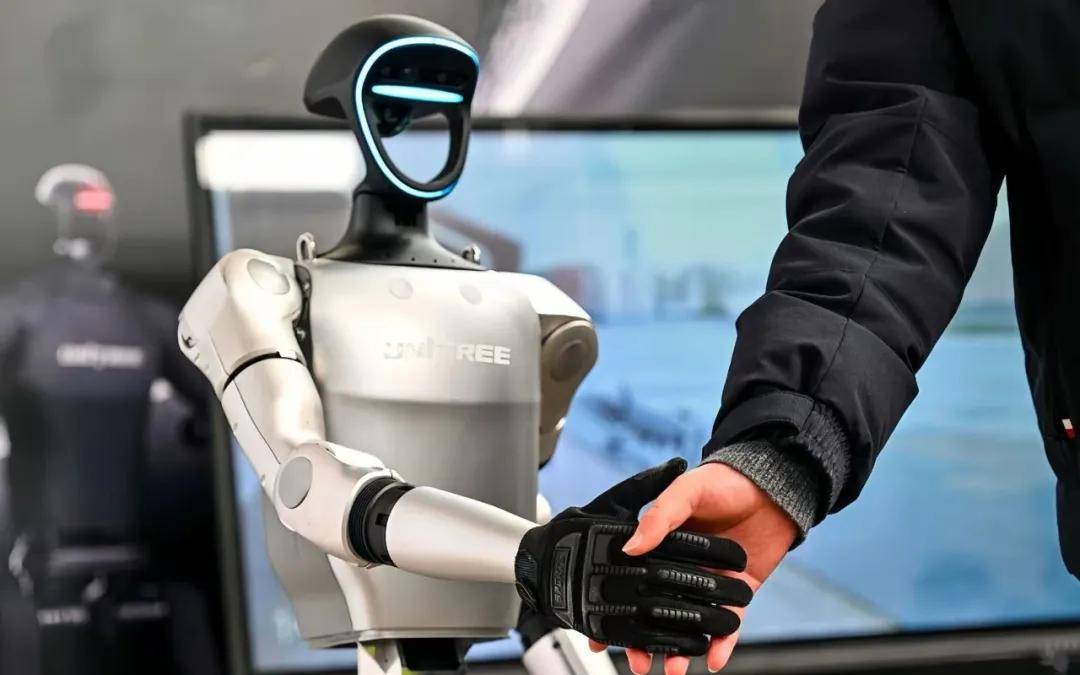
Sorry, mom. The shopping bots suggested a bathrobe for Christmas
Fortune· 2025-11-27 19:40
Core Insights - New AI shopping tools are emerging as US consumers are expected to spend a record $253 billion online during the holiday season, indicating a shift in consumer behavior towards autonomous agents for product research and purchases [2][3] - The concept of agentic commerce, where automated agents assist in transactions, is projected to grow into a $1 trillion market in the US by 2030, reflecting consumer demand for innovative shopping experiences [3] - Despite the potential, the current phase of agentic commerce is experimental, with companies facing technical challenges and the need for effective partnerships [4][9] Company Developments - Amazon has introduced its AI shopping assistant, Rufus, which aims to enhance the shopping experience by providing personalized recommendations and facilitating purchases [1][12] - OpenAI has launched a free ChatGPT tool that generates personalized gift-buying guides, showcasing the trend towards AI-driven shopping assistance [1][16] - Walmart is collaborating with AI companies to allow direct purchases through ChatGPT, indicating a willingness to integrate AI into their shopping platforms [13][14] Consumer Behavior - Over one-third of US consumers have utilized AI tools for online shopping, primarily for product research, highlighting a growing acceptance of AI in the shopping process [3] - The user experience of AI shopping assistants is seen as more intuitive compared to traditional search methods, with early indications suggesting that users referred by AI are more prepared to make purchases [6][16] Technical Challenges - Current shopping bots have not significantly improved the shopping experience, with issues related to personalization and accuracy in pricing and delivery estimates [7][10] - Retailers' websites were not originally designed for automated purchasing, leading to limitations in how effectively AI can facilitate transactions [8] Future Outlook - Partnerships with major retailers and payment processors are essential for AI companies to enable seamless shopping experiences directly within their applications [14] - The development of AI tools that can effectively communicate and navigate product catalogs is ongoing, with companies like Microsoft and Google working on solutions to enhance bot capabilities [9]



Wall Street Has a Mixed Opinion on PayPal Holdings (PYPL), Here’s Why
Yahoo Finance· 2025-11-27 10:51
Core Viewpoint - PayPal Holdings, Inc. (NASDAQ:PYPL) is experiencing a mixed reception from Wall Street following its fiscal Q3 2025 results, where it exceeded expectations but saw a stock decline of over 17% since the announcement [1]. Financial Performance - PayPal raised its full-year guidance, now expecting GAAP EPS in the range of $5.11 – $5.15, an increase from the previous range of $4.90 – $5.05 [2]. Executive Actions - The decline in PayPal's share price is attributed to three executives selling shares worth more than $1.5 million [2]. Analyst Ratings - Wall Street analysts maintain a cautiously optimistic outlook, with Bryan Keane from Citi reiterating a Hold rating without price targets, and Iris Gao from DBS also reiterating a Hold rating with a price target of $70 [3]. Strategic Partnerships - PayPal announced a strategic partnership with Perplexity, which is launching a free agentic shopping product for US users, enabling direct purchases from over 5,000 merchants through PayPal's payment platform [4].

AI is reshaping how Americans shop. Here’s how Target’s top tech leader says the retailer is adapting
Yahoo Finance· 2025-11-26 17:10
Core Insights - Target's chief information and product officer, Prat Vemana, recently engaged in a new shopping experience by purchasing sleepwear through OpenAI's ChatGPT, indicating a shift in consumer behavior towards AI-assisted shopping [1][2] Group 1: Retail Trends - Retailers are experiencing a significant transformation as they approach the holiday season, with U.S. spending projected to exceed $1 trillion for the first time [2] - Consumers are evolving from traditional web-based shopping to mobile commerce and now to AI-driven platforms like ChatGPT, indicating a new phase in shopping behavior [2] Group 2: Target's Strategy - Target aims to leverage AI technologies, including integration with ChatGPT, to reach its 800 million weekly active users and provide personalized shopping recommendations [3] - The company has introduced an AI-powered gift finder on its website and app, allowing users to receive natural-language responses to gift inquiries [3] Group 3: Financial Performance - Despite ongoing sales challenges, Target has seen a positive trend in digital sales, with a 2.4% increase in comparable digital sales reported for the fiscal third quarter [4][5] - Digital comparable sales have risen for seven consecutive quarters, showcasing a strong performance in the digital segment [5] Group 4: AI Implementation - Target has rolled out ChatGPT Enterprise to approximately 18,000 employees for various internal applications, including data summarization and spreadsheet queries [6] - A recent training session on ChatGPT was attended by 4,300 employees, with a satisfaction rate of 92% reported [6]
PayPal and Perplexity Debut Instant Buy Ahead of Black Friday Shopping
PYMNTS.com· 2025-11-25 20:48
Core Insights - PayPal and Perplexity launched Instant Buy, enabling U.S. consumers to make purchases directly within Perplexity's AI chat, streamlining the shopping experience from product discovery to checkout [1][2] - The feature utilizes PayPal's identity and payment systems while maintaining the merchant relationship with retailers, allowing merchants to engage in AI-driven commerce without extensive integration efforts [3][4] Group 1: Product Features and Benefits - Instant Buy compresses the shopping process into a single conversational thread, allowing users to request product recommendations, compare items, and complete purchases within the same interface, reducing friction in the shopping experience [5] - PayPal is offering a promotional incentive of 50% back on the first Instant Buy transaction, capped at $50, to encourage usage during the holiday shopping season [3] Group 2: Market Context and Future Developments - The rollout of Instant Buy expands Perplexity's previous shopping features into a full transactional environment supported by over 5,000 merchants, indicating a significant growth in AI-driven commerce [4] - The companies plan to introduce additional capabilities in early 2026, including enhanced catalog connectivity and a broader range of merchant categories, reflecting ongoing innovation in the sector [6] Group 3: Industry Trends - There is a growing trend among retailers and payment providers to implement AI-led purchase flows as consumer behavior shifts towards using conversational systems for product discovery [6] - The commerce ecosystem is experiencing tensions between large platforms and third-party AI agents, exemplified by a conflict between Amazon and Perplexity, highlighting the challenges of agentic commerce [7]
X @TechCrunch
TechCrunch· 2025-11-25 19:37
OpenAI and Perplexity are launching AI shopping assistants, but competing startups aren’t sweating it https://t.co/BZPoDSqJrG ...
三个00后,干出700亿独角兽
投中网· 2025-11-23 07:04
Core Insights - Mercor, founded less than three years ago, has raised $350 million in its latest funding round, achieving a valuation of $10 billion, making it the youngest AI infrastructure unicorn [3][4] - The company initially focused on recruitment but pivoted to training AI models by hiring skilled professionals, leading to a significant increase in valuation [3][4] - Mercor's annual revenue is nearing $450 million, with a profit of $6 million in the first half of the year, positioning it to reach $500 million in annual recurring revenue faster than competitors [4][8] Company Overview - Mercor's founders, all born in 2004 and recipients of the Peter Thiel Scholarship, dropped out of prestigious universities to start the company, leveraging their debate team experience to address employment market issues [7][11] - The company has expanded its contractor base to over 30,000 experts across various fields, including doctors and lawyers, serving major clients like OpenAI and Meta [8][9] - Mercor's platform allows clients to quickly assemble interdisciplinary teams for AI training, distinguishing it from competitors focused on general recruitment or broad data labeling [8][9] Funding and Growth - Mercor's funding journey includes a seed round of $3.6 million in 2023, Series A of $32 million in 2024, Series B of $100 million in 2025, and the recent $350 million round, with notable investors like Peter Thiel and Jack Dorsey [9] - The company generates over $1.5 million in daily revenue and plans to expand its platform into healthcare and legal services, where specialized knowledge is critical [9][14] Industry Trends - The rise of young entrepreneurs in Silicon Valley reflects a shift in investment focus towards those who are digital natives and can adapt quickly to the fast-evolving AI landscape [11][14] - The trend of investing in younger founders is driven by the rapid pace of AI development, where traditional experience may become a liability [14][15] - Initiatives like the Peter Thiel Scholarship and Y Transformers program in China support young entrepreneurs, indicating a growing ecosystem for AI startups led by the youth [15]

扒完英伟达的84笔投资,我们发现一个秘密丨投中嘉川
投中网· 2025-11-23 07:04
Core Insights - The article highlights Nvidia's significant financial success and strategic investments in AI startups, indicating its dominant position in the AI revolution. Nvidia's operating profit surged by 65% year-over-year to $36 billion, while net profit also increased by 65% to $31.9 billion, marking a nearly 19-fold increase since the launch of ChatGPT 3.5 in November 2022 [6][8]. Investment Overview - Nvidia has made 251 investments in 244 startups since 2022, with 84 investments in 74 startups from January to November 2023 alone, surpassing the total of 76 investments made in 2024 [8][12]. - The majority of these investments focus on AI-related fields, particularly software applications, computational power, and energy, with 39 AI application companies receiving funding [12][14]. - The total funding for model-related companies reached over $28.6 billion, with a significant portion coming from a single round of financing by Musk's xAI [14][16]. Investment Signals - Nvidia's investments signal a narrowing focus on model-layer companies, indicating a trend towards consolidation in the AI model sector [20][23]. - The company is addressing energy supply issues by investing in nine energy or resource management startups, including those focused on nuclear fusion and renewable energy-driven data centers [24][27]. - A significant portion of Nvidia's investments (34 out of 39 AI software applications) targets enterprise clients, reflecting a strategic shift towards more stable and predictable revenue sources [29][32]. Financial Strategy - Nvidia's frequent investments are driven by its substantial cash reserves, which reached $60.6 billion, allowing for aggressive stock buybacks and dividends [37][40]. - The company aims to diversify its revenue sources, as 50% of its revenue currently comes from three clients, reducing reliance on a few major customers [40][42]. - Nvidia is also focused on exploring new business opportunities, as data center revenue accounted for 89% of total revenue, while autonomous driving revenue remains minimal [42].


靠创始人亲自假扮AI起家,如今估值10亿美元!印度CEO公开反内卷:从不在10点前起床,也不开例会
Sou Hu Cai Jing· 2025-11-23 04:32
Core Insights - The article discusses the rise of Fireflies, an AI startup that achieved a valuation of $1 billion, highlighting its unique approach to business and the challenges it faced in its early days [2][3][4]. Company Overview - Fireflies, an AI note-taking startup, claims to serve 75% of Fortune 500 companies and has maintained profitability since 2023, with annual growth rates in the triple digits [2][3]. - The company has developed a feature called "Talk to Fireflies," an interactive AI meeting assistant that integrates with major platforms like Zoom and Google Meet, supporting over 60 languages [3][4]. - Fireflies has over 20 million users and serves more than 500,000 organizations, focusing on extracting key information from meetings to enhance communication efficiency [4]. Founders and Early Challenges - The founders, Krish Ramineni and Sam Udotong, met at the University of Pennsylvania and later studied at MIT. Udotong has a background in aerospace engineering and computer science, while Ramineni previously worked at Microsoft [5]. - In its early days, Fireflies provided AI transcription services that were actually performed manually by the founders, who attended meetings and took notes themselves [6][13]. Business Philosophy - Ramineni emphasizes a non-traditional approach to business, rejecting the Silicon Valley norm of high financing and spending, and instead focusing on profitability and sustainable growth [3][8]. - The company operates with a fully remote workforce across multiple time zones, promoting a culture of trust rather than micromanagement [8][12]. Controversy and Public Reaction - The revelation of Fireflies' early practices, where the founders pretended to have an AI assistant, sparked criticism online, with some users expressing concerns about ethical implications and trust [15][17]. - Despite the backlash, some commentators defended the founders, arguing that their approach was a common startup strategy to validate market demand before fully automating processes [19][20].