
Anthropic

Search documents
8500亿美元!OpenAI刷新AI公司估值纪录,领先第二名2.2倍
Sou Hu Cai Jing· 2026-02-20 14:57
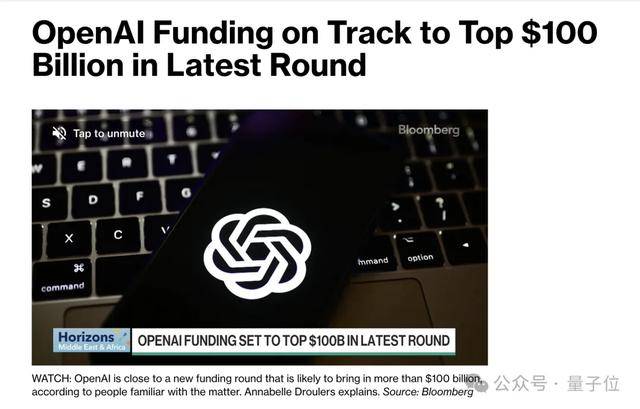
Group 1 - OpenAI is nearing the completion of a new funding round, expected to raise over $100 billion, surpassing its previous record of $40 billion set in early 2025 [1] - The company's overall valuation may exceed $850 billion, making it the highest-valued company in the AI sector, although it would fall to second place behind SpaceX if its valuation of approximately $1.25 trillion is included [4] - The funding round includes major strategic investors such as Amazon, SoftBank, NVIDIA, and Microsoft, with SoftBank having already invested $34.6 billion for an 11% stake [7][8] Group 2 - The initial discussions for OpenAI's valuation were around $830 billion, which has now been adjusted to over $850 billion [7] - Amazon is expected to invest up to $50 billion, SoftBank up to $30 billion, and NVIDIA is discussing a $20 billion investment, with funds being allocated in tranches rather than a lump sum [8] - In the AI landscape, Google has recently released Gemini 3.1, reclaiming its position in AI models, while rumors suggest upcoming updates for GPT, including a new adult mode and GPT 5.3 [9]

谷歌Gemini 3.1 Pro重磅发布:推理能力翻倍,未来AI格局将如何变革?
Sou Hu Cai Jing· 2026-02-20 12:39
Core Insights - Google has officially launched its latest AI model, Gemini 3.1 Pro, which has doubled its reasoning capabilities compared to its predecessor, achieving a score of 77.1% on the ARC-AGI-2 benchmark, marking a significant breakthrough in AI technology [3][4]. Group 1: Model Performance - Gemini 3.1 Pro shows a notable improvement in reasoning ability, particularly excelling in handling new logical patterns, indicating major advancements in Google's reasoning capabilities [3]. - Since its release in November last year, Gemini 3 has performed exceptionally well in various internal task tests, surpassing several competitors, including Microsoft's Copilot, and has received high user ratings, laying a solid foundation for Gemini 3.1 Pro [3]. Group 2: Recent Upgrades - The release of Gemini 3.1 Pro follows a significant upgrade to Gemini 3 Deep Think, which introduced new capabilities in chemistry and physics, as well as breakthroughs in mathematics and coding [4]. - Google aims to address complex research challenges with the upgrades, positioning Gemini 3.1 Pro as a core intelligence that facilitates new breakthroughs [4]. Group 3: Competitive Landscape - While Gemini 3.1 Pro has made progress in reasoning capabilities, Anthropic's Claude Opus 4.6 remains at the top of the text capability rankings, showcasing its advantages in reasoning and safety [5]. - The introduction of Gemini 3.1 Pro adds new competitive dynamics to the market, with the AI model competition expected to intensify as new models like GPT-5.3 emerge [5]. - The lifecycle of AI models extends beyond a single release, involving continuous testing and iteration for optimization, posing a challenge for Google to maintain its competitive edge [5].

7天狂飙超250%!AI大模型,彻底爆发!
证券时报· 2026-02-20 12:32
Core Viewpoint - The article highlights the significant rise in the stock prices and market valuations of major AI model companies, particularly Zhiyu and MiniMax, driven by advancements in their AI models and new financing rounds in the industry [1][5][10]. Group 1: Stock Performance - Zhiyu, known as the "first global AI model stock," saw its stock price increase by over 42% on the first trading day of the Year of the Horse, with a market capitalization exceeding 320 billion HKD [1]. - Since February 9, Zhiyu's stock has surged over 250% over seven trading days, while MiniMax's stock has risen over 110% in the same period [1][5]. - As of February 20, Zhiyu's cumulative increase in February is over 220%, and MiniMax's is over 105% [5]. Group 2: Model Developments - Zhiyu recently launched its flagship model GLM-5, designed for complex system engineering and long-range agent tasks, achieving performance levels comparable to top international models [6]. - GLM-5 ranks fourth globally and first among open-source models, marking a significant achievement for domestic models [6]. - MiniMax introduced its latest flagship programming model, MiniMax M2.5, which is designed for agent scenarios and competes with leading international models [8]. Group 3: Financing and Valuation - OpenAI is expected to raise over 100 billion USD in its latest financing round, potentially increasing its valuation to over 850 billion USD, a 70% increase from the end of last year [3][10]. - The domestic AI model company Kimi has seen its valuation double in its latest financing round, indicating strong investor interest [3][10]. - World Labs, founded by AI pioneer Fei-Fei Li, completed a new financing round of 1 billion USD, focusing on enhancing spatial intelligence through world models [11]. Group 4: Market Trends and Future Outlook - The article notes a competitive landscape in the global AI model sector, with major companies investing heavily to capture consumer markets [10]. - The integration of AI with robotics is expected to drive significant growth in the coming years, with predictions of a substantial increase in market demand for embodied intelligence [9]. - The Chinese AI market is projected to grow from 93.7 billion CNY in 2022 to 160.7 billion CNY in 2024, with a compound annual growth rate of 31% [11].

X @Elon Musk
Elon Musk· 2026-02-20 10:33
RT X Freeze (@XFreeze)OpenAI, Anthropic, and Google seem to have no clear ethics. They're still debating and they don't know what it should be, so whenever you ask a controversial question, they hit you with a canned answer: "Sorry, I can't help with that"They're woke as hellThey're are literally programmed to hate the very country they now live in. They're woke as hell, just like the crazy liberals who hate America but never want to live anywhere else. These AIs are trained to mimic that same, lunatic beha ...
当着莫迪的面,又“翻车”了!
Xin Lang Cai Jing· 2026-02-20 10:33
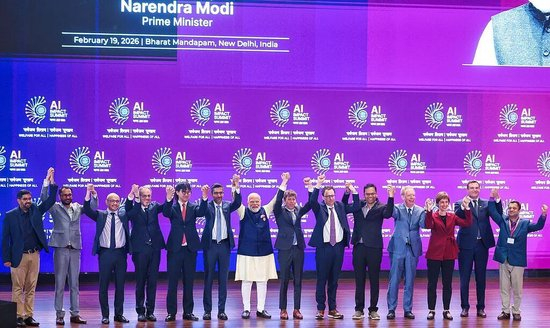
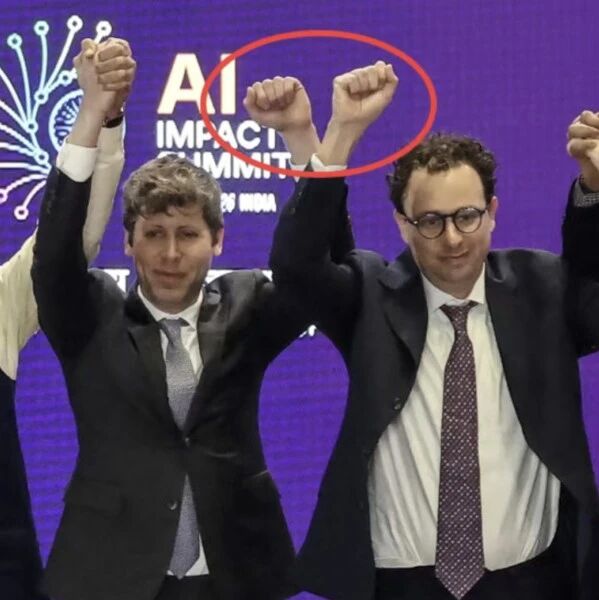
当地时间2026年2月19日,印度新德里,印度总理莫迪(中)与人工智能企业负责人在人工智能影响力 峰会上合影。视觉中国 阿莫代伊曾在OpenAI出任副总裁,2021年初离职,带走多名研究人员,共同创立Anthropic公司。阿莫 代伊与奥尔特曼这两个昔日同事多次在公开场合表示"看不上"对方的商业模式和理念。 两人拒绝握手在社交媒体引发热议,有人评论说:"萨姆·奥尔特曼和达里奥·阿莫代伊拒绝握手,却举起 了拳头,这真是尴尬一刻。" 硅谷大佬拒绝握手 印度AI峰会"槽点"不断 正在印度举行的人工智能影响力峰会频现"大型翻车现场",继有当地大学拿中国产机器狗冒充自主研发 成果引发群嘲后,19日会场又现尴尬一幕:在印度总理莫迪出席的场合,两名与会嘉宾在合影环节拒绝 握手。 硅谷大佬"不对付" 合影"掉链子" 现场拍摄的视频和图片显示,莫迪和与会嘉宾站成一排,手牵手举过头顶,面带笑容。 然而,美国开放人工智能研究中心(OpenAI)首席执行官萨姆·奥尔特曼同身边的Anthropic公司首席执 行官达里奥·阿莫代伊各自握拳、没有握手,导致一排"手链"出现"断点"。 来源:参考消息 峰会问题频出 盖茨"临阵"缺席 峰会16 ...
印度想多了,硅谷没少想
虎嗅APP· 2026-02-20 09:23
Core Viewpoint - The article discusses the recent AI summit in New Delhi, highlighting the contrasting objectives of India and Silicon Valley companies, where India aims for global leadership in AI governance while Silicon Valley focuses on business opportunities and market growth [5][66][92]. Group 1: Summit Highlights - The AI summit in New Delhi was described as the largest and highest-profile AI event in Asia, attracting significant attention from major tech leaders [5][6]. - A notable moment during the summit was when OpenAI's Sam Altman and Anthropic's Dario Amodei did not join the hand-holding gesture symbolizing unity among tech leaders, indicating underlying tensions [11][12][15]. - Nvidia CEO Jensen Huang's absence was significant, as he represents a crucial player in AI infrastructure, particularly in chip supply, which India lacks [18][19][20]. Group 2: Investment and Agreements - Major agreements were announced during the summit, including Google's $15 billion investment in AI infrastructure in India, OpenAI's partnership with Tata Group for a data center, and Microsoft's commitment to invest $50 billion globally by 2030, with India as a key focus [29]. - Despite the high-profile agreements, the article suggests that the underlying relationships among the companies are competitive rather than collaborative, reflecting a cautious approach to partnerships [30][34]. Group 3: India's AI Landscape - India has a strong pool of English-speaking engineers and a large market, but it faces significant challenges, including reliance on foreign chips and a lack of top-tier native AI models [43][58][59]. - The Indian government has initiated the India AI Mission, investing over $1 billion to build a public computing pool, but the country still struggles with infrastructure and regulatory stability [45][62]. Group 4: Diverging Objectives - India's ambition is to position itself as a global AI hub and a voice for developing countries, while Silicon Valley companies are primarily interested in market expansion and immediate business opportunities [67][68]. - The article emphasizes that while India seeks to establish itself as a leader in AI governance, Silicon Valley's focus remains on transactional relationships and market-driven strategies [70][72]. Group 5: Conclusion - The summit illustrated the disconnect between India's aspirations and Silicon Valley's pragmatic approach, with India wanting to assert its role in AI governance while tech companies prioritize business interests [92][94]. - The absence of a unified commitment from Silicon Valley leaders, as symbolized by the empty seat of Jensen Huang and the unjoined hands of Altman and Amodei, reflects the ongoing tension between collaboration and competition in the AI space [82][96].



为对抗中国AI,美国想给这个冷战产物披上“新羊皮”
Guan Cha Zhe Wang· 2026-02-20 07:58
Core Viewpoint - The U.S. government is launching a new "Tech Corps" initiative to send thousands of American science and math graduates abroad to enhance foreign reliance on U.S. technology and reduce the global prevalence of Chinese competitive products [1][5]. Group 1: Initiative Overview - The "Tech Corps" program aims to deploy up to 5,000 American volunteers and advisors to partner countries over the next five years, focusing on promoting the adoption of U.S. AI hardware and software [1][5]. - The initiative will be announced by Michael Kratsios at the "India AI Impact Summit," marking a new mission for the historically significant "Peace Corps" [1][4]. Group 2: Historical Context - The original "Peace Corps" was established in 1961 to promote U.S. foreign policy through volunteer work in developing countries, serving as a tool for U.S. soft power [2]. Group 3: Strategic Goals - The Trump administration views winning the global AI competition as a top priority, aiming to increase the export of U.S. technology, including advanced processors from companies like NVIDIA [5]. - The initiative is designed to counter China's growing influence in AI, particularly in regions like South America, Africa, and parts of Europe, where China has been active in infrastructure development [5][7]. Group 4: Funding and Implementation - Funding for the tech initiative will come from corporate and philanthropic donations, with the organization receiving approximately $410 million in funding from Congress for the fiscal year 2026 [5][6]. - Recruitment and training for technology volunteers will begin this year, with an initial target of attracting 500 professionals for the first projects [6]. Group 5: Competitive Landscape - The initiative is expected to intensify competition between the U.S. and China in the Southern Hemisphere, where Chinese tech companies are gaining ground with low-cost products [7]. - Recent comments from Microsoft highlight concerns that U.S. AI companies are being outpaced by Chinese competitors, particularly in emerging markets where open-source models are rapidly gaining traction [8][10].
智谱与MiniMax市值双双突破3000亿港元,Kimi新一轮超7亿美元融资将交割,AI大模型赛道持续升温
Jin Rong Jie· 2026-02-20 07:58
Group 1 - The AI large model sector in Hong Kong continues its strong performance post-Spring Festival, with companies like Zhipu (02513.HK) and MINIMAX-WP (00100.HK) seeing their market values exceed 300 billion HKD, collectively surpassing 580 billion HKD, outpacing well-known tech firms like Trip.com, Kuaishou, and JD.com [1][2] - Zhipu and MiniMax went public on January 8 and 9, raising nearly 10 billion HKD, with share prices of 116.20 HKD and 165 HKD respectively, both companies have recorded several-fold increases in their stock prices since listing [2][3] - The primary market remains active, with Kimi, under the Dark Side of the Moon, set to complete a new round of financing exceeding 700 million USD shortly after raising 500 million USD, with a latest valuation surpassing 10 billion USD [3] Group 2 - Recent reports indicate that multiple large models are releasing new features or integrating ecosystems, potentially leading to a new wave of innovation in the sector, shifting the internet value chain from traditional traffic scale to a focus on execution, capability invocation, governance, and result-based business models [4] - The AI application sector is transitioning from being a technology follower to becoming the core narrative of a new technological era, with accelerated commercialization, restructured user behavior, and clearer profit models, indicating a shift in AI investment focus from "computing infrastructure" to "scenario realization" [4]

李飞飞,刚刚又融70亿
3 6 Ke· 2026-02-20 07:31
Core Insights - World Labs, founded by Fei-Fei Li, has completed a new financing round of $1 billion, bringing its valuation to $5 billion within just 16 months of establishment [1][2][4]. - The company has attracted significant investments from major players like NVIDIA and AMD, as well as new investors including Autodesk, which invested $200 million [3][4]. - World Labs aims to focus on robotics and scientific discovery, actively recruiting engineers to develop core technologies for autonomous navigation and 3D reconstruction [4][5]. Company Overview - World Labs was founded by Fei-Fei Li, a prominent figure in AI, who previously initiated the ImageNet project that significantly advanced deep learning in computer vision [5][6]. - The company has raised a total of approximately $2.3 billion in funding since its inception, with its latest round pushing its valuation to $5 billion [4][6]. - The founding team includes notable scientists and alumni from prestigious institutions, reflecting a strong academic and professional background [6][8]. Product and Technology - World Labs launched its first commercial product, Marble, which generates persistent 3D worlds from various input formats using advanced technologies like Neural Radiance Fields (NeRF) [4][5]. - The business model is based on a freemium approach, allowing users to generate content for free up to four times, with paid plans available for $95 per month [4]. - The company is set to collaborate with Autodesk to enhance its research and modeling capabilities, aiming to build physical AI that enhances human creativity [5][8]. Industry Context - The AI sector is experiencing a wealth creation surge, with companies like Anthropic and Databricks achieving valuations of $380 billion and over $134 billion, respectively [9][11]. - In China, AI companies like Zhiyuan and MiniMax have seen their market capitalizations soar, reflecting the global trend of rising valuations in the AI industry [11]. - The current investment landscape prioritizes "AI content" as a key evaluation criterion for projects, indicating a strong market focus on AI-driven innovations [11].
Vitalik 批评延长人类与 AI 反馈距离,警示潜在不可逆风险
Xin Lang Cai Jing· 2026-02-20 06:13
Core Viewpoint - Vitalik Buterin criticizes Sigil's Web4.0 proposal for extending the feedback distance between humans and AI, arguing that it leads to the generation of low-quality content rather than solving real problems [1] Group 1 - Buterin believes that the increasing power of AI poses irreversible risks to humanity, suggesting that even developers may regret their decisions in the future [1] - The goal of Ethereum is to liberate humanity rather than create independent AI that leaves human conditions unchanged or worsened [1] - Current AI models operated by OpenAI and Anthropic are not truly autonomous, perpetuating a centralized trust assumption that contradicts the spirit of Ethereum [1] Group 2 - The exponential growth of AI is unstoppable, and the urgent task is not to accelerate it but to choose the right direction to avoid negative attractors [1]