
Neuralink

Search documents
X @Tesla Owners Silicon Valley
Tesla Owners Silicon Valley· 2025-07-01 17:09
RT Tesla Owners Silicon Valley (@teslaownersSV)We have 12 incredible panels and 22 panelist 👥 lined up for @theXtakeover event on July 26th!Everything from Tesla ⚡️, SpaceX 🚀, Neuralink 🧠, AI 🤖, Crypto 💰, and more!Register today at - https://t.co/T5sY3Z9t2o https://t.co/Xstc1J9D69 ...

科创院士谈 | 郑海荣:一定要让“脑”控制“机”,而不是“机”控制“脑”
Di Yi Cai Jing· 2025-07-01 15:41
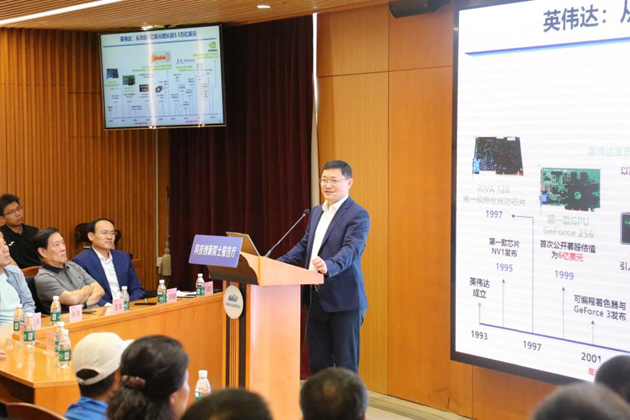
脑机接口(BCI)无疑是当下最热门的前沿科技话题之一。近日,马斯克旗下脑机接口公司Neuralink展示他们最新的研 究进展,将各界对这一话题的讨论推向新的高潮。 脑机接口亟需科学界、产业界及国家战略层面的协同关注与投入 在此背景下,6月30日上午,在位于河套深港科技创新合作区的深圳创新发展研究院"院士报告厅",中国科学院院 士、南京大学副校长郑海荣,为观众做了一场"脑机接口与生物智能"的演讲。 郑海荣认为,脑机接口是掌握未来人工智能最高形态的重要抓手,也是解决未来重大医疗需求的关键路径。基于其兼 具变革性与颠覆性的双重特征,亟需科学界、产业界及国家战略层面的协同关注与投入。 最需要脑机接口的领域 "人类大脑就是一个生物的宇宙,我们外面是一个物理的宇宙。如何把生物的宇宙和物理的宇宙连接起来,这是重要 的科学命题。"郑海荣说。 他以科幻电影《阿凡达》中通过意念驾驭飞龙的场景为引,阐释了脑机接口技术"读取"大脑神经信号并"写入"反馈指 令以实现控制的核心原理。 郑海荣指出,当前脑机接口研究的核心目标之一,是深入解析大脑的功能特征,尤其是与疾病相关的神经机制。例 如,通过植入式装置,有望帮助中风患者或失明人士重建因 ...

X @Tesla Owners Silicon Valley
Tesla Owners Silicon Valley· 2025-07-01 15:29
Neuralink’s 6th Patient: Rob Greiner @greiner_ro52817 https://t.co/Wt4LTqAmfl ...
X @Tesla Owners Silicon Valley
Tesla Owners Silicon Valley· 2025-07-01 14:03
We have 12 incredible panels and 22 panelist 👥 lined up for @theXtakeover event on July 26th!Everything from Tesla ⚡️, SpaceX 🚀, Neuralink 🧠, AI 🤖, Crypto 💰, and more!Register today at - https://t.co/T5sY3Z9t2o https://t.co/Xstc1J9D69 ...
Neuralink发布重大突破,关注脑机接口迭代进展
Changjiang Securities· 2025-07-01 12:26
Investment Rating - The report maintains a "Positive" investment rating for the industry [5]. Core Insights - Neuralink, a leading brain-computer interface company, showcased significant advancements in its technology, indicating a potential acceleration in the commercialization of brain-computer interfaces [2][10]. - The report suggests focusing on three main investment themes: 1) domestic mapping of the advanced overseas invasive brain-computer interface supply chain; 2) product deployment of non-invasive brain-computer interfaces in consumer scenarios; 3) downstream application targets related to brain-computer interfaces [10]. Summary by Sections Event Description - On June 27, Neuralink released a one-hour video demonstrating its latest research achievements and product development directions [3]. Event Commentary - The report highlights the impressive progress of Neuralink's brain-computer interface technology, which has significantly improved the quality of life for its seven trial participants, including patients with spinal cord injuries and ALS [10]. - Future plans include the development of a "full brain interface" with milestones set for 2025 to 2027, aiming to decode conscious speech and restore vision [10]. Product Overview - Neuralink currently has three products targeting different scenarios: 1) "Telepathy" for patients with motor disabilities; 2) "Blindsight" for visually impaired individuals; 3) "Deep" for neurological disorders [10].
中科院院士郑海荣:马斯克的脑机接口方案“太落后了”
经济观察报· 2025-07-01 11:30
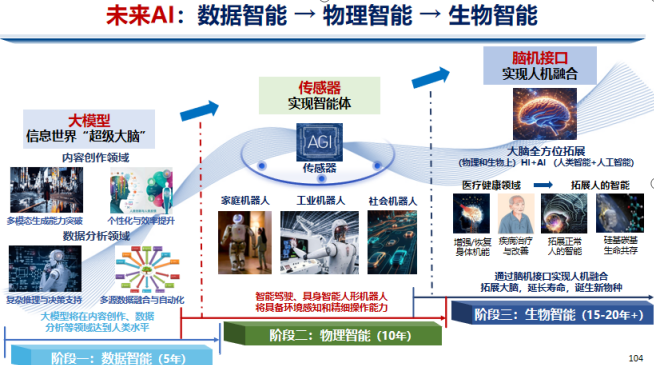
Core Viewpoint - The article emphasizes the need to explore non-invasive brain-computer interface (BCI) technologies rather than invasive methods, as proposed by Chinese Academy of Sciences academician Zheng Hairong [2][3][9]. Industry Overview - The global BCI market is projected to grow from $2.35 billion in 2023 to $10.89 billion by 2033, indicating significant investment and interest in this sector [5]. - Major players in the BCI field include Neuralink, which focuses on invasive methods, and Synchron, which has developed a less invasive approach with support from tech giants like Apple and NVIDIA [2][7]. Technological Developments - Neuralink has reported advancements in its invasive BCI technology, with patients able to control complex devices using their thoughts, showcasing a leap from simple cursor control to intricate robotic manipulation [5][6]. - Synchron has achieved key safety milestones with its BCI devices, including FDA approval for temporary implants and successful long-term trials without severe adverse events [8]. Critique of Current Approaches - Zheng Hairong criticizes the invasive methods as "brute force engineering," arguing that they fail to understand the complexity of the human brain and its evolutionary history [3][9]. - He highlights the challenges of biological compatibility in invasive BCIs, noting that many electrodes fail due to the brain's natural resistance [6]. Alternative Approaches - Zheng advocates for a non-invasive approach that utilizes external technologies like ultrasound and fMRI to read and potentially write brain signals without penetrating the skull [9][10]. - This method aims to decode brain activity by observing the relationship between blood flow and neural activity, likening it to a soldier and their supplies [10]. Future of AI and BCI - Zheng outlines a three-stage evolution of AI, with the final stage being "biological intelligence" achieved through effective BCI integration [12][13]. - He envisions a future where hospitals transform into AI-driven data centers, moving away from traditional medical practices [14]. Ethical Considerations - The article raises concerns about the ethical implications of BCI technology, emphasizing the need for strong regulations to prevent misuse and ensure human control over technology [14][15]. - Global legislative efforts are underway to protect brain data, indicating a growing recognition of the ethical challenges posed by BCI advancements [15]. Timeline for Adoption - Zheng estimates that it may take 20 to 30 years for BCI technology to become a part of everyday life for the general public [17].
中科院院士郑海荣:马斯克的脑机接口方案“太落后了”
Jing Ji Guan Cha Wang· 2025-07-01 09:38
Core Viewpoint - The global brain-computer interface (BCI) sector is experiencing significant advancements, with companies like Neuralink and Synchron leading the way in different technological approaches [2][4][6] Group 1: Company Developments - Neuralink has increased its number of human trial participants to 7 and demonstrated the ability to control a robotic arm using thoughts [2] - Synchron has achieved native integration with Apple devices through a new protocol, enhancing its market presence [2] - Precision Neuroscience received FDA approval for a temporary implantable device, marking a step towards commercialization [6] Group 2: Market Growth - The global BCI market is projected to grow from $2.35 billion in 2023 to $10.89 billion by 2033, indicating a substantial increase in investment and interest [4] Group 3: Technological Approaches - Two main technological paths are identified: invasive methods like those used by Neuralink, which require surgical implantation, and less invasive methods like those of Synchron, which utilize blood vessels for sensor delivery [2][6] - The invasive approach has shown promising results, allowing patients to perform complex tasks, but faces challenges related to biological compatibility [5][6] Group 4: Alternative Perspectives - Chinese Academy of Sciences academician Zheng Hairong advocates for non-invasive BCI technologies, arguing that current invasive methods are outdated and lack imagination [3][8] - Zheng proposes using external physical methods like ultrasound and fMRI to read and potentially write brain information without surgical intervention [8][9] Group 5: Future Implications - Zheng predicts that the future of AI will involve a three-stage evolution, culminating in "biological intelligence" achieved through effective brain-computer integration [10][11] - He envisions a healthcare system transformed by AI, moving away from traditional methods to a data-centric model that predicts and manages diseases [12] Group 6: Ethical Considerations - The ethical implications of BCI technology are becoming a global concern, with countries like Chile and Colorado taking legislative steps to protect brain data [13] - Zheng emphasizes the need for strong regulations to ensure that brain-computer interfaces remain under human control, highlighting the potential risks of losing that control [12][13] Group 7: Timeline for Adoption - Zheng estimates that it may take 20 to 30 years for BCI technology to become a part of everyday life for the general public [14]
中国科学院院士郑海荣:脑机接口突破性进展将在医疗康复领域
Zheng Quan Shi Bao Wang· 2025-07-01 08:53
Group 1 - Brain-computer interface (BCI) technology is expected to lead a new revolution in medical care, particularly in rehabilitation, addressing significant medical needs in the future [1] - Current research focuses on understanding brain functions and mechanisms related to diseases, with potential applications for stroke patients and the visually impaired [1][2] - The next generation of BCI breakthroughs will depend on advancements in new electrode materials, precise decoding of complex neural information, and efficient non-invasive neural modulation techniques [1][2] Group 2 - Multiple research teams in China have announced that BCI technology has entered clinical stages, showing promise in helping patients regain motor functions [2] - Despite progress, significant technical challenges remain in translating BCI technology into safe and effective clinical solutions, requiring rigorous clinical validation [2] - Neuralink, founded by Elon Musk, is a leading company in invasive BCI clinical advancements, achieving notable tasks with spinal cord injury patients, but faces challenges related to biocompatibility and electrode lifespan [2] Group 3 - The development of non-invasive BCI technology, which interprets and translates neural signals without surgery, is a key research direction due to the complexity of brain cell functions [2] - BCI tools are anticipated to significantly enhance disease diagnosis and treatment, necessitating a re-evaluation of disease causes and therapies [3] - The evolution of AI is seen as progressing from data intelligence to physical intelligence and ultimately to biological intelligence through BCI, enabling deep integration of human-machine intelligence [3][6] Group 4 - Biological intelligence and BCI technology are viewed as core breakthroughs in artificial intelligence, expected to reshape future industrial forms, scientific paradigms, and social structures [6]
财信证券晨会纪要-20250701
Caixin Securities· 2025-07-01 00:31
Market Overview - The A-share market shows a mixed performance with the Shanghai Composite Index closing at 3444.43, up by 0.59%, while the Shenzhen Component Index rose by 0.83% to 10465.12 [2][3] - The total market capitalization of the Shanghai Composite Index is 6683.73 billion, with a price-to-earnings (PE) ratio of 12.31 and a price-to-book (PB) ratio of 1.28 [3] Financial Insights - The manufacturing PMI for June is reported at 49.7%, indicating a slight contraction, while the non-manufacturing PMI is at 50.5%, suggesting expansion [11][13] - The railway sector anticipates sending 9.53 billion passengers during the summer transport period, reflecting a year-on-year growth of 5.8% [14] Industry Dynamics - The Ministry of Industry and Information Technology has issued a plan to promote green and low-carbon standardization in the industrial sector, aiming to establish a comprehensive standard system by 2030 [26][28] - The photovoltaic industry is facing challenges with overcapacity and price declines, as highlighted in a recent article discussing the "involution" phenomenon affecting the sector [30] Company Updates - Heng Rui Medicine (600276.SH) has received approval for new indications for its innovative drugs, which may enhance its market position [31] - Xiamen Tungsten (688778.SH) is undergoing a shareholder adjustment, with plans for a significant share reduction by a secondary shareholder [32] - New Dairy (002946.SZ) announced a plan for its controlling shareholder to reduce holdings by up to 3%, driven by funding needs [34]
X @Cointelegraph
Cointelegraph· 2025-06-30 19:40
🤖 NEW: Elon Musk says Neuralink users will eventually control a full Tesla Optimus robot remotely including full-body movement and sensors. https://t.co/UzBY8zJKgF ...