小红书

Search documents
小红书藏着生活经济的什么信号?
财联社· 2026-01-29 10:22
Core Viewpoint - The article emphasizes the significance of the "life economy" in boosting domestic demand and promoting high-quality development, as highlighted in the "2026 Life Economy Report" released by Peking University [3][4]. Group 1: Definition and Importance of Life Economy - The life economy is defined as an economic form where individual life needs are expressed, connected, and activated through digital technology, leading to a positive interaction between supply and demand [3][9]. - The life economy is seen as a key strategy for addressing the structural contradiction of strong supply and weak demand in China's economy, especially in the context of challenges posed by the international environment [3][4]. Group 2: Mechanisms and Practices - The life economy's value lies in activating demand through micro-level scenarios while being supported by macro-level policies, with platforms like Xiaohongshu exemplifying this logic [6][17]. - Xiaohongshu's community ecosystem allows for the rapid connection of niche demands, transforming them into consumable market potential through user-generated content [8][11]. Group 3: Case Studies and Examples - The report illustrates how traditional brands, such as Hisense, have successfully utilized Xiaohongshu's data to identify and target specific consumer segments, leading to significant sales growth [12][13]. - The rise of Citywalk as a consumer trend showcases how user-shared experiences can activate local consumption, creating a mutually reinforcing ecosystem of supply and demand [13][14]. Group 4: Individual and Entrepreneurial Growth - The life economy promotes a new paradigm that focuses on individual needs rather than traditional scale-driven competition, allowing small brands and entrepreneurs to thrive without succumbing to price wars [14][16]. - Xiaohongshu's decentralized algorithm and community reputation mechanisms enable niche suppliers to reach target audiences effectively, significantly lowering the barriers to entrepreneurship [15][16].

北大国发院发布报告首提“生活经济”概念:提振内需应关注个体需求
Zheng Quan Ri Bao Wang· 2026-01-29 09:17
Core Insights - The concept of "life economy" is introduced, indicating a shift from fragmented consumption to a systematic economic form that can boost domestic demand [1][2] - The life economy is defined as the interaction of individual life needs through digital technology, fostering a positive supply-demand cycle [2] Group 1: Life Economy Definition and Characteristics - The life economy reflects a transition in consumer demand from mere availability to quality, characterized by diversification and personalization [2] - It emphasizes the role of digital technology as an "accelerator" and "translator" in matching supply and demand [2] - The life economy aims to address the mismatch between traditional supply systems and individual consumer needs, moving away from a focus on lowest prices [2] Group 2: Role of Xiaohongshu - Xiaohongshu generates over 9 million posts and 70 million comments daily, with 200 million users seeking purchase advice monthly, providing real demand data for understanding the Chinese consumer market [3] - The platform supports small businesses and individual entrepreneurs by facilitating precise matching of long-tail supply and demand, countering the centralization of traditional e-commerce platforms [3][4] Group 3: Supply-Demand Matching and Community Impact - Decentralized algorithms on Xiaohongshu enable long-tail supply to gain accurate exposure, enhancing the survival of small and unique businesses [4] - User-generated content (UGC) communities on Xiaohongshu create a complete ecosystem for the life economy, promoting both demand and supply cycles [4] Group 4: Policy Recommendations for Life Economy Development - The report suggests four policy recommendations: 1. Encourage the development of life economy and enhance the utilization of life big data for precise supply-demand matching [5] 2. Strengthen online and offline collaborative innovation to integrate virtual communities with the real economy [5] 3. Deepen the "production-sales co-creation" mechanism to build a platform-driven individual innovation incubation system [5] 4. Proactively layout artificial intelligence empowerment and governance to reshape digital connection efficiency [5]
北大国发院发布生活经济报告,生活社区让更多新需求被看见
Sou Hu Wang· 2026-01-29 09:05
Core Insights - The concept of "life economy" has been introduced, indicating a shift from fragmented consumption to a systematic economic form that can stimulate domestic demand [1][3] - The life economy is seen as a key driver for enhancing domestic circulation and promoting high-quality development [1][4] Group 1: Definition and Characteristics of Life Economy - The life economy is defined as the expression, connection, and stimulation of individual life needs through digital technology, leading to a positive interaction between supply and demand [3] - It emphasizes the return to the essence of life, addressing the transformation of supply-demand contradictions, and highlights the role of digital technology as an "accelerator" and "translator" in matching supply and demand [3][9] - The life economy aims to create a dual circulation system of demand and supply, reshaping the innovation ecosystem on the supply side [3] Group 2: Role of Digital Platforms - Xiaohongshu (Little Red Book) is identified as a core carrier of the life economy, generating over 9 million posts and 70 million comments daily, with 200 million users seeking purchase advice monthly [6] - The platform's user-generated content (UGC) fosters a community that captures and stimulates personalized and diversified demands, creating a complete ecosystem for the life economy [9] - The decentralized algorithms on digital platforms allow long-tail supply to gain precise exposure, enhancing the survival space for small businesses and individual entrepreneurs [8] Group 3: Policy Recommendations and Future Outlook - The report suggests four policy recommendations to further develop the life economy: encouraging the development of life economy, strengthening online-offline collaboration, deepening the "co-creation" mechanism, and proactively integrating AI [9] - The rise of the life economy is seen as a result of policy guidance and technological innovation, with the 2024 Central Economic Work Conference emphasizing the importance of boosting consumption and expanding domestic demand [9][10] - The life economy represents a paradigm shift from "production-driven consumption" to "demand-driven supply innovation," embedding consumption within individual life scenarios and emotional experiences [10]
小红书电商“新春市集”专场:年货节家居饰品行业指南趋势解读与商家实战策略
Xiao Hong Shu· 2026-01-29 08:20
桑普丨小红书家居饰品行业负责人 主讲人 年货节 家居饰品 行业指南 趋势解读与商家实战策略 小红书电商"新春市集"专场 年货节家饰行业消费趋势洞察 2026年家饰年货消费三大趋势 氛围感年货 春节氛围装饰 红色主题家居 节庆限定设计 SPRING 家饰礼品化 互动型装饰 好寓意摆件 定制化装饰 成套系装饰 可DIY装饰 亲子共创 年俗体验装饰 FESTIVAL 年货节家饰行业消费趋势洞察 小红书家饰品类用户画像与需求分析 FESTIVAL 20- 30岁,一二线城市女性为主 租房也要美,小预算也要精致;擅 长用装饰品掩盖房屋缺点;相信 "软装是房子的灵魂" 空间美化师 生活记录家 高知收藏家 SPRING SPRING FESTIVAL 30- 45岁,拥有良好的教育背景和 审美能力,收入较高。 家是他们的个人画廊,购买饰品不 仅是装饰,更是个人品味的投资和 收藏 SPRING 25- 35岁,以情侣、新婚夫妇、年 轻父母为主。 极度重视家庭关系和情感联结,乐 于记录和分享生活中的幸福瞬间, 是亲子、情侣类内容的忠实消费者 SPRING FESTIVAL FESTIVAL 商家备战年货节核心策略 选品与备货建 ...
大型漫展已经开始攻占2026年的大假了
3 6 Ke· 2026-01-29 07:57
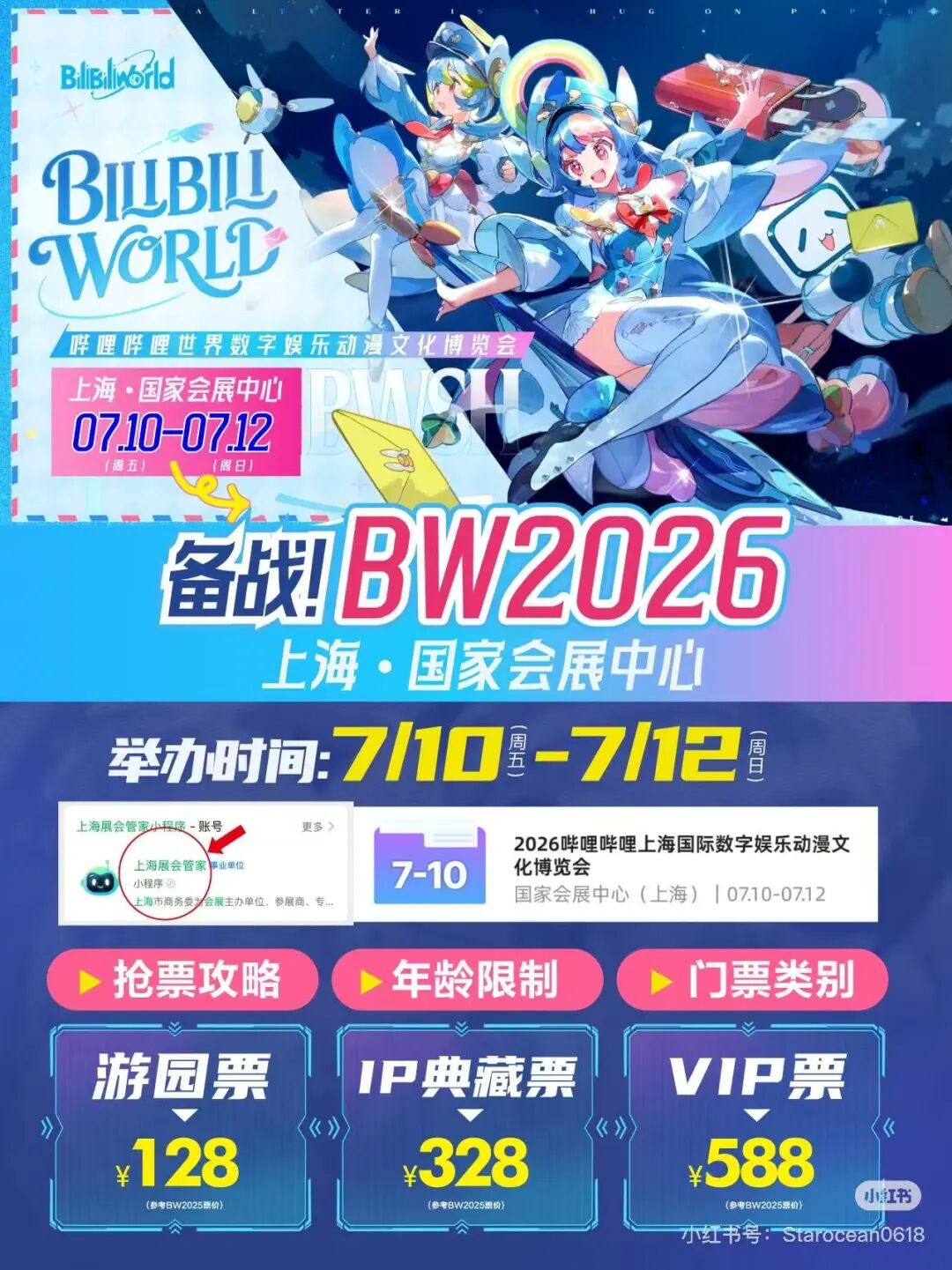
Core Insights - Major anime and manga exhibitions in China, such as BW2026 and RED LAND, are strategically scheduled during peak holiday periods to maximize attendance and engagement [1][3][5] - The competition among these events is intensifying, with multiple exhibitions planned for the same dates, indicating a crowded market [5][11] - The target demographic for these events is predominantly young, with over 70% of attendees aged between 15 and 28, highlighting the importance of appealing to this age group [9][21] Event Scheduling - BW2026 is set for July 10-12, 2026, maintaining its traditional mid-July timing [1] - RED LAND will take place from October 2-6, 2026, coinciding with the National Day holiday, and features an extended duration compared to previous years [3] - Other events like萤火虫SP 2026 and CICF are also expected to be scheduled during the National Day holiday, further saturating the market [5] Market Dynamics - The number of anime and manga exhibitions is increasing, with at least 413 events planned during the 2025 Mid-Autumn and National Day holidays, indicating a growing interest in the genre [7] - The concentration of events during peak periods is driven by the need to capture the attention of the youth demographic, who are more likely to attend during school holidays [11] Challenges and Trends - The industry faces challenges related to content restrictions, particularly concerning Japanese IPs, which are being limited in favor of domestic ACG content [12][16] - Despite these challenges, there is a rich pool of domestic ACG IPs that can be leveraged for exhibitions, with many games gaining traction among attendees [16][20] - The trend of integrating gaming into anime exhibitions is growing, as these events provide a more targeted audience for game developers compared to traditional gaming expos [18] Audience Engagement - The rise of the "fan economy" is evident, with over 500 million users in China's broader anime and manga community, particularly among younger generations who are willing to spend on experiences that provide emotional value [21][22] - Large-scale exhibitions are becoming significant social events, fulfilling various needs such as identity recognition, emotional expression, and social interaction among fans [22]

北大国发院发布生活经济报告:生活社区让更多新需求被看见
Xin Lang Cai Jing· 2026-01-29 06:36
Core Insights - The report introduces the concept of "life economy," emphasizing a shift in consumer demand from mere availability to quality and personalization [1][4] - It highlights the limitations of traditional supply systems in meeting individual needs, leading to competition focused solely on price, resulting in market saturation [1][4] Group 1: Definition and Characteristics of Life Economy - The life economy is defined as an economic form where individual life needs are expressed, connected, and stimulated through digital technology, fostering positive supply-demand interactions [1][4] - It consists of three core value dimensions: returning to the essence of individuals as "lifers," addressing the transformation of supply-demand contradictions, and emphasizing the role of digital technology as an "accelerator" and "translator" in matching supply and demand [1][4][5] Group 2: Role of Xiaohongshu - Xiaohongshu generates over 9 million posts and 70 million comments daily, with 200 million users seeking purchasing advice monthly, providing valuable insights into real consumer demand [2][5] - The platform's user-generated content (UGC) community has a natural advantage in aggregating and stimulating personalized and diversified demands, establishing a complete ecosystem for the life economy [2][5] Group 3: Policy Recommendations - The report proposes four policy recommendations: encourage the development of the life economy and enhance the utilization of life big data for precise supply-demand matching; strengthen online-offline collaborative innovation; deepen the "production-sales co-creation" mechanism; and proactively layout artificial intelligence empowerment and governance to reshape digital connection efficiency [3][6]
北大国发院发布生活经济报告:促进消费要关注个体的需求
Sou Hu Cai Jing· 2026-01-29 04:45
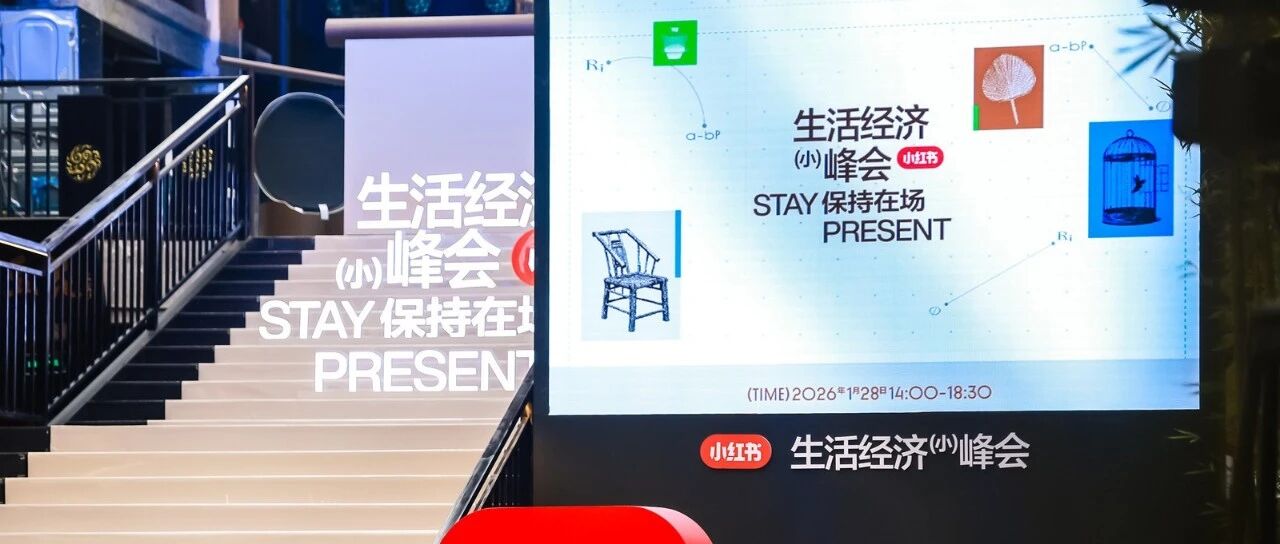
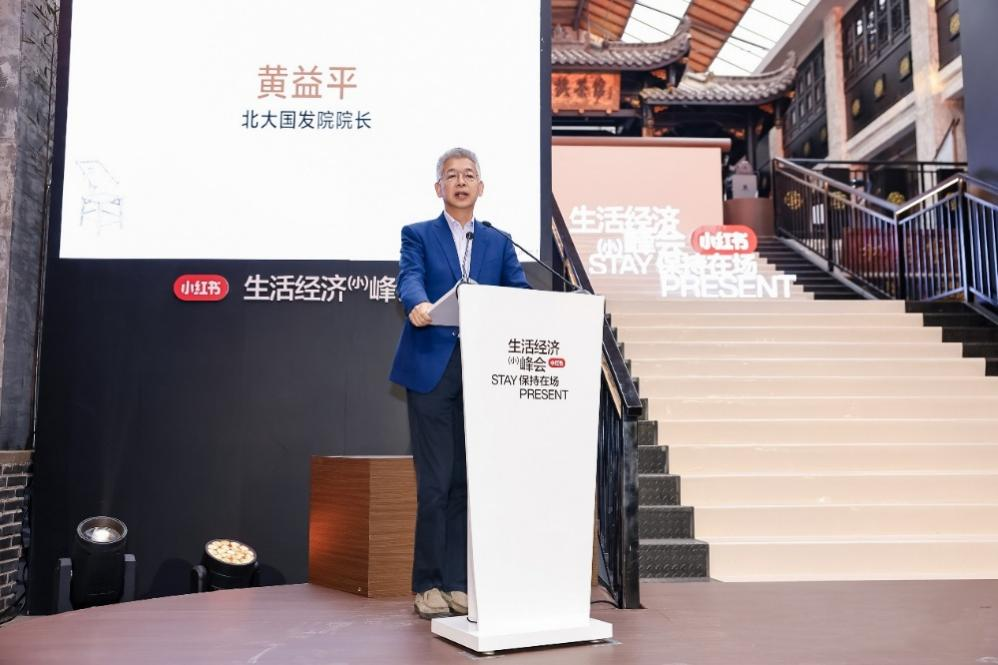
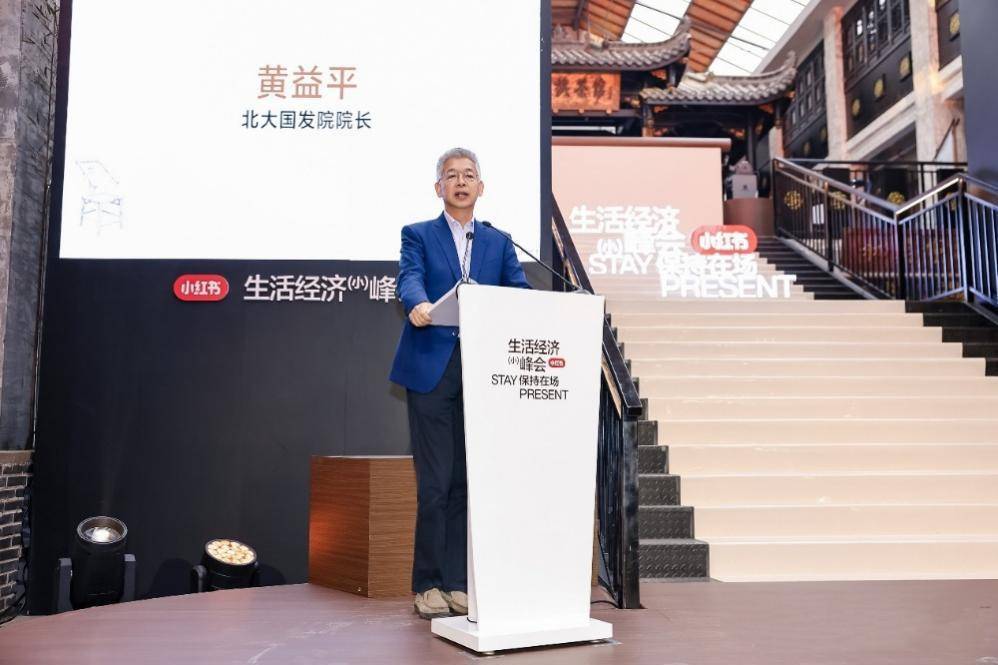
极目新闻通讯员周菲 实习生严梓欣金芷瑶周嘉宇 2026年1月28日,在小红书"保持在场·生活经济小峰会"上,北京大学国家发展研究院发布《2026生活经济报告》(以下简称《报告》),首次提出"生活经 济"的概念。指出生活经济正从零散消费现象升级为系统性经济形态,有望成为破解当前提振内需的重要抓手,而小红书凭借对生活场景的深度链接,已成 为生活经济发展的核心载体与典型案例。 全国政协委员尹艳林、北京大学国家发展研究院院长黄益平等嘉宾结合宏观政策与微观实践,解读了生活经济对扩大内需、推动高质量发展的重要意义,指 出"生活经济"有望成为激活国内大循环内生动力的关键抓手之一。 报告首提生活经济概念 《报告》梳理我国经济发展历程发现,当前正进入"双循环与高质量发展"阶段,居民需求从"有没有"转向"好不好",并且呈现出多元化、差异化、个性化特 征。但与此同时,传统供给体系不能有效识别并满足真实个体需求,导致竞争回到"最低价"这一单维度,从而产生内卷。 在这样的背景下,北大国发院报告首次明确"生活经济"的核心定义:生活经济是指个体的生活需求通过数字技术被表达、连接和激发,形成供需良性互动和 增长的经济形态。 尹艳林强调,党的 ...
在成都的茶馆里,生活经济成为热议新话题
Mei Ri Jing Ji Xin Wen· 2026-01-29 03:37
每经编辑|蒙锦涛 冬日蓉城的茶馆里,一场关于"生活经济"的探讨引发关注。 1月28日,小红书"生活经济小峰会"在成都举办。峰会聚焦宏观经济背景下的微观叙事,首次提出"生活经济"概念并系统阐释其价值,现场聚集了经济学 家、智库学者、跨界生活达人等共议消费新趋势,探求供给创新的新风向。 "'生活经济'是激发潜在需求的新方式、推动企业创新的新模式。"全国政协委员尹艳林在主旨演讲中指出,"潜在的消费需求不仅仅在于要有消费能力,而 且还在于要有消费的意愿和消费落地的方式。消费者的需求并非是预先存在的,很多时候是通过观察他人的生活来激发的,这就是我们常说的示范效 应。" 从"内衣袜子分区清洁"的细分需求到"通过Citywalk探索在地文化"的体验需求,拥有3.5亿月活用户的小红书被视为生活经济的"第一现场",也因此成为北 京大学国家发展研究院(下称"北大国发院")《2026生活经济报告》的核心观察研究对象。 北大国发院联合小红书在峰会现场首次发布《2026生活经济报告》,明确了"生活经济"的定义:指个体的生活需求通过数字技术被表达、连接和激发,形 成供需良性互动和增长的经济形态。其中指出,生活经济正从零散消费现象升级为系 ...

新加坡媒体:中国“银发博主”重新定义“年老”
Huan Qiu Wang Zi Xun· 2026-01-26 22:59
来源:环球时报 新加坡亚洲新闻台1月26日文章,原题:皱纹、健身与智慧:中国"银发博主"重新定义年老的意义 从健 身房举重到练习瑜伽,一名女博主经常在网上记录她的日常健身活动。这名来自上海的博主还分享健康 食谱和每日穿搭建议。一般来说,这类内容往往出自更年轻的创作者,但64岁的她坦然接受了自己的年 龄,"64岁只是一个数字,我的皱纹和白发是我的荣誉勋章"。 这名老年博主并非个例。在中国,越来越多的60岁及以上老年人正从观看社交媒体内容转向内容创作。 分析人士表示,与志同道合者分享的乐趣和使用中国社交媒体应用的便利性,是更多中国老年人选择这 样做的原因。 分析人士表示,年长创作者的内容往往被认为比年轻创作者的内容更接地气。与年轻网红博主不同,年 长创作者通常更专注于传统技能、生活反思和如何优雅地老去等话题。对于许多年长用户来说,转向内 容创作是他们上网习惯的自然延伸。如今,大部分中国老年人已经成为"数字移民",智能手机"几乎无 处不在"。中国互联网络信息中心发布的《中国互联网络发展状况统计报告》显示:截至2025年6月,中 国60岁以上网民规模已达1.61亿人,互联网普及率为52%。(作者莱基莎·利奥,王会聪译 ...
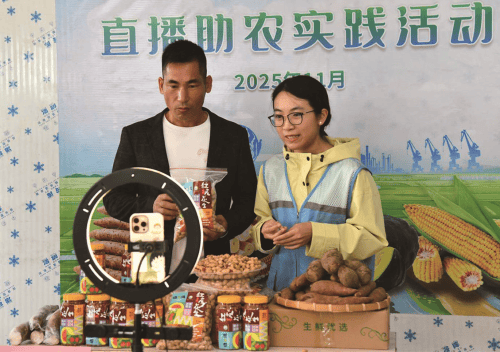
我市多措并举助推电商产业“加速跑”
Sou Hu Cai Jing· 2026-01-26 12:43
Core Insights - The e-commerce industry in the city is experiencing rapid growth, with a projected online retail sales of 9.14 billion yuan in 2025, marking a year-on-year increase of 7.9%, ranking fourth in the region [1] - The agricultural products online retail sales reached 1.21 billion yuan, ranking third in the region, with live streaming retail sales amounting to 318 million yuan [1] Group 1: E-commerce Development - The city has implemented various measures to enhance the quality and efficiency of the e-commerce industry, including optimizing policy and funding application guidance to support business development [3] - A total of 563 live streamers were involved in promoting products, with over 350 million interactions during live broadcasts [3] Group 2: Talent Development - The city launched a "Rural E-commerce Talent Cultivation" initiative, conducting over 20 specialized training sessions and nurturing more than 2,000 rural e-commerce professionals [4] - The initiative has successfully incubated over 300 live streamers and established 9 live streaming bases and 47 standard live streaming rooms, contributing to over 200 million yuan in increased income for farmers [4] Group 3: Promotion of Specialty Products - The city is focusing on promoting the sea duck egg industry by participating in major trade fairs and conducting promotional activities in key e-commerce hubs [4] - Successful entry of sea duck egg products into international markets, including exports to Australia, has been achieved [4] Group 4: Future Plans - In 2026, the city will continue to focus on cultivating e-commerce entities and specialty industries, launching a "Network Store Empowerment Action" to enhance service and expand online retail scale [4]