毕马威

Search documents
从被动合规走向价值驱动 多家银行启动ESG报告项目招标
Zhong Guo Jing Ying Bao· 2025-11-21 15:20
Core Insights - The increasing global focus on ESG (Environmental, Social, and Governance) has made it an unavoidable topic for companies, as highlighted by the recent ESG reports from Guangfa Bank and Gansu Bank [1][2] - The KPMG 2025 ESG Assurance Maturity Index indicates a significant disparity in ESG readiness among companies, with leading firms scoring 65.2 and entry-level firms only 30.5, reflecting a need for improvement across the board [1] - A notable 88% of companies that are the first to report under the CSRD (Corporate Sustainability Reporting Directive) have engaged external assurance service providers, emphasizing the essential role of professional institutions in the ESG journey [1] Group 1 - Guangfa Bank has published its 2025 ESG report, while Gansu Bank has announced a competitive consultation for its ESG report advisory services [1] - The KPMG report shows an overall readiness score of 46.77 for surveyed companies, with a stark contrast between leading and entry-level firms [1] - The reliance on external professional support for ESG reporting is growing, with 88% of early CSRD reporters seeking external assurance [1] Group 2 - KPMG's ESG partner in China, Shen Ying, notes that ESG assurance is shifting from passive compliance to value-driven approaches, highlighting the increasing importance of professional service institutions [2] - Professional service institutions are expected to play a crucial role in enhancing global ESG practices through knowledge sharing, capacity building, and data management [2] - Chinese companies can leverage the global networks and expertise of professional institutions to better integrate into the global sustainable development movement and achieve high-quality growth [2]
毕马威发布长三角高端装备新质领袖榜单
Zheng Quan Ri Bao Wang· 2025-11-21 14:17
Core Insights - The Yangtze River Delta region is recognized as a core cluster for high-end equipment manufacturing in China, benefiting from strategic initiatives like the G60 Science and Technology Innovation Corridor [1] - The release of the "Yangtze River Delta High-end Equipment New Quality Leaderboard" highlights the region's growth potential, supported by continuous policy incentives from "Made in China 2025" to the "14th Five-Year Plan" [1] Industry Overview - The leaderboard focuses on five key sectors: robotics, energy equipment, low-altitude economy, intelligent transportation equipment, and other emerging industrial technologies [1] - Evaluation criteria for participating companies include core team strength, technological and product leadership, market and business layout, financial health, market influence, and future planning [1] Company Highlights - A total of 38 companies were recognized for their outstanding innovation capabilities and development potential [1] - Emerging industrial technology equipment sector leads with a representation of 34.2% among the evaluated companies, while integrated circuit equipment companies account for 10.5% of the total [1] - The robotics sector follows closely with a 31.6% share, indicating strong growth momentum [1]
毕马威沈莹:ESG鉴证成熟度分化,数据质量成核心竞争力
Xin Jing Bao· 2025-11-21 09:49
Group 1 - The COP30 conference in Brazil from November 10 to 21 is focused on climate change and sustainable development, highlighting the shift of corporate sustainability disclosures from optional to mandatory [1] - The KPMG report indicates that the overall readiness score for surveyed companies is 46.77, with leading companies scoring 65.2 and entry-level companies only 30.5, showing a significant gap [1] - 88% of the first batch of companies reporting under the CSRD engaged external assurance service providers, emphasizing the essential role of professional institutions in the ESG journey [1] Group 2 - KPMG has developed an ESG assurance readiness assessment tool that covers governance, skills, data management, digital technology, and value chains to help companies prepare for comprehensive ESG assurance [2] - The report shows that 89% of leading companies provided mandatory ESG training to employees, while only 8% of entry-level companies did, highlighting the importance of professional training [2] - As global climate governance improves and corporate awareness of sustainability increases, ESG assurance is transitioning from compliance to value-driven, with professional service institutions playing a crucial role [2]
COP30转型计划训练营:洞悉毕马威权威报告,共创可持续价值新未来
Sou Hu Cai Jing· 2025-11-21 07:11
Core Viewpoint - The article emphasizes the necessity for companies to develop and implement transformation plans in response to climate change and the global shift towards net-zero emissions, highlighting that such plans are essential for survival, compliance, and future value creation in a competitive landscape [1]. Group 1: Governance and Strategy - High-quality transformation plans must integrate climate goals, such as net-zero emissions, into the core of corporate strategy, supported by a robust governance framework where the board and executives are accountable for climate strategies [2]. Group 2: Setting Goals - Companies should establish clear, measurable, and scientifically-backed mid- to long-term emission reduction targets, with specific milestones to ensure transparency and verification of progress, thereby mitigating greenwashing risks and building stakeholder confidence [3]. Group 3: Implementation Steps - Transformation plans should be broken down into actionable steps across various dimensions, including finance, operations, supply chain, and technology, with clear resource allocation and accountability mechanisms [4]. Group 4: Data Disclosure and Performance Management - High-quality data disclosure enhances corporate transparency, and tracking key performance indicators (KPIs) can link performance assessments and incentives to transformation goals, facilitating a shift from compliance-driven to value-creating approaches [5]. Group 5: Collaboration and Industry Engagement - Individual companies cannot achieve systemic transformation alone; collaboration with supply chain partners, industry organizations, financial institutions, and regulatory bodies is essential to establish unified standards and methodologies for systemic decarbonization [6]. Group 6: Global Trends and Local Initiatives - Over 60% of major economies have policies promoting transformation plans, with more than half of listed companies incorporating these plans into governance and disclosing climate strategies according to international standards. Over 140 countries have set net-zero targets, emphasizing the need for fair transitions and international cooperation [9]. Group 7: Financial Sector's Role - The financial sector is increasingly recognizing the importance of transition planning as a means to manage risks and unlock new value opportunities, with a focus on integrating transition goals into investment and risk management processes [10][12].


毕马威参加COP30 分享ESG前沿洞察
Zheng Quan Ri Bao Wang· 2025-11-20 11:11
毕马威中国环境、社会和治理(ESG)主管合伙人沈莹在COP30分享中国在绿色低碳高质量发展方面的最 新实践与智慧,与全球伙伴共同探讨通过可持续的方式推进能源转型。从企业的角度,沈莹认为,在全 球对气候与可持续发展要求不断提升的背景下,企业披露的可持续信息正在从"可选题"转变为"必答 题",ESG鉴证如今正逐渐成为企业战略管理的重要组成部分。全球ESG鉴证成熟度呈现分化态势,而 数据质量成核心竞争力。总体趋势已经非常明确:ESG鉴证不是终点,而是一个持续旅程的起点。 本报讯(记者闫立良)11月10日至21日在巴西贝伦市举行的《联合国气候变化框架公约》第三十次缔约方 大会(COP30)被国际社会寄予厚望。继深度参与COP29后,专业服务机构毕马威此次以"创新驱动转型之 路"为主题,继续投身COP30的全球议程。毕马威在此次巴西COP30大会上,解读《毕马威2025年环 境、社会与治理鉴证成熟度指数》报告等研究成果,并聚焦"披露和可持续投资"等相关议题,与国际多 边机构、标准制定组织、机构投资者等进行深入交流。 本次毕马威参加COP30,还就人工智能(AI)对气候行动与能源转型的影响;自然与生物多样性在企业转 型规 ...
在德中资企业对营收前景总体谨慎乐观
人民网-国际频道 原创稿· 2025-11-20 01:21
Core Insights - The report indicates a cautiously optimistic outlook for Chinese enterprises operating in Germany, with potential for increased investment and collaboration opportunities [1][2] Group 1: Revenue Outlook - 43% of surveyed companies expect moderate to strong revenue growth in the coming year, while 46% anticipate their revenue will remain stable year-on-year [1] - 41% of companies plan to expand their workforce, and 42% expect to maintain their current employee levels [1] Group 2: Strategic Importance - Over half of the surveyed companies consider Germany as their European headquarters, highlighting its significant role in the global strategy of Chinese enterprises [1] Group 3: Areas of Cooperation - The report identifies digitalization, battery technology, and the automotive industry as the three sectors with the most collaboration potential in Germany [1] Group 4: Investment Environment Concerns - Only 13% of companies view the investment environment in Germany as "favorable" or "very favorable" for the next five years, while 58% rate it as "neutral," indicating a balance of opportunities and risks [1] - Recommendations for improving the investment climate include simplifying administrative procedures, optimizing foreign investment review processes, and enhancing market transparency [1]
无锡高新区借力全球智慧谋划“十五五”发展新篇
Zhong Guo Xin Wen Wang· 2025-11-19 08:26
"我们将以更开放姿态融入全球,以更优质服务护航企业,以更完备生态集聚资源,携手各方共谱合作 新篇。"无锡高新区党工委书记、新吴区委书记崔荣国表示,"十四五"以来,该区对外开放取得的成 效,离不开各类企业机构的支持。未来,无锡高新区将聚焦新质生产力发展、科创硬实力提升,推进世 界一流高科技园区建设,希望与更多企业机构深化合作,共同打造链主企业生态圈、深度融合的"发展 共同体"和更广阔的"朋友圈"。 据悉,"十四五"期间,无锡高新区持续扩大对外开放,高效推进综保区新片区、无锡中欧产业创新区、 无锡新加坡科创城等载体建设,累计到位注册外资超50亿美元、占全市比重约1/3。目前,该区外资企 业已扩容至近1900家,128家世界500强企业在此投资200多个项目。(完) (文章来源:中国新闻网) 中新网无锡11月19日电 11月18日,无锡高新区2025年国际咨询顾问委员会年会举行。GE医疗、松下电 器、LG化学、毕马威、普华永道等企业及机构代表参会,围绕"链接全球创见未来——无锡高新区'十 五五'发展的战略抉择"主题,探讨开放合作方向,为区域发展提供智慧支持。 无锡高新区国际咨询顾问委员会自1998年成立以来,始终发 ...
COP30召开,气候治理亟待创新动力
Guo Ji Jin Rong Bao· 2025-11-19 08:17
Core Insights - The 30th UN Climate Change Conference (COP30) in Belem, Brazil, focuses on climate financing, emissions reduction, adaptation capacity, and climate resilience, marking a critical moment for global climate action [1] - Despite increasing global net-zero commitments, significant gaps remain in funding, transition speed, and the implementation of technology and policies [1][3] - The conference coincides with the 10th anniversary of the Paris Agreement, highlighting the disparity between corporate commitments to net-zero targets and their actual implementation [3] Group 1: Challenges in Achieving Net-Zero Goals - Many companies have set net-zero targets for 2040 or 2050 but lack clear mid-term roadmaps and actionable emission reduction strategies, leading to insufficient execution [3][5] - The mismatch between technology, business models, and policies results in companies being in experimental or early stages regarding decarbonization technologies and low-carbon business models [3][5] - Complex value chains and unclear responsibility boundaries complicate emission reduction efforts, particularly for multinational companies with layered supply chains [3][5] Group 2: Pathways to Achievable Net-Zero Strategies - Companies need to establish systematic execution mechanisms that cover governance, investment, technology, and supply chains to transition from commitment to implementation [5] - Key actions include strengthening governance systems, setting mid-term goals, and integrating decarbonization into operational and capital decisions [5] - Developing technology and investment roadmaps, identifying key emission reduction levers, and extending reduction requirements to supply chains are essential steps [5] Group 3: The Rise of Natural Capital - Increasing global regulatory and investor focus on natural capital has led many multinational companies to incorporate "Taskforce on Nature-related Financial Disclosures" (TNFD) into their sustainability reporting [6] - Over 700 institutions managing approximately $22 trillion in assets have expressed alignment with or intention to adopt TNFD, indicating its growing importance in mainstream disclosure frameworks [6] - TNFD helps companies identify potential risks related to ecological degradation and water resource scarcity while supporting opportunities in ecological restoration and resource efficiency [6] Group 4: Innovation as a Necessity - Innovation is deemed essential for global climate action, encompassing technological, business model, and policy innovations [8][9] - Key technological innovations include renewable energy, hydrogen, carbon capture, utilization and storage (CCUS), smart grids, and digital carbon management [9] - Artificial intelligence (AI) is increasingly recognized as a critical driver for climate action, aiding in carbon emission calculations, energy efficiency optimization, and supply chain carbon tracking [10] Group 5: AI and Green Energy Transition - AI applications in carbon emission measurement and energy management can enhance emission identification and energy consumption efficiency [10] - However, the rapid increase in AI's energy consumption poses a risk of new carbon emissions if the growth of computational power outpaces clean energy supply [10] - Companies are urged to develop "green computing" strategies to align AI development with energy transition efforts [10]

报告显示经济逆风下德国仍是中企重要投资地
Xin Hua She· 2025-11-19 06:02
Core Viewpoint - Despite facing challenges such as high labor costs, Germany remains a key investment destination for Chinese enterprises in Europe, with potential for increased cooperation through improved business environment [1] Group 1 - The report titled "2025 Business Environment Survey for Chinese Enterprises in Germany" was jointly released by the German Chinese Chamber of Commerce and KPMG [1] - The findings suggest that optimizing the business environment in Germany could attract more Chinese investments [1] - The report highlights the importance of Germany as a strategic location for Chinese companies looking to expand in Europe [1]
毕马威发布美妆产业报告:“理性悦己”带火国货美妆
Sou Hu Cai Jing· 2025-11-17 13:37
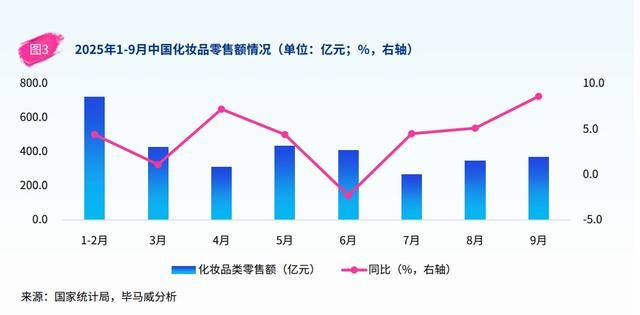
深圳商报·读创客户端首席记者 王海荣 在情绪价值成为新刚需、个性化解决方案备受追捧的当下,"颜值经济"正成为中国消费市场重要增长领 域之一。11月17日,毕马威对外发布《"颜"值经济新篇章:2025年中国美妆市场行业报告》(以下简称 《报告》),深度洞察中国美妆产业正在经历的深刻变革,从市场需求演变、品牌竞争格局、技术创 新、消费者洞察到资本动向,全面解析在理性消费与情感需求并存的时代,美妆行业如何实现从"量的 扩张"迈向"质的跃升"。 毕马威中国客户及业务发展主管合伙人江立勤指出,当前,"颜值经济"已成为中国消费市场中最具成长 性的板块之一,虽受宏观经济波动与消费理性化的双重影响,中国美妆市场展现出令人瞩目的发展韧 性。在政策与资本的双重助推下,美妆产业正步入集中度提升与模式重塑的关键阶段。 理性消费引导市场从流量驱动转向价值驱动 《报告》指出,2025年前三季度,社会消费品零售总额达到36.6万亿元,同比增长4.5%,而化妆品零售 额达3288亿元,同比增长3.9%,成为消费市场的稳定器之一。 消费者也不再盲目追随大牌与营销,而是更加关注产品成分、安全性与实际功效。《报告》显示, 58.8%的消费者将产品 ...