OpenAI

Search documents
软银连续四个季度实现盈利 对OpenAI的投资估值收益带来提振
Xin Lang Cai Jing· 2026-02-12 09:51
Group 1 - The company reported a net profit of 248.59 billion yen (approximately 1.6 billion USD) for the third fiscal quarter, exceeding analyst expectations of around 857 billion yen, marking its fourth consecutive profitable quarter and the first since 2021 [1][2] - SoftBank has invested over 30 billion USD in OpenAI, holding an 11% stake as of December last year, and is negotiating an additional investment of up to 30 billion USD, which could raise OpenAI's valuation to approximately 750 billion to 830 billion USD [1][2] - The estimated investment return for SoftBank in OpenAI is around 19.8 billion USD as of December [2] Group 2 - SoftBank holds approximately 90% of shares in chip design company Arm Holdings Plc, linking its stock performance closely to the performance of ChatGPT against competitors like Google's Gemini and Anthropic's Claude [2] - The company is increasing investments in other areas of the artificial intelligence ecosystem, with founder Masayoshi Son aiming to play a more significant role in shaping the future of technology [1][2]

X @BSCN
BSCN· 2026-02-12 09:46
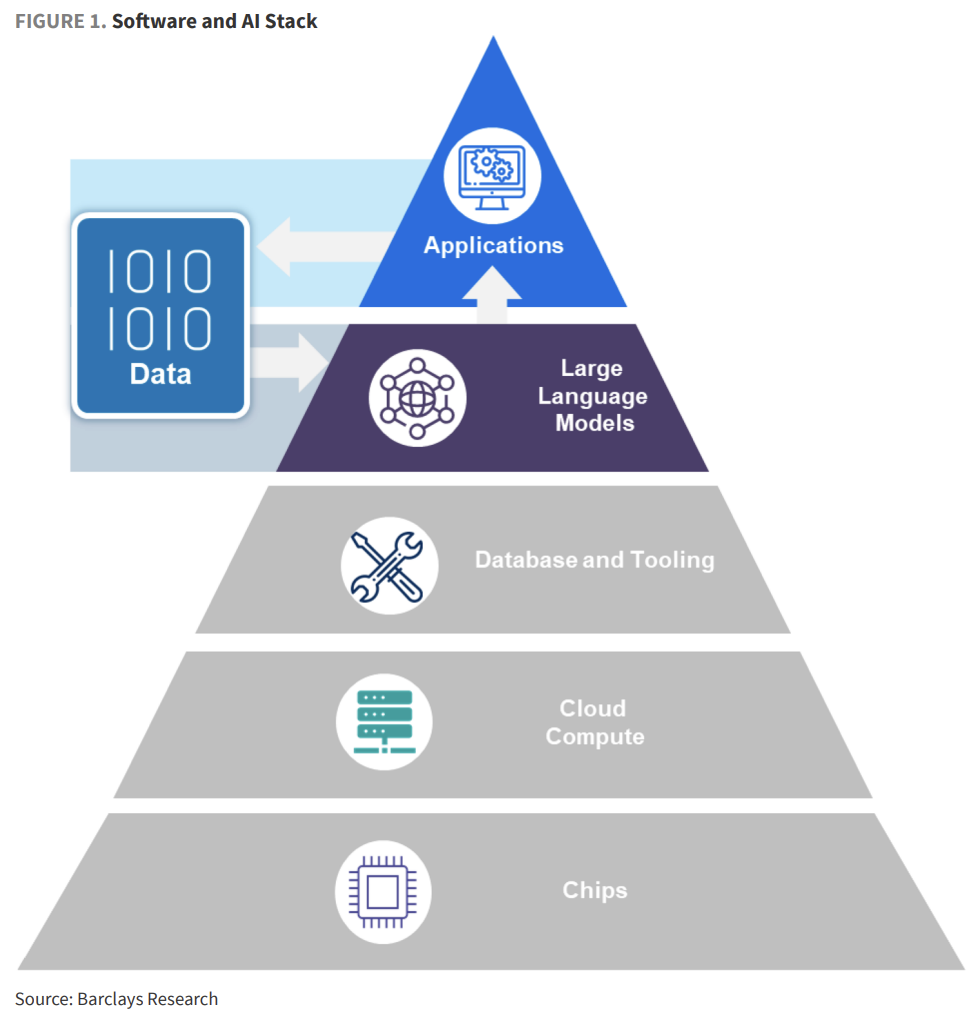
🚨MONEY: SOFTBANK MADE $4.2 BILLION FROM INVESTMENT IN OPENAIJapanese financial giant, SoftBank, recorded a $4.2 billion gain in Q4 2025, from its investment into @Sama's @OpenAI.In total, it has made $19.8 billion from the investment, owning an 11% stake in the AI company. https://t.co/DWrA2u0kzT ...
软银集团借助 AI 热潮重回盈利
Xin Lang Cai Jing· 2026-02-12 09:40
专题:聚焦美股2025年第四季度财报 日本科技与电信巨头软银集团周四表示,得益于对 OpenAI 等企业的投资开始兑现收益,公司在 2025 年第四季度重新实现盈利。 软银集团公布,2025 年 10—12 月当季实现利润2486 亿日元(约合 16.2 亿美元),扭转了去年同期亏 损 3690 亿日元的局面。 当季销售额增长 8%,至1.98 万亿日元(约 129 亿美元)。 总部位于东京的软银集团于 10 月以58 亿美元出售了所持英伟达股份,这与其聚焦人工智能的战略方向 一致。 软银表示,已向 ChatGPT 开发者 OpenAI 累计投资近350 亿美元,持股比例约 11%,这笔投资带来了可 观的投资收益。 在其他投资方面,软银集团去年以65 亿美元收购了美国半导体设计公司 Ampere,使其成为旗下全资美 国子公司。 软银另一大布局领域是机器人。公司去年与 ABB 达成协议,以53.75 亿美元收购其机器人业务,该交 易仍需获得欧洲、中国、美国等监管机构批准。 截至 12 月的前 9 个月,软银集团实现利润3.17 万亿日元(约 207 亿美元),约为上年同期的 5 倍;前 9 个月销售额小幅增长近 ...

SoftBank says it made $4.2 billion from its OpenAI investment in the last quarter
MarketWatch· 2026-02-12 09:19
Core Viewpoint - SoftBank reported a $4.2 billion gain from its investment in OpenAI during the last quarter, highlighting the significant financial impact of its 11% stake in the company [1]. Group 1: Financial Performance - The $4.2 billion gain reflects the valuation surge of OpenAI, which reached a $500 billion valuation following a secondary share sale of $6.6 billion in October [1]. - SoftBank's participation in the secondary share sale contributed to the increased valuation of OpenAI, indicating a circular relationship between the investment and valuation [1]. Group 2: Investment Strategy - SoftBank is actively pursuing investments in artificial super intelligence, positioning itself as a key player in the tech investment landscape [1].


OpenAI估值飙升提振利润 软银Q3扭亏但逊于预期
Xin Lang Cai Jing· 2026-02-12 09:13
Group 1 - SoftBank Group turned a profit in the third fiscal quarter, reporting a net profit of 248.59 billion yen (approximately $1.6 billion), despite falling short of analyst expectations of around 857 billion yen [1] - The company's investment in OpenAI yielded a profit of $4.2 billion, offsetting losses from the decline in Coupang's stock price, marking the fourth consecutive quarter of profitability for SoftBank and its first since 2021 [1] - As of December, SoftBank has invested over $30 billion in OpenAI, holding an 11% stake in the company, which is now its largest holding [2] Group 2 - SoftBank is negotiating to reinvest up to $30 billion in OpenAI, potentially raising the company's valuation to between $750 billion and $830 billion [2] - Analysts estimate that OpenAI accounts for approximately 30% of SoftBank's net asset value, highlighting its significance in the company's portfolio [2] - The company has also increased its investments in the AI ecosystem, including a $3 billion agreement to acquire DigitalBridge Group Inc. and plans to build data centers in the U.S. with partners [3] Group 3 - SoftBank has created a new business unit called "AI Computing," which will include its chip design company Arm and two other semiconductor companies it has acquired [3] - To raise funds, SoftBank has further reduced its stake in T-Mobile US and increased its financing loan limits based on its mobile business [3] - Standard & Poor's Global Ratings has warned that the accelerated pace of investments and the significant drop in Arm's stock value are putting pressure on SoftBank's credit rating [4]
AI恐慌引发软件股“大逃杀”,华尔街反应过度了?
Jin Shi Shu Ju· 2026-02-12 08:59
Core Viewpoint - The software sector on Wall Street has faced significant turmoil due to fears that artificial intelligence (AI) will disrupt the industry, culminating in a recent sell-off described as a "collapse" [1] Group 1: Market Reactions - Major software companies have seen substantial stock declines, with ServiceNow (NOW) down over 22%, Thomson Reuters (TRI) down over 26%, Intuit (INTU) down over 26%, Snowflake (SNOW) down 18%, and Salesforce (CRM) down over 20% since January 29 [1] - The market logic suggests that AI companies like Anthropic and OpenAI may either develop their own software to compete with existing products or enable businesses to easily create custom internal software, both scenarios posing risks to traditional software firms [1] Group 2: Analyst Perspectives - Analysts argue that the panic on Wall Street may be an overreaction, suggesting that AI may not replace all existing software companies but could enhance the services of many legacy firms [1][2] - Jason Ader from William Blair emphasizes the need to differentiate between software companies facing greater risks and those that are more secure, indicating that the current sell-off may not reflect the true value of individual companies [2] Group 3: Challenges for AI Companies - There are significant barriers preventing AI companies from overtaking existing software firms, including the reluctance of enterprises to allocate IT resources for developing custom software unless it offers a critical long-term advantage [3] - The initial development costs of custom software are only part of the equation, and despite the availability of open-source software, the third-party software market has continued to thrive [3] - Ader notes that using AI tools to create new applications may not be practical for companies that already have effective solutions in place [3] Group 4: Integration of AI - AI functionalities are likely to be integrated into existing software, enhancing their capabilities and customer value rather than completely replacing them [4] - Data governance issues also pose challenges, as companies may be hesitant to share proprietary data with AI models, preferring to work with established partners [5] - While some software companies may struggle to keep pace with the evolving AI landscape, those that adapt are likely to thrive [5]
Japan's technology investor SoftBank Group sees profitability return on AI boom
Yahoo Finance· 2026-02-12 08:51
Core Insights - SoftBank Group returned to profitability in Q4 2025, reporting a profit of 248.6 billion yen ($1.62 billion), a significant turnaround from a loss of 369 billion yen in the same quarter the previous year [1] - Quarterly sales increased by 8% to 1.98 trillion yen ($12.9 billion) [1] Investment Focus - SoftBank sold its stake in Nvidia for $5.8 billion in October, aligning with its strategy focused on artificial intelligence [2] - The company has invested nearly $35 billion in OpenAI, acquiring an 11% ownership interest, which has generated investment gains [2] Acquisitions and Ventures - SoftBank acquired Ampere, a U.S.-based semiconductor design company, for $6.5 billion, making it a wholly owned subsidiary [3] - The company reached an agreement to acquire ABB's robotics business for $5.375 billion, pending regulatory approval in multiple regions [3] Financial Performance - For the nine months ending December, SoftBank reported a profit of 3.17 trillion yen ($20.7 billion), approximately five times higher than the previous year [4] - Nine-month sales increased nearly 8% to 5.7 trillion yen ($37 billion) [4] - The CFO noted that investments are beginning to yield returns [4] Diverse Investment Gains - Gains are attributed not only to OpenAI but also to investments in Arm, an AI semiconductor company [5] - SoftBank's financial performance is characterized by volatility due to its aggressive investment strategy in innovative technologies [5] - Shares of SoftBank Group rose by 2.4% following the announcement [5]
字节跳动最新AI视频生成模型走红
Sou Hu Cai Jing· 2026-02-12 08:50
Core Insights - The article discusses the advancements of the AI video generation model Seedance 2.0 developed by ByteDance, which has gained significant attention for its ability to create high-quality, movie-like videos [3][4] - The model is praised for surpassing competitors such as OpenAI's Sora 2 and Google's Veo 3.1, marking a fundamental transformation in video generation capabilities [4] Group 1: Technology Advancements - Seedance 2.0 represents a significant leap in video generation, not only improving video quality but also automating video editing judgment capabilities that were previously exclusive to professionals [4] - The model has begun small-scale testing in China, with realistic synthetic videos going viral across major social media platforms globally [3] Group 2: Market Impact - Following the popularity of Seedance 2.0, stock prices of Chinese entertainment and gaming companies saw a general increase on February 9 [4] - Industry expert Iñaki Berenguer from LifeX noted the rapid development in this field, highlighting that China appears to be leading the way [4]

软银前三财季净利润同比大增253%,投资OpenAI收益接近2.8万亿日元
Ge Long Hui· 2026-02-12 08:33
Core Insights - SoftBank Group reported a net sales of 5.72 trillion yen for the first three fiscal quarters ending December 31, 2025, representing a year-on-year increase of 7.9% [1] - The net profit surged to 3.73 trillion yen, marking a significant year-on-year growth of 253%, with diluted earnings per share at 552.86 yen [1] - Total investment income reached 4.22 trillion yen, up 94.5% year-on-year, with returns from the investment in OpenAI contributing nearly 2.8 trillion yen [1] Financial Performance - For the third fiscal quarter, net sales were 1.98 trillion yen, reflecting an 8.2% year-on-year increase, surpassing market expectations of 1.96 trillion yen [1] - The net profit for the third quarter was 413.1 billion yen, a turnaround from a net loss of 179.68 billion yen in the same period last year [1] - Total investment income for the third quarter was 293.68 billion yen, with the SoftBank Vision Fund generating 179.74 billion yen in returns [1]
AI vs SaaS:先卖再问,市场“卖对了一半”?
Hua Er Jie Jian Wen· 2026-02-12 08:24
Core Insights - The recent release of Anthropic's products has triggered a significant sell-off in enterprise software stocks, revealing an overreaction in the market regarding AI threats [1][3] - Barclays highlights that while AI tools are encroaching on the application layer of SaaS companies, they do not threaten the foundational "system of record" infrastructure, which is crucial for companies like Salesforce and SAP [1][3] Group 1: Market Reaction and Misunderstandings - The release of Claude Cowork by Anthropic has been described as the tipping point for the decline in enterprise software stocks, with Salesforce and Workday seeing over a 40% drop in the past year [3] - Investors are confused about the capabilities of AI, mistakenly believing that new AI tools will completely replace traditional SaaS software, leading to a devaluation of established companies [3][12] - Barclays' report argues that the simplistic view of AI as a total replacement for software does not apply to most enterprise software companies [3] Group 2: AI Capabilities and Limitations - Generative AI excels in pattern recognition and initial draft generation but has fundamental limitations due to its probabilistic nature, making it less effective in scenarios requiring absolute accuracy [4][5] - Traditional software operates on deterministic rules, ensuring consistent outputs, while AI software functions probabilistically, lacking guaranteed consistency [5][6] Group 3: System of Record Companies - Barclays identifies three categories of enterprise software companies that have been mispriced during the sell-off, starting with system of record companies like Salesforce and SAP, which provide critical data requiring certainty [7][8] - SAP's position is particularly strong, as it manages essential business data and workflows that generative AI cannot handle effectively [7][8] - The report suggests that AI will not replace these systems but will instead increase their importance as AI creates more data touchpoints [8] Group 4: Misjudged Investment Opportunities - Besides system of record companies, Barclays points out two other categories that are misjudged: beneficiaries of AI agents and AI computing providers, which may see increased demand due to AI expansion [9] - There is a contradiction in the market logic; if AI is powerful enough to disrupt the software industry, the demand for computing power should rise, yet companies like Oracle and CoreWeave have also faced sell-offs [9] Group 5: Application Layer Challenges - The market's panic is not entirely unfounded, as SaaS companies have struggled with poor user interfaces, high prices, and security vulnerabilities, leading to customer dissatisfaction [10] - Companies like Klarna are moving away from traditional SaaS products in favor of smaller firms, utilizing AI tools to build their own applications, which highlights a genuine threat to the SaaS model [10] Group 6: Future Market Dynamics - The current market correction is seen as necessary, as SaaS companies have enjoyed inflated valuations by controlling both infrastructure and interface [11] - The emergence of AI technologies that can operate above system records may erode the pricing power of SaaS companies, indicating a shift in the profitability landscape [11] - As understanding of AI capabilities and SaaS business models deepens, the market may begin to re-evaluate companies incorrectly labeled as "AI victims," while those relying on poor application layers may face continued valuation pressure [12]