平安银行

Search documents
警惕平安信用卡征信修复陷阱,黑灰产利益链暗藏玄机
Jin Tou Wang· 2025-11-06 08:14
Core Viewpoint - The rise of illegal proxy complaint services in the credit card sector has led to a systematic and industrialized approach, exploiting vulnerable debtors through deceptive practices and false advertising [1][2]. Group 1: Industry Trends - The illegal proxy complaint industry is increasingly using social media and short video platforms to promote fraudulent services, claiming to have internal bank partnerships that can eliminate bad credit records at no cost [1]. - The operational model of these illegal services is highly covert, luring debtors with "free consultations" and subsequently charging high fees under the guise of "deposit + final payment" [1]. Group 2: Consumer Impact - Debtors, such as individual Zhang, have fallen victim to these scams, paying significant sums (e.g., 5,000 yuan) for services that were never delivered, leading to personal information being sold to loan platforms and resulting in harassment [6]. - The fraudulent activities have severe consequences, including being placed on risk lists by banks due to falsified documents, which further complicates the debtor's financial situation and leads to a cycle of increasing debt [6]. Group 3: Regulatory Response - In response to the rampant illegal activities, regulatory bodies and financial institutions are developing a multi-dimensional governance system to disrupt the customer acquisition chain of these black and gray market operations [7]. - Initiatives such as the "Qinglang Pujiang" special action plan for 2025 will focus on illegal financial intermediaries, while financial institutions are employing big data models to identify and block abnormal complaint behaviors [7].



翻遍9家银行财报,我发现行业洗牌的秘密藏在这些数字里
3 6 Ke· 2025-11-06 02:03
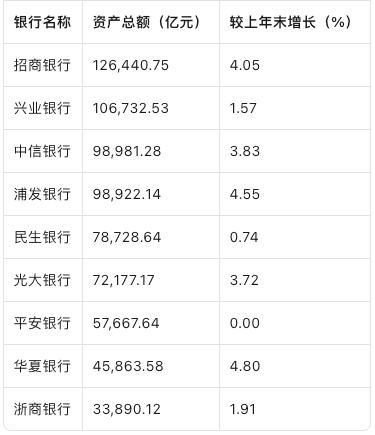
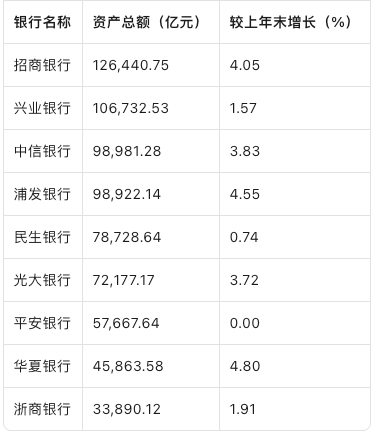
Core Insights - The overall performance of the nine listed joint-stock banks in China showed a decline in both revenue and net profit for the first three quarters of the year, with total operating income at 1.12 trillion yuan, down 2.56% year-on-year, and net profit at 406.1 billion yuan, down nearly 1% [1][3] Group 1: Performance Overview - Among the nine banks, four experienced declines in both revenue and net profit, while some banks managed to achieve growth in both metrics [1][4] - The top joint-stock banks by asset size are China Merchants Bank (12.64 trillion yuan), Industrial Bank (10.67 trillion yuan), and CITIC Bank, with Shanghai Pudong Development Bank showing the fastest growth rate at 4.55% [1][2] Group 2: Revenue and Profit Analysis - Only Minsheng Bank and Shanghai Pudong Development Bank reported year-on-year revenue growth, with increases of 6.74% and 1.88%, respectively; the remaining seven banks saw revenue declines, with Ping An Bank experiencing the largest drop at 9.8% [3][4] - In terms of net profit, only four banks, including Shanghai Pudong Development Bank, reported growth, with the latter achieving a 10.21% increase, making it the leader in profit growth among joint-stock banks [4] Group 3: Net Interest Income and Margin - Net interest income, a key indicator of banks' operating income, showed mixed results, with only three banks reporting growth; China Merchants Bank led with 160.04 billion yuan, up 1.74% [5][6] - The net interest margin (NIM) faced pressure, with most banks experiencing declines; China Merchants Bank maintained the highest NIM at 1.87%, while CITIC Bank saw the largest drop of 16 basis points [7] Group 4: Asset Quality and Risk Management - The non-performing loan (NPL) ratio improved for most banks, with China Merchants Bank having the lowest NPL ratio at 0.94% [9][10] - However, the provision coverage ratio decreased for seven banks, with Ping An Bank showing the largest decline of 21.11 percentage points; Shanghai Pudong Development Bank's coverage ratio increased by 11.08 percentage points, indicating enhanced risk mitigation [10][11]






债市成拖累?多家银行非息收入承压,央行重启国债买卖有何利好
Xin Lang Cai Jing· 2025-11-06 00:38
Core Viewpoint - The bond market's volatility has significantly impacted the non-interest income and overall revenue growth of listed banks in China during the first three quarters of the year [1][3][7]. Group 1: Non-Interest Income Decline - Among 42 A-share listed banks, 24 reported a year-on-year decline in non-interest income, with 8 banks experiencing a drop in net investment income [1][2]. - For instance, China Merchants Bank reported a 4.23% decrease in non-interest net income, primarily due to reduced bond and fund investment returns [3][4]. - Ping An Bank's revenue fell by 9.8%, influenced by declining loan rates and market volatility affecting non-interest income [3]. Group 2: Fair Value Changes - The significant drop in fair value changes has also been a major factor in revenue growth decline, with China Merchants Bank reporting a cumulative loss of 8.827 billion yuan in fair value changes for the first three quarters [4]. - Other banks like Everbright Bank and Huaxia Bank also reported losses in fair value changes, amounting to 4.982 billion yuan and 4.505 billion yuan, respectively [4]. - Analysts noted that fair value changes are highly influenced by bond market fluctuations, with smaller banks being more affected due to a higher proportion of FVTPL assets [4]. Group 3: Future Outlook and Central Bank Actions - The People's Bank of China announced the resumption of government bond trading operations, which is expected to help lower bond yields and benefit banks' non-interest income [11][12]. - Some bank executives expressed uncertainty about future non-interest income growth due to ongoing market volatility, suggesting that the bond market may remain in a fluctuating state [9][10]. - Analysts believe that the resumption of government bond trading will provide a safety net for the bond market, potentially stabilizing yields and supporting both bond and equity markets in the long term [12][13].


北京城建投资发展股份有限公司关于2025年度第三期中期票据发行情况公告
Shang Hai Zheng Quan Bao· 2025-11-05 19:32
北京城建投资发展股份有限公司(以下简称"公司")于2024年7月25日召开2024年第一次临时股东大 会,会议审议通过了关于公司拟注册发行中期票据的议案。公司向中国银行间市场交易商协会(以下简 称"交易商协会")申请注册发行不超过75亿元人民币的中期票据。2024年11月,公司收到交易商协会出 具的《接受注册通知书》(中市协注[2024]MTN1110号),交易商协会决定接受公司中期票据注册,注 册金额为75亿元,注册额度自该通知书落款之日(2024年11月12日)起2年内有效。 近日,公司发行了2025年度第三期中期票据(简称:25京城投MTN003,代码:102584635.IB),发行 金额8亿元,期限3年期,票面利率为2.13%,计息方式为按年付息,起息日为2025年11月05日。 中信建投证券股份有限公司为本期中期票据的主承销商和簿记管理人,中信银行股份有限公司、上海银 行股份有限公司、平安证劵股份有限公司和北京银行股份有限公司为联席主承销商。本期中期票据发行 的有关文件详见中国货币网(www.chinamoney.com.cn)和上海清算所网站(www.shclearing.com)。 证券代码: ...

惠升和顺恒利3个月定期开放债券型证券投资基金第十二个开放期开放申购、赎回和转换业务的公告
Shang Hai Zheng Quan Bao· 2025-11-05 19:30
登录新浪财经APP 搜索【信披】查看更多考评等级 公告送出日期:2025年11月6日 2、申购、赎回、转换业务的办理时间 (1)开放日及开放时间 投资人办理基金份额的申购、赎回等业务的开放日为相应开放期的每个工作日,2025年11月10日(含该 日)至2025年12月5日(含该日)为本基金第十二个开放期。管理人有权根据本基金的申购、赎回及转 换情况调整本次开放期。 (2)申购、赎回、转换业务办理时间 投资人办理基金份额的申购、赎回、转换业务的开放日为开放期内的每个工作日,具体办理时间为上海 证券交易所、深圳证券交易所的正常交易日的交易时间,但基金管理人根据法律法规、中国证监会的要 求或基金合同的规定公告暂停申购、赎回、转换业务时除外。 基金合同生效后,若出现新的证券/期货交易市场、证券/期货交易所交易时间变更或其他特殊情况,基 金管理人将视情况对前述开放日及开放时间进行相应的调整,但应在实施日前依照《信息披露办法》的 有关规定在规定媒介上公告。 基金管理人不得在基金合同约定之外的日期或者时间办理基金份额的申购、赎回或者转换。在开放期 内,投资人在基金合同约定之外的日期和时间提出申购、赎回或转换申请且登记机构确 ...
商业银行密集推进不良资产转让
Zheng Quan Ri Bao Zhi Sheng· 2025-11-05 15:40
Core Insights - Multiple banks are accelerating the transfer of non-performing assets due to regulatory pressure, financial optimization needs, and the maturation of market disposal channels [2][3] - The year-end is a critical period for banks to meet financial targets and regulatory assessments, making it an opportune time for non-performing asset transfers [2][3] Group 1: Non-Performing Asset Transfers - In November alone, several banks, including China Bank and Construction Bank, have announced non-performing loan transfers, with amounts exceeding hundreds of millions [1] - Construction Bank's Shanghai branch announced a transfer of non-performing personal loans totaling 38.91 million yuan, involving 250 borrowers with an average overdue period of 166.92 days [1] - Nearly 90 banks have reported non-performing loan transfers since October, involving over 10 billion yuan, with personal housing loans and consumer loans being the primary categories [1] Group 2: Market Dynamics and Challenges - The transfer of non-performing assets is seen as a way for banks to lower their non-performing loan balances and free up capital for new credit issuance [2][3] - The market for non-performing asset transfers faces challenges such as inconsistent valuation standards and high costs associated with traditional disposal methods [3] - There is a need for a comprehensive disposal system that incorporates technology and policy optimization to enhance asset valuation accuracy and disposal efficiency [3]
翻遍9家银行财报,我发现行业洗牌的秘密藏在这些数字里
凤凰网财经· 2025-11-05 13:27
Core Viewpoint - The overall performance of the nine listed joint-stock banks in China showed a decline in both revenue and net profit for the first three quarters, indicating a challenging environment for the banking sector [2][5]. Group 1: Overall Performance - The nine joint-stock banks collectively achieved an operating income of 1.12 trillion yuan, a year-on-year decrease of 2.56%, and a net profit of 406.1 billion yuan, down nearly 1% year-on-year [2][5]. - There is a notable divergence in performance among the banks, with four banks experiencing declines in both revenue and profit, while others managed to achieve growth [2][5]. Group 2: Individual Bank Performance - As of the end of Q3, China Merchants Bank led with total assets of 12.64 trillion yuan, followed by Industrial Bank at 10.67 trillion yuan, with Shanghai Pudong Development Bank showing the fastest growth rate of 4.55% [3][4]. - Only Minsheng Bank and Shanghai Pudong Development Bank reported year-on-year revenue growth of 6.74% and 1.88%, respectively, while the remaining seven banks saw declines, with Ping An Bank experiencing the largest drop at 9.8% [7][8]. Group 3: Net Interest Income - Among the nine banks, only three reported an increase in net interest income, with China Merchants Bank leading at 160.04 billion yuan, a growth of 1.74% [11][12]. - The net interest margin pressure remains a common challenge, with most banks experiencing a decline in this metric, except for Minsheng Bank, which saw a slight increase [13][14]. Group 4: Asset Quality - Most banks reported a decrease in non-performing loan (NPL) ratios, with China Merchants Bank having the lowest at 0.94%, while the others ranged between 1% and 1.5% [15][16]. - The provision coverage ratio decreased for most banks, with Ping An Bank showing the largest decline of 21.11 percentage points [17]. Group 5: Future Outlook - The banks face challenges in narrowing net interest margins in a low-interest-rate environment, and the potential impact of "deposit migration" due to stock market recovery will test their adaptability [17].

翻遍9家银行财报,行业洗牌的秘密藏在这些数字里
Feng Huang Wang Cai Jing· 2025-11-05 13:19
Core Insights - The overall performance of the nine listed joint-stock banks in China showed a decline in both revenue and net profit for the first three quarters, with total operating income of 1.12 trillion yuan, down 2.56% year-on-year, and net profit of 406.1 billion yuan, down nearly 1% [1][4] Group 1: Performance Overview - Four banks experienced a decline in both revenue and net profit, while two banks, Minsheng Bank and Pudong Development Bank, achieved revenue growth [1][4] - Among the nine banks, only Pudong Development Bank reported both revenue and net profit growth, with a net profit increase of 10.21%, making it the leader in profit growth among joint-stock banks [5][11] Group 2: Asset Scale and Growth - As of the end of Q3, China Merchants Bank led with total assets of 12.64 trillion yuan, followed by Industrial Bank at 10.67 trillion yuan, with Pudong Development Bank showing the fastest growth rate of 4.55% [2][3] Group 3: Revenue and Profit Analysis - Revenue performance varied significantly, with only Minsheng Bank and Pudong Development Bank achieving positive year-on-year growth rates of 6.74% and 1.88%, respectively [4][5] - The largest revenue declines were observed in Ping An Bank and Everbright Bank, with decreases exceeding 6%, and Ping An Bank experiencing a 9.78% drop [4][5] Group 4: Net Interest Income and Margin - Net interest income showed a mixed performance, with only three banks reporting growth, while six banks saw declines, the largest drop being 8.25% at Ping An Bank [6][7] - The net interest margin pressure remains a challenge for all listed joint-stock banks, with only Minsheng Bank showing a slight increase in net interest margin [8] Group 5: Asset Quality - Most banks reported a decrease in non-performing loan (NPL) ratios, with China Merchants Bank having the lowest NPL ratio at 0.94% [9][10] - The provision coverage ratio declined for seven banks, with Ping An Bank experiencing the largest drop of 21.11 percentage points [10][11] Group 6: Future Outlook - The banks face challenges in narrowing net interest margins in a low-interest-rate environment, and the upcoming year-end performance will be critical for their strategies [11]
10月6家银行收到超千万罚单,有行长任职资格罕见被否
21世纪经济报道· 2025-11-05 11:29
Core Viewpoint - In October, financial institutions received 489 fines, a year-on-year decrease of 2.59%, but the total penalty amount reached 378 million yuan, a significant increase of 223.08% compared to the previous year [2]. Group 1: Penalty Overview - The number of fines in October decreased significantly compared to the first three months of the year, but the total penalty amount remains high, with October being the second highest this year after September [4]. - Regulatory bodies such as the National Financial Supervision Administration, the People's Bank of China, the China Securities Regulatory Commission, and the State Administration of Foreign Exchange all issued fewer fines in October [7]. - Banks received a total of 310 fines, a month-on-month decrease of 24.39%, while insurance companies received 108 fines, down 16.92%, and securities firms received 16 fines, down 42.86% [9]. Group 2: Major Fines - In October, six fines exceeded 10 million yuan, with the largest fine against a bank for issues related to corporate governance, loans, interbank transactions, bills, asset quality, and non-performing asset management [12]. - The largest fine was against the Bank of China, amounting to 97.9 million yuan, for various management failures [13]. - Other significant fines included China Minsheng Bank (28.62 million yuan), Agricultural Bank of China (27.2 million yuan), and Ping An Bank (18.8 million yuan) for similar management issues [14]. Group 3: Compliance Cases - Five Mining Securities was criticized for publishing incorrect coupon rates and issuance results during a bond issuance process, failing to comply with relevant regulations [15][16]. - Tianjin Investment Futures was ordered to rectify its operations due to ineffective risk isolation between its brokerage and proprietary trading businesses, leading to significant losses [17]. - A rare case occurred where the qualification of a bank president was denied due to non-compliance with regulatory requirements, highlighting increased scrutiny on corporate governance in small and medium-sized banks [18]. Group 4: Compliance Characteristics - There was a more than double increase in fines for illegal loan issuance, with 19 fines issued in October, reflecting a year-on-year increase of 111.11% [21]. - Fines related to internal control management also increased, with 32 fines issued in October, a month-on-month increase of 52.38% [23]. Group 5: Penalty Rankings - China Agricultural Development Bank had the highest penalty amount in the third quarter and continued to lead in October [27]. - Zhongcheng Trust received the largest penalty among non-bank institutions in October, with a fine of 6.6 million yuan for various violations [29].
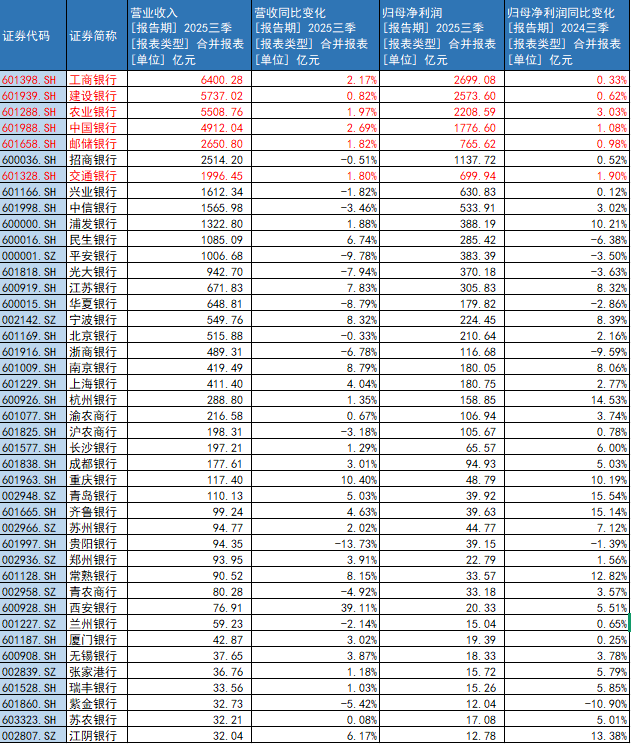
透视银行三季报:超30家净息差收窄 债市波动拖累非利息收入
Bei Ke Cai Jing· 2025-11-05 11:12
Core Insights - The overall performance of A-share listed banks in the first three quarters of the year is positive, with over 80% achieving year-on-year growth in net profit attributable to shareholders [2][3] - The growth in net profit is primarily driven by stable net interest income and improved asset quality, despite a decline in non-interest income due to bond market fluctuations [2][3] - The six major banks collectively reported over 1 trillion yuan in net profit, marking a significant milestone [3][4] Financial Performance - Among the 42 listed banks, 35 reported year-on-year growth in net profit, while only 7 experienced a decline [3][4] - The top four state-owned banks (Industrial and Commercial Bank of China, China Construction Bank, Agricultural Bank of China, and Bank of China) all achieved growth in both revenue and net profit [4][5] - Industrial and Commercial Bank of China led in revenue with 640.03 billion yuan, a 2.17% increase year-on-year, and a net profit growth of 0.33% [4][6] Non-Interest Income and Market Impact - Many banks faced a decline in non-interest income due to volatility in the bond market, with several banks reporting significant losses in fair value changes [9][10] - For instance, China Merchants Bank reported a fair value loss of 8.83 billion yuan, transitioning from profit to loss [10][12] - The decline in non-interest income is attributed to reduced earnings from bond and fund investments [10][13] Interest Income Trends - Some banks, particularly city commercial banks, saw substantial growth in interest income, with Xi'an Bank's interest income increasing over 60% [7][8] - Conversely, banks like Guiyang Bank and Capital Bank reported declines in interest income of 12.29% and 17.34%, respectively [8][9] Net Interest Margin - The overall net interest margin for listed banks has narrowed compared to the end of the previous year, although some banks have seen a recovery from the second quarter [16][20] - As of the end of the third quarter, Xi'an Bank's net interest margin was 1.79%, reflecting a 0.43% increase from the end of the previous year [16][17] - The stability of net interest margins in the fourth quarter will depend on the banks' ability to optimize their liability structures and find high-quality investment opportunities [20]