
中信银行

Search documents
中信银行深圳分行:全力担当科技金融“主力军” 助力大湾区科技创新高质量发展
证券时报· 2025-12-12 08:44
Core Viewpoint - The article emphasizes the importance of financial support for technological innovation in the Guangdong-Hong Kong-Macao Greater Bay Area, highlighting the role of CITIC Bank Shenzhen Branch as a key player in this integration of finance and technology [1][3]. Group 1: Economic Contribution of the Greater Bay Area - In 2024, the Greater Bay Area, covering less than 0.6% of the national land area and accounting for less than 6% of the population, generated 1/9 of the national economic output [3]. - The region hosts over 71,000 high-tech enterprises, 190 national-level manufacturing champions, and 2,089 specialized and innovative "little giant" companies, showcasing its status as a fertile ground for technological innovation [3]. Group 2: Role of CITIC Bank in Technological Finance - CITIC Bank Shenzhen Branch is deeply integrated into the development of the Greater Bay Area, actively supporting the "20+8" strategic emerging industry clusters through innovative financial products like "Investment-Loan Linked Points Card" and "Technology Talent Loan" [3][4]. - The bank leverages its full-license financial capabilities and follows a "One CITIC, One Client" principle to provide a comprehensive service model that includes investment, research, and commercial banking [6]. Group 3: Policy and Market Innovations - The bank capitalizes on Shenzhen's policy flexibility and market sensitivity to address institutional barriers in technological finance, engaging in cross-border financial innovations and capital project openings [4][6]. - CITIC Bank Shenzhen Branch is committed to aligning its development strategy with regional industrial planning, utilizing platforms like Qianhai for cross-border financial innovation [4]. Group 4: Comprehensive Support for Technology Enterprises - The bank focuses on the entire lifecycle of technology enterprises, offering tailored services that include collaboration with private equity, industry capital, and consulting firms to provide comprehensive financial and advisory services [6][7]. - CITIC Bank Shenzhen Branch aims to enhance its support for technology enterprises by exploring partnerships with universities and research institutions to facilitate early-stage technology transfer and financing [7].



并购新标尺!中信银行牵头主承50亿历史最大单并购票据
Xin Lang Cai Jing· 2025-12-12 08:29
Core Insights - The successful issuance of a 5 billion yuan merger note by CITIC Bank marks a significant milestone in China's merger financing market, being the largest in history and a pilot project under new regulations [1][4] - The project focuses on investing in strategically important resources, providing timely financing for the restructuring and upgrading of large state-owned enterprises [1][4] Group 1 - The issuance is expected to initiate a new dual-driven model of "merger loans + merger bonds" in the domestic merger financing market [2][5] - CITIC Bank has leveraged its expertise in bond financing and merger finance to optimize financing scales, terms, and costs for enterprises, showcasing its innovative capabilities [2][6] Group 2 - CITIC Bank has been a leader in direct financing, enhancing the breadth and depth of corporate bond financing, and has played a crucial role in supporting the real economy [3][6] - The bank has consistently been at the forefront of financial support for national strategies, having underwritten over 40% of the first batch of pilot projects for the "Technology Board" launched in May [3][6]
装修业探索后付费模式
Jing Ji Guan Cha Bao· 2025-12-12 07:47
在支付宝推出装修宝前,一些装修企业已经开始和金融机构合作探索后付费模式。2025年6月,圣都家 装与中信银行推出资金存管业务,名匠装饰、点石家装等家装企业联合平安银行推出家装资金安全保 函。 陈炜说,家装企业重营销、轻服务,差的服务很少被惩罚,爱空间希望通过与家装宝合作建立一个服务 得到奖赏的闭环,倒逼企业提升服务。 后付费模式 (原标题:装修业探索后付费模式) 经济观察报 记者 田国宝 2025年12月上旬,爱空间与支付宝旗下的家装宝签署资金存管合作协议。爱空间创始人陈炜说,2026年 3月起,爱空间的装修业务将全部转为后付费模式。 传统家装行业采取预付费模式,客户与装修公司签订完装修合同,需要支付部分或全部装修款;后付费 模式下,客户不需要预先付款,双方签订合同确定装修金额,业主将金额转入支付宝专户,按照装修节 点验收,确认满意后支付相应款项。 支付宝于2025年7月推出家装宝业务,目前在上海、杭州、贵阳、昆明、重庆、长沙、青岛、南宁等地 与数十家装修企业达成合作协议,爱空间是家装宝在北京合作的首家装修企业。 相比之下,后付费模式将总工程款按施工节点分配,节点验收合格后支付对应比例款项,竣工节点支付 最后 ...

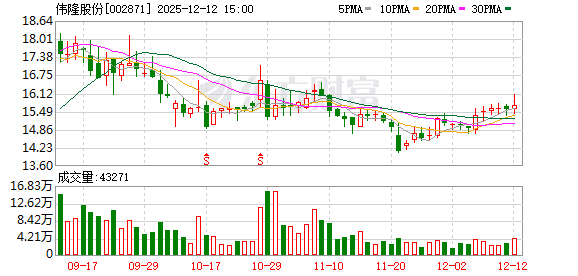
伟隆股份:使用闲置募集资金6100万元购买中信银行结构性存款
Zheng Quan Ri Bao· 2025-12-12 07:35
Group 1 - The company, Weilon Co., announced the use of idle raised funds amounting to 61 million yuan to purchase a structured deposit product linked to the exchange rate from CITIC Bank [2] - The structured deposit product has a term from December 10, 2025, to March 12, 2026, with an expected annual yield ranging from 1.00% to 2.00% [2]

红利低波ETF(512890)近20个交易日累计成交金额达141.84亿元,银行板块对长期资金的吸引力增强
Xin Lang Cai Jing· 2025-12-12 07:13
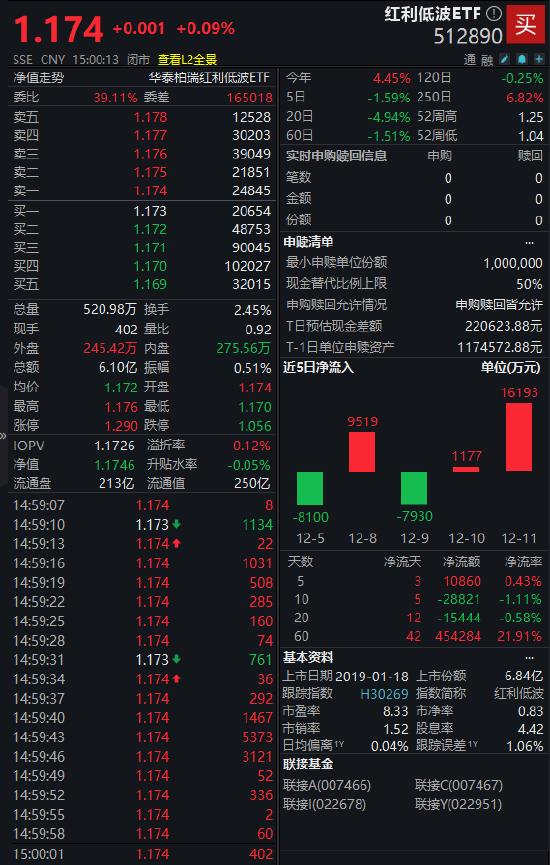
Core Viewpoint - The market is showing signs of recovery, with the three major indices closing in the green. The Dividend Low Volatility ETF (512890) has seen a slight increase of 0.09%, closing at 1.174 yuan, with a trading volume of 6.10 billion yuan, leading in its category [1][5]. Trading Performance - As of December 12, the Dividend Low Volatility ETF (512890) recorded a trading volume of 6.10 billion yuan, with a turnover rate of 2.45% [1][5]. - The ETF's price increased by 0.09%, closing at 1.174 yuan, with a maximum price of 1.176 yuan and a minimum of 1.170 yuan during the trading session [2][6]. Liquidity - Over the past 20 trading days, the ETF has accumulated a trading amount of 14.184 billion yuan, averaging 709 million yuan per day. Since the beginning of the year, the total trading amount has reached 109.795 billion yuan, with an average daily trading amount of 4.77 billion yuan [3][8]. Holdings - The latest report indicates that the top ten holdings of the Dividend Low Volatility ETF (512890) include major companies such as COFCO Sugar, Nanjing Steel, Chengdu Bank, and others, with significant weightings in the portfolio [4][8]. Historical Performance - The Dividend Low Volatility ETF (512890) was established in December 2018 and has shown a cumulative return of 134.92% as of December 11, 2025, indicating a stable historical performance [5][10].
中小银行跟进“停卡潮” 信用卡行业驶入存量竞争新航道
Xin Lang Cai Jing· 2025-12-12 01:24
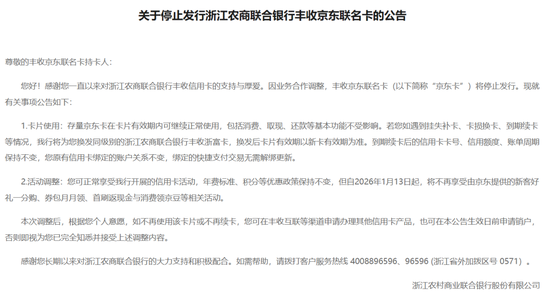
Core Viewpoint - The credit card market is undergoing significant adjustments, with many banks, especially smaller ones, halting the issuance of co-branded credit cards due to rising costs and risks associated with these products [1][5][6]. Group 1: Market Trends - The trend of halting credit card issuance is not isolated, as it has become a common practice among both national and regional banks throughout the year [1][6]. - Major banks, including China Construction Bank and Postal Savings Bank, have collectively stopped issuing over 100 credit card products since the beginning of 2025, with co-branded cards being a significant portion of these [6][11]. - The total number of credit cards in circulation has decreased by 100 million over the past three years, indicating a shift away from the previous era of aggressive expansion [10][11]. Group 2: Bank Strategies - Banks are transitioning from a focus on quantity to quality in their credit card offerings, prompted by regulatory changes and market dynamics [11][12]. - The recent adjustments include the closure of credit card centers and the integration of credit card functionalities into main banking apps, reflecting a strategic shift towards efficiency and cost reduction [14][15]. - The halting of co-branded cards is seen as a necessary step for banks to concentrate resources on more viable products and improve operational efficiency [8][9]. Group 3: Future Directions - The future of credit card business is expected to focus on three main transformation directions: integrating various service scenarios, upgrading technology for better digital experiences, and deepening customer segmentation to enhance value creation [16].




神州数码集团股份有限公司 关于为子公司担保的进展公告
Sou Hu Cai Jing· 2025-12-11 23:12
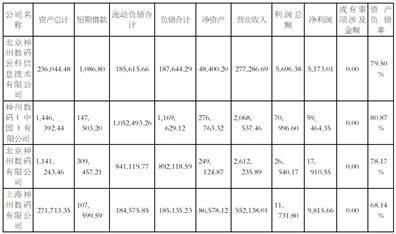
Core Viewpoint - The company has approved a series of resolutions regarding the provision of guarantees for its subsidiaries, with a total expected guarantee amount of up to 680 billion RMB, reflecting a strategic approach to support its subsidiaries based on their financial health [3][4]. Group 1: Guarantee Approvals - The company and its subsidiaries are authorized to apply for credit or performance obligations from banks and suppliers, with specific limits set for subsidiaries based on their asset-liability ratios [3]. - The approved guarantee limits include 25 billion RMB for subsidiaries with an asset-liability ratio below 70% and 655 billion RMB for those above 70%, with a total expected guarantee amount of 680 billion RMB [4]. - The company has signed guarantee contracts with various banks, including a 3 billion RMB guarantee for Beijing Shenzhou Digital Co., Ltd. and a 2 billion RMB guarantee for Beijing Shenzhou Digital Cloud Technology Co., Ltd. [5]. Group 2: Financial Data and Risk Management - As of the latest announcement, the total amount of external guarantees provided by the company and its subsidiaries is 657.11 billion RMB, with no overdue guarantees or litigation involved [6]. - The actual utilization of external guarantees is 278.49 billion RMB, which represents 301.23% of the company's most recent audited net assets [6]. - Guarantees for subsidiaries with an asset-liability ratio below 70% total 13.61 billion RMB, while those above 70% total 609.67 billion RMB [6].

银行密集挂牌 零售类不良资产“出清潮”来袭
Bei Jing Shang Bao· 2025-12-11 15:39
Core Viewpoint - A wave of retail non-performing asset (NPA) disposals is occurring among banks in China, driven by the need to optimize year-end financial statements, reduce non-performing loan ratios, and release capital space, while also addressing risks accumulated from years of rapid retail business expansion [1][5] Group 1: Asset Disposal Trends - The pace of retail NPA disposals has accelerated as year-end approaches, with multiple banks, including state-owned and regional banks, participating in the process [3][4] - Ping An Bank has announced multiple personal loan transfer projects, including a package involving 308 loans with an outstanding principal and interest of approximately 52.98 million yuan, and two credit card NPA packages totaling around 84.77 million yuan [4][5] - The average overdue days for these NPAs are significantly high, with some exceeding 2,284 days, indicating severe asset quality deterioration [4][6] Group 2: Challenges in NPA Management - Retail NPAs are characterized by small amounts, dispersion, and lack of collateral, leading to high due diligence costs and valuation difficulties for potential buyers [6][7] - Many of these assets have aged significantly, with recovery rates dropping sharply for loans overdue by more than five years, often falling below 4% [7][8] - The complexity of managing these assets, including the need for legal proceedings and the lack of effective collection methods, poses significant challenges for banks [6][7] Group 3: Future Outlook and Strategic Shifts - The current wave of NPA disposals is expected to continue into the first half of next year, with a potential increase in the scale of disposals, particularly among smaller regional banks [8][9] - Banks are increasingly utilizing financial technology, such as big data and AI, to enhance risk management and monitoring of retail clients, aiming for a comprehensive risk management system [8][9] - A strategic shift towards prioritizing risk control over rapid expansion is necessary for banks to balance growth and risk management effectively [9]

构建“五圈”生态,中信银行描绘科技金融高质量发展新蓝图
Zhong Guo Zheng Quan Bao· 2025-12-11 14:37
Core Viewpoint - The development of technology finance is essential for commercial banks, and CITIC Bank has made significant strides in product innovation, investment-loan linkage, and ecosystem construction to support technology enterprises [1] Group 1: Establishment of Technology Finance Center - CITIC Bank established a Technology Finance Center in 2022 to drive the development of technology finance across the bank, acting as a strategic implementation center, development driving center, and resource coordination center [1][2] - The center has selected 21 key technology finance branches and over 200 pioneering branches to create an agile action team that connects upper and lower levels [2] Group 2: Resource Coordination and Risk Management - The Technology Finance Center optimizes systems, integrates resources, and allocates special policies, including incorporating technology finance indicators into the assessment system and providing special subsidies [3] - It has implemented differentiated approval mechanisms to enhance credit efficiency and accessibility for technology enterprises [3] Group 3: Product Innovation and Service Offerings - CITIC Bank focuses on product innovation to create a competitive service system, introducing products like the credit financing model based on innovation scores and the Torch Loan for precise evaluation of technology enterprises [4][5] - The bank offers a full lifecycle of financial services tailored to different stages of enterprise growth, from startup loans to bond issuance and mergers and acquisitions for mature companies [5] Group 4: Ecosystem Development - CITIC Bank aims to provide comprehensive services to technology enterprises, especially startups, by building a multi-dimensional ecosystem through five circles: capital assistance, government empowerment, listing cultivation, industry traction, and result transformation [7] - The bank actively collaborates with various stakeholders, including government departments and market service institutions, to support technology enterprises [7] Group 5: New Subsidiary Launch - CITIC Bank announced the establishment of its wholly-owned subsidiary, Xinyin Financial Asset Investment Co., Ltd., which has been approved to operate, marking it as the second shareholding bank financial asset investment company in China [8] - The new subsidiary will focus on market-oriented debt-to-equity swaps and equity investment in strategic emerging industries, enhancing the bank's comprehensive operational capabilities [8]
白金信用卡权益大缩水:贵宾厅限次、酒店减量……
Mei Ri Jing Ji Xin Wen· 2025-12-11 13:51
Core Insights - The high-end credit card benefits are being significantly reduced by multiple banks, leading to a decline in the perceived value of these cards [1][3][4] - The profitability of high-end credit cards is under scrutiny, as banks struggle to balance the high costs of benefits with low revenue from transaction fees [4][5][6] - Banks are shifting their strategies from aggressive customer acquisition to maintaining existing high-value clients, focusing on overall customer value rather than just credit card profitability [8][10] Summary by Sections Benefit Reductions - High-end credit card benefits such as unlimited airport lounge access and hotel stays are being cut back, with some banks reducing annual hotel stays from two nights to one [1][2] - Changes include limiting airport lounge access to a maximum of six visits per year and increasing the points required for redeeming benefits [3] Profitability Challenges - High-end credit cards are not profitable for banks due to high costs associated with benefits and low transaction fee revenue, which averages around 0.3% in China [4][5] - The cost of services like airport transfers can range from 200 to 300 yuan, further straining profitability [4] Strategic Shifts - Banks are focusing on high-end credit cards as a means to identify and engage high-value customers, integrating these products into broader wealth management strategies [8][9] - The industry is moving towards a model that prioritizes maintaining existing customers over acquiring new ones, especially as the market becomes saturated [10]