嘉士伯

Search documents
2025一季度海外营收激增,茅台出海,必有回甘
Zhong Guo Jing Ji Wang· 2025-05-03 07:16
Core Viewpoint - The Chinese liquor industry, particularly Baijiu, is accelerating its international expansion as domestic market conditions become challenging, with major companies like Kweichow Moutai and Wuliangye actively seeking growth opportunities abroad [1][2]. Industry Overview - In 2024, the production of Baijiu in China saw a decline of 1.8%, with major listed companies reporting weak performance [1]. - The total export value of Chinese Baijiu reached $970 million in 2024, marking a 20.4% increase, while the export volume was 16,400 liters, up 6.3% [3]. - Kweichow Moutai alone accounted for over 70% of the Baijiu export market, with overseas revenue reaching approximately $7.02 billion, a 19.27% increase year-on-year [3]. Company Strategies - Kweichow Moutai aims to become an international company by 2035, while Wuliangye has prioritized international markets as a key goal for the year [1]. - The company has been enhancing its product structure and optimizing its export strategy to improve sales quality in international markets [3][4]. Market Challenges - Despite the growth in exports, Baijiu's international presence remains limited, with exports only accounting for 2.4% of the global spirits trade [5]. - Cultural differences, competition from established international brands, and tariff barriers pose significant challenges for Baijiu's global expansion [6]. Long-term Vision - Kweichow Moutai has outlined a long-term strategy focusing on quality, cultural promotion, and sustainable practices to enhance its international brand influence [7][11]. - The company is actively pursuing international certifications and has achieved significant recognition in ESG ratings, which are increasingly important for global market entry [8][12]. Sustainability Efforts - Kweichow Moutai has implemented comprehensive sustainability measures, including carbon footprint reduction and resource recycling initiatives, aiming for a 20% reduction in carbon emissions by 2030 [13][14]. - The company is also working with suppliers to promote green practices and certifications, contributing to a sustainable supply chain [14].

发展数年营收反低于2012年,惠泉啤酒利息收入占比已过半
Sou Hu Cai Jing· 2025-04-30 09:30
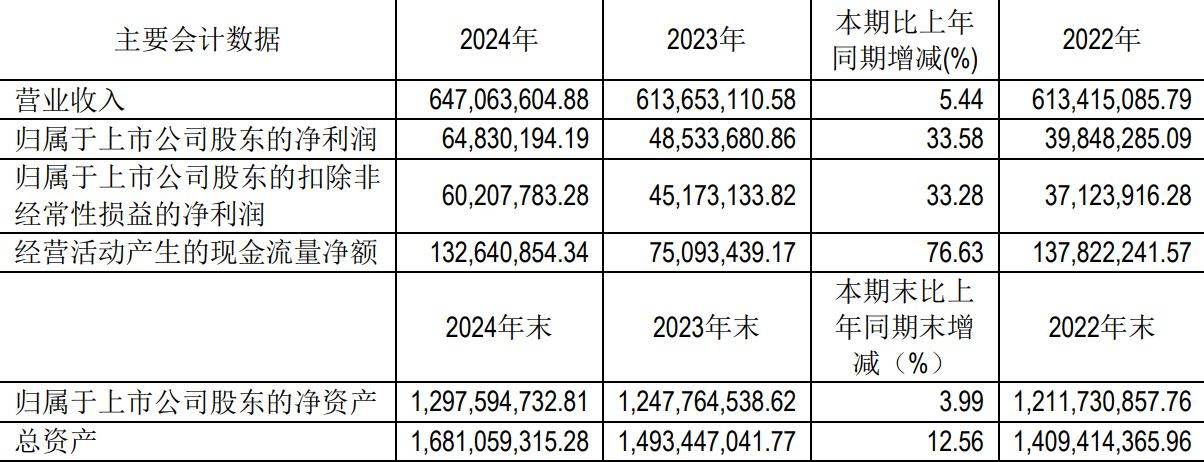
Industry Overview - The total production of the industry remains the highest globally in 2024, but the consumption side shows a trend of "stable quantity and improved quality" [1] - The five major groups, including China Resources, Qingdao, Budweiser, Yanjing, and Carlsberg, occupy over 70% of the market share, creating a monopolistic competition landscape [1] - Regional beer brands face increasing pressure from these giants, leading to a further contraction of their survival space [1] Company Performance - Huichuan Beer reported an operating revenue of approximately 647 million yuan in 2024, reflecting a year-on-year growth of about 5.44% [2][3] - The net profit attributable to shareholders was around 64.83 million yuan, showing a significant year-on-year increase of approximately 33.58% [2][3] - Interest income and investment income accounted for a substantial 57% of the total profit, indicating a reliance on non-core business activities for profitability [4][5] Financial Data - The net profit growth was primarily driven by non-beer business activities, as the core beer business struggled to contribute significantly to profits [2][4] - Operating cash flow from operating activities increased by 76.63% year-on-year, reaching approximately 132.64 million yuan [3] - The total assets of Huichuan Beer grew by 12.56% year-on-year, amounting to approximately 1.68 billion yuan [3] Market Challenges - Despite a 30.61% increase in revenue from mid-to-high-end products, the low-end market saw a decline, with ordinary product revenue dropping by about 21.05% [6] - Sales expenses exceeded the net profit from the beer business, indicating high costs associated with promoting mid-to-high-end products [6][7] - The company has faced intense competition from major players since 2012, leading to a decline in market share and revenue [8][10] Historical Context - Huichuan Beer has a long history dating back to 1938, transitioning from traditional liquor production to beer in the 1980s [8] - The company was listed on the Shanghai Stock Exchange in 2003 and has undergone several expansions to reach a production capacity of 800,000 tons [8] - Despite recent revenue growth, the company's 2024 revenue of approximately 647 million yuan is still lower than the 690 million yuan reported in 2012, indicating a long-term decline [10]


Coca-Cola Stock Gains on Q1 Earnings & Revenue Beat, Positive Trends
ZACKS· 2025-04-29 17:15
Core Insights - The Coca-Cola Company reported first-quarter 2025 results with revenues declining year over year but earnings per share (EPS) improving, indicating strong business momentum and effective pricing strategies [1][2][3] Financial Performance - Comparable EPS for the first quarter was 73 cents, a 1% increase from the previous year, surpassing the Zacks Consensus Estimate of 71 cents [2] - Revenues totaled $11.13 billion, down 2% year over year but slightly above the Zacks Consensus Estimate of $11.12 billion; organic revenues rose 6% [3] - Operating income surged 71% year over year to $3.66 billion, with a comparable operating income increase of 4% to $3.79 billion [12] Volume and Pricing - Concentrate sales increased by 1% year over year, with a price/mix improvement of 5% [5] - Total unit case volume rose 2% year over year, driven by growth in China, Brazil, and India [7] - The trademark Coca-Cola category saw a 1% volume increase, with Coca-Cola Zero Sugar advancing 14% [8] Segment Performance - North America reported a 3% revenue increase, while EMEA saw a 1% rise; however, Latin America, Asia Pacific, and Bottling Investments experienced revenue declines [11] - Organic revenues improved by 13% in Latin America and 3% in North America, with 7% growth in EMEA and Asia Pacific [11] Margin Analysis - The operating margin expanded significantly to 32.9% from 18.9% in the prior-year quarter, with comparable operating margin increasing to 33.8% [13] - Comparable currency-neutral operating income advanced 10% due to strong organic revenue growth and effective cost management [12] Guidance for 2025 - The company anticipates organic revenue growth of 5-6% for 2025, with comparable EPS growth expected to be 2-3% from the $2.88 reported in 2024 [14][15] - Management projects an adjusted free cash flow of $9.5 billion for 2025, with capital expenditure estimated at $2.2 billion [16]

FEMSA Earnings Fall Short of Estimates in Q1, Segmental Revenues Aid
ZACKS· 2025-04-29 12:55
Core Insights - FEMSA reported first-quarter 2025 net majority earnings per ADS of 79 cents, with adjusted net majority earnings per ADS of 45 cents, missing the Zacks Consensus Estimate of 52 cents [1][2] - Total revenues increased to US$9.58 billion, reflecting an 11.1% year-over-year growth in local currency, driven by gains across all business units and favorable currency rates [2] - The company's net consolidated income was Ps. 8,943 million (US$437.1 million), marking a 54.3% increase from the previous year [1] Financial Performance - Gross profit rose 15.8% year over year to Ps. 78,918 million (US$3.86 billion), with a consolidated gross margin expansion of 160 basis points [3] - Operating income improved 4.9% year over year to Ps. 13,565 million (US$663.1 million), while the consolidated operating margin declined 40 basis points to 6.9% [5] Segment Performance - **Proximity Americas**: Revenues increased 6.8% year over year to Ps. 74,886 million (US$3.7 billion), but same-store sales declined by 1.8% due to a 6.6% drop in store traffic [7][8] - **Proximity Europe**: Revenues grew 18% year over year to Ps. 12,909 million (US$631 million), but operating income fell 14.6% [9] - **Health Division**: Revenues rose 21% year over year to Ps. 21,972 million (US$1.07 billion), with same-store sales increasing by 15.4% [10] - **Fuel Division**: Revenues increased 1.8% year over year to Ps. 15,237 million (US$744.8 million), but operating income declined 13.9% [11] - **Coca-Cola FEMSA**: Revenues advanced 10% year over year to Ps. 70,157 million (US$3.4 billion), with a 7.4% increase in operating income [12] Financial Position - As of March 31, 2025, FEMSA had cash and cash equivalents of Ps. 109,345 million (US$5.3 billion) and long-term debt of Ps. 131,736 million (US$6.4 billion) [13] - Capital expenditure in Q1 2025 totaled Ps. 8,788 million (US$429.6 million), focusing on production and distribution capacity investments [13]


Boston Beer Q1 Revenues & Earnings Beat, Tariff Fears Loom on Outlook
ZACKS· 2025-04-25 16:55
Core Insights - The Boston Beer Company reported strong first-quarter 2025 results, with earnings per share of $2.16, significantly exceeding the Zacks Consensus Estimate of 78 cents, marking a 108% year-over-year improvement [3] - Net revenues reached $453.9 million, a 6.5% increase from the prior-year quarter, surpassing the Zacks Consensus Estimate of $432.3 million, driven by higher pricing and volume gains [3] - The company is focused on executing its operating plans for the summer season, leveraging a diversified brand portfolio and innovation pipeline despite ongoing macroeconomic challenges [2] Financial Performance - Gross profit improved by 17.7% year over year to $219.3 million, with gross margin expanding by 460 basis points to 48.3% from 43.7% in the previous year [9] - Advertising, promotional, and selling expenses rose by 14.4% to $137.5 million due to increased investments in media and local marketing, while general and administrative expenses decreased by 4.8% to $48 million [10] - As of March 29, 2025, the company had cash and cash equivalents of $152.5 million and total stockholders' equity of $897 million, with sufficient liquidity to meet cash requirements [11] Shipment and Depletion Trends - Shipment volume increased by 5.3% year over year to 1.7 million barrels, primarily driven by higher shipments in brands like Sun Cruiser, Hard Mountain Dew, and Twisted Tea, although depletions fell by 1% year over year [5][6] - Distributor inventory averaged nearly five weeks on hand, indicating appropriate inventory levels for each brand [8] Future Guidance - The company anticipates tariffs to have an unfavorable cost impact of $20-$30 million in 2025, which could reduce earnings per share by $1.25-$1.90 [13] - Depletions and shipments are expected to fluctuate in 2025, with second-quarter shipments anticipated to outpace depletions, but a reversal is expected in the third quarter [14] - The gross margin is projected to be between 45-47% for 2025, factoring in negative impacts from shortfall fees and non-cash expenses [15] Capital Expenditures and Share Repurchase - Capital spending is expected to be between $90-$110 million in 2025, aimed at enhancing brewery capabilities and efficiencies [17] - The company repurchased Class A common stocks worth $49.2 million in the first quarter of 2025, bringing total year-to-date repurchases to $60.5 million [12]
Keurig Q1 Earnings & Sales Beat, U.S. Refreshing Beverages Up 11%
ZACKS· 2025-04-25 15:45
Core Insights - Keurig Dr Pepper Inc. (KDP) reported first-quarter 2024 results with earnings and revenues exceeding the Zacks Consensus Estimate, showing year-over-year improvement [1][2] Financial Performance - Adjusted earnings per share (EPS) reached 42 cents, a 10.5% increase year over year, surpassing the Zacks Consensus Estimate of 38 cents [2] - Net sales amounted to $3.64 billion, reflecting a 4.8% year-over-year increase and exceeding the Zacks Consensus Estimate of $3.56 billion [6] - On a constant-currency basis, net sales improved by 6.4%, driven by a 3.6% increase in volume/mix and a favorable net price realization of 2.8% [6] - Adjusted gross profit rose 1.8% year over year to $1.99 billion, while adjusted gross margin decreased by 170 basis points to 54.6% [6] Segment Performance - U.S. Refreshment Beverages segment sales totaled $2.32 billion, up 11% year over year, supported by market share gains and the acquisition of GHOST [8] - U.S. Coffee segment sales declined 3.7% year over year to $877 million, impacted by a 5.2% decline in volume/mix due to pricing actions related to rising green coffee costs [10] - International segment sales fell 6.3% year over year to $435 million, but increased by 5.4% on a constant-currency basis [11] Operational Efficiency - Adjusted operating income increased by 3.9% year over year to $847 million, aided by higher sales and productivity savings, despite inflationary pressures [7] - Adjusted operating margin contracted by 50 basis points year over year to 23.3% [7] Financial Health - As of March 31, 2025, KDP had cash and cash equivalents of $653 million, long-term obligations of $12 billion, and total stockholders' equity of $24.4 billion [12] - Net cash provided by operating activities was $209 million, with free cash flow amounting to $102 million [12] Future Outlook - KDP reaffirmed its guidance for 2025, projecting mid-single-digit net sales growth and high-single-digit adjusted EPS growth on a constant currency basis [13] - Foreign currency translation is expected to be a nearly one percentage point headwind on growth for the current year [13]

FEMSA Stock Shoots Up 24% YTD: Time to Buy or Pause for Thought?
ZACKS· 2025-04-23 14:05
Core Viewpoint - FEMSA's shares have increased by 24.3% year-to-date, outperforming the broader industry and Consumer Staples sector, which grew by 10.7% and 5.7% respectively, while also surpassing the S&P 500's decline of 12.6% in the same period [1]. Stock Performance - At the current price of $106.23, FMX stock is trading at a 13.7% discount to its 52-week high of $123.09 and reflects a 31% premium from its 52-week low of $81.08 [5]. - The stock is above its 50 and 200-day moving averages, indicating a bullish sentiment [5]. Growth Strategies - FEMSA is focused on the FEMSA Forward Strategy, aimed at long-term value creation in its core businesses, including retail, Coca-Cola FEMSA, and Digital@FEMSA [6]. - The retail business, particularly the Proximity division, presents substantial long-term growth opportunities [6]. Digital Initiatives - FEMSA is advancing in the digital space through Digital@FEMSA, which aims to create a value-added digital and financial ecosystem [7]. - The company is investing in digital offerings, loyalty programs, and fintech platforms within its OXXO chains to strengthen its long-term position [8]. Business Unit Performance - FEMSA is experiencing solid growth trends across all business units, with significant opportunities in the Proximity and Health retail sectors [9]. - OXXO Mexico is a key pillar of FEMSA's retail operations, with a store network exceeding 1,000 locations and increasing productivity per store [11]. Valuation Perspective - FEMSA is trading at a forward 12-month price-to-earnings ratio of 19.79X, which is above the industry average of 12.49X, indicating a premium valuation [12]. - This premium is justified by FEMSA's consistent financial performance and growth prospects, driven by successful digital initiatives and strong performances in OXXO Mexico and OXXO Gas [13]. Investment Potential - The focus on the FEMSA Forward strategy, digital expansion, and potential in Proximity and Health retail businesses offers significant long-term growth opportunities [15].

“美国关税阴影”笼罩全球酒业:百年制桶厂即将关闭、千亿美元跨境贸易遭遇风暴
21世纪经济报道· 2025-04-19 15:06
Core Viewpoint - The article highlights the significant impact of U.S. tariffs on the global alcohol industry, leading to job losses and financial strain for companies, including the closure of the historic Barrels Factory in Kentucky, which will result in 210 employees losing their jobs [2][3]. Group 1: Impact of Tariffs on Companies - The closure of the Barrels Factory is part of a broader strategy by Brown-Forman to cut costs, with an expected annual savings of at least $70 million and potential asset recovery exceeding $30 million [2]. - Brown-Forman's global workforce reduction plan includes laying off over 540 employees, indicating a significant shift in operational strategy due to tariff pressures [3]. - The global alcohol industry is experiencing a downturn, with many companies facing stagnant or declining sales, prompting them to adjust their strategies in response to tariff uncertainties [3][4]. Group 2: Market Dynamics and Trade - The U.S. is a major market for imported alcoholic beverages, with projected imports of distilled spirits at $11.42 billion, beer at $6.7 billion, and wine at nearly $6.8 billion in 2024 [6]. - Major international companies like Diageo and Pernod Ricard are adjusting their performance forecasts due to tariff uncertainties, with Diageo canceling mid-term guidance and others lowering expectations [6]. - The article notes that the previous tariff disputes led to a significant drop in U.S. whiskey exports to the EU, with exports declining by over 20% [10]. Group 3: Consumer Behavior and Industry Challenges - The article discusses the adverse effects of tariffs on consumer prices, particularly for European wines, which could see price increases of nearly 30% due to added tariffs [13]. - The U.S. alcohol market is facing its first decline in nearly 30 years, with a 2% drop in sales in 2023, affecting various categories except for tequila, American whiskey, and ready-to-drink cocktails [18]. - Smaller distilleries in the U.S. are particularly vulnerable, with nearly 50 whiskey distilleries filing for bankruptcy in 2023 due to liquidity crises and debt pressures [19]. Group 4: Global Trends and Regional Variations - The article highlights that the global alcohol market is experiencing a significant shift, with the U.S. market showing a decline while Australian wine exports to China are rebounding after tariff removals [20][21]. - European alcohol producers are also struggling, with the Scottish whiskey industry facing export declines and some distilleries halting production in response to reduced demand [20]. - The overall sentiment in the alcohol industry is one of caution, with many producers and consumers adopting a wait-and-see approach due to the uncertainties created by tariffs and economic conditions [23].



Are Consumer Staples Stocks Lagging Carlsberg (CABGY) This Year?
ZACKS· 2025-04-16 14:46
The Consumer Staples group has plenty of great stocks, but investors should always be looking for companies that are outperforming their peers. Has Carlsberg AS (CABGY) been one of those stocks this year? Let's take a closer look at the stock's year-to-date performance to find out.Carlsberg AS is a member of the Consumer Staples sector. This group includes 177 individual stocks and currently holds a Zacks Sector Rank of #8. The Zacks Sector Rank considers 16 different groups, measuring the average Zacks Ran ...

CABGY vs. BF.B: Which Stock Should Value Investors Buy Now?
ZACKS· 2025-04-09 16:45
Core Viewpoint - Carlsberg AS (CABGY) is currently viewed as a more attractive investment option compared to Brown-Forman B (BF.B) for value investors, based on various financial metrics and earnings outlooks [1][3][7]. Valuation Metrics - CABGY has a forward P/E ratio of 14.63, while BF.B has a forward P/E of 17.35, indicating that CABGY is potentially undervalued [5]. - The PEG ratio for CABGY is 1.43, compared to BF.B's PEG ratio of 5.42, suggesting that CABGY offers better value relative to its expected earnings growth [5]. - CABGY's P/B ratio is 3.66, while BF.B's P/B ratio is 3.89, further supporting the notion that CABGY is more attractively valued [6]. Earnings Outlook - CABGY holds a Zacks Rank of 2 (Buy), indicating a positive earnings estimate revision trend, whereas BF.B has a Zacks Rank of 3 (Hold), suggesting a less favorable outlook [3][7]. - The stronger estimate revision activity for CABGY implies a more optimistic earnings outlook compared to BF.B [7].