
Nexperia

Search documents
Nexperia crisis gives rise to chip supply concerns
Yahoo Finance· 2025-10-29 10:26
Core Viewpoint - The ongoing geopolitical tensions between the US and China have led to significant disruptions in the semiconductor supply chain, particularly affecting Nexperia, a key supplier to the automotive industry, which may result in production stoppages if not resolved quickly [4][11][14]. Company Overview - Nexperia, based in Nijmegen, Netherlands, primarily serves the automotive industry, with around 60% of its products used in various vehicle applications such as lighting and airbag systems [5]. - The company was formed in 2017 when NXP sold its Standard Products division to Chinese investors for $2.75 billion, and later acquired by Wingtech Technology for $3.6 billion in 2019 [6]. Recent Developments - Nexperia's Chinese subsidiary declared independence from its parent company in the Netherlands on October 19, 2025, stating it would only follow local instructions [1]. - The Chinese government imposed export controls on Nexperia's factories from October 4, 2025, impacting the delivery of chips to the automotive supply chain [2]. - On October 10, 2025, Nexperia warned clients that it could no longer guarantee chip deliveries, leading to concerns about potential production stoppages [2][7]. Industry Impact - The European automakers' lobbying group, ACEA, projected that Nexperia's chip stocks might last only a few weeks, affecting many suppliers across the industry [7]. - The Alliance for Automotive Innovation in the US also called for a quick resolution, warning that assembly stoppages could occur as early as November [8]. - Major European automakers, including BMW and Volkswagen, are monitoring the situation but have not yet announced production reductions due to Nexperia chip shortages [9][10]. Mitigation Strategies - Unlike previous chip shortages caused by the COVID pandemic, this disruption is seen as potentially resolvable through negotiations and trade agreements [11]. - OEMs and Tier 1 suppliers are actively seeking alternative chip sources, with companies like Infineon and ON Semiconductor identified as potential replacements [12]. - Some companies, such as Valeo, have successfully found replacements for Nexperia chips, indicating that alternative sourcing strategies are viable [13]. Conclusion - If Nexperia cannot resume deliveries soon and suppliers fail to secure alternative chips, production slowdowns and closures are likely [14]. - The industry may revert to stockpiling and component rationing strategies reminiscent of the severe chip shortages in 2021, although political stakeholders are expected to seek a resolution to minimize disruptions [15].
Global Markets Navigate Chip Shortages, Inflationary Shifts, and Policy Initiatives
Stock Market News· 2025-10-29 09:09
Market Overview - Global financial markets are influenced by a combination of economic data, corporate earnings, and geopolitical tensions, including automotive production halts and inflation metrics [2] - Ongoing property market issues in China are affecting investor sentiment, while U.S. policy initiatives aim for energy abundance and faster drug approvals [2] Automotive Sector - Honda announced a temporary production halt at its Celaya, Mexico plant due to severe supply chain issues, particularly a global semiconductor chip shortage, impacting its North American operations [3] - Mercedes-Benz reported a 31% year-on-year decline in third-quarter net income to €1.19 billion, with revenue down 7% to €32.15 billion, primarily due to weak demand in China and U.S. tariffs [4] Inflation and Monetary Policy - The U.S. core Consumer Price Index (CPI) rose by 0.23% month-over-month in September, leading to a year-over-year increase of 3.0%, driven by cooling shelter inflation and falling used car prices [5] Gold Market - Gold prices have shown significant volatility, surpassing $4,000 per ounce and reaching an all-time high of $4,381.58 in October 2025, but recently dipped below $4,000 due to easing safe-haven demand [6][7] China's Property Crisis - Fitch Ratings warns that China's property crisis will extend into 2026, with new home sales expected to decline by 15-20%, further impacting the asset quality of Chinese banks [8] Energy Policy - The U.S. Department of Energy is pursuing an "energy abundance" policy, aiming to keep energy prices down and accelerate the commercialization of fusion energy by the mid-2030s [9] Sovereign Wealth Fund Performance - Norway's Sovereign Wealth Fund reported a 5.7% return on investments for the first half of 2025, driven by strong equity market performance, particularly in the financial sector [10] Drug Approvals - The U.S. FDA is set to accelerate generic biological drug approvals, with 2025 expected to be a record year for biosimilar approvals, potentially reducing prescription drug costs significantly [11]




投资80亿,欧洲最大晶圆厂诞生
半导体行业观察· 2025-10-29 02:14
Core Viewpoint - GlobalFoundries plans to invest €1.1 billion to expand its semiconductor manufacturing capacity in Dresden, Germany, aiming to produce over 1 million wafers annually by the end of 2028, making it the largest facility of its kind in Europe [2][4]. Investment and Expansion Plans - The "SPRINT" expansion project will receive support from the German federal government and Saxony under the European Chips Act, with full implementation expected to be approved by the EU later this year [2][4]. - The investment highlights Saxony's role as a key hub for semiconductor manufacturing and innovation, reinforcing Europe's strategy to enhance supply chain resilience [2][4]. Government and Political Support - German Chancellor Friedrich Merz welcomed the investment, emphasizing Germany's commitment to being an industrial and innovation center, particularly in shaping the global semiconductor market [2][4]. - Saxony's Prime Minister Michael Kretschmer noted that the investment is a positive development for the Saxony Silicon Valley, enhancing economic strength and technological independence in Europe [2][4]. Technological Focus - The new capacity will focus on differentiated technologies, including low power consumption, embedded security memory, and wireless connectivity, which are crucial for sectors like automotive, IoT, defense, and critical infrastructure [2][4]. - The investment will also support ongoing innovations in next-generation computing architectures and quantum technologies [2][4]. Market Demand and Supply Chain Concerns - GlobalFoundries' CEO Tim Breen stated that the recent turmoil in the automotive sector has highlighted the fragility of the global chip supply chain, prompting the need for independent semiconductor supply outside of China and Taiwan [4][5]. - The company aims to meet the growing demand from European clients for secure and independent semiconductor supply chains [4][5]. EU Chips Act and Market Dynamics - The EU Chips Act aims for Europe to control 20% of the global advanced chip production market by 2030, but current levels are only at 8.1% [5]. - GlobalFoundries is expected to receive subsidies from the EU Chips Act, although there are concerns about the slow process and allocation of funds [5][6].

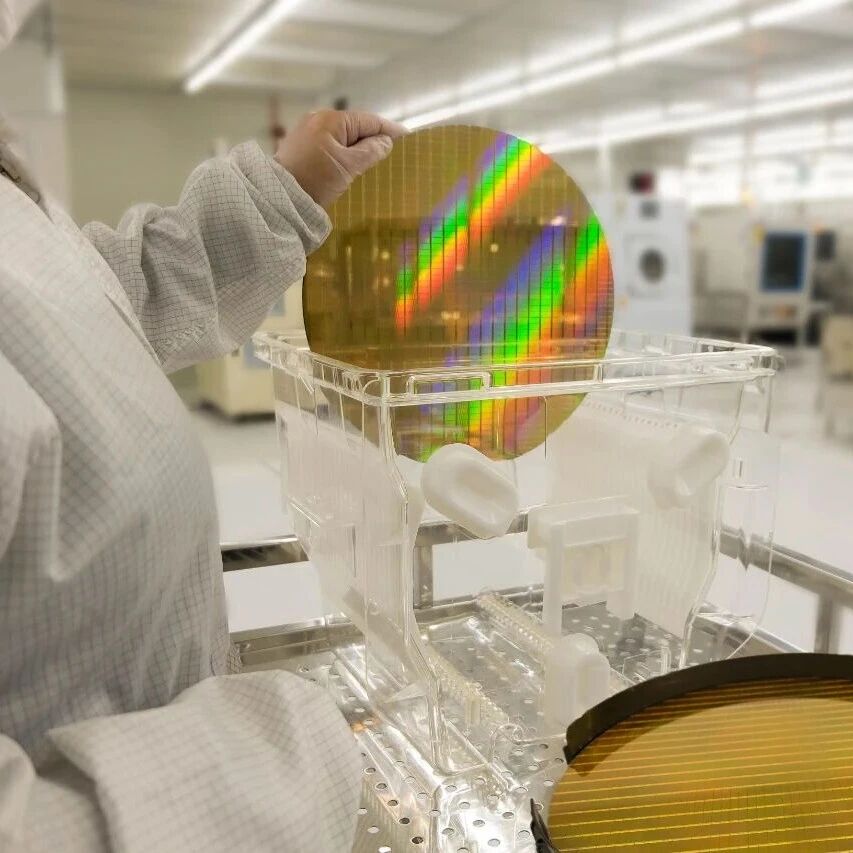
安世芯片禁止出口,车厂被迫停产
半导体行业观察· 2025-10-29 02:14
Group 1 - The automotive industry is facing a potential disruption due to a shortage of simple microchips, highlighted by Honda's production cut in North America [2][3] - Dutch chip manufacturer Nexperia has halted exports from China, raising concerns among automakers about supply shortages [2][4] - Nexperia holds a significant market share in basic chips used in various automotive components, and its inability to resume shipments could complicate the search for alternatives [2][4] Group 2 - Honda is implementing strategic adjustments, including temporary shutdowns, to manage existing parts amid semiconductor supply chain issues [3][4] - The Dutch government has taken control of Nexperia due to concerns over national security risks associated with its CEO's actions regarding production capacity and intellectual property [3][4] - The Chinese government has retaliated by ordering Nexperia's parent company to suspend exports, affecting 80% of Nexperia's products processed in China [4][5] Group 3 - Industry executives express that the current supply disruption may not be as severe as the previous semiconductor crisis, but the limited inventory of Nexperia's chips poses a challenge [5][6] - Major suppliers like Bosch are preparing to adjust production plans but currently do not see an immediate need for drastic changes [5][6] - U.S. automakers are collaborating with government officials to address the supply chain issues before production losses occur [6]

Automakers may halt output in Brazil if chips crisis persists, says government official
Yahoo Finance· 2025-10-28 23:00
Core Viewpoint - The global chips supply crisis may lead to some automakers in Brazil halting operations within two to three weeks if no solution is found, prompting the Brazilian government to engage with Chinese authorities for resolution [1][3]. Group 1: Impact on Automakers - Some automakers in Brazil could be affected by the ongoing global chip supply crisis, although specific companies have not been identified [2]. - The potential shutdown of operations is linked to a standoff between China and the Netherlands regarding the chipmaker Nexperia, which has implications for the automotive sector [2][4]. Group 2: Government Response - Brazil's Vice President and Minister of Development, Industry, Trade and Services, Geraldo Alckmin, is actively involved in discussions to address the chip supply issue, having contacted both the Brazilian ambassador to China and the Chinese ambassador to Brazil [5]. - The local private sector is urging for dialogue between Brazilian and Chinese authorities to mitigate the impact of the chip supply crisis [5].
欧洲车市“金九”成色足:销量连续三月增长 电动车激增三成
Zhi Tong Cai Jing· 2025-10-28 07:08
Group 1 - In September, the number of affordable electric vehicles available to European consumers increased, leading to a third consecutive month of growth in car sales, with new registrations rising by 11% year-on-year to 1.24 million units [1] - Sales of fully electric and plug-in hybrid vehicles grew by one-third, driven by strong demand for more affordable models like the Skoda Elroq and Renault R5 [1] - Major markets in Europe, including the UK and Germany, saw increases in car deliveries of 14% and 13% respectively [1] Group 2 - Despite improvements in electric vehicle sales, automakers are still facing challenges with lower-than-expected sales, particularly for higher-priced battery-powered models [4] - The EU's plan to phase out the sale of new fuel vehicles by 2035 faces uncertainty, which hinders the adoption of electric vehicles [4] - The overall increase in sales provides some relief for German manufacturers like BMW, Volkswagen, and Mercedes-Benz, who are struggling in the Chinese market against local competitors [4] Group 3 - In the UK, September saw a significant increase in car registrations, typically a peak sales month due to the issuance of new license plates [8] - Plug-in hybrid vehicle deliveries surged by 62%, while fully electric vehicle sales increased by 22%, together accounting for nearly one-third of total registrations in the region [8] - Among major manufacturers, Stellantis and Renault performed best, while Tesla's sales declined by 10%, resulting in a market share of only 3.2% [8] Group 4 - Automakers and suppliers are urgently seeking alternatives to chips produced by Nexperia, which has become a focal point in the political deadlock [5] - Upcoming meetings between US and Chinese leaders may yield positive outcomes to ease trade tensions, although core issues remain unresolved [5]

投资者演示文稿 - 全会要点与五年规划科技投资手册-Investor Presentation-Plenum Takeaways and FYP Tech Playbook
2025-10-27 12:06
Summary of Key Points from the Conference Call Industry and Company Involved - The conference call primarily discusses the **Asia Pacific** region with a focus on **China's technological self-sufficiency and innovation** as part of the **Five-Year Plan (FYP)** priorities set during the recent Plenary Session [5][4]. Core Insights and Arguments 1. **Technological Self-Sufficiency**: The Plenary emphasized the importance of achieving technological self-sufficiency and innovation, aiming to maintain a "reasonable share" of manufacturing in GDP [5][4]. 2. **Consumption and Social Welfare**: There is a gradual but continued focus on improving consumption and social welfare, with upcoming documents expected to provide more detailed suggestions on supply-centric policies [5][4]. 3. **Medium-Term Goals**: The full FYP will outline medium-term goals for various economic indicators, including GDP growth, R&D intensity, urbanization, carbon emissions, and social welfare coverage [5][4]. 4. **Economic Targets for 2026**: The real GDP growth target is likely set at approximately **5%**, with fiscal policies remaining broadly aligned with 2025, and additional stimulus contingent on external demand weakness [5][4]. 5. **Housing Support**: Direct support from the central government for housing is considered possible, although implementation challenges remain [5][4]. Additional Important Content 1. **Emerging Sectors and Bottlenecks**: The report highlights rapid progress in emerging sectors such as biotech and aerospace, while also identifying key bottlenecks in high-end chips, core algorithms, and foundational models [14][15][16]. 2. **Investment Trends**: Recent measures to support investment include a **RMB 500 billion** quasi-fiscal tool and an increase in local government bond issuance [33][32]. 3. **TFP Growth Challenges**: Total Factor Productivity (TFP) growth has slowed, indicating a "TFP recession" since 2008, with an average growth rate of **1.5%** since 2010 [21][22]. 4. **Social Welfare Spending**: Insufficient social welfare spending is linked to lower consumption shares in GDP, suggesting a need for reform in this area to boost economic growth [28][30]. This summary encapsulates the critical points discussed in the conference call, focusing on the strategic direction of China's economic policies and the implications for investment opportunities and risks in the Asia Pacific region.
Japanese automakers warned of chip supply disruption
Yahoo Finance· 2025-10-27 09:52
Core Insights - Japan's automotive industry faces potential semiconductor shortages due to the Dutch government's seizure of Nexperia BV, a subsidiary of China's Wingtech Technology Company [1][3] - Major Japanese automakers, including Toyota, Honda, and Nissan, are reassessing their sourcing strategies in light of these developments [1] - The Japan Automobile Manufacturers Association (JAMA) has warned that disruptions in supplies from Nexperia could impact vehicle production in Japan [2][6] Group 1: Government Actions and Corporate Governance - The Dutch government took operational control of Nexperia at the end of September, citing corporate governance flaws, which has escalated trade tensions between China and the Netherlands [3] - Wingtech has indicated a potential cash flow squeeze if it cannot regain control of Nexperia, despite a 280% increase in its latest quarterly net profit [4] Group 2: Impact on Automotive Industry - Nexperia has informed its Japanese automotive customers that it can no longer guarantee supplies, prompting Japanese electronics companies to seek alternative suppliers [5] - JAMA emphasized that chips from Nexperia are critical for electronic control units (ECUs), and the situation could severely affect global production for its member companies [6]

VW's Lies urges quick diplomatic solution to Nexperia dispute
Reuters· 2025-10-27 09:34
Core Viewpoint - The trade dispute between China and the Netherlands regarding Dutch chipmaker Nexperia poses a significant risk to automotive production and requires urgent diplomatic intervention [1] Group 1: Industry Impact - The ongoing trade tensions could disrupt the supply chain in the automotive sector, which is heavily reliant on semiconductor components [1] - A resolution is critical to prevent potential production halts in the automotive industry, highlighting the interconnectedness of global supply chains [1] Group 2: Company Specifics - Nexperia, as a key player in the semiconductor market, is at the center of this dispute, which could affect its operations and partnerships [1] - The outcome of the diplomatic negotiations will have direct implications for Nexperia's production capabilities and market position [1]


Geopolitical Tensions Escalate: Nexperia Crisis Hits EU Auto Industry as Russia Tests Nuclear-Powered Missile
Stock Market News· 2025-10-27 07:08
Geopolitical Tensions - The global geopolitical landscape is experiencing heightened tensions, particularly due to a semiconductor dispute in Europe and advancements in Russia's nuclear arsenal [2] - The semiconductor dispute is centered around Nexperia, a key supplier for the automotive sector, which has raised concerns about global supply chain stability [3][4] Nexperia Controversy - The Dutch government seized control of Nexperia, citing national security and intellectual property concerns, influenced by US pressure after Wingtech Technology was added to the US Entity List in 2024 [3][4] - In retaliation, China has banned exports of Nexperia's finished chips to Europe, directly impacting the supply chain [4] - Nexperia supplies approximately 49% of the electronic components used in European vehicles, making the automotive sector highly vulnerable to disruptions [5] Impact on Automotive Industry - The European automotive industry is facing severe repercussions, with industry bodies warning of potential production stoppages due to the chip shortage [5] - Analysts at Deutsche Bank forecast a potential 10% production drop for Germany, with a worst-case scenario reaching 30% [5] - Dutch Prime Minister Dick Schoof has briefed EU leaders on the situation, indicating ongoing discussions among Dutch, Chinese, and EU officials to find a resolution [5] Russian Military Developments - Russian President Vladimir Putin announced the successful test of the Burevestnik nuclear-powered cruise missile, claiming it has unlimited range and can evade existing defense systems [6][7] - The missile test involved a 15-hour flight covering 14,000 kilometers (8,700 miles), signaling Moscow's defiance against Western pressure regarding the Ukraine conflict [7][8] - The missile is expected to enter service between 2025 and 2027, although Western experts express skepticism about its reliability and environmental risks [9]