沪农商行

Search documents
金融严监管驱动机构完善内部治理
Jin Rong Shi Bao· 2025-05-14 01:43
Core Viewpoint - The regulatory environment for financial institutions in China is becoming increasingly stringent, with a focus on enhancing compliance and risk management practices to protect investors and improve market confidence [1][2][3]. Regulatory Actions - As of the end of April, financial regulatory bodies issued a total of 727 fines to banking institutions, involving over 300 commercial banks, with a total penalty amounting to 562 million yuan [1][2]. - The regulatory authorities are expected to continue implementing "five major regulations" to deepen the enforcement of financial regulations [1][2]. Penalty Statistics - In the first four months of the year, a total of 1,916 fines were issued, with 727 directed at institutions and 1,189 at individuals, indicating a trend towards personal accountability in financial misconduct [2][5]. - Among the penalties, rural financial institutions faced the highest number of fines, with 216 for rural commercial banks, 32 for rural credit cooperatives, and 100 for village banks, totaling approximately 212 million yuan [2]. Focus Areas of Violations - The primary reasons for penalties include violations related to credit management, internal controls, and account management, with a significant number of fines issued for issues in loan management and compliance [7][8]. - The new Anti-Money Laundering Law, effective from January 1, 2025, aims to enhance the obligations of financial institutions in areas such as customer due diligence and suspicious transaction reporting [3]. Compliance and Internal Control - There is a growing emphasis on internal compliance, with financial institutions increasingly integrating compliance assessments into their business performance evaluations [5][6]. - The dual penalty system, which holds both institutions and individual employees accountable, is becoming a standard practice, enhancing the deterrent effect of regulatory actions [4][5]. Trends in Regulatory Environment - The overall trend shows a reduction in the number of penalized institutions and fines compared to the previous year, suggesting that banks are becoming more compliant and that regulatory measures are effective [3][8]. - Financial institutions are encouraged to adopt technology to improve monitoring of loan usage and compliance, thereby reducing the risk of violations [8][9].
10家A股上市农商银行业绩披露→
Jin Rong Shi Bao· 2025-05-13 12:40
Core Insights - The 10 A-share listed rural commercial banks reported a dual increase in revenue and net profit attributable to shareholders for 2024, despite challenges from economic changes and a decline in net interest margins [1][3]. Group 1: Financial Performance - Ruifeng Bank is the only institution among the 10 A-share listed rural commercial banks to achieve a total asset growth rate exceeding 10%, with total assets reaching 220.503 billion yuan, ranking it higher in total assets among its peers [2]. - Ruifeng Bank's net interest margin decreased by 0.23 percentage points, but its interest income remained above 3 billion yuan due to high business growth, leading to over 10% growth in both operating revenue and net profit [2]. - Changshu Rural Commercial Bank also reported over 10% year-on-year growth in both revenue and net profit, with net profit reaching 3.813 billion yuan and revenue surpassing 10 billion yuan, attributed to a relatively stable net interest margin of 2.71% [2]. Group 2: Non-Interest Income - The overall narrowing of interest margins among A-share listed rural commercial banks was evident, with all banks except Changshu experiencing a decline in interest income, while non-interest income grew rapidly, highlighting its significant contribution to revenue [3]. Group 3: Service Differentiation - The banks focused on enhancing their service models and product systems, adjusting interest rate management and operational methods to mitigate the impact of margin changes and insufficient effective demand [4]. - Chongqing Rural Commercial Bank implemented a detailed service management system and promoted a differentiated financial service system to better serve agricultural needs [4]. - Qingdao Rural Commercial Bank innovated with a "Farm Calendar" to align financial services with agricultural production cycles, while Wuxi Rural Commercial Bank leveraged its social security card services for cross-marketing opportunities [4]. Group 4: Risk Management - A-share listed rural commercial banks maintained high asset quality levels, with 8 out of 10 banks reporting stable or improved non-performing loan (NPL) ratios, with Jiangyin Rural Commercial Bank showing the most significant improvement [6][7]. - Chongqing, Qingdao, and Suzhou Rural Commercial Banks also reported slight decreases in their NPL ratios, while Changshu and Zijin experienced minor increases [6]. - Many banks saw a decline in their provision coverage ratios, indicating effective risk management practices, with only Qingdao and Ruifeng banks showing slight increases in their coverage ratios [7].
聚焦价值创造,上海农商银行实现投资价值与社会效益双丰收
Huan Qiu Wang· 2025-05-13 07:40
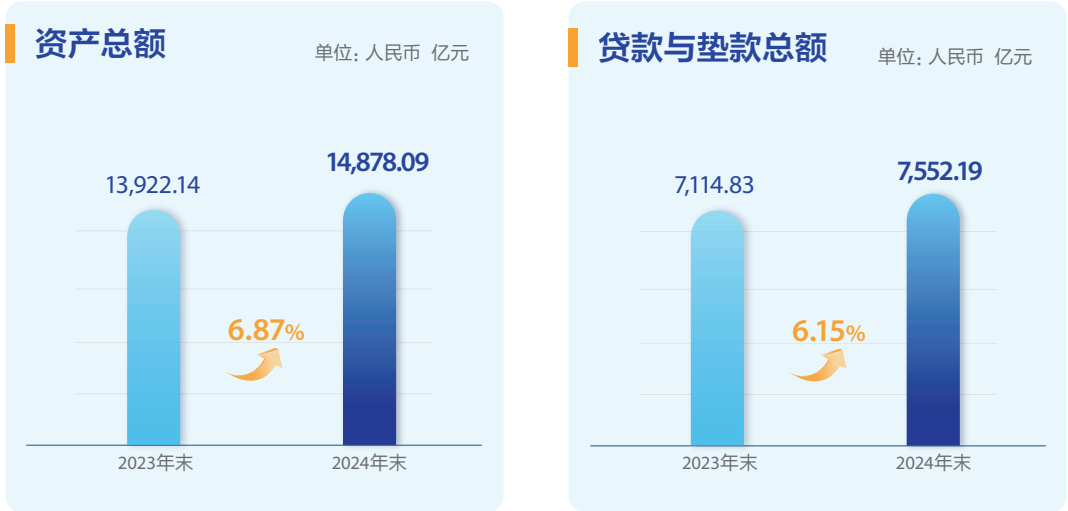
Core Viewpoint - Shanghai Rural Commercial Bank reported steady growth in revenue and profit for 2024, with a focus on enhancing asset quality and optimizing business structure [1][3] Financial Performance - The bank achieved a net operating income of 26.641 billion yuan, a year-on-year increase of 0.9% [1] - The net profit attributable to shareholders was 12.288 billion yuan, up 1.2% year-on-year, with a non-recurring net profit growth of 2.75% [1] - Total assets reached 1.49 trillion yuan, a 6.87% increase from the previous year [1] Asset Quality - Non-performing loan balance stood at 7.295 billion yuan, with a non-performing loan ratio of 0.97%, unchanged from the previous year [3] - The bank's net capital amounted to 145.266 billion yuan, an increase of 11.748 billion yuan year-on-year, with a capital adequacy ratio of 17.15%, up from 15.74% [3] Business Strategy - The bank emphasizes "value creation" and aims to balance business performance with social responsibility [3] - It has developed a comprehensive financial service system focusing on agriculture, technology, and green finance [4][5] Technology and Innovation - The bank's loans to technology enterprises reached 114.984 billion yuan, a 24.29% increase year-on-year, with the number of technology clients growing by 30.63% [4] - Digital financial services have been enhanced, with online channel users increasing to 6.4963 million, a growth of 5.93% [7] Social Responsibility and Community Engagement - The bank has established a robust inclusive finance service system, with microloans for small and micro enterprises reaching 86.608 billion yuan, an 11.14% increase [6] - It has also focused on pension finance, with a client base of 1.2751 million for pension distribution [6] Market Position and Recognition - Shanghai Rural Commercial Bank ranked 128th in the "2024 Global Bank 1000" and 23rd in the "2024 China Banking Top 100" [8] - The bank has received multiple awards for its stability and innovation in financial technology [9] Shareholder Returns - The bank proposed a cash dividend of 1.93 yuan per 10 shares, totaling 1.861 billion yuan, with a cumulative dividend payout of 4.166 billion yuan for 2024 [9][11] - The dividend payout ratio increased to 33.91%, up 3.81 percentage points from the previous year [9][11] Future Outlook - Analysts expect steady growth in net profit for 2025-2027, with a focus on maintaining high dividend rates [12]

政策加码下25年银行基本面有望重塑,国企红利ETF(159515)涨近1%
Sou Hu Cai Jing· 2025-05-13 06:05
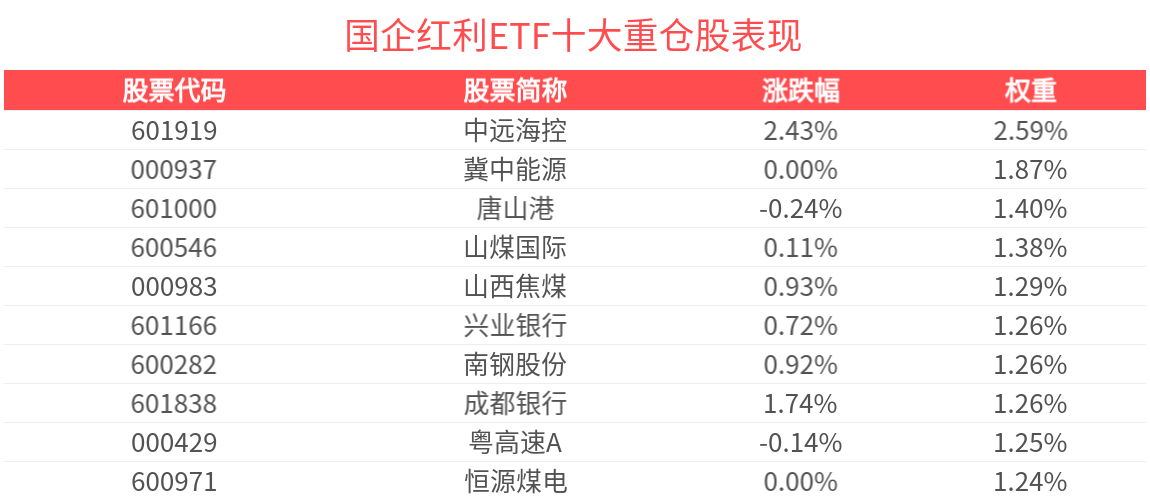
Group 1 - The banking sector is experiencing significant gains, with the CSI State-Owned Enterprises Dividend Index rising by 0.85% and several constituent stocks showing notable increases, such as Shimao Holdings up by 5.71% and Shanghai Bank up by 3.66% [1] - The National Enterprise Dividend ETF has seen a substantial growth in scale, increasing by 18.98 million yuan over the past three months, ranking it in the top half among comparable funds [1] - The ETF's share volume has also grown significantly, with an increase of 16.80 million shares in the last three months, again placing it in the top half of comparable funds [1] Group 2 - Current economic policies are focused on stabilizing growth, with a combination of loose monetary and fiscal policies expected to have a profound impact on the banking sector's fundamentals in 2025 [2] - The fiscal policy is being strengthened to support social financing and boost economic expectations, which is likely to benefit cyclical sectors [2] - Although banks may face short-term pressure on net interest margins due to a broad decline in interest rates, regulatory measures against high-interest deposit solicitation are expected to provide support for interest margins in 2025 [2] - 2025 is anticipated to be a year of solidifying asset quality for banks, with improved risk expectations in real estate and urban investment properties underpinned by supportive policies [2] Group 3 - As of April 30, 2025, the top ten weighted stocks in the CSI State-Owned Enterprises Dividend Index account for 15.18% of the index, with significant contributors including COSCO Shipping Holdings and Hebei Energy [3]


中小银行开启数字化转型“加速跑” 科技人才加速引进 AI大模型应用全面开花
Jin Rong Shi Bao· 2025-05-13 03:11
Group 1 - The emergence of AI large models like ChatGPT and DeepSeek is significantly influencing the digital transformation strategies of commercial banks, particularly highlighting the contrasting approaches of state-owned banks and small to medium-sized banks [1] - Small and medium-sized banks are actively pursuing digital transformation, leveraging open-source large models to enhance their technological capabilities and narrow the gap with larger banks [1] - The trend of "AI + finance" is gaining momentum among small banks, leading to the replacement of repetitive manual tasks with intelligent applications, thereby transforming their efficiency and value [1] Group 2 - A recent report indicates that small banks are steadily increasing their financial technology investments in 2024, with a growing number incorporating core technology development and new financial applications into their plans [2] - Beijing Bank has successfully completed its digital transformation phase, with technology investment accounting for 4.6% of its revenue in 2024, while Shanghai Bank's technology investment reached 2.519 billion yuan, a 3.15% increase year-on-year [2] - Small banks are also ramping up recruitment for technology talent, with their financial technology teams beginning to take shape [2][3] Group 3 - As of last year, Beijing Bank had 1,101 technology employees, while Ningbo Bank's technology personnel accounted for 7.92% of its total staff, reflecting a year-on-year increase [3] - Ningbo Bank is actively recruiting for application development roles focused on large model applications, while Shanghai Bank has also announced multiple job openings in technology-related positions [3] Group 4 - The presence of AI and large models in the annual reports of small banks is notably high, with Beijing Bank launching an "All in AI" strategy and deploying the DeepSeek model for daily operations [4] - Ningbo Bank has established a dedicated project team for large models, focusing on the application of AI in banking operations [5] Group 5 - Small banks are increasingly exploring the application of AI in various business scenarios, with Beijing Bank implementing over 170 AI-based services and 540 algorithm models [6] - Innovations such as "Smart Assistant" tools and AI-driven wealth management services are being introduced by banks like Hangzhou Bank and Changsha Bank to enhance customer service and operational efficiency [6] Group 6 - The integration of AI has led to significant operational cost reductions and efficiency improvements for small banks, with Shanghai Bank reporting a 60% increase in knowledge retrieval efficiency and an 80% accuracy rate in customer service processes [7] - Beijing Bank's automation initiatives have resulted in a 30% improvement in business process efficiency, demonstrating the effectiveness of AI in enhancing operational workflows [7]


前十大农商行2024净利榜:两家连续两年降幅两位数
Zhong Guo Jing Ji Wang· 2025-05-12 23:19
Core Insights - The China Banking Association released the "Top 100 Chinese Banks for 2024," featuring 17 rural commercial banks, with Shanghai Rural Commercial Bank leading in net profit [1] - Shanghai Rural Commercial Bank achieved a net profit of 12.288 billion yuan, followed by Chongqing Rural Commercial Bank and Beijing Rural Commercial Bank with 11.513 billion yuan and 7.973 billion yuan respectively [1] Summary by Category Net Profit Performance - Shanghai Rural Commercial Bank: 12.288 billion yuan - Chongqing Rural Commercial Bank: 11.513 billion yuan - Beijing Rural Commercial Bank: 7.973 billion yuan - Chengdu Rural Commercial Bank: 6.465 billion yuan - Shenzhen Rural Commercial Bank: 6.141 billion yuan - Dongguan Rural Commercial Bank: 4.625 billion yuan - Jiangnan Rural Commercial Bank: 3.843 billion yuan - Shunde Rural Commercial Bank: 3.174 billion yuan - Tianjin Rural Commercial Bank: 2.946 billion yuan - Guangzhou Rural Commercial Bank: 2.081 billion yuan [1] Net Profit Growth Rate - Chengdu Rural Commercial Bank: 11.58% growth in 2024, down from 12.13% in 2023 - Tianjin Rural Commercial Bank: 5.98% growth in 2024, down from 6.90% in 2023 - Chongqing Rural Commercial Bank: 5.60% growth in 2024, down from 6.10% in 2023 - Jiangnan Rural Commercial Bank: 2.86% growth in 2024, down from 12.73% in 2023 - Shanghai Rural Commercial Bank: 1.20% growth in 2024, down from 10.64% in 2023 - Beijing Rural Commercial Bank: 0.71% growth in 2024, up from 0.14% in 2023 - Shenzhen Rural Commercial Bank: 0.17% growth in 2024, down from 3.37% in 2023 - Shunde Rural Commercial Bank: -8.26% decline in 2024, down from -0.05% in 2023 - Dongguan Rural Commercial Bank: -10.40% decline in 2024, down from -12.99% in 2023 - Guangzhou Rural Commercial Bank: -21.02% decline in 2024, down from -24.56% in 2023 [2]

前十农商行2024不良率榜:东莞农商行数值增幅双冠王
Zhong Guo Jing Ji Wang· 2025-05-12 23:19
Core Insights - The "Top 100 Chinese Banking Industry" list for 2024 includes 17 rural commercial banks, highlighting their significance in the banking sector [1] - Dongguan Rural Commercial Bank has the highest non-performing loan (NPL) ratio among the top ten rural commercial banks at 1.84%, which has increased by 0.61 percentage points from the end of 2023 [1][2] - Beijing Rural Commercial Bank boasts the lowest NPL ratio in the same group at 0.96%, showing a decrease of 0.13 percentage points compared to the end of 2023 [1][2] Summary by Relevant Categories Non-Performing Loan Ratios - Dongguan Rural Commercial Bank: 1.84% NPL ratio, up from 1.23% (increase of 0.61 percentage points) [2] - Guangzhou Rural Commercial Bank: 1.66% NPL ratio, down from 1.87% (decrease of 0.21 percentage points) [2] - Shunde Rural Commercial Bank: 1.61% NPL ratio, up from 1.48% (increase of 0.13 percentage points) [2] - Tianjin Rural Commercial Bank: 1.50% NPL ratio, down from 1.66% (decrease of 0.16 percentage points) [2] - Jiangnan Rural Commercial Bank: 1.32% NPL ratio, up from 1.02% (increase of 0.30 percentage points) [2] - Chongqing Rural Commercial Bank: 1.18% NPL ratio, down from 1.19% (decrease of 0.01 percentage points) [2] - Shenzhen Rural Commercial Bank: 1.11% NPL ratio, up from 0.99% (increase of 0.12 percentage points) [2] - Chengdu Rural Commercial Bank: 1.02% NPL ratio, down from 1.20% (decrease of 0.18 percentage points) [2] - Shanghai Rural Commercial Bank: 0.97% NPL ratio, unchanged from 0.97% [2] - Beijing Rural Commercial Bank: 0.96% NPL ratio, down from 1.09% (decrease of 0.13 percentage points) [2]
自由现金流和红利低波有哪些差别?
雪球· 2025-05-12 07:19
Core Viewpoint - The article discusses the differences between Free Cash Flow Index and Low Volatility Dividend Index, focusing on stock selection criteria, industry distribution, and performance characteristics. Group 1: Stock Selection Criteria - Free Cash Flow Index considers multiple factors including free cash flow and earnings quality, representing a growth value style [5][21] - The selected stocks in the Free Cash Flow Index include growth-oriented companies such as CATL, Midea Group, and Wuliangye [6] - Low Volatility Dividend Index focuses on liquidity, dividend yield, and volatility, selecting high dividend, low volatility stocks, typical of a value style [10][21] Group 2: Industry Distribution - Free Cash Flow Index covers growth sectors like telecommunications, power equipment, home appliances, and food and beverage, with these sectors accounting for over 34% of the index weight [12][21] - Low Volatility Dividend Index primarily includes undervalued, high dividend sectors such as banking, transportation, construction, textiles, coal, and steel [14][21] Group 3: Concentration and Performance - Free Cash Flow Index has a high concentration with the top ten stocks accounting for nearly 70% of the index weight, leading to higher volatility risk [17][21] - In contrast, Low Volatility Dividend Index has a more dispersed weight distribution, with the highest individual stock weight below 3%, resulting in lower volatility risk [19][21] - Performance-wise, from 2019 to 2021, the Free Cash Flow Index increased by over 90%, while the Low Volatility Dividend Index rose by only about 30% [23][25]

【广发金工】关注指数成分股调整的投资机会
广发金融工程研究· 2025-05-12 03:22
广发证券联席 首席金工分析师 陈原文 SAC: S0260517080003 chenyuanwen@gf.com.cn 广发证券首席金工分析师 安宁宁 SAC: S0260512020003 anningning@gf.com.cn 广发证券资深金工分析师 张钰东 SAC: S0260522070006 zhangyudong@gf.com.cn 广发金工安宁宁陈原文团队 摘要 研究背景: 近年来,指数化投资理念愈发受到投资者认可。根据指数编制规则,上证50、沪深300和中证500等宽基指数于每年的6月和12月定期调仓,成 分股名单会部分调入调出。跟踪相应指数的指数型基金,同样会参照指数编制规则,被动调整持仓成分股。当前的被动型基金规模屡创新高,若指数成分 股存在较大变动,则可能带来潜在的投资机会。 指数类产品规模统计: 规模继续增长。根据Wind,截至4月30日,1969只被动指数型基金(ETF和场外被动指数型基金)规模合计3.4万亿元,346只增强 指数型基金规模合计2211亿元,合计规模高于偏股混合型基金(2.07万亿元)。根据跟踪指数的不同,统计各类指数的产品跟踪情况,跟踪指数产品规模 靠前的指数分 ...

继续推荐银行股稳健与持续性:解读最新金融货币政策对银行影响及相关复盘
ZHONGTAI SECURITIES· 2025-05-11 12:39
解读 | 最新金融货币政策对银行影响及相关复盘——继续推荐 银行股稳健与持续性 | 银行 | 证券研究报告/行业深度报告 2025 年 05 月 11 日 | | --- | --- | | 评级: 增持(维持) | 报告摘要 核心要点:1、近期一揽子货币政策对银行影响:对息差影响偏中性,负债端可对冲, | | | 测算对 和 息差影响分别为+0.68bp 和-1.85bp。2、1Q25 货币政策报告对银 25E 26E | | 分析师:戴志锋 | 行的影响:平衡好"支持实体"与"保持银行自身健康性"的关系,全文增加更多对呵护 | | 执业证书编号:S0740517030004 | 银行息差的相关表述。3、盘点 2021 年以来 10 次降息、9 次降准对银行股价影响复 | | | 盘:降息后较长时间以及降准当日有较大概率实现相对收益。4、投资建议:关税挑 | | Email:daizf@zts.com.cn | 战后,我们继续看好银行业绩的稳健性,及其带来的投资收益的持续性。 | | 分析师:邓美君 | 月 最新一揽子金融货币政策对银行影响:对息差影响偏中性,负债端可对冲。1、5 7 | | 执业证 ...