浦发银行

Search documents
泽州浦发村镇银行获批解散 浦发银行承接其全部资产负债
Xin Lang Cai Jing· 2025-12-02 05:52
12月2日金融一线消息,国家金融监督管理总局山西监管局发布关于泽州浦发村镇银行股份有限公司解 散的批复,同意解散泽州浦发村镇银行股份有限公司,泽州浦发村镇银行全部资产、负债、业务、网 点、人员及其他权利义务将由上海浦东发展银行股份有限公司承接。 责任编辑:秦艺 12月2日金融一线消息,国家金融监督管理总局山西监管局发布关于泽州浦发村镇银行股份有限公司解 散的批复,同意解散泽州浦发村镇银行股份有限公司,泽州浦发村镇银行全部资产、负债、业务、网 点、人员及其他权利义务将由上海浦东发展银行股份有限公司承接。 责任编辑:秦艺 ...



浦发银行获批收购重庆铜梁浦发村镇银行并设立分支机构
Cai Jing Wang· 2025-12-02 04:38
Group 1 - The National Financial Supervision Administration approved the acquisition of Chongqing Tongliang Pudong Development Bank Co., Ltd. by Shanghai Pudong Development Bank [1] - The acquisition includes the assets, liabilities, business, and employees of Chongqing Tongliang Pudong Development Bank after the completion of asset verification [1] - Shanghai Pudong Development Bank is required to complete the establishment of its Chongqing Tongliang branch and apply for operational approval after the setup is finished [1] Group 2 - The approval mandates compliance with relevant laws such as the Company Law and the Commercial Banking Law of the People's Republic of China [1] - Chongqing Tongliang Pudong Development Bank is instructed to handle the dissolution of its legal entity as per regulations [1]
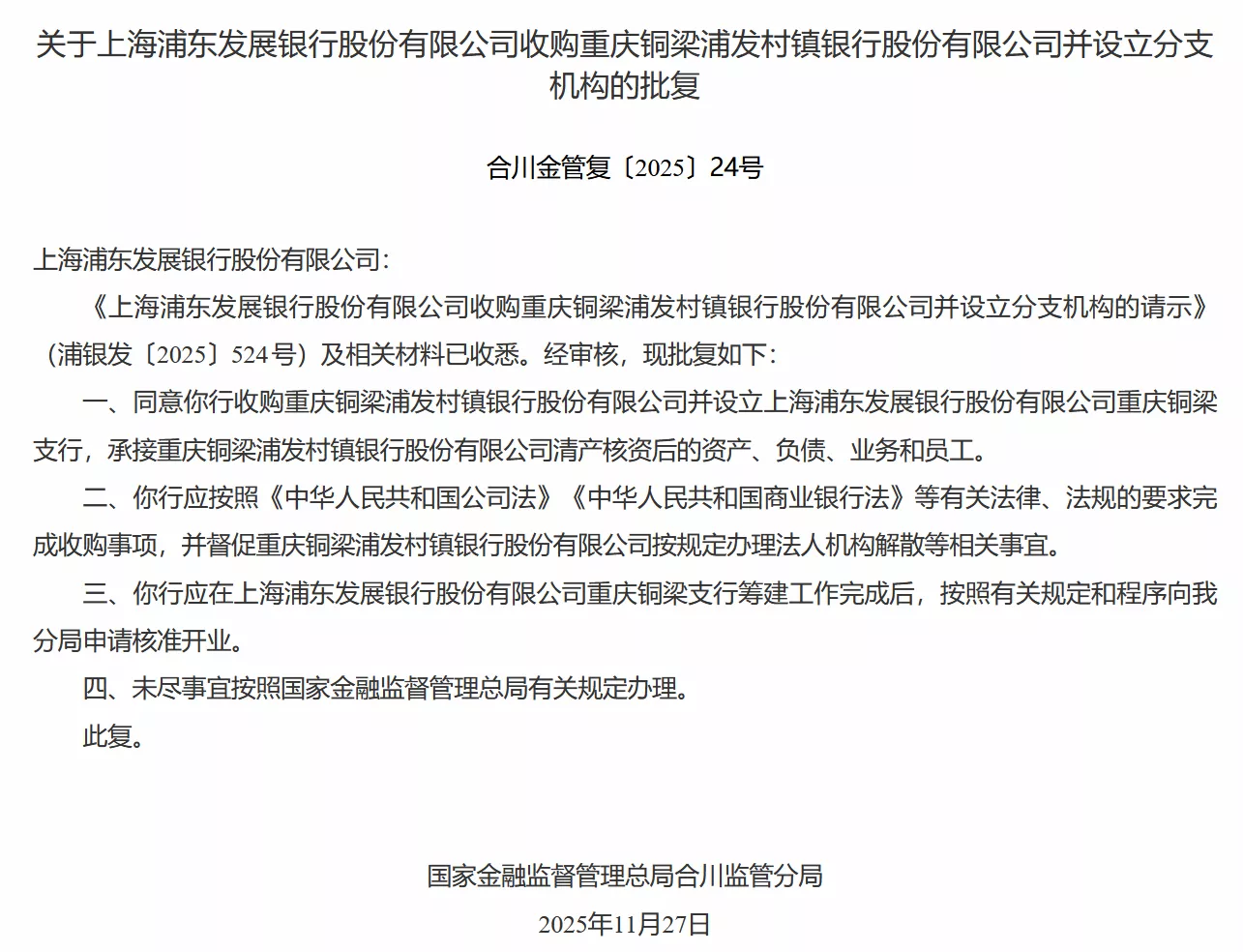
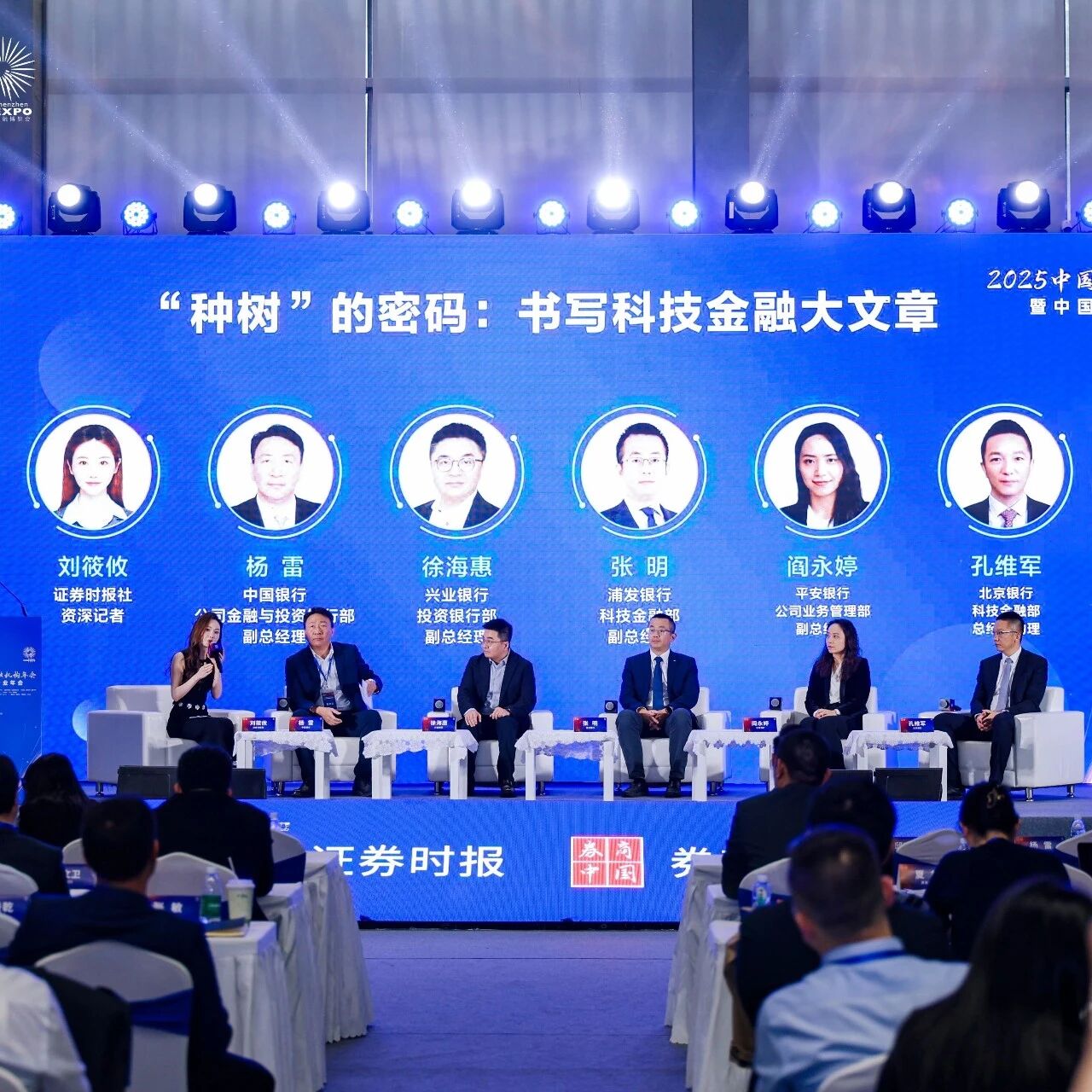
破解“种树”的密码!五家银行谋篇科技金融方法论
券商中国· 2025-12-02 03:45
Core Viewpoint - The article emphasizes that technology finance has become a strategic focus for the banking industry, driven by policy guidance and market dividends, and highlights the ongoing exploration of effective lending mechanisms in this sector [1]. Group 1: Organizational Structure - All five banks prioritize technology finance in their strategic frameworks, with a consensus on the necessity of specialized teams and organizational setups to support this business [3][4]. - China Bank has established a multi-tiered organizational structure for technology finance, enhancing its ability to understand the needs of tech enterprises [3]. - SPD Bank aims to strengthen its position as the preferred banking partner for tech companies by creating a specialized organizational framework that includes a dedicated technology finance team [3]. Group 2: Product Offerings - Ping An Bank has set up technology finance centers at both the headquarters and key branches, focusing on a wide range of clients and offering products that span the entire business cycle, including investment banking and transaction banking services [4]. - Beijing Bank has developed a specialized technology finance system and launched the "Leading e-loan" product, which has seen significant uptake, with cumulative loans exceeding 140 billion yuan [5]. Group 3: Risk Management - The article discusses the challenges banks face in assessing the value and risks of tech companies, particularly smaller ones, due to their unique characteristics such as light assets and long R&D cycles [6]. - Ping An Bank has formed a research team to evaluate industry segments and has developed an evaluation system focusing on intellectual property and financial health [6][7]. - Beijing Bank has implemented a dual approach to risk assessment, combining offline credit committees with an online approval system to better understand tech enterprises [7]. Group 4: Market Dynamics - The article notes a mismatch between supply and demand in the technology finance sector, with a significant increase in loan coverage for tech SMEs but unmet needs from early-stage companies [8]. - SPD Bank has shifted its focus from traditional lending to technology investment banking, aiming for high-quality development in technology finance [8]. Group 5: Strategic Recommendations - Recommendations include focusing on the quality of development rather than just quantity, emphasizing product differentiation and innovation, and utilizing syndicate loans to spread risk [9][10]. - The article suggests that banks should collaborate to support promising tech enterprises, balancing equity and debt financing to mitigate risks associated with market fluctuations [9][10].




破融资难题,强产业链条,控金融风险——浦发银行“惠链贷”打造普惠金融新范式
Qi Lu Wan Bao· 2025-12-02 03:09
多维数据融合,精准画像授信 在实体经济高质量发展的背景下,中小微企业融资难、融资贵问题始终是制约产业升级的关键瓶颈。浦 发银行(600000)济南分行积极响应国家深化金融供给侧结构性改革的战略部署,聚焦制造业、商贸流 通等重点领域,创新推出"惠链贷"供应链金融服务模式,通过科技赋能和生态共建,打通产业链上下游 资金流、信息流和物流的闭环链条,实现金融服务对实体经济的精准滴灌。 当前,我国产业链中大量中小微企业面临账期长、周转慢、融资渠道单一等问题,传统信贷模式难以满 足其高频次、短周期的资金需求。浦发银行依托核心企业信用背书和数字化技术,构建"核心企业+平 台+场景"的立体化服务网络,将金融服务嵌入产业链全生命周期,既为核心企业提供稳定的供应商资 源和资金回笼保障,也为中小微企业开辟低成本、高效率的融资通道。这一模式不仅提升了产业链协同 效率,更通过风险共担机制有效控制金融风险,形成多方共赢的可持续发展生态。 线上化、数据驱动的供应链金融解决方案 "惠链贷"以"线上化、智能化、场景化"为核心设计理念,通过整合核心企业数据、第三方征信信息及银 行风控模型,构建全流程数字化融资服务闭环。该模式突破传统线下审批的时 ...
申万宏源助力浦发银行200亿元绿色金融债成功发行
申万宏源证券上海北京西路营业部· 2025-12-02 02:21
Core Viewpoint - The article highlights the successful issuance of the first phase of green financial bonds by Shanghai Pudong Development Bank, amounting to 20 billion yuan with a coupon rate of 1.73%, showcasing the bank's commitment to green finance and its role in supporting low-carbon projects [2] Group 1: Bond Issuance Details - The bond issuance scale reached 20 billion yuan, with a coupon rate of 1.73%, receiving positive investor subscriptions [2] - The funds raised will be directed towards clean energy, energy conservation, and green transportation projects, aligning with the bank's "dual carbon" strategy [2] Group 2: Role of Shenwan Hongyuan Securities - Shenwan Hongyuan Securities played a significant role as one of the lead underwriters for this green financial project, demonstrating its expertise and strong sales capabilities in the green finance sector [2] - The successful issuance of the bonds enhances the cooperative relationship between Shenwan Hongyuan and Shanghai Pudong Development Bank, while also increasing Shenwan Hongyuan's influence in the green bond underwriting market [2]

中国金融板块-追踪工业风险:制造业固定资产投资增速显著放缓,助力更快管控风险-China Financials-Tracking industrial risks further notable slowdown in manufacturing FAI growth to help contain risks more quickly
2025-12-02 02:08
Summary of Key Points from the Conference Call Industry Overview - **Industry**: China Financials, specifically focusing on manufacturing and infrastructure investments in China [1][5][7] Core Insights and Arguments - **Manufacturing FAI Growth**: There has been a notable slowdown in manufacturing Fixed Asset Investment (FAI) growth, dropping to 2.7% year-over-year (yoy) from 4.0% yoy in the previous month, indicating steady progress on capital expenditure (capex) slowdown [7] - **Liability Growth**: Total liability growth for industrial firms moderated to 5.0% yoy, while manufacturing firms saw a slight increase to 5.9% yoy. This moderation is expected to lead to more rational capacity expansion [2][7] - **Revenue Decline**: Manufacturing revenue declined by 4.3% yoy, attributed to lower production levels due to overcapacity control efforts. The Value-Added Industrial (VAI) growth also slowed to 4.9% yoy from 6.5% yoy in September [3][10] - **Profit Growth**: Manufacturing profit growth moderated to 7.7% yoy from 9.9% yoy in September, influenced by higher financing costs and lower production [10] Future Outlook - **Infrastructure Investment**: A potential increase in infrastructure investments, supported by a new RMB 500 billion fund from the China Development Bank, is expected to bolster demand in 2026 and aid in the digestion of overcapacity risks [8][3] - **Sector Performance**: 77.1% of sectors experienced a slowdown in capex in October 2025 compared to the first half of 2025, while 39.3% of sectors showed profit improvement [9][7] Additional Important Information - **PPI Trends**: The Producer Price Index (PPI) rebounded month-over-month for the first time since December 2024, with the year-over-year decline narrowing to 2.1% [7] - **Investment Sentiment**: The overall sentiment towards the China Financials sector remains attractive, with ongoing efforts in financial tightening contributing to anti-involution measures [5][4] This summary encapsulates the critical insights from the conference call, highlighting the current state and future expectations of the manufacturing and financial sectors in China.





人民币铁矿石掉期中央对手清算业务优化上线
Jin Rong Shi Bao· 2025-12-02 02:05
Core Insights - The optimization and launch of the RMB iron ore swap central counterparty clearing business is significant for the high-quality development of the iron ore industry [1][2] Group 1: Business Operations - On the first day of operation, the Shanghai Clearing House processed 22 RMB iron ore swap transactions, totaling a clearing amount of 315 million RMB, covering agreements until February 2026 [1] - The participating institutions included major companies such as China Securities, Guotai Junan Securities, and Huatai Securities, with services provided by SPDB and CCB for agency clearing [1] Group 2: Industry Impact - The new clearing service enriches risk management tools, providing comprehensive coverage for the risk management needs of iron ore products [2] - It enhances price discovery and strengthens pricing power by increasing the influence of the RMB spot price index and providing forward pricing for 12 months [2] - The professional risk management system aims to help iron ore enterprises manage potential credit and market risks effectively [2] Group 3: Future Plans - The Shanghai Clearing House plans to continue focusing on serving the real economy, aiming to become a major centralized clearing institution for OTC bulk commodity trading [2] - Ongoing efforts will include product development, service optimization, and platform construction, while also addressing potential regional or systemic risks [2]
【银行】G-SIBs整体排名提升,工商银行晋档3组——中资银行2025年全球系统重要性银行G-SIBs排名点评(王一峰/董文欣)
光大证券研究· 2025-12-01 23:04
Core Viewpoint - The Financial Stability Board (FSB) has released the 2025 Global Systemically Important Banks (G-SIBs) list, with five major Chinese banks included, and the Industrial and Commercial Bank of China (ICBC) has been upgraded from Group 2 to Group 3 [4][5]. Group 1: G-SIBs List and Rankings - Five major Chinese banks, including ICBC, Bank of China, China Construction Bank, Agricultural Bank of China, and Bank of Communications, are included in the 2025 G-SIBs list [5]. - ICBC's capital requirement has increased by 0.5 percentage points due to its upgrade to Group 3, raising its additional capital requirement from 1.5% to 2% [5]. - Other four major banks maintain their additional capital requirements at 1.5%, while Bank of Communications remains at 1% [5]. Group 2: Score Changes and Future Prospects - The scores of the five major banks have increased by 9 to 33 points, indicating a potential for Bank of China to be upgraded in the future [5]. - ICBC and Bank of China scored above 300 points, with ICBC's score rising by 33 points to 332 and Bank of China's by 32 points to 314, just 16 points away from the Group 3 threshold [5]. - Agricultural Bank of China and China Construction Bank scored 272 and 259 points respectively, with stable group expectations in the short term [5]. - Bank of Communications scored 138 points, an increase of 9 points, remaining in Group 1 [5]. Group 3: Potential for Other Banks - The likelihood of China Merchants Bank entering the G-SIBs list has significantly increased, with its score rising by 19 points to 122, just 8 points shy of Group 1 [6]. - Other banks such as Industrial Bank and CITIC Bank have maintained stable scores, while Shanghai Pudong Development Bank's score has remained unchanged [6]. Group 4: Capital Adequacy and Regulatory Compliance - After the upgrade, ICBC's core Tier 1 capital adequacy ratio requirement increases to 9.5%, while its actual ratio stands at 13.6%, providing a buffer of 4.1 percentage points [7]. - All major banks meet the G-SIBs regulatory requirements, with safety margins ranging from 0.8 to 5.4 percentage points [7]. - The total loss-absorbing capacity (TLAC) requirements are also being met, with ICBC's total capital adequacy ratio at 19%, exceeding the required thresholds [7].

汽车金融变阵“稳消费”
Bei Jing Shang Bao· 2025-12-01 16:36
Core Insights - The automotive finance sector is becoming a crucial driver for growth in automotive consumption amidst increasing market competition [1][2] - The industry is undergoing significant adjustments, with automotive finance being recognized as essential for maintaining the smooth operation of the automotive supply chain [1][4] Market Performance - In the first ten months of this year, retail sales of passenger vehicles reached 19.25 million units, a year-on-year increase of 7.9%, while used car transactions totaled 1.649 million units, up 3.53% [2] - The operating costs of large-scale automotive manufacturing enterprises increased by 8.6% year-on-year, with total profits rising by 3.4% [2] - Despite the growth in sales, the overall profitability and quality of the industry need improvement, as indicated by a decline of 0.2% in retail sales of automotive consumer goods [2] Dealer Challenges - Only 20% of dealerships are currently profitable, highlighting the challenges faced by automotive dealers due to low sales margins and intense market competition [3] - The contribution of after-sales and financial insurance to dealership profits is significantly higher than that of new car sales, with 63.8% and 36.2% respectively [3] Policy Support - Recent policies aim to enhance financial support for automotive consumption, including measures to promote auto loans and optimize financial products for various purchasing scenarios [4] - The People's Bank of China and other departments have issued a plan to strengthen financial support for automotive consumption, particularly for new energy vehicles [4] Financial Innovation - The automotive finance sector is shifting from traditional credit growth to structural optimization and product innovation, with a notable increase in retail sales of new energy vehicles by 21.9% [5] - The future trend is expected to focus on comprehensive lifecycle services for automotive finance, catering to the needs of younger consumers [5] Technological Integration - The integration of big data, AI, and blockchain is reshaping the financial landscape within the automotive sector, leading to the development of smart finance [8][9] - Financial institutions are increasingly utilizing intelligent methods for risk management, combining human expertise with AI to enhance risk identification and response [8][9] Global Expansion - As Chinese automotive brands expand internationally, the need for corresponding financial support in overseas markets is becoming a focal point for industry players [7] - Companies are exploring cross-border leasing options to support their international business ventures, particularly in emerging markets [7]
浦发银行资产托管规模突破20万亿元
Zhong Jin Zai Xian· 2025-12-01 12:26
Core Insights - SPDBank's asset custody business has achieved a significant milestone, with the asset custody scale surpassing 20 trillion yuan by the end of November 2025, ranking fourth in the industry and marking the highest annual growth in nearly a decade [1][2] Group 1: Business Growth and Strategy - The asset custody scale has consistently increased by over one trillion yuan for five consecutive years, indicating robust growth and a new development phase for SPDBank's custody services [1] - The bank has implemented a collaborative strategy, enhancing its custody business through initiatives like "joint custody" and "group custody," which have led to comprehensive breakthroughs across operational goals, collaborative mechanisms, and digital applications [1] Group 2: Innovation and Market Leadership - SPDBank is at the forefront of market innovation, having introduced several industry-first products, including the first floating-rate public fund and the first climate change high-grade bond index fund [2] - The bank's "Kao Pu Custody" brand has received multiple awards, including recognition as an "Excellent Asset Custody Institution" and "Best Innovative Fund Custody Service" by industry authorities, showcasing its strong market presence and professional reputation [2] Group 3: Future Outlook - With a new starting point of 20 trillion yuan, SPDBank aims to align closely with national strategic deployments, enhancing service standards and contributing significantly to the construction of a strong financial nation [2]