青岛银行

Search documents
郑州银行:今年上半年唯一下跌的银行股
凤凰网财经· 2025-07-09 13:28
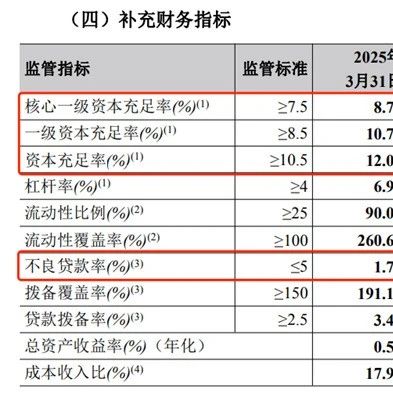
Core Viewpoint - Zhengzhou Bank's stock performance has been underwhelming compared to its peers, with a year-to-date increase of only 3.81%, placing it at the bottom among 42 A-share listed banks. Despite recent gains, the bank's overall performance remains a concern due to low dividend rates and high non-performing loan ratios [1][2][8]. Group 1: Stock Performance - As of July 8, 2023, Zhengzhou Bank's stock rose by 0.46% to 2.18 yuan, marking three consecutive days of increases [1]. - In the first half of 2023, Zhengzhou Bank was the only bank among 42 A-share banks to report a decline, with a year-to-date drop of -1.9% as of June 30 [2]. - Other banks, such as Shanghai Pudong Development Bank, saw significant increases, with a year-to-date rise of 38.29% [2]. Group 2: Dividend Policy - Zhengzhou Bank's dividend payout ratio is the lowest among A-share banks, with a proposed cash dividend of 0.20 yuan per 10 shares, translating to a total payout of approximately 182 million yuan and a dividend rate of 9.69% for 2024 [8][9]. - The bank's low dividend rate is attributed to factors such as narrowing interest margins, regulatory constraints, and a focus on retaining earnings to enhance capital adequacy [9]. - This year marks the first dividend distribution in five years, with the last being in 2019 when the bank distributed 1 yuan per 10 shares [9]. Group 3: Asset Quality - Zhengzhou Bank reported a non-performing loan (NPL) ratio of 1.79% as of the end of 2024, which is above the industry average of 1.5% and ranks second highest among A-share banks [11][12]. - The bank's NPL balance stood at 6.923 billion yuan, with significant concentrations in the real estate sector, which saw an increase in NPL ratio from 6.48% in 2023 to 9.55% in 2024 [12][13]. - The bank's financial performance showed a decline in operating income by 5.78% year-on-year to 12.877 billion yuan, while net profit increased slightly by 1.39% to 1.876 billion yuan [10][11]. Group 4: Management Changes - In early 2023, Zhengzhou Bank appointed a new president, Li Hong, while experiencing a wave of resignations among senior executives, raising concerns among investors [15][17]. - The bank attributed the high turnover to normal market dynamics and a strategic focus on optimizing governance structures [17]. Group 5: Regulatory Compliance - Despite facing challenges, Zhengzhou Bank has not received any regulatory fines in 2023, a significant improvement from previous years when it faced multiple penalties totaling over 2.8 million yuan [18]. - The bank has implemented measures to enhance compliance and has reduced executive salaries as part of its strategy to improve performance [18].

道恩股份: 关于使用闲置募集资金进行现金管理到期赎回的公告
Zheng Quan Zhi Xing· 2025-07-09 09:15
Group 1 - The company approved the use of idle raised funds for cash management, with a limit of up to 30 million RMB, during the annual shareholders' meeting held on April 8, 2025 [1] - The company has successfully redeemed a financial product named "Galaxy Jinli" with a total amount of 30,141,287.67 RMB, which includes both principal and earnings [2] - The company has engaged in various cash management activities over the past twelve months, including multiple financial products with different types and expected annual yields [2] Group 2 - The financial product "Galaxy Jinli" was initiated on April 10, 2025, and matured on July 8, 2025, with a total return of 30,141,287.67 RMB [2] - Other financial products managed by the company include those from Qingdao Bank and Guotai Junan Securities, with varying maturity dates and types [2]

又见“85后”升任副行长!上市银行女副行长扩容
券商中国· 2025-07-08 23:25
Core Viewpoint - Jiangyin Bank has appointed Yu Xiaoyun as the new vice president, pending regulatory approval, highlighting the increasing presence of women in leadership roles within the bank [1][6][8]. Group 1: Appointment and Background - Yu Xiaoyun, born in 1985, is currently the general manager of the asset management department at Jiangyin Bank [2]. - She has a career history that includes roles at Agricultural Bank of China and various leadership positions within Jiangyin Bank since 2011 [6]. - The appointment follows the resignation of the previous vice president, Wang Kai, due to a job transfer [5][6]. Group 2: Gender Representation in Leadership - Among A-share listed banks, there are at least 24 female vice presidents, predominantly from the "70s" generation, with "85s" being relatively rare [3][12]. - Jiangyin Bank's leadership team includes a female chairperson and two female vice presidents, indicating a significant representation of women in its executive ranks [7][8]. - The trend of female leadership is noted across various banking institutions, although female "heads" remain scarce [9][10]. Group 3: Broader Context of Female Executives - Female executives are notably present in roles such as vice president, board secretary, and heads of finance, risk, and compliance departments [10][11][13]. - The role of board secretary is particularly concentrated with female executives, primarily from the "70s" generation [13]. - In rural commercial banks, there is a younger demographic of female executives, with many being from the "80s" generation [14][17].


浦发银行涨超34% 郑州银行逆势下跌
Nan Fang Du Shi Bao· 2025-07-08 23:16
Core Viewpoint - The banking sector in China has shown significant performance, with the China Securities Banking Index achieving a 34.7% increase in 2024, leading all industry indices, and a further 13% rise in the first half of 2025, driven by improved fundamentals and market preferences for stable investments [4][6]. Group 1: Performance Metrics - The China Securities Banking Index had a dividend yield of approximately 5.2% as of June, contrasting with declining deposit rates [8]. - In the first half of 2025, the banking sector saw a 17.6% increase, with the share prices of major banks like Shanghai Pudong Development Bank and Qingdao Bank rising over 30% [6][7]. - Among the six major state-owned banks, Agricultural Bank of China led with a 12.7% increase, while Postal Savings Bank lagged with only a 1% rise [5]. Group 2: Investment Trends - Insurance funds have become a significant source of investment in bank stocks, with 23 A-share listed banks having insurance capital as major shareholders [9]. - Analysts suggest that the high dividend yields of bank stocks continue to attract stable capital inflows, despite some recent volatility in stock prices [4][10]. - The market is currently evaluating the sustainability of high dividend yields, focusing on profitability, valuation, and dividend stability [10]. Group 3: Market Dynamics - The banking sector has experienced internal differentiation, with state-owned banks showing varied performance; while some have maintained strong growth, others have seen declines [4][6]. - The recent increase in capital for state-owned banks has led to concerns about short-term impacts on dividend yields and earnings per share [5]. - The overall sentiment in the market remains cautious, with investors weighing the benefits of high dividends against potential valuation pressures [9][10].


“分红王”工商银行豪掷超千亿元
Mei Ri Shang Bao· 2025-07-08 22:53
Core Viewpoint - A-share listed banks are entering a concentrated dividend distribution period, with total annual dividends expected to reach a record high of 632 billion yuan for 2024, highlighting the investment value of the banking sector [1][2]. Dividend Distribution - As of July, over 10 listed banks have announced their 2024 dividend distributions, with the total amount reaching 632 billion yuan, marking the highest in history [1][2]. - The six major state-owned banks are leading in dividend payouts, with a total of over 420 billion yuan expected for the year [2]. - Industrial and Commercial Bank of China (ICBC) is set to distribute approximately 58.664 billion yuan, maintaining its position as the "dividend king" with a total payout nearing 110 billion yuan when including interim dividends [2]. Dividend Ratios - Fourteen banks have a dividend payout ratio exceeding 30%, with China Merchants Bank having the highest at 33.99% [2]. - Several banks, including Xi'an Bank and CITIC Bank, have shown significant increases in their dividend ratios compared to the previous year [3]. Market Performance - The banking sector has demonstrated strong market performance, with the Shenwan Bank Index rising by 18.28% year-to-date, outperforming the CSI 300 Index by 17.5 percentage points [5]. - The average dividend yield for listed banks is currently at 3.9%, significantly higher than market risk-free rates and fixed deposit rates [5]. - All 42 listed bank stocks have seen price increases this year, with 20 reaching all-time highs; Shanghai Pudong Development Bank has the highest increase at 41.89% [5]. Future Outlook - Analysts expect that the relative valuation and dividend yield advantages of the banking sector will enhance, with high-dividend banks likely to outperform in terms of relative returns [7]. - The banking sector's return on equity (ROE), earnings growth, and dividend rates are projected to be higher than the overall market, while its valuation remains lower [7].

关于建信中债1-3年国开行债券指数证券投资 基金修改托管协议的公告
Zhong Guo Zheng Quan Bao - Zhong Zheng Wang· 2025-07-07 23:33
Group 1 - The announcement details the modification of the custody agreement for the fund to better meet investors' needs, agreed upon by the fund manager and the custodian bank [1] - The original terms of the custody agreement specified the procedures for fund subscription and redemption, including timelines for payment and responsibilities of both parties [2][3] - The revised terms clarify the settlement process between the fund's accounts and the clearing accounts, ensuring timely transfers and notifications regarding payments [3][4] Group 2 - The modifications are stated to have no substantial adverse impact on the interests of fund shareholders and do not conflict with the fund's contract [4] - The changes will take effect immediately upon the announcement's release, and the company retains the right to interpret the announcement [5] - The company has also announced a new partnership with Qingdao Bank for the distribution of certain open-end funds starting from July 14, 2025 [6]

杭银转债今日摘牌 6只银行转债年内到期
2 1 Shi Ji Jing Ji Bao Dao· 2025-07-07 03:21
Core Viewpoint - The bank convertible bond market is experiencing a significant reduction in the number of available bonds, with only 9 remaining after several have been redeemed or matured, indicating a shrinking market size and potential changes in investment strategies [1][6]. Group 1: Convertible Bonds Redemption - Qilu Bank's convertible bond has triggered a conditional redemption clause due to its stock price exceeding 130% of the conversion price for 15 out of 30 trading days, leading to an early redemption three and a half years before maturity [2]. - The total issuance of Qilu convertible bonds was 8 billion yuan, with a conversion price currently at 5.00 yuan per share, and 2.66 billion yuan worth of bonds converted into shares as of June 30, 2025 [2]. - Hangzhou Bank's convertible bond has also been redeemed, with a total conversion amount reaching 14.908 billion yuan, representing 99.39% of the total issuance [3]. Group 2: Market Trends and Performance - The continuous rise in bank stock prices has led to a 17.7% increase in the China Securities Bank Index this year, with all 42 stocks in the sector showing positive performance [4]. - Five banks have seen stock price increases exceeding 30%, with Shanghai Pudong Development Bank leading at a 41.69% increase [4]. - The market for bank convertible bonds is shrinking, with the total balance dropping from nearly 300 billion yuan to below 150 billion yuan, and market share decreasing from 40% to approximately 20% [6]. Group 3: Investment Strategies and Market Dynamics - The ongoing reduction in the supply of bank convertible bonds is altering market structure and triggering a shift in investment strategies, with institutional investors reducing their allocations to these bonds [6]. - As the supply of bank convertible bonds diminishes, funds are seeking alternative high-yield assets or other convertible bonds to fill the gap, leading to a divergence in allocation strategies among different types of funds [6].
沂链通供票小课堂:沂链通如何优化企业融资结构?
Sou Hu Cai Jing· 2025-07-07 02:03
Core Insights - The article discusses the role of Yilian Tong in optimizing financing structures for enterprises through diverse bill financing products and services [3][4] - It highlights the rapid growth and significant scale of Yilian Tong's supply bill services, positioning it among the top players in the market [4] Group 1: Financing Products and Services - Yilian Tong offers bank acceptance bill discounting services, enabling quick cash conversion for enterprises and reducing reliance on traditional bank loans [3] - The platform also provides commercial acceptance bill discounting services, enhancing financing options and efficiency for businesses [3] - Additionally, Yilian Tong facilitates commercial acceptance bill pledge loans, broadening financing channels for enterprises [3] - The platform's bill asset securitization feature allows companies to monetize future cash flows, improving balance sheets and reducing financing costs [3] Group 2: Market Position and Growth - Yilian Tong's supply bill public service platform is the first third-party platform in China with a commercial logistics background and government support, approved for nationwide operations [4] - The platform's supply bill business scale has surpassed 30 billion yuan, ranking it among the top four in the country [4] - It achieved a record of launching its system and surpassing 10 billion yuan in supply bill business within the first year, marking the fastest speed in the nation [4]
帮主郑重:量化新规落地,A股下周怎么走?这些信号必须关注!
Sou Hu Cai Jing· 2025-07-06 16:02
Market Overview - A-shares are expected to face a critical week with the implementation of the new quantitative trading regulations on July 7, which is considered the strictest regulatory policy in the past decade, potentially altering market structure [1][3] News Impact - Key economic data, including June's CPI and PPI, will be released next week, serving as indicators for market sentiment. Lower-than-expected figures may prompt further policy easing, while higher figures could raise inflation concerns [3] - The expiration of tariff issues on July 9 is anticipated to relieve market sentiment, regardless of the outcome [3] - A total of 31.294 billion yuan worth of stocks will be unlocked next week, with the largest amount on Monday, which may impact related sectors [3] Policy Changes - The new quantitative trading regulations impose strict limits on high-frequency trading, with a threshold of 300 orders per second triggering regulatory scrutiny. The cancellation fee has increased to 0.05 yuan per order, affecting the operations of quantitative funds [3] - The abolishment of T+0 for margin trading will prevent quantitative institutions from exploiting short-term arbitrage, which is seen as beneficial for retail investors by reducing information asymmetry [3] External Market Conditions - The U.S. stock market has faced pressure due to Apple lowering its product sales forecast, leading to a 0.73% decline in the Nasdaq index. European markets also showed weakness, with Germany's DAX index down 0.78% due to declining industrial orders [4] - The Hong Kong Hang Seng Index performed relatively well, with Tencent Holdings slightly up by 0.8%, potentially providing some support for A-share technology sectors [4] Technical Analysis - The Shanghai Composite Index has been fluctuating around 3472 points, with a recent peak at 3497 points before a pullback, indicating significant selling pressure near the 3500-point mark. Historical data suggests a potential average decline of 3.5% following similar patterns [4] - The index has shown strong support at 3452 points over the past two weeks, and if it can maintain above 3430 points, the upward trend may continue [4] Capital Flow - There is a noticeable divergence in capital flow, with active funds experiencing significant outflows, particularly from cyclical stocks and diversified financials. Meanwhile, passive funds continue to accumulate, albeit at a reduced pace [5][6] - Northbound capital has recently increased its positions, particularly in consumer and technology sectors, while bank stocks have seen net outflows [6] Investment Strategy - For short-term defensive strategies, high-dividend and defensive sectors such as electricity and coal are recommended, with specific stocks like Huaneng International and China Shenhua offering attractive dividend yields [6] - Mid-term opportunities in technology and small-cap stocks are highlighted, particularly in semiconductor and renewable energy sectors, with specific stocks showing potential for rebound [6] - High-risk stocks to avoid include high-priced weight stocks and those without performance catalysts, especially in light of the new quantitative regulations [6] Conclusion - The market is expected to undergo a "stress test" next week, with key support levels and trading volume being critical observation points. Investors are advised to avoid chasing high-priced stocks and instead consider undervalued technology and high-dividend sectors [7]
银行业2025年度中期投资策略:价值重估的下半场
Changjiang Securities· 2025-07-06 09:42
Core Insights - The banking sector is currently undergoing a trend of value reassessment, driven by expectations of fundamental stability, with banks' earnings resilience consistently exceeding expectations due to regulatory support and the establishment of risk bottom lines in key areas such as local government financing and real estate [4][8] - The current market rally is fundamentally a reflection of the stability of the banking sector rather than a reliance on macroeconomic recovery, marking a systematic value reassessment and correction of historically unreasonable low valuations [8][23] Summary by Sections Fundamental Outlook: Maintaining Earnings Stability - The net interest margin (NIM) is expected to stabilize as regulatory policies aim to maintain it by reducing banks' funding costs to offset the impact of loan interest rate cuts, with NIM currently at a low point [9][26] - Since 2022, multiple rounds of deposit rate cuts have been implemented, and as a significant amount of fixed-term deposits mature in 2025, the repricing of deposit costs will accelerate [9][26] - The overall non-performing loan (NPL) ratio of listed banks is expected to remain stable, supported by rapid asset expansion and write-offs, with a stable provision coverage ratio across most banks [9][37] Capital Market Dynamics: Increased Institutional Investment - Various capital entities, including state-owned enterprises and insurance companies, have been increasing their holdings in bank stocks, driven by the value reassessment of undervalued banks amid an asset scarcity environment [10][45] - The shift in investment strategy among active funds towards bank stocks is anticipated due to their significant index weight and long-standing underallocation, with a focus on quality banks with strong fundamentals [10][45] Investment Recommendations - The report recommends focusing on high-quality city commercial banks and dividend-paying banks, highlighting the investment value of state-owned banks listed in Hong Kong due to their lower valuations [11][10] - Specific banks recommended include Hangzhou Bank, Chengdu Bank, Jiangsu Bank, Qilu Bank, and Qingdao Bank, with a focus on their regional economic performance, asset quality, and growth rates [11][10]