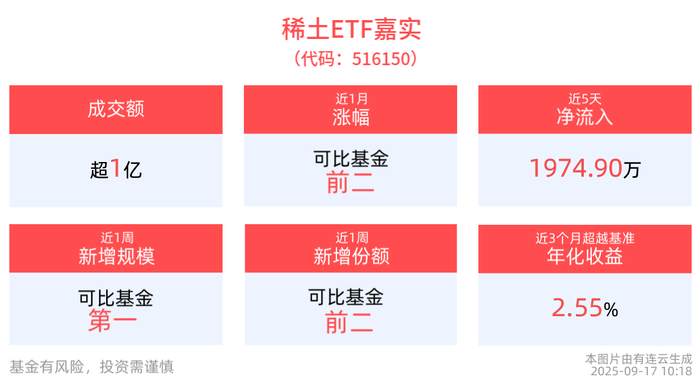
领益智造

Search documents
灵巧手产业链A股公司瞄准方向积极布局
Zheng Quan Ri Bao· 2025-09-17 16:08
Core Insights - Tesla's CEO Elon Musk emphasized the strategic importance of the "hand" in the Gen3 core development during the 2025 ALL-IN summit, highlighting the advancements in the Optimus robot's dexterous hand technology [1] - The dexterous hand technology is crucial for humanoid robots, involving high technical barriers across hardware, algorithms, and application scenarios, directly impacting the efficiency of the robot's "brain" [2] - The industry is experiencing rapid technological iterations and expanding applications beyond industrial settings into healthcare and education, with a shift towards market-driven development [3] Industry Support and Policy - The Chinese government is providing strong support for the development of dexterous hand technology, with initiatives aimed at overcoming key technological challenges in humanoid robots [2] - Local governments are actively creating favorable policies to promote the humanoid robot industry, as seen in Guangdong's action plan to advance intelligent robots [2] Market Growth and Projections - The global market for dexterous hands in robotics is projected to reach $1.921 billion by 2025 and exceed $3 billion by 2030, driven by decreasing cost barriers and increasing demand [4] - The cost reduction in dexterous hand production is facilitated by domestic manufacturers achieving self-reliance in key components, which supports large-scale production [4] Industry Chain Participation - Companies in the robotics dexterous hand supply chain are actively engaging in key segments, including component manufacturing and assembly, to drive collaborative development [6] - Various companies are reporting progress in developing and supplying components for humanoid robots, indicating a robust engagement in the market [6] Innovation and Collaboration - Industry experts suggest that companies should focus on core innovations in micro-motorization, sensor integration, and algorithm optimization to enhance performance and reduce costs [7] - Strengthening collaboration within the supply chain and fostering local partnerships are essential for overcoming production challenges in the humanoid robot industry [7]
领益智造:关于“领益转债”赎回实施的第八次提示性公告
Zheng Quan Ri Bao· 2025-09-17 13:35
证券日报网讯 9月17日晚间,领益智造发布公告称,根据安排,截至2025年10月14日收市后仍未转股 的"领益转债"将被强制赎回。本次赎回完成后,"领益转债"将在深圳证券交易所摘牌,特提醒"领益转 债"债券持有人注意在限期内转股。债券持有人持有的"领益转债"如存在被质押或被冻结的,建议在停 止转股日前解除质押或冻结,以免出现因无法转股而被赎回的情形。 (文章来源:证券日报) ...


护航高质量发展 广东证监局持续深化常态化走访上市公司
Zhong Zheng Wang· 2025-09-17 11:08
Core Viewpoint - Guangdong Securities Regulatory Bureau is actively engaging with listed companies to address their operational challenges and support high-quality development through regular visits and coordinated efforts with relevant departments [1][2][3]. Group 1: Engagement and Support Initiatives - Since the beginning of 2024, Guangdong Securities Regulatory Bureau has visited 395 listed companies, covering 86% of the total in the region, collecting over 300 issues and suggestions from these companies [2]. - The bureau has established a dedicated task force to ensure effective execution of the visitations, creating a multi-party collaboration mechanism with local government departments and stock exchanges [2]. - Specific focus has been placed on key companies such as Midea Group and Haitian Flavoring & Food, addressing their needs in overseas financing, foreign exchange management, and capacity building [2][3]. Group 2: Performance Improvement - The operational performance of listed companies in Guangdong has shown steady improvement, with 459 A-share companies reporting a total revenue of 1.85 trillion yuan and a net profit of 115.07 billion yuan in the first half of 2025, reflecting year-on-year growth of 6.97% and 9.19% respectively [4]. - The region has seen the addition of three companies with a market capitalization exceeding 100 billion yuan in the first half of 2025, with the total market value of listed companies reaching 6.54 trillion yuan by the end of August 2025 [4]. Group 3: Investor Returns and Market Confidence - The Guangdong Securities Regulatory Bureau has promoted mid-term dividends among 74 listed companies, amounting to over 16 billion yuan, enhancing investor returns and market confidence [5]. - The bureau has facilitated the establishment of the Guangdong Capital Market M&A Alliance to support companies in leveraging policy opportunities for mergers and acquisitions, with 17 major asset restructuring transactions completed in 2025, totaling over 40 billion yuan [6].


领益智造(002600) - 关于领益转债赎回实施的第八次提示性公告
2025-09-17 08:47
3、"领益转债"停止交易日:2025 年 10 月 10 日 | 证券代码:002600 | 证券简称:领益智造 | 公告编号:2025-141 | | --- | --- | --- | | 债券代码:127107 | 债券简称:领益转债 | | 广东领益智造股份有限公司 关于"领益转债"赎回实施的第八次提示性公告 本公司及董事会全体成员保证信息披露的内容真实、准确、完整,没有虚 假记载、误导性陈述或重大遗漏。 特别提示: 1、"领益转债"赎回价格:100.181 元/张(含当期应计利息,当期年利率为 0.20%,且当期利息含税),扣税后的赎回价格以中国证券登记结算有限责任公司 深圳分公司(以下简称"中登公司")核准的价格为准。 2、赎回条件满足日:2025 年 9 月 8 日 4、"领益转债"赎回登记日:2025 年 10 月 14 日 5、"领益转债"停止转股日:2025 年 10 月 15 日 6、"领益转债"赎回日:2025 年 10 月 15 日 7、发行人(公司)资金到账日:2025 年 10 月 20 日 8、投资者赎回款到账日:2025 年 10 月 22 日 9、赎回类别:全部赎回 10、 ...
同花顺果指数概念上涨2.32%,5股主力资金净流入超3000万元
Zheng Quan Shi Bao Wang· 2025-09-17 08:43
Group 1 - The Tonghuashun Fruit Index concept rose by 2.32%, ranking second among concept sectors, with 14 stocks increasing in value [1][2] - Leading gainers included Zhongshi Technology, Changying Precision, and Lens Technology, which rose by 14.09%, 12.44%, and 5.94% respectively [1][2] - The stocks with the largest declines were Lingyi iTech, Pengding Holdings, and Luxshare Precision, which fell by 2.41%, 0.74%, and 0.73% respectively [1][2] Group 2 - The concept sectors with the highest daily gains included lithography machines at 3.30% and copper cable high-speed connections at 2.18% [2] - The Tonghuashun Fruit Index experienced a net outflow of 1.472 billion yuan, with 8 stocks seeing net inflows, and 5 stocks receiving over 30 million yuan in net inflows [2][3] - The top net inflow stock was Lens Technology, with a net inflow of 705 million yuan, followed by Wentai Technology and Dongshan Precision with net inflows of 244 million yuan and 212 million yuan respectively [2][3] Group 3 - In terms of net inflow ratios, Lens Technology, Wentai Technology, and Desay Battery led with net inflow rates of 13.50%, 11.95%, and 4.29% respectively [3] - The trading volume and turnover rates for the top stocks included Lens Technology with a turnover rate of 3.35% and Changying Precision with a turnover rate of 18.89% [3][4] - Stocks such as Lingyi iTech and Luxshare Precision had significant net outflows, with Lingyi iTech experiencing a net outflow of 689 million yuan and Luxshare Precision a net outflow of 1193 million yuan [4]


领益智造(002600.SZ):已经在人形机器人的机加工结构件、核心零部件、关节等模组、灵巧手零部件及组装、整机组装与应用落地开发方面具备订单
Ge Long Hui· 2025-09-17 07:37
Core Insights - The company has accumulated significant core technological capabilities in the robotics field, forming a rich product matrix of humanoid robot hardware [1] - The company possesses core technologies in servo motors, reducers, drivers, and motion controllers, with capabilities spanning from material development to various composite processing techniques [1] - The company offers a one-stop service for core components and module services, including die-cutting, stamping, CNC, anodizing, electroplating, MIM, die-casting, forging, injection molding, 3D printing, Softgoods processing, and assembly [1] - The company's cycloidal pinwheel reducer has obtained invention patents in China, the United States, and Japan [1] - The company has secured orders in humanoid robot machining structural parts, core components, joints, dexterous hand components and assembly, as well as complete machine assembly and application development [1]
领益智造与鼎晖投资达成战略合作
Xin Lang Cai Jing· 2025-09-17 05:33
Core Viewpoint - Guangdong Lingyi iTech Limited (referred to as "Lingyi iTech") has signed a strategic cooperation framework agreement with Dinghui Equity Investment Management (Tianjin) Co., Ltd. (referred to as "Dinghui Investment") to enhance collaboration and explore investment opportunities in the hard technology and manufacturing sectors [1] Group 1 - The agreement establishes a high-level leadership meeting mechanism to strengthen the cooperative relationship and friendship between Lingyi iTech and Dinghui Investment [1] - The collaboration aims to leverage Lingyi iTech's extensive experience and industry resources in hard technology and manufacturing, combined with Dinghui Investment's investment capabilities in both RMB and USD funds [1] - The focus of the partnership will be on exploring minority equity investments and merger and acquisition opportunities related to Lingyi iTech's main business and future development directions [1]
AI大模型厂商加速导入硬件入口,端侧AI产业链投资机遇可期 | 投研报告
Zhong Guo Neng Yuan Wang· 2025-09-17 03:18
Core Insights - The report highlights the rapid iteration of AI models, emphasizing the importance of edge computing and lightweight models as core directions for development [2][3] - The performance of the MiniCPM model with 2 billion parameters is now comparable to the 2020 GPT-3 model with 175 billion parameters, indicating significant advancements in AI capabilities [2][3] - The collaboration between cloud and edge devices is essential for scaling AI models, leading to optimizations in cost, energy consumption, and performance [2][3] Industry Trends - Major AI model vendors are accelerating the integration of hardware to facilitate the deployment of AI applications across various scenarios [3][4] - Companies like Google, Alibaba, and Apple are making strategic partnerships and launching new AI functionalities to enhance user interaction and application performance [3][4] - The mobile AI market in China is projected to capture around 30% market share by 2025, indicating rapid growth in the edge AI model market [3][4] Technological Developments - AI terminals are evolving with advancements in computing power, energy efficiency, and interaction capabilities [5] - Hardware improvements include the integration of NPU in SoCs, high-bandwidth storage, and enhanced cooling technologies [5] - The form factor of AI terminals is diversifying, with products like AI glasses and AI headphones emerging to cater to specific user interactions [5] Investment Opportunities - Beneficial stocks include brands like Transsion Holdings, Xiaomi, and Luxshare Precision, as well as component manufacturers such as Lens Technology and AAC Technologies [6] - The chip and storage sectors are also highlighted, with companies like Rockchip and Hanguang Technology being potential investment targets [6]
【标题】电子ETF(515260)单日狂揽2.34亿元!覆盖半导体+苹果产业链,含芯量50% 含果量43%!
Xin Lang Ji Jin· 2025-09-17 03:05
Core Viewpoint - The article highlights the performance of various stocks within the semiconductor and technology sectors, indicating a positive trend driven by MACD golden cross signals. Group 1: Stock Performance - Luxshare Precision (立讯精密) shows a growth of 5.94% [1] - Cambricon Technologies (寒武纪) has increased by 7.94% [1] - SMIC (中芯国际) reports a rise of 5.81% [1] - Industrial Fulian (工业富联) sees a growth of 5.45% [1] - BOE Technology Group (京东方A) has a performance increase of 3.96% [1] - Haiguang Information (海光信息) shows a growth of 4.61% [1] - Zhaoyi Innovation (兆易创新) reports a rise of 2.69% [1] - Northern Huachuang (北方华创) has increased by 4.11% [1] - GoerTek (歌尔股份) shows a growth of 2.29% [1] - Lattice Semiconductor (澜起科技) reports a rise of 3.59% [1] Group 2: Additional Stocks - Dongshan Precision (东山精密) shows a growth of 2.16% [1] - OmniVision Technologies (豪威集团) has increased by 3.11% [1] - Lens Technology (蓝思科技) reports a rise of 1.58% [1] - Zhongwei Company (中微公司) shows a growth of 2.39% [1] - Changdian Technology (长电科技) has increased by 1.46% [1] - Linyang Technology (领益智造) reports a rise of 1.11% [1] - Jialin Holdings (膠鼎控股) shows a growth of 1.06% [1] - Unisoc (紫光国微) has increased by 1.41% [1]
最新资金净流入1.44亿元,稀土ETF嘉实(516150)红盘上扬,成分股京运通10cm涨停
Xin Lang Cai Jing· 2025-09-17 02:42
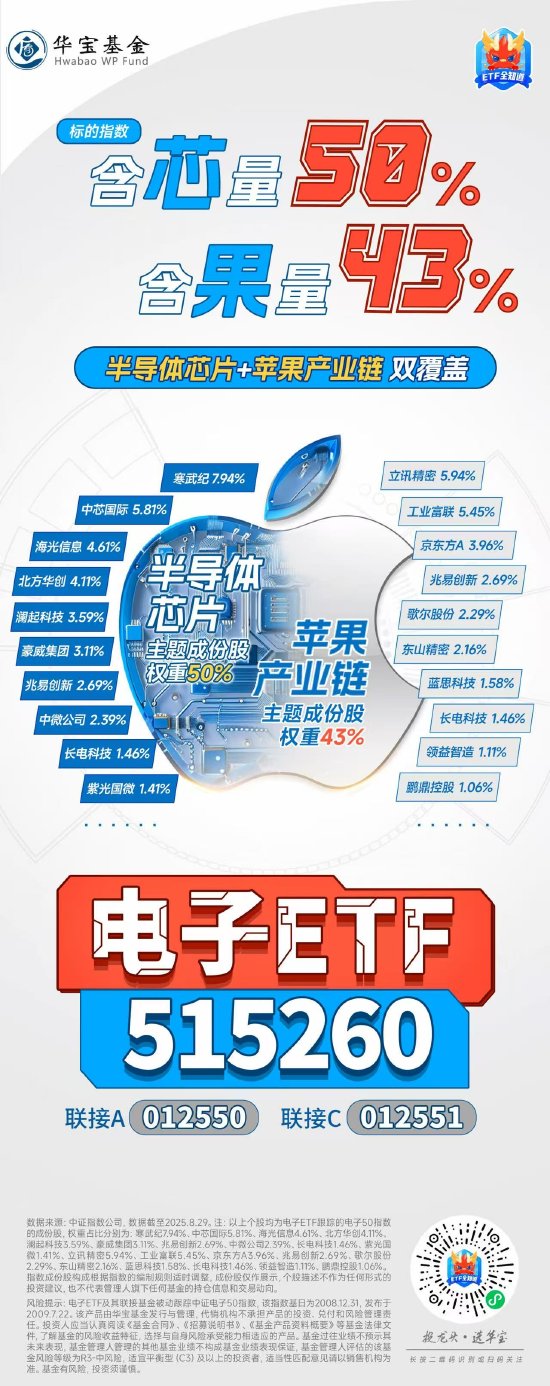
Core Viewpoint - The rare earth industry is experiencing a positive trend, with significant price increases expected due to rising demand from downstream sectors and strategic importance in the context of "de-globalization" [4]. Group 1: Market Performance - As of September 17, 2025, the China Rare Earth Industry Index rose by 0.39%, with notable stock performances including Jingyuntong reaching the daily limit increase, and Dayang Electric and Wolong Electric Drive rising by 8.22% and 7.50% respectively [1]. - The rare earth ETF, Jiashi (516150), increased by 0.58% [1]. - The Jiashi rare earth ETF recorded a turnover rate of 1.73% and a transaction volume of 147 million yuan, leading comparable funds in average daily trading volume over the past month at 564 million yuan [3]. Group 2: Fund Performance - The Jiashi rare earth ETF saw a significant scale increase of 367 million yuan over the past week, ranking first among comparable funds [3]. - The fund's net inflow reached 144 million yuan recently, with a total net value increase of 122.13% over the past year, placing it in the top 3.85% of index stock funds [3]. - Since its inception, the Jiashi rare earth ETF achieved a maximum single-month return of 41.25% and an average monthly return of 10.78% during rising months [3]. Group 3: Industry Fundamentals - The rare earth supply chain is entering a traditional consumption peak season, with increasing orders from downstream magnetic material manufacturers and strong overseas replenishment demand, driving up rare earth prices [4]. - Huatai Securities emphasizes the strategic importance of rare earths and anticipates a continued upward trend in prices from 2025 to 2026 [4]. - The active bidding for praseodymium and neodymium metals in July reflects strong market optimism regarding rare earth prices [4]. Group 4: Key Stocks - The top ten weighted stocks in the China Rare Earth Industry Index account for 62.15% of the index, with notable companies including Northern Rare Earth, China Rare Earth, and Lingyi Technology [3][4]. - The performance of key stocks varies, with Northern Rare Earth and China Rare Earth experiencing slight declines of 1.10% and 0.53% respectively, while Wolong Electric Drive saw a significant increase of 7.50% [6].