DeepSeek

Search documents
刚刚集体爆发,人工智能四大重磅彻底引爆
Zheng Quan Shi Bao· 2025-09-18 04:00
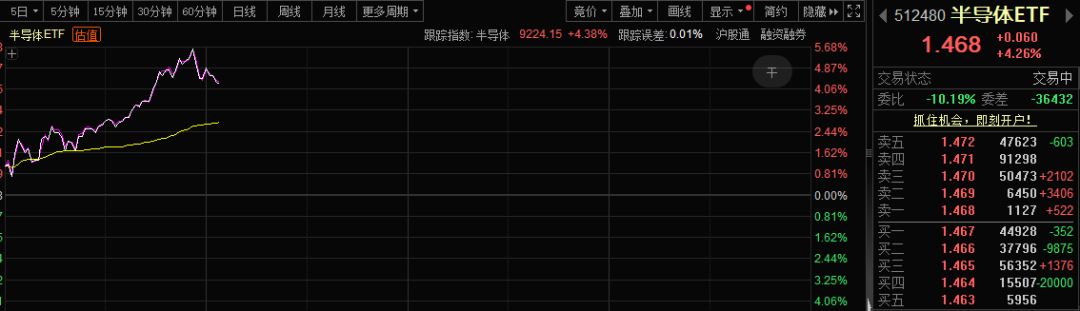
Core Insights - The artificial intelligence sector is experiencing significant momentum, driven by major developments and investments in technology [1][4][5] - The semiconductor industry is also witnessing a surge, with key players like SMIC and Cambrian seeing substantial stock price increases [2][4] - Predictions indicate a massive growth in computing power and AI storage needs, with Huawei forecasting a 100,000-fold increase in total computing power by 2035 [5][6] Group 1: AI Developments - The DeepSeek-R1 model has been recognized on the cover of the prestigious journal Nature, marking a significant milestone as the first mainstream large language model to undergo peer review [4] - Elon Musk's xAI is positioned to potentially achieve Artificial General Intelligence (AGI) through its GROK 5 model, with the Colossus 2 data center expected to be the world's first G-Watt level cluster [4] - The Chinese AI industry is projected to exceed 700 billion yuan by 2024, maintaining a growth rate of over 20% annually [6] Group 2: Semiconductor Sector - Semiconductor stocks have seen a collective surge, with SMIC and Hua Hong Semiconductor both rising over 7% in early trading [2] - The domestic semiconductor industry is being driven by the need for AI chip replacements, with SMIC identified as a key player in this transition [5] Group 3: Market Trends and Predictions - The trend towards AI is irreversible, akin to the mobile internet boom over a decade ago, with significant advancements in AI applications across various sectors [6] - The World Trade Organization predicts that AI applications could boost global trade by nearly 40% by 2040, contingent on supportive policies [6][7] - The number of restrictions on AI-related goods has surged from 130 in 2012 to nearly 500 by 2024, highlighting the need for open trade policies [7]

梁文锋论文登上《自然》封面;李飞飞放出3D AI新成果
2 1 Shi Ji Jing Ji Bao Dao· 2025-09-18 03:00
Group 1: AI and Technology Developments - DeepSeek's research paper on the DeepSeek-R1 reasoning model has been published on the cover of the prestigious journal Nature, marking it as the first mainstream large language model to undergo peer review [2] - Stanford professor Fei-Fei Li's startup World Labs launched a new 3D AI project called Marble, which generates vast 3D environments from photos, although it still faces challenges in commercial application [3] - Microsoft plans to invest $30 billion in the UK by 2028 to build AI infrastructure, including a supercomputer with over 23,000 advanced GPUs, alongside investments from Nvidia, Google, OpenAI, and Salesforce totaling over $40 billion [4] - Huawei released a report predicting that by 2035, AI will drive significant technological advancements, with a projected 100,000-fold increase in total computing power and a 500-fold increase in AI storage capacity [5] - The World Trade Organization forecasts that AI could boost global trade by nearly 40% and GDP by 12-13% by 2040, emphasizing the need for balanced access to AI technology across countries [6] Group 2: Industry Collaborations and Investments - Lyft and Waymo announced a partnership to launch fully autonomous ride-hailing services in Nashville by 2026, utilizing Lyft's Flexdrive for fleet management [8] - Dongshan Precision announced its AI strategy focusing on high-end PCB and optical module development to meet the surging demand for AI-driven optical chips, particularly in the 800G and above market [9] - AI chip startup Groq completed a $750 million funding round, achieving a post-money valuation of $6.9 billion, with participation from various investment firms [10] - Alibaba strategically invested in Hello Robotaxi, aiming to enhance collaboration in smart driving models and computing platforms, accelerating the commercialization of Robotaxi services [11]
X @外汇交易员
外汇交易员· 2025-09-18 02:30
DeepSeek-R1论文登上Nature期刊封面,提到的是DeepSeek今年1月在arxiv发布的论文《DeepSeek-R1: Incentivizing Reasoning Capability in LLMs via Reinforcement Learning》,通讯作者为梁文锋。Nature编辑认为,同行评审模式对AI大语言模型发展有益,因为基准测试是可被操控,将模型的设计、方法论和局限性交由独立的外部专家审视,能够有效“挤水分”,抑制AI行业炒作。🗒️DeepSeek-R1被认为是首个通过权威学术期刊同行评审的大语言模型。 ...
下棋比智商!8 大 AI 模型上演棋盘大战,谁能称王?
AI前线· 2025-09-18 02:28
Core Insights - Kaggle has launched the Kaggle Game Arena in collaboration with Google DeepMind, focusing on evaluating AI models through strategic games [2] - The platform provides a controlled environment for AI models to compete against each other, ensuring fair assessments through an all-play-all format [2][3] - The initial participants include eight prominent AI models from various companies, highlighting the competitive landscape in AI development [2] Group 1 - The Kaggle Game Arena shifts the focus of AI evaluation from language tasks and image classification to decision-making under rules and constraints [3] - This benchmarking approach helps identify strengths and weaknesses of AI systems beyond traditional datasets, although some caution that controlled environments may not fully replicate real-world complexities [3] - The platform aims to expand beyond chess to include card games and digital games, testing AI's strategic reasoning capabilities [5] Group 2 - AI enthusiasts express excitement about the potential of the platform to reveal the true capabilities of top AI models in competitive scenarios [4][5] - The standardized competition mechanism of Kaggle Game Arena establishes a new benchmark for assessing AI models, emphasizing decision-making abilities in competitive environments [5]


梁文锋执笔的R1论文登上Nature封面!首次回应外界三大质疑
AI前线· 2025-09-18 02:28
Core Viewpoint - The article highlights the significant breakthrough of DeepSeek's AI model, DeepSeek-R1, which has successfully passed peer review and is recognized as the first large language model to achieve this milestone, marking a notable advancement for domestic AI research on the global stage [3][8]. Summary by Sections Model Development and Features - DeepSeek-R1 utilizes reinforcement learning (RL) to develop reasoning capabilities without relying on extensive human-annotated data, showcasing a novel approach in AI model training [3][12]. - The model was built on DeepSeek-V3 Base, with a focus on rewarding correct predictions to enhance the generation of longer and more logical responses [3][12]. - The training cost for DeepSeek-R1 was approximately $294,000, significantly lower than competitors that often spend tens of millions [6][12]. Peer Review Process - The peer review process for DeepSeek-R1 involved eight external experts over five months, resulting in a comprehensive review document that was three times the length of the original paper [9][12]. - The review addressed various aspects, including originality, methodology, and robustness, leading to improvements in the final published version [9][12]. Data and Safety Measures - The pre-training data for DeepSeek-V3 Base was sourced entirely from the internet, with a significant effort made to clean the data to avoid contamination, removing around 6 million potentially polluted samples [6][12]. - DeepSeek-R1 has implemented external risk control mechanisms and real-time audits, demonstrating superior safety performance compared to other mainstream models like Claude-3.7-Sonnet and GPT-4o [6][12]. Impact and Future Directions - The innovative use of pure reinforcement learning in DeepSeek-R1 is expected to influence future research in large language models, with many researchers looking to apply similar methods to enhance reasoning capabilities across various domains [12][14]. - Despite some concerns regarding the transparency of training data composition, the model has shown competitive performance in balancing accuracy and cost in scientific task challenges [14][12].

DeepSeek论文登上《自然》封面,R1成为首个严格学术审查大模型
Xin Lang Cai Jing· 2025-09-18 02:23
Core Insights - DeepSeek's R1 model has been recognized as the first major language model to be peer-reviewed and published in the prestigious journal Nature, marking a significant milestone in AI research [1][2] - The R1 model achieved over 10.9 million downloads on Hugging Face, making it the most popular open-source inference model globally [2] - DeepSeek's innovative approach utilizes pure reinforcement learning to enhance reasoning capabilities, diverging from traditional human-imitation methods [2][3] Company Developments - DeepSeek's R1 model was developed with a training cost of only $294,000, significantly lower than the costs associated with training AI models by OpenAI and Google, which can reach millions [2] - The company released an upgraded version, DeepSeek-V3.1, which features a mixed reasoning architecture, improved thinking efficiency, and enhanced agent capabilities [3] - DeepSeek was founded in 2023 in Hangzhou, backed by the quantitative firm Huansquare, with a team composed of experts from top universities and international institutions [3] Industry Context - The publication of DeepSeek's research is seen as a critical step in addressing the rampant speculation and unverified claims within the AI industry, emphasizing the importance of independent peer review [3] - The recognition of DeepSeek's work by Nature highlights China's advancements in foundational research in large models, contributing to the global AI landscape [2]

DeepSeek-R1登上Nature封面:朝着AI透明化迈出的可喜一步
3 6 Ke· 2025-09-18 02:02
Core Insights - The value of open-source artificial intelligence (AI) is gaining broader recognition, highlighted by the publication of the DeepSeek-R1 paper in the prestigious journal Nature, with founder Liang Wenfeng as the corresponding author [1][5]. Research Findings - The research team hypothesized that human-defined reasoning patterns might limit model exploration, and unrestricted reinforcement learning (RL) training could better stimulate the emergence of new reasoning capabilities in large language models (LLMs) [3][8]. - Experiments demonstrated that the reasoning ability of LLMs can be enhanced through pure RL, reducing the need for human input, and outperforming traditionally trained LLMs in tasks such as mathematics, programming competitions, and graduate-level STEM problems [3][9]. Model Evaluation - Following the launch of DeepSeek-R1, it received widespread acclaim from global developers, achieving 91.1k stars on GitHub [4]. - Nature's editorial recognized DeepSeek-R1 as the first mainstream LLM published after peer review, marking a significant step towards transparency in AI [5][17]. - The editorial emphasized the importance of peer-reviewed publications in clarifying LLM operations and assessing their authenticity [6][17]. Methodology - The research introduced a new paradigm within the RL framework, minimizing reliance on human-annotated reasoning processes and exploring the potential for LLMs to develop reasoning capabilities through self-evolution [9][10]. - The team proposed a RL algorithm called "Group Relative Policy Optimization" (GRPO) and trained various models, including DeepSeek-R1-Zero and DeepSeek-R1, based on the foundational model DeepSeek-V3 Base [10][12]. Training Phases - The training process involved multiple stages, with each subsequent model improving upon the previous one in terms of reasoning and instruction-following capabilities [14]. - DeepSeek-R1 demonstrated strong reasoning abilities aligned with human preferences, achieving superior performance across 21 mainstream benchmarks, validating the effectiveness of the RL framework [15][16]. Industry Implications - The editorial raised concerns about the lack of independent peer review for many widely used LLMs, highlighting the need for transparency and accountability in the AI industry [17][18]. - Nature called for more AI companies to submit their models for publication review, emphasizing that peer review can enhance trust and credibility in AI research [18][19].

DeepSeek登上Nature封面,梁文锋带队回应质疑,R1训练真29.4万美金
3 6 Ke· 2025-09-18 01:32
Core Insights - The paper "DeepSeek-R1: Incentivizing Reasoning Capability in LLMs via Reinforcement Learning" has gained significant recognition, being featured on the cover of a leading global journal, Nature [2][4] - DeepSeek-R1 is noted as the first mainstream large language model (LLM) to undergo a peer review process, which has set a precedent for transparency in AI development [7] Model Performance and Popularity - After its open-source release, DeepSeek-R1 became the most downloaded model on Hugging Face, surpassing 10.9 million downloads [4] - The model demonstrated a remarkable improvement in reasoning capabilities, achieving an average problem-solving accuracy (pass@1) of 77.9%, and up to 86.7% with "self-consistent decoding" technology [10] Training Costs and Efficiency - The training cost for DeepSeek-R1 was reported at $294,000, significantly lower than the costs incurred by companies like OpenAI and Google [5][6] - The training process involved 147,000 GPU hours, with a breakdown of costs for different training phases [6] Innovative Training Approach - DeepSeek-R1-Zero was developed by completely discarding human reasoning patterns, utilizing a simplified reinforcement learning framework [8][10] - The model was trained with a focus on two main components: task format and reward signals based on the correctness of final answers [10] Self-Evolution and Advanced Reasoning - During training, the model exhibited self-evolution behaviors, increasing the length of generated text in the "think" tag and developing advanced reasoning strategies [12][15] - A notable "Aha Moment" was observed when the model began using the word "wait" more frequently, indicating a shift in its reasoning process [16][18] Multi-Stage Training Process - The training process consists of multiple stages, including cold start, reinforcement learning, large-scale supervised fine-tuning, and a second round of reinforcement learning [19][20] - Each stage is designed to enhance different aspects of the model's capabilities, from initial fine-tuning to improving language consistency and general knowledge [20][35] Reward System Design - DeepSeek implemented a dual-track reward system, combining rule-based rewards for reasoning tasks and model-based rewards for general tasks [27][30] - The rule-based rewards focus on accuracy and format compliance, while the model-based rewards assess the usefulness and safety of the outputs [28][31] Challenges and Future Directions - Despite its advanced reasoning capabilities, DeepSeek-R1 faces limitations in structured outputs and tool usage, and it is sensitive to prompt variations [43] - The reliance on reliable reward signals poses challenges, particularly for subjective tasks, which may lead to reward hacking [44]

中国大模型首登Nature封面!DeepSeek首次披露:R1训练只花了200万
量子位· 2025-09-18 00:51
Core Insights - DeepSeek has become the first Chinese large model company to be featured on the cover of Nature, with founder Liang Wenfeng as the corresponding author [2][3] - The R1 model has been recognized for its innovative approach, achieving significant performance improvements in reasoning tasks through a pure reinforcement learning framework [19][20] Group 1: Achievements and Recognition - DeepSeek's R1 model is the first large language model to undergo peer review, marking a significant milestone in the field [5] - The model has garnered 3,596 citations on Google Scholar and has been downloaded 10.9 million times from Hugging Face, indicating its widespread acceptance and use [7] - The training cost of R1 is approximately $294,000, significantly lower than competitors that often exceed $10 million, challenging the notion that high investment is necessary for top-tier AI models [12][13] Group 2: Training and Data - R1 was trained using 512 H800 GPUs for 198 hours, with a total training cost of $294,000 [10][11] - The dataset for R1 includes five types of data: Math, Code, STEM, Logic, and General, with a total of 126,000 prompts [15][18] - The model's training involved a combination of cold-start data, reinforcement learning, and supervised fine-tuning, enhancing its reasoning capabilities [25][26] Group 3: Performance Metrics - DeepSeek-R1-Zero achieved a pass@1 score of 71.0% in AIME 2024, significantly improving from 15.6% [21] - In comparison to other leading models, DeepSeek-R1 demonstrated competitive performance across various benchmarks, including MATH-500 and LiveCode [23][30] - The distilled models from DeepSeek-R1 outperformed direct applications of reinforcement learning on the base model, showcasing the effectiveness of the training approach [29] Group 4: Safety and Transparency - DeepSeek has released a detailed safety assessment of the R1 model, indicating a moderate inherent safety level comparable to GPT-4o [18][22] - The company has embraced transparency by open-sourcing the model weights for DeepSeek-R1 and DeepSeek-R1-Zero on Hugging Face, promoting community engagement [30]
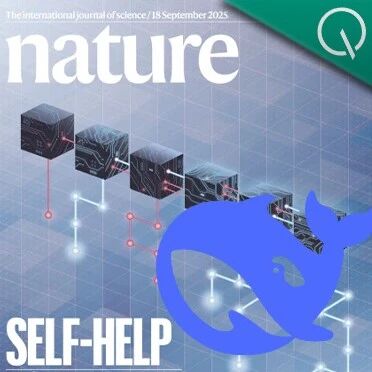
梁文锋论文登上《自然》封面
财联社· 2025-09-18 00:49
Core Viewpoint - The DeepSeek-R1 inference model research paper, led by Liang Wenfeng, has been published in the prestigious journal Nature, marking a significant milestone in the field of large language models [1][4]. Group 1 - The latest paper provides more detailed insights into the model training process compared to the initial version released in January [4]. - DeepSeek-R1 is recognized as the first mainstream large language model to undergo peer review, addressing previous concerns regarding its distillation [4]. - Nature highlighted that most mainstream large models have not yet been independently peer-reviewed, and DeepSeek has filled this gap [4].