欧莱雅

Search documents
前第四范式总裁创业,用营销AI Agent解构内容社交平台的“营销玄学”,已获千万元融资
3 6 Ke· 2026-01-19 00:35
Core Insights - Noumena, led by CEO Pei Nasi, adopts a unique approach by embedding its team within client offices to foster deep collaboration and understanding of business needs [1][3] - The marketing landscape has shifted from e-commerce platforms to content social platforms, significantly impacting brand marketing strategies [3][4] - Noumena aims to transform marketing from an art into a science through its AI-driven "Growth Intelligence" system, addressing the challenges of consumer insights and data processing [5][6] Group 1: Business Model and Strategy - Noumena's founders emphasize a focus on specific business domains to leverage AI effectively, opting for direct engagement with clients rather than traditional office setups [1][8] - The company targets top-tier brands and fast-growing DTC brands, believing that these clients possess valuable insights that can enhance Noumena's AI capabilities [9][27] - The "Manhattan Project" within Noumena includes modules for public domain compression and evidence grading verification, aimed at extracting actionable insights from vast amounts of user-generated content [6][7] Group 2: Market Dynamics - Over 85% of Gen Z's purchasing decisions are influenced by content social platforms, making them critical battlegrounds for brands [4][10] - Traditional marketing methods struggle to adapt to the rapid changes in consumer behavior driven by social media, necessitating a new approach to data and insights [10][11] - The shift in consumer decision-making processes highlights the need for brands to optimize their content distribution and engagement strategies [12][13] Group 3: Technological Innovation - Noumena's AI system is designed to process unstructured data and validate insights, addressing the limitations of traditional consumer research methods [5][6] - The company employs a structured approach to understanding content social platforms, focusing on causal relationships that can drive marketing effectiveness [23][24] - The integration of technology in marketing is seen as a means to enhance decision-making and operational efficiency, moving beyond mere content generation [30][31] Group 4: Operational Insights - The co-creation model adopted by Noumena allows for a better understanding of client needs and market dynamics, bridging the gap between technical capabilities and business requirements [25][26] - The company emphasizes the importance of aligning marketing strategies with long-term brand growth rather than short-term execution efficiency [25][26] - Noumena's dual-track business model includes service fees for top clients and a token-based payment system for professional users, indicating a scalable approach to growth [29][30]


半亩花田冲击IPO 林清轩创始人“潜伏”
Zhong Guo Ji Jin Bao· 2026-01-18 05:14
Core Viewpoint - The company "Banmu Huatian" is accelerating its IPO process in Hong Kong, aiming to become the first domestic personal care stock listed in Hong Kong, with significant attention from industry insiders due to its Pre-IPO financing involving the founder of Lin Qingxuan [1][4]. Company Overview - Banmu Huatian, officially known as Shandong Huawutang Cosmetics Co., Ltd., submitted its IPO application to the Hong Kong Stock Exchange on January 16, 2026, with CITIC Securities as the sole sponsor [1]. - The company reported a revenue of 1.895 billion RMB for the first nine months of 2025, marking a 76.7% increase compared to the same period in 2024 [4]. Revenue Breakdown - The company's revenue is primarily driven by three main business segments: body care, hair care, and facial care. Body care products contribute over 40% of total revenue, while hair care has emerged as a significant growth driver, increasing from 43 million RMB in 2023 to 482 million RMB in the first nine months of 2025 [5][6]. - The facial care segment's revenue share decreased from 50.1% in 2023 to 24.4% in the first nine months of 2025 [5]. Sales Channels - Online channels accounted for over 75% of revenue in 2023 and 2024, with 76.3% in the first nine months of 2025, amounting to 1.445 billion RMB [6][8]. - The company is also expanding its offline presence, increasing the number of distributors from 187 at the end of 2023 to 454 by the end of September 2025, with offline revenue share rising from 13.9% to 23.5% [7]. Marketing Expenses - Marketing expenses have been substantial, with 637 million RMB in 2023 (53.2% of revenue), slightly decreasing to 677 million RMB in 2024 (45.2%), and then rising again to 896 million RMB in the first nine months of 2025 (47.3%) [9][10]. - The marketing budget is primarily allocated to brand and product promotion, e-commerce interactions, KOL collaborations, and outdoor advertising [10]. Industry Context - The personal care market in China is experiencing rapid growth, with the body wash market expected to reach 111 billion RMB in 2024, growing at a compound annual growth rate (CAGR) of 5.6% from 2024 to 2029 [4][13]. - The overall skin and personal care market is projected to grow to 1,022.1 billion RMB by 2029, with a CAGR of 6.5% from 2024 to 2029 [13]. Competitive Landscape - The personal care sector is highly competitive, with major players like L'Oréal, Procter & Gamble, and Unilever holding significant advantages in channels, R&D, and brand positioning. Domestic brands such as Proya and others are also rapidly expanding in the body care segment [13]. - The average price-to-earnings ratio for listed beauty and personal care companies ranges from 25 to 30 times, indicating a shift in investor focus from growth to profitability and sustainability, especially amid rising marketing costs [14].

半亩花田冲击IPO,林清轩创始人“潜伏”
Zhong Guo Ji Jin Bao· 2026-01-18 04:56
Core Viewpoint - The company "Banmu Huatian" is preparing for an IPO in Hong Kong, aiming to become the first domestic personal care stock in the Hong Kong market, with significant interest from investors, including the founder of Lin Qingxuan participating in its Pre-IPO financing [2][4]. Financial Performance - Banmu Huatian reported a revenue of 1.895 billion yuan for the first nine months of 2025, representing a 76.7% increase compared to the same period in 2024 [4]. - The company's revenue grew from 1.199 billion yuan in 2023 to 1.895 billion yuan in the first nine months of 2025 [5][6]. Business Segments - The three main business segments of Banmu Huatian are body care, hair care, and facial care, with body care contributing over 40% of total revenue [6]. - Hair care has emerged as a significant growth driver, increasing from 43.255 million yuan in 2023 to 482.16 million yuan in the first nine months of 2025 [6]. Sales Channels - Online channels accounted for over 75% of revenue in 2023 and 2024, with 76.3% in the first nine months of 2025, amounting to 1.445 billion yuan [7][8]. - The number of offline distributors increased from 187 at the end of 2023 to 454 by the end of September 2025, with offline revenue share rising from 13.9% to 23.5% [8]. Marketing Expenses - Marketing expenses have been substantial, reaching 637.176 million yuan in 2023, 677.410 million yuan in 2024, and increasing to 896.222 million yuan in the first nine months of 2025 [10]. - The marketing budget is primarily allocated to brand promotion, e-commerce interactions, KOL collaborations, and outdoor advertising [10]. Industry Context - The personal care market in China is rapidly growing, with the body wash market expected to reach 111 billion yuan in 2024, growing at a compound annual growth rate (CAGR) of 5.6% from 2024 to 2029 [5]. - The overall skin and personal care market in China is projected to grow to 1,022.1 billion yuan by 2029, with a CAGR of 6.5% from 2024 to 2029 [14]. Competitive Landscape - The personal care sector is highly competitive, with major players like L'Oréal, Procter & Gamble, and Unilever holding significant advantages in channels, R&D, and brand positioning [14]. - Emerging brands are also capturing niche markets through differentiated positioning, intensifying competition [14].

涌入成人网站,时尚品牌「下海」谋生了?
36氪· 2026-01-17 13:52
以下文章来源于潮生TIDE ,作者J 36氪旗下生活方式内容品牌。潮来潮去,生活不息。 其实是一场双赢。 文 | J 编辑 | 薇薇子 设计 | 曲枚 来源| 潮生TIDE(ID: chaoshengTIDE ) 封面来源 | 品牌官方 品牌、设计师们集体"下海" 潮生TIDE . 在时尚界,极端的先锋与彻底的禁忌之间往往只有一线之隔。 如果说过去几年,品牌们还在为挤进抖音、小红书的流量池而卷得不可开交,那么现在,更酷、也更令人意想不到的坐标正悄然发生偏移。 想象一下,当你熟练地输入那个带有标志性蓝色Logo的网址 , 在被社会公序良俗反复标注为"成人内容"的界面背后,映入眼帘的却不再只是模糊暧昧的感 官刺激,而是一张张锋利的秀场面孔、解构主义的剪裁草图,甚至是品牌斥巨资打造的全球创意企划。 没错,品牌和设计师们顶着巨大的争议,集体"下海"了。 这种反差感很难让人忽视。长期以来, OnlyFans在主流语境中是不可言明的"赛博红灯区", 它靠着订阅制模式建立起一个私密且直接的变现闭环。然而, 当这些象征着精英审美与大众流行的时装品牌选择入驻时,这种打破次元壁的碰撞,不仅是在向传统社交媒体的审查机制宣战,也更像 ...

“达人直播的佣金比例越来越高”
第一财经· 2026-01-17 04:35
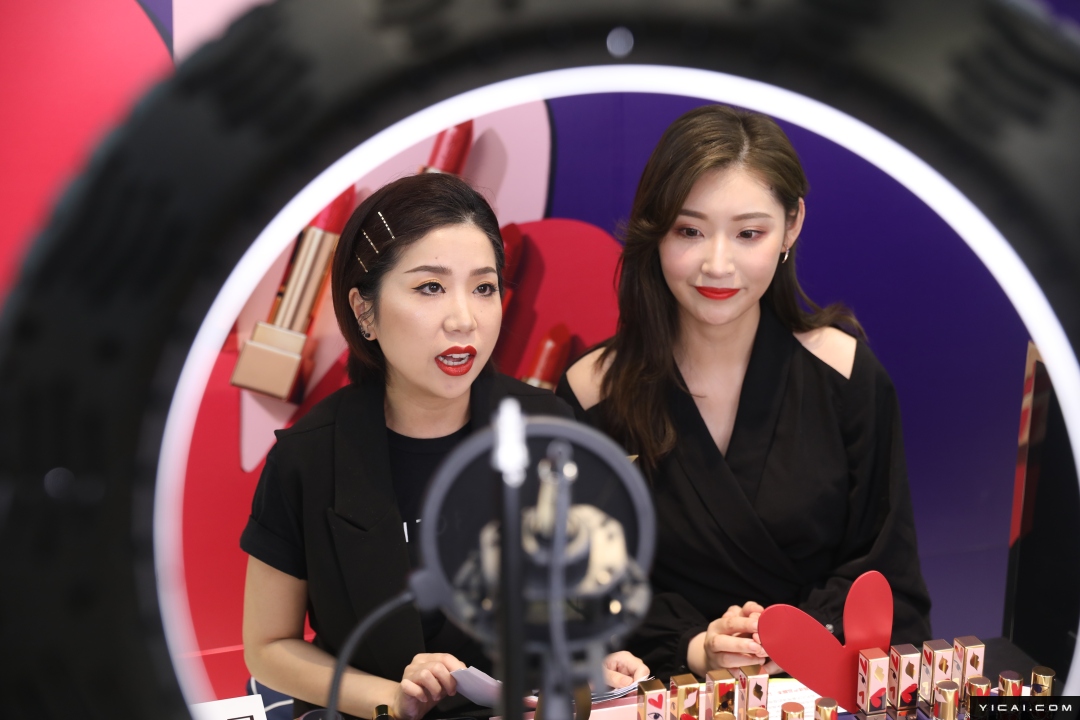
Core Viewpoint - The beauty industry in China is facing a flow dilemma, with increasing commission rates for live streaming influencers, which has led to a significant rise in marketing costs and a decline in profit margins for local brands [3][4][8]. Group 1: Industry Challenges - The commission rate for influencers in live streaming is projected to rise from 40% in 2024 to 60% in 2025, indicating a growing cost burden for beauty brands [8]. - Local beauty brands, such as Proya, have heavily relied on traffic-driven strategies, resulting in high sales expenses. In 2024, Proya's sales expenses reached 5.16 billion yuan, accounting for 47.9% of its revenue of 10.77 billion yuan [8][17]. - The marginal returns on channel expenses are diminishing, as Proya's revenue growth rate fell 8 percentage points behind its sales expense growth rate in 2024 [8]. Group 2: Shift in Marketing Strategies - Many companies are transitioning from influencer-driven sales to self-operated content, as the era of influencer marketing is perceived to be declining [9][10]. - The CEO of Youmai Technology noted that the current trend is moving away from reliance on influencers, with brands needing to develop strong in-house content capabilities to survive [12]. - Proya has established its content department in 2025 to adapt to the changing landscape and improve its marketing effectiveness [12]. Group 3: R&D Investment Concerns - The beauty industry in China has a common issue of under-investing in research and development (R&D). Proya's R&D expenditure was only 210 million yuan in 2024, representing just 1.9% of its revenue [16]. - The lack of R&D capabilities among most beauty companies is a significant concern, especially as the market becomes more competitive and consumers demand higher quality products [16][17]. - The disparity in R&D investment between local brands and multinational companies is stark, with companies like L'Oréal investing approximately 10 billion yuan in R&D in 2024, nearly equivalent to Proya's total revenue [17]. Group 4: Market Dynamics and Future Outlook - The beauty market has seen a slowdown in new brand emergence, with the flow of traffic becoming more expensive and less accessible [14][18]. - The competitive landscape is intensifying, with local brands needing to focus on brand building and R&D to avoid being outperformed by more established competitors [16][18]. - The path to becoming a globally recognized brand is challenging for local companies, as they must overcome significant organizational and operational differences compared to multinational firms [17].
美妆企业失去流量红利,它们正在放弃达人直播
Di Yi Cai Jing· 2026-01-16 15:31
Core Insights - The beauty brand Opal's founder, Zhou Yan, highlighted the increasing commission rates for influencers in live streaming, projecting it to reach 60% by 2025, indicating a significant challenge for beauty companies in managing rising costs of traffic acquisition [1][5] - Domestic beauty brands have gained market share over foreign brands, with Proya achieving over 10.7 billion RMB in revenue in 2024, marking it as the first Chinese beauty brand to surpass the 10 billion RMB threshold [4][10] - The live streaming e-commerce model has been crucial for the rise of domestic beauty brands, but the industry is facing regulatory scrutiny and a shift towards self-broadcasting as influencer costs become unsustainable [4][6] Industry Challenges - The beauty industry is experiencing a "traffic anxiety," with companies like Proya heavily reliant on platforms like Douyin and Tmall, where online sales account for over 90% of their revenue [5][10] - Proya's sales expenses reached 5.16 billion RMB in 2024, constituting 47.9% of its revenue, with a notable increase in promotional costs, indicating diminishing returns on marketing investments [5][9] - The trend of relying on influencer marketing is declining, with companies urged to develop their own content capabilities to ensure long-term sustainability [6][7] Market Dynamics - The cost of acquiring traffic has surged, with CPM rates on short video platforms rising from 30-50 RMB in 2020-2021 to 300 RMB by 2025, necessitating a multi-channel approach to reduce costs [8][9] - The beauty market has seen a stagnation in new brand emergence, with existing brands needing to focus on product development and brand positioning to remain competitive [9][10] - The disparity in R&D investment between domestic and foreign brands is significant, with foreign companies like L'Oréal investing around 13 billion euros (approximately 100 billion RMB) in R&D, comparable to Proya's total revenue [10][11] Future Outlook - The current landscape suggests that while domestic brands have capitalized on the e-commerce boom, they face a long road ahead to compete with global giants like L'Oréal and Shiseido, particularly in terms of brand development and international expansion [11][12]


美妆企业失去流量红利
Di Yi Cai Jing· 2026-01-16 14:01
Core Insights - The beauty brand Opal's founder, Zhou Yan, highlighted the increasing commission rates for influencers in live streaming, projecting a rise to 60% by the end of 2025, indicating a significant challenge for beauty companies in managing costs and maintaining profitability [2][5] - Domestic beauty brands have gained market share over foreign brands, with Opal achieving over 10.7 billion yuan in revenue in 2024, marking it as the first Chinese beauty brand to surpass the 10 billion yuan threshold [4][16] - The shift from influencer-driven sales to self-operated content is becoming a trend as companies seek to reduce dependency on high commission rates and improve their own content capabilities [7][11] Industry Challenges - The beauty industry is experiencing a flow of anxiety due to rising costs associated with influencer marketing, with sales expenses for Opal reaching 51.6 billion yuan in 2024, accounting for 47.9% of its revenue [5][6] - The marginal returns on channel investments are diminishing, as evidenced by Opal's revenue growth rate lagging behind its sales expense growth by 8 percentage points in 2024 [6] - The market is witnessing a decline in new brand emergence, with companies needing to adapt to a more rational approach rather than relying on opportunistic strategies [13][14] Competitive Landscape - The competitive environment is intensifying, with domestic brands facing significant pressure from established foreign brands like L'Oréal and Procter & Gamble, which have more robust R&D and marketing systems [16][17] - The disparity in R&D investment is stark, with L'Oréal's R&D expenditure in 2024 reaching approximately 13 billion euros (around 100 billion yuan), comparable to Opal's total revenue [16] - The potential for domestic brands to rank among the top global beauty companies is limited by their reliance on the Chinese market, which does not support the scale needed for global competitiveness [16][17]

美妆企业失去流量红利
第一财经· 2026-01-16 13:07
Core Viewpoint - The beauty industry in China is facing a flow dilemma, with increasing commission rates for live-streaming influencers, which has led to a significant rise in marketing costs and a decline in profitability for many brands [3][4][7]. Group 1: Industry Trends - The commission rate for influencers in live-streaming is projected to rise from 40% in 2024 to 60% in 2025, indicating a shift in the cost structure for beauty brands [7]. - Domestic beauty brands have gained market share, surpassing foreign brands in 2024, with Proya achieving over 10.7 billion yuan in revenue, becoming the first Chinese beauty brand to exceed this threshold [6][16]. - The live-streaming e-commerce model has provided domestic brands with opportunities to compete against established foreign brands, which have more complex organizational structures [6][16]. Group 2: Financial Insights - Proya's sales expenses reached 5.16 billion yuan in 2024, accounting for 47.9% of its revenue, highlighting the high cost of marketing in the current environment [7]. - The growth rate of Proya's revenue in 2024 was 8 percentage points lower than the growth rate of its sales expenses, indicating diminishing returns on marketing investments [7]. - Research and development (R&D) spending for Proya was only 2.1 billion yuan in 2024, representing about 1.9% of its revenue, which is significantly lower than its marketing expenses [15][16]. Group 3: Strategic Shifts - Many companies are transitioning from relying on influencer marketing to developing their own content, as the effectiveness of influencer-driven sales diminishes [8][11]. - The trend indicates a need for brands to enhance their content capabilities to survive in a competitive market [11]. - The beauty industry is witnessing a decline in new brand emergence, with existing brands needing to focus on product development and brand positioning to remain competitive [15][17]. Group 4: Market Challenges - The cost of advertising on short video platforms has surged, with CPM rates increasing from 30-50 yuan in 2020-2021 to 300 yuan during the 2025 Double 11 shopping festival [14]. - The market is becoming increasingly competitive, with a plethora of beauty brands leading to intense competition and consumer choice [15][17]. - The disparity in R&D investment between domestic and foreign brands remains significant, with foreign companies like L'Oréal investing around 13 billion euros (approximately 100 billion yuan) in R&D, nearly equal to Proya's total revenue [16].

美妆企业失去流量红利,它们正在放弃达人直播 | 海斌访谈
Di Yi Cai Jing· 2026-01-16 12:29
Core Insights - The commission rate for influencer live streaming in the beauty industry is expected to rise significantly, from 40% in 2024 to 60% in 2025, indicating increasing costs for brands [1][5] - Domestic beauty brands are facing challenges due to rising traffic costs and a shift in consumer behavior, leading to a need for more sustainable business models [4][16] Group 1: Industry Trends - The rise of influencer live streaming has been crucial for the growth of domestic beauty brands, allowing them to gain market share against established foreign brands [4][15] - In 2024, domestic beauty brands surpassed foreign brands in market share, with Proya achieving over 10.7 billion yuan in revenue, becoming the first Chinese beauty brand to exceed 10 billion yuan [4][15] - The influencer-driven sales model is becoming less effective, with many brands transitioning to self-operated content to reduce dependency on high commission rates [6][8] Group 2: Financial Insights - Proya's sales expenses reached 5.16 billion yuan in 2024, accounting for 47.9% of its revenue, highlighting the high cost of marketing and promotion [5][14] - The growth rate of Proya's revenue in 2024 was 8 percentage points lower than the growth rate of its sales expenses, indicating diminishing returns on marketing investments [5] - Research and development (R&D) spending remains low in comparison to marketing expenses, with Proya's R&D investment at only 2.1 billion yuan, about 1.9% of its revenue [14][15] Group 3: Market Dynamics - The beauty market is experiencing a decline in new brand emergence, with existing brands struggling to maintain growth amid rising costs and competition [13][14] - The CPM (cost per thousand impressions) for advertising on short video platforms has surged from 30-50 yuan in 2020-2021 to 300 yuan during the 2025 Double Eleven shopping festival, reflecting increased advertising costs [13] - The competitive landscape is intensifying, with many brands needing to focus on product development and brand positioning rather than relying solely on traffic-driven sales strategies [14][16]
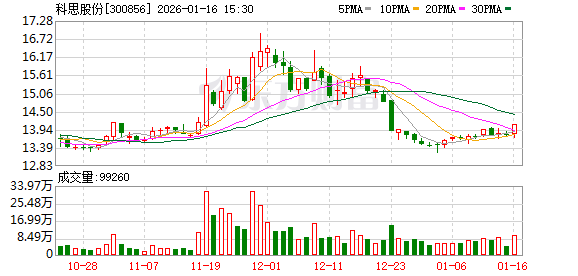
科思股份:P-S产品在美国市场的商业化仍需等待FDA批准
Mei Ri Jing Ji Xin Wen· 2026-01-16 09:19
Group 1 - The company is actively promoting the sales of amino acid surfactants and pyrrolidone ethanolamine salts, having entered the supply chains of leading brands such as Unilever [1] - The commercialization of P-S products in the U.S. market is pending FDA approval [1] - The impact of inventory reduction for sunscreen products is gradually diminishing, with varying recovery situations for different products [1] Group 2 - An investor inquired about the expansion of amino acid surfactants into head brands over the past two years and the addition of new head clients for the anti-dandruff agent, specifically asking about supply volume and production capacity utilization [3] - Questions were raised regarding the bulk supply of PS sunscreen agents to American brands and the recovery of supply volume in collaboration with DSM to 2022 levels [3] - The investor also inquired about the expected operational status of the Malaysian factory by April 2026 and the addition of new clients for overseas exhibitions in 2025 [3]