阿里健康

Search documents
2025年CDSS品牌推荐数据驱动精准辅助,循证决策提升诊疗质量
Tou Bao Yan Jiu Yuan· 2026-01-23 00:35
Investment Rating - The report does not explicitly state an investment rating for the CDSS industry Core Insights - The Clinical Decision Support System (CDSS) is evolving from basic rule-based systems to intelligent, scenario-based solutions that integrate artificial intelligence and clinical knowledge, enhancing diagnostic accuracy and treatment standardization [5][7] - The market for CDSS in China is projected to grow from 540 million yuan in 2020 to 900 million yuan in 2024, with a compound annual growth rate (CAGR) of 13.4%, and is expected to reach 2.01 billion yuan by 2029, with a CAGR of 18.5% [8] - The penetration rate of CDSS in China is around 20%, significantly lower than the 74% in the United States, indicating substantial growth potential in the Chinese market [9] Market Background - CDSS is defined as an information tool that integrates medical knowledge and patient data to provide intelligent assistance to healthcare professionals, aimed at improving the quality and safety of clinical decisions [6] - The evolution of CDSS has gone through three main stages: rule-based systems, integration with hospital information systems, and the current phase that incorporates artificial intelligence and multi-source data [7] Market Status - The CDSS market in China is expected to see significant growth, particularly in specialized CDSS, which is projected to grow from 20 million yuan in 2020 to 190 million yuan in 2024, with a CAGR of 80.3% [8] - The demand for CDSS is primarily focused on improving medical quality and efficiency, with high agreement across different economic regions on the need for optimized business processes [10] Market Competition - The competitive landscape of the CDSS market in China features established IT vendors, emerging tech companies, and cross-industry giants, each leveraging their strengths to capture market share [15] - Key competitive dimensions include system performance, technological innovation, and market positioning, with a focus on understanding the differentiated needs of healthcare institutions [12][13][14] Recommended Brands - The report highlights ten leading brands in the CDSS market, including Weining Health, Chuangye Huikang, and Neusoft Group, each recognized for their unique contributions to the industry [16][18][19][20][21][22][23][24][25][26] Development Trends - The CDSS industry is transitioning towards data and knowledge-driven systems, utilizing machine learning to enhance decision-making capabilities [28] - There is a trend towards diversified solutions tailored to specific clinical scenarios, including specialized CDSS for various diseases and lightweight versions for grassroots healthcare [29] - The deployment model is shifting from traditional localized systems to cloud-based solutions, reducing costs and enabling rapid updates [30]
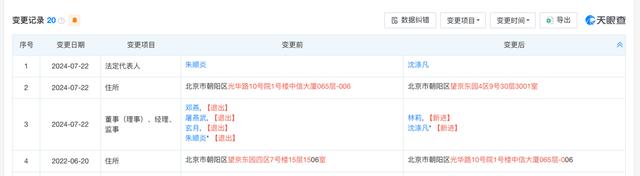
AI叙事下,阿里健康拿到了“高德、饿了么”的剧本
3 6 Ke· 2026-01-22 23:33
Core Insights - Alibaba Health has launched its AI product "Hydrogen Ion," marking a significant step in its AI strategy [1][10] - The company is positioning itself within the competitive landscape of AI, following the introduction of other AI models like Ant Group's "Afu" and "Lingguang" [2][5] - The leadership transition to CEO Shen Difan is expected to drive the company's focus on AI applications and B2B services [10][11] Group 1: AI Strategy and Product Launch - "Hydrogen Ion" is seen as the first major initiative under Shen Difan's leadership, aiming to integrate AI into Alibaba Health's operations [6][11] - The product is designed as a ChatGPT-like assistant for doctors, but its low-key launch raises questions about its market positioning and potential user base [12][14] - The internal and external challenges of commercializing "Hydrogen Ion" are acknowledged, with a focus on building trust in AI-assisted diagnostics among healthcare professionals [14][15] Group 2: Leadership and Organizational Changes - Shen Difan's appointment as both CEO and Chairman indicates a strategic shift towards AI and digital health [7][10] - The previous leadership under Zhu Shunyan established a foundation for preventive health management, but the focus may now shift towards AI-driven solutions [9][21] - The organizational changes reflect a broader strategy to align with Alibaba Group's emphasis on AI across its various business lines [6][18] Group 3: Market Position and Financial Performance - Alibaba Health's revenue structure shows a strong reliance on its self-operated pharmaceutical business, with a reported income of 26.124 billion yuan for the fiscal year 2025 [21][22] - The company is primarily viewed as a pharmaceutical e-commerce platform rather than a medical technology firm, which may limit its ability to compete in the AI space [22][24] - The challenges of transitioning to a technology-driven model in the highly regulated healthcare sector are highlighted, suggesting that Alibaba Health may need to focus on its core competencies [24][26] Group 4: Competitive Landscape - Ant Group's AI initiatives, particularly "Afu," have gained traction, positioning it as a leader in the healthcare AI space, which may overshadow Alibaba Health's efforts [15][16] - The differing focuses of Alibaba Health and Ant Group—one on pharmaceutical distribution and the other on technology-driven health solutions—illustrate the competitive dynamics within Alibaba's ecosystem [16][26] - The potential for Alibaba Health to become a supporting player in the broader AI strategy of Alibaba Group is discussed, drawing parallels with other business lines that have evolved into supplementary roles [27][29]


2025年CDSS品牌推荐:数据驱动精准辅助,循证决策提升诊疗质量
Tou Bao Yan Jiu Yuan· 2026-01-22 12:24
Investment Rating - The report does not explicitly state an investment rating for the CDSS industry Core Insights - The Clinical Decision Support System (CDSS) is evolving from basic rule-based systems to intelligent, scenario-based solutions that integrate artificial intelligence and clinical knowledge, enhancing diagnostic accuracy and treatment standardization [5] - The market for CDSS in China is projected to grow from 540 million yuan in 2020 to 900 million yuan in 2024, with a compound annual growth rate (CAGR) of 13.4%, and is expected to reach 2.01 billion yuan by 2029, with a CAGR of 18.5% [8] - The penetration rate of CDSS in China is around 20%, significantly lower than the 74% in the United States, indicating substantial growth potential in the Chinese market [9] Market Background - CDSS is defined as an information tool that integrates medical knowledge and patient data to provide intelligent assistance to healthcare professionals, aimed at improving the quality and safety of clinical decisions [6] - The evolution of CDSS has gone through three main stages: rule-based systems, integration with hospital information systems, and the current phase that incorporates artificial intelligence and multi-source data [7] Market Status - The CDSS market in China is expected to see significant growth, particularly in specialized CDSS, which is projected to grow from 20 million yuan in 2020 to 190 million yuan in 2024, with a CAGR of 80.3% [8] - The demand for CDSS is primarily focused on enhancing medical quality and efficiency, with a high consensus across different economic regions on the need to optimize business processes and improve healthcare quality [10] Market Competition - The competitive landscape of the CDSS market in China is characterized by leading traditional IT vendors, emerging tech companies focusing on AI and big data, and cross-industry giants entering the market [15] - Key competitive dimensions include system performance and data advantages, technological innovation, and market positioning [12][13][14] Recommended Brands - The report highlights ten recommended brands in the CDSS market, including: 1. Weining Health 2. Chuangye Huikang 3. Neusoft Group 4. Yidu Tech 5. Senyi Intelligent 6. Huimei Technology 7. iFlytek 8. Baidu Lingyi Zhihui 9. Alibaba Health 10. Ping An Smart Healthcare [16][18][20][22][24][26] Development Trends - The CDSS industry is moving towards data and knowledge-driven upgrades, with a focus on utilizing machine learning to analyze clinical data and build dynamic medical knowledge graphs [28] - There is a trend towards diversified scenarios and solutions, with CDSS being tailored for specific diseases and integrated into new healthcare models [29] - Deployment and operational models are shifting towards cloud-based solutions, reducing costs and enabling rapid updates of algorithms and knowledge bases [30]
港股芯片股高开低走
Di Yi Cai Jing Zi Xun· 2026-01-22 08:43
| 名称 | 现价 | 涨跌 | 涨跌幅 · | 成交额 | | --- | --- | --- | --- | --- | | 理想汽车-W | 65.550c | 2.600 | 4.13% | 13.08亿 | | 百度集团-SW | 160.000c | 6.300 | 4.10% | 39.62亿 | | 哔哩哔哩-W | 257.000c | 8.200 | 3.30% | 10.55亿 | | 华虹半导体 | 109.200c | 3.400 | 3.21% | 27.72亿 | | 金蝶国际 | 14.520c | 0.360 | 2.54% | 5.89亿 | | 蔚来-SW | 37.040c | 0.820 | 2.26% | 1.33亿 | | 阿里巴巴-W | 164.800c | 1.600 | 0.98% | 98.37亿 | | 京东集团-SW | 113.900c | 1.100 | 0.98% | 9.37亿 | | 中芯国际 | 77.850c | 0.600 | 0.78% | 39.62亿 | 跌幅方面,地平线机器人跌逾4%,小鹏汽车、京东健康跌近3%。 1月22日, ...
港股芯片股高开低走
第一财经· 2026-01-22 08:36
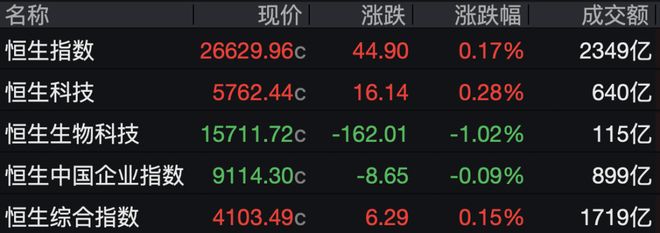
跌幅方面,地平线机器人跌逾4%,小鹏汽车、京东健康跌近3%。 | 名称 | 现价 | 涨跌 | 涨跌幅 ^ | 成交额 | | --- | --- | --- | --- | --- | | 地平线机器人-W | 8.890c | -0.400 | -4.31% | 19.42亿 | | 小鹏汽车-W | 76.950c | -2.350 | -2.96% | 12.96亿 | | 京东健康 | 64.850c | -1.950 | -2.92% | 3.96亿 | | 美的集团 | 85.700c | -1.700 | -1.95% | 1.95亿 | | 海尔智家 | 26.320c | -0.480 | -1.79% | 3.79亿 | | 同程旅行 | 23.340c | -0.260 | -1.10% | 1.37亿 | | 阿里健康 | 6.740c | -0.070 | -1.03% | 7.02亿 | 半导体、 芯片股高开低走,兆易创新跌超8%,纳芯微跌近8%,天岳先进跌超4%。 1月22日,香港恒生指数收涨0.17%,恒生科技指数涨0.28%。 | 名称 | 涨跌| 现价 | | | 成交额 ...

银行回撤,大消费/互联网紧随其后;医疗和科技逆势小涨
Ge Long Hui· 2026-01-22 05:17
大消费冲高回落,截止午盘下跌0.23%。其中安踏体验下跌5.75%,李宁下跌4%,申洲国际/蜜雪集团/ 康方生物等股跌幅均在3%上方;同程旅行/阿里健康/药明联合等涨幅均在2%上方。 恒生科技开盘后只需拉升,随后维持在中轴上方盘整,截止午盘上涨0.13%。其中百度集团上涨 3.29%,中芯国际上涨3.15%,比亚迪股份/阿里巴巴等股涨幅均在1%上方;网易逆势下跌3.43%,小米 集团下跌2.31%。 内容只是个人观点,仅供参考,不作为投资依据!欢迎关注交流,互相学习、共同探讨! 冲高回落维持弱势,截止午盘,恒生指数小跌0.15%。银行跌幅居前,大消费/互联网等紧随其后;恒生 医疗和恒生科技等逆势小涨。 银行高开低走后一路回撤,截止午盘下跌0.29%。重庆农村商业银行下跌1.51%,大新集团下跌1.5%, 农业银行/光大银行/招商银行等股跌幅均在1%上方,青岛银行/招商银行/中国银行等股逆势小涨。 ...

港股科网股集体走强
Di Yi Cai Jing Zi Xun· 2026-01-22 01:46
科网股集体走强,百度集团、金蝶国际涨超3%,蔚来涨超2%,阿里巴巴、中芯国际、商汤、阿里健康 等涨超1%,京东集团涨近1%。 | 名称 | 现价 | 涨跌 | 涨跌幅 ▼ | | --- | --- | --- | --- | | 百度集团-SW | 159.500 | 5.800 | 3.77% | | 金蝶国际 | 14.600 | 0.440 | 3.11% | | 蔚来-SW | 37.100 | 0.880 | 2.43% | | 华虹半导体 | 108.000 | 2.200 | 2.08% | | 阿里巴巴-W | 166.000 | 2.800 | 1.72% | | 中芯国际 | 78.500 | 1.250 | 1.62% | | 快手-W | 80.050 | 1.250 | 1.59% | | 阿里健康 | 6.900 | 0.090 | 1.32% | | 商汤-W | 2.510 | 0.030 | 1.21% | | 京东集团-SW | 113.900 | 1.100 | 0.98% | | 小米集团-W | 35.740 | 0.320 | 0.90% | 1月22日,香港恒生 ...
智通港股通持股解析|1月22日
智通财经网· 2026-01-22 00:31
Group 1 - The top three companies by Hong Kong Stock Connect holding ratios are China Telecom (00728) at 70.91%, Green Power Environmental (01330) at 69.45%, and Tianjin Chuangye Environmental (01065) at 67.62% [1][2] - The largest increases in holding amounts over the last five trading days were seen in Alibaba-W (09988) with an increase of 2.229 billion, SMIC (00981) with an increase of 1.693 billion, and Huahong Semiconductor (01347) with an increase of 1.379 billion [1][2] - The largest decreases in holding amounts over the last five trading days were recorded for China Mobile (00941) with a decrease of 2.613 billion, UBTECH (09880) with a decrease of 787 million, and Kuaishou-W (01024) with a decrease of 739 million [1][3] Group 2 - The latest holding ratio rankings for Hong Kong Stock Connect show that China Telecom holds 9.842 billion shares, Green Power Environmental holds 0.281 billion shares, and Tianjin Chuangye Environmental holds 0.230 billion shares [2] - The top ten companies with the largest increases in holdings over the last five trading days include Tencent Holdings (00700) with an increase of 917 million and China Construction Bank (00939) with an increase of 866 million [2] - The top ten companies with the largest decreases in holdings over the last five trading days also include Alibaba Health (00241) with a decrease of 665 million and China Hongqiao (01378) with a decrease of 647 million [3]



智通港股通资金流向统计(T+2)|1月22日





智通财经网· 2026-01-21 23:35
Group 1 - The top three companies with net inflow of southbound funds are SMIC (00981) with 458 million, Sanhua Intelligent Control (02050) with 405 million, and Hua Hong Semiconductor (01347) with 390 million [1] - The top three companies with net outflow of southbound funds are China Mobile (00941) with -601 million, UBTECH (09880) with -516 million, and Sanofi (01530) with -357 million [1] - In terms of net inflow ratio, Haitian Flavoring (03288) leads with 76.61%, followed by Southern Hong Kong Stock Connect (03432) with 62.50%, and CIMC (02039) with 59.57% [1] Group 2 - The top ten companies by net inflow include Tencent Holdings (00700) with 272 million and Alibaba-W (09988) with 263 million [2] - The top ten companies by net outflow include Meituan-W (03690) with -287 million and Bilibili-W (09626) with -242 million [2] - The top three companies with the highest net outflow ratio are Dekang Agriculture (02419) at -50.69%, Sanofi (01530) at -47.05%, and Jianfa International Group (01908) at -45.45% [3]
微医三闯港交所上市:历史包袱难卸,模式瓶颈待破
Sou Hu Cai Jing· 2026-01-21 11:52
Core Insights - WeDoctor is undergoing a significant transformation, moving from a digital healthcare platform to a "B2G" model focused on AI-driven health management services, particularly in collaboration with local governments and health insurance funds [5][6][20] - The company has reported impressive growth in revenue, particularly in health management services, which surged from 354 million RMB in 2023 to 3.893 billion RMB in 2024, with a 131.4% year-on-year increase in the first half of 2025 [8][14] - Despite the growth, WeDoctor faces structural vulnerabilities, heavily relying on a single client, the Tianjin health insurance fund, which accounted for 77.6% of its total revenue in the first half of 2025 [8][14] Business Model and Performance - WeDoctor's new operational model is based on a "per capita bundled payment" system, where health insurance funds prepay a budget for specific populations, linking revenue directly to cost control outcomes [5][6] - The company has achieved notable improvements in patient health metrics during its Tianjin pilot, with significant increases in control rates for chronic diseases [6] - However, the gross profit margins for WeDoctor's health management services have remained extremely low, fluctuating between 0.7% and 3.8%, indicating ongoing profitability challenges [8][14] Competitive Landscape - The healthcare sector is becoming increasingly competitive, with major players like Alibaba and JD.com entering the "AI + grassroots healthcare" space, leveraging their technological and market advantages [16][18] - WeDoctor's approach of deep integration with local healthcare services and insurance systems presents a unique positioning but also entails higher operational risks and slower expansion [17][20] - Competitors like DXY and Yilian have adopted different strategies, focusing on building trust and technology-driven solutions, which may pose further challenges for WeDoctor [16][18] Governance and Financial Health - WeDoctor's governance issues, particularly related to founder Liao Jieyuan's past regulatory violations, have raised concerns about the company's management stability and investor confidence [10][13] - The company's financial situation is precarious, with cumulative losses reaching 17.826 billion RMB over seven years, and a significant net loss of 7.508 billion RMB from 2022 to the first half of 2025 [14][15] - Despite a positive cash flow in the first half of 2025, the company has a low cash reserve of 455 million RMB, raising questions about its financial sustainability [15][14] Future Outlook - WeDoctor aims to replicate its Tianjin model in other regions, but faces challenges due to varying local policies and the complexity of implementation [19][20] - The company's ability to navigate these challenges and innovate its business model will be crucial for its survival in a competitive market [21]