Cerebras

Search documents
速递| 英伟达竞对Groq的估值冲60亿美元,中东金主加持
Z Potentials· 2025-07-11 06:11
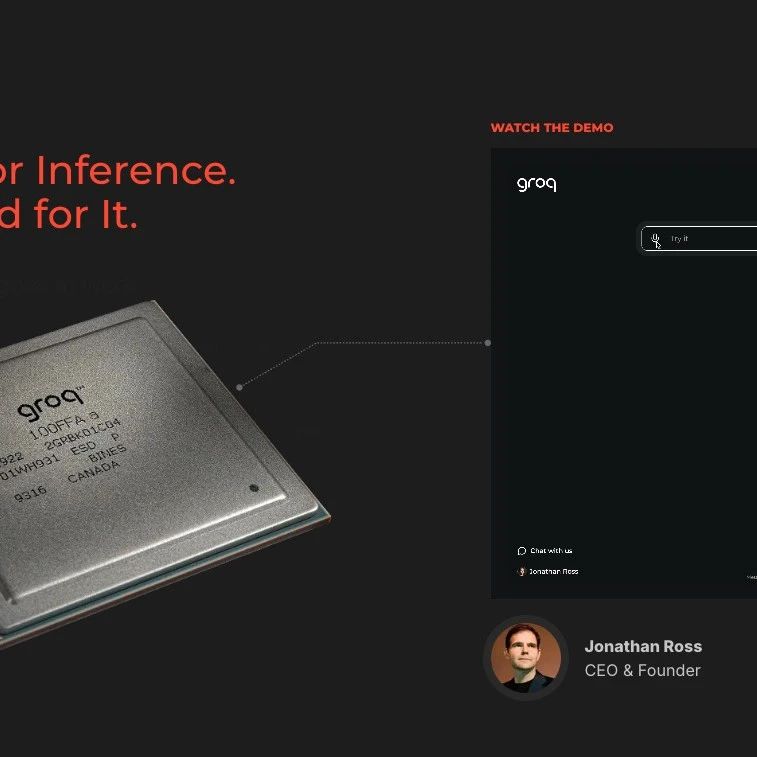
Core Viewpoint - Groq, a challenger to Nvidia in the AI chip market, is in talks to raise $300 million to $500 million at a post-money valuation of $6 billion, reflecting a doubling of its valuation from a year ago [1][2]. Group 1: Company Overview - Groq specializes in the inference market with its LPU chips designed for open-source model inference, aiming to compete with Nvidia's offerings while being less powerful than Nvidia's Hopper and Blackwell training chips [1][2]. - The company has raised over $1 billion in equity financing from notable investors including BlackRock, Cisco, and Samsung [1]. - Groq's revenue is projected to increase from $90 million last year to approximately $500 million this year, driven by agreements with Saudi Arabia and Finland [2]. Group 2: Product and Market Position - Groq's chips are intended for running existing AI applications rather than training new models, which typically require significant chip resources and expensive networking [3]. - The company has approximately 70,000 chips operational, which is at least 30% below its initial target for the first quarter [4]. - Groq faces challenges in persuading AI developers to switch from Nvidia's platform, despite increasing sales efforts in the Middle East due to limited Nvidia supply in the region [4]. Group 3: Competitive Landscape - The AI chip market is seeing significant investment, with 24 startups raising over $7 billion, indicating a competitive environment for companies like Groq [4]. - Other startups, such as SambaNova Systems, are also targeting the Middle East market, providing chip systems and software support to major companies like Saudi Aramco [4]. - D-Matrix, another AI chip developer, is currently in the process of raising $300 million, highlighting the ongoing funding efforts within the sector [5].

芯片行业,正在被重塑
半导体行业观察· 2025-07-11 00:58
Core Viewpoint - The article discusses the rapid advancements in generative artificial intelligence (GenAI) and its implications for the semiconductor industry, highlighting the potential for general artificial intelligence (AGI) and superintelligent AI (ASI) to emerge by 2030, driven by unprecedented performance improvements in AI technologies [1][2]. Group 1: AI Development and Impact - GenAI's performance is doubling every six months, surpassing Moore's Law, leading to predictions that AGI will be achieved around 2030, followed by ASI [1]. - The rapid evolution of AI capabilities is evident, with GenAI outperforming humans in complex tasks that previously required deep expertise [2]. - The demand for advanced cloud SoCs for training and inference is expected to reach nearly $300 billion by 2030, with a compound annual growth rate of approximately 33% [4]. Group 2: Semiconductor Market Dynamics - The surge in demand for GenAI is disrupting traditional assumptions about the semiconductor market, demonstrating that advancements can occur overnight [5]. - The adoption of GenAI has outpaced earlier technologies, with 39.4% of U.S. adults aged 18-64 reporting usage of generative AI within two years of ChatGPT's release, marking it as the fastest-growing technology in history [7]. - Geopolitical factors, particularly U.S.-China tech competition, have turned semiconductors into a strategic asset, with the U.S. implementing export restrictions to hinder China's access to AI processors [7]. Group 3: Chip Manufacturer Strategies - Various strategies are being employed by chip manufacturers to maximize output, with a focus on performance metrics such as PFLOPS and VRAM [8][10]. - NVIDIA and AMD dominate the market with GPU-based architectures and high HBM memory bandwidth, while AWS, Google, and Microsoft utilize custom silicon optimized for their data centers [11][12]. - Innovative architectures are being pursued by companies like Cerebras and Groq, with Cerebras achieving a single-chip performance of 125 PFLOPS and Groq emphasizing low-latency data paths [12].



AI芯片新贵Groq在欧洲开设首个数据中心以扩大业务
智通财经网· 2025-07-07 07:03
Group 1 - Groq has established its first data center in Helsinki, Finland, to accelerate its international expansion, supported by investments from Samsung and Cisco [1] - The data center aims to leverage the growing demand for AI services in Europe, particularly in the Nordic region, which offers easy access to renewable energy and cooler climates [1] - Groq's valuation stands at $2.8 billion, and it has designed a chip called the Language Processing Unit (LPU) specifically for inference rather than training [1] Group 2 - The concept of "sovereign AI" is being promoted by European politicians, emphasizing the need for data centers to be located within the region to enhance service speed [2] - Equinix, a global data center builder, connects various cloud service providers, allowing businesses to easily access multiple vendors [2] - Groq's LPU will be installed in Equinix's data centers, enabling enterprises to access Groq's inference capabilities through Equinix [2]
这种大芯片,大有可为
半导体行业观察· 2025-07-02 01:50
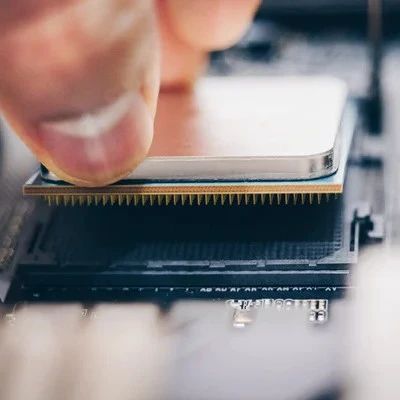
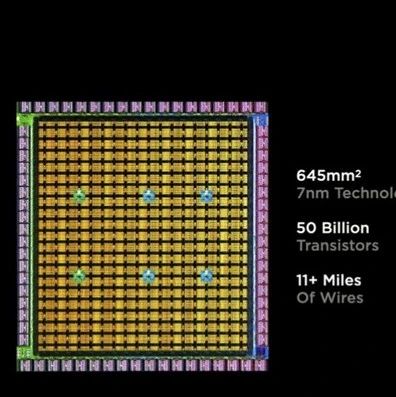
Core Insights - The article discusses the exponential growth of AI models, reaching trillions of parameters, highlighting the limitations of traditional single-chip GPU architectures in scalability, energy efficiency, and computational throughput [1][7][8] - Wafer-scale computing has emerged as a transformative paradigm, integrating multiple small chips onto a single wafer to provide unprecedented performance and efficiency [1][8] - The Cerebras Wafer Scale Engine (WSE-3) and Tesla's Dojo represent significant advancements in wafer-scale AI accelerators, showcasing their potential to meet the demands of large-scale AI workloads [1][9][10] Wafer-Scale AI Accelerators vs. Single-Chip GPUs - A comprehensive comparison of wafer-scale AI accelerators and single-chip GPUs focuses on their relative performance, energy efficiency, and cost-effectiveness in high-performance AI applications [1][2] - The WSE-3 features 4 trillion transistors and 900,000 cores, while Tesla's Dojo chip has 1.25 trillion transistors and 8,850 cores, demonstrating the capabilities of wafer-scale systems [1][9][10] - Emerging technologies like TSMC's CoWoS packaging are expected to enhance computing density by up to 40 times, further advancing wafer-scale computing [1][12] Key Challenges and Emerging Trends - The article discusses critical challenges such as fault tolerance, software optimization, and economic feasibility in the context of wafer-scale computing [2] - Emerging trends include 3D integration, photonic chips, and advanced semiconductor materials, which are expected to shape the future of AI hardware [2] - The future outlook anticipates significant advancements in the next 5 to 10 years that will influence the development of next-generation AI hardware [2] Evolution of AI Hardware Platforms - The article outlines the chronological evolution of major AI hardware platforms, highlighting key releases from leading companies like Cerebras, NVIDIA, Google, and Tesla [3][5] - Notable milestones include the introduction of Cerebras' WSE-1, WSE-2, and WSE-3, as well as NVIDIA's GeForce and H100 GPUs, showcasing the rapid innovation in high-performance AI accelerators [3][5] Performance Metrics and Comparisons - The performance of AI training hardware is evaluated through key metrics such as FLOPS, memory bandwidth, latency, and power efficiency, which are crucial for handling large-scale AI workloads [23][24] - The WSE-3 achieves peak performance of 125 PFLOPS and supports training models with up to 24 trillion parameters, significantly outperforming traditional GPU systems in specific applications [25][29] - NVIDIA's H100 GPU, while powerful, introduces communication overhead due to its distributed architecture, which can slow down training speeds for large models [27][28] Conclusion - The article emphasizes the complementary nature of wafer-scale systems like WSE-3 and traditional GPU clusters, with each offering unique advantages for different AI applications [29][31] - The ongoing advancements in AI hardware are expected to drive further innovation and collaboration in the pursuit of scalable, energy-efficient, and high-performance computing solutions [13]


晶圆级芯片,是未来
3 6 Ke· 2025-06-29 23:49
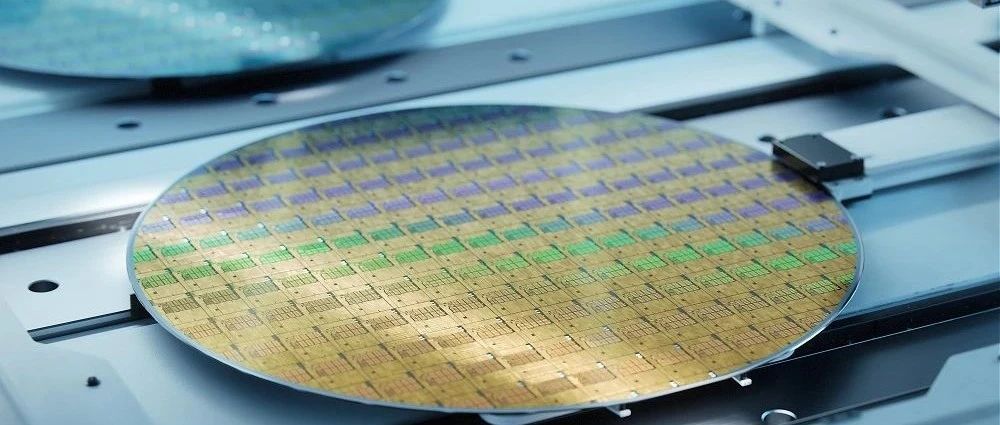
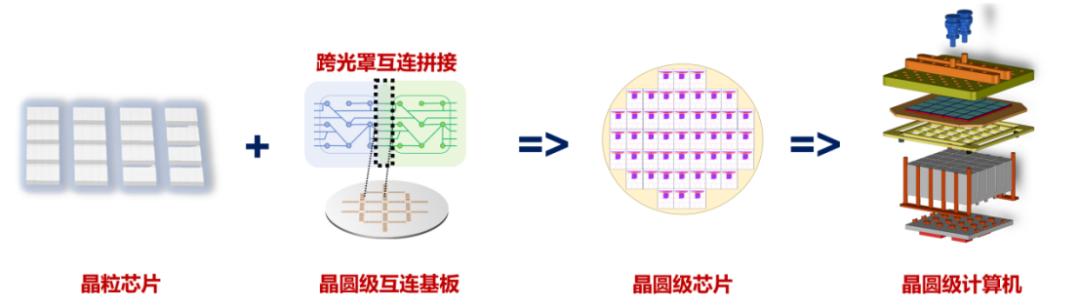
Group 1: Industry Overview - The computational power required for large AI models has increased by 1000 times in just two years, significantly outpacing hardware iteration speeds [1] - Current AI training hardware is divided into two main camps: dedicated accelerators using wafer-level integration technology and traditional GPU clusters [1][2] Group 2: Wafer-Level Chips - Wafer-level chips are seen as a breakthrough, allowing for the integration of multiple dies on a single wafer, which enhances bandwidth and reduces latency [3][4] - The size of a single die chip is approximately 858 mm², and the maximum size is constrained by the exposure window [2][3] Group 3: Key Players - Cerebras has developed the WSE-3 wafer-level chip, which utilizes TSMC's 5nm process, featuring 4 trillion transistors and 900,000 AI cores [5][6] - Tesla's Dojo chip employs a different approach, integrating 25 proprietary D1 chips on a wafer, achieving 9 Petaflops of computing power [10][11] Group 4: Performance Comparison - WSE-3 can train models 10 times larger than GPT-4 and Gemini, with a peak performance of 125 PFLOPS [8][14] - In comparison, the WSE-3 has 880 times the on-chip memory capacity and 7000 times the memory bandwidth of the NVIDIA H100 [8][13] Group 5: Cost and Scalability - The cost of Tesla's Dojo system is estimated between $300 million to $500 million, while Cerebras WSE systems range from $2 million to $3 million [18][19] - NVIDIA GPUs, while cheaper initially, face long-term operational cost issues due to high energy consumption and performance bottlenecks [18][19] Group 6: Future Outlook - The wafer-level chip architecture is considered the highest integration density for computing nodes, indicating significant potential for future developments in AI training hardware [20]
深度对话 Benchmark 合伙人:AI 打破了 SaaS 的 3322 规则改变创造本质
投资实习所· 2025-06-11 05:01
Core Insights - The conversation highlights the exponential growth potential in the AI era, which disrupts traditional growth models like the SaaS 3-3-3-2-2 growth rule [1][2] - Benchmark's investment strategy focuses on identifying groundbreaking companies and supporting visionary entrepreneurs, emphasizing a flat partnership structure that fosters trust and collaboration [2][32] Founder Characteristics - Founders' narrative ability, intellectual honesty, and continuous learning capacity are crucial traits for success [2][6] - Exceptional founders often exhibit a combination of extreme optimism and skepticism, believing in their mission while remaining cautious about external factors [2][19] Investment Strategy - Benchmark seeks to invest in transformative companies and maintain a streamlined investment approach, ensuring deep involvement post-investment [2][32] - The firm prioritizes insights and unique perspectives over mere numerical data when evaluating potential investments [5][6] AI Market Dynamics - The AI sector is witnessing unprecedented growth, with companies achieving significant revenue milestones in record time, often within 12 to 18 months [16][18] - The traditional SaaS growth rules have been upended, with AI products demonstrating a "magical" user experience that drives willingness to pay [16][17] Case Studies - The investment in Fireworks, which has reached a valuation of $4 billion and an ARR exceeding $100 million, exemplifies the rapid growth potential in the AI space [3][18] - Cerebras, a company focused on AI chips, showcases the importance of a strong founding team and a compelling narrative in attracting investment [10][12] Future Trends - The AI landscape is expected to evolve, with a shift towards applications that integrate AI capabilities into various sectors, similar to how the internet transformed business models [23][25] - Founders must adapt to the changing technological landscape, leveraging AI to redefine business logic and create sustainable competitive advantages [24][27] Investment Environment - The venture capital landscape has become increasingly competitive, with a surge in capital supply and a higher ceiling for potential returns, particularly in the AI sector [29][30] - Benchmark's unique approach, characterized by a small, focused team and a commitment to deep partnerships, allows for a more agile and responsive investment strategy [32][34]

特斯拉,超详细解读Dojo芯片
半导体行业观察· 2025-06-08 01:16
Core Insights - Tesla has developed a Stress tool to detect and disable faulty cores on its Dojo processors, which is crucial as a single silent data corruption (SDC) error can ruin weeks of AI training [1][3] - The Dojo processor is one of the largest in the world, utilizing 300mm wafers and housing up to 8,850 cores per chip, making it challenging to detect defects during manufacturing [1][5] Technical Details - Each Dojo Training Tile consists of 25 D1 chips, each with 354 custom 64-bit RISC-V cores and 1.25 MB SRAM, organized in a 5x5 cluster with a mechanical network interconnect providing 10 TB/s bandwidth [5] - The power consumption of the Dojo processors is significant, with current draw reaching 18,000 amperes and power consumption at 15,000 watts, which complicates the detection of SDC [3] Fault Detection Methodology - Tesla initially used differential fuzz testing to identify faulty cores but improved the method by assigning unique payloads to each core, allowing for faster testing without communication overhead [7] - The enhanced method allows cores to run multiple payloads without resetting, increasing the likelihood of detecting subtle errors [7] - The Stress tool operates independently of the core, enabling background testing without taking cores offline, and only faulty cores are disabled [9] Findings and Improvements - The Stress tool has identified numerous defective cores within the Dojo cluster, with detection times varying significantly based on the payload size executed [9] - The tool has also uncovered rare design-level defects, which were resolved through software adjustments, indicating its effectiveness in monitoring hardware health [11] Future Plans - Tesla plans to leverage data from the Stress tool to study long-term performance degradation due to aging and intends to extend this testing methodology to pre-production stages [13] - The company aims to identify potential SDC issues before production, although this presents challenges due to the nature of aging-related defects [13] Industry Context - The development and manufacturing of wafer-scale processors are complex, with only a few companies like Tesla and Cerebras achieving this feat [15] - TSMC, the manufacturer of these processors, anticipates that more companies will adopt wafer-scale designs in the coming years, indicating a growing trend in the industry [15]
英伟达,遥遥领先
半导体芯闻· 2025-06-05 10:04
Core Insights - The latest MLPerf benchmark results indicate that Nvidia's GPUs continue to dominate the market, particularly in the pre-training of the Llama 3.1 403B large language model, despite AMD's recent advancements [1][2][3] - AMD's Instinct MI325X GPU has shown performance comparable to Nvidia's H200 in popular LLM fine-tuning benchmarks, marking a significant improvement over its predecessor [3][6] - The MLPerf competition includes six benchmarks targeting various machine learning tasks, emphasizing the industry's trend towards larger models and more resource-intensive pre-training processes [1][2] Benchmark Performance - The pre-training task is the most resource-intensive, with the latest iteration using Meta's Llama 3.1 403B, which is over twice the size of GPT-3 and utilizes a four times larger context window [2] - Nvidia's Blackwell GPU achieved the fastest training times across all six benchmarks, with the first large-scale deployment expected to enhance performance further [2][3] - In the LLM fine-tuning benchmark, Nvidia submitted a system with 512 B200 processors, highlighting the importance of efficient GPU interconnectivity for scaling performance [6][9] GPU Utilization and Efficiency - The latest submissions for the pre-training benchmark utilized between 512 and 8,192 GPUs, with performance scaling approaching linearity, achieving 90% of ideal performance [9] - Despite the increased requirements for pre-training benchmarks, the maximum GPU submissions have decreased from over 10,000 in previous rounds, attributed to improvements in GPU technology and interconnect efficiency [12] - Companies are exploring integration of multiple AI accelerators on a single large wafer to minimize network-related losses, as demonstrated by Cerebras [12] Power Consumption - MLPerf also includes power consumption tests, with Lenovo being the only company to submit results this round, indicating a need for more submissions in future tests [13] - The power consumption for fine-tuning LLMs on two Blackwell GPUs was measured at 6.11 gigajoules, equivalent to the energy required for heating a small house in winter [13]
全球最大AI芯片,创纪录
半导体芯闻· 2025-05-29 10:22
Core Viewpoint - Cerebras has developed the world's largest computer chip, the Cerebras WSE, which integrates an impressive 4 billion transistors and achieves AI inference speeds that are approximately 2.5 times faster than comparable NVIDIA clusters [1][4]. Group 1: Chip Specifications and Performance - The Cerebras WSE measures 8.5 inches (22 cm) on each side and has set a world record for AI inference speed, processing 2,500 tokens per second, surpassing NVIDIA's Llama 4, which reached 1,000 tokens per second [1][4]. - The WSE's performance is attributed to its 4 billion transistors, which is significantly higher than Intel's Core i9 with 3.35 billion transistors and Apple's M2 Max with 6.7 billion transistors [4]. - The chip features 44GB of the fastest RAM, allowing for integrated computing without the need for external processing, which is a limitation in NVIDIA's architecture [4][5]. Group 2: Evolution of Chip Technology - The WSE represents a significant evolution in chip design, moving beyond traditional CPU dominance and GPU reliance, introducing a new GPU-accelerated architecture that is not based on x86 or ARM [5]. - This development is characterized as a leap rather than an incremental improvement in technology, indicating a transformative shift in the semiconductor industry [5]. Group 3: Market Implications - The speed of AI engines is becoming increasingly critical as businesses seek to implement AI solutions that can handle complex, multi-step tasks efficiently [3][4]. - Independent verification from Artificial Analysis confirmed the WSE's speed claims, stating it outperformed NVIDIA's Blackwell in inference solutions for Meta's flagship models [4][5].

美股科技IPO市场终于显露出复苏迹象!
Sou Hu Cai Jing· 2025-05-21 07:36
Group 1 - eToro's stock surged nearly 29% on its first day of trading on Nasdaq, with a market valuation exceeding $5.4 billion, following an IPO price above the expected range [1][3] - CoreWeave reported a remarkable 420% revenue growth in its first earnings report, significantly exceeding expectations, and its stock price has increased approximately 60% since its IPO in March [1][3] - The IPO market is showing signs of recovery, with optimism among bankers and venture capitalists, despite previous delays from major tech companies like Klarna and StubHub due to tariff policies [3][5] Group 2 - Klarna and StubHub have not provided recent updates, but eToro's successful IPO may encourage other companies to proceed with their listings, including fintech company Chime and digital health company Omada Health [4] - Rachel Gerring from Ernst & Young expressed confidence in the market's recovery, attributing it to a temporary pause in strict trade policies and reduced tariffs on Chinese goods [5] - The upcoming week is crucial for the digital health sector, with Hinge Health updating its IPO filing, expecting a price range of $28 to $32, which would value the company at around $2.4 billion [6] Group 3 - Cerebras, a chip manufacturer, has received necessary approvals to proceed with its IPO after delays due to regulatory reviews, indicating a potential market entry this year [7] - Galaxy Digital transitioned from the Toronto Stock Exchange to Nasdaq, aiming to attract a broader investor base amid cautious regulatory attitudes towards cryptocurrencies [7] - The overall sentiment suggests that the IPO market may be one of the last sectors to recover fully, with a need for more large, growth-oriented companies to enter the market [7]