Mobileye Global Inc.

Search documents
Micron upgraded, Klarna initiated: Wall Street's top analyst calls
Yahoo Finance· 2025-10-06 13:53
Core Insights - The article compiles significant research calls from Wall Street, highlighting upgrades and downgrades that could impact investor decisions. Upgrades - Deutsche Bank upgraded Mobileye (MBLY) to Buy from Hold with a price target of $19, indicating a favorable setup for the shares [2] - BofA upgraded Brinker (EAT) to Buy from Neutral with a price target of $192, up from $190, noting that full-service restaurants are better positioned due to higher incomes among older consumers [3] - Jefferies upgraded Ford (F) to Hold from Underperform with a price target of $12, up from $9, citing the potential for improved earnings as constraints on higher CO2 mix models loosen [4] - Rothschild & Co Redburn upgraded Affirm (AFRM) to Buy from Neutral with a price target of $101, up from $74, highlighting its established product set and international growth potential [5] - Morgan Stanley upgraded Micron (MU) to Overweight from Equal Weight with a price target of $220, up from $160, predicting multiple quarters of double-digit price increases that could enhance earnings power [6] Downgrades - Susquehanna downgraded Rambus (RMBS) to Neutral from Positive with a price target of $100, indicating that the best-case EPS outlook is already priced in [7] - BofA downgraded Shake Shack (SHAK) to Underperform from Neutral with a price target of $86, down from $148, due to margin pressures from competition and inflation [7] - Citi downgraded Boston Beer (SAM) to Neutral from Buy with a price target of $235, down from $255, anticipating continued challenges in the second half of 2025 [7] - Scotiabank downgraded AT&T (T) to Sector Perform from Outperform with a price target of $30.25, expecting modest revenue and EBITDA growth amid business segment weakness [7] - Scotiabank downgraded Check Point (CHPT) to Sector Perform from Outperform with a price target of $205, down from $220, expressing less optimism about the company despite a positive outlook for the U.S. software sector [7]





Trump Has Created an ‘Unusual Bull Case’ for Intel Stock. Should You Buy INTC Now?
Yahoo Finance· 2025-09-30 20:02
Core Viewpoint - Intel's stock has experienced significant growth in 2025, driven by political support and substantial investments, but faces ongoing profitability challenges despite stabilizing revenue [2][5][10]. Company Overview - Intel, based in California, operates in the semiconductor industry, focusing on designing, developing, and fabricating computing products and services globally. Its segments include Intel Products, Intel Foundry, and others, offering products like microprocessors and AI-driven solutions [3]. Recent Stock Performance - Intel's market capitalization is approximately $161 billion, with its share price rising from below $20 last summer to mid-$30s by late September, marking a 41% increase over the past year and 66% year-to-date [2]. - In September, rumors of an investment from Apple contributed to a 20-30% increase in stock price [2]. Political Influence - Analysts at Bernstein noted an "unusual bull case" for Intel due to President Trump's public support for the stock, which adds a new dynamic for investors [5][6]. - Trump's endorsement and the U.S. government's investment of approximately $8.9 billion as a 10% stakeholder have created a unique situation for Intel [7][8]. Financial Performance - In Q2 2025, Intel reported $12.9 billion in revenue, flat year-over-year but slightly above guidance, ending a streak of declines [10]. - The Client Computing Group generated $7.9 billion, down 3%, while Data Center and AI chips contributed $3.9 billion, up 4% [11]. - Despite stable revenue, Intel posted a net loss of $2.9 billion due to restructuring and impairment charges, with GAAP earnings per share at a loss of 0.26 [12]. Future Outlook - Intel is advancing its technology with the rollout of new AI CPUs and the production of its Intel 18A process technology, aiming for U.S. chipmaking independence [9]. - For Q3, Intel guided revenue between $12.6 billion and $13.6 billion, with continued losses expected despite stable sales momentum [13]. Analyst Sentiment - Wall Street analysts maintain a consensus "Hold" rating, with 43 analysts tracked, including two recommending "Strong Buy" and five "Strong Sell" [14]. - The stock trades above its average price target of $25.43, approaching a Street-high target of $43, which is 26% above current levels [14]. Investment Dynamics - The influx of capital and political backing may stabilize Intel, but the company must demonstrate its ability to compete effectively in the semiconductor market [15][16].

欧洲车企,走上一条偏裂之路
Hu Xiu· 2025-09-29 23:46
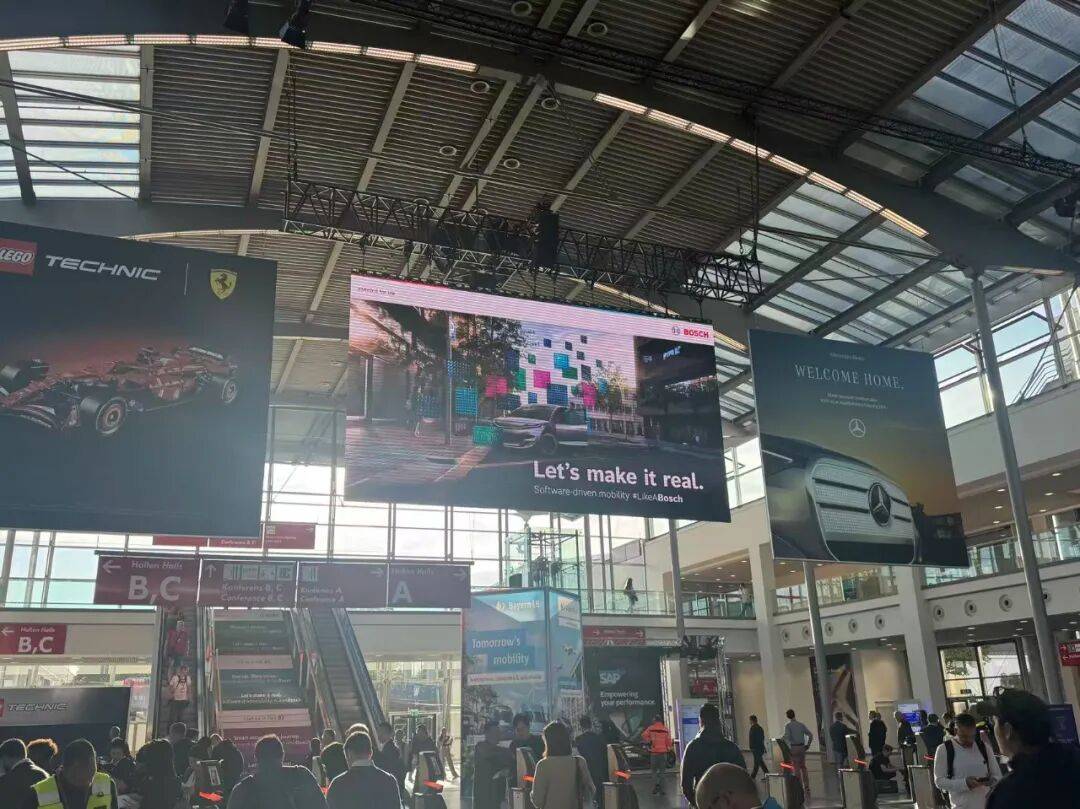
Core Viewpoint - The Munich Auto Show, one of the world's most prestigious auto exhibitions, is often misunderstood as a gateway for Chinese manufacturers to enter the European market, while in reality, the entrenched arrogance of the European automotive market remains unchallenged [1][3][6]. Group 1: European Market Dynamics - The historical arrogance of the European automotive industry is rooted in its industrial revolution and colonial expansion, which has not dissipated despite attempts at modernization [4][6]. - The European automotive market is experiencing significant layoffs and overcapacity in electric vehicle factories, indicating that the push for electrification is not yielding the expected results [6][7]. - The presence of Chinese battery manufacturers at the show highlights the dominance of the "ternary lithium" battery technology, but challenges remain for lithium iron phosphate batteries to penetrate the European market [12][13]. Group 2: Chinese Companies at the Show - Many Chinese manufacturers and suppliers mistakenly view the Munich Auto Show as a platform to gain visibility in Europe, but the actual engagement with European stakeholders is minimal [2][8][22]. - The exhibition space and style of Chinese companies starkly contrast with local European firms, reflecting a disconnect in understanding the European market [10][29]. - Some Chinese companies, like BYD, have adopted a more strategic approach by focusing on networking with European political and business leaders rather than solely showcasing products [35][36]. Group 3: Challenges Faced by Chinese Manufacturers - The lack of genuine engagement and understanding of European consumer preferences among many Chinese manufacturers leads to poor reception and ineffective marketing strategies [72][120]. - The overall scale of the Munich Auto Show is significantly smaller compared to other global exhibitions, limiting the exposure for lesser-known companies [29][30]. - The cultural and operational differences between Chinese and European companies create barriers that hinder successful market entry for many Chinese firms [9][101]. Group 4: Technological Landscape - European Tier 1 suppliers like Bosch and Mobileye continue to dominate the intelligent driving technology market, while many Chinese companies struggle to compete at this level [74][78]. - The slow progress in the deployment of charging infrastructure in Europe reflects broader inefficiencies within the region's automotive ecosystem [15][16]. - The emergence of UK and US AI startups at the show indicates a shift in focus towards innovative technologies, contrasting with the stagnation observed among some European firms [95][96].




智驾中国队闯全球:生态输出与协同共建
Zhong Guo Qi Che Bao Wang· 2025-09-28 02:35
Core Insights - Chinese intelligent driving companies are accelerating their global expansion, driven by industry characteristics and domestic competition, focusing on risk avoidance, customer resource acquisition, and overcoming development bottlenecks [3][4][5] Group 1: Globalization Strategy - The global strategy of Chinese intelligent driving companies is not merely market expansion but a strategic necessity to avoid single risks and capture customer resources [3][4] - Collaborations with major global automakers like Mercedes and Toyota allow Chinese companies to cover multiple markets simultaneously, enhancing customer value [3][4] - The competitive landscape in the domestic market is pushing these companies to seek opportunities abroad, as the domestic market is increasingly dominated by leading players [4][5] Group 2: Technology Ecosystem Output - Chinese intelligent driving companies are focusing on exporting a complete technology ecosystem rather than just individual products, which is essential for their success in global markets [6][7] - Successful examples include collaborations like WeRide with Renault in France, which integrate advanced technology with local manufacturing and operational management [7] - The ability to provide a comprehensive technology ecosystem enhances competitiveness and allows for better adaptation to local market needs [6][7] Group 3: Collaborative Approach - The complexity of intelligent driving technology necessitates collaboration among various stakeholders to build a robust ecosystem [8][9] - Partnerships with local firms can facilitate quicker market entry and better alignment with local regulations and consumer habits, as seen with companies like Ninebot in the UAE [9] - The recent IAA auto show highlighted the trend of ecosystem co-construction among Chinese companies and global partners [9][10] Group 4: Synergy with Automakers - Collaborating with automakers is a strategic choice for intelligent driving companies, addressing challenges in technology implementation and market entry [11][12] - Joint efforts can streamline the integration of intelligent driving systems into vehicles, ensuring seamless transitions from development to production [11][12] - This collaboration also allows for maximizing commercial value through shared resources and expertise [12] Group 5: Rule-Making and Industry Leadership - Chinese intelligent driving companies are transitioning from followers to rule-makers in the global industry, supported by technological advancements and practical experience [13][14] - Companies like Horizon Robotics are setting high standards in chip performance and safety, enabling them to enter the supply chains of top international automakers [13] - The practical experience gained from diverse traffic scenarios in China positions these companies to contribute effectively to international standards and regulations [14] Group 6: Challenges and Risks - Despite advancements, Chinese intelligent driving companies face significant risks, particularly geopolitical uncertainties that could disrupt partnerships [15][16] - Compliance with stringent data protection regulations in regions like Europe poses challenges for market entry and operational continuity [16][17] - The need for deep localization of technology to meet varying regional traffic conditions and user habits is critical for successful market penetration [17]

Huge News For Lyft Stock Investors
The Motley Fool· 2025-09-26 10:17
Core Viewpoint - Lyft is experiencing a resurgence in the ride-hailing market, outperforming Uber in stock performance year to date, driven by market share recovery and positive free cash flow generation [1][10]. Partnership with Waymo - Lyft announced a partnership with Waymo to manage self-driving vehicles in Nashville, marking a significant development for Lyft as it navigates the autonomous vehicle landscape [2][3]. - Waymo's self-driving cars will be managed through Lyft's Flexdrive service, leading to a positive market reaction with Lyft's shares rising over 10% following the announcement [4]. - While Waymo is currently a partner, it could become a competitor in the future, as customers will have the option to hail Waymo vehicles through both Lyft and Waymo's apps [5][6]. Market Share and Growth - Lyft's market share in the U.S. has increased from 26%-27% to 30%-31% since CEO Dave Risher took over in 2023, attributed to lower ride costs and innovative features [9]. - The company has expanded its operations into Canada and is developing new features like the Flexdrive program [9]. Financial Performance - Lyft reported revenue of $1.59 billion last quarter, an 11% increase year over year, and achieved $993 million in free cash flow, indicating a profitable operation [10]. - The company has a market cap of $9.2 billion, which appears inexpensive compared to its free cash flow generation and Uber's $200 billion market value [12]. - Despite a high price-to-earnings ratio of around 100, Lyft has potential for profit margin expansion, as net income was only 0.9% of total booking volume last quarter [13]. Future Outlook - The turnaround under Risher has alleviated bankruptcy concerns, with steady revenue growth and new partnerships like the one with Waymo [14].

Pony AI: A Solid Autonomous Mobility Bet
Seeking Alpha· 2025-09-21 13:22
Group 1 - The autonomous driving technology has been maturing and consolidating over the last 1-2 years [1] - Continuous advancements in computing, sensors, and AI technologies are driving growth in the autonomous driving sector [1] - Companies like Google are increasingly involved in the development of autonomous driving technologies [1]
Ouster, Inc. (OUST): A Bull Case Theory
Yahoo Finance· 2025-09-19 17:39
Group 1: Company Overview - Ouster, Inc. is positioned as a leader in the Physical AI sector, specializing in digital lidar sensors and perception software for various markets including automotive, industrial, robotics, and smart infrastructure [2][3] - The company's REV7 digital lidar technology integrates the entire system onto a chip, making it smaller, more durable, scalable, and cost-effective compared to traditional spinning lidar [2] Group 2: Technology and Applications - Ouster's technology is essential for autonomous applications such as drones, robotaxis, industrial machinery, and has already been deployed in military drones, autonomous trucks, and delivery robots [3][4] - The company is also developing software solutions like BlueCity for traffic management and Gemini for people and object detection, enhancing the value of its sensor technology [4] Group 3: Financial Performance - Ouster reported $35 million in quarterly revenue, reflecting a 30% year-over-year increase, with GAAP and non-GAAP gross margins of 45% and 52% respectively [5] - The company has shown an improving net loss, with adjusted EBITDA nearing profitability, and maintains a strong financial position with $229 million in cash and zero debt [5] Group 4: Market Position and Valuation - With a market capitalization of $1.7 billion and a forward sales multiple of 11x, Ouster's valuation may appear high, but its diversified client base and growth potential in defense, robotics, automotive, and industrial automation suggest significant upside for long-term investors [6][8] - The company is still in the early stages of growth, but its innovative technology and recurring revenue potential position it as a leading player in the Physical AI market [6]

'NEXT GLORY PHASE': Intel's 'big growth opportunity'
Youtube· 2025-09-18 21:45
Core Viewpoint - Intel is experiencing a recovery phase, with potential for significant growth driven by advancements in processing power, particularly in AI technology [2][4]. Group 1: Intel's Market Position - Intel has become the number one percentage gainer in the market, indicating a positive shift in investor sentiment [3]. - The company is expected to benefit from its foundry initiative and partnerships aimed at developing advanced processors for servers and AI-enabled PCs, which represent substantial growth opportunities [7]. Group 2: Investment Sentiment - Analysts recommend buying Intel stock, especially during any potential pullbacks, as the company is seen to be turning a corner in its performance [4][3]. - The investment made by the Trump administration in Intel is highlighted as a successful move, with the initial $10 billion investment now valued at approximately $14 billion [5]. Group 3: Competitive Landscape - While AMD and Nvidia are also key players in the semiconductor space, Intel is viewed more favorably by some analysts, particularly due to its historical performance and current recovery trajectory [6]. - The rise of AI is expected to impact all companies, with a belief that every company will eventually adopt AI technologies to optimize their operations [9]. Group 4: Future Prospects - Mobileye, a subsidiary of Intel, is anticipated to see significant growth in 2026 as it rolls out technology for autonomous vehicles, with numerous OEM contracts in place [10][12]. - The adoption of AI in various sectors is expected to continue to grow, with companies like Royal Caribbean already utilizing AI for pricing adjustments, indicating a broader trend towards AI integration across industries [9].
Deutsche Bank Asserts Mobileye Global (MBLY) ‘Buy’ Rating on EyeQ6 High-based SuperVision System Prospects
Yahoo Finance· 2025-09-18 16:40
Group 1 - Mobileye N.V. is highlighted as a top lidar stock, with Deutsche Bank maintaining a 'Buy' rating and a price target of $16, reflecting confidence in the company's long-term prospects [1][2] - The launch of the EyeQ6 High-based SuperVision system is expected to enhance Mobileye's market position, alongside new OEM designs and updates on robotaxi initiatives [2] - Mobileye reported strong Q2 results with revenue of $506 million, surpassing estimates of $486 million, and has raised its fiscal 2025 revenue forecast to $1.79 billion, indicating an 8% growth from the previous year [3] Group 2 - Mobileye develops lidar technology as part of its "True Redundancy" sensing system for autonomous vehicles, which enhances safety by creating an independent model of the environment [4]
Lyft, Waymo to Offer Driverless Rides in Nashville in 2026
Insurance Journal· 2025-09-18 12:29
Core Insights - Lyft Inc. is partnering with Waymo to launch a robotaxi service in Nashville starting next year, enhancing its competitive position against Uber Technologies Inc. [1][2] - Waymo has been testing in Nashville since March and plans to initiate fully autonomous operations soon, with public rides available next year through its app and later on Lyft's platform [2][5] - Lyft's stock surged by 16% following the announcement, reaching its highest level since 2022, while Uber's stock fell by 5.3% [2] Partnership Details - Flexdrive, Lyft's fleet management subsidiary, will manage vehicle maintenance and operations for Waymo's vehicles in Nashville, and will also build a fleet management facility [3][7] - Waymo has not disclosed pricing for rides in Nashville or whether fares will differ between its app and Lyft's platform [4] - This partnership marks Lyft's first collaboration with Waymo, while Waymo has an existing partnership with Uber [5] Strategic Moves - Lyft is actively pursuing partnerships to enhance its autonomous vehicle offerings, including agreements with May Mobility, Mobileye Global Inc., and Baidu Inc. [6] - Lyft's executives emphasize the company's role in the future of autonomous vehicles, leveraging its operational expertise through Flexdrive [7] - To finance new facilities, Lyft plans to reallocate capital from its Flexdrive rental locations to support autonomous vehicle rollouts, maintaining its overall strategy [8] Waymo's Operations - Waymo is currently providing hundreds of thousands of fully autonomous trips weekly across five major U.S. cities, employing a varied approach in each market [9] - Waymo is open to expanding its partnership with Lyft in other markets following the Nashville launch [10]