On Holding AG

Search documents
On Holding (ONON) Fell on Macro Economic Uncertainty and Rising Competition
Yahoo Finance· 2025-11-06 12:24
Core Insights - Baron Focused Growth Fund reported a 4.83% appreciation in Q3 2025, underperforming the Russell 2500 Growth Index's 10.73% gain due to economic growth slowdown concerns affecting Consumer Discretionary stocks [1] - Competitive pressures have negatively impacted the valuations of some holdings within the fund [1] Company Analysis: On Holding AG (NYSE:ONON) - On Holding AG experienced a one-month return of -16.67% and a 52-week loss of 28.38%, closing at $36.08 with a market capitalization of $11.782 billion on November 5, 2025 [2] - Despite macroeconomic uncertainties and rising competition, On Holding AG reported a 38% revenue increase and raised its revenue and profitability expectations for the year, indicating strong quarterly results [3] - The company is expected to gain market share in the global sportswear segment due to its premium brand positioning and innovative products, with shares considered undervalued at current levels [3] Hedge Fund Interest - On Holding AG was held by 42 hedge fund portfolios at the end of Q2 2025, a decrease from 53 in the previous quarter, indicating a decline in popularity among hedge funds [4] - While On Holding AG shows potential, certain AI stocks are viewed as offering greater upside potential and lower downside risk [4]

选择过剩的2025,钱该往哪花?
虎嗅APP· 2025-11-06 12:00
Core Insights - The article emphasizes a shift in consumer behavior towards thoughtful consumption, where spending reflects personal values and lifestyle choices rather than mere impulse or necessity [2][3][41] - The concept of "super consumers" is introduced, highlighting the importance of understanding genuine consumer preferences through in-depth conversations with diverse individuals from various industries [7][8][42] Consumer Behavior Trends - Consumers are increasingly overwhelmed by choices due to the influence of AI algorithms, marketing information, and KOL endorsements, leading to a need for curated lists to guide purchasing decisions [5][6] - The article suggests that spending more does not equate to better decision-making, as consumers struggle to determine what is truly "worth it" [6][41] Product Recommendations - A list of recommended products is provided, showcasing items that enhance quality of life and align with the values of modern consumers [9] - Categories include technology products like the DJI Pocket 3 and the iPad Mini 7, which are praised for their practicality and design [10][14][17] - Lifestyle products such as fresh flowers from Yunnan and unique home decor items are highlighted for their emotional value and ability to enhance living spaces [25][27] Emotional and Practical Value - The article stresses that consumers are now prioritizing emotional satisfaction and practical solutions over mere cost-effectiveness, indicating a shift towards "heart price" rather than "cost performance" [26][18] - The importance of community brands and unique experiences is noted, as consumers seek products that resonate with their individual tastes and lifestyles [29][30] Future Consumption Outlook - The core of consumption in 2025 is identified as a reflection of personal lifestyle choices, with a focus on making informed decisions that lead to a more ideal future [41][42] - The article concludes with an invitation to engage with innovative trends and connect with industry leaders at the 2025 F&M Innovation Festival [43]


BWG Global Downgrades View on On Holding AG’s (ONON) to Mixed from Positive
Yahoo Finance· 2025-11-04 14:36
Core Insights - On Holding AG (NYSE:ONON) has seen a surge in stock price following updates from analysts regarding its revenue potential and market positioning [1][3] Group 1: Analyst Ratings and Price Targets - Goldman Sachs lowered its price target for On Holding AG to $50 from $57 while maintaining a Neutral rating, suggesting that the company's direct-to-consumer (DTC) model may allow for faster revenue growth compared to competitors like Nike and Adidas [1] - Raymond James analyst Rick Patel reduced the price target to $55 from $66 but set an Outperform rating, indicating optimism about rising revenue estimates in the Softlines and Digital Commerce sectors as consumer momentum improves [3] Group 2: Revenue Estimates and Market Conditions - Goldman Sachs expressed concerns about a long-term revenue estimate of CHF19 billion, citing a lack of exposure to team sports as a limiting factor [2] - The company is facing tariff risks, particularly from potential higher tariffs on imports from China, which could pressure margins despite some relief from foreign exchange shifts [4] Group 3: Company Overview - On Holding AG specializes in the development and distribution of sports products, including apparel, footwear, and accessories, with a global sales strategy that includes distributors, independent retailers, and an online presence [4]
中国消费脉搏 2025 年第三季度_体验式消费引领,高端需求反弹,消费市场格局分化-China Consumer Pulse 3Q25_ Experiential spending leads and Premium demand rebounds, amid mixed consumer landscape
2025-11-03 02:36
Summary of China Consumer Pulse Q3 2025 Industry Overview - **Industry**: Chinese Consumer Market - **Key Sectors Analyzed**: Alcohol, Apparel, Beauty, Travel, Luxury Goods, Autos Core Insights 1. **Mixed Consumer Sentiment**: Chinese consumer sentiment remains mixed, with a notable divergence in spending patterns across sectors [2][29][30] 2. **Experiential Spending Resilience**: Experiential categories such as restaurants (+24% YoY) and travel (+16% YoY) show resilience, indicating a shift towards experiences over goods [2][35] 3. **Premium Demand Recovery**: Onshore luxury spending has improved, with premium auto sales stabilizing and showing positive year-over-year growth in September, ending a 19-month decline [2][30] 4. **Digital Channels Outperform**: Digital retail channels continue to outperform traditional retail, although there are signs of weakness in specific segments like beauty e-commerce, which saw a -3% decline [2][29][30] 5. **GDP and Retail Growth Slowdown**: China's Q3 GDP growth slowed to 4.8% YoY, with retail growth easing to 2.1%, attributed to fading consumer incentives and macroeconomic uncertainties [3][29] 6. **Deflationary Trends**: Deflationary pressures persist across travel and hotel pricing, with moderate price declines observed [12][29] Sector-Specific Insights Premium Beverages - **Weak Demand**: Ultra-premium Baijiu prices continued to slide in Q3 due to weak demand, particularly around the Mid-Autumn Festival [4][30] Apparel and Sportswear - **Mixed Performance**: The apparel market is growing online but remains negative offline, with brands like Adidas showing over 20% growth while Nike faces challenges [5][22] Home Appliances - **Sector Contraction**: The home appliance sector contracted by 7% in Q3, with significant declines in both domestic and overseas exports [7][31] Luxury Goods - **Signs of Improvement**: Early signs of recovery in the luxury market, with brands like Hermès and Louis Vuitton performing well, while Kering struggles [8][9][30] Automotive - **Sales Growth Slowdown**: Auto sales growth slowed to +2.5% YoY in Q3, with EV sales decelerating to +12.5% YoY. However, EV penetration reached 55.1% [10][16][17] Hotels - **RevPAR Declines**: Domestic hotel RevPAR continues to decline, with luxury hotels being the only segment not experiencing persistent declines [10][23] Travel - **Resilient Growth**: The travel industry showed stable positive growth of 16% during the National Day Golden Week, reflecting ongoing domestic travel trends [11][12] Cosmetics - **Moderate Growth**: The cosmetics sector saw a +6.5% YoY increase in gross merchandise value, marking an improvement from previous quarters [13][29] Additional Considerations - **Cautious Consumer Behavior**: The macroeconomic environment is expected to lead to cautious, value-driven consumer behavior, highlighting the uneven recovery across sectors [3][32] - **Investment Implications**: The outlook for various sectors remains cautious, with potential growth in EVs and premium segments, while traditional sectors face challenges [16][17][22][23]





Fashion’s $7B Club: Morgan Stanley Examines Who Has Scale and Who Doesn’t
Yahoo Finance· 2025-10-30 18:30
Core Insights - The global apparel and footwear market is highly fragmented, with nearly 70% of companies generating less than $1 billion in retail selling value, indicating low barriers to entry and high competitive intensity [2][3] - Only a third of the top apparel and footwear companies have revenues exceeding $7 billion, with many businesses struggling to breach this threshold despite market expectations [3][6] - Nike holds the largest market share at 3.5%, followed by Inditex at 2%, Adidas at 1.8%, and several others, highlighting that even leading brands occupy a small portion of the overall market [4] Market Dynamics - The $7 billion-plus club tends to be concentrated in Western markets, with successful companies often selling a diverse range of products and focusing on direct-to-consumer sales [5] - Companies like Abercrombie & Fitch and On Holding show potential for growth, while others like Amer Sports and Gap Inc. may face overly optimistic revenue expectations [6][7] Strategic Moves - Kering's CEO is focusing on divesting non-core assets, such as selling its beauty business to L'Oréal, while others like Authentic Brands Group aim for aggressive growth through acquisitions, targeting $100 billion in sales [8][9] - Tapestry is looking to expand Coach from $5.6 billion to $10 billion by broadening its target market to include a larger consumer base, currently estimated at 1.9 billion potential customers [10][11]

多品牌抢占市场 跑圈新贵HOKA还能“狂奔”多久
Bei Jing Shang Bao· 2025-10-30 01:54
Core Viewpoint - HOKA, a key brand under Deckers Brands, is experiencing a slowdown in growth despite maintaining double-digit increases in sales and net profit, attributed to market saturation and increased competition [1][3][9]. Financial Performance - Deckers Brands reported net sales of $1.431 billion for Q2 of fiscal year 2026, a year-on-year increase of 9.1%, with net profit reaching $268 million, up 10.74% [3]. - HOKA's net sales for the same period were $634 million, reflecting an 11% growth, while UGG sales were $759 million, up 10.1% [3]. - The company anticipates total net sales of approximately $5.35 billion for the fiscal year 2026, with HOKA's growth expected to be in the low double digits of 10%-15% [3]. Brand Growth and Market Position - HOKA's sales growth has been significant over the past years, with a 23.6% increase in fiscal year 2025, reaching $2.233 billion, and a 27.9% increase in fiscal year 2024 [4]. - HOKA currently contributes 45% to Deckers Brands' total sales, closely following UGG's 51% share [5]. Market Dynamics - The running shoe market is becoming increasingly competitive, with brands like Nike, Adidas, and domestic players such as Anta and Xtep entering the mid-to-high-end segments [10][12]. - The demand for professional running shoes has surged due to the growth of mass participation events like marathons, benefiting brands like HOKA that have established a strong reputation in niche markets [9][11]. Consumer Trends - The rise of consumer spending on sports brands is driven by a shift towards a more active lifestyle and the popularity of running events, which has expanded the customer base for brands like HOKA [5][8]. - HOKA's marketing strategy focuses on appealing to urban consumers who prioritize health and quality of life, leveraging social media and KOL marketing to enhance brand image [8]. Challenges Ahead - HOKA's growth rate has slowed from over 50% to around 11%, reflecting a natural deceleration as the brand matures and faces intensified competition [9][10]. - The brand must innovate and enhance its market positioning to sustain growth, particularly in the high-end consumer segment [13].

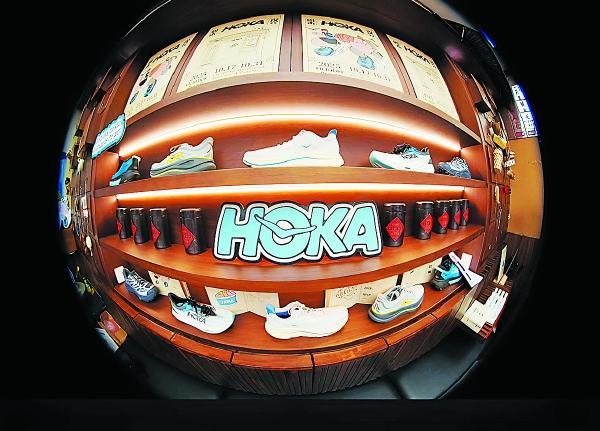
跑圈新贵HOKA“狂奔”
Bei Jing Shang Bao· 2025-10-29 16:40
Core Insights - HOKA, a key brand under Deckers Brands, is experiencing a slowdown in growth despite maintaining double-digit increases in sales and net profit, attributed to market saturation and increased competition [1][3][9] Financial Performance - For the second quarter of fiscal year 2026, Deckers Brands reported net sales of $1.431 billion, a year-over-year increase of 9.1%, and net profit of $268 million, up 10.74% [3] - HOKA's net sales reached $634 million, growing 11% year-over-year, while UGG's sales were $759 million, up 10.1% [3] - The overall sales forecast for Deckers Brands in fiscal year 2026 is approximately $5.35 billion, with HOKA's growth expected to be in the low double-digit range of 10%-15% [3] Brand Development - HOKA's sales growth has been impressive over the past few years, with a 23.6% increase in fiscal year 2025, reaching $2.233 billion, and a 27.9% increase in fiscal year 2024 [4] - HOKA currently contributes 45% to Deckers Brands' total sales, closely following UGG's 51% share [5] Market Trends - The running shoe market is becoming increasingly competitive, with brands like Nike, Adidas, and domestic brands such as Anta and Xtep entering the mid-to-high-end segment [10][12] - The demand for professional running shoes has surged due to the growth of mass participation events like marathons and trail running [9][11] Consumer Behavior - The rise of HOKA and similar brands in China is linked to consumer upgrades and the growing popularity of sports lifestyles, appealing to urban consumers who prioritize health and quality of life [8][9] - HOKA's marketing strategy focuses on product innovation and leveraging social media to build a high-end brand image [8] Competitive Landscape - The running shoe sector is described as a "red ocean," with numerous brands competing for market share, leading to increased pressure on HOKA and similar brands [10][12] - As HOKA's market presence grows, maintaining high growth rates becomes more challenging due to market saturation and heightened competition [12][13]
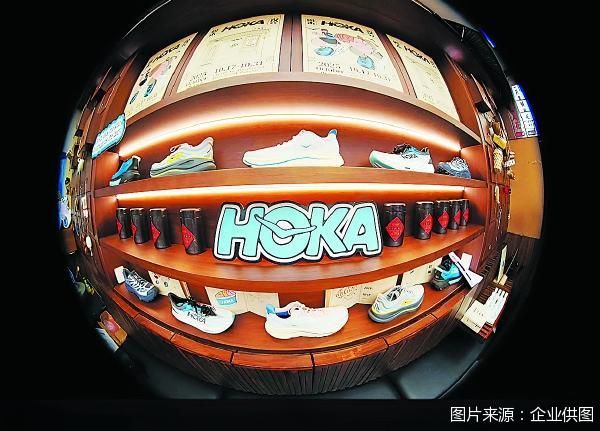
跑圈新贵HOKA还能“狂奔”多久
Bei Jing Shang Bao· 2025-10-29 14:45
Core Insights - HOKA, a key brand under Deckers Brands, is experiencing a slowdown in growth despite maintaining double-digit increases in sales and net profit, attributed to market saturation and increased competition [1][2][8] Financial Performance - For Q2 of fiscal year 2026, Deckers Brands reported net sales of $1.431 billion, a year-over-year increase of 9.1%, and net profit of $268 million, up 10.74% [2] - HOKA's net sales reached $634 million in Q2, reflecting an 11% year-over-year growth, while UGG's sales were $759 million, growing by 10.1% [2] - The overall sales forecast for Deckers Brands in fiscal year 2026 is approximately $5.35 billion, with HOKA's growth expected to be in the low double digits of 10%-15% [2][3] Brand Development - HOKA's net sales grew by 23.6% in fiscal year 2025, reaching $2.233 billion, and had previously seen growth rates exceeding 55% in earlier years [3] - HOKA contributes 45% to Deckers Brands' total sales, closely following UGG, which accounts for 51% [3] Market Trends - The growth of HOKA and similar brands is driven by consumer spending upgrades and the expansion of professional sports into the mass market, appealing to a broader consumer base [4] - The running shoe market in China is rapidly expanding, with significant increases in sales and participation in running events, indicating a growing demand for specialized running shoes [6][9] Competitive Landscape - The running shoe market is becoming increasingly competitive, with both international brands like Nike and Adidas and domestic brands like Anta and Xtep intensifying their presence [9][10] - HOKA faces challenges from traditional brands launching similar products and a potential consumer fatigue regarding the "thick sole" trend [10] Strategic Recommendations - To sustain growth, HOKA needs to enhance brand positioning towards high-end consumers, focus on product innovation, and embrace digital transformation to improve customer experience [10]
阿迪达斯Q3营收66亿欧元,创单季纪录
Guan Cha Zhe Wang· 2025-10-29 13:09
Core Viewpoint - Adidas reported record-high quarterly revenue of €6.6 billion for Q3 2025, marking a 12% year-over-year increase excluding Yeezy factors, with a significant growth in both revenue and operating profit [1][3] Financial Performance - Q3 2025 global revenue reached €6.6 billion, the highest in company history, with a 12% increase year-over-year (excluding Yeezy) [1] - Operating profit for Q3 was €736 million, reflecting a 23% year-over-year growth [1] - Gross margin improved to 51.8%, up 0.5% from the previous year [1] - Year-to-date revenue for 2025 reached €18.735 billion, a 14% increase year-over-year [1] Revenue Breakdown - Footwear revenue grew by 11%, with running category revenue (ADIZERO 0 series) increasing by over 30% [1] - Apparel revenue rose by 16%, while accessories revenue saw a modest 1% increase [1] - Greater China region revenue grew by 10% to €947 million, marking four consecutive quarters of double-digit growth [1] Market Context - The competitive landscape is intensifying, with Nike reporting a 1% revenue increase to $11.7 billion for Q1 2026, and Puma experiencing a 2% decline in revenue [2] - Emerging brands like Lululemon and On Running are also facing challenges, with Lululemon lowering its annual revenue guidance [2][3] Strategic Initiatives - Adidas is focusing on local market strategies in China, including launching the 2026 World Cup ball and showcasing local designs at Shanghai Fashion Week [3][4] - The company aims to deepen its connection with local consumers and enhance brand engagement [4][5] Future Outlook - Based on Q3 performance, Adidas raised its full-year guidance for 2025, expecting double-digit growth and operating profit to reach €2 billion, up from previous estimates of €1.7 to €1.8 billion [5] - Following the Q3 earnings announcement, TD Cowen raised Adidas' target price from €190 to €201 [5]


Three Long-Term Stocks to Buy and Hold Forever
Investor Place· 2025-10-26 16:00
Core Insights - On Holding AG (ONON) experienced a significant stock price increase of 250% over two years, driven primarily by retail interest rather than institutional investment [1][2] - The company has successfully partnered with popular Gen Z figures, enhancing its brand appeal among younger consumers [3] - Social media's influence on stock valuations is highlighted, with companies like Tesla and fashion brands relying heavily on their popularity among young consumers [4] Company Analysis: On Holding AG - Shares of On Holding AG rose from $23 in January 2023 to over $60, reflecting a 250% return [1] - Revenue growth has been slowing in percentage terms despite the stock price surge [1] - Institutional investors have largely avoided ONON, as indicated by a low "D" grade from Louis Navellier's Stock Grader [2] Company Analysis: Dollar General Corp. - Dollar General Corp. (DG) has a high Social Heat Score of 91.5, indicating strong popularity, especially among rural customers [10] - The average customer spends $522 annually at Dollar General, nearly double that of Dollar Tree [10] - The company has solid fundamentals with operating margins at 4.2%, comparable to Walmart's [11] - Dollar General is rated "A" under Louis' Stock Grader, suggesting potential for shares to return to previous highs around $250 [12] Company Analysis: Advance Auto Parts Inc. - Advance Auto Parts Inc. (AAP) is undergoing a turnaround, with signs of improved profitability and a projected net income increase of 58% to $166 million next year [14] - The company's Social Heat Score is at 74, indicating a positive consumer perception [15] - Shares are currently trading at 14X 2027 earnings, suggesting potential for significant price appreciation from around $55 to the $100 range [16] Company Analysis: Alibaba Group Holding Ltd. - Alibaba's Qwen3 model is competitive with leading chatbots, ranking fourth in "Humanity's Last Exam" [19] - The company has seen positive developments, including rising profit margins and successful tech innovations [20] - Alibaba scores an "A" in Louis' Stock Grader and has an 86 Social Heat Score, indicating strong investor interest [21] Market Trends - Social media's fragmented nature poses challenges for investors trying to gauge company popularity [5] - The Social Heat Score system developed by TradeSmith aggregates data to assess company popularity effectively [6][7] - The system can also identify potential "bear traps," helping investors avoid stocks that may continue to decline [22]