
宁波银行

Search documents
苏州银行的前世今生:2025年三季度营收94.77亿行业排12,净利润46.52亿行业排10
Xin Lang Cai Jing· 2025-10-30 16:19
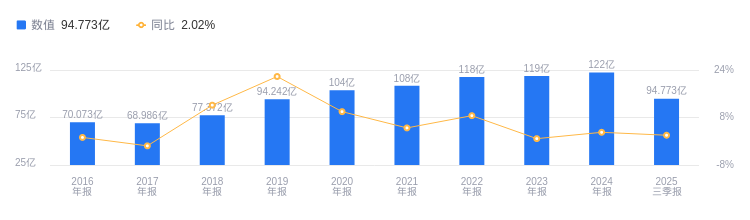
Core Viewpoint - Suzhou Bank, established in 2004 and listed in 2019, is a regional commercial bank known for its solid operations and innovative services, with a focus on various financial services [1] Financial Performance - For Q3 2025, Suzhou Bank reported revenue of 9.477 billion yuan, ranking 12th among 17 companies in the industry, significantly lower than Jiangsu Bank's 67.183 billion yuan and Ningbo Bank's 54.976 billion yuan, with industry averages at 23.652 billion yuan and median at 11.740 billion yuan [2] - The net profit for the same period was 4.652 billion yuan, placing it 10th in the industry, again far behind Jiangsu Bank's 31.895 billion yuan and Ningbo Bank's 22.578 billion yuan, with industry averages at 10.212 billion yuan and median at 5.196 billion yuan [2] Financial Ratios - As of Q3 2025, Suzhou Bank's asset-liability ratio was 92.09%, lower than the previous year's 92.54% and below the industry average of 92.63%, indicating good debt repayment capability [3] - The gross profit margin for the same period was 58.45%, up from 55.82% year-on-year and higher than the industry average of 45.51% [3] Executive Compensation - The salary of Chairman Cui Qingjun increased by 211,700 yuan from 1.1383 million yuan in 2023 to 1.35 million yuan in 2024 [4] Shareholder Information - As of September 30, 2025, the number of A-share shareholders increased by 8.07% to 65,100, while the average number of circulating A-shares held per account decreased by 7.31% to 67,500 [5] - The top ten circulating shareholders included Hong Kong Central Clearing Limited and Southern CSI 500 ETF, with notable decreases in their holdings [5] Business Highlights - Suzhou Bank's revenue and net profit for the first half of 2025 showed year-on-year growth, with a strong increase in fee and commission income by 9.00% [5] - The bank is actively optimizing its credit structure and effectively managing liability costs to counteract some downward pressure on asset yields [5] - Asset quality remains stable with a high provision coverage ratio, and projections for revenue and net profit from 2025 to 2027 indicate continued growth [5][6]

上海银行的前世今生:2025年三季度营收411.4亿行业第五,高于行业平均174.88亿元
Xin Lang Zheng Quan· 2025-10-30 15:35
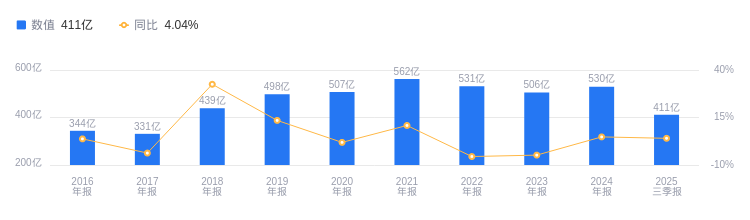
Core Viewpoint - Shanghai Bank, established in 1996 and listed in 2016, is a comprehensive commercial bank with significant regional advantages in key areas such as the Yangtze River Delta and the Greater Bay Area [1] Financial Performance - As of Q3 2025, Shanghai Bank reported a revenue of 41.14 billion yuan, ranking 5th in the industry out of 17 banks, with the industry leader, Jiangsu Bank, at 67.18 billion yuan [2] - The net profit for the same period was 18.06 billion yuan, also ranking 5th, with Jiangsu Bank leading at 31.90 billion yuan [2] Financial Ratios - The bank's debt-to-asset ratio stood at 92.12%, lower than the industry average of 92.63%, indicating strong debt repayment capability [3] - The gross profit margin was 51.47%, higher than the industry average of 45.51%, reflecting a competitive edge in profitability [3] Leadership - The chairman, Gu Jianzhong, has a master's degree in finance from Fudan University and a rich career history in various financial roles, enhancing the bank's leadership profile [4] Shareholder Information - As of September 30, 2025, the number of A-share shareholders increased by 17.26% to 114,900, while the average number of shares held per shareholder decreased by 14.72% [5] - The bank's valuation has been at the industry bottom since 2020, but recent strategic changes are expected to stabilize ROE [5] Business Highlights - In the first half of 2025, revenue grew by 4.18% year-on-year, and net profit increased by 2.02%, indicating stable growth [6] - The bank experienced growth in interest-earning assets and loans, with a notable increase in corporate loans, particularly in manufacturing and technology sectors [6]

北京银行的前世今生:营收行业第三,净利润第三高于行业平均,毛利率高于行业均值
Xin Lang Zheng Quan· 2025-10-30 14:23
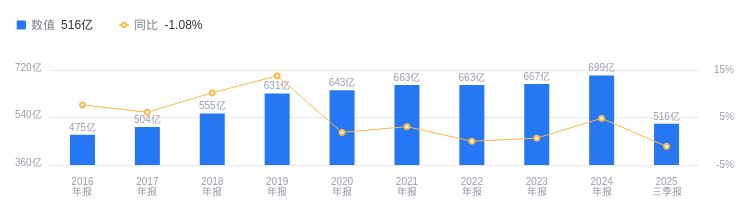
Core Viewpoint - Beijing Bank, established in 1996 and listed in 2007, is a prominent urban commercial bank in China with a strong presence in the Beijing-Tianjin-Hebei region, focusing on corporate, personal, and funding businesses [1] Financial Performance - As of Q3 2025, Beijing Bank reported operating revenue of 51.588 billion yuan, ranking third in the industry, surpassing the industry average of 23.652 billion yuan and the median of 11.74 billion yuan, but below Jiangsu Bank and Ningbo Bank [2] - The net profit for the same period was 21.105 billion yuan, also ranking third in the industry, exceeding the industry average of 10.212 billion yuan and the median of 5.196 billion yuan, but lower than Jiangsu Bank and Ningbo Bank [2] Financial Ratios - The debt-to-asset ratio for Q3 2025 was 92.09%, slightly up from 91.18% year-on-year, but lower than the industry average of 92.63%, indicating good solvency [3] - The gross profit margin for Q3 2025 was 46.43%, an increase from 44.60% year-on-year, and higher than the industry average of 45.51%, reflecting strong profitability [3] Executive Compensation - The chairman, Huo Xuewen, received a salary of 698,500 yuan in 2024, a decrease of 390,500 yuan from 2023 [4] Shareholder Information - As of September 30, 2025, the number of A-share shareholders increased by 34.74% to 183,000, while the average number of circulating A-shares held per shareholder decreased by 25.78% [5] - Notable changes among the top ten circulating shareholders include a decrease in holdings by Hong Kong Central Clearing Limited and the exit of Huatai-PineBridge CSI 300 ETF from the list [5] Growth and Transformation - Longjiang Securities noted that Beijing Bank's revenue and net profit growth turned positive in the first half of the year, with highlights including accelerated growth in total assets and credit scale, improved net interest margin, and rising non-interest income [5] - Huatai Securities emphasized the bank's ongoing retail and digital transformation, with improvements in interest income and a decline in credit costs [6]

多家银行调整黄金积存金购买规则
2 1 Shi Ji Jing Ji Bao Dao· 2025-10-30 12:40
Core Viewpoint - The gold market is experiencing high volatility, with prices fluctuating nearly $500 per ounce within a short period, prompting banks to adjust their gold accumulation purchasing rules to better align with market dynamics [1][5][9]. Group 1: Market Volatility and Bank Responses - Gold prices have shown significant fluctuations, reaching a high of $4381.11 per ounce and a low of $3886.3 per ounce, with current prices above $3900 [1]. - In response to market volatility, several banks are shifting from fixed investment thresholds to a "floating price" mechanism for gold accumulation, allowing for more flexibility in investment amounts [3][5]. - The Bank of Communications announced that starting October 27, 2025, its gold accumulation plan will require a minimum investment that is at least equal to the current gold price, with increments of 100 yuan [5]. Group 2: Adjustments by Various Banks - Agricultural Bank of China implemented a similar floating price mechanism last year, adjusting its gold accumulation plan to reflect market prices [5]. - Other banks, such as Industrial Bank and Ping An Bank, have also raised their minimum investment amounts due to recent price fluctuations, with Ping An Bank increasing its threshold from 900 yuan to 1100 yuan [6][9]. - China Bank and Ningbo Bank have also adjusted their minimum purchase amounts, reflecting a trend among banks to respond to the volatile gold market [6][7]. Group 3: Global Gold Demand Trends - The World Gold Council reported that global gold demand reached a record high of 1313 tons in Q3 2024, a 5% increase year-on-year, with total demand exceeding $100 billion for the first time [9][10]. - Investment demand surged over 100% to 364 tons, driven by increased interest in gold ETFs, while demand for gold bars and coins decreased by 9% [9][10]. - Central bank gold purchases remained strong at 186 tons in Q3, maintaining a total of 694 tons for the year, despite a slowdown in buying activity [10]. Group 4: Future Outlook for Gold Market - Analysts remain optimistic about the gold market, citing factors such as a weakening dollar, expectations of interest rate cuts, and inflation risks that could support further investment demand [11]. - The current market environment suggests that gold prices may continue to rise, with strategic value in gold allocation remaining robust [11].

多家银行调整黄金积存金购买规则
21世纪经济报道· 2025-10-30 11:35
Group 1 - The article discusses the recent volatility in gold prices, with fluctuations reaching nearly $500 per ounce, and current spot gold prices above $3900 per ounce [1] - Several banks, including Bank of Communications and Agricultural Bank of China, are shifting to a floating mechanism for gold accumulation plans, allowing investment amounts to adjust with real-time gold prices [3][4] - The article highlights that despite the trend towards floating mechanisms, many banks still maintain fixed investment thresholds, with recent adjustments in minimum investment amounts across various banks [4][5] Group 2 - In Q3, global gold demand reached a record high of 1313 tons, a 5% year-on-year increase, with total demand exceeding $100 billion for the first time [6][8] - Central bank gold purchases have slowed but remain strong at 186 tons for the quarter, with total purchases for the year at 694 tons, consistent with the previous year [8] - The article notes a 12% decline in gold jewelry consumption, yet its total value increased by 13% to over $360 billion, indicating a shift towards lighter gold products [8]





黄金价格波动加大 多家银行调整积存金门槛从固定到浮动
2 1 Shi Ji Jing Ji Bao Dao· 2025-10-30 09:29
Core Viewpoint - The article discusses the significant fluctuations in gold prices, prompting several banks to adjust their gold accumulation investment thresholds from fixed to floating mechanisms to better align with market dynamics [2][3]. Group 1: Market Dynamics - Gold prices have entered a high-frequency oscillation phase, with a maximum fluctuation of nearly $500 per ounce, ranging from a high of $4381.11 to a low of $3886.3 within a short period [2]. - The shift to a floating mechanism allows investors to set accumulation amounts that are at least equal to the current gold price, providing more flexibility in investment decisions [3][4]. Group 2: Bank Adjustments - Several banks, including the Bank of Communications and Agricultural Bank of China, have implemented floating pricing mechanisms for gold accumulation plans, allowing for adjustments based on real-time gold prices [3][4]. - Other banks, such as Ping An Bank and Industrial and Commercial Bank of China, have raised their minimum investment amounts for gold accumulation products, reflecting the increased volatility in gold prices [5][6]. Group 3: Global Gold Demand - The World Gold Council reported that global gold demand reached a record high of 1313 tons in Q3 2024, a 5% year-on-year increase, with total demand exceeding $100 billion for the first time [7]. - Investment demand surged over 100% year-on-year to 364 tons, driven by increased interest in gold ETFs, while gold bar and coin demand decreased by 9% [7][8]. - Central bank gold purchases remained strong at 186 tons, maintaining the total for the year at 694 tons, consistent with the previous year [7][9]. Group 4: Supply and Market Outlook - Global gold supply increased by 5%, with mine production rising by 6% to 989.8 tons and recycled gold up by 11% to 323 tons [9]. - The outlook for the gold market remains optimistic due to factors such as a weakening dollar, expectations of interest rate cuts, and persistent stagflation risks, which may further support gold investment demand [9].
蚂蚁数科Agentar入选2025国际标准金融应用卓越案例
Zhong Guo Jing Ji Wang· 2025-10-30 07:48
Core Insights - Ant Group and Ningbo Bank's collaboration on the "Agentar Knowledge Engineering KBase" has been recognized as an exemplary case for international financial applications, showcasing its potential to enhance business intelligence in the financial sector [1] - The financial industry faces challenges related to "knowledge silos," where critical information is dispersed across different systems, leading to inefficiencies in service and consultation experiences [1] - The Agentar platform integrates knowledge processing management, logical reasoning engines, and intelligent application scenarios to provide a robust decision-making system for financial institutions [1] Technology and Implementation - The platform manages multi-source heterogeneous data throughout its lifecycle and features capabilities such as intelligent Q&A, knowledge processing, multi-route recall, and knowledge management [2] - A significant technological breakthrough is the knowledge-enhanced generation engine, which utilizes a collaborative mechanism of "planning-retrieval-reasoning" to improve knowledge quality through bidirectional indexing of knowledge graphs and raw text [2] - The system has transitioned from "fuzzy matching" to "precise reasoning," increasing reasoning depth from traditional 1-hop to 3-5 hops, enabling AI to understand financial knowledge and exhibit human-like logical reasoning [2] Performance Metrics - The solution has been implemented across various internal scenarios at Ningbo Bank, including market analysis, product interpretation, dialogue practice, and report writing [2] - Evaluation results indicate that the accuracy of complex Q&A has improved from 68% to 91%, with response times reaching the millisecond level [2] - Content recommendation accuracy has increased by 35%, and recall rates have improved by 40%, leading to a significant enhancement in business efficiency [2] Future Directions - Ant Group and Ningbo Bank plan to deepen their collaboration by expanding the technology to a broader range of financial business scenarios [2] - The partnership aims to actively participate in industry standardization efforts, promoting the regulated and large-scale application of knowledge engineering and large model technologies in the financial sector [2]
蚂蚁数科Agenar打造“金融AI大脑”,入选国际标准卓越案例
Jing Ji Guan Cha Wang· 2025-10-30 06:42
Group 1 - Ant Group's KBase knowledge engineering project, in collaboration with Ningbo Bank, was recognized as an "Outstanding Case of International Standard Financial Application" at the 2025 Financial Street Forum, showcasing its high security, accuracy, and interpretability [1] - Ant Group's AI business president, Yu Bin, highlighted that many city commercial banks are embracing financial large models and intelligent agent technology to seek performance breakthroughs, with significant improvements in employee efficiency, marketing conversion rates, and revenue scale in the Jiangsu, Zhejiang, and Shanghai regions [1] Group 2 - City commercial banks are facing unprecedented challenges due to narrowing net interest margins, slowing revenue growth, and intensified homogeneous competition, leading them to view AI as a critical path for "curve overtaking" [2] - Ant Group's AI applications have evolved from early-stage solutions like intelligent customer service to a comprehensive intelligent agent system covering marketing, risk control, investment advisory, and claims, significantly enhancing service capabilities [2] - Feedback from pilot banks indicates that the use of digital avatars for financial advisors has increased the average number of clients served per advisor from 200 to 2000, resulting in approximately 20% revenue growth by reaching previously hard-to-access mid-tail customers [2]

宁波银行前三季度净利润224.45亿元 同比增8.39%
Hua Xia Shi Bao· 2025-10-30 06:06
Core Viewpoint - Ningbo Bank reported strong financial performance for the first three quarters of 2025, with total assets exceeding 3.5 trillion yuan, reflecting a 14.50% increase from the beginning of the year, and a net profit of 22.445 billion yuan, up 8.39% year-on-year [1][2]. Group 1: Financial Performance - As of September 30, 2025, Ningbo Bank's total assets reached 357.8396 billion yuan, marking a significant milestone by surpassing 3.5 trillion yuan, with a year-to-date growth of 14.50% [2]. - The total loans and advances amounted to 171.6823 billion yuan, representing a 16.31% increase from the start of the year, while total deposits reached 204.7804 billion yuan, up 11.52% [2]. - The bank achieved a net profit attributable to shareholders of 22.445 billion yuan for the first three quarters, reflecting an 8.39% year-on-year growth, and reported an operating income of 54.976 billion yuan, which is an 8.32% increase [3]. Group 2: Asset Quality and Risk Management - Ningbo Bank maintained a non-performing loan (NPL) ratio of 0.76%, consistent with the beginning of the year, indicating strong asset quality [4]. - The bank's provision coverage ratio stood at 375.92%, with a provision for loan losses ratio of 2.85%, demonstrating robust risk management capabilities [4]. - Since its listing in 2007, Ningbo Bank has maintained an NPL ratio below 1% for 18 consecutive years, ensuring a solid foundation for sustainable growth [4]. Group 3: Strategic Focus and Business Development - The bank continues to implement a differentiated business strategy, focusing on serving the real economy and enhancing service quality [1][2]. - Ningbo Bank has developed a diversified profit structure with nine profit centers, including corporate banking, retail banking, wealth management, and investment banking, which are all contributing to stable earnings [3]. - The bank emphasizes a commitment to customer service and aims to strengthen its core competitiveness by addressing differentiated customer needs [4].
宁波银行(002142):25Q3财报点评:业绩持续提速,不良生成改善
Orient Securities· 2025-10-30 05:20
Investment Rating - The report maintains a "Buy" rating for the company, with a target price of 30.80 CNY per share, based on a historical valuation method applying a PB of 0.88 for 2025 [4]. Core Insights - The company's net profit for 2025 is projected to grow by 8.5%, with corresponding BVPS of 35.08 CNY, while the PB ratios for 2025, 2026, and 2027 are estimated at 0.79X, 0.71X, and 0.64X respectively [4]. - As of Q3 2025, the company has shown a significant improvement in revenue and profit growth, with year-on-year increases of 8.3% in revenue, 12.9% in PPOP, and 8.4% in net profit [8]. - The bank's loan growth rate is reported at 17.9%, driven primarily by corporate loans, while the net interest margin has stabilized at 1.76% [8]. Financial Performance Summary - Revenue for 2023 is reported at 61,585 million CNY, with a projected growth of 6.4% [5]. - The net profit attributable to the parent company for 2023 is 25,535 million CNY, reflecting a year-on-year growth of 10.7% [5]. - The bank's total assets are expected to reach 3,728,647 million CNY by 2025, with a projected loan total of 1,729,946 million CNY [11]. Profitability Metrics - The average return on assets (ROAA) is projected to be 0.86% in 2025, while the average return on equity (ROAE) is expected to be 13.38% [11]. - The net interest income for 2025 is forecasted at 53,494 million CNY, with a growth rate of 11.46% [11]. Asset Quality - The non-performing loan (NPL) ratio is stable at 0.76%, with a net generation rate of 0.93% indicating improving asset quality [8]. - The provision coverage ratio has increased to 376%, enhancing the bank's risk mitigation capacity [8].