荣耀

Search documents
荣耀全球开发者大会暨AI终端生态大会
2 1 Shi Ji Jing Ji Bao Dao· 2025-10-23 06:52
Core Insights - The 2025 Honor Global Developer Conference and AI Terminal Ecological Conference was held on October 23 in Shenzhen, focusing on the themes of developer engagement and AI terminal ecosystem development [1] Group 1: Developer Conference - The Honor Developer Conference featured a keynote speech on MagicOS 10, outlining the brand and strategic direction of MagicOS, emphasizing AI self-evolution and innovative experiences [1] - Seven sub-forums were organized for developers, covering topics such as AI agents, design and themes, connectivity & security & foundational experiences, gaming, application services, and international salons, aimed at sharing the latest technological developments and successful case studies [1] Group 2: AI Terminal Ecological Conference - The Honor AI Terminal Ecological Conference was themed "Intelligent Connection Without Boundaries, Co-creating the Ecosystem," focusing on empowering the creation of a trillion-level AI terminal ecological industry cluster through technology branding, channels, and ecosystem [1] - The conference included one main forum, five sub-forums, and an all-day open experience area, gathering over 1,000 industry leaders and experts to interpret new trends in global AI hardware development and explore best practices across various industries [1] Group 3: Event Highlights - The event showcased the newly launched Honor HONOR AI Connect platform, eight industry solution releases, and a 3,000+ square meter exhibition area, providing a comprehensive presentation of Honor's latest AI capabilities and product experiences [1]
荣耀方飞公布“1×3×N”战略:零授权费、开放3000家门店
Feng Huang Wang· 2025-10-23 05:29
Core Insights - Honor has introduced its AI ecosystem strategy, termed the 1×3×N strategy, which includes one platform, three empowerments, and multiple industry clusters [1] Group 1: Platform - The HONOR AI Connect platform aims to open up Honor's AI capabilities, supporting Connect SDK and integrated hardware-software modules for cross-device and cross-ecosystem connectivity [1] Group 2: Empowerments - Honor is providing access to a vast ecosystem of over 100 million devices, offering free IoT connectivity with no authorization fees to lower the entry barriers for partners [1] - The company is also opening up resources from 3,000 global offline stores to provide sales and experience support while expanding into key overseas markets [1] Group 3: Industry Clusters - The strategy encompasses various fields including education, smart home, wearable audio, companionship toys, pet health, sports health, and smart travel, promoting the practical application of AI [1] Group 4: AI Solutions - Eight AI scenario-based ecological solutions have been launched, focusing on high-frequency scenarios such as home, vehicle connectivity, companionship, pet care, sports health, education, audio, and office [2] - These solutions aim to break down the boundaries between devices and scenarios, enabling proactive awareness and seamless experiences for users [2]
AI研发投入超100亿,荣耀董事长吴晖:得AI者得天下
Feng Huang Wang· 2025-10-23 05:29
Core Viewpoint - AI is reshaping the terminal ecosystem, and companies that leverage AI will dominate the future, as emphasized by Honor's chairman, Wu Hui [1][2] Group 1: Investment and Strategy - Honor has invested over 10 billion yuan in AI research and development [1] - The company aims to transform into an AI terminal ecosystem company with a core strategy called the "Alpha Strategy," focusing on building a three-step path: smart phones, smart ecosystems, and a smart world [1] Group 2: Platform Upgrade and Capabilities - Honor has upgraded its existing "HONOR Connect" platform to "HONOR AI Connect," marking a transition from connectivity to intelligent connectivity [1] - The new platform will provide enhanced intelligent sharing capabilities for ecosystem partners, including support for multimodal interactions such as voice and vision [1] - Honor will introduce A-series integrated hardware and software modules for easy AI capability access [1] Group 3: Collaboration and Ecosystem Development - The HONOR AI Connect platform aims to significantly reduce R&D costs for partners and shorten product launch cycles [1] - The platform will facilitate three collaboration models: ecosystem empowerment, channel empowerment, and technology and brand empowerment, enabling partners to participate more efficiently in ecosystem co-construction [1]
Coosea酷赛智能x荣耀合作!AI NAS相框+桌面机器人落地,智慧生活升级
Jin Tou Wang· 2025-10-23 04:50
Core Insights - The opening of the Honor Alpha global flagship store in Shenzhen marks the transition of the Honor Alpha strategy from planning to physical implementation [1] - Coosea, as a key strategic partner, showcased its core AI hardware products, including the AI NAS photo frame and desktop robot, which are set to launch in Q4 2025 [1][3] Group 1: Store and Design Concept - The flagship store is designed with the concept of "integration of technology and culture," creating a comprehensive AI lifestyle experience space [3] - The Honor Theater, opened simultaneously, serves as a core venue for AI ecosystem exchanges [3] Group 2: Product Features and Collaboration - The AI NAS photo frame is positioned as "the intelligent image steward for the whole family," featuring a sleek metal design and supporting various display angles [3] - It integrates NAS storage technology with AI management capabilities, ensuring data security and alleviating storage anxiety through local large-capacity storage [3] - The desktop robot is designed as an "emotionally aware interactive partner," suitable for diverse environments such as homes and service halls, enhancing interaction dimensions in the smart ecosystem [5] Group 3: Strategic Importance - The collaboration between Coosea and Honor represents a significant step in advancing AI strategies, leveraging Coosea's comprehensive R&D and manufacturing capabilities [5] - The introduction of these products into the Honor flagship store enhances Honor's "AI empowering life" ecosystem and provides users with a tangible experience of "technology with warmth" [5]



史上最薄iPhone发售遇冷,eSIM手机不香吗
Qi Lu Wan Bao Wang· 2025-10-23 04:26
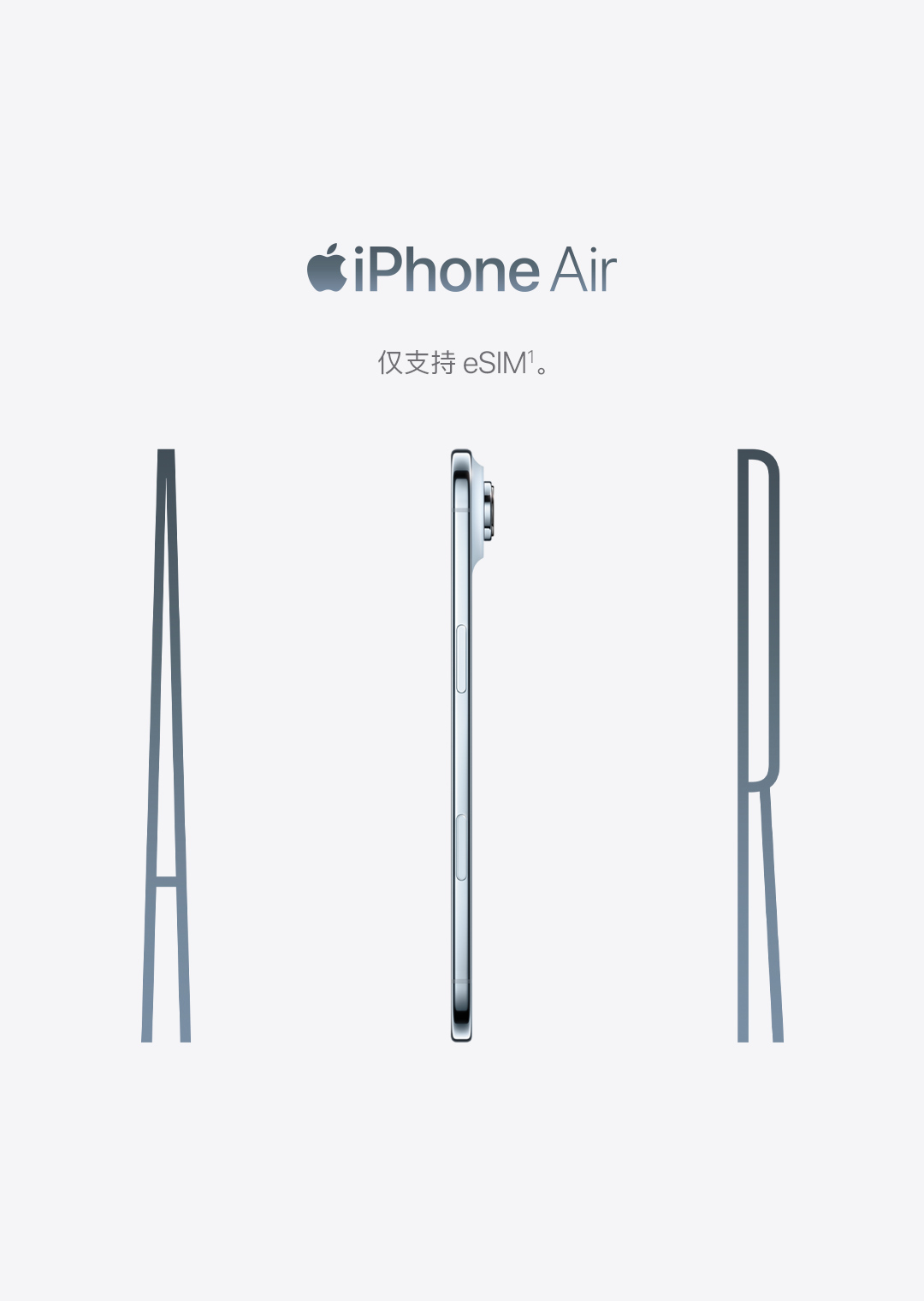
Core Insights - The iPhone Air, launched on October 22, has experienced a lukewarm market response, contrasting sharply with the initial excitement surrounding the iPhone 17 series [1][2] - The device's delayed release and concerns over its eSIM functionality and battery life have contributed to its lackluster sales performance [2][3] Sales Performance - On its first day of sale, the iPhone Air faced price drops below the official retail price, indicating weak demand [2] - Retailers reported that the iPhone Air was "almost ignored" by customers, with most interest directed towards the iPhone 17 Pro models [2] - As of the report, only about thirty units of the iPhone Air had been sold in a specific store, highlighting its poor sales trajectory [2] eSIM Technology - The iPhone Air is the first iPhone in China to utilize eSIM technology, which allows for a thinner design by integrating the SIM card into the device [4][5] - Concerns regarding the convenience of switching between eSIM and physical SIM cards have been raised by potential buyers [3][7] - The eSIM technology is expected to enhance security by reducing the risk of SIM card theft and fraud [7] Market Trends - Despite the initial struggles of the iPhone Air, the global eSIM market is projected to grow significantly, with an estimated 10 billion eSIM connections by 2025 and 69 billion by 2030 [8][9] - Domestic brands are also preparing to launch eSIM-enabled devices, with OPPO and other manufacturers planning to release their own models soon [9] - The introduction of eSIM technology is anticipated to drive a shift in the telecommunications and consumer electronics industries, fostering a "cardless era" [10]
荣耀董事长吴晖:荣耀已投入100亿元用于AI研发
Mei Ri Jing Ji Xin Wen· 2025-10-23 04:12
每经AI快讯,10月23日在荣耀AI终端生态大会上,荣耀董事长吴晖表示,智能体将成为新的"超级入 口",推动人机交互向自然语言驱动演进。 当前,荣耀已累计投入超100亿元用于AI研发。(证券时 报) ...
从跟跑,到并跑:中国AI这五年|“十四五”规划收官
Di Yi Cai Jing· 2025-10-23 03:46
Core Insights - The "14th Five-Year Plan" period is crucial for China's AI industry to transition from "catching up" to "keeping pace" and "leading" globally, marking a significant phase for the emergence of new productive forces [1][5] - The narrative of China's AI development has shifted from merely "catching up" to showcasing a collective rise, with China now holding 60% of global AI patents and achieving significant milestones in AI model development [1][6] Industry Growth and Trends - The AI industry in China is experiencing explosive growth, with a notable increase in the number of AI companies from 1,454 in 2020 to over 5,300 by September 2025, representing 15% of the global total [6] - By 2024, the AI industry in China is projected to exceed 700 billion yuan, maintaining a growth rate of over 20% annually [6] - The number of large models with over 1 billion parameters in China has surpassed 200, with a total of 1,509 models expected by July 2025, accounting for 40.2% of the global total [5][6] Technological Advancements - Significant advancements in technology autonomy have been observed during the "14th Five-Year Plan," with breakthroughs in foundational models, domestic computing power, and algorithm optimization [5] - Chinese AI models are increasingly competitive on the global stage, with nine out of the top ten open-source models listed by Hugging Face being from China [6] - The performance gap between Chinese and American AI models has narrowed dramatically, with the difference in performance shrinking from 17.5% in 2023 to just 0.3% [9] Applications and Impact - AI is becoming a foundational infrastructure across various sectors, including government, finance, manufacturing, and healthcare, with applications rapidly expanding [11] - The integration of AI in agriculture has led to breakthroughs in crop breeding, while AI is also enhancing operational efficiency in factories through intelligent scheduling and visual AI technologies [12] - The "AI+" initiative has resulted in the establishment of over 1,000 industry data sets and significant investments in AI infrastructure by central enterprises [10] Future Potential - The next decade is expected to see AI deeply integrated across various sectors, with a goal of achieving over 70% penetration of new intelligent terminals and applications by 2027 [13] - The concept of "AI twins" is emerging, where intelligent terminals will evolve into personalized partners, enhancing user interaction and experience [13] - The commercialization of embodied intelligence is gaining momentum, with significant contracts and collaborations indicating a growing market for intelligent robotics in industrial applications [14]

新发安卓三款旗舰手机,重头戏在AI
2 1 Shi Ji Jing Ji Bao Dao· 2025-10-23 03:03
Core Insights - The main focus of the recent product launches by vivo, OPPO, and Honor is the integration of AI capabilities into their smartphones, moving from a tool-level application to a system-level feature [2][3][4] Group 1: AI Integration - The new products highlight AI OS as a key selling point, enhancing the capabilities of smart assistants to perform complex tasks seamlessly [2] - Honor's YOYO features self-evolution capabilities, allowing it to learn and grow across different scenarios, while vivo's Blue Heart assistant has improved continuous dialogue capabilities [2][3] - OPPO's updated assistant can provide targeted recommendations based on user behavior, integrating various data points such as credit card bills and travel preferences [2][3] Group 2: User Understanding - Deep user understanding is emphasized, with OPPO integrating multi-dimensional data to accurately capture user needs without relying on single app data [3] - vivo focuses on filtering and retaining valuable personalized insights from user information [3] Group 3: Ecosystem and Interconnectivity - The rich mobile ecosystem allows for diverse task execution, with Honor's YOYO connecting to over 4,000 ecological MCPs and enabling 3,000 automated scenarios [3] - vivo's Blue Heart platform collaborates with over 50 ecosystem partners, offering more than 200 services across various applications [3] - Cross-device connectivity is a common goal among manufacturers, enabling seamless sharing across smartphones, cars, and smart devices [3] Group 4: Future Outlook - AI remains a primary selling point for smartphone manufacturers, with ongoing developments in understanding user intent and physical world perception [4]
荣耀董事长吴晖:荣耀已投入100亿用于AI研发
Zheng Quan Shi Bao Wang· 2025-10-23 02:57
人民财讯10月23日电,10月23日荣耀AI终端生态大会上,荣耀董事长吴晖表示,智能体将成为新的"超 级入口",推动人机交互向自然语言驱动演进。当前,荣耀已累计投入超100亿元用于AI研发。 ...
“手机无卡时代”到来,但必须去线下营业厅办理?
Hu Xiu· 2025-10-23 01:21
Core Viewpoint - The launch of the iPhone Air, a pure eSIM phone, marks a significant shift towards a "SIM-less" future, but the actual implementation and user experience reveal complexities and limitations that may hinder widespread adoption [1][10][30]. Group 1: Product Launch and Market Response - Apple CEO Tim Cook announced the iPhone Air, which will be available in China starting October 22, emphasizing the transition to eSIM technology [1]. - The iPhone Air sold out within five minutes of its pre-sale, indicating strong initial demand, but subsequent concerns about eSIM activation processes have emerged [3][6]. - Analysts predict that Apple may reduce production by 1 million units due to lower-than-expected sales, influenced by mixed international market reactions [3][6]. Group 2: eSIM Technology and User Experience - The iPhone Air supports a maximum of two eSIM numbers, and users must visit physical stores to activate eSIMs, which complicates the process compared to traditional SIM cards [2][17]. - Users must present identification and visit their phone number's local service provider to activate eSIMs, which contrasts with the convenience of online activation for physical SIM cards [18][19]. - The eSIM technology allows for easier switching between carriers and eliminates the need for physical SIM cards, but the current implementation in China is cumbersome and requires in-person visits [12][28]. Group 3: Industry Implications and Challenges - The introduction of eSIM technology is seen as a potential game-changer for mobile devices, allowing for more internal space and innovative designs [35][36]. - However, the reluctance of Chinese telecom operators to fully embrace eSIM technology due to concerns over user retention and security has created barriers to its adoption [37][40]. - The current eSIM process in China resembles the traditional SIM card experience, limiting its advantages and leading to frustration among users [30][26].