Samsung

Search documents
How Samsung Missed the AI Moment
Bloomberg Originals· 2025-08-08 08:01
Semiconductor Industry Dynamics - Samsung faces increasing competition and is struggling to keep pace with the latest technology, particularly in the high-bandwidth memory (HBM) sector [10] - SK Hynix has emerged as a major rival, securing contracts with Nvidia and achieving record profits due to its dominance in HBM [14][15] - Samsung was overtaken by SK Hynix in the DRAM market, ending its three-decade lead [16] - TSMC dominates the foundry market, putting intense pressure on Samsung's foundry business, with TSMC controlling approximately two-thirds (66%) of the global market while Samsung holds about 8% market share [22] Financial Performance & Market Position - Samsung's chip profits have tumbled, with the semiconductor division reporting an operating profit of 400 billion won, missing analyst projections of 273 trillion won (2730 billion won) [2] - Samsung shares have decreased in value since their 2020 peak and tanked in 2024, while SK Hynix's shares have surged [3] - SK Hynix provides approximately 20% of Nvidia's cost of goods sold, while Samsung accounts for about 1% [16] Strategic Challenges & Opportunities - Samsung needs to win over Nvidia to become a contractor, as its chips have not passed Nvidia's required tests [19] - Samsung is making an all-out push into next-generation HBM4 to close the gap with SK Hynix [21] - Samsung has reached a $165 billion (16500 million) pact with Tesla to produce its next-generation AI semiconductor [23] South Korean Economy Impact - Samsung is the biggest company in South Korea, contributing significantly to the economy, accounting for about one-fifth (20%) of the country's exports [6] - The company's struggles threaten its national identity, as the South Korean population relies heavily on it [3]

X @Bloomberg
Bloomberg· 2025-08-08 08:01
For decades, Samsung was the world’s leading memory chip maker, but the tech giant was recently surpassed by smaller rival SK Hynix.Is it too late for South Korea’s biggest company to get back in the AI race? https://t.co/GkinviI2yZ https://t.co/iMday8LkER ...
全球存储技术_7 月出口强劲,HBM4 订单推进中,第三季度指引核查-Global Memory Tech_ Weekly theme_ strong July exports, HBM4 order in progress, 3Q guidance check
2025-08-08 05:02
Summary of Key Points from the Conference Call Industry Overview - **Semiconductor Industry**: The focus is on the memory semiconductor sector, particularly in South Korea, with a notable recovery in exports in July 2025, showing a **32% YoY growth** compared to an average of **11%** from January to June 2025. The total export amount reached **US$15 billion**, nearing record highs [1][20][23]. - **Key Contributors**: The growth is attributed to increased capital expenditures (capex) from US Big Tech companies rather than inventory restocking. Analysts have raised capex forecasts for these companies by **20%** for the second half of 2025 and for 2026-2027 [1][25]. HBM4 Orders and Pricing - **HBM4 Contracts**: SK Hynix is nearing the final stages of contract negotiations for HBM4 with major US tech firms, including NVIDIA. Volume confirmations for deliveries in **4Q25** and **2026** are expected soon, with initial price requests likely exceeding **30%** above HBM3e due to low yield and small economies of scale [2]. - **Price Premium**: A **15-20% price premium** for HBM4 over HBM3e is considered reasonable, reflecting the cost increases associated with more advanced technology [2]. 3Q Guidance and ASP Trends - **ASP Expectations**: Memory chipmakers anticipate a **5-10% increase** in average selling prices (ASP) for 3Q, driven by various factors including a **10%+ increase** in legacy DRAM and a **5%** increase in DDR5. The forecast indicates a **17% QoQ growth** in DRAM sales, contrasting with an **8% growth** for NAND [3]. - **Sales Growth YoY**: DRAM sales are expected to grow **38% YoY**, while NAND is projected to decline by **6% YoY** [3]. Capex and Market Sentiment - **Capex Discipline**: Despite a **20% revenue guidance cut** for Tokyo Electron, the overall memory capex is expected to rise by **18%** in 2025 and **7%** in 2026. The industry is characterized by disciplined spending, with strong growth anticipated only in HBM and advanced packaging areas [4]. - **Market Sentiment**: There are no signs of a hard landing in memory capex, indicating a stable outlook for the sector [4]. Memory Pricing Trends - **Spot Prices**: Recent data shows a **1% increase** in DRAM spot prices for DDR5, with a **20% increase** YoY. DDR4 prices have also seen significant increases, with **8Gb DDR4** prices rising **200%+** YTD [7][61]. - **NAND Prices**: NAND spot prices have shown slight recovery, with **1% increases** observed in recent weeks, driven by production cuts and demand recovery [54]. HBM Market Forecast - **Future Growth**: The global HBM market is projected to reach **US$35.4 billion** in 2025, with a **42% YoY growth** expected in 2026. The ASP for HBM is anticipated to decline slightly, but robust bit growth is expected to offset this [75]. - **Market Share**: SK Hynix is expected to maintain a dominant position in the HBM market, with a projected market share of **60%+** by 2027, while Samsung is expected to hold around **20%** [77]. Additional Insights - **Inventory Levels**: Memory industry inventories are nearing normal levels, with expectations to stabilize by mid-2025 [10]. - **Utilization Rates**: DRAM utilization rates are expected to recover steadily to **85%+** by the second half of 2025 [11]. This summary encapsulates the key insights and projections from the conference call, highlighting the positive trends in the semiconductor memory industry, particularly in DRAM and HBM segments, while also addressing pricing dynamics and market forecasts.
Mad Money 8/07/25 | Audio Only
CNBC Television· 2025-08-07 23:50
Hey, I'm Kramer. Welcome to Mad Money. Welcome to Crane America. Other people do my make friends. Hey, I'm just trying to make you a little money. My job is not just to teach you, but to educate, entertain, too. So, call me at 1800743 CBC. Tweet me at Jim Kramer. In any given market, you need to understand the themes, what's really going on, not in the averages, but underneath. So, on a day where the Dow lost 224 points, as we shed 008%, but the NASDAQ, where the hottest stocks are, gain 35%. Let's take a m ...


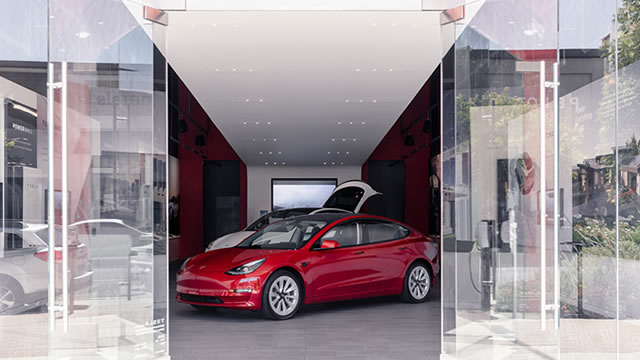
Tesla shuts down Dojo, the AI training supercomputer that Musk said would be key to full self-driving
TechCrunch· 2025-08-07 22:19
Core Insights - Tesla is disbanding its Dojo supercomputer team, marking a significant shift in its strategy for developing in-house chips for driverless technology [1][4] - The departure of around 20 employees to form a new AI startup, DensityAI, has contributed to the dissolution of the Dojo project [2] - CEO Elon Musk has been promoting Tesla as an AI and robotics company, despite challenges in the rollout of its robotaxi service [3] Group 1: Dojo Project Developments - The lead of the Dojo project, Peter Bannon, is leaving Tesla, and remaining team members will be reassigned to other projects [1] - The Dojo project was initially seen as a cornerstone for Tesla's AI ambitions, with Musk emphasizing its potential to process vast amounts of video data [4] - Morgan Stanley had predicted that Dojo could add $500 billion to Tesla's market value by creating new revenue streams [5] Group 2: Shift in Strategy - Tesla plans to increase reliance on external technology partners like Nvidia and AMD for computing needs, moving away from in-house chip development [8] - A recent $16.5 billion deal with Samsung aims to produce AI6 inference chips for various applications, including full self-driving and humanoid robots [9] - Musk hinted at potential redundancies and convergence between the Dojo and AI6 inference chip projects [9] Group 3: Future Directions - The focus has shifted to a new AI training supercluster called Cortex, which is being developed at Tesla's headquarters in Austin [7] - The Dojo project was part of a broader strategy that included the development of Tesla's D1 chip, which was unveiled in 2021 [7] - Tesla's board has offered Musk a $29 billion pay package to ensure his continued leadership in advancing the company's AI initiatives [10]

The Trade Desk(TTD) - 2025 Q2 - Earnings Call Transcript
2025-08-07 22:02
Financial Data and Key Metrics Changes - The company reported revenue of $694 million for Q2, representing a 19% year-over-year growth, and approximately 20% growth when excluding political ad spend from the previous year [45][51] - Adjusted EBITDA for Q2 was approximately $271 million, or about 39% of revenue [46] - The company ended the quarter with about $1.7 billion in cash, cash equivalents, and short-term investments [50] Business Line Data and Key Metrics Changes - CTV (Connected TV) continued to be the fastest-growing channel, with video (including CTV) representing a high 40s percentage share of the business [46] - Mobile accounted for a mid-30s percentage share of spend, while display represented a low double-digit share and audio around 5% [47] - Over 70% of spend is now on the Kokai platform, with expectations for full client adoption by the end of the year [46][96] Market Data and Key Metrics Changes - North America represented about 86% of spend, while international markets accounted for about 14% [47] - International growth outpaced North America, indicating a strong global execution strategy [47] Company Strategy and Development Direction - The company is focused on enhancing its position in CTV, retail media, and programmatic advertising, leveraging innovations like Kokai and OpenPath to improve supply chain efficiency [6][12][20] - The company aims to define the category of a Demand-Side Platform (DSP) by emphasizing objectivity and transparency in media buying [30][31] - The strategic focus includes building partnerships and joint business plans with major advertisers, which are growing significantly faster than overall platform spend [60][89] Management's Comments on Operating Environment and Future Outlook - Management expressed confidence in navigating macroeconomic uncertainties, emphasizing that programmatic advertising offers agility and measurable results [55][88] - The company sees a significant opportunity in the evolving digital advertising landscape, particularly as large brands face pressures that could accelerate their shift to programmatic solutions [88][90] - The management highlighted the importance of AI and data assets in driving future growth and innovation [57][96] Other Important Information - The company announced leadership changes, including the transition of CFO roles and the addition of new board members to strengthen its governance [25][28] - The company is committed to maintaining a dual-class share structure to support long-term strategic goals [37][39] Q&A Session Summary Question: What gives you confidence in the evolving digital ad environment? - Management highlighted the opportunity presented by uncertainty, the measurable nature of programmatic advertising, and the supply-demand imbalance favoring the company [55][57] Question: How do you evaluate the competitive landscape with Amazon's advertising efforts? - Management stated that Amazon is not a direct competitor due to its focus on its own inventory and the inherent biases in its platform, emphasizing the company's independence and objectivity [71][73] Question: How do tariffs impact ad spend for large brands? - Management acknowledged the short-term negative impact of tariffs on large brands but expressed optimism that volatility would accelerate the shift to programmatic advertising [88][90] Question: Can you elaborate on the progress with Kokai and AI capabilities? - Management reported significant improvements in campaign performance due to Kokai, with clients seeing substantial ROI from AI-driven features [96][94]

Integral Ad Science (IAS) - 2025 Q2 - Earnings Call Transcript
2025-08-07 22:00
Financial Data and Key Metrics Changes - Total revenue increased by 16% to $149 million, exceeding prior expectations due to higher spending on social measurement offerings and optimization products [24] - Adjusted EBITDA increased by 12% to $52 million, maintaining a 35% margin, driven by higher revenue [30] - Net income for the second quarter was $16 million, or $0.10 per share, compared to $8 million, or $0.05 per share in the prior year [30] Business Line Data and Key Metrics Changes - Optimization revenue grew by 16% to $68 million, benefiting from the industry's shift towards performance products [24] - Measurement revenue increased by 8% to $57 million, with social media revenue growing by 22%, representing 60% of measurement revenue [25] - Publisher revenue rose by 36% to $24 million, representing 16% of total revenue, driven by new CTV products and OEM partnerships [26] Market Data and Key Metrics Changes - International revenue grew by 8% to $43 million, representing 30% of total revenue, with 45% of measurement revenue coming from outside The Americas [27] - The company continues to see strong demand in EMEA and APAC, particularly in social optimization and CTV products [58] Company Strategy and Development Direction - The company is focused on expanding its AI infrastructure to enhance customer relationships and drive demand in the evolving AI landscape [6] - Strategic partnerships with major broadcasters and technology companies are being pursued to enhance product offerings and market reach [15][20] - The company is investing in new capabilities, including GenAI, to accelerate activation and deliver actionable insights [17] Management's Comments on Operating Environment and Future Outlook - Management raised the full-year outlook based on positive second-quarter performance, expecting continued growth in the advertising environment [32] - The company anticipates maintaining gross margins in the range of 77% to 79% for the full year [34] - Management expressed confidence in the ongoing strength of the Oracle business and the adoption of optimization solutions [40] Other Important Information - The company received the first ethical artificial intelligence certification from the Alliance for Audited Media, highlighting its commitment to responsible AI use [20] - The company appointed a new CFO, Alpanna Wagner, who brings over 25 years of financial leadership experience [21] Q&A Session Summary Question: Progress on onboarding Oracle customers - Management noted strong momentum with Oracle customers, with a focus on cross-selling and upselling optimization solutions [39] Question: Critical mass for social optimization adoption - Management indicated that they are seeing significant adoption of pre-bid social optimization, particularly in EMEA, and highlighted a new partnership with Meta for Threads [44] Question: Drivers of growth in the Publisher segment - Management attributed the 36% growth in the Publisher segment to expanding OEM partnerships and the adoption of new CTV products [52] Question: Guidance for Q3 across business lines - Management expects measurement to grow in the high single digits, optimization in the mid-teens, and strong double-digit growth in the Publisher segment [56] Question: Volatility in measurement and optimization segments - Management acknowledged the volatility but emphasized the overall strength and growth across all business lines, particularly in social and CTV [65] Question: Drivers of optimization average CPM growth - Management explained that optimization pricing increased by 10% year over year due to the adoption of QSP, despite a deceleration in optimization volumes [69] Question: Advertiser adoption of Meta optimization products - Management reported that the number of brands adopting Prebid Social on Meta has more than doubled, with significant international adoption [71]

How Tim Cook convinced Trump to drop made-in-USA iPhone — for now
CNBC· 2025-08-07 20:47
In this articleAAPLWASHINGTON, DC August 6: US President Donald Trump shakes hands with CEO of Apple Tim Cook during a meeting in the Oval Office of the White House on Wednesday August 6, 2025. Demetrius Freeman | The Washington Post | Getty ImagesPresident Donald Trump has made clear that he wants Apple to make iPhones in the U.S.Apple CEO Tim Cook is doing what he can to appease the commander in chief, without making that ultimate concession.Cook on Wednesday appeared at the White House with President Tru ...

Stacy Rasgon: Chips industry is more dynamic than it's ever been in my career
CNBC Television· 2025-08-07 18:58
So joining us now is Stacy Ragson, the senior US semiconductor analyst over at Bernstein. And also here with us is our own Christina Parts. Thank you both for being with us.Uh Christina, I'm going to start things off with you and just how we unpack all of these headlines coming out from tariffs to the calling of a resignation for a main Intel CEO type personality. Yeah, I guess right now it's just there's a 100% tariff, but we take it with a grain of salt. As long as companies can prove that they will or th ...


Apple Wins Wall Street Backing As $600 Billion US Investment Eases Trump Tensions, Boosts Growth Plan
Benzinga· 2025-08-07 18:15
Core Insights - Apple announced a new $100 billion commitment to increase investments in the U.S., raising its total commitment to $600 billion [1][2] - The investment includes a $2.5 billion allocation for producing all cover glass for iPhones and Apple Watches in Corning's Kentucky facility, ensuring 100% domestic production [1] - Analyst Daniel Ives views this investment as a strategic move to ease tensions with the Trump administration and secure long-term growth amid tariff pressures [2][3] Investment and Job Creation - The total planned U.S. investment of $600 billion over the next four years is expected to create 20,000 new jobs [2] - Ives highlighted the American Manufacturing Program as a key initiative to strengthen domestic supply chains, expanding partnerships with companies like Corning, Coherent, and MP Materials [3] Geopolitical Context and Production Challenges - The investment is seen as a timely response to geopolitical challenges, with Ives noting CEO Tim Cook's ability to balance diplomacy and leadership [3] - Despite the positive outlook, Ives expressed skepticism about the feasibility of mass-producing iPhones in the U.S. due to unfavorable cost structures compared to Asia and India, calling it "a fairy tale" [3][4] Future Projections - Ives expects Apple to continue investing in AI, Macs, U.S. manufacturing infrastructure, and services, but not in domestic iPhone production [4] - He projects that Apple will produce over 19 billion U.S.-made chips by 2025 through partnerships with various semiconductor companies [5] - Ives anticipates fourth-quarter revenue of $101.40 billion and EPS of $1.76 [5] Stock Performance - Following the announcement, Apple stock rose by 2.70% to $219.00 [6]