OPPO

Search documents
领跑苹果 中国影像赛道成关键
Nan Fang Du Shi Bao· 2025-10-21 15:46
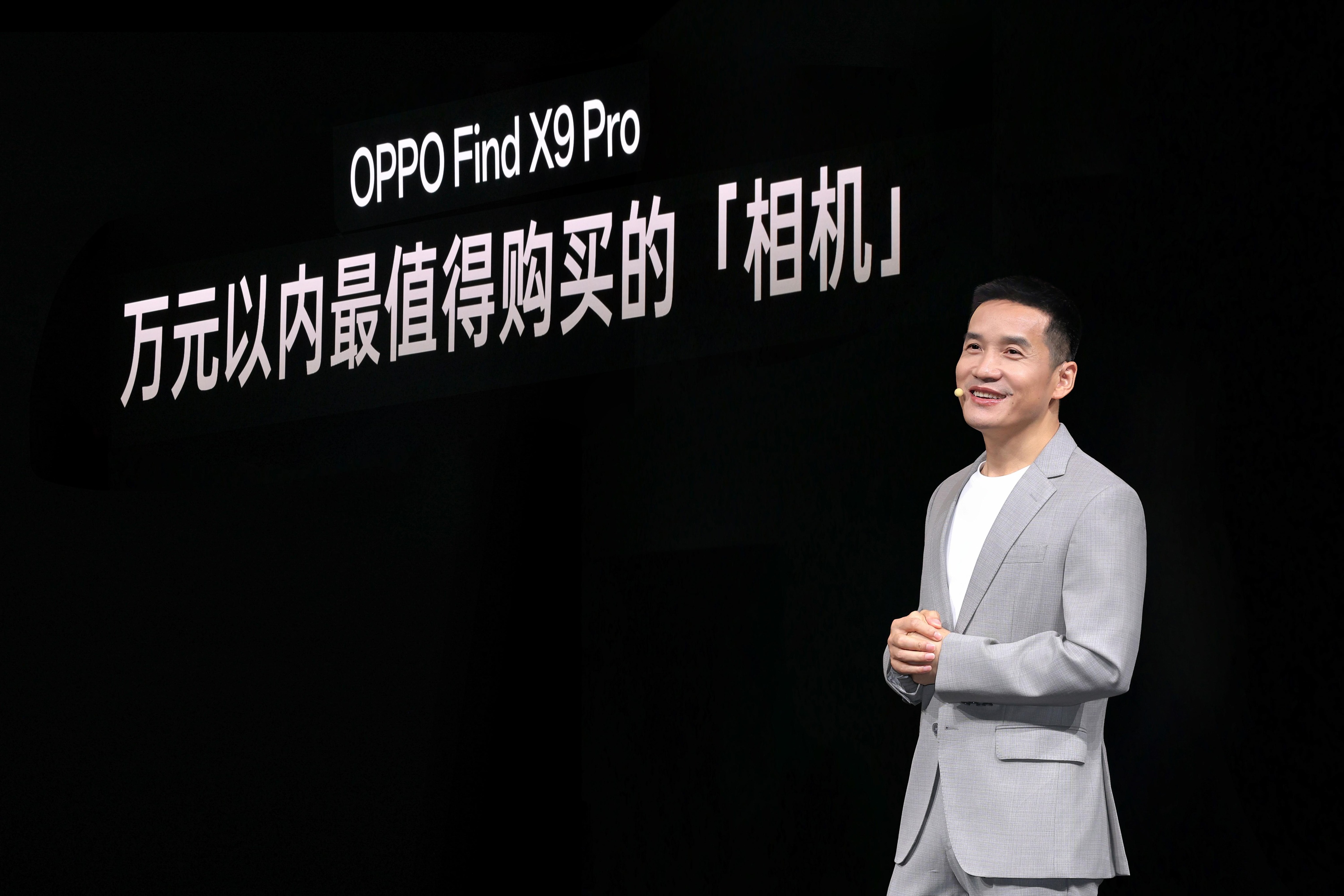
Core Viewpoint - OPPO's Find X9 series marks a significant advancement in mobile imaging technology, positioning smartphones as viable alternatives to traditional cameras, particularly with the Find X9 Pro being touted as the best camera under 10,000 yuan [1][5][13]. Group 1: Product Features and Innovations - The Find X9 Pro features a 200-megapixel telephoto lens, setting a new standard in the sub-10,000 yuan imaging market, achieving detail resolution comparable to medium format cameras [7][19]. - OPPO has integrated advanced imaging algorithms and hardware solutions, such as the "instant triple exposure" technology, which enhances image quality in dynamic scenes and low-light conditions [19]. - The collaboration with Hasselblad has led to the development of natural color algorithms, ensuring accurate color reproduction without excessive digital manipulation [11][19]. Group 2: Market Position and Trends - Over the past decade, Chinese brands have transitioned from following Apple to leading in key areas such as imaging, communication, and fast charging, with OPPO being a representative of this shift [4][17]. - Research indicates that nearly 95% of high-end smartphone users have high expectations for imaging capabilities, making it a core feature in their purchasing decisions [5][9]. - The Chinese imaging market is projected to capture 17.4% of the global smart imaging device market share by 2024, with a significant push towards domestic production in consumer-grade panoramic cameras [21][22]. Group 3: Industry Impact and Future Outlook - OPPO's advancements in mobile imaging reflect a broader trend of innovation within the Chinese tech industry, which has evolved from a follower to a global leader in mobile imaging technology [21][22]. - The complete ecosystem for smart imaging in China includes upstream components like CMOS modules and DSP chips, as well as downstream applications, indicating a robust and integrated industry [21][22]. - The future of imaging technology is expected to be driven by Chinese companies like OPPO, which are building comprehensive ecosystems that encompass hardware development, software innovation, content creation, and platform operation [22].

隆利科技(300752.SZ):OPPO和荣耀是公司的重要客户
Ge Long Hui· 2025-10-21 10:13
Core Viewpoint - Longli Technology (300752.SZ) has established friendly cooperative relationships with key clients OPPO and Honor, indicating a strong position in the market and a commitment to deepening collaborations with these customers [1] Group 1 - Longli Technology identifies OPPO and Honor as important clients, highlighting their significance in the company's business strategy [1] - The company expresses intentions to maintain and actively expand the depth of cooperation with these clients, suggesting potential for future growth and partnership opportunities [1]

被曝支持与苹果互传,鸿蒙6将有哪些升级?
Guan Cha Zhe Wang· 2025-10-21 09:38
Core Insights - Huawei is set to officially launch HarmonyOS 6 on October 22, marking a return to conventional naming after previous versions like "HarmonyOS NEXT" [1] - The new operating system aims to enhance cross-device collaboration, intelligence, security, and performance [1][3] Group 1: HarmonyOS 6 Features - HarmonyOS 6 will enable data transfer between Huawei devices and Apple devices during device switching, differing from other manufacturers' proposals for ecosystem compatibility [1] - The upgrade focuses on cross-device collaboration, with features like "tap to share" allowing users to easily transfer content between devices [1][3] - The introduction of the HarmonyOS Intelligent Agent Framework (HMAF) will enhance the capabilities of smart agents, enabling them to assist users in complex tasks [3] Group 2: Performance and User Experience - Performance improvements are expected through optimizations in the Ark Engine and HarmonyOS kernel, leading to faster application launch and loading times [4] - The user interface will see changes, including a vertical volume and brightness adjustment bar for better usability [4] - Developers will gain access to new foundational capabilities, reducing the barriers for app development [4] Group 3: Ecosystem Development - Despite over 30,000 applications and services developed for HarmonyOS, the ecosystem still falls short of the 100,000 applications benchmark for maturity [6] - Huawei plans to invest 150 billion RMB annually over the next five years to support ecosystem development, alongside significant resources for open-source community support [6] - The upcoming Mate80 series smartphones are expected to feature the new HarmonyOS 6 and will include various models targeting different user preferences [6] Group 4: Market Context - In Q3, the smartphone market in mainland China saw a 3% year-on-year decline, with Huawei ranking second in shipments at 10.5 million units, a 3% decrease [7] - Vivo led the market with 11.8 million units shipped, while Apple was the only brand among the top five to see growth [7] - The success of HarmonyOS 6 and the Mate80 series will be crucial for Huawei in building a robust ecosystem amidst intense competition [7]

Omdia: India Smartphone Market Grew 3% as Brands Gear Up for Festive Season
Businesswire· 2025-10-21 06:30
Core Insights - India's smartphone market experienced a 3% year-on-year growth in Q3 2025, with shipments reaching 48.4 million units, driven by new product launches and retail incentives ahead of the festive season [1][2][6] Market Performance - vivo led the market with 9.7 million units shipped, capturing a 20% market share, followed by Samsung with 6.8 million units (14% market share) and Xiaomi with 6.5 million units (13% market share) [2][7] - Apple returned to the top five with 4.9 million units shipped, achieving a 10% market share, largely due to demand from smaller tier cities [5][7] Vendor Strategies - Vendors employed aggressive retail incentive programs to boost sales, including cash bonuses, tiered margins, and consumer-facing schemes like zero-down-payment EMIs and bundled accessories [3][4] - vivo's success was attributed to a balanced product portfolio and strong retail programs, while Samsung focused on mid-premium models but faced challenges in the entry-level segment [4][5] Future Outlook - Despite the growth in Q3, the momentum is not expected to sustain into the year-end due to limited organic demand and cautious urban consumer sentiment [5][6] - The overall smartphone demand recovery remains fragile, with urban consumers delaying upgrades amid economic uncertainties, while rural demand has been stable but insufficient to offset urban caution [6]

东莞“百千万工程”实践看长安,市场主体三年增长19.8%
Nan Fang Du Shi Bao· 2025-10-21 05:20
Core Insights - Dongguan's "Hundred Million Thousand Project" aims to activate high-quality development in towns and villages, with Chang'an Town emerging as a model for success [1][2][7] Economic Performance - Chang'an Town's GDP is projected to reach 1,050.7 billion yuan in 2024, marking a 5.5% year-on-year growth, with significant contributions from over 44,000 industrial enterprises [2][5] - The town's tax revenue exceeded 19.7 billion yuan, and the number of market entities grew by 19.8% over three years [2][3] Industrial Development - Chang'an has established a "2+3" characteristic industrial system, focusing on electronic information and hardware mold industries, alongside emerging sectors like intelligent vision and new energy vehicles [2][3] - The town's industrial output value reached 40 billion yuan, with a total import-export volume of 41 billion yuan [1] Community and Governance - Approximately 70% of enterprises and population are based at the town and village level, emphasizing the importance of community-driven economic models [3][4] - Chang'an is promoting diversified community economies, moving from a rental model to technology and industry-focused initiatives, leading to increased collective income [3][4] Talent and Education - The town has implemented various talent attraction strategies, resulting in over 267,000 talents, including 22,000 high-level professionals [5][6] - Investments in education include a 1.2 billion yuan project for a new school and expansions of existing public schools, adding over 5,500 quality public school seats [6] Future Goals - By 2025, Chang'an aims to enhance urban-rural integration, strengthen comprehensive capabilities, and address social welfare gaps, continuing its trajectory of economic growth [7]
英伟达发布800VDC白皮书,关注GaN及SiC功率器件
Ping An Securities· 2025-10-21 03:16
Investment Rating - The industry investment rating is "Outperform the Market" [1][33]. Core Insights - NVIDIA's recent white paper on the 800V DC architecture highlights energy consumption as a critical factor affecting the development of current and next-generation AI data centers. The power density of GPU racks is approaching 100 times that of web servers and continues to grow exponentially. Power infrastructure, once secondary, is now on par with or surpassing computational space [3]. - The 800V DC architecture significantly reduces current, copper usage, and cable volume compared to 54V DC or 480VAC systems while maintaining safety and scalability. It enhances overall energy efficiency and density through simplified power paths and increased transmission voltage [3]. - The performance of the 800V DC system relies on GaN (Gallium Nitride) and SiC (Silicon Carbide) power semiconductors, which have unique advantages in high-voltage, high-frequency, and high-efficiency scenarios. The market for GaN and SiC is expected to grow significantly, with GaN power devices projected to increase from $390 million in 2024 to $3.51 billion by 2030, representing a compound annual growth rate (CAGR) of 44% [3]. - The report suggests focusing on the GaN and SiC supply chain, recommending companies such as Sanan Optoelectronics, China Resources Microelectronics, Innoscience Technology (Hong Kong), Tianyue Advanced, Sinda Semiconductor, Silan Microelectronics, and Times Electric [3]. Summary by Sections Industry Overview - NVIDIA's white paper emphasizes the transformation of data centers into "AI factories" driven by GPU advancements, highlighting the critical role of energy infrastructure [3]. Market Trends - The demand for GaN and SiC is driven by applications in AI data centers, new energy vehicles, and humanoid robots, indicating a robust market outlook [3]. Investment Recommendations - The report recommends monitoring the GaN and SiC industry chain, identifying key players for potential investment opportunities [3].
从“苏超”到“湘超”“川超”“蒙超”……“省超”营销哪家强?
创业邦· 2025-10-21 03:12
Core Insights - The article discusses the unprecedented popularity of the "Sichuan Super League" (苏超) and its impact on local football events across various provinces in China, highlighting its role as a social symbol that transcends sports, culture, tourism, and public services [4][5]. Group 1: Event Popularity and Marketing - Since its launch in mid-May, the Sichuan Super League has seen record attendance and significant online engagement, leading to a surge in local football events like "Jiangxi Super League" and "Hunan Super League" [4]. - The emergence of these local leagues has sparked a marketing frenzy, attracting numerous brands and sponsors, thereby creating a vast flow of engagement and commercial opportunities [5][12]. Group 2: Sponsorship and Commercial Potential - The "Hunan Super League" has attracted 15 sponsors, including major partners like China Construction Bank and Wuliangye, while the "Sichuan Super League" has reached 19 sponsors, showcasing the high commercial appeal of these events [7][8]. - The "Guangdong Super League" has garnered 24 sponsors, with top-tier sponsorships from brands like Yili and Dongfeng Nissan, indicating a strong trend of investment in local football leagues [8][12]. Group 3: Market Dynamics and Future Outlook - The regional nature of these leagues allows local businesses to engage effectively, with sponsorship opportunities structured to maximize exposure and engagement [12][17]. - The increasing number of sponsors and the commercial viability of these leagues suggest a promising future for sports marketing in China, with expectations for more refined partnerships and marketing strategies as events evolve [17][18].

国产品牌被曝将集中上线,eSIM手机怎么办理?
Guan Cha Zhe Wang· 2025-10-21 01:09
Core Insights - The iPhone Air's domestic version has begun pre-sales on October 17 and will be fully launched on October 22, with most smartphone brands expected to adopt eSIM technology by early next year [1][4] - The three major telecom operators in China have announced that eSIM services are currently in the commercial trial phase, only supporting offline activation at service centers [1][4] - eSIM technology integrates SIM card functions into the phone's internal chip, enhancing convenience and allowing for more flexible internal layouts, particularly beneficial for high-end devices [3][6] Industry Developments - eSIM services are currently limited to the iPhone Air (model A3518), with plans for more models to be supported in the future [1][4] - China Mobile plans to introduce more devices that support both traditional SIM cards and eSIM, focusing on domestic technology development for eSIM chips and operating systems [1][3] - Over 170,000 users have already pre-ordered eSIM-enabled devices, indicating strong market interest [4] Competitive Landscape - The introduction of eSIM may increase competition among telecom operators, as it lowers the barriers for consumers to switch providers, potentially impacting revenue from traditional services [3][4] - China Unicom is leveraging partnerships with smart hardware manufacturers to advance eSIM technology and differentiate its offerings [3][4] - OPPO has launched its Find X9 series, with the Pro version set to support eSIM and satellite communication, highlighting the trend towards integrating advanced technologies in smartphones [6][7] Market Projections - Global eSIM smartphone connections are projected to reach 1 billion by the end of 2025 and 6.9 billion by 2030, representing 76% of total smartphone connections [7][8]

国内首款eSIM手机即将发售!多家公司早有布局相关业务
Zheng Quan Shi Bao· 2025-10-21 00:48
Core Insights - Apple CEO Tim Cook announced the official launch of the iPhone Air in China on October 22, which is the first smartphone in the country to utilize eSIM technology, eliminating the physical SIM card slot [1] - Major Chinese telecom operators, including China Unicom, China Mobile, and China Telecom, have received approval to commence eSIM services, marking a significant shift towards a "cardless era" in mobile technology [1][2] - The global eSIM market is projected to grow significantly, with an estimated 1 billion eSIM-enabled smartphones by the end of 2025 and 6.9 billion by 2030, representing 76% of total smartphone connections [2] Industry Developments - The eSIM technology integrates SIM card functions into the phone's internal chip, allowing for a more compact design and improved features such as water and dust resistance [2] - Domestic brands are quickly adapting to the eSIM trend, with OPPO announcing an eSIM version of its Find X9 series set to launch in November [1] - The eSIM industry involves a complex ecosystem, including chip design, platform management, operator services, device integration, and end-user applications, with expectations for collaborative growth and maturity [3] Company Activities - Several companies have been actively involved in the eSIM space, including Unisoc, which has launched multiple eSIM products compliant with GSMA standards [4] - Eastcompeace has developed an embedded operating system and eSIM management platform that has received GSMA security certification [5] - Megmeet has established a mature eSIM solution with large-scale production capabilities across 4G and 5G platforms [5] Market Performance - eSIM concept stocks have seen an average increase of 42.42% this year, significantly outperforming the Shanghai Composite Index [7] - Six stocks have recorded gains exceeding 50%, including Hengbao Co., Eastcompeace, and Chutianlong [7] - Despite the overall positive trend, some stocks have experienced significant pullbacks, with several dropping over 30% from their year-to-date highs [7]
多项大赛落地 东莞滨海湾AI产业释放“磁吸效应”
Nan Fang Du Shi Bao· 2025-10-20 23:12
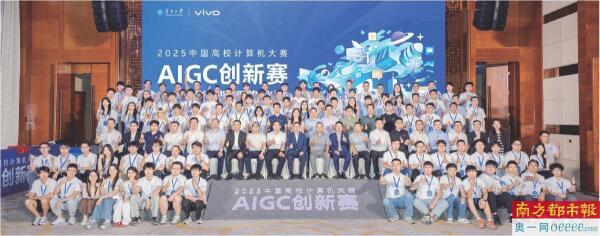
Core Insights - The article highlights the growing significance of the Binhai Bay area as a hub for AI competitions and innovation, attracting talent and fostering industrial development through various AI-related events [4][6][10]. Group 1: AI Competitions - The "Industrial AI Application Innovation Challenge" is set to close registrations in 10 days, with over 1,000 students participating, showcasing their "AI+" solutions [4]. - The AIGC Innovation Competition attracted 6,390 students from 478 universities, forming 2,310 teams, while the upcoming Intelligent Interaction Innovation Competition has 3,626 teams and 4,939 participants from 477 universities [6]. - The competitions focus on technological creativity and address industry pain points, with the "Hundred Scenery Competition" targeting specific technical needs of enterprises in Dongguan [7]. Group 2: Industrial Development - Binhai Bay has become a focal point for AI development, with major companies like OPPO and vivo establishing significant operations in the area, including global computing centers and health labs [8]. - The local government has implemented supportive policies, including a 300 million yuan incentive package and the establishment of a 10 billion yuan AI industry fund, to accelerate AI development [8][9]. - Binhai Bay has been designated as a national AI application pilot base, enhancing its status in the AI industry [9]. Group 3: Talent and Resource Attraction - The competitions not only generate excitement but also attract valuable talent and resources necessary for high-quality regional development [10]. - The "Youth Partner Program" offers various incentives for young innovators, including project funding and living subsidies, to encourage entrepreneurship in the area [10]. - Binhai Bay plans to collaborate with universities and AI companies to establish a technology incubation base, aiming to create a hub for AI project transformation [11].