
宽禁带半导体

Search documents
天岳先进(02631) - 海外监管公告
2026-03-29 10:51
香港交易及結算所有限公司及香港聯合交易所有限公司對本公告的內容概不負責,對其準確 性或完整性亦不發表任何聲明,並明確表示概不會對本公告的全部或任何部分內容所產生或 因依賴該等內容而引致的任何損失承擔任何責任。 山東天岳先進科技股份有限公司 SICC CO., LTD. (於中華人民共和國註冊成立的股份有限公司) (股份代號:2631) 海外監管公告 本公告乃根據香港聯合交易所有限公司證券上市規則第13.10B條刊發。 茲載列山東天岳先進科技股份有限公司於上海證券交易所網站( www.sse.com.cn ) 所刊發的公告,僅供參考。 承董事會命 山東天岳先進科技股份有限公司 董事長、執行董事兼總經理 宗艷民先生 香港,2026年3月27日 於本公告日期,董事會成員包括(i)執行董事宗艷民先生、高超先生及王俊國先生;(ii)非執行 董事邱宇峰先生、李婉越女士及方偉先生;及(iii)獨立非執行董事李洪輝先生、劉華女士及 黎國鴻先生。 山东天岳先进科技股份有限公司 2025 年年度报告摘要 公司代码:688234 公司简称:天岳先进 山东天岳先进科技股份有限公司 2025 年年度报告摘要 山东天岳先进科技股份有限公 ...
蓝箭电子:公司已掌握完整的宽禁带半导体封测技术体系,积极开发功率MOSFET车规级产品
Zheng Quan Ri Bao Wang· 2026-01-27 12:13
Core Viewpoint - Blue Arrow Electronics (301348) has developed a complete wide bandgap semiconductor packaging and testing technology system, focusing on automotive-grade power MOSFET products that have passed AEC-Q101 third-party testing certification [1] Group 1 - The company is actively developing automotive-grade power MOSFET products [1] - Multiple products have achieved AEC-Q101 third-party testing certification, enabling key functionalities in electric vehicles [1] - The company has obtained IATF16949 automotive industry quality management system certification [1]
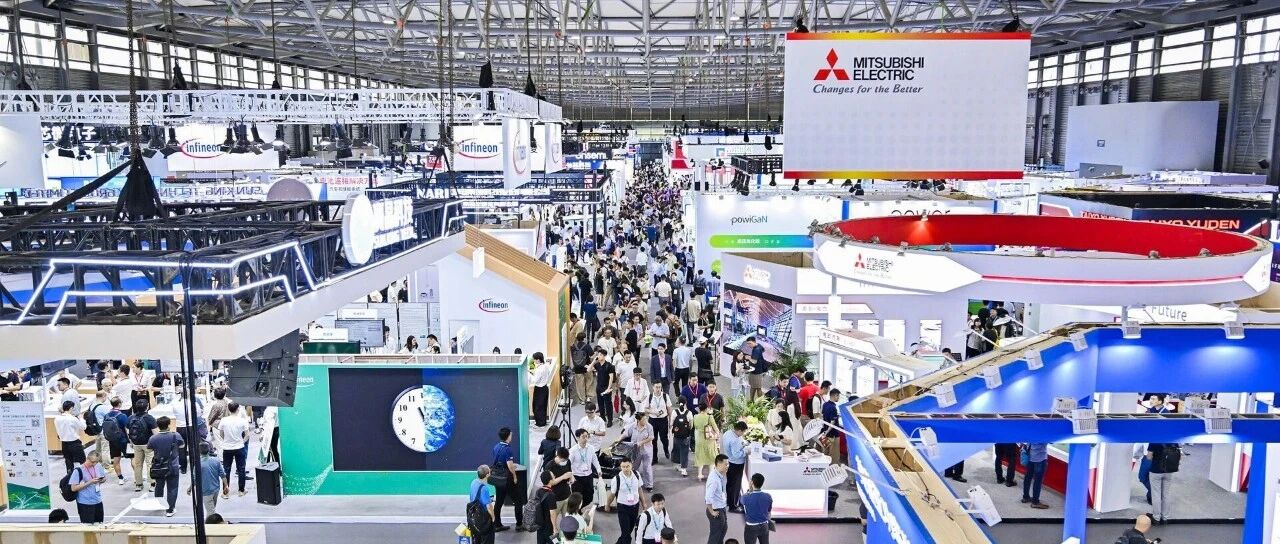
PCIM Asia 深圳 2026 解锁宽禁带半导体产业增长新机遇
半导体行业观察· 2026-01-18 03:32
Core Viewpoint - The PCIM Asia exhibition in Shenzhen, set to commence on August 26, 2026, is positioned as a pivotal platform for the power electronics industry, focusing on cutting-edge technology and industry trends, particularly in wide bandgap semiconductors [1][2]. Group 1: Forum Highlights - The forum titled "Breaking the Deadlock and Coexistence - Wide Bandgap Semiconductors Leading Power Electronics Industry Upgrade and Intelligent Application Innovation" will address three core pain points: technical bottlenecks in material preparation, device design, and packaging testing; collaborative barriers in local supply chain construction; and challenges in applying emerging scenarios like AI and high-voltage platforms [2][3]. - The forum aims to provide four core values: deep technical insights, industry collaboration, forward-looking trends, and precise matching of technology and demand [2][3]. Group 2: Key Participants - The event will feature a prestigious lineup of global semiconductor leaders such as Infineon, Rohm, STMicroelectronics, and ON Semiconductor, alongside key figures from Tesla, Volkswagen, Google Cloud, and Amazon Web Services, as well as experts from top research institutions like Georgia Tech and Tokyo Institute of Technology [7]. - Domestic industry leaders including CRRC Times Semiconductor, Sanan Optoelectronics, BYD, CATL, Huawei Digital Energy, and Alibaba Cloud will also participate, showcasing advancements in domestic technology and industry ambitions [7]. Group 3: Technical Focus Areas - The forum will cover critical technical topics such as defect control in SiC substrates, reliability enhancement of GaN devices, and breakthroughs in domestic yield [8]. - It will also delve into the integration technology of power modules under 800V high-voltage platforms and share practices in adapting electric drive systems for new energy vehicles [8]. - Discussions will include the domestic replacement of key materials, collaborative innovation in advanced packaging technologies, and the balance between supply chain stability and cost control [8]. Group 4: Agenda Overview - The agenda includes five major presentations followed by a roundtable discussion focused on "Breaking the Deadlock in the Industry Chain" to explore high-quality development paths for power semiconductors [6][9]. - Key topics will include advancements in wide bandgap semiconductor materials, power semiconductor module integration, and innovative power solutions for data centers driven by AI [9]. Group 5: Target Audience - The forum is specifically targeting decision-makers from the power semiconductor industry chain, core technical leaders from sectors such as new energy vehicles, energy storage, industrial control, and data centers, as well as academic leaders and experts from industry associations [12].

天岳先进(688234):天琢晶刚,岳筑芯途
China Post Securities· 2025-12-30 09:05
Investment Rating - The report maintains a "Buy" rating for the company, indicating an expected relative increase in stock price of over 20% compared to the benchmark index within the next six months [6][16]. Core Insights - The company is a leading player in the global wide-bandgap semiconductor materials industry, having achieved early industrialization of semi-insulating silicon carbide substrates and further advancing to conductive silicon carbide substrates [3][13]. - The company is expanding its production capacity, with the Jinan plant steadily increasing output through technological improvements, and the Shanghai Lingang plant achieving an annual production capacity of 300,000 conductive substrates ahead of schedule [3][4]. - The company has established a comprehensive product matrix for silicon carbide substrates, including 6/8/12-inch products, and is positioned to benefit from the industry's transition to a "12-inch era" [4][5]. - The company is actively expanding its applications in electric vehicles, renewable energy, and AI, having achieved significant partnerships with leading power semiconductor manufacturers and optical firms [5][6]. Financial Projections - Revenue projections for the company are estimated at 1.73 billion, 2.74 billion, and 3.80 billion yuan for the years 2025, 2026, and 2027 respectively, with net profits expected to be 33.19 million, 143.93 million, and 278.49 million yuan for the same years [10][11]. - The company is expected to experience significant growth in net profit, with a projected increase of 491.56% in 2025, followed by 333.71% in 2026, and 93.48% in 2027 [10][11].

高端汽车市场创2亿营收,「悉智科技」拓疆AIDC蓝海 |36氪首发
3 6 Ke· 2025-12-19 02:25
Financing Information - "Xizhi Technology" has completed a Pre-A round financing of 250 million RMB, led by Anxin Capital, Zhejiang New Energy Vehicle Fund, and China Merchants Jinling International [1] - The funds will be used for new product development, construction of new facilities, and expansion of the AIDC division [1] Company Overview - Established in 2022 in Suzhou, "Xizhi Technology" specializes in wide-bandgap semiconductor (SiC/GaN) components [1] - The company has achieved mass production of encapsulated modules and high-frequency design, focusing on automotive-grade silicon carbide power modules and high-frequency power modules [1] Product Highlights - The company's power modules are crucial for electric vehicles, converting DC battery power to AC for motors, directly impacting vehicle performance [4] - "Xizhi Technology" has reduced loop inductance by 50% and improved current sharing by 45% compared to international competitors, enhancing system performance [4] - The company is developing an 800V to 12V high-frequency power module for the AIDC market, targeting over 98% efficiency and over 5000W/inch³ power density, expected to enter mass production by the end of 2026 [4] Market Potential - The global market for automotive-grade power modules and AIDC high-end power sources is projected to reach hundreds of billions, with the electric vehicle market expected to hit 30 million units by 2030 [7] - The domestic high-end power module market is currently dominated by international giants, indicating significant room for domestic alternatives [7] Performance and Clients - The first automotive-grade silicon carbide module is set to begin mass production in Q4 2024, with expected sales of approximately 30 million RMB in that quarter and nearly 200 million RMB in 2025 [8] - Within a year of mass production, the company has delivered 200,000 encapsulated automotive-grade modules, achieving over 50% market share in the third-party automotive encapsulated power module market [8] Competitive Strategy - "Xizhi Technology" differentiates itself from domestic competitors by focusing on innovative solutions rather than imitation, aiming to compete directly with international leaders [9] - The company employs a "dual-drive" strategy, focusing on the established automotive market while strategically positioning itself in the future AIDC market [10] Investor Insights - Anxin Capital views investment in "Xizhi Technology" as a key step in deepening its third-generation semiconductor industry chain layout, recognizing the company's rapid growth and technological capabilities [11] - The company has demonstrated impressive execution speed, achieving mass production of high-end silicon carbide power modules within 32 months [11]

平湖实验室成功研制新器件
Shen Zhen Shang Bao· 2025-12-17 18:16
Core Insights - The Shenzhen Pinghu Laboratory has made significant advancements in low-voltage (15V-40V) Gallium Nitride (GaN) power devices, successfully developing high-performance low-voltage GaN E-HEMT (Enhanced High Electron Mobility Transistor) devices that meet international advanced standards, providing a new solution for efficient, high-power density computing chip power supply [1] Group 1: Technological Advancements - The laboratory's research team has overcome several key technical challenges using an advanced 8-inch silicon-based GaN research and pilot platform [1] - The representative 25V device has achieved key parameters that significantly exceed the performance limits of traditional silicon-based technologies [1] Group 2: Industry Context - The rapid development of artificial intelligence has increased the demands on power supply systems for computing chips in terms of efficiency and power density [1] - Traditional silicon-based power devices are approaching their physical performance limits, while GaN devices are recognized as the core for next-generation efficient power conversion due to their high electron mobility and fast switching characteristics [1] - The cost and performance advantages of GaN devices in low-voltage applications have not yet fully materialized, posing a key bottleneck for large-scale applications [1]
研判2025!中国硅外延片行业产业链全景、发展现状、细分市场及未来发展趋势分析:大尺寸引领技术跃迁,新兴应用开辟增长空间【图】
Chan Ye Xin Xi Wang· 2025-11-10 00:54
Core Insights - The silicon epitaxial wafer industry is experiencing significant growth driven by strong demand in downstream applications, particularly in integrated circuits and power devices [1][7][10] - The market for silicon epitaxial wafers in China is projected to reach 12.44 billion yuan in 2024, with a year-on-year growth of 10.58% [10][11] - The industry is transitioning towards high-end, autonomous, and diversified development, focusing on technological upgrades and industry chain collaboration [13][14][15] Industry Overview - Silicon epitaxial wafers are core semiconductor materials formed by growing a single-crystal semiconductor film on a silicon substrate, allowing precise control of key parameters [2][3] - The classification of silicon epitaxial wafers includes sizes of 300mm (12 inches), 200mm (8 inches), and 150mm (6 inches and below), catering to various semiconductor device requirements [3][4] Market Dynamics - The integrated circuit sector is the most significant application market for silicon epitaxial wafers, with production expected to reach 451.42 billion units in 2024, a 14.38% increase year-on-year [7][8] - The power semiconductor market in China is projected to grow to 175.255 billion yuan in 2024, driven by sectors such as new energy vehicles and photovoltaics [8][10] Industry Development - The Chinese silicon epitaxial wafer industry has evolved from technology dependence to achieving self-sufficiency, with significant advancements in 8-inch core processes and a shift towards 12-inch high-end products [5][10] - The industry is currently in a phase of simultaneous scale expansion and quality upgrade, with increasing competitiveness and a focus on high-end applications [10][11] Competitive Landscape - The industry is characterized by a competitive landscape where international giants dominate the high-end market, while domestic companies are rapidly catching up through technological collaboration and industry chain integration [12][13] - Key players include Hu Silicon Industry, TCL Zhonghuan, and Lian Microelectronics, focusing on breakthroughs in 12-inch technology and establishing advantages in the 8-inch power device sector [12][13] Future Trends - The silicon epitaxial wafer industry is expected to accelerate towards high-end, autonomous, and diversified development, with a focus on large-size and low-defect density technologies [14][15] - There will be a stronger emphasis on upstream and downstream collaboration to enhance self-sufficiency and build a secure and controllable industrial ecosystem [14] - Emerging application scenarios, such as new energy vehicles and artificial intelligence, will drive product diversification and innovation in the industry [15][16]




东方证券:HVDC、SST等供电新方案需求方向明确 AIDC供电新方案有望助力SiC/GaN打开成长空间
智通财经网· 2025-11-05 03:40
Core Insights - The report from Dongfang Securities indicates that SST (Solid State Transformer) is expected to become the optimal choice for direct current power supply solutions in data centers, with NVIDIA highlighting SST as a mainstream technology in its AIDC white paper [1] - The demand for new power supply solutions like HVDC (High Voltage Direct Current) and SST is clearly defined, driven by the increasing power requirements of AI data centers [1][3] Group 1: Trends in Power Supply Solutions - AIDC (AI Data Center) is experiencing a surge in power demand, with high voltage and high efficiency becoming critical trends [1] - Traditional AC/DC and DC/DC conversion methods lead to efficiency losses and increased maintenance burdens, necessitating more efficient and compact power architectures [1] - NVIDIA's collaboration with industry partners to propose an 800V HVDC power supply architecture aims to significantly enhance power efficiency and reduce electricity costs [1] Group 2: Advantages of SST - SST offers several advantages over traditional transformers, including higher efficiency, better power quality, modularity, and stable performance, which can greatly improve space utilization and power efficiency [1] - SST is projected to become the best choice for direct current power supply solutions in data centers in the long term [1] Group 3: Market Potential for SiC/GaN Devices - The demand for SiC (Silicon Carbide) and GaN (Gallium Nitride) devices is expected to rise due to the implementation of new power supply solutions like HVDC and SST [3] - The market for SiC/GaN devices in 800V HVDC data center power supply systems could reach $2.7 billion by 2030, indicating significant growth potential [3] - NVIDIA's partnerships with various SiC/GaN manufacturers suggest a strong and certain demand for these devices in future AIDC power systems [3] Group 4: Current Market Penetration - As of 2024, the penetration rate of silicon carbide in global power semiconductors is projected to be 4.9%, while gallium nitride is at 0.5% in 2023 [2] - Some investors express concerns about the limited growth potential for wide bandgap semiconductors due to the gradual increase in silicon carbide's penetration in the electric vehicle sector [2]


AIDC供电新方案有望助力SiC/GaN打开成长空间
Orient Securities· 2025-11-04 08:16
Investment Rating - The report maintains a "Positive" investment rating for the electronic industry, particularly focusing on the potential growth of SiC/GaN power devices driven by new power supply solutions for AI data centers [6]. Core Insights - The demand for AI servers and data centers is expected to open up growth opportunities for SiC/GaN power devices, with new power supply solutions like HVDC and SST becoming increasingly important [3][11]. - The report highlights that the transition to 800V HVDC power supply architecture is anticipated to significantly enhance power efficiency and reduce operational costs for data centers [9][28]. Summary by Sections 1. AI Data Center Power Requirements - The power requirements for AI data centers are increasing, with single cabinet power rising from 5-8 kW to 20-50 kW, and potentially exceeding 100 kW [19]. - NVIDIA is promoting the transition to an 800V HVDC power supply architecture, which is expected to be fully implemented by 2027 [26][28]. 2. SST (Solid State Transformer) - SSTs are characterized by high efficiency and compact size, making them suitable for modern power supply needs [37]. - The adoption of SST technology is expected to become mainstream in future power supply solutions, significantly improving space utilization and power efficiency in data centers [47]. 3. HVDC and SST Impact on Power Semiconductors - The report indicates that HVDC and SST solutions will enhance the performance requirements for power semiconductors, creating a favorable environment for the penetration of SiC/GaN devices [56]. - The market for SiC/GaN devices is projected to reach $2.7 billion by 2030, driven by their application in 800V HVDC data center power systems [11][68]. 4. SiC/GaN Growth Potential - The report identifies key companies that are well-positioned to benefit from the growth in SiC/GaN devices, including industry leaders like Innoscience and Tianyu Advanced [3][14]. - The penetration rates for SiC and GaN in the power semiconductor market are expected to increase, with forecasts suggesting a rise in demand due to AI computing facilities [68].


国盛证券:AIDC电源管理终极方案 SST产业链上游材料与器件迎来发展机遇
Zhi Tong Cai Jing· 2025-10-27 02:09
Core Insights - The adoption of Solid State Transformers (SST) is expected to drive demand for wide bandgap semiconductors like Silicon Carbide (SiC) and Gallium Nitride (GaN), with SiC primarily used in input applications and GaN in output applications [1] - The global solid-state transformer market is projected to grow at a compound annual growth rate (CAGR) of 25% to 35% over the next 5-10 years, benefiting both magnetic materials and power semiconductors [1] Group 1: Industry Transformation - The power supply systems for data centers are undergoing significant changes due to the explosion of AI computing power, with power density per rack increasing from under 60 kW to 150 kW or higher [1] - Solid State Transformers (SST) offer over 98% system efficiency and require less than 50% of the space compared to traditional solutions, making them a promising core solution for next-generation data center power systems [1][2] - NVIDIA's recent release of an 800V DC white paper highlights the critical role of SST in its next-generation power architecture, indicating strong industry recognition of SST technology [1] Group 2: Technical Advantages of SST - SST improves efficiency by replacing traditional transformers with high-frequency power electronics, achieving over 98% efficiency compared to 95.1% for traditional HVDC systems [2] - The compact design of SST, utilizing high-frequency magnetic materials and modular architecture, significantly reduces the size of transformers while integrating multiple functions, thus saving space in data centers [2] Group 3: Future Potential of SST - SST acts as a "software-defined" energy router, enhancing the intelligence and resilience of power supply systems through real-time control and fault self-recovery capabilities [3] - SST's compatibility with renewable energy sources allows for direct integration of solar and wind power, improving the acceptance of renewable energy by over 50% compared to traditional systems [3] - The dual active bridge topology of SST supports bidirectional energy flow, enabling energy storage during low demand and feedback to the grid during peak times, which can reduce operational costs for data centers [3] Group 4: Companies to Watch - Companies involved in SST systems include Sifang Co., Ltd. (with SST efficiency reaching 98.5% and applications in national demonstration projects), China West Electric (with a subsidiary's 2.4MW SST operational), and Jinpan Technology (developing a 10kV/2.4MW prototype) [4] - Companies focused on SST materials include Hengdian East Magnetic (largest ferrite material company globally), Placo New Materials (new soft magnetic materials with frequencies over 10 MHz), and Yunlu Co., Ltd. (global leader in amorphous alloys) [4]