自变量机器人

Search documents
大脑:具身智能落地的关键
Soochow Securities· 2025-10-24 06:02
Investment Rating - The report maintains an "Overweight" rating for the computer industry, indicating a positive outlook for the sector in the next 6 months [1]. Core Insights - The brain is identified as the key to achieving embodied intelligence, with humanoid robots consisting of a brain, cerebellum, and body, where the brain utilizes AI large models for optimal decision-making based on environmental inputs [3][8]. - The technology path for embodied intelligence is still in the exploratory phase, with three main technical routes: end-to-end VLA, brain+cerebellum layered approach, and world model technology [3][13]. - The development of the robot brain is seen as a critical bottleneck for the advancement of embodied intelligence, with current challenges primarily related to model issues rather than data [3][18]. - The global landscape features a diverse array of robot brain manufacturers, with several companies achieving valuations exceeding $1 billion, such as Galaxy General at 11.5 billion yuan and Physical Intelligence at $2.4 billion [3][17][46]. - Investment suggestions highlight the rapid growth of the embodied intelligence market, emphasizing the importance of the brain in this development, and recommend focusing on related companies [3][56]. Summary by Sections 1. Definition and Capabilities of Robot Brain - The humanoid robot's brain is based on AI large models, enabling autonomous navigation, task execution, and human-robot interaction [8][9]. 2. Parallel Exploration of Humanoid Robot Large Model Technologies - The report outlines three main technical routes for humanoid robot brain development: end-to-end VLA, brain+cerebellum layered approach, and world model technology, with ongoing research in each area [13][14]. 3. Industry Participants in Humanoid Robot Brain - Participants are categorized into three types: companies specializing in robot brains, general large model companies, and companies developing their own solutions [17]. 4. Key Bottleneck in Embodied Intelligence Development - The report emphasizes that the robot large model is the most significant challenge facing intelligent agents, limiting the large-scale application of humanoid robots [18][19]. 5. Challenges in Developing Embodied Intelligence Large Models - The report discusses the difficulties in obtaining training data for embodied intelligence, highlighting the scarcity of interaction data with the physical world [20][21]. 6. Diverse Global Robot Brain Manufacturers - The report details various companies in the sector, including Tesla, Figure AI, Physical Intelligence, and others, each with unique approaches and technological advancements [22][31][36].

“今年最火的20家机器人,我只投中5家”
投中网· 2025-10-23 06:30
Core Insights - The article discusses the investment strategies and reflections of Wang Sheng, a partner at Inno Angel Fund, particularly in the context of the AI and robotics sectors, highlighting the importance of early investment and the need to adapt to changing market dynamics [2][4][14]. Investment Strategy - Wang Sheng emphasizes the significance of identifying potential winners in the robotics industry, noting that he invested in five out of the top 20 most valuable robotics companies in China, achieving returns ranging from tens to hundreds of times [2][4]. - The investment logic varies among companies, with some being tactical responses to market trends while others are based on strategic foresight regarding the future of intelligent development [2][4]. - There is a reflection on the missed opportunities in investing in multiple promising companies rather than betting on a single champion, suggesting a shift in investment philosophy towards a more inclusive approach [14][16]. Personal Journey - Wang Sheng's background includes a long career in internet and entrepreneurship, transitioning to early-stage investment as he recognized the potential in the mobile internet and entertainment sectors [3][4][5]. - His experiences highlight the importance of personal interest and passion in investment decisions, as he found success in areas he was genuinely interested in, such as entertainment and AI, rather than forcing himself into less appealing sectors [4][62]. Industry Trends - The article notes the rapid evolution of the AI and robotics sectors, with a particular focus on embodied intelligence and the need for a deeper understanding of the technology behind it [24][26]. - Wang Sheng discusses the misconceptions surrounding embodied intelligence, clarifying that it is more about human cognitive processes and learning through interaction rather than merely endowing machines with intelligence [26][27]. - The investment landscape is characterized by a cautious yet proactive approach, with a focus on companies that demonstrate both long-term growth potential and immediate revenue generation [35][36]. Reflections on Investment Philosophy - There is a critical examination of past investment choices, with an acknowledgment that overconfidence in market predictions may have led to missed opportunities [16][19]. - The current investment strategy has shifted to place greater trust in founders and their visions, even when they diverge from the fund's initial assessments [20][21]. - Wang Sheng emphasizes the importance of understanding the people behind the projects, suggesting that strong teams can adapt and thrive even if their initial direction differs from established trends [20][22].


直击IROS现场:宇树禾赛自变量杭州论剑,美团C位攒局
具身智能之心· 2025-10-23 00:03
Core Viewpoint - The article emphasizes the importance of "embodied intelligence" in transforming the retail industry, with Meituan leading the way in integrating technology into real-world scenarios to enhance service efficiency and quality [9][10][11]. Group 1: Meituan's Strategy and Innovations - Meituan's strategic shift from "retail" to "retail + technology" highlights the integration of technology as a means to empower retail scenarios [9][10]. - The company is pioneering in the use of drones and autonomous delivery vehicles, being the only one in China authorized by the Civil Aviation Administration to operate drones nationwide, even at night [16][21]. - Meituan's focus on "autonomy" aims to drive transformation in the retail sector, showcasing innovations like drone delivery of food and rapid delivery services in various environments [14][15][18]. Group 2: Insights from Industry Experts - Various industry leaders at the conference discussed the need for embodied intelligence to address real-world challenges, emphasizing that technology should serve practical purposes rather than being an end in itself [5][6][12]. - The concept of "Generative Adversarial Transduction" (GAT) was introduced, which allows machine learning models to iteratively correct each other, enhancing both learning and stability [25][26]. - The discussion also covered the importance of infrastructure in supporting the robotics industry, with a focus on quality, performance, and cost management in hardware development [38][42][46]. Group 3: Theoretical Frameworks and Future Directions - Theoretical frameworks such as "Non-vector Space Control" and "Perceptive Control" were proposed, suggesting that robots should learn to act based on sensory inputs rather than relying solely on pre-defined paths [29][33]. - The need for a foundational model for embodied intelligence was emphasized, distinguishing it from existing AI applications and highlighting the importance of understanding the physical world [50][51][52]. - The article concludes with a vision for the future of robotics, where machines possess curiosity and the ability to adapt, ultimately leading to a harmonious coexistence with humans [106][108][110].
机器人公司融资疯了:各地国资大手笔打钱,有一家刚融资就停摆了?
3 6 Ke· 2025-10-22 12:05
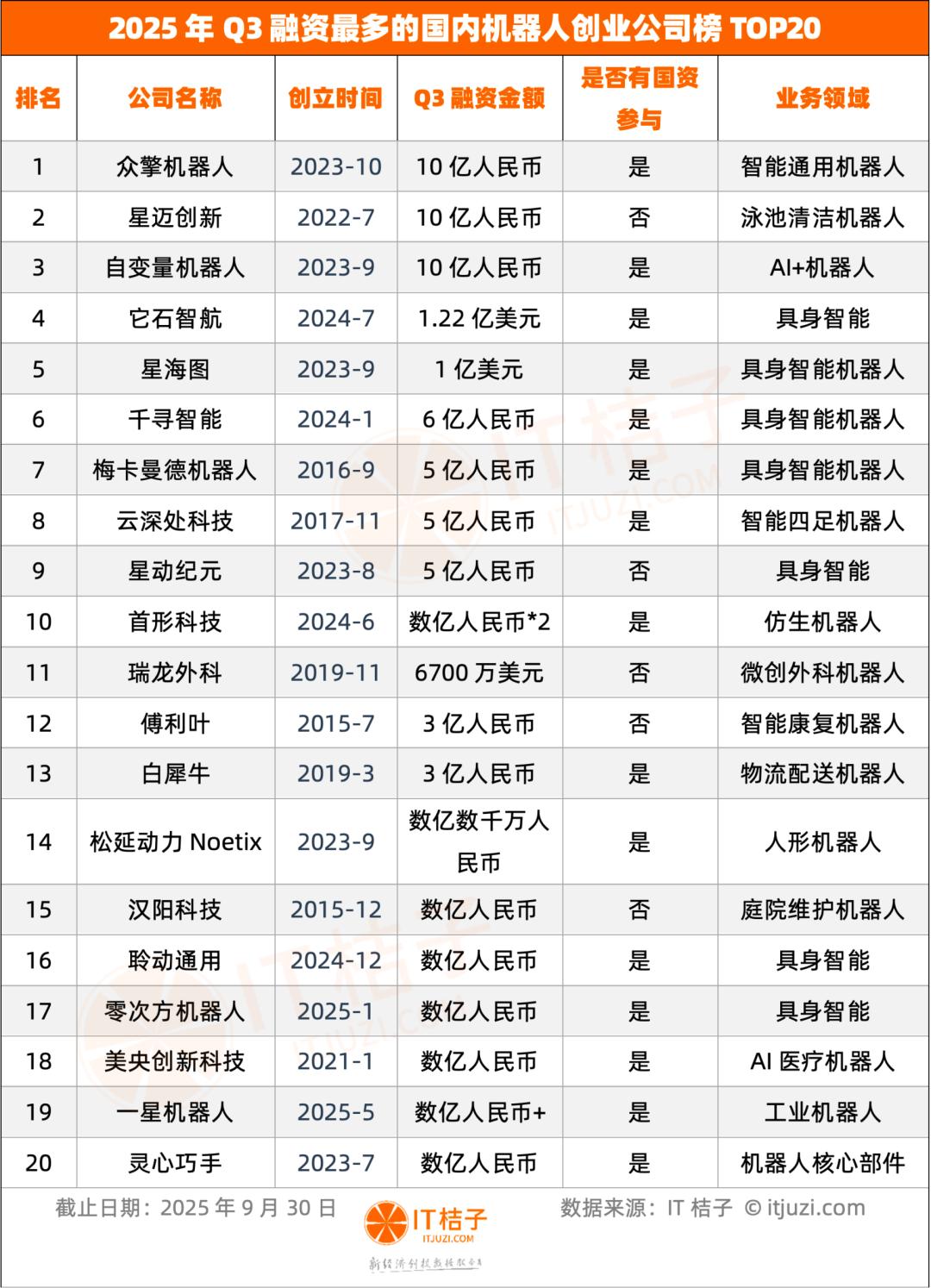
Core Insights - The domestic robotics sector in China has seen a significant increase in financing events, with 243 investment incidents in Q3 2025, representing a 102% year-on-year growth, and a total estimated financing amount of 19.813 billion RMB, up 172% year-on-year [1][2][3] - 26 robotics startups secured over hundreds of millions in financing, accounting for 63% of the total financing in the primary market for the sector [1] - 75% of the top 20 funded robotics companies received investments from state-owned enterprises (SOEs), indicating a strong trend of government support in the industry [1][2] Financing Trends - The top three companies that received approximately 1 billion RMB each in Q3 2025 are Zhongqing Robotics, Xingmai Innovation, and Ziwang Robotics [3] - Notable investments include Mechaman Robotics receiving funding from Xiong'an Fund and other companies like Zongqing Robotics and Lingxin Qiaoshou also attracting significant investments from various SOEs [1][2][3] Investment Motivations - SOEs are investing in local robotics companies to support local industry innovation and attract established companies from other regions to set up operations locally [1] - The investment strategy reflects a dual logic of supporting local industries while also enhancing regional competitiveness through attracting external firms [1][16] Sector Focus - The majority of the top 20 funded robotics companies focus on "embodied intelligence" and "industrial robotics," showcasing a policy-driven investment direction towards core technology fields [1][16] - The "embodied intelligence" segment has emerged as a major attraction for capital, with nearly half of the top 20 companies in this category [16] Market Comparison - Chinese robotics unicorns generally have valuations between 1 billion to 3 billion USD, while US counterparts like Figure AI have reached valuations as high as 39 billion USD, highlighting a significant valuation gap [18][19] - The difference in valuation logic between Chinese and US markets is attributed to the latter's focus on high-risk, high-reward investments based on founder credibility and market expectations [19][20]

机器人公司融资疯了:各地国资大手笔打钱;有一家刚融资就停摆了?
Sou Hu Cai Jing· 2025-10-22 11:54
Core Insights - The domestic robotics sector in China has seen a significant increase in financing events, with 243 investment incidents in Q3 2025, representing a 102% year-on-year growth, and a total estimated financing amount of 19.813 billion RMB, up 172% year-on-year [1] - 26 robotics startups secured over hundreds of millions in financing, accounting for 63% of the total financing in the primary market for the sector [1] - 75% of the top 20 funded robotics companies received investments from state-owned enterprises (SOEs), indicating a strong trend of government support in the industry [1] Financing Trends - The top three companies that received the most financing in Q3 2025 are: - Zhongqing Robotics with 1 billion RMB - Xingmai Innovation with 1 billion RMB - Ziwang Robotics with 1 billion RMB [4] - Notable investments include Itstone Intelligent Navigation, which raised 1.22 million USD, and Xinghai Map, which raised over 1 billion USD [4][16] Investment Examples - Examples of SOE investments include: - Xiong'an Fund invested in the unicorn company Meikaman Robot - Hefei Binhu Jin Investment funded Zhongqing Robotics and Ziwang Robotics - Beijing Guoguan invested in Songyan Power Noetix and Yundongchu Technology [1] Sector Analysis - The active SOE investors in the robotics sector include Beijing Guoguan, Shenzhen Venture Capital, and Hefei Binhu Jin Investment, reflecting a dual strategy of supporting local industries and attracting external companies [17] - The majority of SOE investments are concentrated in "embodied intelligence," "industrial robots," and "AI + robotics," indicating a policy-driven focus on core technology areas [17] Market Dynamics - Nearly half of the top 20 funded robotics companies focus on "embodied intelligence," with most established between 2023 and 2025, suggesting a competitive landscape with emerging players [18] - The market for embodied intelligence robots is seen as having significant growth potential, although some investors express concerns about the clarity of the business model [19] Valuation Comparison - Chinese robotics unicorns have valuations typically between 1 billion to 3 billion USD, while US counterparts like Figure AI have reached valuations as high as 39 billion USD, highlighting a significant valuation gap [20][22] - The difference in valuation logic between the US and China is attributed to the US venture capital's focus on market potential and founder credibility, which is less prevalent in China [22]
美团吹响机器人号角:集结宇树科技、自变量等 具身智能加速从实验室冲向商业战场
Mei Ri Jing Ji Xin Wen· 2025-10-22 05:41
Core Insights - Meituan is strategically positioning itself in the embodied intelligence sector through a combination of capital, technology, and real-world applications, aiming to seize early opportunities in this competitive landscape [1][6]. Group 1: Technological Advancements - Meituan's Vice President, Mao Yinian, highlighted significant breakthroughs in drone, autonomous vehicle, and humanoid robotic hand technologies, emphasizing the company's shift towards a "retail + technology" strategy [1][3]. - The company is actively developing a multi-layered service network centered on automation, including drone delivery and autonomous vehicle operations, to meet rising consumer demands for rapid delivery [3][4]. - Meituan's drone delivery service has surpassed 670,000 commercial orders as of September, exceeding the order volume of Google's Wing Aviation, while autonomous vehicle deliveries in Shenzhen have achieved over 5 million orders [5][6]. Group 2: Collaborative Research and Development - The Meituan Robotics Research Institute is collaborating with various universities, including Tsinghua University, to advance humanoid robotic hand research, with several projects already recognized at major international robotics conferences [5][6]. - A significant breakthrough in drone obstacle avoidance technology has been achieved, improving recognition rates by nearly 30 percentage points and reducing false detection rates to 0.68% [4]. Group 3: Investment Strategy - Meituan has been actively investing in the embodied intelligence sector, with notable investments in companies like Yishizhi Hang and Xinghai Tu, contributing to a comprehensive investment matrix that includes various robotics firms [6][7]. - The company is building an "alliance" in the embodied intelligence space, with a focus on providing both industrial support and financial backing to its portfolio companies [6][7]. - Analysts suggest that Meituan's investments in advanced technology sectors not only complement its existing business but also tap into the vast potential of these emerging markets [7].

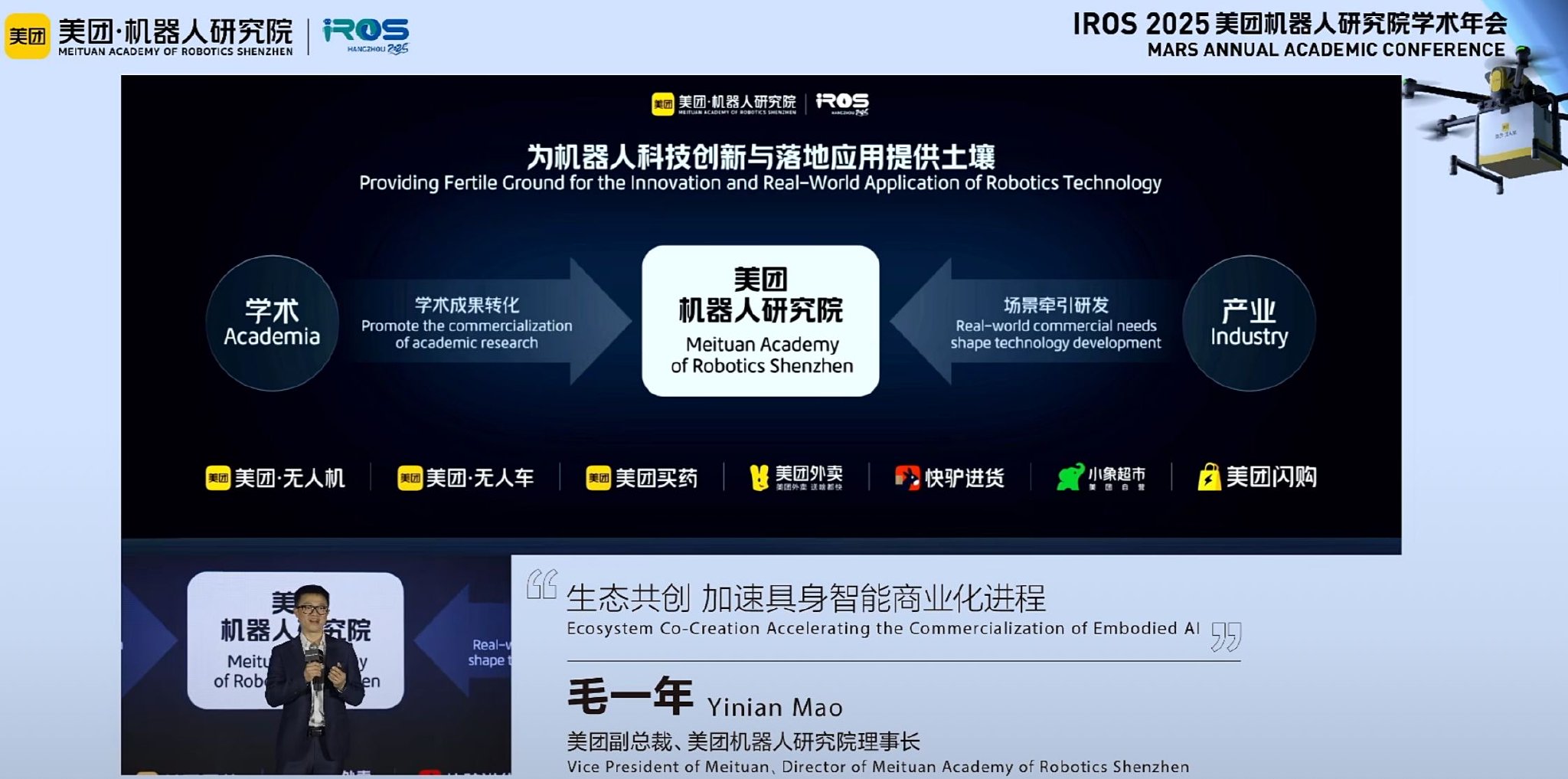
具身智能学界业界思想「惊人的统一」?美团在IROS开了个学术年会
机器之心· 2025-10-21 09:32
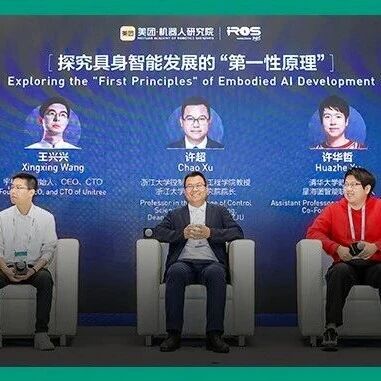
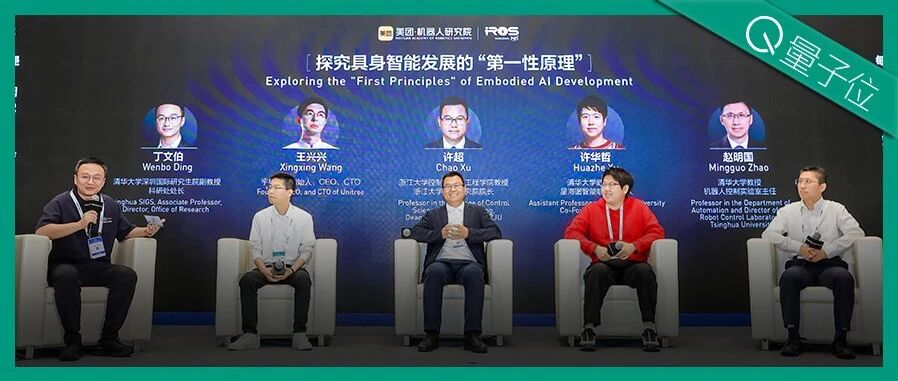
Group 1 - The core theme of the IROS conference this year is "Robotics for Better Life," focusing on the integration of embodied intelligence and retail services, which aligns with Meituan's vision and business philosophy [5][3] - Meituan's drone delivery service has achieved initial scale and has begun global operations, being the only company approved by the Civil Aviation Administration of China to operate drones in all cities, including night flights [5][3] - The conference featured significant academic contributions from Meituan's robotics research institute, with six papers presented, highlighting the practical value of research in areas like drone flight and visual semantic recognition [7][10] Group 2 - Professor Xi Ning emphasized the need to move away from traditional robotic planning paradigms to more effectively utilize artificial intelligence methods [13][11] - The GAT (Generative Adversarial Tri-model) proposed by Professor Xi aims to combine physical models with data-driven models to enhance task planning and control in robotics [18][21] - The concept of Non-Vector Space Models was introduced to improve perception and measurement processes in robotics, moving beyond traditional vector data approaches [28][24] Group 3 - CEO Wang Qian of Zivariable Robotics discussed the necessity of an end-to-end model for embodied intelligence, highlighting the complexity of physical interactions [43][40] - The importance of data quality and diversity over sheer quantity was stressed, with a focus on experiential learning as a means to overcome data limitations in embodied intelligence [52][53] - The roundtable discussion at the conference explored the foundational principles of embodied intelligence, emphasizing the integration of physical laws with data-driven learning [57][60] Group 4 - There is a consensus among both academia and industry regarding the complexity of the physical world and the need to combine physical and data-driven approaches in building embodied intelligence models [63][62] - The outdated notion of "large models + automation = embodied intelligence" is being challenged, with a call for the development of genuine embodied intelligence models [64][61] - The closing remarks from the roundtable participants highlighted the importance of dreams, curiosity, and the pursuit of knowledge in advancing the field of embodied intelligence [65][66][67]
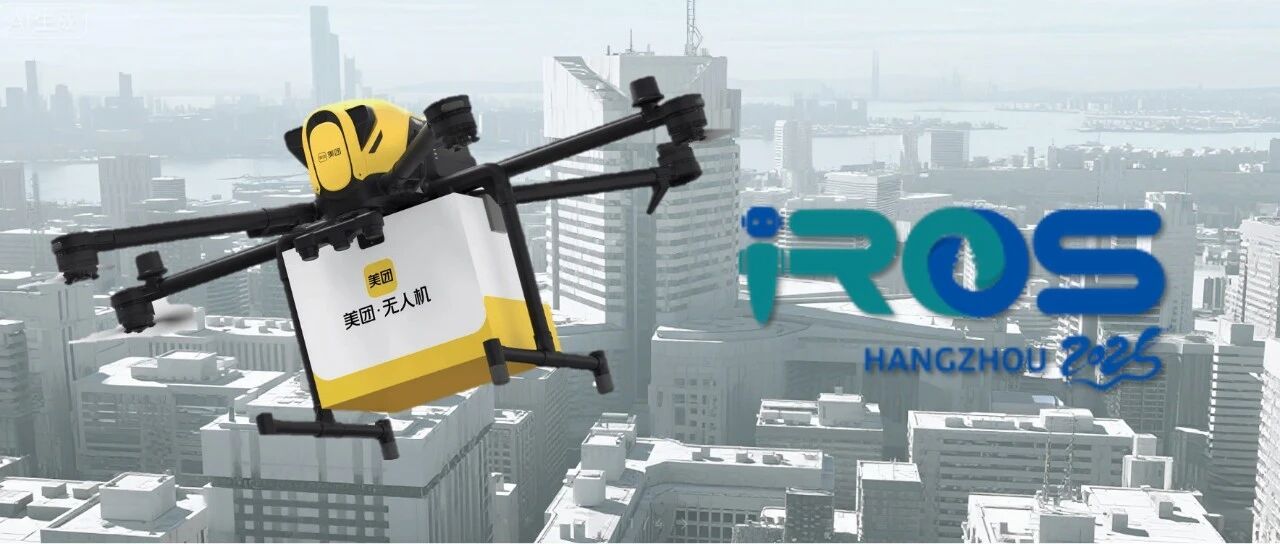
直击IROS现场:宇树禾赛自变量杭州论剑,美团C位攒局
量子位· 2025-10-21 05:41
Core Viewpoint - Meituan stands out as a leader in the robotics industry, emphasizing the integration of technology and retail to enhance service efficiency and quality [1][8][11]. Group 1: Event Highlights - The IROS Day 1 event featured prominent figures from the robotics field, including Meituan's Vice President Mao Yinian and various esteemed professors and CEOs [3][4]. - The event's theme, "Robotics for Better Life," reflects a consensus among teams working on embodied intelligence that technology should address real-world problems rather than being an end in itself [4][5]. Group 2: Meituan's Strategy - Meituan's strategic evolution from "retail" to "retail + technology" highlights the importance of integrating technology to enhance retail scenarios [8]. - The company focuses on autonomy, utilizing drones and autonomous delivery vehicles to transform the retail landscape [11][12][13]. Group 3: Technological Insights - The concept of embodied intelligence is identified as a core technological paradigm for the next 5 to 10 years, with Meituan leading in this area [10]. - The event showcased advancements in drone delivery and autonomous vehicles, emphasizing Meituan's unique position in the market [16][14]. Group 4: Theoretical Discussions - Discussions on the first principles of embodied intelligence revealed a need for a balance between physical laws and AI learning capabilities [54][60]. - The importance of high-quality, diverse data over merely increasing data volume was emphasized as crucial for improving model performance in robotics [49][50]. Group 5: Future Perspectives - The future of robotics is envisioned as a collaborative space where robots possess curiosity and the ability to coexist with humans, highlighting the potential for green intelligence [100][102]. - The dialogue around the ideal form of robots suggests aspirations for them to have their own desires and capabilities to explore and learn [99][101].
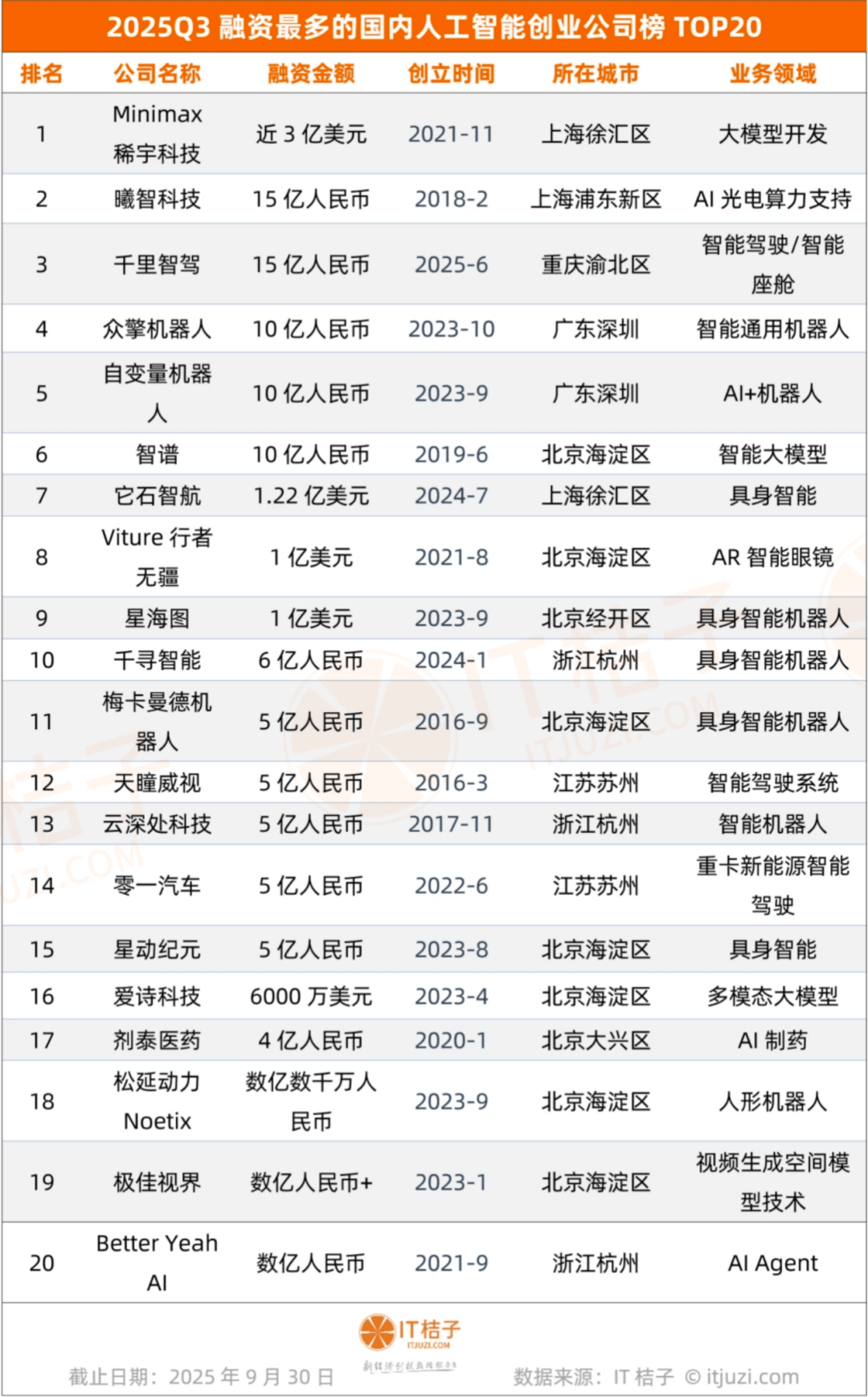
最新AI企业融资TOP20榜单:8家独角兽上榜、11家创立于2022年后
Sou Hu Cai Jing· 2025-10-17 04:36
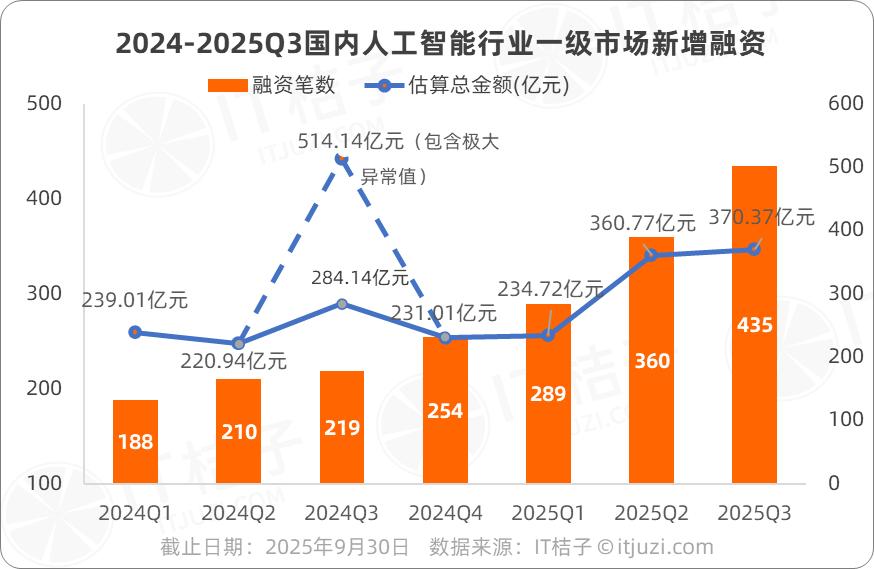
Core Insights - In Q3 2025, China's AI industry saw a total of 435 financing events, marking a 99% year-on-year increase and a 21% quarter-on-quarter rise, with an estimated total financing amount of 37 billion yuan [1][2] Financing Overview - The top 10 AI startups collectively raised over 10 billion yuan, with Minimax leading by securing nearly 300 million USD in July 2025 [1][3] - Other notable financings include Xizhi Technology with over 1.5 billion yuan and Qianli Zhijia also raising 1.5 billion yuan [3][4] Top 20 AI Startups - The top 20 AI startups are heavily concentrated in three main sectors: large models, AI + robotics (including embodied intelligence), and intelligent driving, accounting for over 75% of total financing [3][5] - The top three large model companies (Minimax, Zhipu, and Aishi Technology) raised a combined 3.63 billion yuan, indicating a high concentration in the large model sector [5][6] Sector Analysis 1. **Large Models**: - The sector is moving towards "industry customization" rather than competing in the "general large model" market [6][7] - Companies like Zhipu focus on government and enterprise applications, while Minimax aims to enhance multi-modal capabilities and efficiency [5][6] 2. **AI + Robotics**: - Nine out of the top 20 companies are robotics-related, with a focus on embodied intelligence, covering various applications from industrial to home use [7][8] - Major hubs for these companies include Shenzhen, Beijing, and Hangzhou, leveraging local manufacturing and technological strengths [7][8] 3. **Intelligent Driving**: - Three companies in this sector focus on intelligent cockpits and new energy heavy-duty trucks, with significant backing from traditional automotive firms [8][9] Company Maturity and Investment Trends - Thirteen of the top 20 companies were founded between 2021 and 2024, indicating a preference for newer firms with proven technology and growth potential [9][10] - Six mature companies (founded between 2016 and 2020) are adapting through technological upgrades to attract new investments [10][11] Unicorn Presence - Among the top 20 companies, eight are classified as unicorns (valued over 1 billion USD), representing 40% of the group [11][12] - Notable unicorns include Minimax, Xizhi Technology, and Zhipu, with most established before 2020 [11][12]
三季度AI融资数同比增近100%;长三角城市群增速显著;长沙竟挤进全国前十
3 6 Ke· 2025-10-16 11:53
Overall Financing Scale - In Q3 2025, the number of financing events in the AI industry increased significantly, with a 20.8% quarter-on-quarter growth, reaching 435 events, which is a 99% year-on-year increase [4][5] - The total estimated financing amount for Q3 2025 was 37.037 billion yuan, reflecting only a 3% increase, indicating a structural imbalance in investment stages [5][6] Investment Stage Distribution - Early-stage investments have become the dominant force, with a 49% increase in Q3 2025, marking the highest growth rate in nearly seven quarters [8][9] - The increase in early-stage investments is attributed to the rapid expansion of AI applications and the emergence of new startups, with 39% of funded AI companies established in 2024 and 2025 [8][9] - Late-stage investments saw a decline, with only 34 events in Q3 2025, as capital tends to focus on established companies with high technical barriers and stable market shares [9] City Distribution - The top cities for AI financing in Q3 2025 included Beijing, Shanghai, Shenzhen, and Hangzhou, with Beijing leading in both the number of events and total financing amount [11][12] - Beijing's Haidian District accounted for 64.8% of the city's financing events, while Shanghai's Xuhui District saw a remarkable 300% increase in financing events [12][13] - New first-tier cities like Chengdu, Nanjing, and Suzhou are exploring differentiated paths in AI investment, focusing on early-stage projects and leveraging local industry strengths [14][17] Key Findings - The AI industry continues to attract significant investment interest, with financing events doubling year-on-year in Q3 2025 [15] - There is a clear preference for early-stage investments, while mid and late-stage investments remain stable, indicating a shift in capital strategy towards new AI projects [16] - The dominance of "North, Shanghai, Shenzhen, and Hangzhou" in AI resources necessitates new first-tier cities to adopt differentiated strategies to compete effectively [17]