三生制药

Search documents
中国创新药企闪耀JPM大会,哪些新药值得关注?港股通创新药ETF(159570)跌逾1%,资金快速涌入,近5日“吸金”超12亿元!
Xin Lang Cai Jing· 2026-01-16 02:54
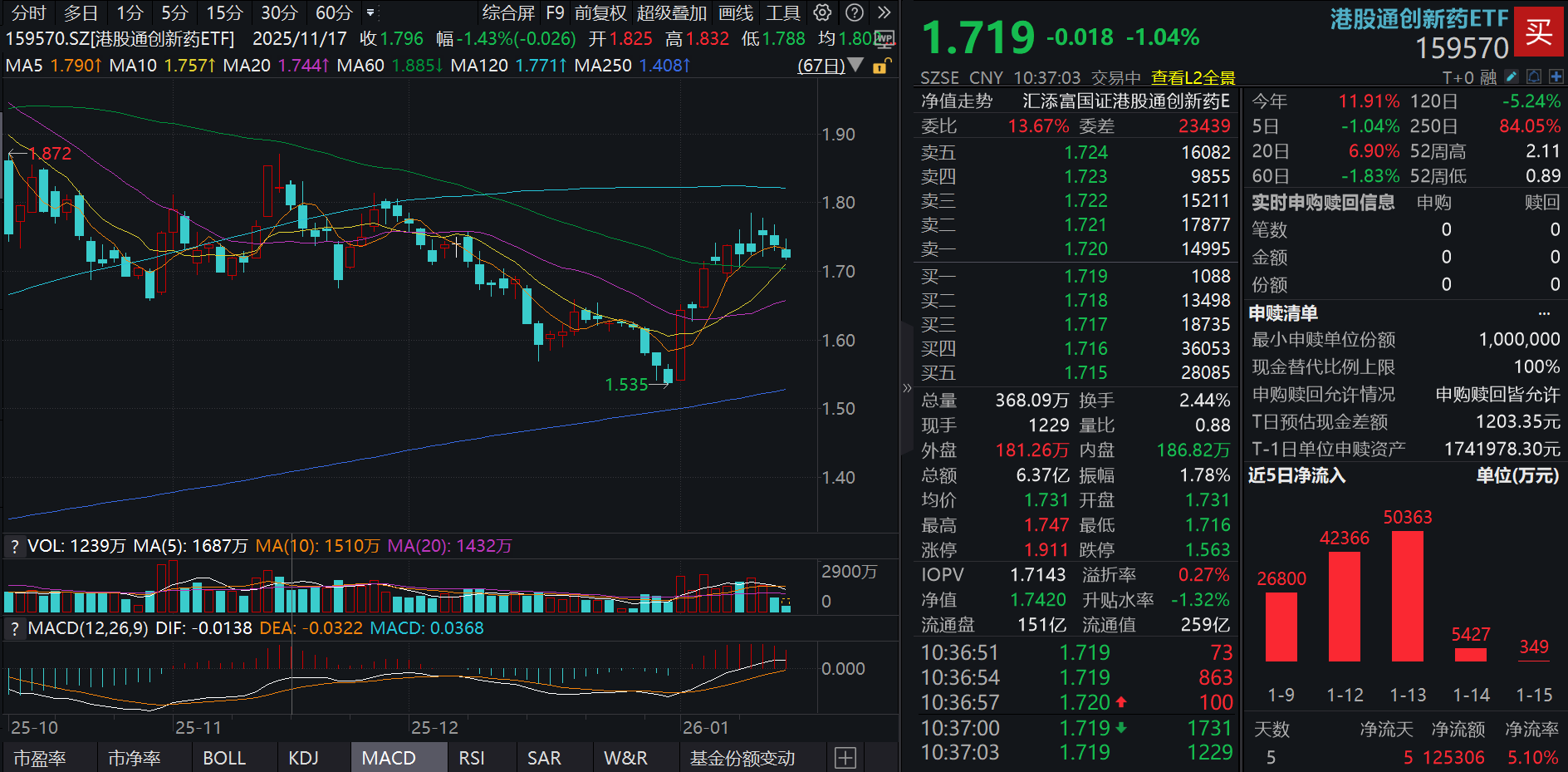
Group 1 - The core viewpoint of the news highlights the performance and trends of the Hong Kong innovative drug sector, particularly focusing on the Hong Kong Stock Connect Innovative Drug ETF (159570), which has seen significant capital inflow and is leading in scale among similar funds [1][2] - The 44th JPMorgan Healthcare Conference showcased several Chinese innovative pharmaceutical companies, emphasizing trends in gene and cell therapy, as well as AI in medicine, indicating a shift from "assets being bought" to "global value" for Chinese innovations [1][2] - The innovative drug sector is expected to reach new highs due to various catalysts, including the significant valuation gap between China and the US, ongoing business development (BD) transactions, and low current allocation of pharmaceutical theme funds in the market [2] Group 2 - Major stocks within the Hong Kong Stock Connect Innovative Drug ETF mostly experienced declines, with notable drops exceeding 1% for companies like BeiGene, China Biologic Products, and others, while CSPC Pharmaceutical showed a slight increase [2][3] - Key innovative drugs presented at the JPMorgan Conference include BeiGene's CDK4 products and the first BCL2 inhibitor approved in China, which highlights the competitive landscape and advancements in treatment options for various cancers [5][6] - The collaboration between Rongchang Biopharmaceutical and AbbVie on the PD-1/VEGF dual antibody RC148 is a significant development, with potential milestone payments and royalties, showcasing the growing internationalization of Chinese innovative drugs [9][10]

荣昌生物盘中涨超5% 交银国际将其目标价升至136港元
Xin Lang Cai Jing· 2026-01-16 02:04
Group 1 - The core point of the article is that Rongchang Biologics (09995) has entered into an exclusive licensing agreement with AbbVie for RC148, which will provide significant upfront and milestone payments to Rongchang [1][5] - Rongchang Biologics will receive an upfront payment of $650 million and potential milestone payments of up to $4.95 billion, along with a tiered sales royalty in the double-digit percentage range [1][5] - The report from CMB International suggests that the short-term direct impact of this deal on similar target products is limited due to the first-mover advantage held by competitors like Kangfang Biologics and 3SBio [1][5] Group 2 - CMB International is optimistic about the progress of Taitasip and Vidisizumab in overseas registration studies by 2026, as well as the advancement of early-stage products in more indications [1][5] - The firm has raised its revenue forecasts for Rongchang Biologics for 2026 to 2027 and increased the target price to HKD 136 [1][5]

港股异动 | 荣昌生物(09995)涨超5% 近日与艾伯维就RC148达成独家授权许可 短期对同靶点产品影响有限
Zhi Tong Cai Jing· 2026-01-16 02:00
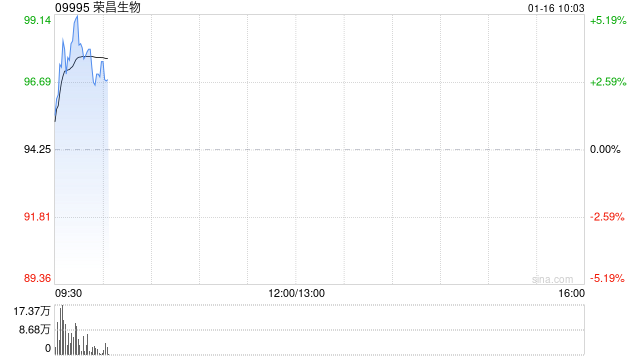
Group 1 - The core viewpoint of the article highlights that Rongchang Biologics (09995) has seen a stock increase of over 5%, currently trading at 98.1 HKD with a transaction volume of 137 million HKD [1] - The report from CMB International indicates that Rongchang Biologics has entered into an exclusive licensing agreement with AbbVie for RC148, granting AbbVie exclusive rights for development, production, and commercialization outside Greater China [1] - Rongchang Biologics will receive an upfront payment of 650 million USD, with potential milestone payments of up to 4.95 billion USD, along with a double-digit percentage tiered sales royalty [1] Group 2 - CMB International believes that the transaction will have limited short-term direct impact on competing products due to the first-mover advantage of companies like Kangfang Biologics and 3SBio in clinical progress [1] - The firm is optimistic about the overseas registration research progress of Taitasip and Vidisirimab by 2026, as well as the advancement of early-stage products in more indications [1] - CMB International has raised its revenue forecast for Rongchang Biologics for 2026 to 2027 and increased the target price to 136 HKD [1]
一家烟台公司卖了“抗癌新药”,落袋6.5亿美金
3 6 Ke· 2026-01-16 00:05
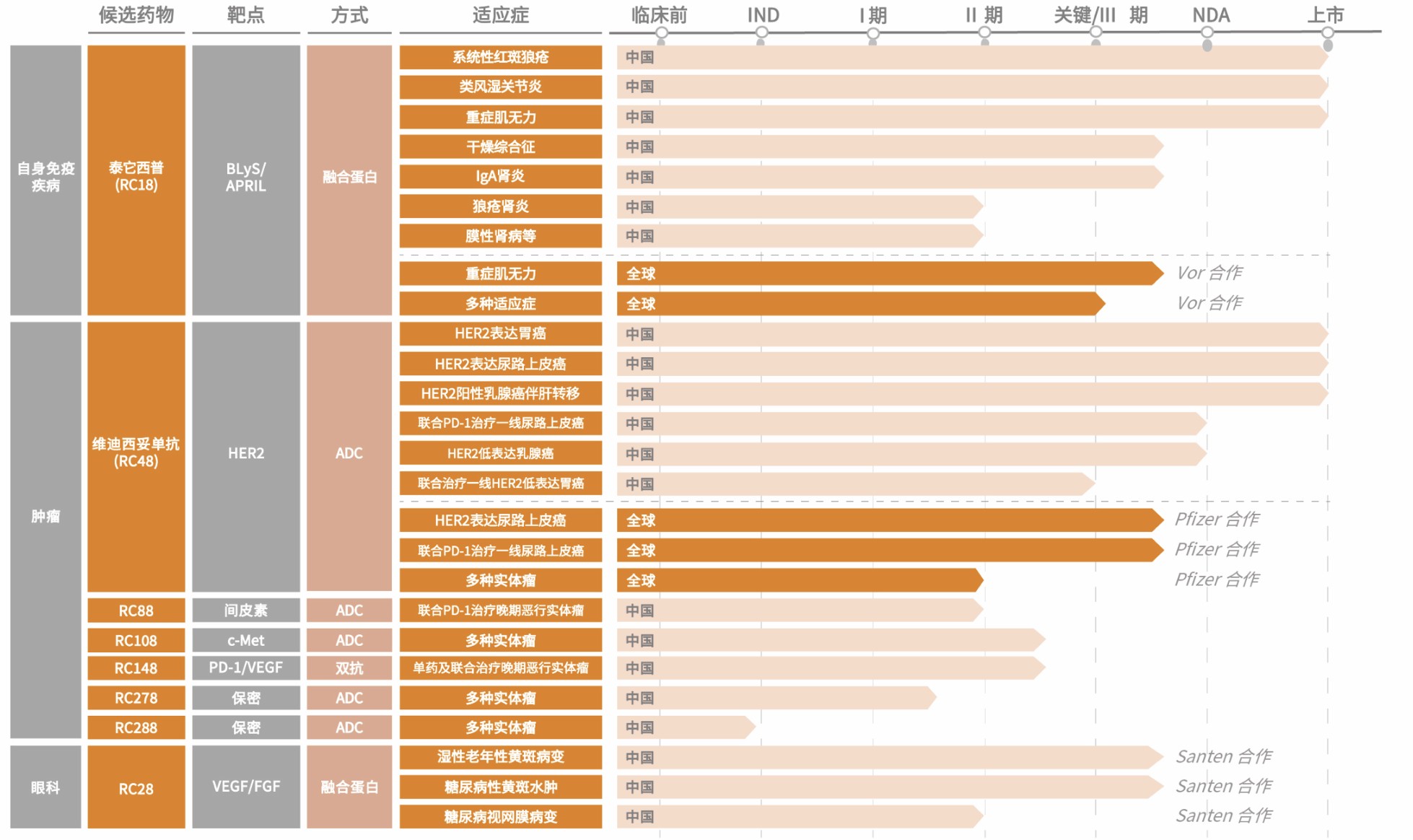
Core Viewpoint - Rongchang Biopharmaceutical has successfully licensed its PD-1/VEGF dual antibody RC148 to AbbVie for an upfront payment of $650 million, with the total deal potentially reaching $5.6 billion, approximately 4 billion RMB, marking a significant turnaround for the company [1][2][7]. Company Overview - Rongchang Biopharmaceutical, founded in 2008, is a pioneer in the development of innovative drugs in China, particularly in antibody-drug conjugates (ADCs) [1]. - The company has faced challenges in commercializing its products and has been criticized for its aggressive strategy, leading to significant losses and limited cash reserves [1]. Financial Impact - The $650 million upfront payment from AbbVie will provide substantial funding for Rongchang Biopharmaceutical, covering all previous R&D investments for RC148 and significantly boosting the company's financial position [2][7]. - Following the announcement of the deal, Rongchang's stock surged over 20%, indicating strong market confidence in the transaction [7]. Product Development and Market Position - RC148 is the first product from Rongchang's dual antibody platform to enter clinical trials, focusing on treating solid tumors [5]. - The product has shown promising clinical data, with objective response rates of 61.9% for monotherapy and 66.7% when combined with chemotherapy for non-small cell lung cancer [8]. Competitive Landscape - The competition in the PD-1/VEGF dual antibody market is intensifying, with other companies like Kangfang Biopharmaceutical and Sanofi already advancing their products to later clinical stages [9][11]. - Rongchang's collaboration with AbbVie, which has limited experience in solid tumors, raises questions about the potential success of RC148 compared to competitors [9][12]. Strategic Significance - The deal with AbbVie reflects ongoing interest from multinational pharmaceutical companies in acquiring dual antibody assets, which could benefit domestic companies like Rongchang [7]. - The transaction underscores the importance of asset quality and collaboration in revitalizing market confidence in the biopharmaceutical sector [7].
JPM医疗年会Day1-2回顾:从中国管线到全球竞争格局
GLP1减重宝典· 2026-01-15 15:45
Core Insights - The JPM Healthcare Conference 2026 highlighted a significant shift in the narrative surrounding Chinese innovation assets, which are increasingly recognized as critical components for multinational pharmaceutical companies' long-term growth strategies [4][5][24] - The conference emphasized the importance of clinical advancement efficiency and global development pace for Chinese pharmaceutical companies, marking the entry of their innovation pipelines into the core narratives of multinational firms as just the beginning [24] Group 1: Chinese Companies' Innovations - Chinese companies are now being integrated into the core strategies of multinational pharmaceutical firms, moving beyond previous "single-point licensing" narratives to being key contributors in oncology, neuroscience, and metabolic diseases [5][9] - Notable collaborations include SystImmune's BL-B01D1, which has a potential total deal value of $800 million with Bristol-Myers Squibb, and the KarXT project, which is prioritized for development in the psychiatric pipeline [5][7] - The partnership between 3SBio and Pfizer on the PD-1 and VEGF bispecific antibody SSGJ-707 is highlighted as a significant transaction, indicating its strategic importance in the next-generation oncology immunotherapy landscape [7][9] Group 2: Multinational Companies' Strategies - Multinational companies are focusing on a 2030 pricing framework, with strategic decisions revolving around which assets will shape the next industry reshuffle [10][24] - Bristol-Myers Squibb plans to launch 10 new drugs by 2030, emphasizing a multi-pillar approach to mitigate risks associated with patent cliffs [10][12] - Vertex Pharmaceuticals and Madrigal Pharmaceuticals are adopting a focused strategy on single disease areas, with Madrigal positioning itself as a leader in the MASH field and Vertex concentrating on cystic fibrosis and gene therapy [12][15] Group 3: Market Dynamics and Challenges - The second day of the conference shifted focus to practical execution challenges, including competition in metabolic diseases, patent expirations, and supply chain management [16][24] - Eli Lilly expressed uncertainty regarding the market performance of its oral GLP-1 candidate, while Novo Nordisk acknowledged significant competitive pressures and emphasized direct patient channel management [16][18] - Bayer updated its assessment of patent expirations for Xarelto and Eylea, indicating a gradual approach to managing revenue impacts while relying on new product launches for future growth [18][19] Group 4: Supply Chain and Manufacturing - The importance of local manufacturing capabilities was underscored, with Samsung Biologics discussing its U.S. production capacity to meet growing demand [21][24] - Companies like Teva and Sandoz are focusing on the strategic value of biosimilars in light of upcoming patent expirations, indicating a long-term structural adjustment rather than a short-term fix [19][21]
15个月的蹉跎,宜明昂科如何用一个“迟到”的资产敲开MNC大门?
Xin Lang Cai Jing· 2026-01-15 14:14
Core Viewpoint - The termination of the collaboration between 宜明昂科-B (1541.HK) and AxionBio highlights the challenges faced by Chinese innovative drug companies in the global market, emphasizing that the choice of partners may be more critical than the technical advantages of the products themselves [5][21][25]. Group 1: Collaboration Details - In August 2024, 宜明昂科-B signed a potential licensing agreement with AxionBio worth over $2 billion, which was seen as a significant step for the company's international expansion [2][18]. - By January 2026, 宜明昂科-B announced the recovery of global rights for its dual-antibody drug IMM2510 and CTLA-4 antibody IMM27M, marking the end of the collaboration [4][21]. - The company retained the $35 million upfront and milestone payments received from AxionBio, indicating a strategic decision rather than a forced exit [5][21]. Group 2: Clinical Development Challenges - The clinical trial progress for IMM2510 was notably slow, with only three patients enrolled in the Phase I trial in the U.S. before the collaboration ended [7][23]. - The FDA approved the clinical trial application for IMM2510 in July 2025, but AxionBio did not administer the first patient until October 2025, resulting in a 15-month delay from the agreement to actual clinical operations [7][23]. Group 3: Market Competition - The PD-(L)1/VEGF dual-antibody market is highly competitive, with 17 drugs currently in clinical trials, all associated with Chinese innovative drug companies [10][27]. - Major players like 康方生物 and 三生制药 have advanced their products to Phase III clinical trials in collaboration with multinational giants, creating a challenging environment for 宜明昂科-B [10][27]. Group 4: Strategic Implications - The decision to regain rights to the assets allows 宜明昂科-B to explore new partnerships and strategies without being constrained by previous agreements, although it also means assuming all associated risks and costs [15][33]. - The company plans to target multinational corporations for future business development while also considering partnerships with mid-sized companies [29][33]. Group 5: Financial Considerations - Despite receiving $35 million from the previous collaboration, the funds are insufficient to cover the long-term costs of global clinical development for the two drugs [30][31]. - 宜明昂科-B has reported continuous losses from 2023 to 2025, with increasing R&D expenditures, indicating significant financial pressure moving forward [30][31].

一家烟台公司卖了「抗癌新药」,落袋6.5亿美金
Xin Lang Cai Jing· 2026-01-15 14:14
Core Insights - Rongchang Biopharmaceutical has authorized all overseas rights of its PD-1/VEGF dual antibody RC148 to AbbVie, with an upfront payment of $650 million, potentially reaching a total of $5.6 billion, approximately 4 billion RMB [3][21][28] - The transaction marks a significant turnaround for Rongchang Biopharmaceutical, which had faced skepticism regarding its aggressive strategy due to slow commercialization and substantial losses in recent years [5][22][28] Company Overview - Founded in 2008 by Wang Weidong and Harvard-returned scientist Fang Jianmin, Rongchang Biopharmaceutical is one of the early innovators in China's pharmaceutical industry, focusing on ADC (antibody-drug conjugate) products [3][21] - The company has a total market capitalization exceeding 100 billion RMB across its A and H shares [21] Financial Impact - The $650 million upfront payment from AbbVie is nearly three times Rongchang Biopharmaceutical's revenue for the first three quarters of the previous year [20][28] - This deal injects substantial funds into the company, which had reported losses exceeding 500 million RMB and had only 1.07 billion RMB in cash reserves as of the third quarter of last year [5][22] Market Position and Strategy - Rongchang Biopharmaceutical has historically adopted a "high-risk, high-reward" strategy, with a large sales team and extensive R&D pipeline [4][22] - The company has been proactive in signaling potential new business development (BD) deals, although it took until 2025 to confirm two significant collaborations [24][28] Product Development - RC148 is the first product from Rongchang's dual antibody platform to enter clinical trials, focusing on solid tumors [10][27] - The clinical data for RC148 shows promising results, with objective response rates of 61.9% for monotherapy and 66.7% when combined with chemotherapy, indicating potential to surpass standard treatments [31] Competitive Landscape - The competition in the PD-1/VEGF dual antibody market is intensifying, with other companies like Kangfang Biopharmaceutical and Sanofi entering advanced clinical stages [29][31] - The ability to conduct global clinical trials and explore multiple indications is becoming a key competitive factor in this space [30][31]

跨国巨头艾伯维锚定本土创新,全球资源如何加速落地中国?
2 1 Shi Ji Jing Ji Bao Dao· 2026-01-15 09:36
Core Insights - The Chinese biopharmaceutical industry is witnessing a significant transformation, moving from a focus on generic drugs to innovative drug development, as evidenced by recent high-value licensing deals involving local biotech firms and multinational corporations [1][4][18] - Multinational pharmaceutical companies are increasingly engaging with local biotech innovations at earlier stages, utilizing open innovation models and partnerships with local incubators to integrate into China's biotech ecosystem [1][2][10] Industry Transformation - The shift in China's biopharmaceutical landscape began around 2015 with government reforms aimed at enhancing drug innovation, leading to a substantial increase in the approval of innovative drugs [4][5] - Data from the National Healthcare Security Administration indicates that the number of approved innovative drugs is expected to rise significantly, with 48 new drugs projected for approval in 2024, more than five times the number in 2018 [4] - China's clinical trial costs are approximately one-third of those in the U.S., and the speed of patient recruitment is notably faster, contributing to the surge in licensing agreements for innovative drugs [5][10] Collaboration Models - The collaboration between AbbVie and local incubators like ATLATL aims to address common challenges faced by local biotech firms, such as regulatory alignment and commercialization readiness [3][6] - The "China Innovation Award" launched by AbbVie emphasizes a "running alongside" approach, providing not just funding but also comprehensive support throughout the R&D process [8][10] - This new collaboration model promotes mutual empowerment, allowing multinational companies to become co-builders of the innovation ecosystem rather than just technology outputters [10][17] Project Selection Criteria - Multinational companies like AbbVie prioritize projects with significant sales potential, focusing on unmet clinical needs and innovative therapeutic candidates [11][12] - The selection process emphasizes the importance of safety and efficacy, with a keen eye on the global intellectual property strategy of projects to enhance their attractiveness for international markets [13][15] Early Engagement and Global Integration - AbbVie’s approach includes early involvement in projects to ensure alignment in clinical design, regulatory compliance, and commercialization strategies, which can significantly reduce integration costs later on [15][16] - The collaboration is designed to enhance the global competitiveness of local biotech firms by integrating international standards and practices into their development processes [9][10] Future Outlook - The success of this collaborative model hinges on the commitment of multinational companies to long-term investment strategies and the willingness of local biotech firms to leverage global resources while maintaining their innovative edge [17] - The ultimate goal is to create a more resilient and vibrant Chinese biopharmaceutical innovation ecosystem that aligns closely with international standards and practices [17][18]

跨国药企“必备”肿瘤药,中国药企还有机会卖
经济观察报· 2026-01-15 05:55
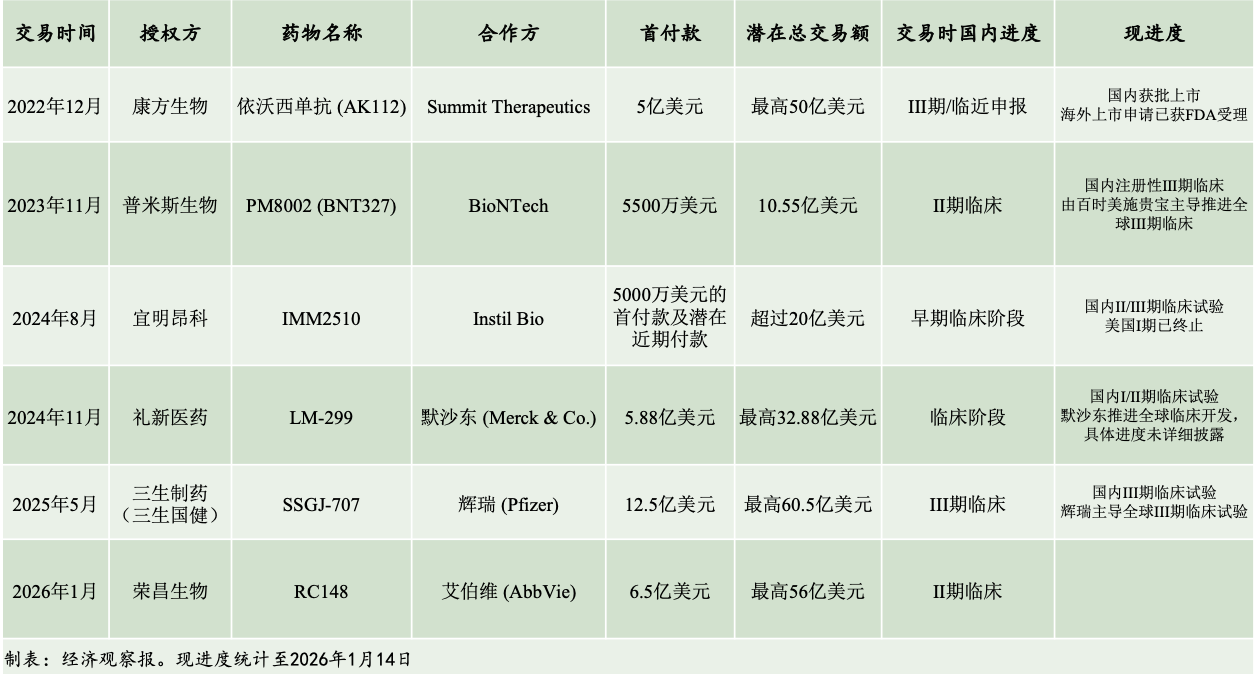
Core Viewpoint - The article discusses the potential for PD-1/VEGF drugs to generate external licensing deals, highlighting recent significant transactions in this sector and the competitive landscape among pharmaceutical companies [1][3]. Group 1: Recent Transactions - Rongchang Biopharma announced an exclusive licensing agreement with AbbVie for its dual-specific antibody drug RC148, targeting PD-1/VEGF, currently in Phase II clinical trials. The deal includes an upfront payment of $650 million and potential milestone payments up to $4.95 billion, with a total deal value of $5.5 billion [2][6]. - Other notable transactions include: - Canfite BioPharma licensed its PD-1/VEGF dual antibody to Summit Therapeutics for an upfront payment of $500 million, with a total deal value exceeding $5 billion [5][6]. - Three other companies have also secured deals for PD-1/VEGF drugs, with upfront payments ranging from $50 million to $1.25 billion and total deal values reaching up to $6.05 billion [5][6]. Group 2: Market Dynamics - The PD-(L)1/VEGF target is considered one of the most promising in oncology, combining immunotherapy and targeted therapy, with expectations of significant therapeutic benefits [5][9]. - Despite the presence of multiple drugs targeting the same pathway, there is still potential for new licensing agreements based on efficacy, different indications, and combination therapies [11][12]. - The competitive landscape is characterized by a trend where companies are looking to acquire PD-1/VEGF assets to strengthen their oncology portfolios, especially those that missed earlier opportunities in the PD-1 market [8][12]. Group 3: Future Outlook - There is an expectation for continued licensing transactions in the PD-1/VEGF space, as companies seek to leverage unique data and therapeutic advantages of their products [10][11]. - Companies like Zai Lab, Junshi Biosciences, and others are in various stages of developing PD-(L)1/VEGF pipelines, indicating ongoing interest and investment in this therapeutic area [11][12].

跨国药企“必备”肿瘤药,中国药企还有机会卖
Jing Ji Guan Cha Wang· 2026-01-15 03:32
Core Viewpoint - The recent licensing agreement between Rongchang Biologics and AbbVie for the dual-specific antibody drug RC148 highlights the competitive landscape of PD-1/VEGF targeted therapies, with significant financial implications for both companies involved [1][6]. Group 1: Licensing Agreement Details - Rongchang Biologics has entered into an exclusive licensing agreement with AbbVie for RC148, a dual-specific antibody currently in Phase II clinical trials, granting AbbVie rights outside Greater China [1][6]. - The deal includes an upfront payment of $650 million and potential milestone payments up to $4.95 billion, along with tiered royalties on net sales, bringing the total potential value of the agreement to $5.5 billion [1][6]. - This transaction's total amount is considered high, especially for a product not ranked among the top three in its category, raising questions about market share potential [6]. Group 2: Market Context and Comparisons - The PD-(L)1/VEGF target has gained significant attention in recent years, combining immunotherapy and targeted therapy, with expectations of enhanced efficacy [3]. - Several Chinese biotech companies have previously licensed their PD-(L)1/VEGF drugs to international firms, with notable deals including a $500 million upfront payment from Summit Therapeutics to Kanyin Biologics, and a $1.25 billion upfront payment from Pfizer to Sanofi [4][5]. - Despite the presence of multiple PD-1/VEGF drugs in the market, there remains potential for further licensing agreements, as efficacy and specific indications will play a crucial role in market segmentation [10]. Group 3: Future Trends and Industry Insights - The combination of PD-(L)1/VEGF drugs with ADCs (antibody-drug conjugates) is anticipated to be a major development trend among pharmaceutical companies [9]. - Companies that have not yet licensed their PD-1/VEGF drugs are actively seeking opportunities, with the success of future deals dependent on finding suitable partners and demonstrating strong clinical data [10]. - Major multinational pharmaceutical companies, including Eli Lilly, Novartis, and Sanofi, have yet to announce new licensing agreements, indicating a cautious approach while awaiting more mature data [12].