
奥飞娱乐

Search documents
机构称2026年或将是游戏产品大年,游戏ETF(159869)现已翻红微涨
Mei Ri Jing Ji Xin Wen· 2025-12-04 06:13
Group 1 - The gaming sector showed resilience with the gaming ETF (159869) recovering slightly after an early decline, indicating investor interest with a total inflow of 371 million yuan over the past five trading days, bringing the product's total scale to 11.019 billion yuan as of December 3 [1] - Notable performances from Chinese companies in the gaming industry were highlighted, with NetEase's FPS game making it to the PlayStation annual game nominations and miHoYo achieving significant recognition with multiple nominations for its games [1] - The gaming industry is expected to maintain high growth in 2026, driven by an increase in game approvals, with a 23% year-on-year rise in game licenses issued from January to October 2025, indicating a strong pipeline of new content [2] Group 2 - Major gaming companies like Tencent, NetEase, and miHoYo are well-positioned with strong IPs and innovative products, while mid-sized firms are showing potential for breakthroughs through gameplay integration [2] - The gaming sector is experiencing multiple catalysts including AI, content, and commercialization model transformations, with the gaming ETF (159869) tracking the performance of A-share listed companies in the anime and gaming industry [2]
华为“智能憨憨”引发AI玩具热,行业同质化严重智能化不足
证券时报· 2025-12-04 01:06
Core Insights - The AI toy market is experiencing a surge in interest, driven by products like the "Smart Hanhai" emotional companion AI robot from Huawei, which sold out quickly and has a high pre-order volume [1][3] - Despite the growing popularity, the industry faces significant challenges, including severe product homogenization and insufficient intelligence levels in AI toys [5][6] - Major companies are entering the AI toy space, indicating a competitive landscape, with new products being launched by firms like UBTECH and JD.com [2][4] Market Trends - The AI toy market is projected to grow significantly, with estimates suggesting a market size of approximately 246 billion yuan in 2024, increasing to 290 billion yuan in 2025, and potentially exceeding 1 trillion yuan by 2030, with a compound annual growth rate of over 50% [4][8] - The increase in consumer demand for intelligent products is pushing AI toys towards becoming mainstream, especially as traditional consumer electronics face stagnation [4][7] Industry Challenges - The AI toy sector is plagued by high return rates, with initial rates reaching up to 40% due to unmet consumer expectations regarding product functionality [6][8] - Many AI toys utilize common models and hardware, leading to a lack of differentiation and innovation, which contributes to the high return rates and consumer dissatisfaction [6][7] - The industry is currently in a "feature phone" stage, with many products failing to meet the true needs of consumers, resulting in a short-lived novelty [6][9] Competitive Landscape - The market is expected to undergo a significant reshuffle within the next five years, with companies lacking unique intellectual property, data, and comprehensive capabilities likely to exit the market [9] - Three main types of players are anticipated to remain: large consumer electronics firms leveraging their ecosystem, content-driven companies like LEGO and Disney, and specialized service providers focusing on niche markets [9][10] - Companies that can transition from one-time sales to sustainable content subscription models are likely to thrive, while others may struggle to compete [9][10]

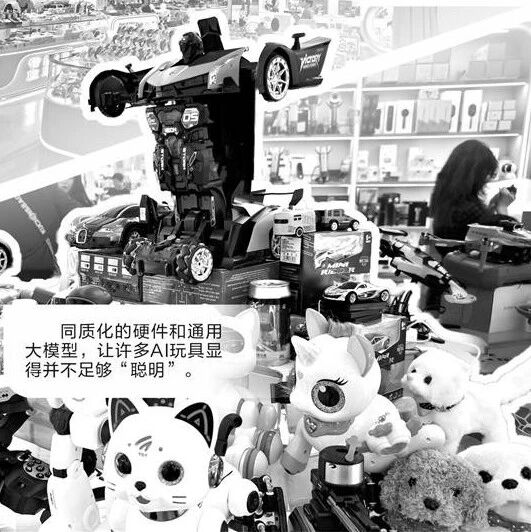
"智能憨憨"引发AI玩具热行业同质化严重智能化不足
Zheng Quan Shi Bao· 2025-12-03 22:40
Core Insights - The launch of Huawei's "Smart Hanhai" AI toy at a price of 399 yuan has sparked a new wave of interest in the AI toy market, with high demand leading to sellouts and significant pre-order volumes [1][2] - Major companies are increasingly entering the AI toy sector, with products like UBTECH's "Youzai" priced at 519 yuan and collaborations between Honor and Aofei Entertainment to develop AI interactive toys [2][5] - The AI toy market in China is projected to grow significantly, with estimates suggesting a market size of approximately 246 billion yuan in 2024, increasing to 290 billion yuan in 2025, and potentially exceeding 1 trillion yuan by 2030 [2][5] Market Trends - The popularity of AI toys is rising, with increased foot traffic in retail locations and a growing number of stores selling AI toys, although many products face challenges such as high return rates and severe product homogeneity [1][3] - Retailers report that while online sales are strong, the "Smart Hanhai" effect has not significantly boosted their sales, indicating a reliance on online channels for AI toy sales [1][3] Industry Challenges - The AI toy market is plagued by issues of product homogeneity, with many toys using similar models and features, leading to consumer dissatisfaction and high return rates, which can reach up to 40% initially [3][4] - The cost of AI toy components is relatively low, with core chip solutions costing around 20 yuan, contributing to the lack of differentiation among products [3][4] Future Outlook - The AI toy sector is expected to undergo a significant transformation within the next five years, with a predicted "boom and bust" cycle, where the initial growth phase will be followed by a market consolidation phase [5][6] - Companies that can innovate and create unique offerings, particularly in niche markets such as early education and elderly care, are likely to survive, while those lacking core competencies may exit the market [5][6]
“智能憨憨”引发AI玩具热 行业同质化严重智能化不足
Zheng Quan Shi Bao· 2025-12-03 22:19
Core Insights - The launch of Huawei's "Smart Hanhai" AI emotional companion robot at a price of 399 yuan has sparked a new wave of interest in AI toys, with high demand leading to sellouts and significant pre-order numbers [1][2] - The AI toy market is experiencing increased attention from major manufacturers, with several companies, including UBTECH and JD.com, entering the space with their own products [2][3] - Despite the growing market, the AI toy industry faces challenges such as product homogeneity and high return rates, which hinder its development [4][5] Market Trends - The AI toy market is projected to grow significantly, with estimates suggesting a market size of approximately 246 billion yuan in 2024, increasing to 290 billion yuan by 2025, and potentially exceeding 1 trillion yuan by 2030 with a compound annual growth rate of over 50% [3] - The popularity of AI toys is leading to increased foot traffic in retail locations, particularly in Shenzhen's Huaqiangbei, where many stores are now prominently displaying AI plush toys [2] Industry Challenges - The AI toy sector is plagued by severe product homogeneity, with many toys utilizing similar models and features, leading to consumer dissatisfaction and high return rates, which can reach up to 40% initially [4][5] - The lack of unique intellectual property and reliance on generic models contribute to the perception that many AI toys do not meet consumer expectations, resulting in a high rate of returns [5] Future Outlook - The AI toy market is expected to undergo a "shakeout" phase within the next five years, where companies lacking unique offerings or comprehensive capabilities may exit the market [6] - Key players likely to survive include major consumer electronics companies, content-driven brands like LEGO and Disney, and specialized service providers focusing on niche markets [6][7]

奥飞娱乐股份有限公司第七届董事会第三次会议决议公告
Shang Hai Zheng Quan Bao· 2025-12-03 19:19
Group 1 - The company held its seventh board meeting on December 3, 2025, with all seven directors present, and the meeting was valid for decision-making [2][3] - The board unanimously approved the proposal to apply for a credit limit from financial institutions totaling up to RMB 1.3 billion and to provide guarantees for its wholly-owned subsidiaries and subsidiaries [3][7] - The company will provide joint liability guarantees for its wholly-owned subsidiaries, with a total guarantee amount of RMB 445 million, with a guarantee period not exceeding three years [7][20] Group 2 - The company plans to conduct foreign exchange hedging business for the year 2026 to mitigate foreign exchange market risks, with a maximum trading margin and premium not exceeding RMB 20 million [23][25] - The board approved the foreign exchange hedging proposal, which allows for a maximum transaction amount of RMB 400 million during the period [25][26] - The company aims to maintain stable profit levels despite significant exchange rate fluctuations by utilizing foreign exchange hedging tools [25][27]
“智能憨憨”引发AI玩具热行业同质化严重智能化不足
Zheng Quan Shi Bao· 2025-12-03 17:38
Core Insights - The launch of Huawei's "Smart Hanhai" AI toy at a price of 399 yuan has sparked a new wave of interest in the AI toy market, with high demand leading to sellouts and significant pre-order volumes [1][2] - The AI toy market is experiencing growth, with major companies entering the space, indicating a shift in focus from traditional consumer electronics to innovative products [2][3] - Despite the excitement, the industry faces challenges such as product homogenization and high return rates, which hinder its development [4][5] Market Trends - The AI toy market is projected to grow significantly, with estimates suggesting a market size of approximately 246 billion yuan in 2024, increasing to 290 billion yuan in 2025, and potentially exceeding 1 trillion yuan by 2030 with a compound annual growth rate of over 50% [3] - Major companies like UBTECH and JD.com are launching their own AI toys, indicating a competitive landscape where traditional electronics firms are diversifying their product offerings [2][3] Industry Challenges - The AI toy sector is plagued by severe product homogenization, with many toys utilizing similar models and features, leading to consumer dissatisfaction and high return rates, which can reach up to 40% initially [4][5] - The lack of unique intellectual property and reliance on generic models contribute to the perception that many AI toys do not meet consumer expectations, resulting in a high rate of returns [5][6] Future Outlook - The AI toy market is expected to undergo a "shakeout" phase within the next five years, where companies lacking unique offerings or comprehensive capabilities may exit the market [6][7] - Experts predict that the market will eventually be dominated by three types of players: major consumer electronics companies, content-driven firms like LEGO and Disney, and specialized service providers focusing on niche markets [6][7]
奥飞娱乐(002292)披露拟开展2026年度远期外汇套期保值业务,12月03日股价下跌3.89%
Sou Hu Cai Jing· 2025-12-03 14:27
Core Viewpoint - The company AoFei Entertainment (002292) is taking measures to mitigate foreign exchange risks by planning to conduct forward foreign exchange hedging for the year 2026, with a maximum trading margin and premium not exceeding 20 million RMB [1] Group 1: Stock Performance - As of December 3, 2025, AoFei Entertainment's stock closed at 9.14 RMB, down 3.89% from the previous trading day, with a total market capitalization of 13.515 billion RMB [1] - The stock opened at 9.38 RMB, reached a high of 9.48 RMB, and a low of 9.06 RMB, with a trading volume of 647 million RMB and a turnover rate of 6.9% [1] Group 2: Foreign Exchange Hedging Announcement - The company announced plans to engage in forward foreign exchange hedging from January 1 to December 31, 2026, primarily involving currencies such as USD, EUR, and KRW [1] - The maximum trading amount at any point will not exceed 400 million RMB (or equivalent foreign currency), and the hedging activities will be limited to foreign exchange settlements related to production and operations, excluding fundraising [1] - This initiative has been approved by the third meeting of the seventh board of directors and does not require submission for shareholder approval [1]
奥飞娱乐主办,WSA飓风战魂世界锦标赛赛事引领青少年运动新潮流
Zheng Quan Shi Bao· 2025-12-03 11:03
Group 1 - The WSA Hurricane Battle World Top Tournament, organized by Aofei Entertainment's subsidiary, showcases a new trend in youth engagement through physical activities, moving away from screen time [1] - The tournament features a multi-tiered competition system, including ranking matches and city competitions, with the inaugural event set for October 2025 in Zhengzhou, marking the start of the 2025-2026 season [1] - The event has generated significant interest among spinning top enthusiasts, with additional competitions planned in cities like Jinan, Xi'an, and Chengdu in December [1] Group 2 - Aofei Entertainment links the success of the WSA tournament to its strategic focus on the young trendy toy market, targeting young consumers through its "Unlimited Play" brand [2] - The company collaborates with well-known brands such as Mihayou, NetEase, Tencent, and TapTap to develop various trendy toy products, including blind boxes and candy figures [2] - Aofei Entertainment aims to concentrate on key business areas such as IP content, trendy toy peripherals, toy derivatives, and infant products while staying attuned to industry trends and opportunities in niche markets [2]
风口上的AI玩具,为何被从业者想简单了?
创业邦· 2025-12-03 10:12
Core Viewpoint - The launch of Huawei's AI toy "Smart Hanhai" has reignited interest in the AI toy market, marking a significant upgrade in the toy industry driven by AI technology [5][9]. Industry Upgrade - The AI toy trend has evolved from a narrative driven by startups and large companies to a comprehensive upgrade of the toy industry, with multiple cities in China implementing policies to integrate AI with toys [5][10]. - The Ministry of Industry and Information Technology has identified "AI toys" as a new growth engine for industrial upgrades, encouraging collaboration between toy and AI technology companies [5][10]. Market Performance - AI toy sales are projected to increase significantly, with JD.com reporting a sixfold increase in sales in the first half of 2025 [9]. - Notable products like BubblePal and Fuzozo have achieved impressive sales figures, with BubblePal selling over 250,000 units and generating over 100 million yuan in revenue [9]. - AI toys have higher profit margins compared to traditional toys, with gross margins for AI toys ranging from 50% to over 90% depending on the product category [9]. Policy Support - Various toy-producing cities, including Guangdong and Jiangsu, have introduced policies to promote the integration of AI in the toy industry, with Guangdong aiming for an AI toy penetration rate of over 30% by 2027 [10][11]. Challenges in AI Toy Development - Despite the potential, the market has yet to see a true blockbuster AI toy, with many companies underestimating the complexity of developing successful AI toys [5][12]. - The industry faces high return rates of 30%-40% due to unsatisfactory user experiences, which significantly erodes profits [15][16]. Consumer Expectations - Consumer interest in AI toys is growing, but many products fail to meet expectations, leading to high return rates [16]. - The industry is shifting towards a more rational approach, with companies recognizing the need for sustainable business models and user retention strategies [16]. Business Models - Companies are exploring various business models, including traditional sales and subscription services for ongoing interaction with AI toys [19]. - The focus is on creating engaging user experiences and character development to enhance user retention and satisfaction [20][21]. Future Directions - The AI toy industry is expected to continue evolving, with companies that can achieve more natural interactions and integrate IP with AI likely to succeed [21].

奥飞娱乐:公司及控股子公司对外担保额度总金额为4.45亿元
Mei Ri Jing Ji Xin Wen· 2025-12-03 09:31
Group 1 - The core point of the article is that Aofei Entertainment announced the approval of external guarantees amounting to 445 million yuan, which represents 14.81% of the company's audited net assets for the most recent fiscal year [1] - The total actual external guarantee balance of the company and its subsidiaries is 42.93 million yuan, accounting for 1.43% of the company's audited net assets for the most recent fiscal year [1] - All guarantees provided are exclusively for wholly-owned subsidiaries and subsidiaries of the company [1]