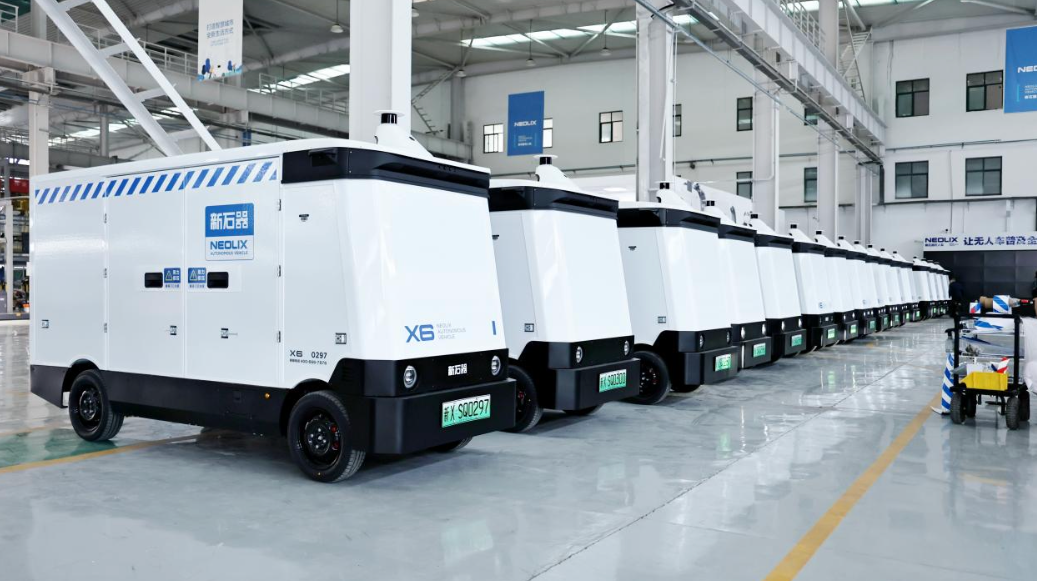
新石器

Search documents
“人工智能+交通运输”实施意见发布智能驾驶产业链迎新机遇
Zheng Quan Shi Bao· 2025-09-26 17:33
Core Insights - The Ministry of Transport and six other departments issued implementation opinions on "Artificial Intelligence + Transportation," aiming for widespread application of AI in transportation by 2027 and achieving key technology autonomy by 2030 [1] Group 1: Policy Objectives - The policy focuses on technological breakthroughs and practical applications, presenting opportunities for the intelligent driving industry chain [1] - It emphasizes accelerating the development of intelligent driving systems and remote driving cockpits, while supporting innovation resource aggregation in key regions [1] Group 2: Market Opportunities - Last-mile delivery and smart logistics are identified as breakthrough areas for the large-scale application of AI in transportation [1] - The delivery of 10,000 unmanned delivery vehicles by New Stone Age covers various scenarios, indicating a growing market potential estimated at approximately 468 billion yuan [2] Group 3: Technological Infrastructure - The establishment of a comprehensive transportation model system is highlighted as a key support for AI applications in transportation [2] - The opinions encourage the integration of leading companies, industry enterprises, and academic institutions to foster a collaborative ecosystem [2] Group 4: Industry Standards - The optimization of the industrial ecosystem and the improvement of standards are expected to enhance the influence of leading enterprises [3] - Companies are encouraged to take the lead in developing standards for new products, technologies, and business models across various operational aspects [3]
“人工智能+交通运输”实施意见发布 智能驾驶产业链迎新机遇
Zheng Quan Shi Bao· 2025-09-26 17:23
Core Insights - The Ministry of Transport and six other departments issued implementation opinions on "Artificial Intelligence + Transportation," aiming for widespread application of AI in transportation by 2027 and achieving key technology autonomy by 2030 [1] Group 1: Policy Objectives - The policy focuses on technological breakthroughs and practical applications, presenting opportunities for the intelligent driving industry chain [1] - It emphasizes accelerating the development of intelligent driving systems and remote driving cockpits, while supporting innovation resource aggregation in key regions [1] Group 2: Market Opportunities - Last-mile delivery and smart logistics are identified as breakthrough areas for the large-scale application of AI in transportation [2] - The market for unmanned delivery vehicles is projected to be approximately 468 billion yuan, with over 6,000 units expected to be operational by the end of 2024 [2] Group 3: Technological Infrastructure - The establishment of a comprehensive transportation model system is highlighted as a key support for AI applications in transportation [2] - The opinions encourage the integration of leading companies, industry enterprises, and academic institutions to create a collaborative ecosystem [2] Group 4: Industry Standards - The optimization of the industrial ecosystem and the improvement of standards are expected to enhance the influence of leading enterprises [3] - Companies are encouraged to lead the development of standards in areas such as production, testing, and operational services [3]
全球首个无人车经济产业博览会在深举办,首日意向合作破6亿
Nan Fang Du Shi Bao· 2025-09-26 14:00
Core Insights - The 2025 World Unmanned Vehicle Economic Expo held in Shenzhen showcased the strong momentum of the unmanned vehicle industry transitioning from technology validation to large-scale commercial application, attracting over 30,000 professional visitors and exceeding 600 million yuan in intended cooperation amounts on the first day [1][2][4]. Industry Overview - The unmanned vehicle industry is approaching a commercialization inflection point, with predictions indicating that sales of low-speed unmanned vehicles in China will exceed 47,000 units and generate sales of 18.5 billion yuan by 2025 [1]. - Shenzhen is recognized as the city with the largest operational scale and highest density of functional unmanned vehicles in China, having opened over 1,000 road rights and operating nearly 800 vehicles, providing a replicable "city-level" model for industry development [1]. Exhibition Highlights - The expo covered over 2,000 square meters and attracted more than 50 industry chain enterprises, including major players like Meituan, JD.com, and New Stone Technology, showcasing the entire ecosystem of the unmanned vehicle economy [2][4]. - The quality of professional visitors was notably high, with over 35% being decision-makers or procurement personnel, and 15% being international visitors from 25 countries and regions [2]. Market Demand - The first day of the expo saw intended cooperation amounts surpassing 600 million yuan, with 65% of the logistics unmanned vehicle procurement orders, indicating strong demand in the smart logistics sector [4]. - Market demand is evolving from single vehicle purchases to comprehensive solutions that include scheduling platforms and roadside equipment, reflecting a trend towards large-scale and systematic development in the industry [4]. New Product Launches - Several companies launched new products at the expo, including Meituan's next-generation autonomous micro delivery vehicle with a range exceeding 30 kilometers, and New Stone Technology's latest model with a range of 400 kilometers, already operational in over 100 cities globally [5][6][8]. - JD Logistics showcased its latest intelligent delivery vehicle with significant improvements in load capacity and range, planning to officially offer unmanned vehicle products and services next year [8][10]. Standards and Initiatives - The expo featured the release of the "Shenzhen Functional Unmanned Vehicle Standard System V2.0," enhancing safety operation norms and road management, providing a clear "standard blueprint" for the scale and standardization of unmanned vehicle development [11]. - The "Deep City Transportation Global Smart Logistics Ecological Platform" was launched, connecting China with international markets, with strategic partnerships signed among major industry players [13]. Insights from the Summit - The summit highlighted the collaborative efforts of government, industry, academia, and research sectors, showcasing the vitality and progress of the unmanned delivery industry from technological breakthroughs to global collaboration [14][16]. - Key discussions included the opportunities and challenges of unmanned delivery, with insights from industry leaders on scaling operations and integrating logistics networks [16].




“中国无人物流车没有对手,是真的遥遥领先!”
Xin Lang Cai Jing· 2025-09-26 11:35
Core Insights - The Chinese unmanned logistics vehicle industry is experiencing explosive growth, with a projected market demand of 40,000 to 50,000 units in the coming year, which is 4 to 5 times the total sales of the past decade [1][3] - The industry saw a significant increase in deliveries, with 12,000 units delivered in the first half of 2025, nearly double the total for 2024 [3][4] Group 1: Market Dynamics - New entrants are flooding the market, with traditional automakers also seeking supply chain solutions, indicating a robust interest in unmanned logistics vehicles [4][6] - Major companies like WeRide, JD.com, and Desay SV are launching new unmanned logistics vehicles, contributing to a tenfold increase in order volume compared to the previous year [4][6] - The growth of new players has not diluted the market share of leading companies; instead, the overall market has expanded, leading to exponential order growth [7] Group 2: Competitive Landscape - Chinese unmanned logistics vehicle companies are perceived to have no direct competitors globally, positioning them for strategic advantages in the AI era [8][9] - The cost of unmanned vehicles in China is significantly lower than that of their American counterparts, with Chinese companies achieving a cost efficiency that is ten times better [9][12] Group 3: Technological and Regulatory Factors - The surge in demand for unmanned logistics vehicles is attributed to advancements in technology, market needs, and supportive policies [11][14] - The maturity of AI technology and the introduction of L4 autonomous driving capabilities have significantly reduced delivery costs, making unmanned vehicles a necessity in logistics [12][13] - Recent policy changes have facilitated the deployment of unmanned delivery vehicles, with a goal of large-scale implementation by 2027 [14][17] Group 4: Industry Challenges - The industry faces challenges such as inconsistent standards across cities, operational system limitations, and data security concerns [18][19] - Increased competition from new players is expected to enhance industry maturity, with the focus shifting from vehicle sales to providing logistics services [19]
展示物流行业“未来图景”
Shen Zhen Shang Bao· 2025-09-25 23:16
Group 1 - The 19th China (Shenzhen) International Logistics and Supply Chain Expo has commenced, attracting over 2,200 exhibitors from more than 60 countries and regions, highlighting the global interest in China's logistics market [1][2] - The expo covers an area of nearly 130,000 square meters, with over 20% of exhibitors being international, indicating a strong global engagement in logistics and supply chain opportunities [2] - The participation of companies from countries like Uzbekistan, Georgia, Romania, and Azerbaijan marks a new trend, driven by the continuous upgrade of the China-Europe transport routes, enhancing supply chain resilience for Chinese enterprises [2] Group 2 - In the first half of the year, Shenzhen's transportation, warehousing, and postal industries saw a value-added growth of 9.0% and a revenue increase of 12.3%, contributing significantly to economic growth [3] - Shenzhen Port achieved a container throughput of 17.23 million TEUs, a year-on-year increase of 10.8%, while Shenzhen Airport handled 983,000 tons of cargo, growing by 14.0% [3] - The China-Europe Railway Express (Shenzhen) operated 87 trains with a cargo value of $348 million and a weight exceeding 40,000 tons, showcasing the robust logistics capabilities of the region [3] Group 3 - The expo serves as a platform for showcasing new technologies and models in logistics, with a focus on digitalization and sustainability [4] - SF Express presented its "SF Super Brain," an AI-driven decision-making platform that optimizes logistics operations, potentially generating over $1 billion in economic benefits and reducing carbon emissions by hundreds of thousands of tons [4] - Lingniu Technology showcased a hydrogen-powered heavy truck, which offers a range of 450-500 kilometers and a competitive operating cost, indicating a promising future for hydrogen energy in commercial vehicles [4]
无人车狂奔背后的商业双面镜
Bei Jing Shang Bao· 2025-09-25 16:53
Core Insights - The autonomous vehicle industry is undergoing significant changes, with a projected sales increase of over 50% in instant logistics and urban distribution for autonomous vehicles next year [1] - Major players in the market include companies like New Stone and Nine Senses, which are expanding their customer base beyond the express delivery sector to include pharmaceuticals, spare parts, and textiles [1][6] - The operational efficiency of autonomous vehicles is notable, with a 30% reduction in operating costs and a 30% increase in delivery efficiency compared to traditional methods [4][5] Industry Trends - The sales of autonomous vehicles have surged, with some companies reporting a tenfold increase in monthly sales, reaching nearly 2,000 units per month [3] - New Stone anticipates delivering over 15,000 units this year, while Nine Senses operates over 7,000 vehicles across more than 300 cities [3][5] - The demand for autonomous vehicles is shifting from express delivery to instant logistics and urban distribution, with these new sectors expected to grow faster than traditional delivery [6] Operational Efficiency - Autonomous vehicles can operate nearly around the clock with a range of 160 kilometers, allowing delivery personnel to focus on package delivery rather than transportation [4] - For instance, deploying 30 autonomous delivery vehicles can handle 1,500 packages daily, significantly improving efficiency [4] Market Dynamics - Major express delivery companies are increasingly adopting autonomous vehicles, with over 500 units used by YTO and 900 by Jitu [5] - The market is seeing a competitive landscape with significant capital inflow, leading to reduced prices for autonomous vehicles [8][9] Challenges and Opportunities - Companies face localization challenges when entering new markets, requiring adaptation to local regulations and data security requirements [7] - The true business model for autonomous vehicles is shifting from vehicle sales to providing operational services that enhance customer experience and reduce costs [9]
非快递客户占比扩大至约四五成 无人物流车企现阶段研发投入聚焦地图方案
Xin Lang Cai Jing· 2025-09-25 15:45
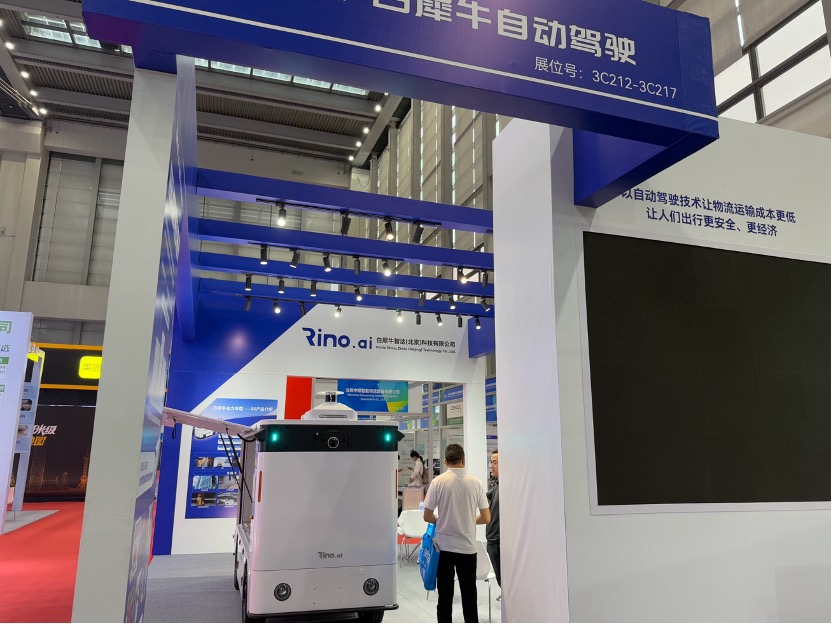
Core Insights - The 2025 Shenzhen Logistics and Supply Chain Expo highlighted the emergence of unmanned logistics vehicles, with three leading companies—JiuShi, New Stone, and White Rhino—making their debut at the event [1] - Unmanned logistics vehicles are primarily being applied in the express delivery sector, with companies like ZTO Express, YTO Express, Shentong Express, and Yunda Express accelerating their adoption [1] - JiuShi has deployed over 2,000 unmanned vehicles across more than 200 cities and 700 outlets, while Shentong Express plans to utilize 2,000 vehicles by the end of the year [1] Company Developments - JiuShi's customer base has shifted, with express delivery clients now accounting for only 50% of its clientele, as the company diversifies into other sectors [2] - New Stone also reports a decrease in express delivery clients to 60%, aiming for at least 50% of its applications to be in non-express sectors to achieve diversified revenue [3] - White Rhino is expanding its applications beyond express delivery to include retail, fresh food delivery, on-demand medicine delivery, campus takeout, industrial logistics, cold chain transport, security patrols, and park distribution [1] Technological Advancements - Companies are focusing their R&D efforts on developing mapping solutions, with JiuShi implementing a new L4+ technology that utilizes light mapping to enhance delivery efficiency [5] - New Stone plans to continuously iterate its end-to-end autonomous driving model and aims to implement a no-map technology solution in the second half of the year [5] - White Rhino is adopting a light asset development approach, concentrating on the R&D of vehicle-grade unmanned vehicle products, AI technology iteration, and expanding commercial applications [5] Production Capacity - New Stone announced the delivery of its 10,000th unmanned vehicle, with plans to deploy 4,000 to 5,000 vehicles in non-express scenarios by the end of the year, primarily for real-time logistics scheduling [5] - JiuShi is expanding its production lines across various regions, including North China, East China, and Southwest China, focusing on delivery production costs and efficiency [5]
新石器交付破万台,无人配送车的春天来了?
Jing Ji Guan Cha Wang· 2025-09-25 14:10
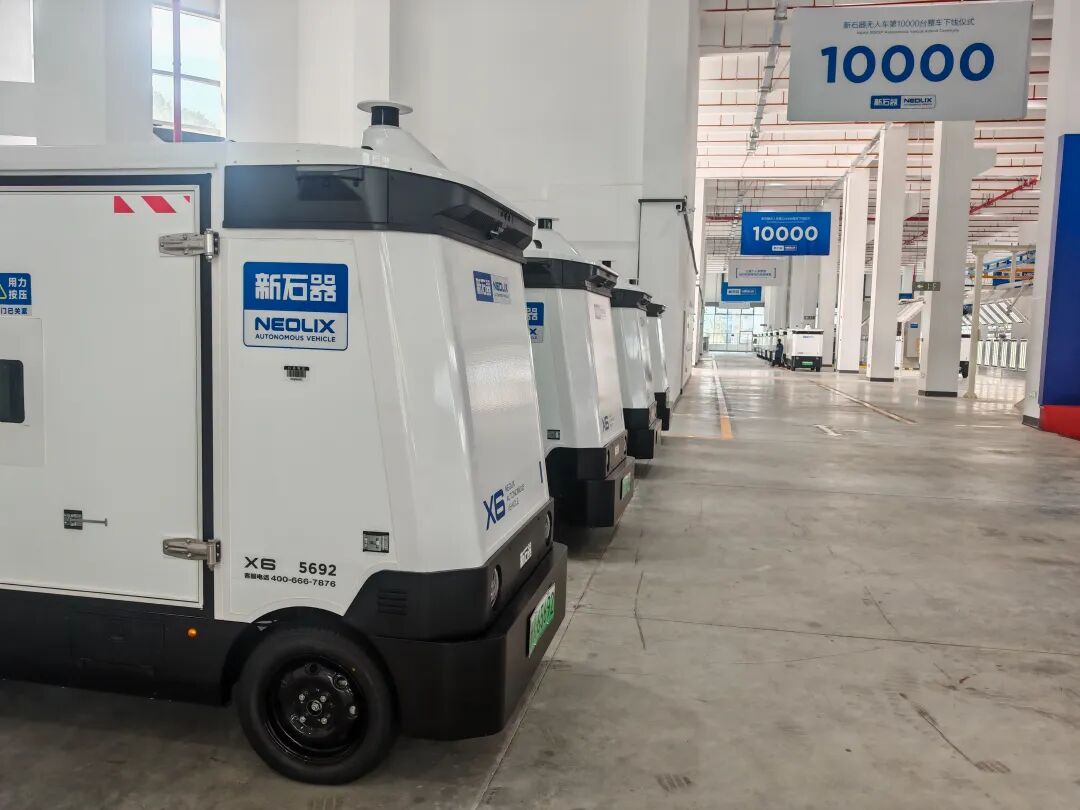
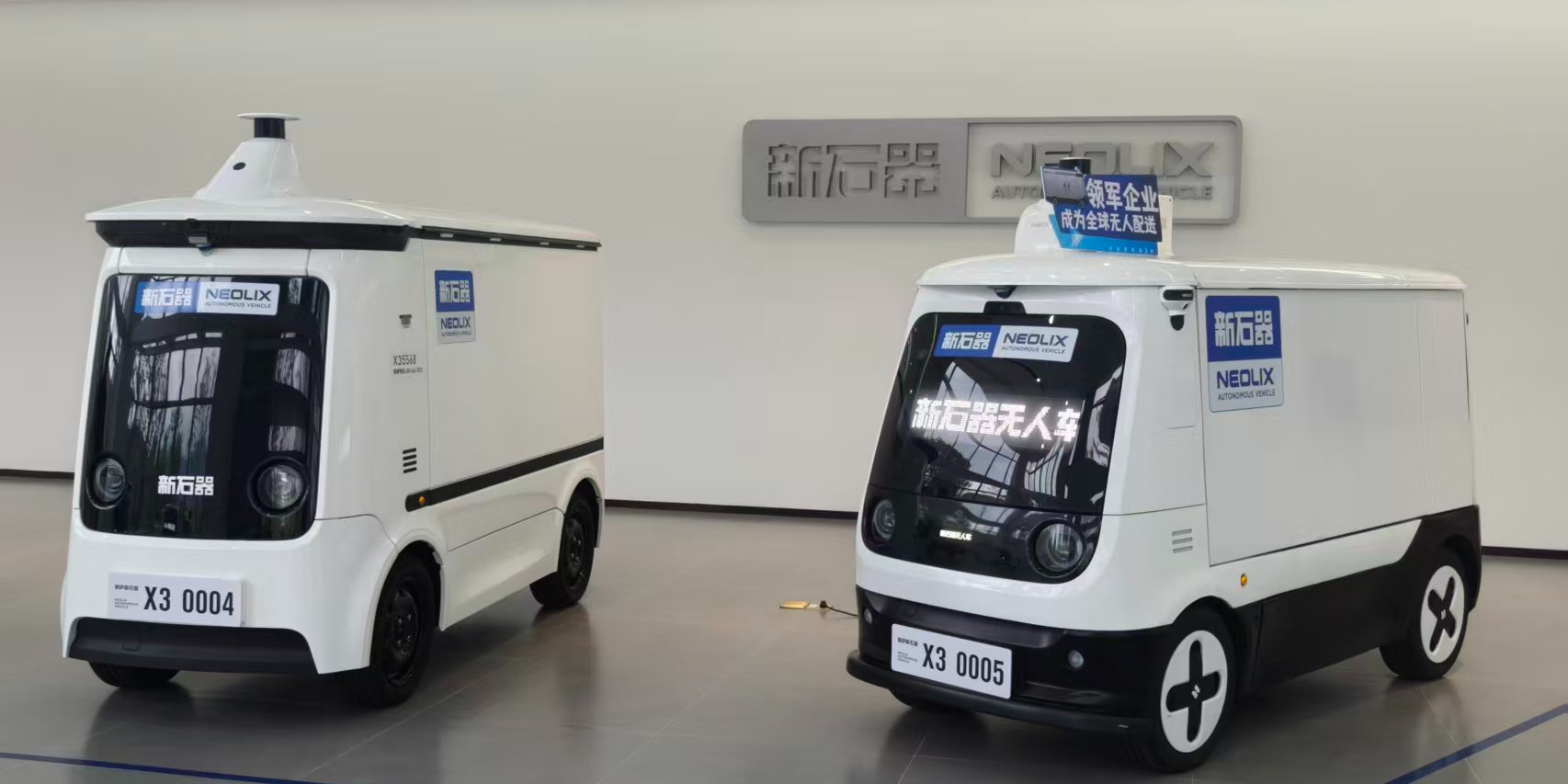
另一个决定无人车需求的重要前提是路权。截至2025年上半年,全国已有103个城市开放了无人配送车的路权。"国内也好,海外也好,管理部门也是看需求 的,要不要给无人驾驶开放路权,要看需求有多大,需求足够大,那么路权也会逐渐越来越开放。"余恩源表示。 现阶段,快递是无人车最重要的应用场景,也是极具商业化前景的领域。桐庐是国内有名的"快递之乡",申通快递、圆通快递、中通快递、韵达快递(俗 称"三通一达")都起源于此地,其每年的快递件数占全国约三分之二。新石器选择在这里设置工厂并举办万台车交付仪式,即是为了贴近客户需求。 9月23日,新石器在浙江桐庐举办第1万台车下线交付仪式。新石器成为无人配送行业第一家车队规模过万台的企业,也让这一长期处于技术验证阶段的行 业,撕开了走向大规模商业化的口子。 就在2024年,新石器的无人车交付量才刚刚过千台。短短不到一年时间里,其交付量即扩增了10倍,达到1万台。新石器无人车创始人兼CEO余恩源表 示:"这是新石器的一小步,也是无人配送行业发展的新开始。"他认为,无人车未来将重构整个全球的物流基础设施。 新石器成立于2018年,过去七年里其在L4自动驾驶技术方面持续投入,在物流配送 ...
快递运营成本降30%,开拓新市场却如“重新创业” 无人车狂奔背后的商业双面镜
Bei Jing Shang Bao· 2025-09-25 13:49
Core Insights - The autonomous vehicle industry is undergoing significant changes, with sales expected to increase by over 50% next year, driven by demand from various sectors beyond just logistics [1][6] - Major logistics companies are increasingly adopting autonomous vehicles, with a notable shift in sales distribution from 70%-80% in the express delivery sector to other industries [5][6] - The commercialization of autonomous vehicles is reaching a turning point, with monthly sales surging from 200-300 units to nearly 2000 units in a short period [2][6] Group 1: Market Dynamics - Autonomous vehicles were initially developed to meet the needs of the express delivery industry, but their applications are expanding into sectors like pharmaceuticals, spare parts, and textiles [1][6] - Companies like New Stone and NineSight are leading the market, with New Stone projecting a delivery volume of over 15,000 units this year [2][4] - The operational efficiency of autonomous vehicles is evident, with a reported 30% reduction in operational costs compared to traditional delivery methods [3][4] Group 2: Technological and Regulatory Challenges - The transition from closed environments to open roads presents localization challenges, as companies must navigate different regulations and data security requirements in new markets [1][7] - The demand for autonomous vehicles is driven by two main scenarios: instant logistics and urban delivery, which are growing faster than traditional express delivery [6][7] - Companies are developing various models of autonomous vehicles to cater to different operational needs, including temperature-controlled vehicles for specific industries [6][7] Group 3: Financial Landscape - Significant capital investment is flowing into the autonomous vehicle sector, with companies like New Stone and NineSight securing substantial funding to support growth [8][9] - Despite the influx of capital, many players in the market are still exploring profitable business models, focusing on providing operational services rather than just selling vehicles [9] - New Stone has achieved monthly profitability, indicating a shift towards sustainable business practices in the industry [9]

新石器完成万台无人车交付 无人配送迎来规模化拐点了吗?
Huan Qiu Wang· 2025-09-25 02:22
Core Insights - New Stone's unmanned vehicle has achieved a significant milestone with the delivery of its 10,000th vehicle, marking a critical step from technology validation to large-scale deployment within seven years since its establishment in 2018 [1][2] - The company emphasizes safety as a non-negotiable priority, focusing its research and operational efforts on safety through a perception solution that combines vision and laser radar [1][4] Group 1: Production and Delivery - New Stone's monthly sales are approaching 2,000 units, with an expectation to exceed 15,000 units for the year and a projected domestic demand of 40,000 to 50,000 units next year [2][4] - The company has transitioned from a trial phase to commercial operations, with a tenfold increase in delivery speed from 2024 onwards [2][4] Group 2: Market Dynamics - The growth in the unmanned vehicle sector is driven by a combination of technological advancements, market demand, and supportive policies, with key milestones including the open-source Transformer in 2021 and the opening of road rights for unmanned vehicles in Beijing [4][5] - The logistics industry is experiencing a shift towards a price competition phase, but New Stone believes the true business model lies in providing transportation services rather than selling vehicles [5][6] Group 3: Opportunities and Challenges - The company currently derives 70-80% of its sales from the express delivery sector, but non-express scenarios are rapidly emerging, with significant partnerships expanding from pilot projects to large-scale operations [6][7] - The transition from planned logistics to instant logistics presents a substantial market opportunity, potentially expanding the market size from millions to tens of millions of vehicles [6][7] Group 4: Future Outlook - New Stone aims for exponential growth in the unmanned vehicle market, targeting a long-term goal of reaching one million vehicles, contingent on the gradual opening of road rights based on demand [7] - The company faces challenges in global expansion, including local regulations and the need for localized operational teams, which complicates international market entry [6][7]