极米科技

Search documents
黑色家电板块1月8日涨0.2%,四川九洲领涨,主力资金净流入1551.49万元
Zheng Xing Xing Ye Ri Bao· 2026-01-08 08:51
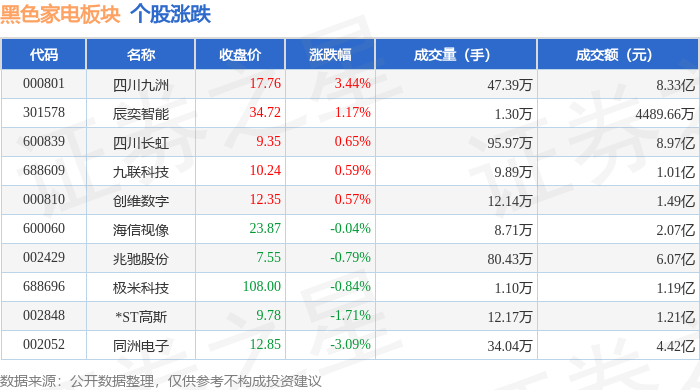
Group 1 - The black home appliance sector increased by 0.2% on January 8, with Sichuan Jiuzhou leading the gains [1] - The Shanghai Composite Index closed at 4082.98, down 0.07%, while the Shenzhen Component Index closed at 13959.48, down 0.51% [1] - Sichuan Jiuzhou's stock price rose by 3.44% to 17.76, with a trading volume of 473,900 shares [1] Group 2 - The net inflow of main funds in the black home appliance sector was 15.51 million yuan, while retail funds experienced a net outflow of 8.75 million yuan [1] - Sichuan Changhong had a main fund net inflow of 64.97 million yuan, but retail funds saw a net outflow of 30.34 million yuan [2] - The stock of *ST Gauss experienced a significant net outflow of 15.39 million yuan from main funds, while retail funds had a net inflow of 1.94 million yuan [2]





智能眼镜将从手机附属品迈向独立,轻量、全彩是趋势
Di Yi Cai Jing· 2026-01-08 08:18
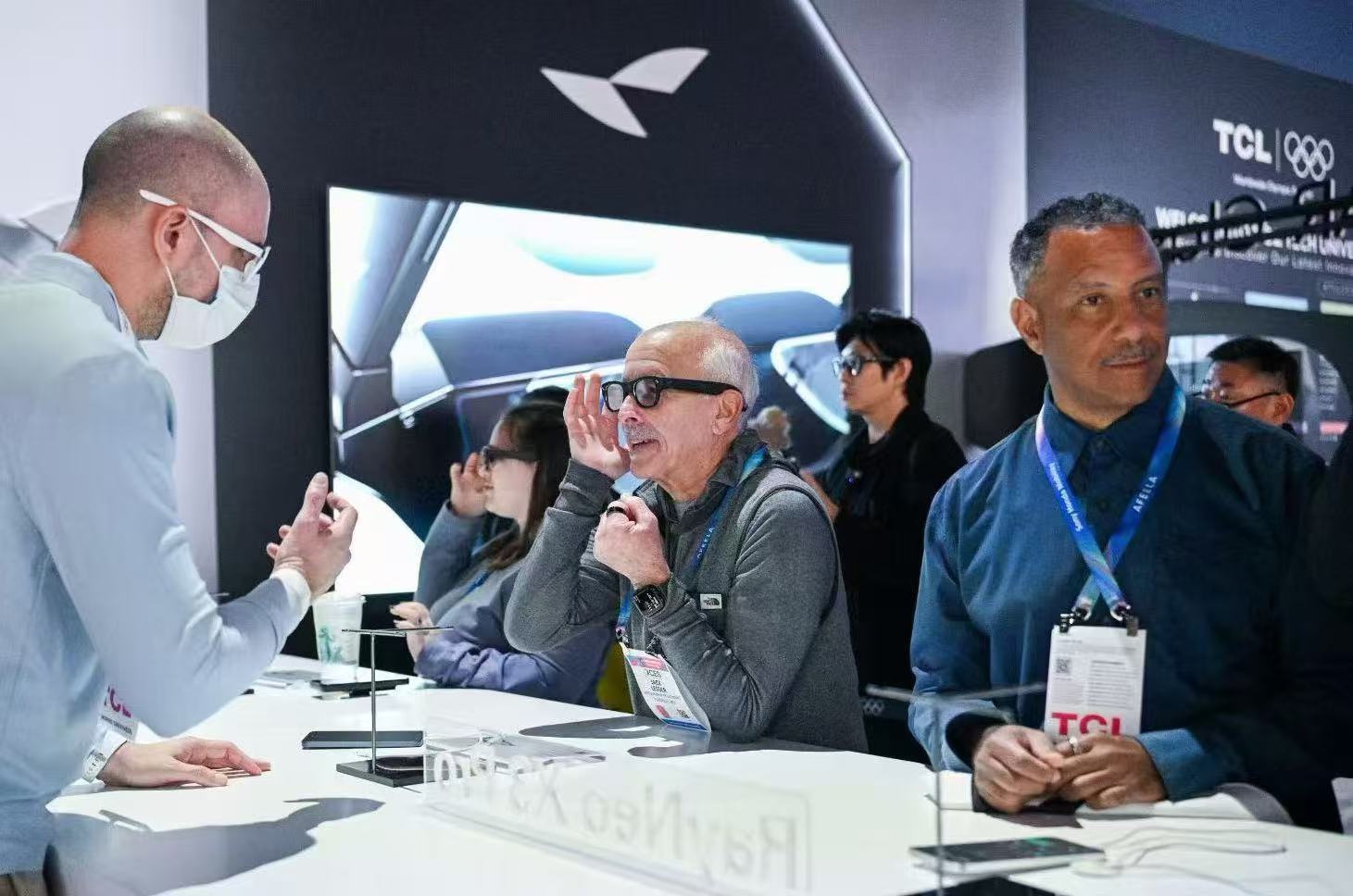
Core Viewpoint - The introduction of eSIM technology is transforming smart glasses from smartphone accessories into independent AI terminals, leading to a systemic restructuring of design, business models, profitability, and competitive landscape in the smart glasses industry [1][4]. Group 1: Industry Developments - At CES 2026, several Chinese companies launched AR and AI glasses, with eSIM technology enabling these devices to operate independently from smartphones, marking a trend towards lighter and full-color displays [3][8]. - Thunderbird Innovation, a subsidiary of TCL, showcased its first AR glasses with eSIM support, allowing for features like phone calls, AI dialogue, real-time translation, and streaming music without a smartphone [4][5]. - The global market share of Thunderbird Innovation's full-color Micro LED AR glasses reached 24% in Q3 of the previous year, with plans for accelerated global expansion [4]. Group 2: Competitive Landscape - Major players, including Alibaba and XREAL, are entering the smart glasses market, with XREAL expanding its partnership with Google to develop Project Aura, integrating Android XR into optical devices [8][9]. - Meta introduced new features for its smart glasses, including muscle-controlled handwriting input, while Alibaba launched its first Quark AI glasses, aiming to create new AI terminal entry points [8][9]. - The competition is intensifying, with a significant presence of Chinese brands at CES, accounting for nearly 70% of the 23 AI glasses brands showcased [9]. Group 3: Market Trends - The shift towards eSIM technology is expected to change the business model from hardware sales to a subscription-based model that includes hardware, connectivity, and AI services [5]. - The trend towards lightweight and full-color displays is evident, with several companies showcasing models weighing under 40 grams, indicating a competitive push for consumer-friendly designs [9][10]. - IDC forecasts that global smart glasses shipments will exceed 23.687 million units by 2026, with the Chinese market alone expected to surpass 4.915 million units, indicating a phase of scaled growth [10].
CES-2026智能眼镜新品解读及产业趋势展望
2026-01-08 02:07
Summary of Key Points from the Conference Call Industry Overview - The smart glasses industry is experiencing significant advancements, particularly highlighted at CES 2026, with a focus on AI and AR technologies. Despite many new brands and products emerging from China, the US market still finds these innovations novel [2][3]. Company Highlights Meta - Meta maintains a leading position in the smart glasses sector, with its Redmi Meta series AI glasses achieving sales of 8 million units in 2025. The AR glasses, Meta Raven Display, exceeded expectations with 80,000 units sold shortly after launch [1][2]. - In 2026, Meta plans to release audio glasses in collaboration with Ray-Ban and Oakley, featuring hearing aid capabilities and applications for children's attention enhancement and translation. The expected shipment for a small batch of iterative AR glasses is 200,000 units [1][6]. - Meta's software updates include enhanced video capabilities and audio systems that function as hearing aids, significantly improving user experience [5]. Xiaomi - Xiaomi plans to launch AI glasses and monochrome waveguide AR glasses in 2026, with expected shipments of 200,000 to 300,000 units for AR glasses and over 300,000 units for AI glasses [13]. XGIMI - XGIMI introduced a new AI glasses model weighing only 28.9 grams, making it the lightest in the market, priced at $599 and expected to launch in Q2 2026 [4][9]. Rokid - Rokid glasses are currently the best-selling AR glasses, with monthly shipments exceeding 30,000 units and a target of 1 million units by 2026 [11]. Apple - Apple is developing AI and AR glasses, with the AI model entering the new product introduction phase, aiming for a 2026 release. However, challenges related to hardware development and time constraints are present [3][16]. ByteDance - ByteDance is working on two models of smart glasses, one without a display and another similar to Rokid Glasses, with potential release dates in late 2026 or 2027 [14]. Market Trends and Challenges - The demand for smart glasses is heavily influenced by weight and comfort, with a target of under 50 grams for all-day wear. Achieving a weight below 30 grams is seen as crucial for expanding the user base [18]. - The supply side faces challenges in achieving clear displays, diverse styles, and developing "killer applications" that meet high-frequency user needs [21]. Competitive Landscape - The smart glasses market is not expected to see a price war in 2026 due to rational consumer behavior and a supply-demand imbalance, particularly in the domestic market [23]. Conclusion - The smart glasses industry is poised for growth with significant innovations from leading companies like Meta, Xiaomi, and XGIMI. The focus on lightweight designs and enhanced functionalities will be critical in meeting consumer demands and expanding market reach [2][18].

从CES看2026智能家电新品趋势
2026-01-08 02:07
Summary of Key Points from the Conference Call Industry Overview - The conference discusses trends in the smart home appliance industry, particularly focusing on the CES 2026 event where the number of Chinese companies participating significantly decreased from 1,100 in 2024 to 837 in 2026, indicating a shift in the overseas ecosystem [2][1]. - Major listed companies continue to participate due to strong cash flow and overseas market shares, showcasing a variety of products [1][2]. Core Insights and Arguments - **Product Diversification**: Companies like Ecovacs and XGIMI are accelerating their expansion into multiple product categories, such as companion robots and AI glasses, leveraging their technological advantages to find new growth avenues [1][3][4]. - **Market Dynamics**: The robotic vacuum cleaner market has seen nearly a decade of iteration, with a focus on embodied functionalities. The lawn mower robot segment is converging on RTK and laser radar navigation technologies, with anti-dumping measures potentially reshaping market dynamics [1][6][7]. - **Regional Focus**: The lawn mower robot market is primarily targeting Europe, while the U.S. market presents more complex challenges due to varied yard environments, leading to increased attention from companies to enhance their product offerings in the U.S. [8][1]. Emerging Trends - **New Product Categories**: AI glasses and 3D printing are in the early stages of market penetration, with no unified technical solutions yet. The demand is being stimulated by innovative designs, necessitating continuous tracking of potential mainstream technologies and capable companies [11][1]. - **Competitive Landscape**: The overseas robotic vacuum market remains stable, with iRobot's market share declining. Leading companies maintain their shares through differentiated strategies. The competition in the floor washing machine market is intensifying, with companies like Roborock increasing their presence [18][3]. Company-Specific Developments - **Ecovacs**: Focused on expanding its overseas presence with products like the rolling washing machine and pool cleaning robots, while also addressing domestic sales uncertainties due to subsidy policies [15][12]. - **Roborock**: Showcased a wheeled robotic vacuum at CES 2026, emphasizing its commitment to quality in a single product category. The company plans to maintain a limited number of washing machine models overseas while optimizing its cleaning solutions [13][16]. - **Ninebot**: Launched a significant number of lawn mower robots at CES 2026, incorporating advanced technologies like RTK and laser radar to meet diverse consumer needs [21][1]. - **XGIMI**: Introduced a high-end projector and several AI glasses, leveraging its existing market channels for rapid product promotion [23][1]. Additional Insights - **Market Evolution**: The lawn mower robot industry is transitioning from a single product focus to a multi-SKU cost control and channel management competition phase, similar to the early stages of the robotic vacuum cleaner market [10][9]. - **Investment Recommendations**: Large domestic appliance companies like Midea and Haier are recommended for their stability and diversified strategies. Companies with clear overseas trends, such as Ninebot and Roborock, are also favored. In emerging categories, 3D printing is highlighted as a promising direction [25][26].


AI应用潮席卷CES 中国产业链竞技“落地赛”
Shang Hai Zheng Quan Bao· 2026-01-07 17:53
Core Insights - The CES 2026 showcases China's advancements in AI hardware and robotics, highlighting the industry's shift towards practical applications and increased collaboration opportunities [1][2] Group 1: AI Hardware and Robotics - Over 20 Chinese humanoid robot companies participated in CES 2026, demonstrating a wide range of technologies and applications, including the launch of the Genie Sim 3.0 simulation platform by AGIBOT and the introduction of the Care-bot GR-3 by Fourier [2] - The event has alleviated concerns about a bubble in the humanoid robotics sector, indicating a trend towards more practical and consumer-oriented products [2] - AI hardware is evolving towards more specialized and practical applications, with AI toys and health-monitoring devices gaining traction [2] Group 2: Strategic Collaborations - Google and Chinese AR company XREAL announced a long-term strategic partnership to promote the Android XR ecosystem for AR glasses, emphasizing the importance of collaboration in the industry [4][5] - XREAL has previously signed strategic agreements with companies like Longqi Technology and Jingsheng Mechanical and Electrical to enhance the AI/AR supply chain [5] - Hesai Technology plans to double its annual production capacity of LiDAR from 2 million units in 2025 to 4 million units in 2026 to meet the growing demand in robotics [5] Group 3: Industry Trends and Innovations - The integration of AI technology in various applications, such as smart charging and smart home solutions, is accelerating, with notable innovations like the AI charging robot showcased by Daotong Technology [3] - The display industry is also evolving, with TCL and Hisense presenting new Mini LED display technologies at the event, indicating a trend towards advanced display solutions [5]
“科技春晚”CES 2026来了!A股参会公司有哪些?
天天基金网· 2026-01-07 10:07
Core Viewpoint - The 2026 International Consumer Electronics Show (CES 2026) will take place from January 6 to 9 in Las Vegas, showcasing numerous A-share listed companies with their latest products in popular sectors such as robotics, smart hardware, and new energy vehicles [6]. Robotics - Ninebot will unveil a new multi-scenario lawn mowing robot, enhancing its product matrix [2]. - Stone Technology is expected to debut its "embodied intelligence black technology" as a representative of smart cleaning robots [7]. - Lingyi Technology will present a comprehensive robotics technology matrix, showcasing core components and application solutions [8]. - Zhaowei Electromechanical will showcase a new generation of dexterous hands with 20 degrees of freedom [9]. - Orbbec will release multiple 3D camera products suitable for humanoid robots, enhancing visual solutions for precise operations [9]. - Ecovacs will introduce a pool cleaning robot and the latest developments in embodied intelligence [9]. - Lens Technology will debut a highly dexterous bionic hand and head assembly, integrating self-developed reducers for improved performance [10]. - Megvii will collaborate with Yimai Intelligent to launch two new micro AI robot products [11]. Smart Glasses - Tianjian Co. will present its latest AI and AR glasses at CES 2026, focusing on AI glasses, AI headphones, and smart speakers [12]. - XGIMI Technology will globally launch its new AI glasses brand "MemoMind" [13]. - GoerTek will showcase multiple innovative MR/AR/smart glasses, enhancing the "AI + smart interaction" experience [13]. - Guangfeng Technology will present three LCoS AR optical products: Wax Girl G1, Dragonfly G1 mini, and Rainbow C1 [14]. Storage Solutions - Baiwei Storage will highlight consumer-grade storage solutions, including a Mini SSD that rivals flagship PCIe Gen4 SSDs, supporting Meta's AI/AR glasses [15]. - Jiangbolong will enhance its consumer market brand with a collaboration featuring a special edition storage product linked to the Argentina national football team [15]. - Rockchip will showcase audio and machine vision products, with its RK3588 chip being widely applied in various robotic forms [15]. Automotive Innovations - Great Wall Motors will return to CES with its full product line and core technology matrix, focusing on new energy and AI vehicles [17]. Display Technologies - TCL Technology will unveil its "machine king" series of televisions and the world's first printed OLED vehicle display solution [5]. - Hisense will launch a new generation of RGB-Mini LED display technology [5]. - BOE will showcase over 60 cutting-edge display technologies and IoT solutions, including the global debut of the "HERO 2.0 smart cockpit" [19].




极米科技发布AI眼镜品牌MemoMind
Zhong Zheng Wang· 2026-01-07 07:14
Core Insights - The company, XGIMI Technology, launched its AI glasses brand MemoMind at CES 2026, marking a shift in the smart glasses market from generic products to scenario-based solutions, which are seen as the core interaction medium of the future [1][2] Market Trends - According to IDC, the global smart glasses market is expected to reach a shipment volume of 23.687 million units by 2026, with China's market alone projected to exceed 4.915 million units [1] Company Development - XGIMI Technology has invested over 1.5 billion yuan in R&D since its listing in 2021, achieving a research expense ratio of 12.15% by mid-2025, and has accumulated 1,219 patents [1] Product Offerings - The MemoMind One represents the company's technological advancement in consumer-grade AI display, utilizing a Micro LED and light guide solution to provide rich visual information for various needs, expected to launch later this year [1] - The MemoMind Air series introduces two new technological directions: MemoMind Air Display, which significantly reduces weight and power consumption while providing essential information, and another product focused entirely on AI experience, which will be revealed later this year [2] Financial Backing - The operational entity of the MemoMind brand, Shenzhen Qilai Innovation Intelligent Technology Co., Ltd., recently raised 50 million yuan through a financing round, achieving a valuation of 770 million yuan, aimed at enhancing R&D and operational capital for the mass production and market promotion of MemoMind AI glasses [2]
CES2026年前瞻:家庭场景中的AI智能消费产品加速落地
HTSC· 2026-01-07 05:18
Investment Rating - The report maintains a "Buy" rating for several companies, including Stone Technology, Eufy, Anker Innovation, Ecovacs, Ugreen Technology, and XGIMI, with target prices set for each [9][13]. Core Insights - The report highlights the rapid advancement of AI and robotics technologies in consumer electronics, particularly in smart home devices, cleaning appliances, and wearable technology, indicating a significant investment opportunity in the tech consumer sector for 2026 [1][6]. - The CES 2026 event is identified as a crucial observation point for AI applications in consumer products, with expectations for innovative product launches across various categories [1][6]. Summary by Sections Smart Cleaning Appliances - The robotic vacuum cleaner industry is transitioning into a phase of micro-innovation, with notable product launches such as the G-Rover by Stone Technology, which features dual mechanical legs for enhanced cleaning capabilities [2]. - Other companies like Ecovacs and Chase are also introducing advanced models with improved obstacle avoidance technology and multifunctional capabilities [2]. Garden Robots - The CES showcased numerous new products aimed at garden maintenance, including robotic lawn mowers and pool cleaning robots, with companies like Ninebot and MOVA presenting models that cover various residential and commercial applications [3]. Smart Hardware - The traditional 3C accessories market is experiencing competition, but companies like Ugreen and Anker are carving out niches by innovating and enhancing product offerings, such as the new AI NAS products and security devices [4]. AI Glasses - AI glasses are emerging as a significant wearable technology, with Chinese manufacturers leading the lightweight trend. Notable products include Alibaba's Quark AI Glasses S1 and Rokid's offerings, which feature functionalities like translation and scene guidance [5]. Investment Opportunities - The report emphasizes that AI-driven product innovation will be a key growth driver for tech consumer companies in 2026, with recommendations for investment in companies that are well-positioned to capitalize on these trends [6].

轻工制造行业跟踪报告:CES 举办在即,关注智能眼镜新品节奏
Huachuang Securities· 2026-01-07 05:14
Investment Rating - The industry investment rating is "Recommended," indicating an expected increase in the industry index exceeding the benchmark index by more than 5% in the next 3-6 months [15]. Core Insights - The report emphasizes the importance of exploring supply chain opportunities from the demand side, particularly in the context of the upcoming CES event, which is expected to showcase a variety of new smart glasses products [3][9]. - The report highlights that 2026 is anticipated to be a year of significant growth for smart glasses, driven by supportive policies and supply upgrades, with a focus on enhancing product features and user experience [9]. Industry Overview - The light industry manufacturing sector comprises 164 listed companies with a total market capitalization of approximately 1,094.55 billion and a circulating market value of about 934.63 billion [6]. - The absolute performance of the industry over the past 12 months has been 32.9%, while the relative performance compared to the benchmark has been 5.8% [7]. Key Company Forecasts and Valuations - 康耐特光学 (Kangnait Optical) is projected to have an EPS of 1.18, 1.45, and 1.81 for 2025E, 2026E, and 2027E respectively, with a strong buy rating [4]. - The PE ratios for 康耐特光学 are forecasted to be 41.05, 33.26, and 26.64 for the same years, indicating strong growth potential [4]. Upcoming Events - The 2026 International Consumer Electronics Show (CES) is scheduled from January 6 to 9, showcasing over 50 exhibitors in the AI glasses segment, with significant product launches expected from various companies [9].
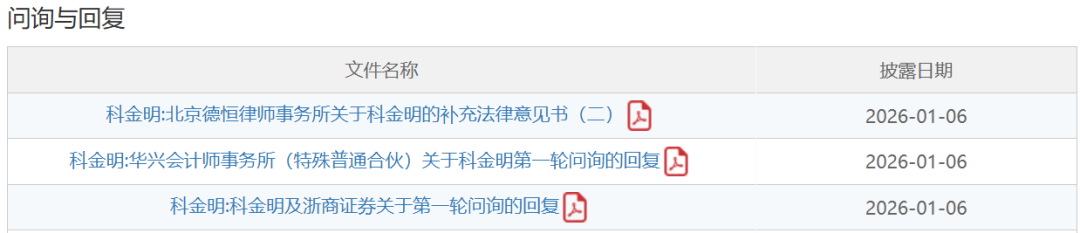
核心产品毛利率三连降,业绩增长靠劳动力密集投入?科金明回应首轮问询
Shen Zhen Shang Bao· 2026-01-07 04:40
Core Viewpoint - Shenzhen Kejinming Electronics Co., Ltd. (Kejinming) has responded to the first round of inquiry letters from the Beijing Stock Exchange, addressing issues related to its innovative characteristics, market space, operational compliance, and the necessity and rationality of fundraising projects [1][2]. Group 1: Innovation and Market Space - Kejinming focuses on the research and sales of smart visual terminal products, including smart micro-projectors, smart cloud photo frames, and smart portable players, aiming to provide immersive visual experience solutions across various scenarios [4]. - The company claims that its performance growth is primarily driven by technological innovation, accumulation of global brand clients, and a dual-driven business model of ODM (Original Design Manufacturer) and OBM (Original Brand Manufacturer) [8]. Group 2: Operational Compliance and Risks - Kejinming operates its OBM business through cross-border e-commerce platforms like Amazon and Walmart, which has raised regulatory concerns regarding the operation of multiple storefronts [11]. - The company asserts that the closure of certain storefronts was based on operational needs and does not involve asset or personnel disposals, and that its multi-store operation aligns with industry norms [11]. Group 3: Financial Performance and Profitability - The gross profit margin of Kejinming's smart micro-projectors has shown a declining trend, while the gross profit margin for smart cloud photo frames has increased significantly [12]. - The company has shifted its sales focus from OBM to ODM products, leading to a decrease in revenue and gross margin for OBM smart micro-projectors, which are now in a marginal profit state [13][14]. Group 4: Sales and Market Dynamics - Kejinming's overseas sales accounted for a significant portion of its revenue, with percentages of 87.40%, 81.58%, 80.05%, and 75.69% over the reporting periods, indicating a slight decline due to increased domestic market penetration [18]. - The company has established a strong presence in overseas markets, particularly in North America, Europe, and Japan, and plans to continue expanding its foreign sales [17]. Group 5: Accounts Receivable and Liquidity - The company has experienced an increase in accounts receivable and notes receivable, with asset-liability ratios of 58.21%, 51.71%, and 59.62%, which are higher than the industry average [19]. - Kejinming has provided sufficient impairment provisions for accounts receivable exceeding one year, and its payment terms and accounts payable are aligned with industry standards, indicating no significant liquidity risks [19].