
TotalEnergies SE

Search documents
The Libya Oil Story No One Is Pricing In Yet
Yahoo Finance· 2026-01-05 23:00
Core Insights - Libya holds Africa's largest proved crude oil reserves at 48 billion barrels and aims to increase production to 2 million barrels per day (bpd) by 2028, with over 40 companies expressing interest in its first oil field licensing round since 2011 [2][3] Group 1: Oil Production and Reserves - Libya's crude oil production was approximately 1.65 million bpd before the civil war, which has since dropped to around 20,000 bpd during the conflict but has recovered to just under 1.4 million bpd [1][2] - The National Oil Corporation (NOC) plans to enhance oil recovery techniques to increase production capacity by about 775,000 bpd at existing fields [1][2] - The Sirte basin contains around 80% of Libya's recoverable reserves and most of its production capacity [1] Group 2: Political and Economic Context - The political stability of Libya remains uncertain, with previous agreements aimed at addressing oil revenue distribution and financial stabilization not fully implemented [3][4] - The blockade from January to September 2020 resulted in a loss of at least US$9.8 billion in hydrocarbons revenues, highlighting the economic impact of political instability [3] Group 3: International Interest and Investment - Major Western firms, including Shell, BP, and ExxonMobil, are re-entering Libya, indicating potential for increased investment and production [2][4] - The NOC's collaboration with international companies aims to leverage their presence to foster political stability and enhance oil production [4][5] - BP has signed a memorandum to evaluate redevelopment options for the Sarir and Messla fields, reflecting strong interest in Libya's energy sector [6]
Dimensional's ETF Made An Easy 41% Betting On International Value, But What's Next? | DFIV
247Wallst· 2026-01-05 14:03
Core Viewpoint - International value stocks have gained significant attention in 2025, with notable performance from European banks, Japanese industrials, and Canadian energy companies, leading to a question of whether this trend is sustainable or a one-time event [1]. Group 1: Performance and Strategy - Dimensional International Value ETF (DFIV) achieved a remarkable 46.6% return over the past year while maintaining a low fee of 0.27% [1]. - DFIV focuses on undervalued companies in developed international markets, particularly in financials, energy, and materials, with a total asset value of $14.9 billion [1]. - The ETF outperformed the iShares MSCI EAFE ETF by 14.3 percentage points and the Vanguard Value ETF by over 30 percentage points, achieving a total return of 40% in 2025 [3]. Group 2: Market Conditions and Risks - Recent performance indicates a cooling trend, with a 4.6% gain over the past month and only 0.7% year-to-date in 2026, suggesting a moderation in explosive growth [4]. - DFIV's concentration in financials, energy, and materials introduces sector risk, particularly during periods of underperformance in these industries [5]. - Significant exposure to European markets means that EU political and economic developments directly impact returns, alongside currency fluctuations that add volatility [6]. Group 3: Investor Considerations - DFIV is best suited for patient investors seeking international diversification with a value tilt, but it requires conviction to endure potential cyclical underperformance [11]. - Short-term traders and those uncomfortable with international exposure should consider alternative investment strategies, as value investing often involves extended periods of underperformance [7][8]. - Vanguard FTSE Developed Markets ETF (VEA) is presented as a simpler alternative for investors seeking international exposure without the active value tilt, offering lower fees and broader market representation [9][10].


The Zacks Analyst Blog Amazon, Palantir, TotalEnergies and MIND Technology
ZACKS· 2026-01-05 11:15
Core Insights - The Zacks Equity Research team has highlighted stocks including Amazon.com, Palantir Technologies, TotalEnergies, and MIND Technology in their recent analysis, focusing on their performance and market outlook [1][2]. Amazon.com, Inc. (AMZN) - Amazon's shares have outperformed the Zacks Internet - Commerce industry over the past six months, with a gain of 4.5% compared to the industry's 2.4% [4]. - The company projects Q4 2025 net sales between $206 billion and $213 billion, with operating income expected to be between $21 billion and $26 billion, indicating operational efficiency gains [5]. - AI integration is enhancing personalization and logistics, strengthening Amazon's competitive position, although substantial capital expenditures for AI infrastructure may strain financial resources [6]. Palantir Technologies Inc. (PLTR) - Palantir's shares have significantly outperformed the Zacks Internet - Software industry, gaining 32.3% compared to a decline of 6.5% in the industry over the past six months [7]. - The company has $5.4 billion in cash and no debt, providing strong liquidity and visibility, while its AI strategy is driving growth in both government and commercial sectors [8]. - Despite a 122.5% increase in share price over the past year, intense competition and rising costs present challenges, leading to a neutral rating on the stock [9]. TotalEnergies SE (TTE) - TotalEnergies' shares have outperformed the Zacks Oil and Gas - Refining and Marketing industry, with a 5.9% increase compared to the industry's 1.7% over the past six months [10]. - The company is benefiting from contributions from startups and well-spread LNG assets, with a focus on generating 15-20% of sales from low-carbon business by 2040 [11]. - However, security concerns in some production regions and acquisition-related risks pose challenges to its operations [12]. MIND Technology, Inc. (MIND) - MIND Technology's shares have gained 11.4% over the past six months, although this is below the Zacks Technology Services industry's gain of 15.4% [13]. - The company secured a $9.5 million seismic contract in December 2025, indicating improving demand, and has expanded its Huntsville facility to support higher-margin throughput [14]. - Despite recent gains, declining revenue and backlog highlight demand volatility, and rising operating expenses may pressure profitability [15].



美国突发!100多个城市,爆发示威!马斯克宣布:免费一个月
券商中国· 2026-01-04 08:15
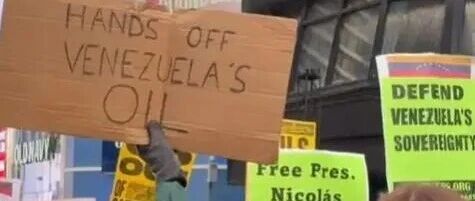
Group 1: U.S. Military Action Against Venezuela - The U.S. launched a large-scale military operation against Venezuela on January 3, capturing President Maduro and his wife, with Trump stating that the U.S. will "manage" Venezuela until a "safe" transition occurs [4] - Former U.S. Vice President Harris criticized the military action as "wrong and unwise," arguing it is illegal and does not enhance U.S. security or affordability for American families [3][4] - New York City Mayor Mamdani expressed opposition to the U.S. actions, labeling them as war crimes and violations of international law [2][4] Group 2: Protests in the U.S. - Over 100 cities in the U.S. held protests on January 3 against the military action in Venezuela, organized by the anti-war coalition "Immediate Action to Stop War and Eliminate Racism" [2] - Protesters displayed banners with messages such as "Defend Venezuela, Free Maduro" and "No War on Venezuela," emphasizing their opposition to U.S. intervention [2] Group 3: Oil Industry Response - ConocoPhillips, one of the major U.S. oil companies, stated it is too early to speculate on involvement in expanding oil production projects in Venezuela [5] - Chevron is currently the only major U.S. oil company operating in Venezuela, with a significant portion of the country's oil production [6] - The U.S. government faces challenges in attracting foreign investment in Venezuela's oil sector due to current global oil price conditions and the need for a stable environment for investment [6]


委内瑞拉石油困局中的中国棋局:百亿投资能否撬动千亿桶油藏?
Sou Hu Cai Jing· 2026-01-03 12:05
Core Insights - Venezuela, once wealthy from oil, is now struggling between recovery and turmoil, with the world's largest proven oil reserves of approximately 47.3 billion tons [1] - Oil production in Venezuela plummeted by 78% since 2010, but signs of recovery emerged in 2021, with production expected to reach 53 million tons in 2024, growing at about 9% annually [1] - Chinese investment has been pivotal in this recovery, as Chinese companies are the only ones willing to invest after Western firms withdrew [1] Chinese Investment - China plans to invest over $1 billion in developing two oil fields, aiming to increase daily production from 12,000 barrels to 60,000 barrels by the end of 2026 [3] - Since 2019, China has provided approximately $50 billion in loans to Venezuela through oil-for-loan agreements, with over $8 billion in oil and gas investments expected in 2024 [3] - The cooperation model between China and Venezuela includes a "production sharing" agreement, allowing transactions in RMB, which aids in the internationalization of the currency [3] Geopolitical Risks - U.S. military presence in the Caribbean is increasing, with a fleet dispatched to the South Caribbean region, posing direct sanctions and military threats to Chinese investments in Venezuela [4] - The U.S. has imposed a 25% tariff on all countries importing Venezuelan oil, complicating the investment landscape for Chinese companies [4] Financial Network - As of April 2025, the China Development Bank has provided approximately $165 billion in financing support to over 260 projects across 21 Latin American countries [4] - The share of RMB in cross-border settlements in Latin America reached 14% in 2024, a nearly fivefold increase since 2019 [4] - Venezuela's proposal to pay suppliers in RMB is a strategy to circumvent U.S. sanctions and further the internationalization of the currency [4] Economic Special Zones - Venezuela is focusing on economic special zones to reduce dependence on oil, with the Economic Special Zone Organization Law enacted in June 2022, inspired by Chinese practices [6] - The establishment of these zones allows for tax incentives and temporary processing permits, strengthening the bilateral relationship and providing a stable political environment for Chinese energy interests [6] - China's investment strategy in Venezuela, including daily imports of 463,000 barrels of oil and over $1 billion in oil field investments, forms a robust foundation for its energy strategy in Latin America [6]
2026能源展望:油价承压、气价趋缓,转型步入深水区?
Sou Hu Cai Jing· 2026-01-03 02:19
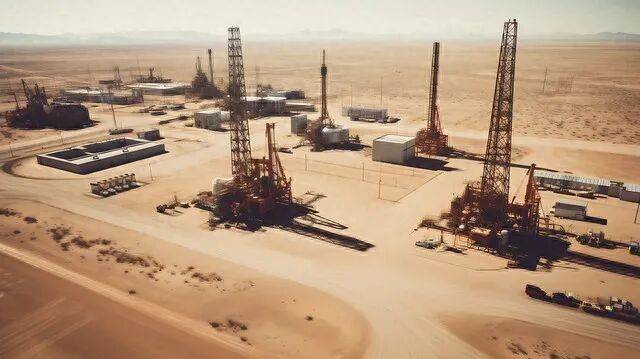
Core Insights - The global energy market is expected to undergo a multi-dimensional restructuring by 2026, with oil demand likely plateauing and a significant LNG supply wave led by North America and the Middle East [1][6] Oil Market Dynamics - The global oil market is projected to enter a rebalancing phase characterized by inventory accumulation and price pressure due to a combination of accelerating supply growth and weak demand [2] - IEA forecasts global crude oil demand to reach 104.8 million barrels per day in 2026, with a modest year-on-year growth of only 0.8% [2] - Developed economies are experiencing structural declines in oil demand, with Japan at a multi-decade low and the U.S. demand stagnating [2] - Non-OECD countries, particularly in Asia, the Middle East, and Africa, are expected to drive demand growth, with China continuing to be a key engine for oil demand in the Asia-Pacific region [2] Supply Side Pressures - The supply side is expected to see significant contributions from non-OPEC+ countries, with IEA predicting an increase of 1.2 million barrels per day from these nations in 2026 [4] - Brazil, Guyana, and Argentina are identified as major drivers of non-OECD oil supply growth, with Brazil's production expected to rise by 200,000 barrels per day to 4 million barrels per day [4] - The efficiency improvements in U.S. shale oil production will provide stability in supply even in a low oil price environment [4] - Goldman Sachs anticipates Brent crude oil prices to average $56 per barrel in 2026, while WTI is expected to average $52 per barrel [5] Natural Gas Market Trends - A significant LNG supply wave led by North America and the Middle East is expected to reshape the natural gas market, transitioning it from a seller's market to a buyer's market [6][9] - IEA predicts a 7% growth in global LNG supply in 2026, reaching 475 million tons, with the U.S. being the primary contributor [8] - The Asia-Pacific region is projected to be the main driver of natural gas demand growth, with an expected increase of over 4% in 2026 [8] - European natural gas demand is forecasted to decline by 2%, while North American demand growth is expected to fall below 1% [8] Energy Transition Developments - The energy transition is characterized by the green transformation of power systems and a pragmatic shift by traditional energy companies [11] - Renewable energy is expected to surpass coal as the largest source of electricity globally by mid-2025, marking a historic shift in energy structure [11] - Traditional oil companies are under dual pressure from oversupply and stringent emission reduction commitments, prompting them to explore pragmatic transition paths [13] - Companies like ExxonMobil are focusing on carbon capture, utilization, and storage (CCUS) technologies as a core part of their low-carbon business strategy [13] - European oil companies are recalibrating their energy transition strategies, with BP and Shell shifting focus towards natural gas and optimizing their investment portfolios [14]

POWER Digest [January 2026]
Yahoo Finance· 2026-01-02 14:28
Group 1: Nuclear Energy Outlook - Global nuclear capacity could reach 1,428 GWe by 2050, exceeding the 1,200-GWe target, driven by extended operation of existing reactors and new units under construction [1] - Nuclear generation reached a record 2,667 TWh in 2024, with 50 countries planning nuclear projects for 2050, including major players like China, France, India, Russia, and the U.S. [1] - Realizing the projected capacity will require accelerated licensing, expanded supply chains, and clear policy frameworks, with support from industrial giants and financial institutions [1] Group 2: Swedish Nuclear Development - Vattenfall and Industrikraft i Sverige AB signed an agreement to co-invest in new small modular reactors (SMRs) at the Ringhals site, with Industrikraft taking a 20% stake and investing SEK 400 million ($42.2 million) [2] - The project aims to ensure Swedish technology's competitiveness in the European supply chain, with Vattenfall considering GE Vernova's BWRX-300 and Rolls-Royce SMR for a 1,500 MW project [2] - The partnership aligns with Sweden's state-aid act, which facilitates loans for new units at existing nuclear sites [2] Group 3: California Battery Storage Expansion - California's battery storage capacity reached a record 16,942 MW, achieving about one-third of the state's 2045 target, with a 2,100% increase since 2019 [3] - The state has more battery capacity than any jurisdiction except China, with significant contributions from utility-scale projects and residential installations [3] - California's strategy aims for 100% clean electricity by 2045, with renewables currently supplying nearly 67% of in-state retail electricity sales [3] Group 4: TotalEnergies and Google Partnership - TotalEnergies signed a 15-year power purchase agreement (PPA) with Google to supply 1.5 TWh of renewable electricity from its Montpelier solar farm in Ohio [4] - The PPA supports Google's strategy for carbon-free energy and aligns with TotalEnergies' goal to meet the growing demand from the digital sector [4] - TotalEnergies is deploying a 10-GW U.S. portfolio of renewable projects, aiming for 35 GW of installed capacity by the end of 2025 [5] Group 5: China's Nuclear Advancements - Unit 2 of China's Zhangzhou nuclear power project connected to the grid, marking both Hualong One units operational for the first time [6] - The project is set to provide over 60 TWh of clean electricity annually, meeting 75% of demand for Xiamen and Zhangzhou cities [6] - Hualong One represents China's self-developed third-generation reactor technology, with six units planned at the site [6]

阿尔及利亚在新油气法框架下推进重点能源和矿业项目布局
Shang Wu Bu Wang Zhan· 2026-01-01 16:46
Group 1: Energy and Mining Developments - Algeria's energy and mining sectors are making significant progress under the new Oil and Gas Law (Law 19-13) and the new Mining Law, with international bidding "Algeria Bid Round 2024" leading to the awarding of five oil and gas exploration and production licenses to companies like TotalEnergies, Eni, and Sinopec, indicating a resurgence in foreign investment participation [1] - The Gara Djebilet iron ore project in Tindouf province has entered the industrialization phase, with an estimated reserve of approximately 3.5 billion tons, and a primary processing production line with an annual capacity of 4 million tons is expected to commence operations in April 2026, supported by the Béchar-Tindouf railway set to be operational in January 2026 [1] - The Bled El Hedba integrated phosphate project in Tebessa province is progressing, with a planned annual production capacity of around 6 million tons of fertilizer products, and the associated railway infrastructure is expected to facilitate the transport of over 10 million tons of phosphate rock annually, generating an estimated annual revenue of $2 billion [1] Group 2: Non-Ferrous Metals and Renewable Energy - The Oued Amizour lead-zinc project in Bejaia province has an estimated recoverable reserve of about 34 million tons, with a planned annual production of 170,000 tons of zinc concentrate, projected to generate annual revenue of approximately $215 million [2] - Algeria is advancing a renewable energy plan to add 15,000 megawatts by 2035, with the first phase of 3,200 megawatts of solar projects progressing well, alongside the implementation of the SoutH2 hydrogen corridor and the Medlink Algeria-Italy electricity interconnection project, aimed at expanding green energy export capacity to Europe [2]
Galp Energia: Market Disappointment, Interesting Long-Term Opportunity
Seeking Alpha· 2026-01-01 15:45
Group 1 - The expectations for a deal between Galp Energia (GLPEF) and TotalEnergies (TTE) were set too high, leading to a significant overreaction in Galp's share price, which dropped by 20% [1] - The Investment Doctor emphasizes a long position in Galp, indicating confidence in its future performance despite the recent price drop [1] - The Investment Doctor focuses on European small-cap investments, advocating for a balanced portfolio of dividend and growth stocks to ensure continuous cash flow [1] Group 2 - The analyst has a beneficial long position in GLPEF through stock ownership, options, or other derivatives, indicating a personal investment interest in the company [2] - There are intentions to write puts on TotalEnergies and Galp, with a potential long position in TotalEnergies being considered, although these actions are unlikely to occur in the next 72 hours [2]


European Stocks Subdued On Final Trading Session; Major Markets Post Strong Gains In 2025
RTTNews· 2025-12-31 15:16
Market Overview - The mood in the markets remained cautious due to New Year's Eve closures, with traders largely sidelined ahead of the holiday [1] - U.K.'s FTSE 100 ended down by 0.09%, France's CAC 40 settled lower by 0.23%, and the pan European Stoxx 600 edged down 0.08% [1] Yearly Performance - The CAC 40 gained over 10% in the year, while DAX jumped over 22% and U.K.'s FTSE 100 climbed 21.6%, marking the strongest performance since 2009 [2] - Switzerland's SMI advanced nearly 15% [2] Company Performance - In the U.K. market, companies such as Pershing Square Holdings, Anglo American Plc, Marks & Spencer, British Land, and 3i Group gained between 0.5% to 1.1% [2] - Conversely, Fresnillo and Croda International closed lower by 2.3% and 2.2%, respectively, with other companies like Beazley, Experian, Diploma, Antofagasta, Ashtead Group, and Schroders also ending notably lower [3] - In the French market, Stellantis, TotalEnergies, Societe Generale, Publicis Groupe, Unibail Rodamco, Capgemini, Bouygues, and AXA closed weak, while LVMH, Kering, Accor, STMicroElectronics, and Edenred closed higher [3]
