
碳捕集利用与封存(CCUS)

Search documents
报告点评:摒弃“难减排”标签:高碳行业科学脱碳的关键前提
Yin He Zheng Quan· 2026-02-06 07:01
Investment Rating - The report does not explicitly provide an investment rating for the industry, but it emphasizes the need for policy changes to facilitate the transition of high-carbon industries towards net-zero emissions [2][3]. Core Insights - The report challenges the "hard-to-abate" label often used by high-carbon industries like steel and cement, arguing that it lacks scientific basis and is used as an excuse to delay emission reduction actions [2][3]. - It asserts that the main barriers to transformation are not technological but rather policy inertia, lack of determination, and investment obstacles [2][3]. - The report highlights that significant emission reductions are achievable through a "whole system" approach, which reduces reliance on carbon capture and storage (CCUS) technologies [2][3]. Summary by Sections Section 1: Current Status of Hard-to-Abate Industries - The report indicates that to limit global warming to 1.5°C, rapid and effective emission reduction measures are required across all industries, including those labeled as "hard-to-abate" [5]. - It notes that the steel and cement industries can achieve substantial emission reductions, with CO2 emissions from steel expected to drop from 2.8 billion tons in 2023 to 224 million tons by 2050, and cement from 2.4 billion tons to 65 million tons [5][8]. Section 2: Emission Reduction Pathways for the Steel Industry - The steel industry, responsible for 7-8% of global emissions, can transition to net-zero emissions by 2050 through the adoption of zero-emission technologies like electric arc furnaces (EAF) and green hydrogen [9][10]. - The report emphasizes that the reliance on CCUS is a delaying tactic and that effective policy interventions are necessary to phase out coal-fired blast furnaces and promote green technologies [10]. Section 3: Emission Reduction Pathways for the Cement Industry - The cement industry, contributing 5-8% of global emissions, is often seen as a difficult sector to decarbonize due to emissions from the clinker production process [12]. - The report advocates for a "whole system" approach that includes demand-side measures and material substitutions to significantly reduce reliance on high-carbon cement [12][13]. Section 4: Policy Implications - The report argues that the "hard-to-abate" label obscures the feasibility of various emission reduction pathways and highlights the importance of strong policy support in facilitating industry transitions [13][16]. - It cites examples from the EU, where robust policy measures have accelerated decarbonization in the steel sector, contrasting with the slower progress in the cement sector due to less stringent policies [13].
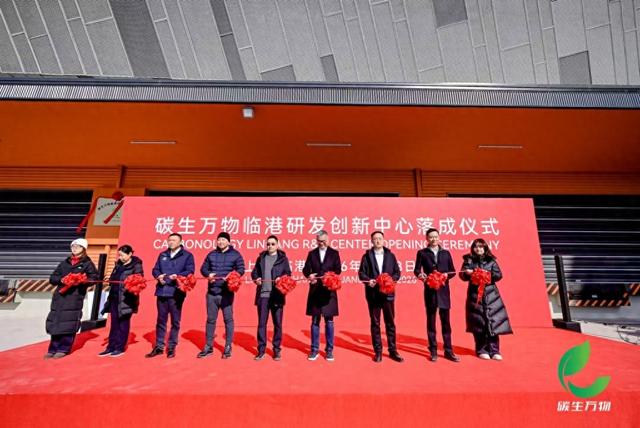
这家公司要捕集二氧化碳生产万物!首条工艺线在临港发布,何时商业化?
Xin Lang Cai Jing· 2026-01-24 15:26
Core Viewpoint - Shanghai Carbon Life Technology Co., Ltd. (referred to as "Carbon Life") has officially launched its R&D innovation center in the Lingang New Area, with an investment of 300 million yuan, aimed at industrializing its core technologies [1][3]. Group 1: Company Overview - Carbon Life was founded in October 2024 by Ren Yuxiang and Zhang Hongxi, with Ren previously serving as the Vice President of Business Development at Tesla before leaving in 2020 [3]. - The company aims to capture carbon dioxide from the air, convert it into necessary products, and ultimately reduce reliance on fossil fuels [3][4]. Group 2: Technology and Projects - The company has announced its first production line, which is a key component of the world's first industrial project for sustainable aviation fuel (SAF) derived from direct air carbon capture (DAC) [4][6]. - Carbon Life plans to establish a pilot base in Ningxia by 2026 and aims to launch the first 50,000-ton commercial SAF project in 2027, focusing on technology industrialization and cost optimization [1][4]. Group 3: Market Focus and Challenges - The initial market focus is on sustainable aviation fuel (SAF), which is seen as having high market potential and green premium [6]. - Currently, global SAF production is less than 0.2% of total aviation fuel demand, facing challenges due to low production and high costs [6]. Group 4: Funding and Future Plans - In August 2025, Carbon Life completed an angel round of financing, raising several tens of millions of yuan to invest in technology upgrades, project construction, and market expansion [6].

四川构建全周期全流程绿色制造体系
Zhong Guo Hua Gong Bao· 2026-01-23 05:58
Core Viewpoint - Sichuan Province aims to establish a comprehensive green manufacturing system by 2030, with specific goals set for 2027, focusing on seven key tasks across various sectors including petrochemicals and hydrogen energy [1][2]. Group 1: Key Tasks - The seven key tasks include green design, green products, green materials, green equipment, green process technology, green low-carbon energy, and resource recycling [1]. - Emphasis on technological innovation in traditional industries, promoting hydrogen energy, biomass energy, and carbon capture utilization and storage (CCUS) [2]. Group 2: Implementation Strategies - The action plan outlines seven specific paths to operationalize the key tasks, including enhancing key technology innovation, large-scale green technology transformation, and developing new green low-carbon industries [2]. - Support for industrial parks to undergo comprehensive upgrades focusing on ecological and structural improvements [3]. Group 3: Goals and Standards - By 2027, the plan includes the construction of 1,000 green factories and 150 green industrial parks, with initiatives to explore zero-carbon factory pilots [3]. - The province aims to revise and develop over 10 advanced standards annually in areas such as energy efficiency, resource utilization, and carbon emission accounting [3].
2026能源展望:油价承压、气价趋缓,转型步入深水区?
Sou Hu Cai Jing· 2026-01-03 02:19
Core Insights - The global energy market is expected to undergo a multi-dimensional restructuring by 2026, with oil demand likely plateauing and a significant LNG supply wave led by North America and the Middle East [1][6] Oil Market Dynamics - The global oil market is projected to enter a rebalancing phase characterized by inventory accumulation and price pressure due to a combination of accelerating supply growth and weak demand [2] - IEA forecasts global crude oil demand to reach 104.8 million barrels per day in 2026, with a modest year-on-year growth of only 0.8% [2] - Developed economies are experiencing structural declines in oil demand, with Japan at a multi-decade low and the U.S. demand stagnating [2] - Non-OECD countries, particularly in Asia, the Middle East, and Africa, are expected to drive demand growth, with China continuing to be a key engine for oil demand in the Asia-Pacific region [2] Supply Side Pressures - The supply side is expected to see significant contributions from non-OPEC+ countries, with IEA predicting an increase of 1.2 million barrels per day from these nations in 2026 [4] - Brazil, Guyana, and Argentina are identified as major drivers of non-OECD oil supply growth, with Brazil's production expected to rise by 200,000 barrels per day to 4 million barrels per day [4] - The efficiency improvements in U.S. shale oil production will provide stability in supply even in a low oil price environment [4] - Goldman Sachs anticipates Brent crude oil prices to average $56 per barrel in 2026, while WTI is expected to average $52 per barrel [5] Natural Gas Market Trends - A significant LNG supply wave led by North America and the Middle East is expected to reshape the natural gas market, transitioning it from a seller's market to a buyer's market [6][9] - IEA predicts a 7% growth in global LNG supply in 2026, reaching 475 million tons, with the U.S. being the primary contributor [8] - The Asia-Pacific region is projected to be the main driver of natural gas demand growth, with an expected increase of over 4% in 2026 [8] - European natural gas demand is forecasted to decline by 2%, while North American demand growth is expected to fall below 1% [8] Energy Transition Developments - The energy transition is characterized by the green transformation of power systems and a pragmatic shift by traditional energy companies [11] - Renewable energy is expected to surpass coal as the largest source of electricity globally by mid-2025, marking a historic shift in energy structure [11] - Traditional oil companies are under dual pressure from oversupply and stringent emission reduction commitments, prompting them to explore pragmatic transition paths [13] - Companies like ExxonMobil are focusing on carbon capture, utilization, and storage (CCUS) technologies as a core part of their low-carbon business strategy [13] - European oil companies are recalibrating their energy transition strategies, with BP and Shell shifting focus towards natural gas and optimizing their investment portfolios [14]

金融业如何抢占绿色新赛道?
Jin Rong Shi Bao· 2025-12-08 05:22
Group 1 - The core issue is how China can leverage financial tools to promote the green transformation of the energy resources sector to achieve its "dual carbon" goals during the critical period of the 14th Five-Year Plan [1][4] - The global energy landscape is undergoing significant restructuring, with the green energy revolution presenting opportunities for China to seize technological and industrial leadership [2] - The "dual carbon" target is expected to generate a massive investment demand ranging from 138 trillion to 500 trillion yuan, indicating vast opportunities for the financial sector to support green projects [2] Group 2 - The National Energy Administration's "2025 Energy Work Guidance" outlines 21 key tasks, providing clear investment guidance for financial institutions to enhance energy security and promote green low-carbon transformation [2] - Challenges persist, including a reliance on fossil fuels and the need for precise financial support to avoid abrupt withdrawal of investments that could disrupt energy supply [2] - There is a pressing need for long-term capital investment in key low-carbon technologies, such as Carbon Capture, Utilization, and Storage (CCUS), to support research and demonstration projects [2] Group 3 - Financial support for the industry transition should focus on precision, innovation, and risk management, with banks encouraged to track international developments in green finance and enhance their professional capabilities [3] - Commercial banks should expand green financing, innovate financial products like green funds and transition bonds, and promote digital transformation in green finance using technologies like IoT and AI [3] - Establishing a robust climate risk identification and management system is essential, including conducting climate risk stress tests to mitigate potential unforeseen events [3] Group 4 - Achieving the "dual carbon" goals in the energy resources sector is a systematic project requiring collaboration among policies, technology, and finance [4] - Financial institutions should seize opportunities for green transformation, improve service systems, and innovate financial tools to support the development of a green, low-carbon, and circular economy [4] - The support from China's financial system will be a crucial driving force for the green transformation of the energy resources sector amid accelerating global climate governance [4]
吉电股份拟投56.98亿元建设白城二期2×66万千瓦保供煤电项目 强化区域电力保供能力
Xin Lang Cai Jing· 2025-11-13 12:58
Core Viewpoint - Jilin Electric Power Co., Ltd. announced plans to invest in the construction of the Baicheng Phase II 2×66 MW coal power project, with a total investment of 5.698 billion yuan, which has been approved by the board of directors and awaits shareholder approval [1] Group 1: Project Overview - The project will consist of two 66 MW ultra-supercritical units equipped with smart power plant and environmental protection facilities, including flue gas desulfurization, denitrification, and efficient dust removal systems [2] - The project has a planned total investment of 5.698 billion yuan and an estimated construction period of 26 months, with an internal rate of return on capital of 8.32% and a post-tax internal rate of return of 4.69% [2] Group 2: Investment Purpose - The project is a key coal power supply project under both national and Jilin provincial plans, included in the national "14th Five-Year Plan," and aligns with national energy strategies, enhancing power supply security in Jilin province [3] Group 3: Company Impact - Jilin Electric Power Co., Ltd. has extensive experience in coal power construction and operation, and the Baicheng area offers competitive advantages such as short railway distances and low coal prices, which will enhance the company's profitability [5] - The investment will not impact the company's current profits, and the company will provide updates on the investment's progress [5]

从能源自信到规则自觉:从邓正红软实力哲学看未来石油市场软实力竞争关键维度
Sou Hu Cai Jing· 2025-10-15 07:29
Core Insights - The future competition in the oil market will revolve around the dynamic balance between "rule power" and "material strength," with participants needing to effectively convert resource potential into rule-making, value innovation, and alliance management capabilities [1][5]. Group 1: Key Dimensions of Competition - Rule Reconstruction Ability: OPEC is transitioning from a traditional production controller to a technology standard setter and geopolitical coordinator, reshaping market expectations through gradual production increases [2][5]. - Expectation Management Mechanism: The current market pricing logic has shifted from traditional supply-demand dynamics to a "geopolitical-financial spiral," highlighting the competition driven by rule reconstruction and psychological expectations [2][5]. - Value Innovation System: The U.S. shale oil industry is facing a transformation dilemma from "technological dividends" to "capital-driven" models, weakening its soft power value creation ability [2][3]. Group 2: Strategic Pathways - Differentiation among leading companies is emerging, with U.S. shale producers relying on financial innovation for production adjustment, Middle Eastern oil companies creating energy-technology-value ecosystems through sovereign wealth funds, and European giants aiming to become carbon-neutral standard exporters [4][5]. - OPEC's strategy is shifting from passive production cuts to proactive production increases to capture market share, utilizing tactics that disrupt market expectations to reconstruct pricing rules [5][6]. Group 3: Soft Power Transformation - OPEC's transformation strategy includes becoming a technology standard setter and balancing geopolitical pressures through differentiated production policies [5][6]. - The competition in the oil market will increasingly focus on standard-setting capabilities, expectation management levels, and geopolitical negotiation wisdom [6][9]. Group 4: U.S. Shale Oil Challenges - The U.S. shale oil industry is encountering a soft power dilemma due to technological standardization leading to a loss of innovative potential and a valuation crisis driven by capital markets reshaping traditional energy valuations [7][8]. - The industry faces a critical turning point where the standardization of technology has led to a collective "innovator's dilemma," trapping companies in efficiency traps created by their own innovations [7][8]. Group 5: Russia's Adaptive Strategies - Russia has diversified its export markets, increasing its share in Asia from 34% in 2019 to 82% in 2024, showcasing its ability to adapt to geopolitical pressures [9][10]. - The country employs a dual strategy of maintaining trade flow through discounted prices while using energy contracts to weave special relationship networks, indicating a nuanced approach to soft power competition [10][11]. Group 6: Demand-Side Soft Power Reconstruction - As global refined oil consumption peaks, oil-producing countries need to reconstruct their value propositions on the demand side, focusing on new growth areas like aviation fuel [11][12]. - The application of AI and digital twin technologies is emerging as a new soft power carrier, with companies like Saudi Aramco developing advanced models to enhance their competitive edge [11][12].
全球最大煤电碳捕集项目在华能正宁电厂投运,年捕集二氧化碳150万吨实现全链路国产化
Jing Ji Guan Cha Wang· 2025-09-29 08:30
Core Insights - The successful operation of the world's largest coal power carbon capture demonstration project at Huaneng Gansu Zhengning Power Plant marks a significant breakthrough in the industrial application of carbon capture, utilization, and storage (CCUS) technology in China [1][2] Group 1: Project Overview - The CCUS project has a carbon capture capacity of 1.5 million tons per year, equivalent to planting nearly 13 million trees [1] - The project achieves 100% domestic production of the entire technology chain from capture, compression to storage [1] Group 2: Technological Innovations - The project features three major technological breakthroughs: 1. A composite absorption tower design with a capture rate exceeding 90% and purity over 99%, significantly reducing energy consumption [1] 2. The introduction of a domestically developed eight-stage gear-type CO2 compressor, which reduces electricity consumption by 10 kWh per ton of CO2 and improves transportation efficiency by 10% [1] 3. The establishment of the deepest saline aquifer storage project in China, with a single well capable of storing 200,000 tons of CO2 annually, supported by a comprehensive monitoring system [1] Group 3: Industry Implications - The project creates a collaborative operational model of "coal power + carbon capture," allowing dynamic adjustment of the carbon capture system based on grid load, thus providing a demonstration case for traditional thermal power companies to explore low-carbon transformation while ensuring supply and efficiency [1] - The advancement of CCUS technology is expected to drive the development of emerging industrial chains such as carbon capture equipment manufacturing, carbon transportation services, and storage monitoring, providing new growth points for energy state-owned enterprises' green transformation [2]

《中国能源展望》显示: 能源减量替代成实现“双碳”重要推手
Zhong Guo Hua Gong Bao· 2025-09-19 06:49
Core Insights - The "China Energy Outlook (2025-2060)" report indicates that the reduction and substitution of fossil energy will be crucial for China to achieve its carbon peak and carbon neutrality goals [1][2][3] Group 1: Carbon Emissions and Industry Impact - Energy activities account for nearly 90% of China's total carbon dioxide emissions and about 30% of global energy-related emissions, making it a key area for achieving "dual carbon" goals [1] - In 2024, carbon emissions from energy activities are projected to be approximately 11.2 billion tons, reflecting a 1.2% increase from the previous year, with the power generation, steel, chemical, and building materials industries contributing to about 80% of total emissions [1][2] Group 2: Future Projections and Trends - The report forecasts that coal consumption will peak between 2026 and 2028, while oil consumption will remain stable with a slight decline from its current plateau [2] - By 2030, energy-related carbon emissions are expected to reach a peak range of 11.4 to 11.6 billion tons, and by 2035, they are projected to decrease to around 10.8 billion tons, approximately 6% lower than the peak [2] Group 3: Long-term Carbon Neutrality Goals - The report suggests that through fossil energy reduction, large-scale development of carbon capture, utilization, and storage (CCUS), and forest carbon sinks, China can achieve carbon neutrality by 2060 [3] - From 2036 to 2060, carbon emissions are expected to decline rapidly, reaching approximately 9.5 billion tons in 2040, 6 billion tons in 2050, and 2.3 billion tons by 2060 [3] - By 2060, CCUS is anticipated to contribute to a reduction of about 1.3 billion tons of carbon emissions annually, alongside land-based forest carbon sinks capable of absorbing 1.5 to 2 billion tons per year, facilitating the achievement of national carbon neutrality [3]
双碳周报:全国碳市场碳排放配额累计成交量下降-20250604
GUOTAI HAITONG SECURITIES· 2025-06-04 10:57
Report Summary 1. Report Industry Investment Rating No information provided. 2. Core Views - Last week, carbon quota trading prices declined in the European, US, and South Korean carbon markets, while the trading volume in the South Korean carbon market increased significantly. The cumulative trading volume of carbon emission allowances in the national carbon market decreased, while the weekly trading volume in domestic pilot carbon markets increased substantially. Two important events occurred in the field of green development [1]. 3. Summary by Directory 3.1 International Carbon Trading Market Tracking - **European Carbon Quota Price and Volume**: EUA spot price dropped by 3.53% to 69.48 euros/ton, and the trading volume rose by 54.3% to 28.7 tons. EUA futures price decreased by 3.59% to 70.41 euros/ton, and the trading volume declined by 24.11% to 335.2 tons [5]. - **US Carbon Quota Price and Volume**: EUA futures price fell by 3.59% to 70.41 euros/ton, and the total trading volume decreased by 21.91% to 135.26 million tons. UKA futures price dropped by 0.83% to 51.26 pounds/ton [9]. - **South Korean Carbon Quota Price and Volume**: KAU24 spot price decreased by 0.11% to 8940 won/ton, and the trading volume soared by 132.64% to 118.81 tons [15]. 3.2 Domestic Carbon Market Tracking - **National Carbon Market Carbon Quota Volume and Average Transaction Price**: The cumulative trading volume of carbon emission allowances (CEA) was 212.23 tons, and the cumulative transaction amount was 145.6572 million yuan. Both the trading volume and transaction amount decreased by 37.57% and 39.44% respectively. The average daily transaction price of CEA was 68.42 yuan/ton, down 3.56% [19]. - **Weekly Average Transaction Price of Carbon Quotas in Domestic Pilot Provincial and Municipal Carbon Markets**: Except for Guangdong Province, the weekly average transaction price of carbon quotas in domestic pilot carbon markets showed an upward trend. Compared with the same period last month, except for Guangdong and Shenzhen, the prices in other regions also increased. Beijing had the largest increase of 21.17% [23]. - **Trading Volume and Transaction Amount of Carbon Quotas in Domestic Pilot Provincial and Municipal Carbon Markets**: Trading was mainly concentrated in the carbon markets of Guangdong, Hubei, Shenzhen, and Tianjin, accounting for 99.04% of the total weekly trading volume and 98.13% of the total weekly transaction amount. The total weekly trading volume in domestic pilot carbon markets was 29.44 tons, a significant increase of 357.3% [25]. 3.3 Tracking of Frontier Technologies in the Dual - Carbon Field - **Release of the Report "Prospects for Industrial Low - Carbon Technologies under China's Carbon Neutrality Goal"**: From 2025 - 2035, it will be a period of large - scale application of low - carbon process technologies in China's industrial sector. From 2035 - 2050, process - disruptive technologies will be in the application stage, and from 2050 - 2060, carbon removal technologies will be deeply applied. The report also put forward a series of policy suggestions [26]. - **CCUS Technology Becomes a Key Path for Deep Decarbonization, and Government - Enterprise Collaboration Builds a Green Industrial Ecosystem**: On May 30, the first domestic production base of Hopu Green Carbon (Shenzhen) Energy Technology Co., Ltd. broke ground. It will have an annual production capacity of 1.5 million tons of carbon dioxide capture equipment. Globally, the number of CCUS projects is growing rapidly, and China's CCUS technology research and engineering demonstrations have also made rapid progress [28].