
赛诺菲

Search documents
甘李药业股份有限公司 关于甘精胰岛素注射液 及其预填充注射笔获得埃塞俄比亚药品注册批件的公告
Zhong Guo Zheng Quan Bao - Zhong Zheng Wang· 2026-01-15 23:46
Group 1 - The company, Ganli Pharmaceutical Co., Ltd., has received approval from the Ethiopian Food and Drug Authority for the registration of its insulin glargine injection and pre-filled pen, indicating a significant step in its market expansion in Ethiopia [1][2] - The approved drug, BasalinTM, is indicated for diabetes treatment and is available in two forms: injection and pre-filled pen, both with a concentration of 100 units/ml in a 3ml vial [1] - The insulin glargine is a long-acting insulin that requires daily subcutaneous injection, providing a stable blood glucose level for up to 24 hours [1] Group 2 - Ethiopia has a population of approximately 130 million, with a projected diabetes patient population of around 2.3 million among individuals aged 20-79, representing a prevalence rate of 3.6% [2] - The average annual expenditure on diabetes-related healthcare per patient in Ethiopia is estimated at $96.2 [2] - Sanofi is currently the main supplier of insulin glargine in Ethiopia, with global sales of its insulin products projected to reach €2.855 billion (approximately $2.989 billion) in 2024 [2] Group 3 - As of September 30, 2025, the company has invested a total of 936 million RMB in research and development for the insulin glargine project [3]

ALX Oncology (NasdaqGS:ALXO) FY Conference Transcript
2026-01-15 21:02
Summary of ALX Oncology FY Conference Call Company Overview - **Company**: ALX Oncology (NasdaqGS:ALXO) - **Key Programs**: Evorpacept and ALX 2004, both in clinical stages and differentiated in their class [2][3] Core Industry Insights - **Focus on CD47**: Evorpacept targets CD47, a critical immune checkpoint in oncology, which has been challenging to target effectively [3][4] - **EGFR-targeted ADC**: ALX 2004 is a novel antibody-drug conjugate (ADC) targeting EGFR, designed to minimize on-target toxicity while maximizing efficacy [21][22] Key Data and Findings - **Evorpacept Data**: - Presented at SITC with promising results in gastric cancer (Aspen-06) showing a 65% response rate in CD47 overexpressing HER2-positive patients, a significant improvement over the control arm [12][14] - Combination studies with Rituxan and Evorpacept showed complete response rates of 83% and 92% in different settings [13] - **ALX 2004 Progress**: - Currently in phase one trials, with successful completion of initial dose cohorts and a focus on optimizing the linker payload for better delivery and efficacy [4][31] - Preclinical data indicates superior bystander effects and reduced toxicity compared to existing EGFR-targeted therapies [27][29] Market Opportunity - **HER2-positive Breast Cancer**: - Estimated addressable patient population of 20,000, with a market opportunity valued between $2 billion to $4 billion [20] - Current treatments show response rates of 15% to 20%, indicating a significant unmet need for effective therapies post-HER2 treatment [19] Strategic Collaborations - **Partnerships**: Collaborations with Sanofi for combination studies in multiple myeloma, leveraging the high expression of CD47 in hematologic malignancies [46][47] Future Catalysts - **Upcoming Data Releases**: - Interim data for Evorpacept expected in Q3 2026, which will be crucial for validating the biomarker-driven approach [33] - Continued dose escalation and data sharing for ALX 2004 to elucidate its safety profile [34] Conclusion - ALX Oncology is positioned to potentially lead in the CD47 and EGFR-targeted therapy spaces with differentiated mechanisms and promising clinical data, addressing significant unmet medical needs in oncology [35][36]
SAB Biotherapeutics (NasdaqCM:SABS) FY Conference Transcript
2026-01-15 16:32
Summary of SAB Biotherapeutics FY Conference Call Company Overview - **Company**: SAB Biotherapeutics (NasdaqCM:SABS) - **Industry**: Biotechnology, specifically focused on treatments for Type 1 Diabetes - **Product**: SAB-142, a human anti-thymocyte immunoglobulin in late-stage clinical development for Type 1 Diabetes [2][3] Core Points and Arguments - **Mission**: To redefine Type 1 diabetes treatment by developing therapies that change the disease's course rather than just managing symptoms [2] - **Market Opportunity**: Type 1 diabetes represents a multi-billion-dollar market with significant unmet medical needs, affecting nearly 10 million people in the U.S. and resulting in 64,000 new diagnoses annually [6][7] - **Clinical Development**: SAB-142 is in a pivotal Phase 2b trial called SAFE-GUARD, aiming to complete enrollment by the end of 2026, with data expected by the end of 2027 [4][17] - **Technology Platform**: The company utilizes a unique technology involving transchromosomic cows to produce fully human immunoglobulin drugs, providing multi-level intellectual property protection [3][4] Clinical Insights - **Mechanism of Action**: SAB-142 engages T cells to create tolerance to the pancreas, preserving beta cell function and insulin production, which is critical for Type 1 diabetes patients [7][8] - **Comparison with Competitors**: - Tzield (a monoclonal antibody) has shown efficacy but does not improve glycemic control, while Thymoglobulin has proven both C-peptide preservation and HbA1c reduction [13][29] - SAB-142 is expected to have a superior safety profile, allowing for reliable redosing, unlike its competitors [15][29] - **Endpoints**: The primary endpoint for the SAFE-GUARD study is stimulated C-peptide at one year, with HbA1c as a significant secondary endpoint [17][23] Regulatory and Market Strategy - **FDA Interaction**: The FDA has agreed that the SAFE-GUARD study can be a pivotal study, indicating regulatory support for the drug's development [26] - **Market Penetration**: The company anticipates significant market penetration among Stage 3 patients, with plans to explore Stage 2 patients in the future [27][28] - **Long-term Vision**: SAB-142 is not diabetes-specific and aims to create self-tolerance without immunosuppression, suggesting potential applications in other autoimmune diseases [18] Financial Position - **Funding**: The company is fully funded through the SAFE-GUARD trial and has a cash runway extending into 2028, allowing for continued development and potential market entry [17][30] Additional Insights - **Management Team**: The company is led by a team with extensive experience in biotech, enhancing confidence in execution and success [3][19] - **Patient Impact**: The urgency and desperation in the Type 1 diabetes patient population highlight the significant unmet medical need that SAB-142 aims to address [28] Conclusion - SAB Biotherapeutics is positioned to make a significant impact in the Type 1 diabetes market with its innovative product SAB-142, backed by a strong management team and a clear clinical development strategy aimed at addressing a major unmet medical need [19]

北京千亿投资冲刺一季度经济“开门红”
Bei Jing Shang Bao· 2026-01-15 14:44
Core Viewpoint - In 2026, Beijing's investment stabilization efforts are being significantly deployed with a focus on six major special actions to boost economic development and ensure a strong start to the year [2][3]. Group 1: Six Major Special Actions - Beijing will focus on enhancing consumption and expanding investment through six special actions in the first quarter, aiming for a strong start to the year [3]. - The actions include promoting consumption through trade-in policies for large goods like automobiles and home appliances, and enhancing cultural tourism activities during the Spring Festival [3]. - The tourism sector will see optimized promotion strategies and the development of high-quality tourism routes, leveraging new transport links to enhance visitor experiences [3]. Group 2: Major Project Initiatives - A total of 160 major projects with an investment of approximately 518.8 billion yuan will commence in the first quarter, marking the beginning of the year's economic activities [8]. - The projects are categorized into four key areas: modern industrial systems, infrastructure, public welfare, and urban renewal [8]. - The "3x100" key engineering projects, with a total investment exceeding 1.4 trillion yuan, are expected to support over 30% of the city's investment in 2026 [6][7]. Group 3: Investment and Economic Growth - The 160 projects are expected to improve social expectations and market confidence, playing a crucial role in achieving annual economic goals [8]. - The focus on modern infrastructure and public services aims to enhance the quality of life for residents and stimulate economic growth [8][9]. - The projects include significant investments in technology innovation, infrastructure upgrades, and public service improvements, which are anticipated to yield long-term benefits for the economy [6][9].


JPM 2026:AI破局,肥胖引爆,巨头血战新王座
Xin Lang Cai Jing· 2026-01-15 14:15
Core Insights - 2026 is identified as a pivotal year for transformation and output in the global biopharmaceutical industry, with major companies revealing strategic developments at the JMP conference [1] - The industry is experiencing extreme differentiation, with ADC and GLP-1 seen as key growth engines for the next five years, while mRNA, siRNA, and RLT are transitioning from concepts to clinical norms [1][9] - The BD strategies are becoming more precise, with 2025's small-scale acquisitions starting to yield results, and the logic behind mergers and acquisitions in 2026 expected to diversify [1] Hot Track Dynamics: Dual Drivers of Technology Iteration and Indication Expansion - ADC remains a leading player in the oncology sector, with Merck advancing multiple ADC assets through collaboration with Daiichi Sankyo [12] - BeiGene views ADC as a core technology and is actively promoting drug accessibility globally [12] - Eli Lilly has completed several ADC-related transactions to enhance its capabilities in cancer treatment [12] Weight Management Market Transition - The weight management market is shifting from simple weight loss to comprehensive management of metabolic syndrome, with Eli Lilly focusing on AI-driven drug discovery and direct patient engagement [14] - Roche's acquisition of Carmot Therapeutics enhances its pipeline with new metabolic therapies [14] - Sanofi is expanding the indications for its core asset Dupixent and advancing its autoimmune pipeline [14] Key Corporate Strategic Planning: Core Track Deepening and Platform Layout - Eli Lilly's strategy focuses on obesity and AI-driven drug development, with a projected investment of up to $1 billion in collaboration with NVIDIA [15] - Pfizer aims to maximize core transaction value and apply AI across its business chain, targeting a $150 billion market in obesity by 2030 [15] - Amgen is accelerating the integration of biotechnology and AI, with a focus on rare diseases and partnerships in China [16] BD Trends: Core Logic of Track Reinforcement and Ecological Synergy - The pharmaceutical industry is seeing a concentration of mergers and acquisitions in ADC and bispecific antibodies, with major companies acquiring key assets and technology platforms [17] - Big Pharma is shifting from scale expansion to pipeline restructuring to avoid revenue cliffs due to upcoming patent expirations [18] - The focus is on mid-stage assets with immediate Phase 3 potential, which are expected to have a premium advantage over early-stage assets [18] Industry Outlook - The biopharmaceutical industry is entering an "innovation harvest period" from 2026 to 2030, with GLP-1 drugs evolving into comprehensive metabolic management platforms [19] - The market for GLP-1 receptor agonists in China is projected to reach approximately 38.3 billion yuan by 2030 [19] - The commercialization of cutting-edge therapies is approaching a "singularity," with advancements in cell and gene therapies and RNA therapies expected to overcome production and reimbursement challenges [19][20]


JPM2026:礼来、辉瑞、AZ等巨头豪赌AI与并购
Xin Lang Cai Jing· 2026-01-15 14:09
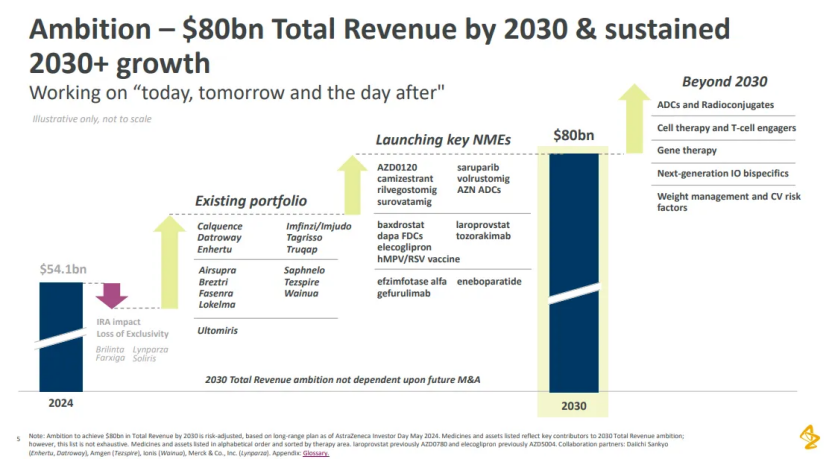
Industry Overview - The 44th JPMorgan Healthcare Conference is taking place in San Francisco, attracting over 8,000 industry elites from biotechnology, pharmaceuticals, and medical devices [1][24] - The global pharmaceutical sector saw a record 516 licensing deals in the past year, totaling over $250.2 billion, indicating a rise in industry transaction activity [24] - The shadow of the "patent cliff" continues to loom over many large pharmaceutical companies, prompting them to actively seek targets and plan for the future [24] AI Integration - AI has transitioned from a concept to a core component of research and development, with companies increasingly focusing on its strategic importance [24][29] - AstraZeneca has elevated AI to a strategic level, implementing its AI Development Agent (AIDA) system to reduce CMC development time by 50% [29] - Eli Lilly announced a partnership with NVIDIA to establish an AI innovation lab, investing $1 billion over five years to accelerate drug development [7][32] AstraZeneca's Strategy - AstraZeneca is focusing on "next-generation dual antibodies + high-value ADCs" as pillars for innovation and growth, aiming for $80 billion in total revenue by 2030 [2][25] - The company has initiated 14 Phase III trials for its PD-1/TIGIT and PD-1/CTLA-4 dual antibodies, with peak sales expected to exceed $3 billion and $2 billion, respectively [5][28] - AstraZeneca's revenue grew by 11% in the first nine months of 2025, with core EPS increasing by 15% [6][29] Pfizer's Focus - Pfizer's strategy for 2026 emphasizes maximizing acquisition asset value, achieving key R&D milestones, and applying AI across its operations [9][33] - The company has reduced operational costs by $5.6 billion to offset declining COVID-19 revenue, which is projected to drop from $11 billion in 2024 to $6.5 billion in 2025 [11][35] - Pfizer is building a differentiated portfolio in the obesity market, aiming to launch products by 2028 that could tap into a market projected to reach $150 billion by 2030 [12][35] Novartis' Pipeline - Novartis is focusing on cardiovascular, renal, metabolic, immunology, neuroscience, and oncology, with a robust pipeline supported by various technology platforms [36][39] - The company expects nine products to achieve peak sales of over $1 billion, with CDK4/6 inhibitors potentially exceeding $10 billion in peak sales [39] - Novartis anticipates a compound annual growth rate of 5-6% in sales from 2025 to 2030 [39] Bristol-Myers Squibb's Approach - Bristol-Myers Squibb is diversifying its pipeline to navigate the patent cliff, focusing on neuroscience, cardiovascular, immunology, and oncology [16][40] - The company plans to disclose core registration data for 13 new molecular entities in 2026 and complete 14 Phase III trials [41] Sanofi's Business Development - Sanofi is actively pursuing business development to enhance its early pipeline, aiming to launch 8-12 high-quality early projects by 2028-2030 [22][49] - The company has completed over 20 business development transactions since 2025, including significant acquisitions to bolster its pipeline [49]


15天9起合作,狂飙60亿美元!2026AI制药开门红,礼来、英伟达、赛诺菲重金押注!
Xin Lang Cai Jing· 2026-01-15 14:09
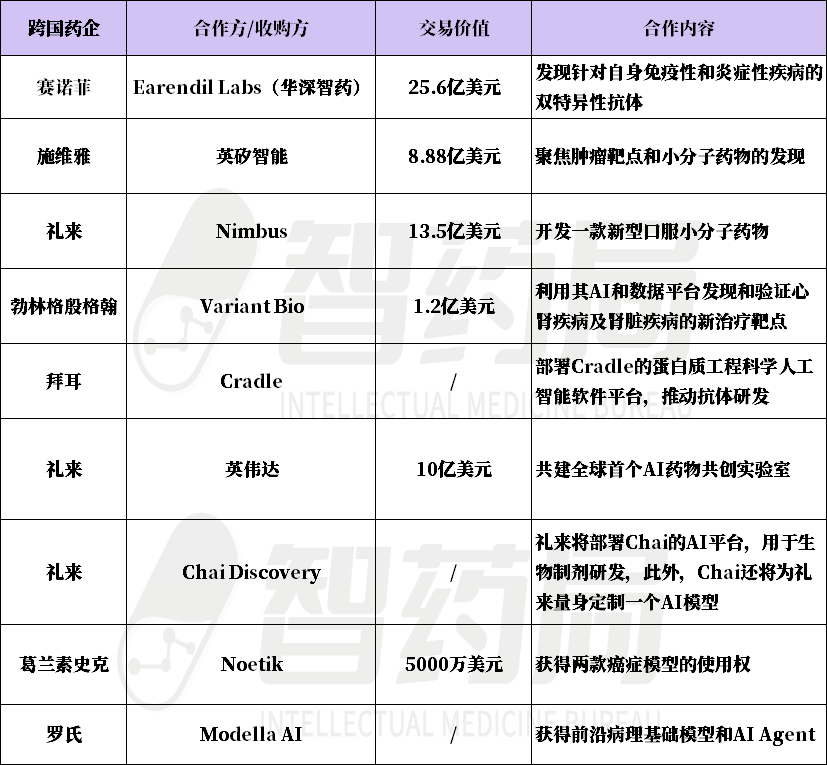
Core Insights - The pharmaceutical industry is experiencing a surge in AI drug development collaborations, with over 9 partnerships announced in just 15 days, totaling more than $6 billion [1][18] - Major pharmaceutical companies are systematically integrating AI, particularly large biopharmaceutical models, into their core R&D processes, moving beyond small-scale pilot projects to enhance efficiency and overcome R&D bottlenecks [3][20] Group 1: Collaborations and Investments - Sanofi partnered with Earendil Labs for $2.56 billion to discover bispecific antibodies for autoimmune and inflammatory diseases [2][19] - Eli Lilly invested $1 billion with NVIDIA to co-build the world's first AI drug co-creation laboratory [2][23] - Takeda renewed its collaboration with Nabla Bio for over $1 billion to strengthen its AI drug development efforts [5][21] Group 2: Shift in AI Utilization - AI is transitioning from pilot projects to foundational infrastructure within pharmaceutical companies, with a shift in investment focus from R&D expenses to strategic investments [5][22] - The collaborations are diverse, including traditional project-based agreements, model subscriptions, platform co-construction, and acquisitions [2][19] Group 3: Advancements in AI Models - The industry is increasingly investing in large biopharmaceutical models, moving from a focus on small chemical molecules to more complex biologics [6][24] - The release of AlphaFold3 has significantly improved the accuracy of predicting biological interactions, marking a turning point in the industry [28] - Companies like GSK are willing to pay substantial fees for access to advanced AI models, indicating a shift in how AI platforms are valued in drug development [13][30] Group 4: Future Trends - The demand for AI and related platforms in the pharmaceutical industry is expected to grow, with companies needing to integrate top AI capabilities with internal biological insights and clinical data [15][16] - The emergence of AI agents and automated laboratory technologies based on large models has the potential to disrupt traditional R&D logic [30]


Does Sanofi (SNY) Have a Long Runway for Future Growth?
Yahoo Finance· 2026-01-15 13:12
Group 1: Fund Performance - Oakmark Global Select Fund delivered a return of 2.91% in the fourth quarter of 2025, lagging behind the MSCI World Index's gain of 3.12% [1] - Healthcare and financials were the top performance contributors, while consumer discretionary and consumer staples detracted from performance [1] Group 2: Sanofi Overview - Sanofi is a global pharmaceutical company known for developing biologics, vaccines, and healthcare solutions, particularly its blockbuster drug Dupixent [3] - As of January 14, 2026, Sanofi's stock closed at $47.89 per share, with a one-month return of -0.21% and a 52-week loss of 5.62% [2] - Sanofi has a market capitalization of $116.027 billion [2] Group 3: Investment Insights on Sanofi - The company has prioritized innovation through aggressive investment in research and development, cultivating a promising product pipeline [3] - Despite strong fundamentals, Sanofi's stock has been affected by a volatile vaccine market, investor concerns about patent cliffs, and minimal value ascription to its pipeline, creating an investment opportunity [3] - Sanofi is not among the 30 most popular stocks among hedge funds, with 32 hedge fund portfolios holding the stock at the end of Q3, up from 24 in the previous quarter [4]
赛默飞世尔科技2026财年年报业绩会议总结
仪器信息网· 2026-01-15 08:59
Core Insights - The article discusses the performance and future outlook of Thermo Fisher Scientific, highlighting its strong market position and growth strategies for 2026 and beyond [3][19]. Financial Performance Analysis - No specific financial data is disclosed; the company plans to release its 2025 performance and 2026 guidance at the end of the month [4]. Key Growth Drivers - Revenue growth is driven by new product launches such as the Astral Zoom mass spectrometer and next-generation cryo-electron microscopes, alongside market share gains in the pharmaceutical and biotechnology sectors [5]. - Cost control measures through the PPI business system have led to exceeding a $300 million cost reduction target in 2025 [5]. - Capital deployment includes the acquisition of Solventum's purification and filtration business, the acquisition of Sanofi's production facility, and a $9 billion acquisition of Clario, with $3.6 billion returned to shareholders through buybacks and dividends [6]. Business Operations Overview - The pharmaceutical and biotechnology segment, which accounts for 56% of revenue, achieved mid-single-digit organic growth in the first nine months of 2025, outperforming industry standards [7]. - The bioproduction segment saw mid-teens organic growth, with strong demand for culture media and single-use technologies [7]. - The clinical research segment, as the second-largest CRO, experienced strong growth driven by accelerated drug development capabilities [7]. - The analytical instruments segment had low single-digit organic growth in 2025, with strong demand for core products like the Astral Zoom mass spectrometer [7]. Market Expansion - The U.S. market benefits from a trend of pharmaceutical reshoring, with the acquisition of Sanofi's New Jersey facility expanding sterile filling capacity [8]. - Increased confidence among pharmaceutical and biotechnology clients, along with improved funding in biotechnology, is driving industry demand growth [8]. R&D Investments and Outcomes - The company invests approximately $1.4 billion annually in R&D, launching several innovative products including the Astral Zoom mass spectrometer and scalable bioreactors [9]. Operational Efficiency - The PPI business system enhances cost reduction and productivity, successfully exceeding a $300 million cost reduction target in 2025 [10]. Future Outlook and Planning - Short-term goals for 2026 include executing growth strategies, launching impactful innovative products, and leveraging PPI and AI capabilities to enhance operational efficiency [12]. - Long-term strategies anticipate industry fundamentals improving, with organic growth expected to recover to over 7% by 2028 and beyond, driven by factors such as aging populations and advancements in life sciences [13]. Q&A Highlights - The company positions itself for 2026 as a year of significant opportunity, with a clear strategy and wise capital deployment [14]. - The CDMO business is expected to grow at a high single-digit rate, benefiting from reshoring and strong execution [16]. - The acquisition of Solventum is expected to enhance the product portfolio and contribute to mid-high single-digit organic growth [17]. - The basis for projected organic growth of 3%-6% in 2026-2027 is grounded in steady market improvements and market share growth [18]. Summary Remarks - The management emphasizes a focus on executing growth strategies through innovative products and operational efficiency improvements via the PPI business system and AI capabilities [19].


AI制药专家交流
2026-01-15 01:06
Summary of AI in Pharmaceutical Industry Conference Call Industry Overview - AI applications in early pharmaceutical stages such as target discovery and molecular design have matured significantly, enhancing efficiency. However, recognition of experimental data and regulatory challenges remain short-term bottlenecks limiting large-scale AI adoption [2][4][5] - The maturity of AI in drug development decreases through the process, with substantial support in early stages but limited assistance in clinical phases due to regulatory restrictions on modifying trial protocols or dosing methods [3][25] Key Insights - **Core Elements for AIGC Development**: Computing power, algorithms, and data are critical for AIGC. Large pharmaceutical companies have data advantages but face challenges in data processing, while smaller biotech firms can be more agile [6] - **Talent Requirements**: AIGC talent typically has backgrounds in biomedicine or algorithms, with most skills developed on-the-job rather than through formal education [7] - **Efficiency Gains**: AI tools can significantly reduce the time required for tasks such as identifying biomarkers, with traditional methods taking much longer compared to AI-assisted approaches [8][9] Company-Specific Insights - **Farm AI Platform**: This platform boasts strong computational and data processing capabilities, integrating various omics data to enhance screening efficiency and optimize clinical trial design, providing a competitive edge [10] - **Unique Business Model of Yingxi Company**: Yingxi combines an AI platform with proprietary pipelines, allowing for iterative development and revenue generation through licensing, which enhances efficiency and feedback on results [12][13] - **Strategic Focus**: Yingxi's primary revenue source is from pipeline development, emphasizing the advancement of its proprietary pipelines rather than merely acting as a data or platform provider [14] Pipeline and Clinical Development - **Key Projects**: The most advanced pipeline is project 055, preparing for Phase III trials, showing better therapeutic effects than existing drugs. Another promising project, 5,411, has completed Phase I and is entering Phase II [16][17] - **Clinical Team Composition**: Yingxi's clinical team consists of about 20 members, with some based in the U.S. for FDA communications, while many roles are outsourced to CROs [19] - **Future Collaborations**: Yingxi plans to seek partnerships for advancing clinical pipelines, especially for promising projects nearing Phase III or market entry [20] Challenges and Considerations - **Regulatory Hurdles**: AI's role in clinical phases is limited due to regulations, which do not currently allow AI to directly influence trial designs or dosing adjustments [25][26] - **Biomarker Selection**: The selection of biomarkers during early trials may not always align with final protocols, impacting patient recruitment and trial outcomes [24] Market Trends - **Collaboration Trends**: The partnership between Nvidia and Eli Lilly exemplifies a trend of combining technological capabilities with rich data resources to enhance drug discovery platforms [29] - **Application Differences**: There is a notable difference in AI application maturity between small and large molecules, with most current applications focused on small molecules due to historical data availability and tool development [30] This summary encapsulates the key points discussed in the conference call, highlighting the current state and future directions of AI in the pharmaceutical industry.