
小分子药物

Search documents
医药生物行业周报:中国新药即将闪耀亮相2026年AACR会议-20260324
Guohai Securities· 2026-03-24 15:37
Investment Rating - The report maintains a "Recommended" rating for the pharmaceutical and biotechnology industry [1]. Core Insights - The pharmaceutical sector has underperformed compared to the broader market, with a year-to-date return of -2.90% against -1.36% for the CSI 300 index, indicating a relative underperformance of 1.54 percentage points [5][11]. - The upcoming AACR conference in April 2026 will feature 104 Chinese pharmaceutical companies showcasing over 250 innovative drugs, highlighting the increasing innovation capabilities of domestic firms [5][12]. - The report emphasizes that the logic behind innovative drugs and devices remains unchanged, and the domestic companies' innovation capabilities are gradually strengthening [5]. Summary by Sections Recent Performance - The pharmaceutical and biotechnology sector has seen a decline of 2.77% in the past week, ranking 8th among 31 primary sub-industries [11]. - The sub-sectors of chemical pharmaceuticals, biological products, medical devices, and traditional Chinese medicine have shown varying performance, with declines ranging from -1.16% to -4.32% [5][12]. Market Dynamics - The pharmaceutical sector's valuation is currently at 32.9 times PE based on 2026 earnings forecasts, which is a 30% premium over the overall A-share market (excluding financials) [5][12]. - The TTM valuation stands at 29.5 times PE, below the historical average of 34.9 times PE, indicating a relative premium of 11.14% over the overall A-share market [5][12]. Key Companies to Watch - The report highlights several companies to focus on, including Aidi Pharmaceutical, Fuhong Hanlin, Baiou Pharmaceutical, and others, which are expected to play significant roles in the industry [5][12].
生物医药企业赴港上市热潮持续升温
Xin Lang Cai Jing· 2026-02-12 00:41
Group 1 - The core viewpoint of the articles highlights a surge in local biopharmaceutical companies applying for listings on the Hong Kong Stock Exchange, driven by favorable market conditions and the need for funding to support research and development [1][5][8] - A significant portion of the companies applying for listings are early-stage, unprofitable biotech firms, with many utilizing the special listing channel for unprofitable companies established under Chapter 18A of the Hong Kong Stock Exchange [2][3] - The current wave of IPOs is characterized by a mix of newly established biotech firms and more mature companies with established business models, indicating a diverse range of funding needs and market strategies [3][4] Group 2 - The capital market's cyclical recovery has provided a crucial external window for these listings, with the Hang Seng Innovation Drug Index showing a rebound of over 200% in the past two years, reflecting a renewed focus on quality assets [5][6] - The internal dynamics of the biopharmaceutical industry, combined with the improved liquidity and sentiment in the Hong Kong market, have created a conducive environment for these companies to seek public funding [7][8] - However, there is a growing concern about market congestion, with over a hundred biopharmaceutical companies in the IPO preparation queue, leading to potential differentiation challenges among these firms [8][9] Group 3 - The market is expected to experience significant polarization, with a clear divide between high-value companies and those with weaker clinical data or less innovative pipelines, which may struggle to attract investment [9][10] - Companies that can withstand market fluctuations are those with unique pipelines and a focus on addressing real clinical needs, as opposed to those merely following trends [10][11] - The long-term success in the biopharmaceutical sector will depend on the ability to build competitive advantages through innovative solutions that meet clinical demands, rather than relying on speculative concepts [11]
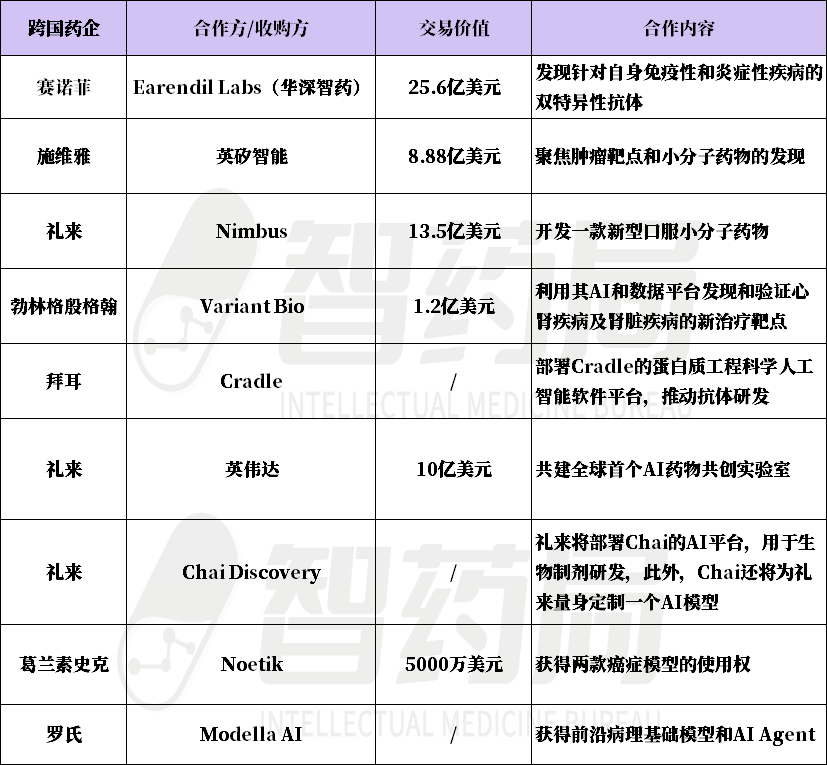
15天9起合作,狂飙60亿美元!2026AI制药开门红,礼来、英伟达、赛诺菲重金押注!
Xin Lang Cai Jing· 2026-01-15 14:09
Core Insights - The pharmaceutical industry is experiencing a surge in AI drug development collaborations, with over 9 partnerships announced in just 15 days, totaling more than $6 billion [1][18] - Major pharmaceutical companies are systematically integrating AI, particularly large biopharmaceutical models, into their core R&D processes, moving beyond small-scale pilot projects to enhance efficiency and overcome R&D bottlenecks [3][20] Group 1: Collaborations and Investments - Sanofi partnered with Earendil Labs for $2.56 billion to discover bispecific antibodies for autoimmune and inflammatory diseases [2][19] - Eli Lilly invested $1 billion with NVIDIA to co-build the world's first AI drug co-creation laboratory [2][23] - Takeda renewed its collaboration with Nabla Bio for over $1 billion to strengthen its AI drug development efforts [5][21] Group 2: Shift in AI Utilization - AI is transitioning from pilot projects to foundational infrastructure within pharmaceutical companies, with a shift in investment focus from R&D expenses to strategic investments [5][22] - The collaborations are diverse, including traditional project-based agreements, model subscriptions, platform co-construction, and acquisitions [2][19] Group 3: Advancements in AI Models - The industry is increasingly investing in large biopharmaceutical models, moving from a focus on small chemical molecules to more complex biologics [6][24] - The release of AlphaFold3 has significantly improved the accuracy of predicting biological interactions, marking a turning point in the industry [28] - Companies like GSK are willing to pay substantial fees for access to advanced AI models, indicating a shift in how AI platforms are valued in drug development [13][30] Group 4: Future Trends - The demand for AI and related platforms in the pharmaceutical industry is expected to grow, with companies needing to integrate top AI capabilities with internal biological insights and clinical data [15][16] - The emergence of AI agents and automated laboratory technologies based on large models has the potential to disrupt traditional R&D logic [30]


药明康德(603259):业绩好于指引 持续经营业务保持较快增长
Xin Lang Cai Jing· 2026-01-15 04:28
Core Viewpoint - The company has released its 2025 performance forecast, expecting a revenue of 45.456 billion yuan, representing a year-on-year growth of 15.84%, with a significant increase in adjusted net profit [1][2] Revenue and Profit Forecast - For 2025, the company anticipates a revenue of 45.456 billion yuan, with a 21% year-on-year growth in continuing operations revenue and an adjusted net profit of 14.957 billion yuan, reflecting a 41.33% increase [1][2] - In Q4 2025, the expected revenue is 12.6 billion yuan, showing a year-on-year growth of 9.19%, with an adjusted net profit of approximately 4.417 billion yuan, up 36.33% year-on-year [1][2] Performance Analysis - The overall performance is better than the annual guidance, with the 2025 revenue exceeding the previously announced guidance of 43.5-44 billion yuan [2] - The adjusted net profit margin for Q4 2025 is projected to be around 35%, an increase from 32.1% in the previous three quarters, indicating improved profitability [2] Business Growth and Capacity Expansion - The company has a robust order backlog of 59.88 billion yuan in continuing operations, a year-on-year increase of 41.2%, with TIDES orders growing by 17.1% [2] - The company is expanding its small molecule and peptide production capacity, with expectations that by the end of 2025, the total volume of small molecule active pharmaceutical ingredient reactors will exceed 4 million liters [2] Earnings Forecast - The company is projected to achieve revenues of 45.456 billion yuan in 2025, 54.635 billion yuan in 2026, and 63.577 billion yuan in 2027, with respective year-on-year growth rates of 15.84%, 20.19%, and 16.37% [3] - The expected net profits for the same years are 19.151 billion yuan, 17.060 billion yuan, and 19.660 billion yuan, with year-on-year growth rates of 102.65%, -10.92%, and 15.24% respectively [3]

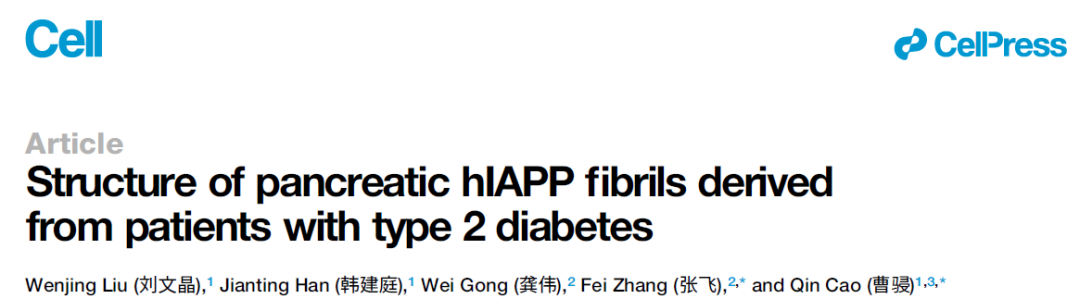
Cell重磅!糖尿病发病的“终极密码”被中国团队破译
Xin Lang Cai Jing· 2026-01-10 10:12
Core Insights - The research published in Cell journal reveals the atomic structure of human islet amyloid polypeptide (hIAPP) fibrils extracted from type 2 diabetes patients, marking a significant advancement in understanding the disease mechanism and potential therapeutic targets [1][2][14]. Group 1: Research Findings - The study identifies a unique "Ω-shaped folding" of hIAPP, which is crucial in the pathology of type 2 diabetes, as it leads to the formation of amyloid fibrils that damage insulin-secreting β-cells [3][6]. - The research team utilized cryo-electron microscopy to directly observe the hIAPP fibrils from patient samples, confirming a highly uniform structure compared to the polymorphic forms seen in vitro [4][6]. - The study highlights the presence of six additional electron density regions in the structure, suggesting the involvement of other molecules (ligands) that stabilize the hIAPP fibrils [7][9]. Group 2: Implications for Diagnosis and Treatment - The findings provide a new understanding of the disease mechanism, proposing that unknown ligands, possibly lipids, play a critical role in driving the pathological folding of hIAPP [9][10]. - The research indicates a structural similarity between hIAPP fibrils and amyloid-beta (Aβ) fibrils found in Alzheimer's disease, suggesting a potential link between the two diseases and the possibility of developing treatments targeting both conditions [10][13]. - The study opens avenues for early diagnosis through the development of molecular imaging probes that can detect hIAPP deposits before clinical symptoms appear, as well as targeted therapies that could disrupt hIAPP fibril formation [13][14].
千亿美元“专利悬崖”逼近!美股制药巨头瞄准收购新药,中小盘生物科技股迎来“超级溢价”投资盛宴?
智通财经网· 2026-01-09 07:45
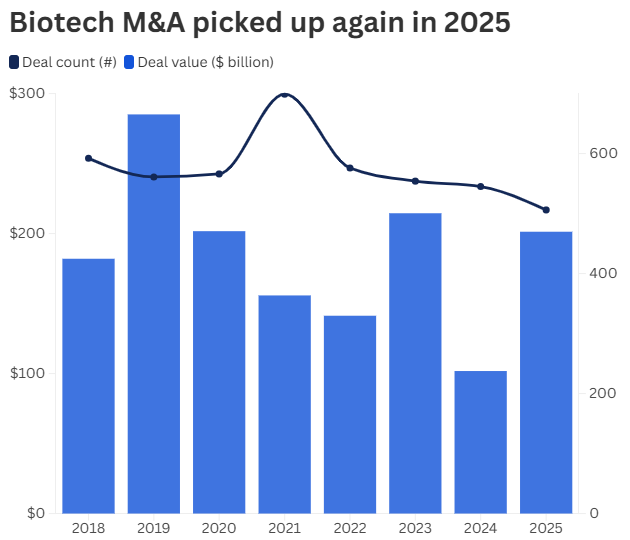
Core Insights - The biotechnology industry has seen a significant resurgence in merger and acquisition (M&A) activity in September and October 2025, following a period of low activity earlier in the year, driven by the easing of pressures on drug pricing and tariffs, as well as the initiation of a new interest rate cycle [1][2][13] - Major pharmaceutical companies are actively seeking to fill revenue gaps due to impending patent expirations, with a projected loss of at least $173.9 billion in annual sales by 2032 from the loss of patent protection on blockbuster drugs [1][5][15] M&A Activity - The competition for high-quality assets is intensifying, exemplified by the high-profile bidding war between Pfizer and Novo Nordisk for Metsera and its leading weight-loss candidate, highlighting the urgency for companies to secure promising products [1][12] - The "patent cliff" phenomenon is a significant driver of M&A activity, as many blockbuster drugs from major companies are approaching the end of their patent protection [6][12] - Between 2014 and 2023, approximately half of the blockbuster drugs approved were acquired rather than developed in-house, with Eli Lilly and AstraZeneca leading in the number of drugs obtained through acquisitions [6][12] Strategic Focus - Companies like GlaxoSmithKline and Novartis are recognizing the need for "complementary transactions" to expand their product lines, with Novartis emphasizing its strong cash flow to invest in business development [7][12] - The focus on acquiring mid-stage assets with validated biological technologies is seen as a strategic priority, with investment amounts typically ranging from $1 billion to $2 billion [7][12] Market Dynamics - The GLP-1 weight-loss drug market has become one of the most competitive segments in the pharmaceutical industry, with over 60 companies developing more than 120 metabolic drugs, providing ample M&A targets [12] - The biotechnology sector has experienced cycles of boom and bust, with the COVID-19 pandemic initially boosting investor interest and valuations, followed by a period of uncertainty due to regulatory pressures [13][14] Future Outlook - Analysts predict that 2026 will present one of the best investment opportunities in decades, driven by the resolution of healthcare policy uncertainties and further interest rate cuts [14] - The potential for significant price reductions on certain blockbuster drugs starting in 2026, as outlined in the Inflation Reduction Act, may increase the urgency for pharmaceutical companies to pursue M&A [14][15]


5亿元!生物制造,呼和浩特大动作!万亿央企出资,已储备36个项目
Xin Lang Cai Jing· 2026-01-08 11:43
Group 1 - The first phase of the 500 million yuan Hohhot Biomedical Industry High-Quality Development Fund, co-established by local state-owned enterprises and China Resources Group, has been officially registered, marking its entry into the substantive investment phase [1][5] - The fund focuses on three main directions: underlying technology innovation, terminal product industrialization, and industrial ecosystem support, with an emphasis on synthetic biology, innovative drugs, and biotechnology [1][5] - Currently, the fund has reserved 36 biomedical projects, indicating a strong pipeline for future investments [1] Group 2 - Hohhot is located at the fermentation golden latitude of 42°N, providing favorable climatic conditions for strain fermentation and continuous production, making it highly suitable for the development of synthetic biological manufacturing [2][8] - Two key areas of focus in the synthetic biology sector are the biovaccine field and the established supply chain from corn to pharmaceuticals, which has a fermentation capacity of 94,000 cubic meters [2][8] Group 3 - The city issued the "Implementation Opinions on Supporting the High-Quality Development of the Synthetic Biology Industry" in February last year, aiming for an industry output value of 50 billion yuan by 2027 and to become a national benchmark city for synthetic biology by 2030 [4][10] - China Resources Group's subsidiary, China Resources Double Crane, has been actively investing in synthetic biology, including a 500 million yuan acquisition of a major coenzyme Q10 supplier and the establishment of a synthetic biology research institute [5][10] Group 4 - The research institute has developed seven technology platforms focusing on industrial enzymes and microorganisms, covering large and small molecule drugs, concentrated medicines, and key compounds, while also promoting the construction of pilot fermentation workshops [7][12] - China Resources Pharmaceutical has partnered with the Shenzhen Institute of Advanced Technology to establish joint laboratories for synthetic biological materials and in vitro diagnostic technologies [7][12]




Why Vertex Pharmaceuticals (VRTX) is a Top Momentum Stock for the Long-Term
ZACKS· 2025-12-08 15:51
Core Viewpoint - The Zacks Style Scores provide a comprehensive framework for investors to evaluate stocks based on value, growth, and momentum, enhancing the effectiveness of the Zacks Rank in identifying high-potential investment opportunities [2][7]. Summary by Category Zacks Style Scores Overview - The Zacks Style Scores rate stocks using an alphabetic system from A to F, where A indicates the highest potential for outperforming the market [3]. - The Style Scores are categorized into four types: Value Score, Growth Score, Momentum Score, and VGM Score, each focusing on different investment strategies [3][4][5][6]. Value Score - The Value Score targets investors seeking undervalued stocks, utilizing financial ratios such as P/E, PEG, Price/Sales, and Price/Cash Flow to identify attractive investment opportunities [3]. Growth Score - The Growth Score emphasizes a company's financial health and future growth potential, analyzing projected and historical earnings, sales, and cash flow [4]. Momentum Score - The Momentum Score assists investors in capitalizing on price trends, using metrics like one-week price changes and monthly earnings estimate changes to identify favorable buying opportunities [5]. VGM Score - The VGM Score combines all three Style Scores, providing a holistic view of a stock's value, growth potential, and momentum, making it a robust indicator alongside the Zacks Rank [6]. Zacks Rank Integration - The Zacks Rank leverages earnings estimate revisions to guide investors in building successful portfolios, with 1 (Strong Buy) stocks achieving an average annual return of +23.93% since 1988, significantly outperforming the S&P 500 [7]. - There are over 800 stocks rated 1 or 2, and the Style Scores help investors narrow down their choices [8]. Stock Example: Vertex Pharmaceuticals - Vertex Pharmaceuticals, focused on developing drugs for serious diseases like cystic fibrosis, holds a 3 (Hold) rating with a VGM Score of B and a Momentum Style Score of B, having seen an 11.2% increase in share price over the past four weeks [11]. - The company's earnings estimate for fiscal 2025 has been revised upwards by nine analysts, increasing the Zacks Consensus Estimate by $0.44 to $18.30 per share, with an average earnings surprise of +2% [12].


Excelsior科学公司融资9500万美元,借助人工智能加速小分子药物研发
Xin Lang Cai Jing· 2025-12-03 14:16
Core Insights - Excelsior Sciences has raised $95 million for the development of machine and artificial intelligence technologies aimed at accelerating the research and testing of small molecules, with the goal of shortening drug development cycles by several years [1][3] Funding Details - The company completed a $70 million Series A funding round led by Deerfield Management, Khosla Ventures, and Sofinnova Partners, along with a $25 million grant from the Empire State Development [1][3] Market Context - Small molecule drugs account for the majority of approved drugs in the U.S., with approximately 60% of newly approved drugs by the FDA still being small molecules, despite the rise of antibody and cell therapies [4] Development Challenges - The research and preparation process for small molecule drugs is slow and costly, often exceeding 10 years and requiring billions of dollars due to the need for customized synthesis processes [4] Technological Innovation - Excelsior Sciences employs a "smart bloccs" approach, described as a new modular language that helps AI more accurately predict how to develop and optimize new therapies [4][5] Efficiency Improvements - A typical process previously took about 4 months or longer, often requiring coordination across multiple contractors in the U.S. and Asia; the new automated facility can reduce this to approximately two weeks [5] - The same process can be scaled for subsequent production, potentially saving an additional 1 to 18 months before clinical trials begin [5] Future Plans - The company plans to demonstrate the full operational capabilities of its platform within 12 months and apply it to at least one drug development project [5]
持续“加仓” 融入“链上”“十四五”以来江苏实际使用外资约占全国1/6
Xin Hua Ri Bao· 2025-11-30 23:26
Core Insights - The article highlights the increasing commitment of multinational companies to invest in Jiangsu, China, showcasing a shift from initial investment to deeper integration and partnership with the local economy [1][2][3][4][6][7] Group 1: Investment Trends - Since the beginning of the 14th Five-Year Plan, Jiangsu has attracted approximately 1/6 of the nation's actual foreign investment, with 43,000 foreign enterprises currently operating in the region [1] - AstraZeneca has invested over $1 billion in Wuxi since its establishment in 1993, with a recent investment of $475 million for a new small molecule drug factory expected to be operational by 2028 [2] - In Wuxi, 33.9% of the actual foreign investment in the first ten months of this year came from reinvested profits of existing foreign enterprises, totaling $970 million [2] Group 2: Foreign Companies' Commitment - Foreign companies are not only establishing operations but are also reinvesting their profits, indicating a long-term commitment to the Jiangsu market [2][3] - The province has seen a continuous increase in profit reinvestment, leading the nation for six consecutive years, demonstrating a strong "magnetic effect" for foreign investment [3] Group 3: Innovation and Collaboration - Foreign enterprises in Jiangsu are shifting focus from cost advantages to integrating into China's robust industrial and innovation chains, indicating a collaborative approach to defining future industry landscapes [4] - The CEO of a Greek company highlighted the potential for collaboration in smart management and technology within the shipbuilding sector in Jiangsu [4] Group 4: Investment Environment - Jiangsu's investment environment has improved significantly, transitioning from reliance on single policy incentives to a comprehensive industrial ecosystem that supports foreign investment [6] - Wuxi High-tech Zone exemplifies this change, with policies that enhance the entire lifecycle of foreign investment, including the establishment of specialized courts and streamlined processes for foreign professionals [6] Group 5: Overall Impact - The growing investment from global multinational companies in Jiangsu reflects a broader narrative of trust and mutual benefit, reshaping the story of opportunities and development in China [7]