软通动力

Search documents
创业板人工智能ETF华夏(159381)开盘涨0.53%
Xin Lang Cai Jing· 2025-12-05 01:41
Core Viewpoint - The article discusses the performance of the ChiNext Artificial Intelligence ETF managed by Huaxia Fund Management, highlighting its recent market activity and returns since inception [1]. Group 1: ETF Performance - The ChiNext Artificial Intelligence ETF (159381) opened with a gain of 0.53%, priced at 1.695 yuan [1]. - Since its inception on March 14, 2025, the fund has achieved a return of 68.77%, with a monthly return of 3.20% [1]. Group 2: Top Holdings - Key stocks in the ETF include: - Zhongji Xuchuang, which opened up by 0.75% - Xinyi Sheng, which increased by 1.98% - Tianfu Communication, which rose by 3.14% - Xiechuang Data, which gained 0.55% - Ruantong Power, which went up by 0.87% - Allwinner Technology remained unchanged at 0.00% - Shenxinfu increased by 0.10% - Beijing Junzheng rose by 0.61% - Zhongke Chuangda increased by 0.31% - Jingjiawei decreased by 0.39% [1].



创业板人工智能ETF华夏(159381)开盘跌0.66%
Xin Lang Cai Jing· 2025-12-04 01:44
Core Viewpoint - The article discusses the performance of the ChiNext Artificial Intelligence ETF managed by Huaxia Fund, highlighting its recent market movements and returns since inception [1]. Group 1: ETF Performance - The ChiNext Artificial Intelligence ETF (159381) opened at a price of 1.659 yuan, experiencing a decline of 0.66% [1]. - The ETF's performance benchmark is the ChiNext Artificial Intelligence Index return [1]. - Since its inception on March 14, 2025, the ETF has achieved a return of 67.07%, with a recent one-month return of 1.26% [1]. Group 2: Top Holdings Performance - Key holdings in the ETF include: - Zhongji Xuchuang, which fell by 1.21% - Xinyi Sheng, which decreased by 1.61% - Tianfu Communication, which dropped by 1.89% - Xiechuang Data, which declined by 0.69% - Softcom Power, which increased by 0.09% - Quanzhi Technology, which fell by 0.02% - Shenxinfu, which rose by 0.43% - Beijing Junzheng, which decreased by 2.66% - Zhongke Chuangda, which dropped by 0.24% - Jingjiawei, which increased by 0.45% [1].
从实验室跑进生产线 人形机器人商业化加速落地
Zheng Quan Shi Bao· 2025-12-04 00:32
Group 1 - The humanoid robot industry is experiencing significant positive developments, with leading companies actively engaging in technology research and commercialization, marking a critical transition phase [1][2] - Major humanoid robot companies are launching new products, such as Tesla's Optimus robot, Zhongqing Robot's T800, and Atom One by Atonomous, indicating a surge in innovation and product availability [2] - The humanoid robot supply chain in China has established a comprehensive layout, with several A-share listed companies entering the mass supply phase, suggesting a robust growth trajectory for the industry [3] Group 2 - The global humanoid robot market is projected to reach approximately $1.017 billion in 2024, with an expected growth to $15 billion by 2030, reflecting a compound annual growth rate (CAGR) of over 56% [3] - The Chinese market is anticipated to grow to 38 billion RMB by 2030, capturing 44.77% of the global market share, highlighting the vast potential for industry expansion [3] - Among humanoid robot concept stocks, 36 companies have seen their stock prices decline by over 20% from their yearly highs, indicating potential undervaluation in the market [4] Group 3 - Among the humanoid robot concept stocks, five companies have a rolling price-to-earnings (P/E) ratio below 30, suggesting they may be undervalued compared to their peers [4] - Zhongding Company has the lowest rolling P/E ratio at 18.18, and it has completed its industrial layout in key components such as joint assemblies and sensors, positioning itself well for future growth [5]

从“实验室”跑进“生产线”人形机器人商业化加速落地
Zheng Quan Shi Bao· 2025-12-03 17:35
Group 1 - The humanoid robot industry is experiencing significant positive developments, with leading companies actively engaging in technological advancements and commercial deployment, marking a critical transition phase [1] - Major humanoid robot companies, including Tesla, Zhongqing Robotics, and Yushu Technology, have recently launched new products and solutions, indicating a shift towards mass production and supply [1] - The Chinese humanoid robot industry has established a complete supply chain, with several A-share listed companies entering the bulk supply phase, suggesting a potential surge in delivery volumes in the coming year [1] Group 2 - The development of embodied intelligence in humanoid robots is evolving from mere functionality to practical usability, with the next 3-5 years being crucial for transitioning from demonstration to reliable commercial use [2] - The global humanoid robot market is projected to grow from approximately $1.017 billion in 2024 to $15 billion by 2030, with a compound annual growth rate exceeding 56%, while the Chinese market is expected to reach 38 billion RMB by 2030 [2] - Among humanoid robot concept stocks, five companies have low valuations, with rolling price-to-earnings ratios below 30, indicating potential investment opportunities [3] Group 3 - Softcom Power has experienced the largest price drop among humanoid robot concept stocks, with a 42.81% decline since its peak in February, despite forming strategic partnerships for technological advancements [3] - The lowest rolling price-to-earnings ratio among the identified stocks is 18.18 for Zhongding Co., which has completed its industrial layout in key components for humanoid robots [3]
从“实验室”跑进“生产线” 人形机器人商业化加速落地
Zheng Quan Shi Bao· 2025-12-03 17:33
Group 1 - The humanoid robot industry is experiencing significant positive developments, with leading companies actively moving towards commercialization and mass supply stages [1][2] - Major humanoid robot companies, including Tesla, Zhongqing Robotics, and Yushu Technology, have recently launched new products and are initiating IPOs and mergers, indicating a shift towards industrialization and capitalization [2][3] - The Chinese humanoid robot industry has established a complete supply chain, with several listed companies entering mass supply phases and expected to see a surge in delivery volumes in the coming year [3] Group 2 - The global humanoid robot market is projected to reach approximately $1.017 billion in 2024 and $15 billion by 2030, with a compound annual growth rate exceeding 56%, while the Chinese market is expected to reach 38 billion RMB by 2030 [3] - Among humanoid robot concept stocks, 36 companies have seen their stock prices decline by over 20% from their yearly highs, with Softcom Power experiencing the largest drop of 42.81% [4] - As of December 3, five humanoid robot concept stocks have rolling price-to-earnings ratios below 30, indicating potential undervaluation in the market [4][5]


软通动力:公司及控股子公司实际担保主债权余额约为36.85亿元
Mei Ri Jing Ji Xin Wen· 2025-12-03 11:30
Group 1 - The company Softcom Power announced that as of the date of the announcement, the actual guarantee principal balance of the company and its controlling subsidiaries is approximately 3.685 billion RMB, which accounts for 34.85% of the audited net assets attributable to shareholders of the listed company as of the end of 2024 [1] - The total guarantee amount for the company and its controlling subsidiaries is approximately 9.238 billion RMB, excluding guarantees between controlling subsidiaries and the parent company, and includes about 5.553 billion RMB of unused guarantee amount [1] - The company and its controlling subsidiaries do not provide guarantees to entities outside the consolidated financial statements [1]
软通动力(301236) - 关于公司全资子公司之间提供担保的公告
2025-12-03 11:14
证券代码:301236 证券简称:软通动力 公告编号:2025-108 软通动力信息技术(集团)股份有限公司 关于公司全资子公司之间提供担保的公告 本公司及董事会全体成员保证信息披露的内容真实、准确、完整,没有虚假 记载、误导性陈述或重大遗漏。 一、担保概述 为促进软通动力信息技术(集团)股份有限公司(以下简称"公司")子公 司的业务发展,公司全资子公司深圳软通动力信息技术有限公司(以下简称"深 圳软通")拟为公司全资子公司江西软通智数技术服务有限公司(以下简称"江 西智数")在保证合同生效之日至 2026 年 12 月 31 日期限内,提供最高不超过 3000 万元人民币余额的连带责任担保。 根据《深圳证券交易所上市公司自律监管指引第 2 号——创业板上市公司 规范运作》等相关规定,本次担保事项属于上市公司控股子公司为上市公司合并 报表范围内的法人提供担保,已履行子公司内部审批程序,无需提交公司董事会、 股东大会审议。 二、被担保人基本情况 名 称:江西软通智数技术服务有限公司 成立日期:2025 年 1 月 22 日 注册地点:江西省赣江新区直管区金山大道 2333 号杏茂商业中心 3-4#楼 902 室 ...
人形机器人明年交付量有望迎来爆发 多只业绩高增长概念股已大幅回撤
Zheng Quan Shi Bao Wang· 2025-12-03 08:13
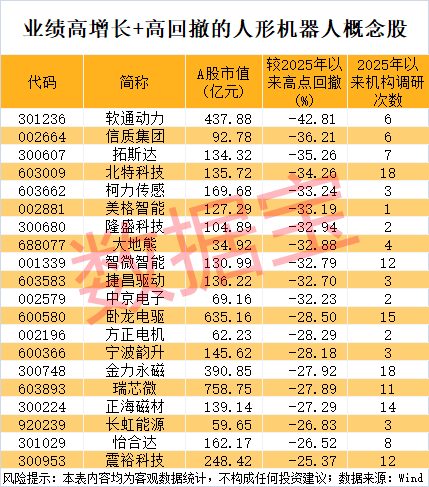
Group 1 - The Chinese humanoid robot industry chain has formed a complete layout, with multiple A-share listed companies making breakthroughs in various segments [1] - Several listed companies have entered the mass supply stage, and the delivery volume is expected to see a significant increase next year [1] - In the first three quarters of this year, humanoid robot concept stocks with a year-on-year net profit growth of 20% (including turning losses into profits) have seen 36 stocks retreat over 20% from their annual highs as of December 3 [1] Group 2 - Among the 36 humanoid robot concept stocks, five have a rolling price-to-earnings ratio below 30 times, including Zhongding Co., Huaqin Technology, Changhong Energy, Mingke Precision, and Jihong Co. [1] - The market capitalization of several companies has significantly decreased from their peak values, with Softcom Power down 42.81%, Xinzhi Group down 36.21%, and Tuosida down 35.26% [2] - The number of institutional research visits for these companies varies, with Softcom Power receiving 6 visits and Tuosida receiving 7 visits [2]




陕西省人民政府新闻办公室举办新闻发布会介绍陕西“十四五”时期民生保障和社会建设成效有关情况
Shan Xi Ri Bao· 2025-12-03 07:50
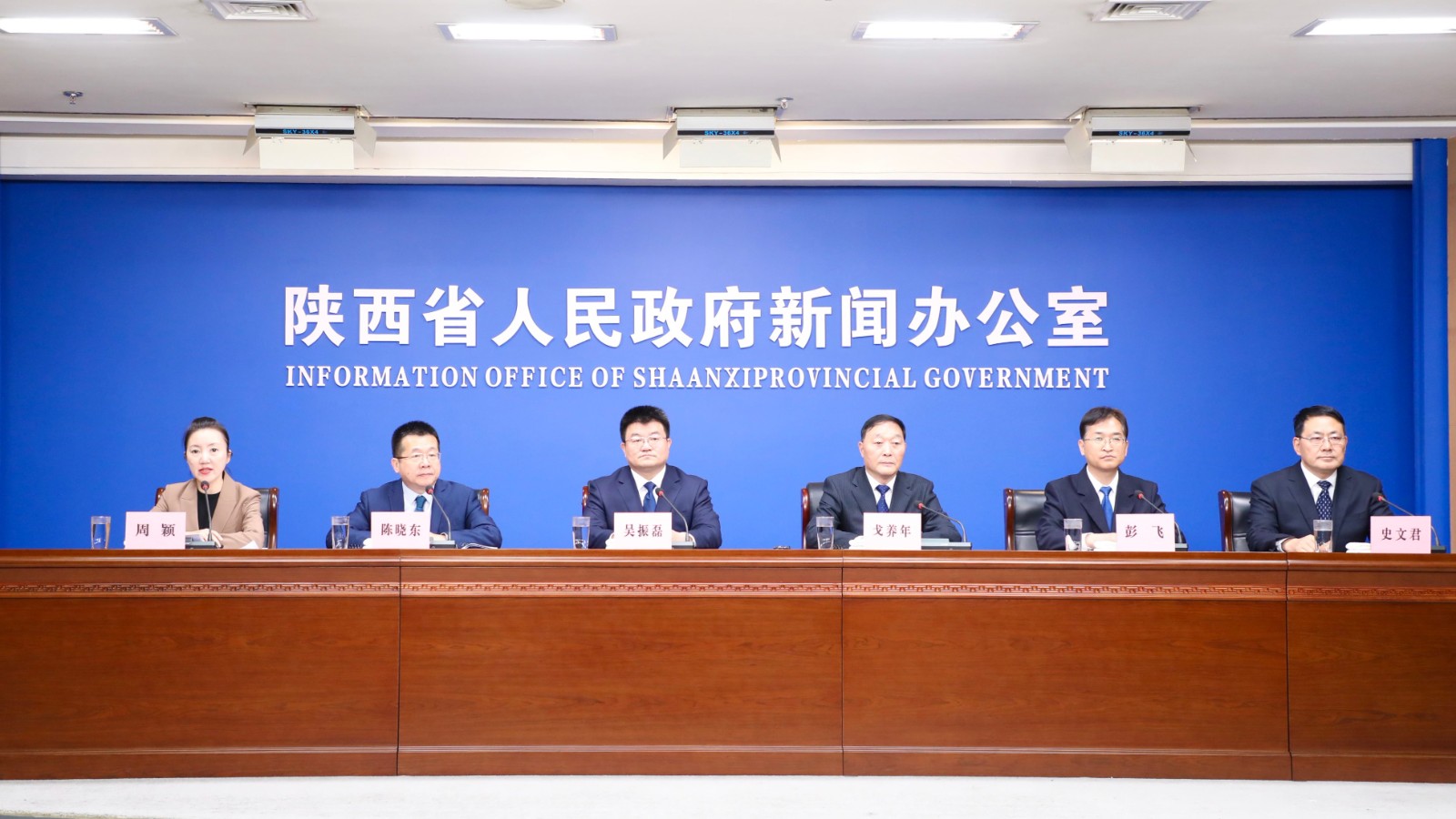
Core Viewpoint The news conference held by the Shaanxi Provincial Government highlighted the achievements in social welfare and construction during the "14th Five-Year Plan" period, focusing on employment stability, social security reforms, talent development, and healthcare improvements. Employment and Social Security - The employment situation in Shaanxi has remained stable, with over 2.14 million new urban jobs created during the "14th Five-Year Plan" period, supported by various employment policies and training programs [5][6]. - The social security system has been enhanced, with the number of participants in basic pension, unemployment, and work injury insurance reaching 32 million, 5.66 million, and 7.27 million respectively, showing significant increases from the end of the "13th Five-Year Plan" [6][7]. Talent Development - The province has focused on aligning talent development with key industrial needs, resulting in over 2.6 million professional technical personnel and attracting more than 6,000 postdoctoral talents for research and innovation [7][8]. - A comprehensive talent support system has been established, including a new skill level system and extensive training programs, contributing to over 6.1 million skilled workers in the region [8]. Healthcare Improvements - Shaanxi has strengthened its public health system, effectively managing multiple COVID-19 outbreaks and reducing the incidence of tuberculosis from 47.26 per 100,000 in 2020 to 36.72 per 100,000 [14][15]. - The province has improved healthcare access and quality, with 434 hospitals implementing streamlined services, and the establishment of regional medical centers to enhance healthcare delivery [15][16]. Education Development - The education system has made significant strides, with 8 universities included in national "Double First-Class" initiatives and over 600 new educational institutions built or renovated [9][10]. - The province has implemented various educational reforms, including a focus on moral education and the integration of technology in teaching, resulting in improved student engagement and performance [10][11]. Social Welfare and Governance - Shaanxi has enhanced its social welfare programs, with an increase in the average urban and rural minimum living standards by 10.1% and 15.5% respectively, ensuring support for over 1.19 million urban low-income individuals [19][20]. - The province has optimized social governance, with initiatives to improve marriage registration services and reduce funeral costs, enhancing overall community welfare [21][22].
中国平板季度出货:华为占比31%甩开苹果,联想增长71%
Guan Cha Zhe Wang· 2025-12-03 06:28
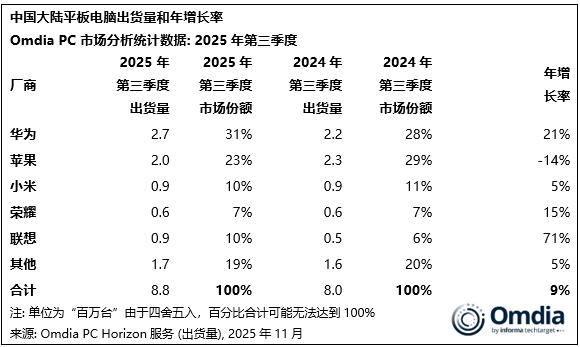
Group 1: Tablet Market Overview - The Chinese tablet market continues to show strong momentum, with Q3 2025 shipments increasing by 9% year-on-year to 8.8 million units, characterized by a split between domestic brands leading and Apple declining [1] - Huawei leads the market with a shipment of 2.7 million units and a 31% market share, growing 21% year-on-year, while Apple's iPad shipments fell 14% to 2 million units, reducing its market share from 29% to 23% [1] - Domestic manufacturers collectively hold 77% of the market share, up 5 percentage points from the previous year, with Xiaomi and Lenovo each shipping 900,000 units and Honor at 600,000 units [1] Group 2: Challenges for Apple - Apple's iPad faces multiple challenges in the domestic market, including competition from local tablets priced between 2,000-3,000 yuan that offer superior specifications [1] - The lack of product innovation and extended iteration cycles for the iPad, despite the strong performance of the M chip, make it difficult to compete with localized innovations from Huawei and Lenovo [1] Group 3: Future Market Projections - Omdia forecasts that the tablet market will grow by 12% to 35 million units by the end of 2025, driven by aggressive product launches and pricing strategies from domestic manufacturers [2] - However, a market adjustment is expected in 2026, with a projected decline of 9% to 32 million units [2] Group 4: PC Market Overview - In Q3 2025, the Chinese PC market saw a 2% year-on-year increase in shipments, reaching 11.3 million units, with desktop shipments growing by 8% to 3.3 million units, primarily driven by strong demand in the commercial sector [2][3] - Lenovo remains the market leader with a 39% share, shipping 4.4 million units, while Huawei's shipments declined by 7% to 1 million units, reducing its market share to 9% [3] Group 5: Future Projections for PC Market - Omdia anticipates a 5% year-on-year growth in the PC market by the end of 2025, reaching 41.5 million units, supported by robust commercial procurement and steady consumer demand [5] - The trend is expected to continue into 2026, although a slight decline of 2% is projected due to weakening consumer demand [5] - The adoption of AI is accelerating in both consumer and commercial markets, with 32% of PCs in Greater China expected to have AI capabilities by 2025, increasing to 46% by 2026 [5]