
中信银行

Search documents
又一大型理财子公司高管变动
Zhong Guo Ji Jin Bao· 2025-11-07 07:21
Group 1 - The core point of the article is the significant management change at Xinyin Wealth Management, with He Jin appointed as the new president, succeeding Dong Wenzhe, who has moved to become the head of the Fuzhou branch of CITIC Bank [1][2] - He Jin, born in January 1979, has extensive experience in the banking and asset management sectors, having worked for major banks including Agricultural Bank of China and Industrial and Commercial Bank of China before joining CITIC Bank in 2016 [2] - Since its establishment in July 2020, Xinyin Wealth Management has undergone several leadership changes, with a registered capital of 5 billion yuan and a focus on various asset management services [2] Group 2 - As of the end of September 2025, Xinyin Wealth Management's managed scale of wealth management products reached 2.21 trillion yuan, reflecting a year-on-year growth of 10.90%, with the number of clients increasing by 9.44% to 10.92 million [3] - The company generated investment returns of 33.71 billion yuan in the first three quarters of the year, marking a 15.15% increase compared to the previous year [3] - Xinyin Wealth Management is accelerating the development of a dual-driven growth model that combines multi-asset and multi-strategy investment with advisory services, aiming to become a key supplier of rights-containing products [3]


又一大型理财子公司高管变动
中国基金报· 2025-11-07 07:07
Core Viewpoint - The article discusses the significant leadership change at Xinyin Wealth Management, with He Jin taking over as president from Dong Wenzhen, who has moved to a new role at CITIC Bank's Fuzhou branch [2]. Group 1: Leadership Changes - He Jin, born in January 1979 and a graduate of Peking University, has extensive experience in the banking and asset management sectors, having worked at major banks including Agricultural Bank of China and Industrial and Commercial Bank of China before joining CITIC Bank [3]. - He Jin has been with Xinyin Wealth Management since its inception, serving in various roles including vice president and overseeing multiple business areas such as investment, research, risk, and finance [3]. - The leadership transition reflects a broader trend within Xinyin Wealth Management, which has seen multiple changes in its top management since its establishment in July 2020 [3]. Group 2: Company Performance - As of September 2025, Xinyin Wealth Management's asset management scale reached 2.21 trillion yuan, marking a 10.90% increase from the end of the previous year [4]. - The number of clients holding wealth management products grew to 10.92 million, a 9.44% increase year-on-year [4]. - The company generated investment returns of 33.71 billion yuan in the first three quarters of the year, reflecting a 15.15% year-on-year growth [4]. Group 3: Product Development - Xinyin Wealth Management is focusing on a dual-driven growth strategy that combines multi-asset and multi-strategy investment with advisory services, aiming to become a key supplier of rights-based products [4]. - As of September 2025, the scale of rights-based products reached 261.02 billion yuan, an increase of 53.94 billion yuan from the previous quarter, with the proportion of new products rising from 9.83% to 11.94% [5].


多家股份行城商行前三季发力个人房贷
Feng Huang Wang· 2025-11-07 02:27
Core Insights - The latest reports indicate a significant increase in personal housing loans from several listed banks, contrasting with the decline observed in state-owned banks' mortgage lending [1][2][6][7] Group 1: Personal Housing Loan Growth - Nearly ten listed banks, including Minsheng Bank, Ping An Bank, and others, reported a clear increase in personal housing loans by the end of Q3 compared to the beginning of the year [1][2] - Specific banks like Ping An Bank reported a housing loan balance of 3,523.50 billion yuan, growing by 8.1% from the beginning of the year [2] - Minsheng Bank's mortgage loan balance increased by 180.41 billion yuan, marking a growth of 3.24% [2] Group 2: State-Owned Banks' Decline - The six major state-owned banks experienced a reduction of over 1,000 billion yuan in personal housing loans in the first half of the year, continuing a downward trend for three consecutive years [1][6] - By the end of Q3, the total personal housing loan balance for these banks was approximately 25.086 trillion yuan, reflecting a decrease of 1,078 billion yuan since the beginning of the year [6] Group 3: Market Dynamics and Regional Insights - The demand for housing loans remains strong in certain regions, such as Jiangsu, Zhejiang, and Shanghai, prompting banks to increase mortgage lending [4][5] - The new personal housing loans issued in key economic regions accounted for 87.70% of the total new loans issued by Shanghai Pudong Development Bank, indicating a regional focus in lending strategies [3] Group 4: Overall Market Trends - As of the end of Q3 2025, the total personal housing loan balance in the market was 37.44 trillion yuan, showing a year-on-year decline of 0.3% despite the growth from smaller banks [7] - The overall trend suggests that while some smaller banks are increasing their mortgage lending, it is not sufficient to offset the overall decline in the personal housing loan market driven by the larger state-owned banks [7]



“耐心资本”青睐红利资产,国企红利ETF(159515)盘中上涨0.5%
Sou Hu Cai Jing· 2025-11-07 02:12
Core Viewpoint - The news highlights the increasing importance of dividend assets in the context of China's economic policies, particularly emphasizing the role of "patient capital" from insurance funds and the regulatory push for higher dividend payouts from listed companies [1][2]. Group 1: Market Performance - As of November 7, 2025, the CSI State-Owned Enterprises Dividend Index (000824) rose by 0.39%, with notable increases in constituent stocks such as Huayang Co. (600348) up by 2.58% and CITIC Bank (601998) up by 2.25% [1]. - The National Enterprise Dividend ETF (159515) also saw an increase of 0.50% [1]. Group 2: Policy and Regulatory Environment - The "14th Five-Year Plan" emphasizes the introduction of "patient capital," primarily from insurance funds, which favor dividend assets due to their stable cash flow characteristics [1]. - Policies like the "Nine National Policies" require listed companies to increase their dividend payout ratios, with state-owned enterprises' dividend scale exceeding 370 billion yuan [1][2]. - Regulatory focus on dividend payouts is expected to provide a solid institutional guarantee for the long-term investment value of dividend assets [1]. Group 3: Investment Strategy - Analysts suggest that the policy guidance injects significant vitality into dividend assets, with major brokerages recommending a dual strategy of technology and dividend stocks for 2025, positioning dividend stocks as defensive assets in a low-interest-rate environment [1].





中国银行业(HA 股)_ 2025 年第三季度表现分化,上行空间有限但下行支撑稳固-Banks - China (H_A)_ 3Q25 mixed, upside limited but good for downside support
2025-11-07 01:28
Summary of Key Points from the Conference Call Industry Overview - **Industry**: Chinese Banking Sector (H-share banks) - **Period**: 3Q25 results and 9M25 performance Earnings Review - **Net Profit Growth**: Increased from +0.4% YoY in 1H25 to +0.5% in 9M25, with all big six state banks reporting positive YoY growth [1][11] - **Core Earnings Growth**: Slowed from +1.6% YoY in 1H to +0.8% by 9M25 [1] - **Performance Comparison**: H-share bank sector rose 19.9% YTD, underperforming MSCI China and HSI by 16ppt and 9ppt, respectively [1][11] - **Dividend Yield**: Sector's dividend yield at 5.3% is considered unattractive [1][11] - **Stock Recommendations**: Downgraded CCB-H/ABC-H from Buy to Neutral; upgraded BoComm-H from Underperform to Neutral; ICBC is the top pick among large banks [1][11] Loan Growth and Deposit Trends - **Loan Growth**: Average loan growth decelerated from 6.8%/6.9% YoY in FY24/1H25 to 6.3% in 9M25; big six state banks led with 7.5-10.0% YoY growth [2] - **Small Banks**: Experienced loan size contraction of 0.3-1.4% QoQ, raising concerns [2] - **Deposit Growth**: Seasonally low at 0.2% QoQ in 3Q, but YoY growth at 6.8% exceeded loan growth [2] Net Interest Margin (NIM) - **NIM Trends**: Average NIM edged down 1bp QoQ to 1.42% in 3Q; some banks reported NIM increases due to reduced funding costs [3] - **Future Outlook**: Potential stabilization of margins expected if no further policy rate cuts occur [3] Non-Interest Income - **Fee Income Growth**: Improved from +3.3% YoY in 1H to +4.8% in 9M25, attributed to a lower base and strong capital markets [4] - **Trading Gains**: Weakened from 29% YoY in 1H25 to 16% in 9M25, with some banks experiencing significant QoQ drops [4] Credit Quality and Provisions - **NPL Ratio**: Stable at 1.22% QoQ/YTD; average credit cost fell 5bp YoY to 67bp in 9M25 [5] - **Provisions**: Total provisions rose by +0.5% YoY in 9M, down from +3.5% in 1H [5] - **Coverage Ratios**: NPL and loan reserve coverage edged down QoQ to 232% and 2.75%, respectively [5] Valuation and Market Performance - **Valuation Metrics**: H-share banks currently trade at 0.55x P/B, 3.5x P/PPOP, and 6.0x P/E; dividend yield has declined from nearly 10% in Jan-2024 to 5.3% [11][21][23] - **Market Performance**: H-share banks underperformed the MSCI China index YTD; A-H share premium narrowed from 34% to 21% [31][11] Conclusion - The Chinese banking sector is showing mixed signals with modest profit growth and declining loan growth. While larger banks provide some stability, the overall market performance and valuation metrics suggest caution for investors. The focus remains on key players like ICBC, with recommendations adjusted based on recent performance.



私行业务成银行“香饽饽”?七家客户数破10万大关
Xin Lang Cai Jing· 2025-11-07 00:20
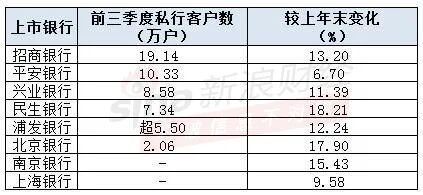
Core Insights - The private banking sector in China is experiencing significant growth, with several listed banks reporting an increase in private banking clients exceeding 10% [1][2][3] - Notably, Minsheng Bank, Beijing Bank, and Nanjing Bank have all reported client growth rates above 15% [1][2][3] - As of the end of September, the total number of private banking clients at Minsheng Bank reached 73,409, marking an 18.21% increase from the previous year [3][5] Private Banking Client Growth - Multiple banks have shown robust growth in private banking clients, with Minsheng Bank, Beijing Bank, and Nanjing Bank leading with growth rates over 15% [1][2][3] - As of September 30, 2023, the number of private banking clients at major banks is as follows: - China Merchants Bank: 191,418 clients, up 13.2% - Ping An Bank: 103,300 clients, up 6.7% - Minsheng Bank: 73,409 clients, up 18.21% - Beijing Bank: 20,586 clients, up 17.9% - Nanjing Bank: growth of 15.43% [3][5][6] Wealth Management Market Expansion - The wealth management market in China continues to expand, with listed banks reporting steady growth in wealth clients [8][9] - As of September 30, 2023, Ping An Bank reported 1.4911 million wealth clients, a 2.4% increase from the previous year [9] - Nanjing Bank's wealth clients grew by 16.31%, while Guiyang Bank's wealth clients increased by 7.77% [9] Asset Under Management (AUM) Growth - The total assets under management (AUM) for private banking clients at Minsheng Bank reached 1,014.72 billion yuan, an increase of 148.75 billion yuan, or 17.18% [3][5] - Beijing Bank's private banking AUM was 224 billion yuan, up 14.39% from the beginning of the year [4] Revenue from Wealth Management Services - Several banks reported positive growth in wealth management fee income, with many exceeding 15% growth [10][12] - For instance, China Merchants Bank's wealth management fee income reached 20.67 billion yuan, an 18.76% year-on-year increase [10] - Ping An Bank's wealth management fee income was 3.979 billion yuan, up 16.1% [10] Distribution and Sales Growth - The distribution of financial products has become a significant revenue source for banks, with many reporting substantial increases in sales [11][12] - For example, Ping An Bank's income from personal insurance sales grew by 48.7%, while its income from personal fund sales increased by 6.7% [12] - China Merchants Bank's income from fund sales rose by 38.76%, driven by increased sales and improved product structure [12]


大唐华银电力股份有限公司关于2025年度第一期中期票据发行情况公告
Zhong Guo Zheng Quan Bao - Zhong Zheng Wang· 2025-11-06 23:16
Core Points - The company has successfully issued its first phase of medium-term notes for 2025, raising a total of 500 million RMB with a maturity of 2 years and an interest rate of 1.9% [1] - The total registered issuance amount for medium-term notes is capped at 1 billion RMB, as approved in the recent shareholders' meeting [1] - The funds raised from this issuance will be used to repay existing interest-bearing debts [1] Summary by Sections - **Issuance Details** - The company completed the issuance of 500 million RMB in medium-term notes, with a face value of 100 RMB each and a 2-year term [1] - The interest rate for the issued notes is set at 1.9% [1] - **Underwriters** - The lead underwriter for this issuance is Shanghai Pudong Development Bank, with CITIC Bank serving as a co-lead underwriter [1] - **Purpose of Funds** - The proceeds from the medium-term notes will be allocated for the repayment of existing interest-bearing debts [1]

5家银行不良率下降,零售AUM增长成亮点
Nan Fang Du Shi Bao· 2025-11-06 23:10
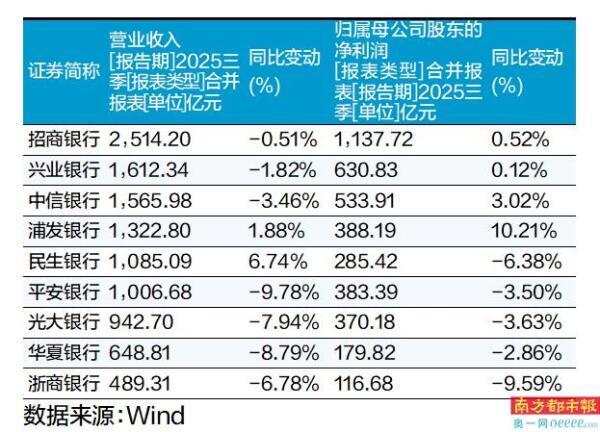
Core Viewpoint - The performance of A-share listed joint-stock banks in the third quarter of 2025 shows a mixed picture, with seven banks experiencing a year-on-year decline in operating income and five banks reporting a drop in net profit. Only Shanghai Pudong Development Bank achieved growth in both metrics [1][2][3]. Group 1: Revenue Performance - Among the nine listed joint-stock banks, only Shanghai Pudong Development Bank and Minsheng Bank reported year-on-year revenue growth, with Minsheng Bank achieving the highest growth rate of 6.74% [2]. - China Merchants Bank led in revenue scale with 2,514.20 billion yuan, followed by Industrial Bank and CITIC Bank with 1,612.34 billion yuan and 1,565.98 billion yuan, respectively [2][3]. - Ping An Bank experienced the most significant revenue decline at -9.78%, while several other banks, including Everbright Bank and Huaxia Bank, also saw declines exceeding 6% [2][3]. Group 2: Net Profit Analysis - China Merchants Bank maintained the highest net profit at 1,137.72 billion yuan, with a slight increase of 0.52% year-on-year. Shanghai Pudong Development Bank saw a notable increase of 10.21% in net profit [3]. - The banks that reported a decline in net profit include Zhejiang Commercial Bank, which had the largest drop at -9.59%, along with Minsheng Bank, Ping An Bank, and others experiencing varying degrees of decline [3]. Group 3: Interest Income and Net Interest Margin - Interest income growth varied significantly, with China Merchants Bank leading at 1,600.42 billion yuan and a 1.74% increase. Shanghai Pudong Development Bank had the highest growth rate in interest income at 3.93% [5]. - The net interest margin faced pressure across the industry, with CITIC Bank experiencing the largest decline of 16 basis points. Only Minsheng Bank reported a slight increase of 2 basis points [5][6]. Group 4: Asset Quality and Provision Coverage - The asset quality of joint-stock banks showed resilience, with a mixed performance in non-performing loan (NPL) ratios. China Merchants Bank had the best NPL ratio at 0.94%, while several banks saw slight increases in their NPL ratios [8]. - Provision coverage ratios decreased for most banks, with China Merchants Bank still leading at 405.93%, despite a decline of 6.05 percentage points [9][10]. Group 5: Loan Structure - The loan structure indicates a shift towards corporate loans, with all five banks reporting growth in corporate loans, while personal loan growth was weak for several banks [11][12]. - China Merchants Bank led in personal loan balance with nearly 3.7 trillion yuan, while corporate loan growth was particularly strong for CITIC Bank, which saw a 10.45% increase [11][12].
压降负债成本 有银行停售五年期定存产品
Zhong Guo Zheng Quan Bao· 2025-11-06 20:15
Core Viewpoint - The recent decision by a village bank in Inner Mongolia to discontinue five-year fixed-term deposits reflects a broader trend in the banking industry aimed at reducing liability costs through lower deposit rates and the removal of high-cost deposit products [1][2][3] Summary by Sections Deposit Products - A village bank in Inner Mongolia announced the cancellation of five-year fixed-term deposits effective November 5, 2025, while still offering shorter-term deposits with rates of 1.10%, 1.30%, 1.45%, 1.55%, and 1.85% for three months, six months, one year, two years, and three years respectively [1] - Many banks continue to offer five-year fixed-term deposits, but some have stopped offering high-value certificates of deposit, indicating a unique situation in the market [1][2] Interest Rates and Trends - The five-year fixed-term deposit rate at Industrial and Commercial Bank of China is 1.3%, which is lower than the three-year rate of 1.55% [2] - China Postal Savings Bank's researcher suggests that banks are reducing long-term liabilities to lower costs due to uncertain interest rate trends [2] Net Interest Margin - The overall net interest margin for banks is under pressure, with a reported decline to 1.42% in Q2 2025, down 0.01 percentage points from Q1 [2][3] - Many banks have adjusted deposit rates downward, with state-owned and joint-stock banks' rates falling below 2% [2] Strategic Responses - Analysts indicate that banks are collectively choosing to lower deposit rates and reduce liability costs as a strategy to stabilize net interest margins [3] - Future strategies may include further reductions in deposit rates and minimizing implicit costs associated with deposits [3][4] Market Outlook - Some listed banks are showing signs of marginal improvement in net interest margins, with expectations that the decline in margins will stabilize, potentially leading to positive growth in net interest income by 2026 [4]
东莞市华立实业股份有限公司关于公司向银行申请并购贷款并质押控股子公司股权的进展公告
Shang Hai Zheng Quan Bao· 2025-11-06 19:17
Overview - The company, Dongguan Huali Industrial Co., Ltd., has announced its decision to apply for a merger loan from CITIC Bank Suzhou Branch, pledging 51% equity of its subsidiary, Suzhou Shangyuan Intelligent Technology Co., Ltd., as collateral [1][4]. Loan and Pledge Details - The company will apply for a merger loan amounting to 285 million yuan (approximately 28.5 million thousand) [1]. - The pledged equity amounts to 102 million yuan (approximately 10.2 million thousand) [2]. - The pledge period is set for 10 years, from November 5, 2025, to November 5, 2035 [3]. Impact on the Company - The merger loan will be used to pay part of the transaction price for acquiring 51% equity in Shangyuan Intelligent, which will help the company reduce long-term capital occupation [4]. - The equity pledge serves as a guarantee for the merger loan, supporting the company's operational development without imposing significant financial risks [4].
