
工商银行

Search documents
中国金融开放的一次战术推进 Visa通过Apple Pay打通服务接口
Jing Ji Guan Cha Wang· 2026-01-16 02:45
Core Viewpoint - Visa has announced that Chinese cardholders can link their Visa cards to Apple Pay for use in overseas physical stores, mobile apps, or online websites, marking a significant enhancement in cross-border payment services [2][3]. Group 1: Partnership and Technical Implementation - The initial collaboration involves eight banks, including Industrial and Commercial Bank of China and Bank of China, with more banks expected to join in the future [2]. - Visa employs payment tokenization technology to ensure card number information is desensitized, enhancing security during the card linking process [2][3]. - This partnership reflects a pragmatic adjustment in the strategies of international financial institutions in the Chinese market, focusing on optimizing existing services rather than exploring new markets [3]. Group 2: Regulatory and Market Context - The collaboration showcases new characteristics in China's financial opening process, emphasizing technical openness at the service interface level rather than traditional market access [3][4]. - Visa's use of payment tokenization aligns with regulatory requirements for data localization and cross-border security transmission, demonstrating a deep understanding of the Chinese regulatory environment [3][4]. Group 3: User Experience and Industry Evolution - User adaptation to using Apple Pay for overseas payments will require time and strategic efforts, as Chinese users are more accustomed to domestic mobile payment ecosystems [4][5]. - The collaboration illustrates a new path for the evolution of financial infrastructure, where card organizations, commercial banks, and device manufacturers work together through standardized interfaces [4][5]. - This partnership is a significant attempt for Visa to deepen its service capabilities in the Chinese market, while also enhancing the application scenarios of Apple Pay and improving the competitive edge of participating banks in cross-border financial services [5]. Group 4: Future Implications - The standardization of payment service interfaces is expected to improve with ongoing technological advancements and regulatory enhancements, potentially extending collaborations beyond payment services to broader financial service scenarios [5]. - This partnership signals a key transition in China's financial opening, moving from market access to ecological integration, reflecting deeper institutional confidence and resilience in the financial system [5].



工商银行陕西省分行落地“并购新政”投放首笔控制型并购贷
Xin Lang Cai Jing· 2026-01-16 02:23
Core Viewpoint - The Industrial and Commercial Bank of China (ICBC) Shaanxi Branch successfully issued the first merger and acquisition (M&A) loan following the release of the new regulatory framework, injecting strong momentum into the "14th Five-Year Plan" through financial innovation [1] Group 1: Regulatory Framework and Implementation - The M&A loan issued by ICBC Shaanxi Branch is part of the first batch of loans following the official release of the "Commercial Bank M&A Loan Management Measures" by the National Financial Regulatory Administration [1] - The new regulations were initially proposed in August of the previous year, prompting ICBC Shaanxi Branch to quickly establish a special task force to analyze policy details and assess industry opportunities [1] Group 2: Targeted Client Engagement - ICBC Shaanxi Branch actively engaged with key clients, including technology companies, industry leaders, investment entities, and functional state-owned enterprises, to promote the new policy through one-on-one presentations [1] - The bank focused on identifying and reserving quality project resources by deeply exploring the M&A and restructuring needs of enterprises [1] Group 3: Future Plans and Strategic Focus - Moving forward, ICBC Shaanxi Branch aims to deepen innovation in M&A financial services, leveraging the new policy to support the transformation and upgrading of the real economy and optimize industrial structure [1] - The bank plans to enhance M&A loan service scenarios and business processes while increasing support for technology company mergers, revitalization of existing assets, and strategic equity participation by enterprises [1]

Visa 首开外卡 Apple Pay 通道,中国跨境支付“无感”升级
Jin Rong Shi Bao· 2026-01-16 02:15
Core Insights - Visa has partnered with Apple to allow Chinese cardholders to link their Visa cards to Apple Pay for seamless payments abroad, marking a significant advancement in cross-border payment solutions [1][3][12] Group 1: Payment Innovation - Visa is the first foreign card organization to enable this payment channel, facilitating a "frictionless" cross-border payment experience for Chinese consumers [3][12] - The collaboration with Apple allows users to bind their Visa cards to Apple Pay, enhancing payment convenience across various scenarios, including in-store, mobile apps, and online [1][4] - The initial launch supports eight major banks in China, with plans to expand to more banks in the future [3][4] Group 2: User Experience - Users can complete payments by simply tapping their iPhone or Apple Watch, utilizing Face ID or Touch ID for authentication, which streamlines the payment process [4][5] - The integration of Apple Pay with Visa allows users to enjoy the same rewards and benefits as with physical cards, including exclusive discounts and offers [5][6] Group 3: Security Measures - Visa's payment tokenization technology enhances security by replacing real card numbers with unique device account numbers, minimizing the risk of fraud [6][7] - The system ensures that real card numbers are not stored on devices or transmitted to merchants, providing an additional layer of protection for users [6][7] Group 4: Market Commitment - Visa's initiative reflects its nearly 40-year commitment to the Chinese market, evolving from a payment network provider to a key player in the modernization of China's payment industry [8][9] - The company has played a crucial role in the development of China's payment infrastructure, facilitating international payment solutions and enhancing cross-border commerce [9][10] Group 5: Future Developments - Visa plans to continue its innovation in payment solutions, including upgrades to dual-branded credit cards and the expansion of contactless payment methods in public transportation [10][11] - The company aims to achieve 100% payment tokenization in e-commerce transactions, further reducing fraud rates and enhancing user trust [7][11]
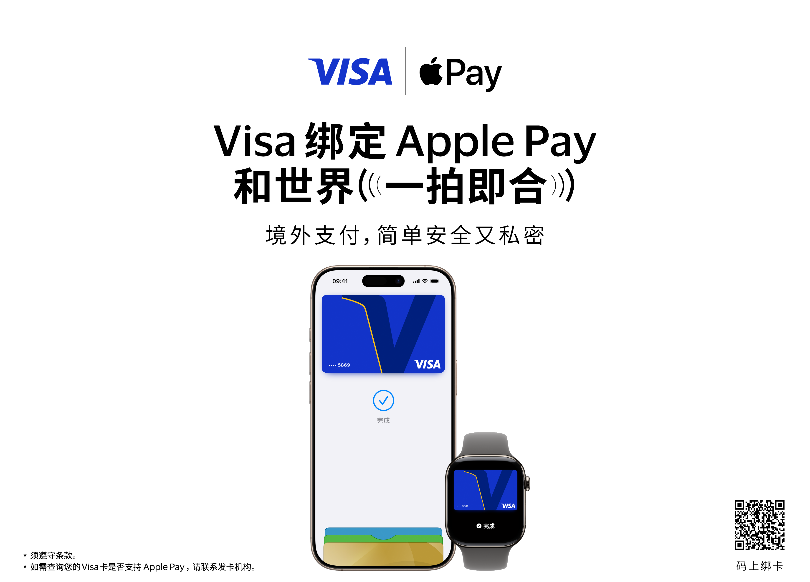
Visa宣布支持中国消费者Apple Pay绑卡,推动中外经贸和人文交流
Huan Qiu Wang Zi Xun· 2026-01-16 02:14
Core Insights - Visa has announced support for Chinese cardholders to link their cards with Apple Pay, enhancing payment options for overseas transactions [1] - The collaboration aims to provide a secure and convenient payment experience for users, leveraging Visa's tokenization technology [2] Group 1: Company Initiatives - Visa is committed to offering diverse payment options for Chinese cardholders, reflecting the growing demand for mobile payment solutions [1] - The initial participating banks include major institutions such as Industrial and Commercial Bank of China, Bank of China, and Agricultural Bank of China, with plans to expand to more banks [1] Group 2: Technology and Security - The core of Visa's service upgrade is the payment tokenization technology, which ensures that real card numbers are not stored on devices or servers, reducing the risk of data breaches and fraud [2] - This technology allows for a seamless payment experience, enabling contactless transactions and simplifying the payment process for users [2] Group 3: Market Commitment - Visa has been rooted in the Chinese market for nearly 40 years and is committed to increasing its investment in the region [2] - The company aims to leverage its unique advantages in consumer payments to support trade and cultural exchanges between China and the global market [2]
黄金热居高不下!多家银行发行挂钩黄金的结构性存款
Mei Ri Jing Ji Xin Wen· 2026-01-16 02:11
Core Viewpoint - The article discusses the rising trend of structured deposits linked to gold being offered by various banks in response to the soaring gold prices and low deposit interest rates, catering to risk-averse investors seeking higher returns [1][2]. Group 1: Gold Price Trends - In 2025, the international gold price experienced a significant bull market, rising from approximately $2646 per ounce at the beginning of the year to over $4367.8 per ounce by year-end, marking an annual increase of about 65% [1]. - The current domestic bank deposit rates are at a low, with some short-term rates starting at 0.65% for three-month deposits [2]. Group 2: Structured Deposit Products - Many banks have launched structured deposit products linked to gold, which offer a combination of principal protection and variable returns, appealing to risk-averse investors [2]. - For example, China Merchants Bank has introduced a series of "Point Gold" structured deposits with terms ranging from 7 to 181 days, offering expected annualized returns of 1%, 1.58%, or 1.78% based on gold price fluctuations [2]. - The Bank of Communications has also launched a series of structured deposits with annualized returns ranging from 0.5% to 3.2%, depending on the performance of the Shanghai Gold Exchange AU99.99 contract [3]. Group 3: Investment Considerations - The structured deposits are characterized by principal protection, but the returns are contingent on the performance of the linked gold prices, which may not guarantee the highest advertised returns [5][6]. - Investors are advised to thoroughly understand the product details and consult with bank financial professionals before purchasing, as the structured deposits may have complex terms and conditions [6].
2025年超300家村镇银行退出市场
Jin Rong Shi Bao· 2026-01-16 02:08
Core Viewpoint - The restructuring of village banks is accelerating in 2026, with state-owned banks actively converting village banks into branch institutions, as evidenced by the approval of the acquisition of Zhejiang Anji Jiaoyin Village Bank by Bank of Communications [1][2]. Group 1: Restructuring Activities - Bank of Communications has been approved to acquire Zhejiang Anji Jiaoyin Village Bank and convert it into three branches, marking the first case of a state-owned bank's "village-to-branch" initiative in 2026 [2]. - Since 2025, over 300 village banks have exited the market, with "village-to-branch" and "village-to-subsidiary" becoming the mainstream exit strategies [1][2]. - In 2025, Bank of Communications completed similar conversions for multiple village banks in Qingdao and Sichuan, demonstrating a consistent strategy in this area [2][3]. Group 2: Industry Trends - The "village-to-branch" strategy involves the full acquisition of village banks by their parent banks, integrating them into the main banking system to enhance operational efficiency and resource allocation [4]. - The trend of state-owned banks engaging in "village-to-branch" conversions is driven by the desire to strengthen their rural financial services while minimizing risks associated with weaker village banks [4]. - Other banks, including Agricultural Bank of China and Industrial and Commercial Bank of China, have also participated in the restructuring of village banks, indicating a broader industry movement [2][3]. Group 3: Regulatory Environment - The acceleration of village bank exits is influenced by regulatory policies aimed at reforming small financial institutions, emphasizing a focus on supporting agriculture and small enterprises [7][8]. - In 2025, 310 village banks exited the market, accounting for over 70% of the total exits since 2010, highlighting the significant impact of regulatory guidance [7]. - The central government's economic work conference in late 2025 underscored the importance of "reducing quantity and improving quality" in small financial institutions, which will continue to shape the reform landscape in 2026 [8].

要排队等5年?金价上涨,银行保险箱不够用了
3 6 Ke· 2026-01-16 02:07
Core Insights - The demand for bank safety deposit boxes in Beijing has surged, leading to a situation where many banks report that all their boxes are fully rented out, with waiting lists extending up to five to six years for new customers [1][2][4][13]. Group 1: Demand and Supply Situation - Many banks, including major ones like Industrial and Commercial Bank of China and Agricultural Bank of China, have reported that their safety deposit boxes are completely rented out, with thousands of customers on waiting lists [2][4]. - The average rental period for safety deposit boxes is approximately 3.5 years, with a low turnover rate of about 10%, making it difficult for new customers to secure a box [4][14]. - Some banks have indicated that they only have a few smaller boxes available, while larger boxes are in high demand and rarely become available [5][11]. Group 2: Pricing and Rental Structure - Rental prices for safety deposit boxes vary significantly based on size, with smaller boxes starting at around 318 yuan per year and larger boxes costing up to 8,000 yuan per year [8][9][11]. - Banks typically charge an annual fee along with a security deposit, and some offer discounts for high-tier customers [10][11]. - The pricing structure includes various box sizes, with the smallest box dimensions being approximately 12 cm x 9.8 cm x 54 cm and the largest being 77 cm x 37 cm x 54 cm [8]. Group 3: Market Trends and Customer Behavior - The increase in demand for safety deposit boxes is attributed to a shift in wealth management strategies among residents, with more individuals seeking to store valuable physical assets like gold and jewelry in secure environments [13][14]. - The trend is further driven by a low-interest-rate environment, prompting investors to seek alternative asset classes for wealth preservation [13]. - Customers prefer bank safety deposit boxes over home storage due to enhanced security features, including 24-hour monitoring and advanced protection systems [13][14].
2025年超300家村镇银行退出市场 村镇银行“减量提质”成常态
Jin Rong Shi Bao· 2026-01-16 02:04
Group 1 - The core viewpoint of the articles highlights the acceleration of structural reorganization of village banks, with state-owned banks actively converting village banks into branch institutions as a mainstream exit strategy since 2025 [1][2][4] - The China Banking and Insurance Regulatory Commission approved the acquisition of Zhejiang Anji Jiaoyin Village Bank by Bank of Communications, marking the first case of a state-owned bank's "village-to-branch" initiative in 2026 [1][2] - Since 2025, over 300 village banks have exited the market, with "village-to-branch" and "village-to-subsidiary" becoming the primary methods for these exits [1][7] Group 2 - Bank of Communications has previously executed similar "village-to-branch" operations in Qingdao and Sichuan, acquiring multiple village banks and converting them into branches [2][3] - Other state-owned banks, including Industrial and Agricultural Banks, have also participated in the "village-to-branch" operations, with a total of 10 village banks converted by state-owned banks since 2025 [2][3] - The restructuring of village banks is seen as a strategy to enhance service capabilities and risk resistance, while also allowing acquiring banks to expand their operational scope in areas lacking existing branches [5][6] Group 3 - The acceleration of village bank exits is attributed to regulatory policies and internal demands, with 310 village banks exiting in 2025 alone, accounting for over 70% of the total exits since 2010 [7][8] - The central government's focus on "reducing quantity and improving quality" for small and medium-sized financial institutions is expected to continue, emphasizing the need for effective measures to prevent deterioration in quality during the reduction process [8]
专家共话2026财富管理新周期:结构重塑、科技赋能与生态共赢
Zhong Jin Zai Xian· 2026-01-16 01:15
Group 1: Core Insights - The annual conference hosted by JD Technology focused on the new economic cycle, financial landscape, and wealth management pathways in the context of the "14th Five-Year Plan" [1] - The wealth management industry is entering a high-quality development phase characterized by structural reshaping, professional refinement, and ecological co-creation [1] Group 2: Macro Trends and Technological Empowerment - The evolution of macro trends and technological waves is creating new development opportunities for the wealth management industry [2] - JD Technology emphasizes the importance of its ecosystem, with over 700 million annual active users, to provide rich scenarios and customer bases for wealth management [2] - AI technology, including the AI wealth manager "Jing Xiaobei," is being leveraged to reshape customer service models and enhance operational efficiency [2][3] Group 3: Industry Challenges and Strategic Directions - The direct financing market's importance is increasing, and the wealth management industry must adapt to the diversified asset allocation needs of residents [3] - The industry is facing challenges such as service gaps, insufficient buy-side advisory, and product homogeneity, necessitating a shift towards professional services and diversified product offerings [4] - The transition from asset management to wealth management requires a robust customer service system and technological support [5] Group 4: Asset Allocation and Ecological Co-Building - Investment experts highlighted three main asset allocation themes for the "14th Five-Year Plan" period: asset revaluation due to global monetary restructuring, long-term premiums in technology and high-end manufacturing, and the investment value of competitive Chinese multinational companies [6] - The gold market is evolving from a consumer product to a significant financial and strategic asset, emphasizing the need for a thoughtful investment approach [6] - In the field of pension finance, banks are encouraged to act as long-term planners and ecosystem integrators to meet diverse pension needs [6] Group 5: Future Outlook - By 2026, the wealth management industry will compete based on professional depth, ecological breadth, and technological speed, requiring higher standards for institutional capabilities and service models [7] - The industry must embrace a collaborative spirit and focus on asset exploration, customer service, and technology application to create a healthier and more prosperous wealth management future [7]
银行大额存单利率新低 部分跌破1%
Jin Rong Shi Bao· 2026-01-16 01:13
2026年开年,存款市场迎来重要变化。曾作为银行"揽储利器"的大额存单,利率持续下行,部分中小银 行3个月期产品利率首次跌破1%,正式进入"0 字头"区间。 大额存单短期限产品利率跌破1%,成为近年来首次出现的市场现象。 这一变化,不仅正在改写储户对于"高息存款"的旧有认知,更推动整个理财市场迎来资产配置的重构浪 潮。 根据中国货币网公开信息,今年已有超40家银行发布2026年第一期大额存单发行公告。在"期限"和"利 率"两个方面都有明显不同于往年的变化。 记者登陆部分银行手机银行App看到,在大额存单转让专区,投资者可选择购买其他人正在转出的大额 存单,但并不支持所谓"定向转让"的操作。 市场普遍关注,未来大额存单市场走势如何? 以往相较于国有大行在利率上有所优势的中小银行,在今年开年的新发产品中,也没有表现出"应有 的"优势。 例如,云南腾冲农商银行、隆阳农商行在1月初发行的期限3个月大额存单,利率均为0.95%。淮北农村 商业银行针对机构发行的3个月期单位大额存单,起存金额高达1000万元,利率也仅1%。 这意味着,从利率上看,大额存单新发行产品利率与普通定期存款差距进一步拉平。存款利率下行趋势 在进入 ...

