中国国家电网

Search documents
“进入‘创新爆发期’的中国重塑世界科技版图”
Ren Min Ri Bao· 2025-10-23 09:15
创新中国,活力澎湃。今年三季度,中国规模以上高技术制造业增加值同比增速明显快于全部工业;信 息传输、软件和信息技术服务业增加值增长11.7%,比上年同期加快1.7个百分点;机器人、3D打印设 备等智能产品,绿色设备及绿色材料等产品产量持续较快增长。创新成果竞相迸发,创新能力有效提 升。 "十四五"时期,中国在量子科技、生命科学、物质科学、空间科学等领域取得一批重大原创成果。"天 宫"空间站转入常态化运营、"嫦娥六号"实现月背采样返回,"海斗一号"完成万米海试,5G通信实现大 规模应用、新能源汽车产销量稳居世界首位……中国科技创新能力稳步提升,科技强国根基不断夯实。 接受记者采访的国际人士表示,中国深入实施创新驱动发展战略,促进科技创新与产业创新深度融合, 大力培育支持全面创新生态,一个向"新"而行的中国,持续为全球发展增添新活力、注入新动能。 逐新峰 强动能 第一艘国产电磁弹射航母福建舰下水、全球第一座第四代核电站石岛湾基地投入商业运行……"十四 五"时期,一个个"第一"代表着"大国重器"站上一个又一个创新制高点,彰显深入实施创新驱动发展战 略在"十四五"规划中全面塑造发展新优势的重要意义。 联合国副秘书长盖 ...
首次世界五百强差距:日本149家,美国151家,中国3家,现在呢?
Sou Hu Cai Jing· 2025-10-08 05:56
Group 1 - The "Fortune Global 500" list was first published in 1995, highlighting the largest companies worldwide based on size, market value, and revenue, with the U.S. having 151 companies and Japan 149, while China had only 3 [1][7] - Over the past 30 years, the global economic landscape has dramatically changed, with the U.S. emerging as a superpower post-Soviet Union, and Japan rising as the second-largest economy due to U.S. support [3][9] - By 2000, the number of Chinese companies in the Fortune Global 500 increased to 9, a significant rise from 3 in 1995, aided by China's entry into the WTO in 2001 [10][12] Group 2 - In 2019, the Fortune Global 500 list included 139 U.S. companies and 133 Chinese companies, indicating a substantial shift in the global economic balance compared to 30 years prior [12] - The year 2010 marked a pivotal moment for China, as it surpassed Japan to become the second-largest economy, with 54 companies on the Global 500 list, including major players like Sinopec and State Grid [13] - The growth of Chinese companies reflects not only the country's economic rise but also its increasing influence in the global economy [15]

最新《财富》世界500强排行榜出炉 中国130家企业上榜
Sou Hu Cai Jing· 2025-07-30 08:29
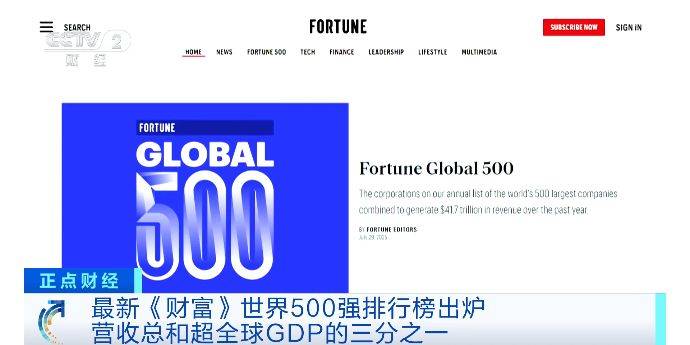
(央视财经《正点财经》)29日,《财富》杂志网站公布了最新的《财富》世界500强排行榜。今年上 榜企业的营收总和约为41.7万亿美元(约合人民币299万亿元),超过全球GDP的三分之一,较去年增 长了约1.8%。 今年共有130家中国公司位列《财富》世界500强,其2024年营收总额约为10.7万亿美元。值得注意的 是,上榜的企业中有10家中国汽车及汽车零部件企业。其中,奇瑞、比亚迪、吉利的排名较去年有显著 提升。 比亚迪排位较去年提升52位,位居第91名,首次进入前100位。奇瑞公司排名上升152位,至第233名。 吉利公司的排名上升30位,至第155位。大约四分之一的上榜公司将总部设在了北京、东京、纽约、上 海和伦敦。北京是拥有最多《财富》世界500强公司总部的城市。 转载请注明央视财经 编辑:王昕宇 根据最新公布的《财富》世界500强排行榜,此次上榜门槛从321亿美元增长至322亿美元。上榜公司的 资产总额和净资产总额均达到自《财富》世界500强排行榜创立以来的最高值。沃尔玛以近6810亿美元 的营收额连续第十二年成为全球最大公司,亚马逊以约6380亿美元的营收额位居第二。中国国家电网、 沙特阿美和中国 ...
2025年Brand Finance中国品牌价值500强:中国国家电网跃居第二位,品牌价值856亿美元
Feng Huang Wang Cai Jing· 2025-05-09 01:26
Group 1 - The core viewpoint of the article highlights the significant growth of the State Grid Corporation of China, with its brand value increasing by 20% to reach $85.6 billion, allowing it to surpass the Industrial and Commercial Bank of China to rank second in the Brand Finance 2025 China Brand Value Top 500 list [1] - The growth of the State Grid's brand value is attributed to ongoing digital upgrades, smarter power solutions, and enhanced service reliability, which have fostered public trust through innovations in green energy and smart pricing [1] - The public utility sector in China is rapidly evolving as companies embrace digital transformation and sustainable practices to maintain a competitive edge, emphasizing that innovation and efficiency will be key to ongoing success in an increasingly competitive environment [1] Group 2 - Brand Finance is an independent third-party brand valuation and strategic consulting firm that collaborates with the International Organization for Standardization (ISO) to establish international standards for brand valuation and assessment [2] - The Brand Finance 2025 China Brand Value Top 500 report includes core performance indicators of listed brands, highlights of innovative technologies, and insights into global brands in sustainability, all based on international accounting standards and ISO guidelines [2] - Brand Finance has provided brand valuation assessments and consulting services for nearly ten thousand brands across major economies, focusing on top Chinese brands since its establishment in China [2]
共建绿色丝路:我国绿色金融与“一带一路”倡议的协同发展
Zheng Quan Shi Bao Wang· 2025-03-14 08:51
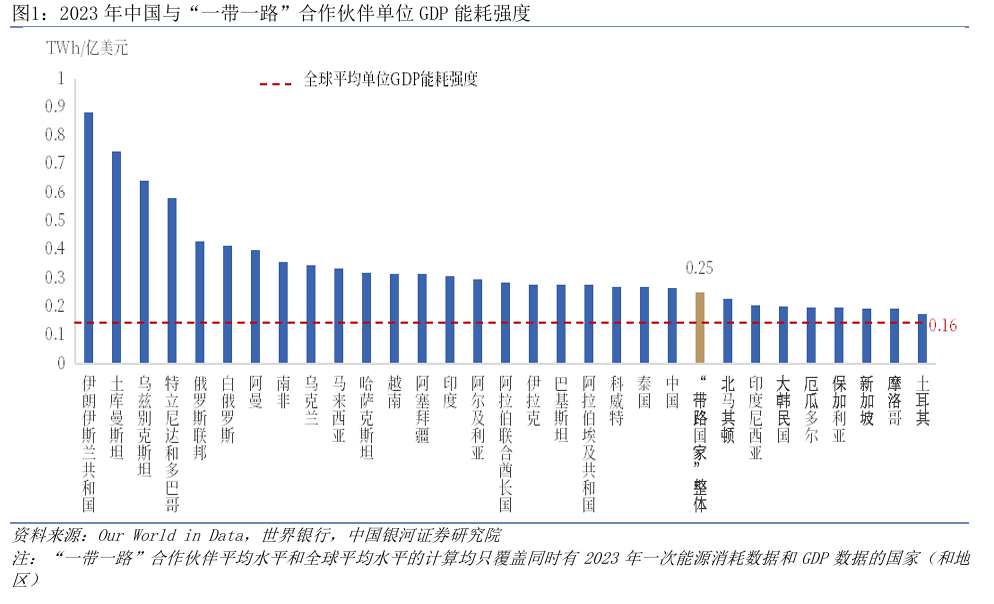
Core Viewpoint - The "Belt and Road" initiative aligns naturally with green finance, addressing the significant green development challenges and funding gaps faced by emerging and developing economies involved in the initiative [1][2][3]. Group 1: Green Development Challenges - Many "Belt and Road" partners are emerging economies facing high energy consumption and carbon emissions, with energy consumption in 2021 accounting for approximately 32.23% of global totals [3]. - The carbon emissions from these partners reached 70% of global totals in 2020, with an average carbon emission intensity of 62.9 thousand tons per billion USD, significantly higher than the global average [3]. - The short window for achieving carbon neutrality poses a challenge, as many developing countries have less time to transition compared to developed nations [4]. Group 2: Policy Initiatives - China has integrated green development goals into its national strategies, emphasizing ecological civilization in the "Belt and Road" initiative since its inception [5][6]. - Most "Belt and Road" partners have updated their Nationally Determined Contributions (NDCs) to include green policies, focusing on sectors like agriculture, manufacturing, and energy [7]. Group 3: Green Finance Mechanisms - Green finance is defined as financial services that support environmentally sustainable development, including investments in clean energy and green infrastructure [13][14]. - The establishment of a unified green finance standard and regulatory framework is essential for aligning green finance with the "Belt and Road" initiative [28]. - Financial institutions are encouraged to innovate green financing mechanisms to meet the diverse needs of "Belt and Road" projects [29]. Group 4: Investment Trends - China's green investment in "Belt and Road" partners has been growing, with total green investment reaching approximately 222.8 billion USD in 2023, reflecting a shift towards green equity investment [22][23]. - The majority of green investments are concentrated in the energy and transportation sectors, with renewable energy investments totaling 742.4 billion USD from 2013 to 2024 [24]. Group 5: Collaborative Platforms - China has established various international alliances and initiatives to promote green development, including the "Belt and Road" Green Development International Alliance [8][9]. - Multilateral development banks, such as the Asian Infrastructure Investment Bank (AIIB), play a crucial role in providing long-term funding for green projects [19]. Group 6: Future Directions - The need for enhanced policy coordination among "Belt and Road" partners is critical for the successful implementation of green finance initiatives [28]. - Promoting sustainable development concepts and increasing public awareness of green finance are essential for fostering collaboration and investment in green projects [29].