智平方(深圳)科技有限公司

Search documents
从梯度转移到生态共建全国统一大市场撬动产业“双向价值跃迁”
Zheng Quan Shi Bao· 2025-10-26 17:39
Core Insights - The article discusses the ongoing trend of industrial transfer in China, highlighting the shift from a simple model of "Eastern output of R&D and Western manufacturing" to a more integrated approach that combines regional characteristics with specialized industries [1][2][3] Group 1: Industrial Transfer Activities - The Ministry of Industry and Information Technology (MIIT) has organized six industrial transfer matching events this year, promoting orderly transfer of manufacturing industries to central and western regions [2][3] - The recent event in Hainan resulted in the signing of 110 projects, including collaborations with state-owned enterprises and listed companies, focusing on new materials, new energy, and digital economy [3] Group 2: Regional Development and Advantages - The article emphasizes the importance of leveraging regional advantages for industrial transfer, with regions like Sichuan benefiting from natural resources for the new energy vehicle industry [3][4] - Guangxi has adopted a proactive approach to attract new quality production enterprises by creating customized industrial parks and leveraging its connection to the ASEAN market [4] Group 3: Economic Impact and Market Structure - Industrial transfer is seen as a means to optimize the national industrial structure, with regions like Jiangxi transitioning from agriculture to becoming a hub for the electronic information industry [5] - The MIIT stresses the need for a coordinated mechanism to facilitate industrial transfer, aiming to eliminate invisible barriers to factor flow and promote a unified national market [5]
中科院院士冷劲松:人形机器人的“身体”革命
经济观察报· 2025-09-20 09:55
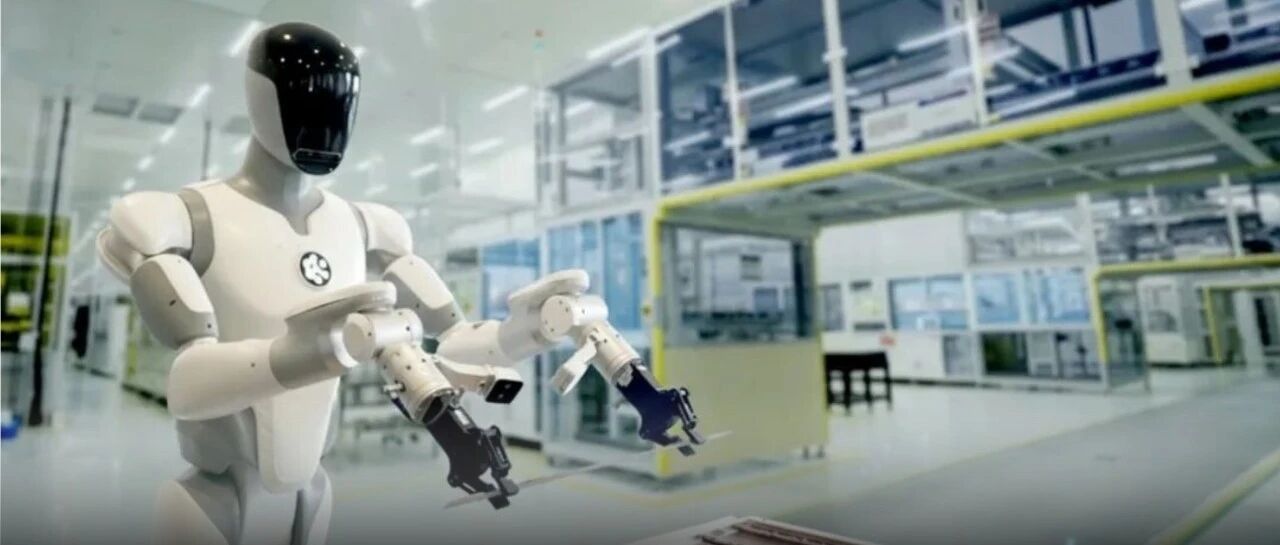
Core Viewpoint - The article discusses the dual exploration of embodied intelligence in China, focusing on advancements in AI large models by companies like UBTECH and Zhihui Square, and the foundational work on intelligent materials by academician Leng Jinsong to reconstruct the "body" of robots [2][3][18]. Group 1: AI Large Models and Commercial Applications - UBTECH announced its large multimodal model, Thinker, which achieved four global firsts in international robot benchmark tests [2]. - Zhihui Square plans to deploy over 1,000 embodied intelligent robots powered by its VLA model in the semiconductor display production base of Huike over the next three years [2][14]. - The VLA model allows robots to learn tasks autonomously through end-to-end data-driven approaches, enhancing their adaptability in existing factory environments [14][15]. Group 2: Intelligent Materials and Robotic "Body" - Leng Jinsong emphasizes the importance of the "execution layer" in embodied intelligence, which is often overlooked in current discussions [2][10]. - His research focuses on intelligent materials that can actively change shape and function, aiming to replace traditional motors in robotics [5][10]. - A notable application of these materials is the flexible solar sail deployed on a commercial satellite, marking the first use of such materials as the main power source in space [7][8]. Group 3: Future Applications and Innovations - Intelligent materials have potential applications in various fields, including aerospace, industrial manufacturing, and biomedical sectors [9][10]. - Examples include flexible hydrogen storage bottles for electric vehicles and biodegradable stents for cardiovascular applications [9][10]. - Leng envisions a future where intelligent materials can not only change but also possess life-like characteristics, integrating AI and self-repair capabilities [11]. Group 4: Industry Challenges and Competitive Landscape - The competition in the industry is not only about AI algorithms but also about enhancing the sensory capabilities of robots through advanced tactile sensors [15][16]. - Despite leading in foundational research on intelligent materials, China faces the risk of being outpaced in product commercialization by companies from Japan and Germany [16]. - The article highlights the need for both AI-driven companies and foundational research to effectively translate their technological advantages into market-ready products [18].


中科院院士冷劲松:人形机器人的“身体”革命
Jing Ji Guan Cha Wang· 2025-09-20 07:58
Core Insights - The narrative around embodied intelligence is increasingly focused on the evolution speed of the "brain" [2][3] - Companies like UBTECH and Zhiping are applying advancements in AI models to practical commercial and industrial scenarios, while researchers like Leng Jinsong are exploring the foundational aspect of intelligent materials to reconstruct the "body" of robots [3][10] Company Developments - UBTECH announced its multi-modal model Thinker, which achieved four global firsts in international robotics benchmarks [2] - Zhiping's VLA model-driven robots are set to enter the global semiconductor display production base of Huike in a scale exceeding a thousand units over the next three years [2][13] - UBTECH secured a procurement contract worth 250 million yuan for humanoid robots, marking the largest contract in the global humanoid robot sector to date [14] Technological Innovations - Leng Jinsong's team is developing intelligent materials that can actively change shape and function, aiming to replace traditional motors in robotics [5][10] - The intelligent materials have been successfully used in a commercial satellite's flexible solar sail, marking a first in international applications [7] - The new approach to solar sail deployment eliminates the need for complex mechanical structures, simplifying the process significantly [7][10] Industry Challenges - The industry faces a dual challenge: enhancing the "brain" of robots through AI advancements while simultaneously innovating the "body" with intelligent materials [12][17] - Despite leading in foundational research on intelligent materials, there is a risk that China may lag in commercialization compared to companies in Japan and Germany [16][17] Future Directions - The exploration of intelligent materials and AI-driven robotics represents two distinct yet complementary paths for the future of embodied intelligence in China [17] - The ultimate goal is to transform technological advantages into market-ready products that are cost-effective and reliable [17]

实探东博会首创AI专馆:智能提词眼镜亮相 粤企出海觅新机
Nan Fang Du Shi Bao· 2025-09-18 15:18
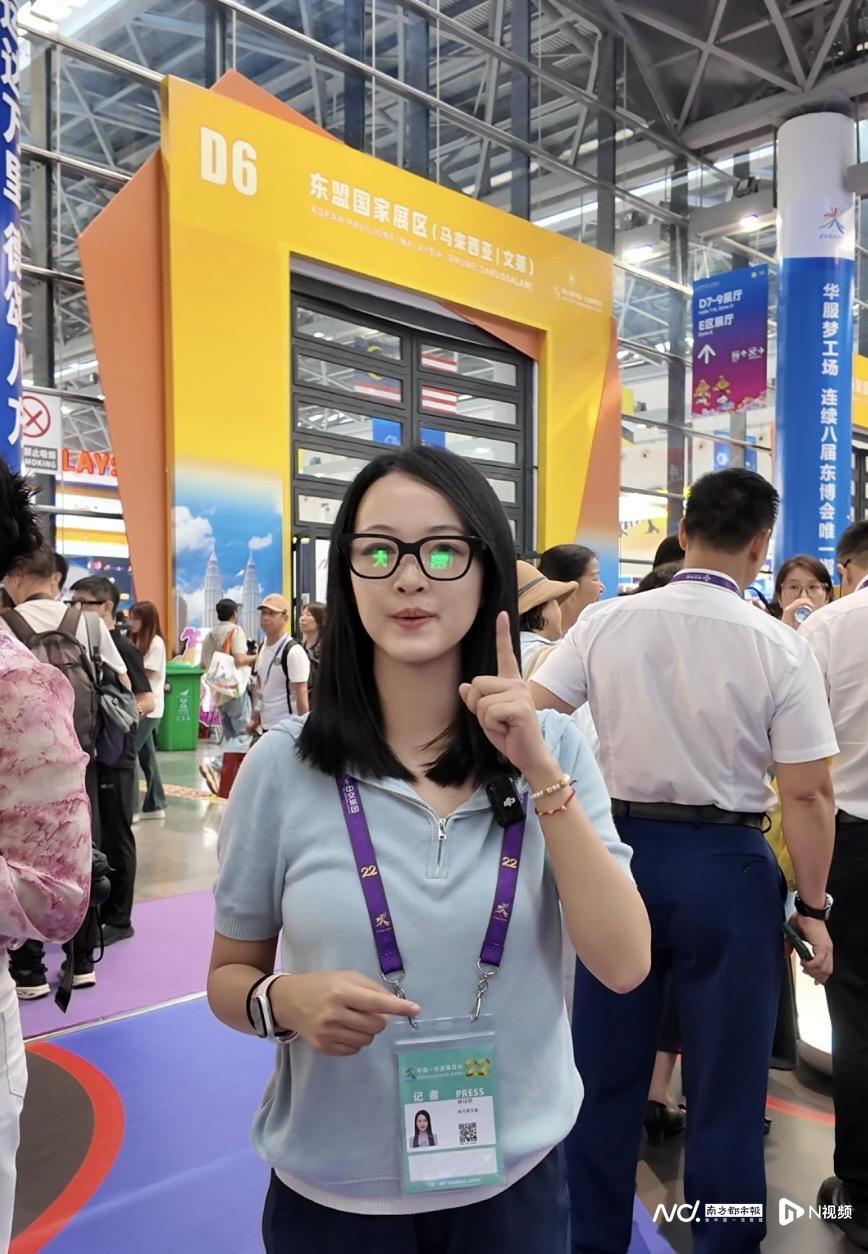
Group 1 - The 22nd China-ASEAN Expo and China-ASEAN Business and Investment Summit opened in Nanning, Guangxi, with AI as the main theme and highlight of the event [1][8] - The event featured an AI pavilion showcasing leading domestic AI companies such as Yushu, Huawei, and iFlytek, highlighting the strength of "Guangdong manufacturing" and its efforts to expand into the ASEAN market [5][8] - The introduction of smart glasses with real-time teleprompter functionality by Guangxi's Party Secretary Chen Gang symbolizes Guangxi's commitment to embracing the AI era and establishing an AI innovation cooperation center with ASEAN [2][4] Group 2 - Shenzhen Mingxin Intelligent Technology Co., Ltd. presented its AI-based "KuaFu" system for cross-border e-commerce tax compliance, which can monitor over 1,000 tax risk indicators in real-time, significantly reducing costs by approximately 90% compared to traditional methods [7] - The expo marked a significant year for China-ASEAN relations, coinciding with the signing of the 3.0 version of the China-ASEAN Free Trade Area agreement and the completion of the ASEAN Community Vision 2025 [8][9] - The event also saw the participation of around 30% new enterprises or products from ASEAN countries, indicating a fresh influx of innovation and collaboration opportunities [9]
实探东博会首创AI专馆:智能提词眼镜亮相,粤企出海觅新机
Nan Fang Du Shi Bao· 2025-09-18 14:07
Core Insights - The 22nd China-ASEAN Expo and Business and Investment Summit opened in Nanning, Guangxi, with AI as the main theme and highlight of the event [1][4] - The event featured an AI pavilion showcasing leading domestic AI companies such as Yushu, Huawei, and iFlytek, emphasizing the role of AI in enhancing international business opportunities [2][4] Group 1: AI Innovations - The event introduced a smart glasses product with real-time teleprompter functionality, representing Guangxi's commitment to embracing the AI era [2] - The AI pavilion attracted significant attention, with companies like Zhifang Technology showcasing their general-purpose intelligent robot "Aibao," which demonstrated various service and entertainment functions [3] Group 2: Cross-Border Opportunities - Companies like Mingxin Smart Technology presented AI-driven solutions for cross-border e-commerce, significantly reducing costs by approximately 90% compared to traditional methods [3] - The expo serves as a platform for Guangdong enterprises to explore opportunities in the ASEAN market, leveraging Guangxi's AI hub [2][3] Group 3: ASEAN Collaboration - This year marks significant milestones in China-ASEAN relations, including the signing of the 3.0 version of the China-ASEAN Free Trade Area agreement [4][5] - ASEAN countries are increasingly focusing on digital and AI collaboration, with Cambodia expressing support for international cooperation in AI capability building [5] Group 4: New Products and Participation - Approximately 30% of ASEAN exhibitors are debuting new products at the expo, indicating a fresh wave of innovation and collaboration [6] - Over 70 foreign purchasing groups have confirmed their participation, aiming to explore new business opportunities in AI and related sectors [6]
东博会AI含量拉满!“以智为船”扬帆四海
Zheng Quan Shi Bao· 2025-09-18 00:30
Core Viewpoint - The 22nd China-ASEAN Expo (CAEXPO) showcased a significant leap in AI integration, featuring a dedicated AI pavilion and numerous cutting-edge AI products from both China and ASEAN countries [1][3]. Group 1: AI Integration in the Expo - The expo featured a 10,000 square meter AI pavilion with approximately 1,200 AI products on display, including AI satellites, humanoid robots, and smart medical systems [1]. - AI was utilized throughout the entire preparation process of the expo, marking a transformation from traditional methods to AI-driven operations [3][4]. - Real-time translation in seven languages was provided during the opening ceremony, enhancing communication among attendees [3][4]. Group 2: Technological Innovations - The AI navigation system, "AI Dongbo," provided accurate guidance and product introductions, showcasing the advanced capabilities of AI in enhancing user experience [3]. - The AI translation machine developed by iFlytek supports 280 languages and has been upgraded to cater specifically to ASEAN languages, demonstrating the adaptability of AI technology [4]. - Various AI products, such as intelligent robots and AI coffee machines, highlighted the practical applications of AI across different industries [5][8]. Group 3: Regional Collaboration and Economic Development - The expo served as a platform for showcasing AI products from ASEAN countries, fostering collaboration and innovation between China and ASEAN [8]. - AI is seen as a new bond for cooperation between China and ASEAN, with a focus on smart manufacturing, digital trade, and intelligent services [8]. - The expo's emphasis on high-tech exhibits, with over 50% being AI-related, reflects the growing importance of AI in regional economic development [5][8].

东博会AI含量拉满!“以智为船”扬帆四海
证券时报· 2025-09-18 00:09
Core Viewpoint - The 22nd China-ASEAN Expo (CAEXPO) has significantly integrated AI technology, showcasing over 1,200 cutting-edge AI products and establishing a dedicated AI pavilion covering 10,000 square meters, marking a transformative shift from traditional to AI-driven exhibitions [1][3]. Group 1: AI Integration in the Expo - The expo featured an AI "digital host" that effectively captured key conference terms and highlights, demonstrating a leap in AI application [1]. - The "AI Dongbo" intelligent navigation system provided real-time assistance to attendees, enhancing the overall experience by offering multilingual product introductions and facilitating buyer-seller matchmaking [3][4]. - AI was involved in the entire preparation process of the expo, including visual design and promotional materials, indicating a comprehensive adoption of AI in event management [3]. Group 2: AI Products and Innovations - The expo showcased a variety of AI products, including AI satellites, humanoid robots, and smart medical systems from ASEAN countries, highlighting the global reach and application of Chinese AI technology [1][6]. - AI-enabled products accounted for over 50% of the high-tech exhibits, reflecting a significant increase in AI representation compared to previous years [6]. - The event featured innovative products like AI coffee machines and traditional Chinese medicine diagnostic robots, showcasing the versatility of AI across different sectors [6][9]. Group 3: International Collaboration and Future Prospects - The expo served as a platform for both Chinese and ASEAN countries to present their AI innovations, fostering collaboration and knowledge exchange [9]. - AI is seen as a foundational technology that can help ASEAN businesses upgrade their operations efficiently and cost-effectively, indicating a strong potential for future partnerships [9]. - The event is expected to pave the way for a new blueprint for regional intelligent economic development, connecting various sectors through AI technology [9].

东博会AI含量拉满 “以智为船”扬帆四海
Zheng Quan Shi Bao· 2025-09-17 18:07
Core Points - The 22nd China-ASEAN Expo (CAEXPO) has significantly increased its integration of artificial intelligence (AI), showcasing over 1,200 cutting-edge AI products from both domestic and ASEAN countries [1][4] - AI has transformed the event's organization and experience, with AI-driven navigation, real-time translation, and product recognition enhancing attendee engagement [2][3] - The expo serves as a platform for both Chinese and ASEAN countries to showcase their AI advancements, with over 50% of exhibits being AI or AI-enabled [4][6] Group 1: AI Integration in the Expo - The expo featured a dedicated AI pavilion covering 10,000 square meters, highlighting various AI technologies such as AI satellites and humanoid robots [1] - AI was involved in the entire preparation process of the expo, marking a significant shift from traditional methods to AI-driven organization [2] - Real-time translation in seven languages was provided during the opening ceremony, showcasing the efficiency and accuracy of AI technology [2][3] Group 2: International Collaboration and Product Showcase - The expo included a variety of AI products from ASEAN countries, such as AI coffee machines and smart healthcare systems, emphasizing the collaborative spirit of the event [6] - Approximately 30% of ASEAN exhibitors presented their products for the first time, indicating a growing interest in AI technology [6] - The event is seen as a new bridge for cooperation between China and ASEAN in AI, with a focus on smart manufacturing, digital trade, and intelligent services [6]
3年部署千台,半导体显示产业首次迎来具身智能机器人
Guan Cha Zhe Wang· 2025-09-12 12:29
Core Insights - Shenzhen Huizhi IoT Technology Service Co., Ltd. and Zhi Ping Fang (Shenzhen) Technology Co., Ltd. have announced a strategic partnership to deploy over 1,000 embodied intelligent robots in the semiconductor display industry over the next three years [1][3] - The collaboration aims to enhance the application of embodied intelligence in semiconductor display and smart terminal manufacturing, starting with PCB operations as a demonstration scenario [3][5] Company Overview - Shenzhen Huizhi IoT is a wholly-owned subsidiary of Huike Co., Ltd., a leading global manufacturer of semiconductor display panels, ranking among the top three in large-size LCD panels [5] - Zhi Ping Fang, established in 2023, has developed the world's first comprehensive embodied large model, GOVLA, and launched the self-developed AlphaBot series of robots, achieving applications across various industries [5] Technological Advancements - The partnership will integrate an AI edge model developed by Shenzhen Huizhi IoT into the production line control system, optimizing for specific scenarios in display panel manufacturing to achieve lower latency and improved energy management [3] - The humanoid wheeled robots used in this collaboration demonstrate significant advantages over traditional industrial robots, allowing for better adaptation to existing factory environments without extensive infrastructure modifications [3][5] Application Scenarios - Beyond PCB operations, the robots will also be utilized in OLED vacuum lamination, consumable management, and waste material recovery, enhancing process consistency by precisely controlling adhesion forces [5] - A joint technical team will be formed to develop next-generation industrial operation models and lightweight edge inference models, aiming to create "intelligent workers" that continuously learn and evolve in understanding screen manufacturing processes [5] Industry Implications - This collaboration opens new pathways for intelligence in the semiconductor display industry and provides a leading global case for the development of embodied intelligence in China [5] - The partnership signifies a shift in industrial logic, where evolving large models and robots in real applications will drive the manufacturing sector into a new phase [5]

惠科进军机器人!
WitsView睿智显示· 2025-09-12 03:16
Core Viewpoint - The strategic cooperation agreement between Huike and Zhifang marks a significant milestone in the intelligent transformation of the display industry, with plans to deploy over 1,000 intelligent robots in production bases globally within three years, amounting to nearly 500 million yuan in orders [2][5]. Group 1: Strategic Cooperation - Huike's subsidiary, Shenzhen Huizhi Internet of Things Technology Co., Ltd., signed a comprehensive strategic cooperation agreement with Zhifang (Shenzhen) Technology Co., Ltd. in the semiconductor display field [2]. - The agreement includes the deployment of over 1,000 intelligent robots across Huike's global production bases, covering the entire process from warehousing logistics to quality inspection [2][5]. Group 2: Application and Technology Development - The PCB operation has been selected as the first demonstration scenario for the intelligent robots, which are driven by the "Vision-Language-Action" (VLA) model [4]. - Huike plans to integrate AI edge models into its production line control systems to achieve lower latency in real-time decision-making and more efficient energy management [5]. - A specialized technical team will be formed to develop next-generation models for industrial operations, aiming to create "intelligent workers" that understand the screen manufacturing process [5].