
泰康基金

Search documents
泰康基金深入推进“守住钱袋子·过好幸福年”投资者教育活动,多措并举守护“一老一小”群体
Xin Lang Cai Jing· 2026-02-10 03:34
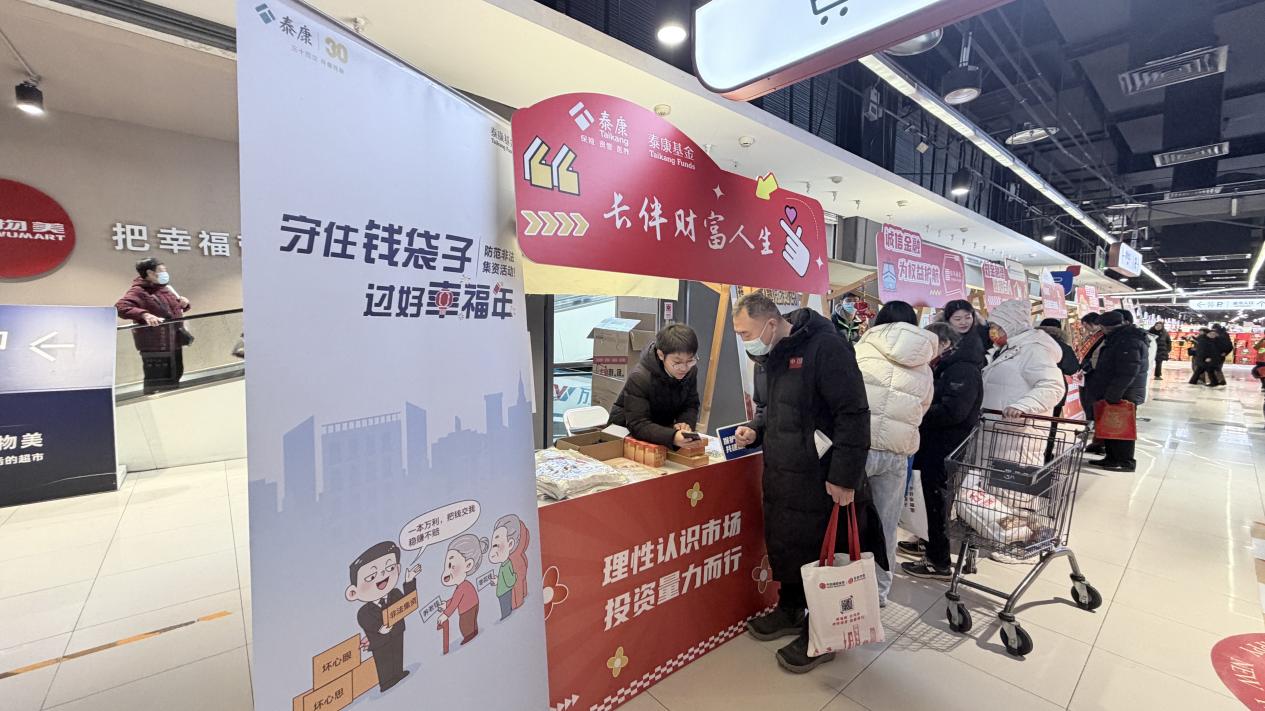
为贯彻落实国家关于加强金融消费者权益保护的政策要求,积极履行金融企业的社会责任、帮助投资者保护个人财富,泰康基金充分把握岁末年初的有利契 机,针对"一老一小"重点群体,开展了一系列形式多样、内容丰富的投资者陪伴活动,切实筑牢金融安全防线,助力居民守护幸福生活。 一、走进商场排忧解难,悉心守护"银发族" 1月23日,在春节临近之际,泰康基金投教团队走进人流密集的双井物美超市,搭建起喜庆且温馨的金融知识宣传展台,将专业的投资者保护服务送到民众 身边。 鉴于老年群体风险防范意识相对薄弱、易受非法集资诱惑的特征,活动特别设立了金融知识互动答题环节,题目内容包含"防非反诈""养老投资"及"基础金 融知识"三大板块。现场工作人员通过单选、多选及判断题等多种形式的有奖问答互动,引导过往长辈参与其中。面对老年人的咨询,工作人员耐心地将晦 涩难懂的金融术语转化为通俗易懂的日常话语,结合近期高发的诈骗案例进行风险提示,手持"投资不投机 才能避危机"等宣传标语,助力百姓提高警惕, 守好养老资金。这种贴近群众、富有温度的宣传形式,不仅增添了节日的喜庆氛围,更使防非反诈知识深入人心。 二、寓教于乐开启财商,播种未来"新希望" 2月3日 ...

晶科能源股价涨5.2%,泰康基金旗下1只基金重仓,持有13.46万股浮盈赚取5.52万元
Xin Lang Cai Jing· 2026-02-06 02:13
数据显示,泰康基金旗下1只基金重仓晶科能源。泰康上证科创板综合指数增强A(023970)四季度持 有股数13.46万股,占基金净值比例为1.46%,位居第七大重仓股。根据测算,今日浮盈赚取约5.52万 元。 泰康上证科创板综合指数增强A(023970)成立日期2025年6月30日,最新规模2481.82万。今年以来收 益5.12%,同类排名2038/5564;成立以来收益44.83%。 2月6日,晶科能源涨5.2%,截至发稿,报8.30元/股,成交12.32亿元,换手率1.55%,总市值830.43亿 元。 资料显示,晶科能源股份有限公司位于上海市闵行区申长路1466弄1号晶科中心,成立日期2006年12月 13日,上市日期2022年1月26日,公司主营业务涉及太阳能光伏组件、电池片、硅片的研发、生产和销 售以及光伏技术的应用和产业化,并以此为基础向全球客户提供高效、高质量的太阳能光伏产品。主营 业务收入构成为:产品销售100.00%。 从基金十大重仓股角度 截至发稿,袁帅累计任职时间1年245天,现任基金资产总规模18.37亿元,任职期间最佳基金回报 69.63%, 任职期间最差基金回报3%。 声明:市场有 ...

晶科能源股价跌8.33%,泰康基金旗下1只基金重仓,持有13.46万股浮亏损失9.42万元
Xin Lang Cai Jing· 2026-02-05 01:57
2月5日,晶科能源跌8.33%,截至发稿,报7.70元/股,成交1.82亿元,换手率0.23%,总市值770.40亿 元。 资料显示,晶科能源股份有限公司位于上海市闵行区申长路1466弄1号晶科中心,成立日期2006年12月 13日,上市日期2022年1月26日,公司主营业务涉及太阳能光伏组件、电池片、硅片的研发、生产和销 售以及光伏技术的应用和产业化,并以此为基础向全球客户提供高效、高质量的太阳能光伏产品。主营 业务收入构成为:产品销售100.00%。 从基金十大重仓股角度 数据显示,泰康基金旗下1只基金重仓晶科能源。泰康上证科创板综合指数增强A(023970)四季度持 有股数13.46万股,占基金净值比例为1.46%,位居第七大重仓股。根据测算,今日浮亏损失约9.42万 元。 泰康上证科创板综合指数增强A(023970)成立日期2025年6月30日,最新规模2481.82万。今年以来收 益6.79%,同类排名1807/5566;成立以来收益47.13%。 泰康上证科创板综合指数增强A(023970)基金经理为袁帅。 截至发稿,袁帅累计任职时间1年244天,现任基金资产总规模18.37亿元,任职期间最佳基金 ...
次新基金:看好后市 快速进场
Shang Hai Zheng Quan Bao· 2026-02-04 18:28
Core Insights - New funds are actively entering the market, with several newly established active equity funds showing significant fluctuations in net value and some ETFs quickly reaching full positions [1][2] - Many new funds are shortening their fundraising periods to seize investment opportunities, leading to substantial inflows into certain new funds [1][4] Group 1: Fund Performance - The Xinhua Low Carbon Economy Mixed Fund, established on December 23, 2025, achieved a return of 18.52% by February 3, 2026 [2] - The Morgan Huikai Growth Mixed Fund, with a fundraising scale of 1.53 billion yuan, reported a return of 8.47% since its establishment on December 2, 2025, as of January 30, 2026 [2] - The Yongying Industry Opportunity Smart Selection Mixed Fund, established on January 28, 2026, recorded a return of 4.3% by February 3, 2026 [2] - The Guotai Haitong Low Carbon Economy Smart Selection Mixed Fund, established on January 20, 2026, achieved a return of nearly 3% within less than half a month [2] Group 2: ETF Activity - The Taikang CSI Nonferrous Metal Mining Theme ETF, established on January 27, 2026, had an equity investment ratio of 98.8% of total assets by February 2, 2026, ahead of its listing on February 9, 2026 [3] - The Invesco Great Wall CSI Nonferrous Metal Mining Theme ETF, established on January 26, 2026, reported an equity investment ratio of 42.59% of total assets by January 30, 2026, before its listing on February 6, 2026 [3] Group 3: Fundraising Trends - Some new funds are attracting significant inflows after opening for regular subscriptions, with the Penghua Qihang Quantitative Stock Selection Mixed Fund receiving over 3 billion yuan in effective subscription applications by February 2, 2026 [4] - The effective subscription confirmation ratio for the Penghua Qihang Quantitative Stock Selection Mixed Fund was 57.08% on February 2, 2026 [4] - The fundraising deadline for several new funds has been advanced, including the GF CSI 500 Index Quantitative Enhancement Fund, which moved its deadline from February 9 to February 6, 2026 [5]
新基金频频提前结募 建仓脚步加快
Zhong Guo Zheng Quan Bao· 2026-02-01 20:53
Core Insights - The speed of new fund issuance and investment has significantly accelerated since 2026, with many funds announcing early closure of their fundraising periods [1][2] - A total of 18 new funds completed their fundraising in just one day from the beginning of 2026 to January 30, while 27 funds took between 2 to 5 days to issue [2] - New funds are also quickly starting their investment activities, with several funds already showing changes in net value shortly after their establishment [2][3] Fundraising and Closure - Several funds, including Rongtong Technology Selected Mixed Fund and Fuguo ETF, have announced early closure of their fundraising periods to better protect investor interests [1][2] - Other funds such as Caitong Asset Management and Bosera have also followed suit, indicating a trend of early fundraising closures across various fund types [2] Rapid Investment Activities - Newly established funds are accelerating their investment processes, with examples like Wanjia Qitai Stable Mixed Fund showing net value changes shortly after establishment [2][3] - Funds like Ruiyuan Research Balanced Fund have also demonstrated quick investment actions, with net value changes occurring within weeks of their launch [2][3] Market Outlook - Several companies express optimism about the market, suggesting that the macro environment remains favorable and liquidity is abundant, indicating potential for further market movements in the spring [3][4] - Jin Ying Fund notes that the market is expected to shift focus from short-term trading to emphasizing industry trends and profit certainty, suggesting structural opportunities will dominate [4] - Fuguo Fund highlights that current policies are positively guiding the market, with expectations for continued solid fundamentals and opportunities in technology growth and sectors with rising prosperity [4]
【干货】一图看懂2025年4季报,投顾组合基金背后的投资秘诀
银行螺丝钉· 2026-01-29 14:04
Core Viewpoint - The article provides an overview of the updated active fund manager pool information for the 2025 Q4 reports, highlighting key metrics such as investment style, stock ratio, industry preference, turnover rate, valuation of major holdings, concentration of holdings, and fund size [1][2][3]. Summary by Sections Fund Manager Information - The article includes a comprehensive list of fund managers categorized by investment style, such as deep value, growth, and balanced strategies, along with their respective fund names and codes [4][5][10][11]. Investment Style - Investment styles are crucial as they reflect the types of stocks held by the funds. The article notes that different styles have their strong and weak phases, with historical data showing a rotation between value and growth styles over the years [36][40]. Industry Preference - Fund managers typically focus on specific industries where they have expertise. The article emphasizes the importance of understanding these preferences to gauge potential performance [48][50]. Stock Ratio - The article discusses the stock ratio, indicating that active funds usually maintain a stock ratio around 85% to 90%, which affects the fund's volatility [45][46]. Concentration of Holdings - The concentration of holdings, defined as the proportion of the top ten stocks in the fund's net assets, is highlighted as a significant factor influencing fund volatility [53]. Valuation of Major Holdings - The article mentions that the valuation of major holdings is assessed based on the top ten stocks disclosed in the fund's reports, which may not always reflect real-time adjustments made by fund managers [56][58]. Turnover Rate - The turnover rate, which indicates how frequently stocks are bought and sold within the fund, is discussed. A turnover rate below 200% is considered low for active funds [59][60]. Fund Size - The size of the fund is noted as a critical factor, with larger funds potentially facing challenges in achieving excess returns due to management complexities [62][64]. Fund Manager's Perspective - The article emphasizes the importance of the fund manager's insights, which can provide valuable context regarding past performance and future market outlooks [70][74].

净值和规模共振 资源主题ETF疾驰
Shang Hai Zheng Quan Bao· 2026-01-28 18:38
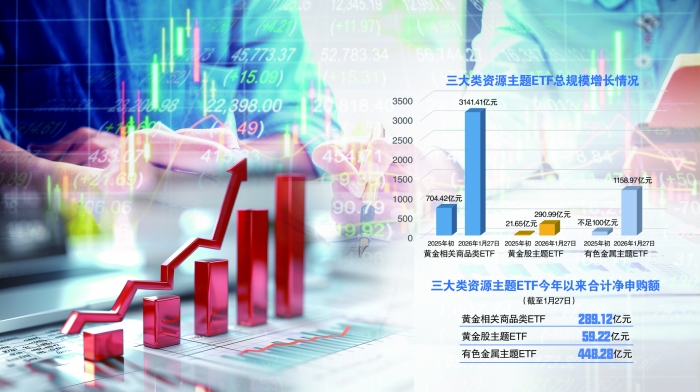
张大伟 制图 ◎记者 赵明超 金银狂飙,有色潮起。今年以来,国际金价迭创新高,推动相关ETF规模劲增,境内市场规模最大的黄 金ETF已突破1200亿元。随着金银投资热潮蔓延至整个有色领域,有色金属主题ETF规模同样快速增 长。 资金大举流入黄金ETF 1月28日,平安黄金股票ETF、国泰黄金股票ETF均强势涨停,并且收盘溢价2%以上,投资热度可见一 斑。 随着国际金价的屡创新高,黄金相关ETF强势上涨,吸引大量资金涌入。从黄金相关商品类ETF来看, 截至1月28日,今年以来涨幅超过20%。从资金流向看,据Choice测算,截至1月27日,境内市场黄金相 关商品类ETF年内净申购额合计达到289.12亿元。 净值上涨叠加资金涌入,黄金相关商品类ETF规模劲增。截至1月27日,境内黄金相关商品类ETF规模 为3141.41亿元,而在2025年初,其规模仅为704.42亿元。其中,规模领跑的华安黄金ETF规模达到 1205.72亿元,博时黄金ETF规模为521.77亿元,易方达黄金ETF规模为450.87亿元,国泰黄金ETF规模 为390.58亿元。 与商品类黄金ETF锚定实物黄金有所不同,黄金股主题ETF主要聚焦 ...
基金满仓老登股血亏30%!自己买科技小登赚翻5000万!泰康基金经理神操作让基民破防了
Sou Hu Cai Jing· 2026-01-28 16:35
Core Viewpoint - The article highlights the stark contrast between the investment strategies employed by fund manager Gui Yueqiang for his clients and his personal investments, leading to significant losses for investors while he profits from technology stocks [2][8]. Group 1: Fund Performance and Strategy - Gui Yueqiang manages over 2 billion yuan in assets but has kept his funds heavily invested in traditional sectors like liquor and home appliances, resulting in a nearly 30% loss over five years for investors [2][6]. - The two funds managed by Gui, the Taikang Advantage Enterprise Mixed Fund and the Taikang Blue Chip Advantage One-Year Holding Stock Fund, have shown poor performance since their inception, with the former losing almost 30% and the latter also underperforming [2][3]. - Despite the potential to invest in a broader range of stocks, including tech giants like Tencent and Alibaba, Gui has chosen to focus on a narrow selection of traditional stocks, leading to stagnant performance [3][4]. Group 2: Personal Investments - Reports indicate that Gui has been heavily invested in technology stocks through his personal account, achieving a floating profit exceeding 50 million yuan, while his managed funds have remained stagnant [8][11]. - This discrepancy in investment strategy raises questions about the alignment of interests between the fund manager and the investors, as Gui's personal investments have thrived in a booming tech market while his clients have suffered losses [12][20]. Group 3: Investor Reaction and Regulatory Implications - Investors have expressed outrage in the fund's comment sections, feeling betrayed by Gui's dual strategy, which appears to prioritize his personal gains over their interests [18][20]. - The situation has prompted discussions about regulatory changes in the industry, with new rules potentially linking fund manager performance to their compensation, aiming to reduce the incentive for such divergent investment strategies [20][22].

基金经理在科技上“狂飙”赚翻,所管基金却在旧蓝筹血亏
市值风云· 2026-01-28 10:13
Core Viewpoint - The article highlights a significant disparity between the performance of a fund manager's personal investments and the funds managed for investors, raising ethical concerns about the management practices at Taikang Fund [3][4][11]. Group 1: Fund Performance - Fund manager Gui Yueqiang has reportedly made a profit of 50 million yuan through personal investments in technology stocks, while the funds he manages have underperformed significantly, with the Taikang Blue Chip Advantage fund returning only 0.48% since its inception in August 2020 [4][5][7]. - The Taikang Blue Chip Advantage fund has consistently lagged behind its benchmark and the CSI 300 index, with a total return of -18% over the past three years and -18.72% over five years [6][8]. - Another fund managed by Gui, the Taikang Advantage Enterprise, has suffered a cumulative loss of over 30% since its establishment at the end of 2020, with a total scale of 634 million yuan [9][10]. Group 2: Ethical Concerns and Regulatory Issues - The article discusses the ethical dilemma of fund managers investing in different assets for personal accounts compared to public funds, which raises questions about their commitment to maximizing returns for investors [11][12]. - Regulations prohibit fund managers from using non-public information for personal gain, yet the article questions why Gui did not align his fund's investments with his personal insights into the technology sector [12][13]. - The article emphasizes the need for fund managers to demonstrate alignment with investor interests, suggesting that they should consider "co-investing" in their funds to create a stronger incentive for performance [12][17]. Group 3: Industry Practices and Management Fees - The article critiques the "guaranteed profit" model prevalent in the mutual fund industry, where management fees continue to be collected despite poor fund performance, highlighting that Taikang Blue Chip Advantage generated only 13.4 million yuan in profits while incurring 37.75 million yuan in management fees from 2020 to mid-2025 [16][17]. - The Taikang Advantage Enterprise fund reported a cumulative loss exceeding 800 million yuan while accruing over 96 million yuan in management fees during the same period, raising concerns about the sustainability of such a business model in a volatile market [17]. - The article concludes that investors should reassess their holdings in funds that have consistently underperformed and lack active management or personal investment from the fund managers [17].
炸锅了!原来是这家基金公司!
Xin Lang Cai Jing· 2026-01-26 13:25
来源 :挖掘机007 你有没有想过,自己辛辛苦苦投进去的钱在亏,而那个管你钱的基金经理,却可能正用自家账户赚得盆 满钵满?这不是小说桥段,而是正在泰康基金上演的现实。 最近,业界诸多报道把这事彻底捅开了。事情主角是泰康基金一位名叫桂跃强的基金经理——他管着超 过20亿的基民资金,五年如一日死守白酒、家电这些所谓"老登股",结果基金亏了快30%;可与此同 时,他自己(或者说他太太名下)的账户却早早重仓科技股,浮盈一度超过5000万。基民血亏,他躺 赢,评论区直接炸锅。 先说说他的两只主力基金:泰康优势企业混合和泰康蓝筹优势一年持有股票。这两只都是偏股型基金, 按理说可以买全市场股票,包括港股通里的腾讯、阿里都没问题。但桂跃强偏偏不走寻常路,硬是把它 们变成了"白酒家电主题基金"。 翻开持仓记录,简直离谱。比如泸州老窖,连续21个季度雷打不动出现在前十大重仓股里,一次都没落 下过;山西汾酒、五粮液也出现了20次;美的集团18次,福耀玻璃、恒生电子各14次……这哪是做投 资,分明是打卡上班。更夸张的是,2025年四季报显示,好几只重仓股一个季度下来一股没动,仿佛账 户被冻住了。 问题是,这几年AI、半导体、新能源轮 ...