
博时黄金ETF

Search documents
跌超20%后反弹!金价过山车,基民吵翻了:割肉还是硬扛?基金经理最新发声
凤凰网财经· 2026-03-25 13:15
Core Viewpoint - The article discusses the recent fluctuations in gold prices and the performance of gold-themed funds, highlighting the debate on whether to hold or redeem these funds amid significant price drops and market volatility [3][4]. Group 1: Gold Price Trends - Since March 3, gold prices have significantly declined, with spot gold dropping below $4,100 per ounce on March 23, a decrease of over 20% from the March 2 high of $5,419.32 [3][4]. - The gold sector in the A-share market saw a year-to-date increase of 73.38% in January, ranking first among 31 Shenwan primary industries, but has since faced a downturn [4]. Group 2: Fund Performance - By March, the year-to-date return of gold funds fell below 5%, with many ETFs experiencing substantial outflows and declines in net asset value [4][5]. - On March 23, the largest gold-themed ETF, managed by Huashan Fund, reported a year-to-date return of -5.12%, with a decrease in circulation scale by 143.13 billion [5][6]. Group 3: Market Sentiment and Future Outlook - The article notes that the recent downturn in gold prices is attributed to pressures from "monetary policy repricing" and "liquidity squeeze," leading to increased selling pressure in the market [8][9]. - Despite short-term volatility, long-term investment managers believe that gold still holds value as a hedge against inflation and uncertainty, suggesting a potential rebound in interest for gold as a strategic asset [9][10].


多个品种创年内新低!贵金属新一轮暴跌“冲击波”有多大?
证券时报· 2026-03-23 14:31
Core Viewpoint - Precious metals, including gold, silver, platinum, and palladium, are experiencing a significant decline in prices, marking a new low for the year, which has also impacted the stock and ETF markets [1][2][3]. Price Decline Details - Gold prices have seen a drastic drop, with the Shanghai Gold Exchange's Au99.99 contract closing down 11.23% on March 23, reaching a low of 911 yuan per gram, over 20% lower than its recent peak [3][4]. - Silver prices have plummeted even more, with the main silver futures contract on the Shanghai Futures Exchange dropping over 13% on March 23, hitting a low of 15,070 yuan per kilogram, effectively halving from its yearly high [3][4]. - Platinum and palladium prices also fell sharply, with platinum futures dropping over 15% and palladium futures over 14% on March 23, both reaching new yearly lows [3][4]. Market Impact - The decline in precious metal prices has led to a significant drop in the Shenyin Wanguo Precious Metals Index, which fell 8.38% on March 23, with a cumulative decline of 20.75% since February [6]. - Stocks related to precious metals have also seen substantial declines, with companies like Hunan Silver and Zhaojin Gold experiencing over 40% pullbacks from their yearly highs [6][7]. - Major ETFs tracking precious metals have seen their scales shrink dramatically, with the Huaan Gold ETF dropping from 126.8 billion yuan to a loss of approximately 61 billion yuan over a few days [8]. Expert Analysis - According to Zhu Shanying, the escalation of geopolitical conflicts and strong energy prices have delayed interest rate cuts and worsened market risk appetite, which are key factors behind the recent adjustments in precious metal prices [10][11]. - In the short term, precious metals are expected to remain under pressure due to ongoing geopolitical tensions, but the long-term outlook remains bullish, driven by rising inflation expectations and potential stagflation risks [11].

金价大幅波动,背后究竟隐藏了什么秘密?
Sou Hu Cai Jing· 2026-02-24 02:55
Core Insights - The article highlights the significant price discrepancies in the gold market during the Chinese New Year, particularly on February 22, 2026, where international gold prices surged while domestic prices remained stagnant due to the Shanghai Gold Exchange being closed for the holiday [1][3]. Group 1: Price Discrepancies - On February 22, 2026, the international gold price reached $5,104.24 per ounce, increasing by $117, or over 2.35%, while domestic gold jewelry was priced at 1,560 RMB per gram, with buyback prices around 1,100 RMB per gram, creating a price gap of 460 RMB per gram [1][3]. - The domestic wholesale gold prices were frozen at the last trading day before the holiday, with AU9999 spot and gold T D prices at 1,109 RMB and 1,108.5 RMB per gram respectively, leading to a "parallel universe" effect in pricing [3]. Group 2: Market Dynamics - Retailers raised prices to include a "risk premium" due to uncertainty in international gold prices, which could lead to losses if they sold at pre-holiday prices [3]. - The recovery price for gold jewelry is significantly lower because consumers pay for craftsmanship and brand value, while recyclers only consider the raw material value, leading to a substantial price difference [4][6]. Group 3: Investment vs. Consumption - For consumers purchasing gold jewelry for personal use, the emotional and aesthetic value justifies the higher prices, while investors seeking asset preservation should avoid jewelry and focus on bank gold bars or gold ETFs, which are closely aligned with raw gold prices [10][12]. - The article emphasizes the importance of understanding the different pricing layers in the gold market, where gold serves as both an investment asset and a consumer product, each with distinct pricing mechanisms [12]. Group 4: Market Influences - The surge in international gold prices was driven by expectations of the Federal Reserve starting a rate-cutting cycle in 2026, alongside geopolitical tensions that heightened global risk aversion [8]. - Central banks have been net buyers of gold for several years, with the World Gold Council reporting a net purchase of 863 tons in 2025, contributing to a solid price foundation for gold [8].

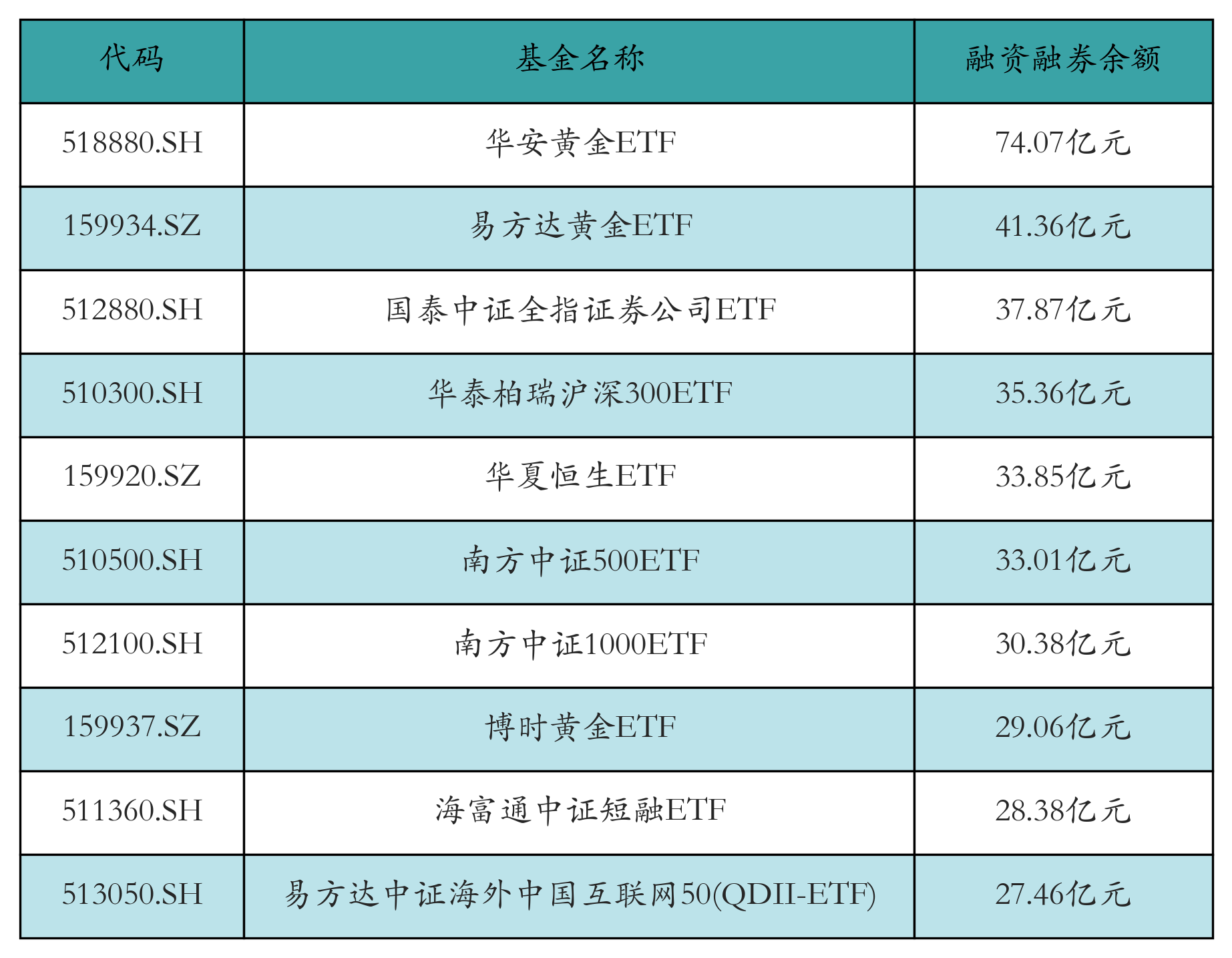
两市ETF两融余额减少94.83亿元丨ETF融资融券日报
2 1 Shi Ji Jing Ji Bao Dao· 2026-02-24 02:45
Market Overview - On February 13, the total ETF margin balance in the two markets was 115.864 billion yuan, a decrease of 9.483 billion yuan from the previous trading day [1] - The financing balance was 108.367 billion yuan, down by 9.454 billion yuan, while the securities lending balance was 7.497 billion yuan, a decrease of 29.625 million yuan [1] - In the Shanghai market, the ETF margin balance was 80.922 billion yuan, a decrease of 8.662 billion yuan, with a financing balance of 74.354 billion yuan, down by 8.657 billion yuan [1] - In the Shenzhen market, the ETF margin balance was 34.942 billion yuan, a decrease of 0.822 billion yuan, with a financing balance of 34.013 billion yuan, down by 0.796 billion yuan [1] ETF Margin Financing and Securities Lending - The top three ETF margin balances on February 13 were: Huaan Gold ETF (7.407 billion yuan), E Fund Gold ETF (4.136 billion yuan), and Guotai CSI All-Share Securities Company ETF (3.787 billion yuan) [2] - The top three ETF financing buy amounts were: Hai Futong CSI Short Bond ETF (1.683 billion yuan), Hang Seng Technology ETF (909 million yuan), and Bosera Convertible Bond ETF (874 million yuan) [4] - The top three ETF financing net buy amounts were: Dachen Hang Seng Technology ETF (31.3105 million yuan), Huaan Gold ETF (30.3682 million yuan), and Huatai-PB CSI 300 ETF (27.6497 million yuan) [5] ETF Securities Lending - The top three ETF securities lending sell amounts were: Southern CSI 500 ETF (1.27 billion yuan), Southern CSI 1000 ETF (283.781 million yuan), and Bosera Convertible Bond ETF (229.007 million yuan) [7]
金价半小时暴跌内幕,别再等了!历史正在重演,机会就在眼前
Sou Hu Cai Jing· 2026-02-14 05:02
Core Viewpoint - The international gold price experienced a significant drop, falling nearly $200 within 30 minutes, while domestic gold prices remained high, leading to a substantial price discrepancy between international and retail gold prices [1][3]. Group 1: Price Levels in the Gold Market - The gold market consists of three distinct pricing tiers: the benchmark price tier, the brand retail tier, and the wholesale and investment tier [3]. - The benchmark price tier is directly linked to the international market, with Shanghai Gold Exchange's AU9999 gold closing at approximately 1110.40 yuan per gram, reflecting the international spot gold price [3]. - The brand retail tier, which is what consumers encounter, shows prices for gold jewelry from major brands like Chow Tai Fook and Lao Feng Xiang ranging from 1550 to 1562 yuan per gram [3]. - The wholesale and investment tier, closer to the raw material cost, has the wholesale price for 999 gold around 1282 to 1289 yuan per gram, with banks offering lower prices for investment gold bars [5]. Group 2: Factors Influencing Gold Price Fluctuations - The primary factor behind the recent gold price drop is the U.S. Federal Reserve's monetary policy, which has seen interest rates lowered multiple times, leading to a shift in market expectations regarding future rate cuts [5][6]. - In 2025, global central banks purchased a total of 863 tons of gold, with the People's Bank of China increasing its reserves significantly, indicating a strategic move to bolster financial security [6]. - Geopolitical tensions, such as conflicts in the Middle East and the ongoing Russia-Ukraine situation, have also contributed to increased demand for gold as a safe-haven asset [8]. Group 3: Cost Structure of Retail Gold Prices - The significant price difference between retail gold and raw gold prices can be attributed to various factors, including design and craftsmanship, which elevate production costs [9][11]. - Retail gold stores incur high operational costs due to prime location rents, staff salaries, and store maintenance, which are reflected in the final retail price [9]. - Marketing expenses also play a role, as brands invest heavily in advertising and promotions to establish trust and recognition among consumers [11]. Group 4: Investment Alternatives and Market Dynamics - For those looking to invest in gold without the premium of retail prices, purchasing investment gold bars from banks is a viable option, with prices closely following the raw material costs [12]. - New investment products like "small gold beans" and gold ETFs have emerged, allowing for flexible and low-barrier entry points for retail investors [12]. - When it comes to selling gold, the market price for gold recovery is significantly lower than retail prices, as recovery businesses deduct costs associated with testing and refining [14].

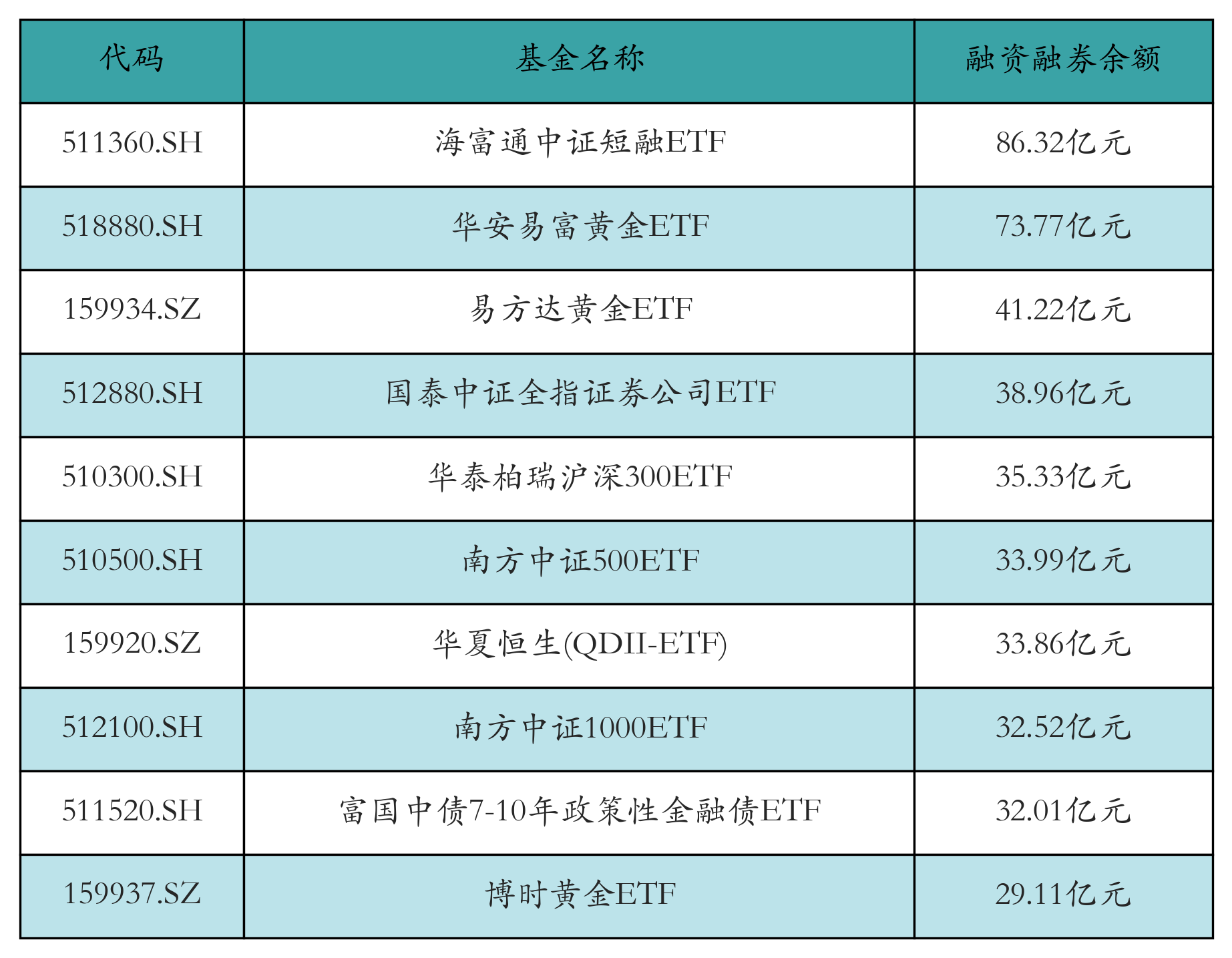
两市ETF两融余额增加45.31亿元丨ETF融资融券日报
2 1 Shi Ji Jing Ji Bao Dao· 2026-02-13 02:55
Market Overview - As of February 12, the total ETF margin balance in the two markets reached 125.347 billion yuan, an increase of 4.531 billion yuan from the previous trading day [1] - The financing balance was 117.82 billion yuan, up by 4.536 billion yuan, while the securities lending balance decreased by 4.2073 million yuan to 7.527 billion yuan [1] - In the Shanghai market, the ETF margin balance was 89.583 billion yuan, increasing by 4.501 billion yuan, with a financing balance of 83.011 billion yuan, up by 4.506 billion yuan [1] - The Shenzhen market's ETF margin balance was 35.764 billion yuan, increasing by 30.4641 million yuan, with a financing balance of 34.809 billion yuan, up by 29.959 million yuan [1] ETF Margin Balances - The top three ETFs by margin balance on February 12 were: - Hai Fu Tong Zhong Zheng Short Bond ETF (8.632 billion yuan) - Hua An Yi Fu Gold ETF (7.377 billion yuan) - Yi Fang Da Gold ETF (4.122 billion yuan) [2][3] ETF Financing Buy Amounts - The top three ETFs by financing buy amounts on February 12 were: - Hai Fu Tong Zhong Zheng Short Bond ETF (7.6 billion yuan) - Hua Tai Bai Rui Nan Fang Dong Ying Hang Seng Technology Index (QDII-ETF) (1.012 billion yuan) - Bo Shi Zhong Zheng Convertible Bonds and Exchangeable Bonds ETF (681 million yuan) [4][5] ETF Financing Net Buy Amounts - The top three ETFs by financing net buy amounts on February 12 were: - Hai Fu Tong Zhong Zheng Short Bond ETF (4.49 billion yuan) - Hua Tai Bai Rui Nan Fang Dong Ying Hang Seng Technology Index (QDII-ETF) (271 million yuan) - Hua Xia Hang Seng Technology (QDII-ETF) (144 million yuan) [6][7] ETF Securities Lending Sell Amounts - The top three ETFs by securities lending sell amounts on February 12 were: - Nan Fang Zhong Zheng 1000 ETF (1.02265 million yuan) - Nan Fang Zhong Zheng 500 ETF (537.15 thousand yuan) - Hua Xia Shang Zheng Ke Chuang Ban 50 Component ETF (391.57 thousand yuan) [8][9]
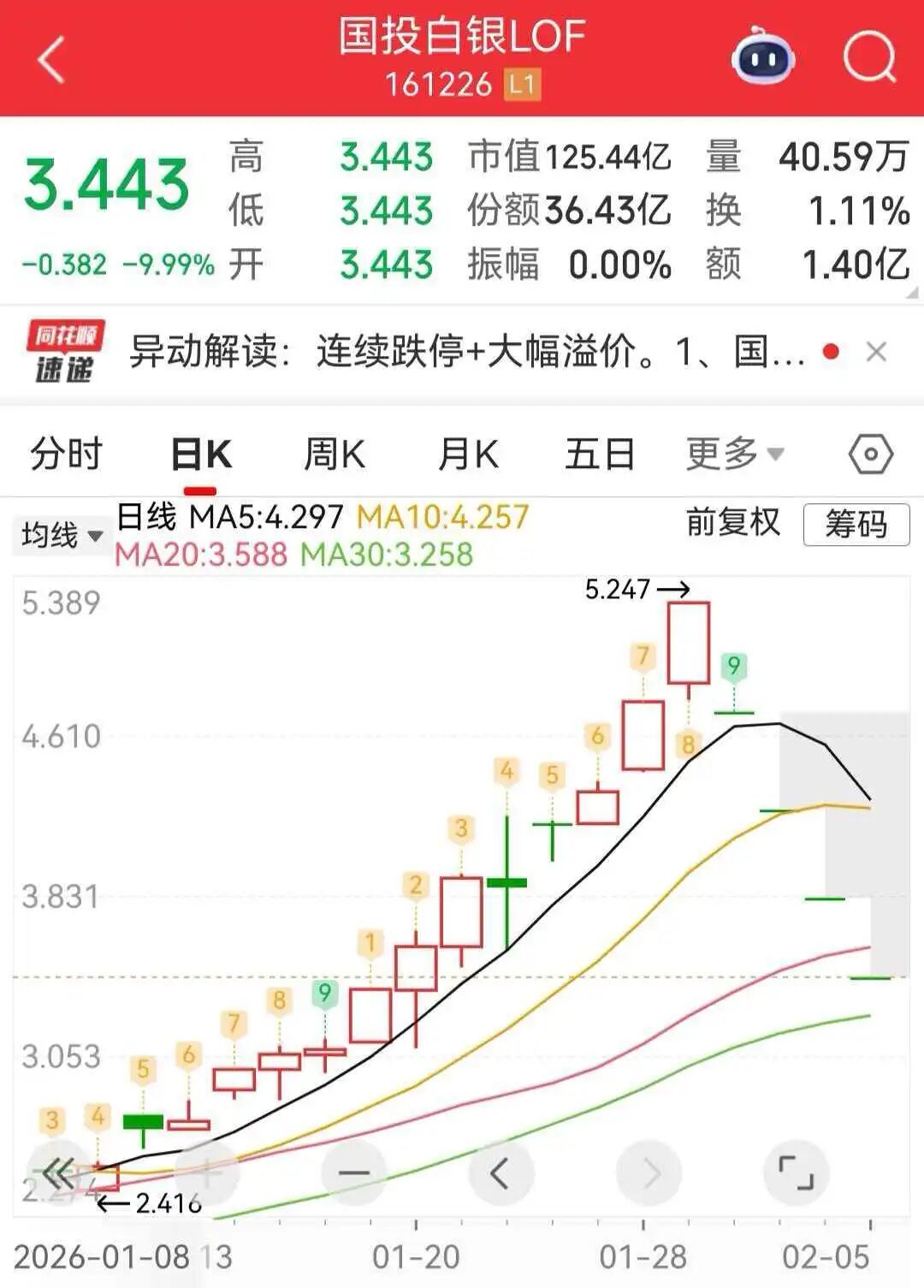
四连跌停后仍有37%的溢价!白银LOF暴跌拷问产品设计逻辑
Mei Ri Jing Ji Xin Wen· 2026-02-06 00:53
Core Viewpoint - The significant drop of over 30% in the net value of Guotou Ruijin Silver LOF raises critical questions about the underlying design logic of the product, highlighting the challenges in implementing hedging strategies to mitigate losses [1][4]. Group 1: Product Design and Investor Expectations - Investors are suggesting that the fund company should temporarily break conventional rules to use derivatives for hedging, but industry insiders indicate that this is difficult due to product positioning, risk matching, and operational feasibility [1][5]. - The fund's design aims to track silver prices closely, with strict guidelines limiting the use of derivatives to maintain its passive tracking nature, which would be compromised by introducing hedging strategies [6][7]. Group 2: Risk and Suitability of Investors - The introduction of hedging strategies could misalign with the risk tolerance of current investors, as these strategies may introduce new risks that could exacerbate losses [7]. - The fund's current scale and risk profile are aligned with its existing investors, and any changes to the investment strategy could lead to a mismatch in risk tolerance [7]. Group 3: Operational Feasibility and Market Comparisons - Achieving perfect hedging through derivatives for a single asset like silver is unrealistic, and even similar products in overseas markets face challenges [8]. - The closest comparable product in the U.S. market, PowerShares DB Silver Fund, has faced significant issues, including a complete liquidation due to market volatility [8]. Group 4: International Product Insights - Internationally, physical silver ETFs and other investment vehicles are more prevalent, with physical silver ETFs offering a more viable model for addressing high entry barriers and storage costs in the domestic market [10][11]. - The design of physical silver ETFs could provide a framework that aligns with regulatory requirements and investor risk preferences, potentially filling gaps in the domestic silver investment landscape [11]. Group 5: Future Considerations and Industry Reflection - The recent valuation event of Guotou Ruijin Silver LOF has prompted a reevaluation of product designs within the public fund industry, emphasizing the need for improved risk management standards [17]. - The industry may need to adapt its product design philosophy and risk control measures in response to extreme market conditions, as current frameworks may not adequately address unforeseen market volatility [17].
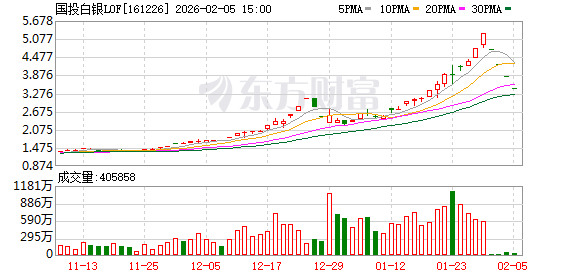
四连跌停后仍有37%的溢价!白银LOF暴跌拷问产品设计逻辑 再次面临极端行情能否扛住压力?
Mei Ri Jing Ji Xin Wen· 2026-02-06 00:45
Core Viewpoint - The significant drop of over 30% in the net value of Guotou Ruijin Silver LOF raises questions about the underlying design logic of the product, prompting investors to seek temporary measures to mitigate losses through derivative hedging, which faces substantial barriers in terms of product positioning, risk matching, and practical implementation [2][4][5]. Group 1: Product Design and Intent - The primary intent of the Guotou Ruijin Silver LOF is to track silver price movements, utilizing futures contracts due to their liquidity, while the physical silver market lacks sufficient depth for large capital movements [6]. - The product is designed to maintain a tracking deviation of no more than 0.5% daily and an annual tracking error of no more than 7%, indicating its nature as a passive tracking tool rather than an actively managed product [6]. Group 2: Investor Suitability and Risk - Introducing hedging mechanisms could misalign the product's risk profile with the existing investors' risk tolerance, as the current holders are matched to a medium-high risk level [7]. - The complexity of hedging strategies may introduce new risks, potentially exacerbating losses if the hedging fails, which could lead to a mismatch between the product's risk and the investors' capacity to bear it [7]. Group 3: Practical Implementation Challenges - Achieving perfect hedging through derivatives for a single asset like silver is unrealistic, and even similar products in overseas markets face challenges, such as the PowerShares DB Silver Fund, which has been affected by futures roll costs and market volatility [8]. - The historical limitations of product design mean that the current framework cannot adequately address extreme market conditions, highlighting the unpredictability of market behavior [9]. Group 4: International Product Comparisons - Internationally, the main silver investment products include physical silver ETFs, silver futures, and silver mining ETFs, with physical silver ETFs being particularly relevant for the Chinese market due to their ability to address high entry barriers and storage costs [11]. - The design of physical silver ETFs, which combines physical backing with share issuance, could provide a model for domestic products, enhancing tracking accuracy and reducing costs [11]. Group 5: Future Product Development - The potential transition of Guotou Ruijin Silver LOF to a QDII-FOF model faces fundamental challenges, particularly regarding the underlying assets, as investing in futures would not fundamentally improve the current model [14]. - The inability to launch a silver ETF in China due to tax implications on physical silver investments presents a significant barrier to developing more effective investment products [14].
四连跌停后仍有37%的溢价!白银LOF暴跌拷问产品设计逻辑,再次面临极端行情能否扛住压力?
Mei Ri Jing Ji Xin Wen· 2026-02-06 00:38
Core Viewpoint - The significant drop of over 30% in the net value of Guotou Ruijin Silver LOF has raised questions about the underlying design logic of the product, prompting investors to suggest temporary measures such as using derivatives for hedging to mitigate losses, which industry insiders deem difficult due to product positioning, risk matching, and operational feasibility [1][2]. Group 1: Product Design and Intent - The primary intent of the Guotou Ruijin Silver LOF is to track silver price movements, utilizing futures contracts due to their liquidity, while the spot market lacks sufficient depth for large transactions [3]. - The product is designed to maintain a tracking deviation of no more than 0.5% daily and an annual tracking error of no more than 7%, indicating its nature as a passive tracking tool rather than an actively managed product [3]. Group 2: Investor Suitability and Risk - Introducing hedging mechanisms could misalign the risk profile of the fund with the existing investors' risk tolerance, as the current fund holders are matched to a medium-high risk level [4]. - The complexity of hedging strategies may introduce new risks, potentially exacerbating losses rather than mitigating them, which raises concerns about the appropriateness of such strategies for current investors [4]. Group 3: Operational Feasibility and Market Comparison - Achieving perfect hedging through derivatives for a single asset like silver is unrealistic, and even in international markets, similar products that effectively manage such risks are scarce [5]. - The closest international counterpart, the PowerShares DB Silver Fund, faced challenges due to futures contract roll costs and market volatility, leading to its liquidation in March 2023 [5]. Group 4: Alternative Investment Structures - Internationally, physical silver ETFs and silver mining ETFs are more prevalent, with physical silver ETFs offering a more accessible investment structure that could address high entry barriers and storage costs in the domestic market [8]. - The design of physical silver ETFs, which combines physical backing with share issuance, could enhance tracking accuracy and reduce costs, making it suitable for domestic investors [8]. Group 5: Future Considerations for Product Design - The current situation highlights the historical limitations of product design, which did not anticipate extreme market conditions, suggesting a need for a thorough review of product categories and risk management standards in the industry [14]. - Future product designs may need to adapt based on lessons learned from this incident, potentially leading to changes in risk control measures and investment strategies [14].

黄金进入“未知领域” 投资者心态极限拉扯
Zhong Guo Zheng Quan Bao· 2026-02-03 20:23
Core Viewpoint - Recent fluctuations in gold prices have led to a mixed sentiment among investors, with some opting to sell for profit while others remain hopeful for future gains. Despite short-term volatility, the long-term bullish outlook on gold remains intact, though market risks should be monitored [1][7]. Group 1: Investor Behavior - Many investors are selling gold due to fears of further price declines, with some choosing to lock in profits after recent purchases [2][3]. - A segment of investors, however, remains optimistic about gold's long-term value, viewing current price dips as buying opportunities [4][6]. - Emotional factors and social media influence are driving some new investors to make impulsive purchases, despite the risks associated with price volatility [4][5]. Group 2: Market Dynamics - The physical gold market is experiencing a stark contrast between high demand for purchases and anxiety over price fluctuations among sellers [2][4]. - Gold-themed ETFs have shown significant trading activity, with notable inflows even during price declines, indicating a complex investor sentiment towards these financial instruments [6][7]. - Institutions are observing a shift in the narrative surrounding gold trading, focusing more on the restructuring of global financial dynamics rather than just liquidity changes [7].