
ASE

Search documents
全球半导体-英伟达和博通带来更强劲的 CoWoS(晶圆级芯片封装)需求前景-UBS Global IO Semiconductors Stronger CoWoS demand outlook from Nvidia and Broadcom
UBS· 2025-10-09 02:39
Investment Rating - The report assigns a "Buy" rating to TSMC and ASE Industrial, indicating a positive outlook for these companies in the semiconductor industry [5][32]. Core Insights - The demand outlook for CoWoS (Chip on Wafer on Substrate) is strengthened due to increased production estimates for Nvidia and Broadcom, with Nvidia's CoWoS demand expected to rise significantly in 2026 [2][4]. - Nvidia's Rubin production at TSMC is on track, with an increase in production units estimated from 1.3 million to 2.3 million in 2026, indicating robust growth potential [3]. - The introduction of Nvidia's new Rubin SKU, CPX, is anticipated to drive further CoWoS demand, with projections showing an increase from 444k units in 2025 to 678k units in 2026 [4]. Summary by Sections Demand Forecasts - Nvidia's CoWoS demand estimates for 2025 and 2026 have been raised by 5% and 26% respectively, driven by higher production units and new product launches [2]. - Broadcom's CoWoS demand for AI accelerators in 2026 has also been revised upwards, reflecting stronger demand from major clients like Google and OpenAI [2]. Production Insights - TSMC's CoWoS capacity is projected to increase from 100kwpm to 110kwpm by the end of 2026, supporting the anticipated growth in demand from Nvidia and Broadcom [2]. - The report highlights that Nvidia's total GPU production units at TSMC are expected to reach 6.9 million and 7.4 million in 2025 and 2026 respectively, up from previous estimates [2]. Stock Recommendations - TSMC is favored as a leading Cloud/Edge AI foundry due to its advanced packaging capabilities, while ASE is expected to benefit from the growth in advanced packaging and testing [5]. - The valuation comparison indicates strong growth potential for both TSMC and ASE, with TSMC's market cap at approximately $1,225 billion and ASE's at $25 billion [5].


属于CN彩六的“元年”,终于到来了
Hu Xiu· 2025-09-28 00:46
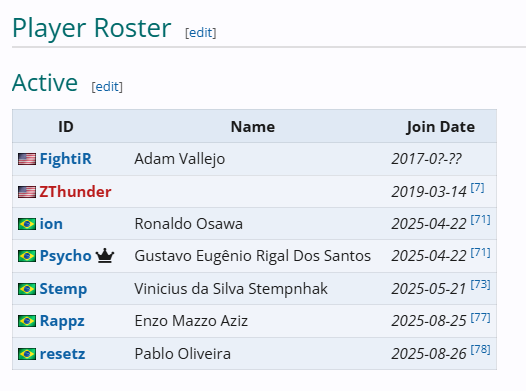
Core Points - The article discusses the significant development in the esports scene for "Rainbow Six Siege" (R6) in China, particularly the opportunity for Chinese teams to compete in the upcoming Six Invitational 2026 (SI 2026) [1][3][20] - Ubisoft announced that the last four spots for SI 2026 will be determined through a series of open qualifiers starting in December, with two spots allocated specifically for teams from mainland China [1][2] Group 1: Historical Context - The esports ecosystem for CNR6 has faced numerous challenges over the past decade, particularly after the game was banned from streaming in 2018, leading to a decline in domestic competitions and team disbandments [5][6][10] - Prior to this year, no Chinese teams had officially participated in international R6 events, with only one team invited to a demonstration match in 2018 [7][8] - The lack of a supportive environment for R6 esports in China has hindered its growth compared to other FPS games, despite the presence of skilled players [9][10] Group 2: Recent Developments - The revival of CNR6 esports is marked by the successful "薪火杯" tournament held in mid-2023, which showcased a high level of professionalism and attracted significant community engagement [15][17] - Following the announcement of Chinese teams' participation in SI 2026, several well-known clubs have begun recruiting former professional players and promising newcomers to form R6 divisions [17][20] - The GVC Pioneer Series, a domestic competition with a total prize pool of 1.35 million RMB, will serve as a preliminary qualifier for the LCQ, further stimulating interest and investment in the CNR6 scene [17][19] Group 3: Future Outlook - The article suggests that the current developments indicate a turning point for CNR6, with the potential for a new era in Chinese esports, referred to as the "CNR6 Year" [4][20] - Ubisoft's focus on the CNR6 ecosystem reflects a strategic interest in diversifying competition in the international league, especially against the backdrop of Brazil's dominance in the esports scene [21][22] - The article concludes with optimism about the future of CNR6, highlighting the importance of a robust competitive structure and the potential for Chinese teams to achieve success on the global stage [23][24]

SiC 进入先进封装主舞台:观察台积电的 SiC 策略 --- SiC Enters the Advanced Packaging Mainstage_ Observing TSMC’s SiC Strategy
2025-09-22 00:59
Summary of Key Points from the Conference Call Industry and Company Overview - The discussion centers around the semiconductor industry, particularly focusing on advanced packaging technologies and the role of Silicon Carbide (SiC) in AI chip design and manufacturing. Key players mentioned include TSMC, NVIDIA, AMD, Google, and AWS, with a specific emphasis on TSMC's strategies and innovations in packaging solutions [1][2][3]. Core Insights and Arguments 1. **Challenges in AI Chip Design**: The increasing complexity and power demands of AI chips have led to significant challenges in power delivery networks (PDNs) and thermal management. Traditional methods are becoming inadequate, with single GPUs now requiring over 1000A of current [5][19]. 2. **Innovative Solutions**: Companies like Marvell and ASE are proposing solutions such as Package-Integrated Voltage Regulators (PIVR) and optimized PDN platforms to address these challenges. TSMC is also innovating with its CoWoS-L platform, which integrates embedded voltage regulators and advanced thermal management techniques [7][10][11]. 3. **Emergence of SiC**: SiC is highlighted as a critical material for AI chip and system design due to its superior properties, including high thermal conductivity and mechanical strength. It is increasingly being viewed as essential for advanced packaging and heterogeneous integration [13][14][16]. 4. **Market Demand**: The demand for ultra-large-scale GPUs and ASICs is driven by generative AI and large-scale model training, with power consumption often exceeding 1 kW. This has exposed bottlenecks in thermal management and power delivery [19][20]. 5. **Bottlenecks Identified**: The exponential growth in AI computing has revealed three critical bottlenecks: thermal challenges, power delivery bottlenecks, and electro-optical integration demands. TSMC is actively addressing these through its 3DFabric strategy and various packaging solutions [22][28][30][32]. Additional Important Content 1. **SiC's Role in Advanced Packaging**: SiC is positioned as a hybrid integration enabler, linking power delivery, thermal dissipation, and optical interconnects. Its unique properties make it suitable for high-voltage integrated circuits (HVICs) and optical interposers [40][44]. 2. **Competitive Landscape**: TSMC's exploration of SiC as an interposer material could provide a competitive edge in thermal management and electro-optical integration, especially compared to Intel and Samsung, who are also advancing their own technologies [45][46]. 3. **Challenges Ahead**: The successful commercialization of SiC in advanced packaging faces challenges such as defect density control in large-size wafers, process compatibility, and cost structure improvements [53][54]. 4. **Future Directions**: The integration of SiC into TSMC's platforms like COUPE and CoWoS-Next could reshape the AI semiconductor supply chain, establishing new industrial advantages in the AI and high-performance computing (HPC) era [44][97]. This summary encapsulates the critical insights and developments discussed in the conference call, emphasizing the strategic importance of SiC in the evolving semiconductor landscape.

2025 年台湾国际半导体展_3.5D 先进封装、共封装光学及更多测试_ SEMICON Taiwan 2025_ 3.5D advanced packaging, co-packaged optics and more testing
2025-09-15 13:17
Summary of Key Points from the Conference Call Industry Overview - The conference focused on the semiconductor industry, particularly advancements in AI chips, heterogeneous integration, advanced packaging, and optical interconnect technologies, reflecting the growing importance of these areas in the market [2][3][20]. Core Findings 1. **TSMC's Capacity Expansion**: TSMC is expected to expand its CoWoS capacity to 100kwpm by the end of 2026, up from 70kwpm at the end of 2025, driven by robust demand for Cloud AI GPUs and ASICs [3]. 2. **AI Computing Demand**: AI computing requirements have surged by 10x in the past year, necessitating advancements in chip scaling, memory, and interconnect technologies [3]. 3. **3.5D Advanced Packaging**: The event highlighted significant discussions around 3.5D advanced packaging, which is anticipated to become mainstream for high-performance computing, improving cost structures and product design speeds [3]. 4. **Heterogeneous Integration**: The trend towards co-packaged optics (CPO) is gaining traction, with expectations for power consumption to be optimized by 2028, allowing for the replacement of copper in AI server integrations [3]. 5. **Testing Innovations**: The complexity of die and package designs is increasing the need for more rigorous testing at the wafer/die level to identify yield issues early [3]. Stock Recommendations - Top stock picks in the Greater China semiconductor sector include TSMC, ASE, MediaTek, Alchip, and Aspeed, all rated as "Buy" due to their structural AI opportunities [4]. Additional Insights - **Optical Interconnects**: Nvidia's advancements in networking infrastructure, particularly with its Spectrum-X CPO solution, promise significant power savings and improved signal integrity [12]. - **AI Data Center Power Consumption**: The power consumption of AI data centers is projected to rise dramatically, with examples like Meta's Hyperion data center expected to consume 2GW by 2030 [16]. - **Challenges in Advanced Packaging**: The industry faces challenges in transitioning to panel-level packaging and CoWoP technologies, which require overcoming technical hurdles related to system design and materials [30][39]. Emerging Technologies - **Silicon Photonics**: TSMC's COUPE platform aims to enhance integration of optics and electrical signaling, addressing bandwidth bottlenecks in computing performance [12]. - **GaN Technology**: GaN is highlighted for its efficiency and potential in powering AI applications, with Texas Instruments and Infineon leading developments in this area [36][38]. Conclusion - The semiconductor industry is at a pivotal point, driven by AI advancements and the need for innovative packaging and integration solutions. Companies like TSMC, Nvidia, and MediaTek are positioned to capitalize on these trends, while challenges in testing and power consumption remain critical areas for development [3][4][16][20].
GC Tech_iPhone 17、Watch Ultra 3、AirPods Pro 3 全新发布;卫星功能;延伸至供应链和股票思路-_ iPhone 17, Watch Ultra 3, AirPods Pro 3 newly launched; Satellite functions; read across to supply chain and stock ideas
2025-09-10 14:38
Summary of Key Points from the Conference Call Industry and Company Overview - The report focuses on the technology sector, specifically highlighting Apple's newly launched products including the iPhone 17 series, Apple Watch Ultra 3, and AirPods Pro 3 [1][2][3]. Core Insights and Arguments iPhone 17 Specifications - The iPhone 17 series features significant upgrades: - Rear cameras upgraded from 12MP to 48MP Fusion cameras for Pro/Pro Max models [2] - Front cameras upgraded from 12MP to 18MP with enhanced software [2] - Thickness of the Air model is reduced to 5.6mm [2] - Display refresh rate increased to 120Hz from 60Hz [2] - Starting prices: iPhone 17 at US$799, iPhone 17 Pro at US$1,099 (10% increase), and iPhone 17 Pro Max at US$1,199 [2]. Apple Watch Ultra 3 Specifications - Key upgrades include: - Adoption of satellite network for emergency calls [3] - Display area increased to 1,245 sqmm with a resolution of 422x514 pixels [3] - Battery life extended to 42 hours [3] - Starting price remains at US$799 [3]. AirPods Pro 3 Specifications - New features include: - Active noise cancellation and heart rate monitoring [8] - Live translation capabilities [8]. Supply Chain and Stock Recommendations - Positive outlook on companies benefiting from Apple's supply chain: - **Buy Recommendations**: Largan, AAC, FII, Hon Hai, BYDE, TSMC, ASE, Realtek, EMC, NYPCB, Delta [1]. - **Neutral Recommendations**: Sunny Optical, JCET, BOE, Quanta, ASMPT, Vanguard, Novatek, Unimicron, Kinsus [1]. Additional Important Information - The report includes a detailed analysis of revenue exposure for various companies in the Greater China tech supply chain related to Apple products, indicating significant dependencies on Apple for revenue generation [9]. - The report emphasizes the potential for increased shipment volumes due to the new product features, which may drive replacement demand [1]. This summary encapsulates the critical aspects of the conference call, focusing on product specifications, market implications, and investment recommendations within the technology sector related to Apple.




台湾科技:调研反馈,先进封装和测试行业情绪因乐观结果后移-Taiwan Technology_ Marketing feedback_ Sustained AI optimism with rising sentiment towards advanced packaging and testing industry
2025-08-28 02:12
Summary of Key Points from the Conference Call Industry Overview - The focus of the conference call was on the Taiwan technology sector, particularly the semiconductor industry, with a strong emphasis on AI and advanced packaging technologies [1][2][7]. Core Company Insights TSMC (Taiwan Semiconductor Manufacturing Company) - TSMC is viewed as one of the most underappreciated AI stocks, currently trading at approximately 17x FY26 P/E, which is lower than other global AI names [2][16]. - TSMC's share price has increased by 12% year-to-date, but it has underperformed compared to peers like SK Hynix (+52%) and Nvidia (+31%) [2]. - The company is expected to achieve a revenue growth of 20% in 2026, following a robust 34% growth in 2025, driven by advancements in 2nm/3nm nodes and higher pricing for advanced nodes [2][16]. - TSMC's capital expenditure (capex) is projected to be moderate at $40 billion in 2025 and $42 billion in 2026, with a significant increase to $50 billion in 2027 due to capacity constraints [3][5]. MediaTek - MediaTek faces divergent views from hedge funds, with long-short funds expressing negativity due to a lack of near-term catalysts and lukewarm smartphone demand [6]. - Despite setbacks in the TPU project timeline, long-only investors remain optimistic about MediaTek's potential in the $45 billion ASIC market [6]. - The tape-out timing of MediaTek's TPU project is a critical monitoring point for investors [6]. ASE Technology - ASE is perceived as an AI laggard, with limited AI revenue contribution expected to be in the high single digits for 2025 [9][10]. - ASE is ramping up its advanced packaging capacity, with projections for significant capacity increases in the coming years [8]. - Investors are cautious due to ASE's reliance on mass-market consumer demand and a slower-than-expected recovery in gross margins [9]. Advanced Packaging and Testing Industry - The adoption of chiplet designs is driving demand for advanced packaging solutions, with CoWoS capacity expected to expand significantly from 2025 to 2027 [7][11]. - The testing industry is gaining traction, with companies like MPI and WinWay expected to benefit from higher average selling prices (ASP) and increased market share [12][13]. Other Important Insights - There is a notable investor interest in CoWoS equipment names, particularly GPTC and All Ring, following recent share price corrections [11]. - The overall sentiment towards the semiconductor industry is optimistic, particularly regarding AI and advanced packaging, despite some concerns about growth prospects in 2026 [1][11]. - Key risks for the companies discussed include weaker-than-expected end demand, competition, and execution challenges [17][20][22]. Conclusion - The Taiwan technology sector, particularly in semiconductors, is experiencing a shift towards AI and advanced packaging, with TSMC, MediaTek, ASE, and testing companies positioned to capitalize on these trends. However, investors remain cautious due to potential risks and varying growth outlooks across different companies.
先进封装设备厂商如何应对全球化市场挑战-How Do Advanced Packaging Equipment Vendors Tackle Challenges in a Globalized Market_
2025-08-27 15:20
Summary of Key Points from the Semiconductor Industry Research Industry Overview - The research focuses on the global semiconductor industry, particularly the front-end Wafer Fab Equipment (WFE) and back-end advanced packaging supply chains, highlighting the challenges posed by globalization and geopolitics [2][6][32]. Core Companies Involved - Major players in the semiconductor industry include TSMC, UMC, Samsung Electronics, Intel, ASML, Applied Materials (AMAT), Lam Research, Tokyo Electron (TEL), KLA, ASE, Amkor, JCET, Disco, Besi, ASMPT, K&S, Semes, Hanmi, Hanwha, EVG, SUSS, Teradyne, SCREEN, Canon, Nikon, and Lasertec [19][49]. Key Trends and Insights 1. **Advanced Packaging Demand**: The demand for advanced packaging technologies such as 2.5D/3D packaging, Hybrid Bonding, and CoWoS is surging due to the rise of AI and high-performance computing (HPC) applications [2][8][10]. 2. **Moore's Law and Packaging**: As Moore's Law slows, advanced packaging has become the primary pathway for sustaining semiconductor performance gains, with technologies like CoWoS and SoIC leading the way [3][38][49]. 3. **Geopolitical Challenges**: Geopolitical pressures and government policies, such as the CHIPS Act, are reshaping the supply chain dynamics, pushing companies to diversify their manufacturing and service locations [7][44][60]. 4. **Localization Trends**: There is a significant trend towards localization in the semiconductor supply chain, with companies establishing production bases in North America, Europe, Japan, and Southeast Asia to mitigate risks [7][32][60]. 5. **Material Innovation**: The shift from equipment-centric to materials-centric innovation is becoming critical, with new materials like UV resins, advanced thermal interface materials, and low-Dk dielectrics emerging as strategic differentiators [15][47][49]. Market Dynamics - The WFE market is projected to grow from approximately USD 13.3 billion in 2024 to USD 16.5 billion by 2029, with a significant portion of revenue coming from equipment shipments [49][72]. - The back-end packaging market is also expanding, with the TCB equipment market estimated at around USD 936 million and HB equipment projected at USD 397 million by 2030 [53]. Challenges and Opportunities 1. **Cost and Pricing Pressures**: Equipment suppliers face challenges related to cost, pricing, and sustainability, which are becoming critical factors in maintaining competitiveness [8][29][49]. 2. **Technological Integration**: The ability to integrate differentiated materials and technologies will increasingly define competitiveness in the semiconductor industry [39][49]. 3. **Sustainability Goals**: Companies are embedding sustainability into their operational metrics, with ESG (Environmental, Social, and Governance) goals becoming essential for process efficiency and cost competitiveness [45][49][69]. Conclusion - The semiconductor industry is undergoing significant transformations driven by technological advancements, geopolitical factors, and evolving market demands. Companies that can effectively navigate these challenges while innovating in materials and processes are likely to secure a competitive edge in the future [49][72].


投资者推介-TMT:半导体关税更新及关键股票思路-Investor Presentation Asia Pacific-Tuesday TMT Webcast Semis Tariff Updates and Key Stock Ideas
2025-08-12 02:34
Summary of Key Points from the Conference Call Industry Overview - **Industry Focus**: Greater China Technology Semiconductors and Technology Hardware [4][8] - **Market Sentiment**: The semiconductor industry in Greater China is viewed as attractive, with potential growth opportunities driven by new policies and technological advancements [4][8] Core Insights - **Semiconductor Tariffs**: Discussion on the implications of Section 232 tariffs and how they may impact companies within the semiconductor sector [6] - **Company Exposure**: - TSMC has a 75% revenue exposure to US customers and plans a US$165 billion capital expenditure for its US operations by 2030 [7] - GlobalWafers has a 30-40% exposure and has initiated operations in Texas with an additional US$4 billion investment planned [7] - ASE and UMC have varying levels of exposure, with ASE at 50% and UMC at 20% [7] - **Investment Plans**: Companies like ASE and its subsidiary SPIL are planning investments in the US, although details are yet to be announced [7] Financial Performance Highlights - **Lenovo's Financials**: - Projected net sales for FY-1Q26E are US$18.081 billion, reflecting a 6% quarter-over-quarter increase and a 17% year-over-year increase [15] - Operating income is expected to rise significantly by 97% year-over-year to US$653 million [15] - Net income is projected to increase by 327% year-over-year to US$384 million [15] - **Margins**: Lenovo's gross margin is expected to be 16.1%, with operating margin at 3.6% [15] Emerging Trends - **AI Demand**: There is a notable increase in demand for AI-related device testers, with firms like Advantest expecting continued growth in System on Chip (SoC) tester demand [10] - **E-Paper Growth**: E Ink is projected to experience a 19% revenue CAGR from 2024 to 2026, driven by opportunities in signage and consumer electronics [18][22] Risks and Considerations - **Market Risks**: - Potential oversupply issues in mature node foundries could impact companies like UMC and Powerchip [7] - The semiconductor market faces uncertainties due to fluctuating demand and geopolitical factors [35][38] - **Investment Risks**: Risks to upside include stronger-than-expected recovery in semiconductor demand, while risks to downside involve potential market share loss and declining gross margins [37][38] Additional Insights - **Strategic Acquisitions**: Lenovo is in the process of acquiring Infinidat Ltd., indicating a strategic move to enhance its capabilities [31] - **Buyback Programs**: Companies like Ushio are implementing share buyback programs, reflecting confidence in their financial health [11] This summary encapsulates the key points discussed in the conference call, highlighting the current state and future outlook of the semiconductor and technology hardware industries in Greater China.
OCP亚太峰会要点 - 持续升级人工智能数据中心的路线图-APAC Technology Open Compute Project (OCP) APAC Summit Takeaways - A roadmap to continue upgrading the AI data center
2025-08-11 02:58
Summary of Key Points from the OCP APAC Summit Industry Overview - The Open Compute Project (OCP) is an industry consortium focused on redesigning hardware technology for data centers, emphasizing efficiency, scalability, and openness. It has over 400 members as of 2025, initiated by Meta in 2011 [3][2]. Core Insights and Arguments AI Data Center Innovations - The OCP APAC Summit highlighted advancements in AI hardware, infrastructure, and networking, with participation from major tech companies like Google, Meta, Microsoft, TSMC, and AMD [2][7]. - Meta is aggressively launching its Hyperion data center, which is expected to significantly benefit server ODMs like Quanta and Wiwynn [4][29]. - AMD's UALink and Ultra Ethernet are set to enhance networking capabilities, enabling larger clusters and improved performance [9][11]. Power and Cooling Solutions - The power consumption of AI servers is projected to double, with NVIDIA's GPUs expected to reach 3,600W by 2027, necessitating a shift to high-voltage direct current (HVDC) systems for efficiency [23][24]. - Liquid cooling is becoming essential for managing the thermal load of high-density AI racks, with designs evolving to accommodate this need [34][23]. Market Dynamics - The AI hardware market is transitioning from proprietary solutions to a more open, collaborative environment, benefiting specialized hardware vendors [10][11]. - The back-end networking market for AI is projected to exceed $30 billion by 2028, driven by the demand for high-bandwidth communication within AI clusters [18]. Important but Overlooked Content - The shift to panel-level processing by ASE is a critical innovation for manufacturing larger AI packages, improving area utilization and cost-effectiveness [13]. - The integration of retimers in cables is essential for maintaining signal integrity in high-density AI racks, addressing challenges posed by traditional passive copper cables [18]. - MediaTek is positioning itself as a leader in on-device AI integration, which is crucial as the demand for edge computing grows [26][30]. Company-Specific Highlights - **Delta**: Target price raised from $460 to $715 due to strong growth momentum driven by AI power needs [21]. - **Google**: Engaging with OCP to upgrade AI infrastructure, including the introduction of the Mt. Diablo power rack for efficient power distribution [24][33]. - **Seagate**: Emphasized the complementary role of HDDs alongside SSDs for high-capacity storage in AI applications [39][41]. - **TSMC**: Focused on co-development of system-level standards to support higher performance compute systems [40]. Conclusion The OCP APAC Summit underscored the rapid evolution of AI infrastructure, highlighting the importance of collaboration among tech giants to address the challenges of power, cooling, and networking in data centers. The insights gained from this event will shape the future landscape of AI technology and its supporting ecosystem.




共封装光学器件(CPO) -点亮人工智能加速之路-Global IO Semiconductor APAC Focus Co-packaged optics—lighting the path to AI acceleration
2025-07-24 05:04
Summary of Co-packaged Optics (CPO) in the Semiconductor Industry Industry Overview - The report focuses on the **semiconductor industry**, specifically the **co-packaged optics (CPO)** technology, which is critical for next-generation AI servers to meet increasing bandwidth demands and improve power efficiency [4][9][32]. Key Insights 1. **CPO Market Potential**: - CPO transceivers could generate a revenue market of **US$7-14 billion** by **2030E** [4]. - Silicon photonics, including CPO, may drive a **US$6-9 billion** revenue market by **2030E**, contributing **2-3%** sales upside to companies like **TSMC** and **ASE** [4][6]. 2. **Technological Transition**: - The industry is expected to transition to CPO technology as AI data center switches move to the **3.2T/port era** around **2027-28E**, followed by integration with xPU in **2028-30E** [4][11][74]. - Traditional optical transceivers will coexist with CPO for the next **2-3 years** as the technology matures [5][6]. 3. **Market Growth**: - The optical transceiver serviceable addressable market (SAM) is projected to grow from **US$12 billion** in **2025E** to **US$32 billion** by **2030E**, with a **CAGR of 22%** [13]. - CPO solutions are expected to capture **20%** of the optical transceiver market by **2030E** [13]. 4. **Impact on Key Players**: - **TSMC** is expected to strengthen its position in Cloud AI through CPO development, while **ASE** could gain significant market share in fiber array units and switch board packaging [6]. - Traditional optical suppliers like **Lumentum** and **Marvell** may face mixed implications due to the rise of CPO, but pluggable transceivers will maintain volume for the near term [6]. 5. **Fibre Optics vs. Copper**: - The shift from copper to fiber optics in data centers is driven by the superior performance of fiber in bandwidth, speed, and distance [18][21]. - Data centers are projected to account for **4%** of global copper demand by **2030E**, up from **1.5%** in **2024** [17]. Challenges and Considerations 1. **Technical Challenges**: - Major challenges for CPO include precise coupling, packaging, thermal management, and reliability [5][11]. - The industry must mature CPO technology by **2027-28** to meet the demands of the **3.2T** switch integration [11]. 2. **Adoption Hesitance**: - Hyperscalers may adopt CPO gradually, needing assurance of system reliability and interoperability across different solution providers [71][72]. 3. **Production Complexity**: - CPO systems require advanced packaging techniques and rigorous testing to ensure reliability, which poses production challenges [68][70]. Conclusion - CPO technology is poised to disrupt the optical module supply chain, offering significant growth opportunities for semiconductor companies while addressing the increasing demands of AI data centers. The transition from traditional optical solutions to CPO will require careful management of technological challenges and market dynamics.