Nike

Search documents
Pershing Square Holdings (OTCPK:PSHZ.F) Update / briefing Transcript
2026-02-11 16:02
Summary of Pershing Square Holdings Investor Meeting (February 11, 2026) Company Overview - **Company**: Pershing Square Holdings (OTCPK:PSHZ.F) - **Key Speaker**: Ryan Israel, Chief Investment Officer - **Chairman**: Rupert Morley Core Industry Insights - **Market Context**: The current market environment is seen as fascinating for public market investors, with significant updates across the portfolio and broader business strategies being discussed [1][3]. Key Financial Performance - **2025 Performance**: - Net Asset Value (NAV) grew by **20.9%** - Total shareholder return was **33.9%** - Compound growth in NAV and share price over 8 years is **23%** [9][10]. - **Share Buybacks**: In 2025, **6.6 million shares** were repurchased for approximately **$370 million**, totaling **$1.8 billion** in buybacks since inception [12]. - **Dividends**: The company has paid out **$666 million** in dividends, with an **86%** increase since the dividend policy was amended in 2022 [11][12]. Strategic Updates - **Howard Hughes Holdings**: - Acquired **$900 million** worth of shares, increasing ownership to **46.9%** [8][9]. - Committed to purchasing up to **$1 billion** in preferred securities to facilitate the acquisition of Vantage, an insurance company [9][22]. - The transformation aims to turn Howard Hughes into a diversified holding company akin to Berkshire Hathaway [17][20]. Investment Strategy - **Investment Focus**: The strategy emphasizes acquiring high-quality, durable growth companies, with a focus on long-term value creation [17][20]. - **Recent Investments**: - New investments in **Hertz**, **Amazon**, and **Meta** were disclosed, with a focus on companies with strong growth potential [43][46]. - Exited positions in **Chipotle**, **Canadian Pacific**, and **Nike** due to underperformance [44][41]. Market Analysis - **S&P 500 Performance**: The S&P 500 has seen a **112%** increase over the last six years, with earnings growth being the primary driver [53][56]. - **Top Companies**: The top 10 companies in the S&P 500 are expected to grow earnings at **25%**, significantly influencing overall market growth [58][59]. - **Valuation Insights**: Current market multiples are seen as potentially undervalued given the expected earnings growth, suggesting optimism for future performance [59][60]. Organizational Updates - **Team Expansion**: New hires include Jordan Aguiar-Lucander, Jill Chapman, and Lucas Richards, enhancing the investment and legal teams [49][50]. - **Investment Philosophy**: The firm maintains a concentrated investment strategy, focusing on a select number of high-quality businesses while keeping a library of potential investment opportunities [52][60]. Conclusion - **Future Outlook**: The firm is optimistic about navigating the current market environment, leveraging its investment strategy and organizational strengths to capitalize on emerging opportunities [45][51].
服饰行业周度市场观察-20260207
Ai Rui Zi Xun· 2026-02-07 08:42
Investment Rating - The report does not explicitly provide an investment rating for the apparel industry Core Insights - The luxury jewelry market is seeing a rise in interest from high-net-worth individuals towards traditional gold jewelry, which has significantly higher sales per store compared to established luxury brands like Cartier and Van Cleef & Arpels, achieving a gross margin of 40% [1] - The second-hand luxury market and emerging local brands are putting pressure on affordable luxury brands, which are experiencing declining sales, although some brands like Coach and Ralph Lauren are showing signs of recovery through product innovation and marketing adjustments [4] - The domestic sportswear market is undergoing a transformation with local brands capturing 60% of the global market share, led by Anta and Li Ning, which are focusing on technological advancements and channel optimization to build competitive barriers [4] - The demand for affordable down jackets is surging among middle-class consumers, leading to a decline in sales for high-end brands, which are struggling with high pricing and quality concerns [5][7] - The outdoor gear market is evolving with the popularity of trail running, leading to increased interest in trail backpacks, which are expected to see significant market growth by 2030 [8] Industry Environment - The luxury jewelry market is being disrupted by traditional gold jewelry brands that are attracting high-net-worth consumers, leading to a shift in customer traffic away from established luxury brands [1] - The affordable luxury segment is facing challenges due to tightening consumer spending, with brands like Michael Kors and Coach reporting significant revenue declines in Asia, although some are beginning to recover [4] - The domestic sportswear market is witnessing a major shift with local brands like Anta and Li Ning leading in revenue and brand value, while international brands are experiencing slower growth [4] - The affordable down jacket market is thriving as consumers prioritize value, leading to a stark contrast in sales performance between high-end and budget brands [5][7] - The trail running trend is driving demand for specialized outdoor gear, particularly trail backpacks, which are becoming essential for outdoor enthusiasts [8] Top Brand News - Pop Mart's Labubu toy line experienced a significant market crash after initial success, highlighting the volatility of collectible markets [10] - Li Ning showcased its Honor Gold Label series at Milan Fashion Week, emphasizing a blend of high-quality design and sports technology [11] - Deckers Brands announced the closure of two niche brands to focus on more profitable core brands like Hoka and UGG [14] - Aokang held an AI fashion show to innovate marketing strategies in the footwear industry, showcasing a digital transformation approach [16]




Under Armour's Financial Performance and Outlook
Financial Modeling Prep· 2026-02-06 23:00
Core Insights - Under Armour reported earnings per share of $0.09, exceeding the estimated loss of $0.015, and revenue of approximately $1.33 billion, surpassing the estimated $1.16 billion [1][5] Group 1: Financial Performance - The company's third-quarter revenue decline was smaller than anticipated due to successful turnaround efforts aimed at simplifying its product assortment [3] - Under Armour's adjusted operating results for the third quarter surpassed expectations, indicating positive progress [3] Group 2: Revenue Expectations - Despite positive earnings, Under Armour has adjusted its revenue expectations for fiscal 2026, anticipating a decline at the milder end of its forecast [2][5] - The company faces challenges such as weak demand in North American and Asia-Pacific markets and ongoing tariff pressures [2][5] Group 3: Valuation Metrics - The price-to-sales ratio is about 0.60, indicating investors pay 60 cents for every dollar of sales [4] - The enterprise value to sales ratio is approximately 0.90, reflecting the company's valuation relative to its revenue [4] - The debt-to-equity ratio is about 1.02, suggesting slightly more debt than equity, while the current ratio is approximately 1.69, indicating good liquidity to cover short-term liabilities [4]

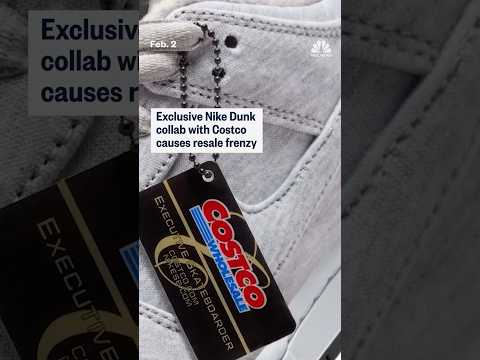
Exclusive Nike Dunk collab with Costco causes resale frenzy
NBC News· 2026-02-02 17:55
Costco members lined up for an exclusive Nike Dunk collab with Kirkland, the wholesale giant's in-house brand. The $135 sneakers quickly resold online for hundreds and in some cases thousands. According to multiple outlets, the drop hit select stores Friday in New York, California, Oregon, and Washington with resale prices as high as $5,000 on stock on sites like StockX and eBay. ...
America's 50 most iconic brands, from Main Street to Silicon Valley
Yahoo Finance· 2026-02-02 17:43
Core Insights - The article highlights the significant American companies that have shaped the nation's identity and economy as it approaches its 250th birthday, emphasizing their cultural and historical impact rather than just financial metrics [1][2]. Group 1: Visa - Visa was established in 1958 as BankAmericard, launching the first consumer credit card in the U.S. [3][6] - The company rebranded as Visa in 1976 and went public in 2008, currently holding a market cap of $632 billion [4][6]. - Visa operates in over 220 countries and territories, accepted at more than 175 million merchants [7]. Group 2: Meta (Facebook) - Facebook was founded in 2004 by Mark Zuckerberg and quickly grew to 1 billion users by 2012, later rebranding to Meta in 2021 [9][13][14]. - The platform has faced controversies regarding user data and misinformation but remains a dominant social media service with over 3 billion regular users [15]. Group 3: Boeing - Boeing, established in 1916, is a leading aerospace company known for producing commercial jets and military aircraft [15][16]. - The company has faced challenges in recent years, including safety allegations and COVID-19 impacts, but continues to be a major player in the industry with a market cap of $185 billion [20][21]. Group 4: Tesla - Tesla was founded in 2003, with Elon Musk joining in 2004, and has become synonymous with electric vehicles, launching the Model 3 in 2017 as the best-selling electric car [23][27]. - The company has a market cap of $1.4 trillion and is recognized for driving electric vehicles into the mainstream [28]. Group 5: Patagonia - Patagonia was founded in 1973 by Yvon Chouinard, known for its commitment to sustainability and donating 1% of sales to environmental causes [30][33]. - The company has expanded from climbing gear to a wide range of outdoor apparel and is estimated to have a market cap of $3 billion [33]. Group 6: Intel - Intel was founded in 1968 and became a leader in semiconductor technology, introducing the first programmable microprocessor in 1971 [34][35]. - The company has maintained a significant market presence, controlling approximately 75% of the CPU market as of 2025 [38]. Group 7: HP - HP was established in 1939, initially focusing on sound equipment and later becoming a leader in personal computers and printers [40][42]. - The company split into HP Inc. and Hewlett Packard Enterprises in 2015, with HP Inc. having a market cap of $18 billion [45]. Group 8: Nike - Nike was founded in 1964 as Blue Ribbon Sports and rebranded in 1971, becoming a dominant player in the sportswear market with a 14% share in 2024 [46][50]. - The company gained fame through its endorsement deal with Michael Jordan, significantly boosting its brand recognition [48]. Group 9: Kodak - Kodak was founded in 1888 and became a pioneer in photography, introducing innovations like roll film and the first digital camera [51][54]. - The company filed for bankruptcy in 2012 and now focuses primarily on commercial printing and imaging [56]. Group 10: IBM - IBM was established in 1911 and became synonymous with computing, initially focusing on tabulating machines and later dominating the PC market [59][62]. - The company has shifted its focus to consulting, software, and cloud computing, with a market cap of $291 billion [67]. Group 11: Paramount Pictures - Paramount Pictures, founded in 1912, is recognized as the longest-operating major studio in Hollywood, producing numerous iconic films [68][70]. - The studio has undergone various mergers and continues to be a significant player in the entertainment industry with a market cap of $12 billion [74]. Group 12: Netflix - Netflix was founded in 1997 as a DVD rental service and transitioned to streaming in 2007, becoming a leader in the industry [77][80]. - The company has a market cap of $351 billion and announced plans to acquire Warner Bros. Discovery in 2025 [81]. Group 13: FedEx - FedEx was founded in 1971, revolutionizing overnight delivery with a centralized hub model [83][84]. - The company has introduced several innovations in the shipping industry and has a market cap of $74 billion [88]. Group 14: Motown - Motown Records, established in 1959, played a crucial role in integrating Black artists into mainstream pop music [91][92]. - The label produced numerous hits and helped launch the careers of many iconic artists, although it faded in prominence during the 1970s [94][96]. Group 15: PepsiCo - PepsiCo was formed in 1965 through the merger of the Pepsi-Cola Company and Frito-Lay, becoming a leading global food and beverage brand [99][100]. - The company is known for its innovative marketing strategies and has a significant rivalry with Coca-Cola [101]. Group 16: Levi Strauss - Levi Strauss, founded in 1853, is known for creating the first riveted blue jeans, which have become a cultural staple [104][106]. - The company continues to sell a wide range of apparel and remains a significant player in the fashion industry [106]. Group 17: Microsoft - Microsoft was founded in 1975 and became a leader in software development, particularly with its Windows operating system [109][110]. - The company has expanded into gaming, cloud services, and AI, with a market cap of $7.8 billion [112]. Group 18: The Home Depot - The Home Depot was established in 1978, focusing on providing a wide range of building supplies and home improvement products [115][116]. - The company has a strong commitment to community initiatives, particularly supporting veterans, and has a market cap of $3.2 trillion [118]. Group 19: WK Kellogg Company - WK Kellogg Company was formed from the original Kellogg's brand, known for its iconic cereals and snacks [121][123]. - The company underwent a reorganization in 2023, with its cereal business spun off into a new entity [123].
X @Crypto.com
Crypto.com· 2026-02-01 15:59
RT Crypto.com Research & Insights (@cryptocom_rni)NFT & Gaming update:🦁 @LoadedLions_CDC partnered with Yield Guild Games for the Mane City Community Quest🦉 Moonbirds launched its BIRB token on Solana👟 Nike quietly sold its digital products and NFT subsidiary RTFKTFull details 👇https://t.co/QGazAYXsVy https://t.co/xzYcSdGQe5 ...
INVESTOR ALERT: Levi & Korsinsky is Investigating Lululemon Amid Athleisure E-Commerce Sales Halt
Prnewswire· 2026-01-23 19:05
Company Overview - Lululemon athletica inc. is under investigation regarding its product development processes and supply chain management, particularly following issues with the "Get Low" collection [1] - The company operates over 650 stores in more than 30 countries and generates approximately 42% of its revenue through digital channels [2] Market Context - The global athleisure market is valued at around $350 billion and is experiencing increased competition from brands like Nike, Adidas, and Athleta, as well as emerging direct-to-consumer brands [2] - Lululemon has historically differentiated itself through premium positioning, vertical retail integration, and technical fabric innovation [2] Product Development Challenges - Successful product launches in the athletic apparel industry require coordination across design, manufacturing, inventory allocation, and quality assurance, with breakdowns in any area likely impacting sales and customer satisfaction [3] - Major apparel brands typically plan new collection launches 12-18 months in advance [3] Recent Product Issues - The "Get Low" collection, launched in mid-January 2026, faced immediate scrutiny due to quality-control complaints, particularly regarding the leggings' performance during activities like squatting and bending [4] - Customers expressed disappointment, noting that the leggings did not meet the promised standards of performance and appearance [4] Historical Context - Lululemon has faced similar challenges in the past, such as the recall of its "Breezethrough" leggings in 2024 due to quality-control issues and customer complaints [5]


Alo想做lululemon,但更想做miumiu
36氪· 2026-01-22 13:46
Core Viewpoint - Alo, a sports brand, aims to transition into a luxury lifestyle brand, drawing inspiration from the luxury sector, particularly through the appointment of Benedetta Petruzzo, former CEO of Miu Miu, as its international CEO [5][11][12]. Group 1: Leadership Changes and Strategic Direction - The appointment of Benedetta Petruzzo, who has extensive experience in the luxury goods sector, indicates Alo's ambition to expand internationally and enhance its brand positioning [5][11]. - Alo plans to open a flagship store in Paris by 2026, with a size exceeding 2000 square meters, previously occupied by Zara, signaling its commitment to a high-end retail experience [8]. - Alo is reportedly seeking a general manager for the Chinese market with a luxury goods background, further emphasizing its strategy to integrate luxury elements into its brand [9][11]. Group 2: Product Development and Market Positioning - Alo has launched its first luxury handbag collection, with prices ranging from $1,200 to $3,600, indicating a shift towards high-end product offerings [20]. - The brand's collaboration with BLACKPINK member Jisoo to release a limited edition sneaker reflects its strategy to blend high fashion with athletic wear, moving away from traditional sports branding [21][25]. - Alo's product offerings are increasingly mirroring those of Miu Miu, particularly in terms of pricing and product categories, suggesting a deliberate strategy to position itself within the luxury market [24][30]. Group 3: Market Trends and Competitive Landscape - The global market for women's yoga apparel is stabilizing, and Alo's current strategy of luxury branding may be necessary to address growth challenges, as traditional athletic wear may not support significant revenue growth [26][28]. - Alo's revenue in 2022 was reported at $1 billion, while Lululemon's revenue exceeded $10 billion in 2024, highlighting the competitive landscape and the need for Alo to differentiate itself [27]. - The trend of luxury brands entering the sports sector is growing, with several high-end outdoor brands benefiting from this shift, indicating a broader industry movement towards luxury positioning in athletic wear [34][41].

申万宏源:25Q4我国纺服终端需求增速放缓 关税谈判结果陆续落定提振出口景气度
智通财经网· 2026-01-22 07:50
Core Viewpoint - The retail sales of clothing, shoes, and textiles in China for the year 2025 reached 1.52 trillion yuan, reflecting a year-on-year increase of 3.2%, with a slowdown in demand observed in Q4 2025 due to warmer winter temperatures affecting winter clothing sales [1][2] Domestic Demand - In 2025, the retail sales of clothing, shoes, and textiles amounted to 1.52 trillion yuan, with monthly growth rates of 6.3%, 3.5%, and 0.6% for October, November, and December respectively, indicating a slowdown in Q4 due to higher winter temperatures [1] - The performance of women's clothing brands is expected to show signs of recovery, with companies like Xinhe and Ge Li Si projected to achieve revenue growth in Q4 2025 [4] External Demand - China's textile and apparel exports totaled $293.8 billion in 2025, down 2.6% year-on-year, with textile exports at $142.6 billion (up 0.4%) and apparel at $151.2 billion (down 5.2%) [2] - Vietnam's textile exports grew by 7.0% to $39.6 billion, indicating a shift in the textile supply chain and highlighting the competitive pressures faced by Chinese exporters [2] Industry Performance - The overall sales in Q4 2025 were impacted by weak winter clothing consumption, but high-end outdoor and niche sports brands are expected to maintain strong growth, with brands like FILA and 361 Degrees projected to see significant revenue increases [3] - The home textile sector is experiencing a mixed performance, with companies like Luolai and Water Mercury showing stable growth, while Fuanna is still in a destocking phase [5] Non-woven Fabric Industry - The non-woven fabric sector is benefiting from quality upgrades and expanding demand, with companies like Wanjia and Nuo Bang expected to see revenue growth of 10% to 20% in Q4 2025 [6] Textile Manufacturing - The performance of the textile manufacturing chain is under pressure due to fluctuations in brand orders, particularly from Nike and Converse, while the Australian wool industry is expected to benefit from rising demand and price increases [7] Investment Insights - Looking ahead to 2026, domestic demand is anticipated to gradually recover, with potential investment opportunities in high-performance outdoor brands and discount retail sectors [9] - The global tariff negotiations are stabilizing, which may not affect the core manufacturing competitiveness of the industry [9]

纺织服饰周专题:部分服饰制造公司2025年营收公布
GOLDEN SUN SECURITIES· 2026-01-18 13:12
Investment Rating - The report recommends a "Buy" rating for several companies including Shenzhou International, Huayi Group, Anta Sports, and Li Ning, with respective 2026 PE ratios of 12x and 15x for Shenzhou International and Huayi Group [2][9][26]. Core Insights - The textile and apparel industry is experiencing a mixed performance, with some companies showing resilience while others face challenges due to fluctuating orders and profit margins [1][3]. - The report anticipates a cautious improvement in downstream orders for 2026, supported by healthy inventory levels and strong sales performance from certain brands [2][20]. - The sportswear segment is expected to outperform the broader apparel market, driven by strong inventory management and long-term growth potential [3][26]. Summary by Sections Recent Revenue Performance - Several apparel manufacturers reported their 2025 revenue, with Feng Tai Enterprises, Ru Hong, and Yu Yuan Group showing year-on-year changes of -4.5%, +3.2%, and +0.5% respectively for the full year [1][12]. - In December 2025, Feng Tai Enterprises, Ru Hong, and Yu Yuan Group reported monthly revenues down by -0.6%, -3.6%, and -3.7% respectively [1][12]. Industry Outlook - The report indicates a weakening industry sentiment since H2 2025, with Southeast Asia's export performance continuing to surpass that of China [2][17]. - For 2026, the report expects cautious improvements in orders, with a focus on core brand performance and inventory management [20]. Investment Recommendations - Recommended stocks include Shenzhou International and Huayi Group, with Shenzhou International expected to achieve a 10% revenue growth in 2025 and Huayi Group's profits anticipated to recover gradually [2][25]. - Other companies to watch include Wei Xing Co., Kai Run Co., and Jing Yuan International, which are expected to benefit from the anticipated recovery in orders [2][26]. Market Performance - The textile and apparel sector has underperformed compared to the broader market, with the Shanghai and Shenzhen 300 index down by 0.57% while the textile manufacturing sector fell by 0.77% [30].