Prada

Search documents
整个社会都在喊没钱了,为什么这些公司反而年赚百亿?
创业家· 2026-02-08 10:00
Core Viewpoint - The article emphasizes that despite the prevailing narrative of economic hardship, certain industries are thriving and generating substantial profits, particularly in the context of Japan's "lost 30 years" and the evolving consumer behavior in China [3][4]. Group 1: Economic Shifts and Opportunities - The concept of a "low-desire society" does not equate to a lack of opportunities, as consumer demand is shifting towards different sectors [4]. - The article identifies eight key industries that are capitalizing on changing consumer preferences, highlighting that demand migration presents significant business opportunities [5]. Group 2: Key Industries - **Second-Hand Economy**: The second-hand luxury market in Japan, exemplified by companies like Daikokuya, has seen a dramatic revenue increase. In China, platforms like Hongbulin and Panghu are experiencing similar growth [6][7][8]. - **Pet Economy**: With declining birth rates, spending on pets is rising. Companies like Inaba in Japan and Guobao in China are benefiting from this trend, with various pet brands seeing continuous sales growth [12][13][14][15][16]. - **Adult Care**: The adult diaper market in Japan has surpassed $10 billion, indicating that aging populations can create substantial economic opportunities rather than being a burden [17][18][19]. - **Health Food and Beverages**: Changes in population structure and rising health awareness have led to the growth of sugar-free beverages and functional foods in both Japan and China [21][22]. - **Beauty Economy**: The demand for beauty products, such as collagen supplements and at-home beauty devices, remains strong, indicating that consumers prioritize personal care even in economic downturns [23][24][25][26]. - **Outdoor Recreation**: Companies in the outdoor equipment sector, like Snow Peak in Japan, are thriving as consumers seek leisure activities despite economic constraints [29][30][31]. - **Convenience Economy**: The rise of frozen foods and smart home appliances reflects a shift towards convenience, with brands like Anjijia and Kewotai seeing steady growth [39][40][42]. - **Lazy Economy**: The trend of reduced cooking time among younger generations has led to increased demand for time-saving products, suggesting that time-saving solutions may hold more commercial value than cost-saving ones in a low-desire economy [39][42]. Group 3: Market Sentiment - The article argues against the notion that the current market is in a "cold winter," suggesting that the true winners in a low-desire era are those who can identify and invest in counter-cyclical opportunities [44].


经济越来越差,这八大行业越赚爆!
创业家· 2026-02-07 10:24
Core Insights - The article discusses how certain industries are thriving despite a general perception of economic downturn, highlighting eight key sectors that present significant business opportunities in a low-desire society [3][4]. Group 1: Key Industries - **Second-Hand Economy**: The second-hand luxury market in Japan, represented by companies like Daikokuya, has seen a surge in revenue. In China, platforms like Hongbulin and Panghu are experiencing similar growth, indicating a shift in consumer spending towards second-hand goods [6][7][8][9]. - **Pet Economy**: With declining birth rates, young people are spending more on pets, leading to significant growth in pet food and healthcare products. Companies like Inaba in Japan and Guobao in China are capitalizing on this trend [11][12][14][15]. - **Adult Care Products**: The adult diaper market in Japan has surpassed $10 billion, indicating a growing demand for adult care products in China, with companies like Kexin showing potential for growth [16][17][18]. - **Health Food and Beverages**: The rise in health consciousness has led to increased demand for sugar-free beverages and functional drinks. Brands like Dongfang Shuye and Jianchun are gaining traction in this sector [21][22]. - **Beauty Economy**: The demand for beauty products, including collagen supplements and at-home beauty devices, is on the rise. Companies like Jinbo Biological are seeing significant market value growth [23][25]. - **Outdoor and Leisure Products**: The outdoor equipment market is thriving, with brands like Kailas and Camel experiencing rapid sales growth, as consumers seek leisure activities despite economic constraints [25][26][27]. - **Emotional Economy**: Brands like Labubu and Rio are tapping into the emotional needs of consumers, providing products that offer comfort and joy, even in a tight economic climate [28][29][30]. - **Convenience Economy**: The demand for convenience products, such as frozen foods and smart home appliances, is increasing as younger generations spend less time cooking. Companies like Anjijia and Kewot are benefiting from this trend [33][35][36]. Group 2: Market Trends - The article emphasizes that the current economic climate, often viewed as a "winter," presents opportunities for those willing to invest in counter-cyclical sectors. The key to success lies in recognizing and seizing these opportunities [39].




X @Bloomberg
Bloomberg· 2026-02-05 12:55
Italian fashion house Versace named Pieter Mulier, the former designer of Alaïa, to be its chief creative officer as the flashy brand seeks a new direction after being bought by Prada https://t.co/j2EK53WwCC ...
马年春节消费预热战,南京商圈已“就位”
Yang Zi Wan Bao Wang· 2026-02-05 09:52
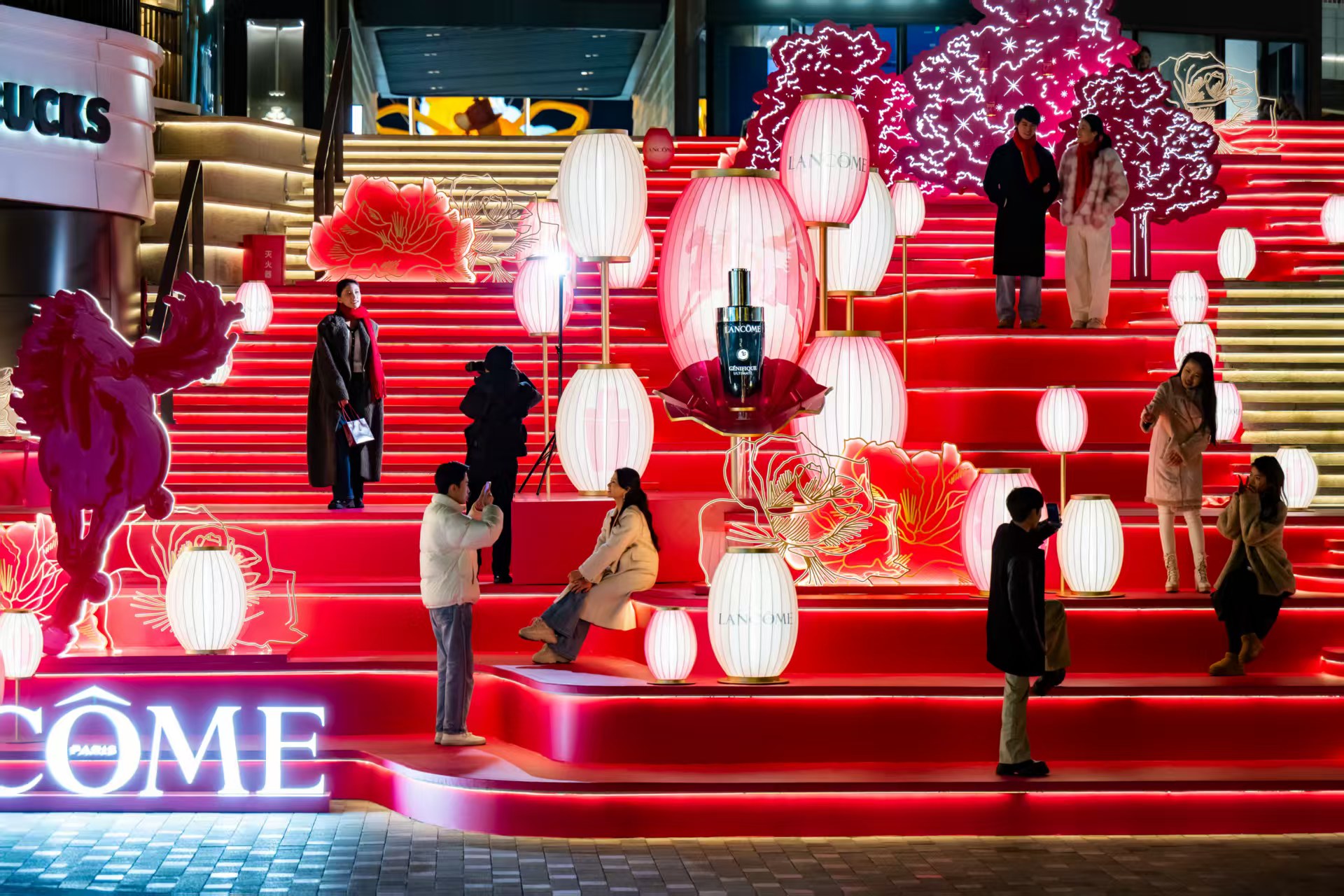
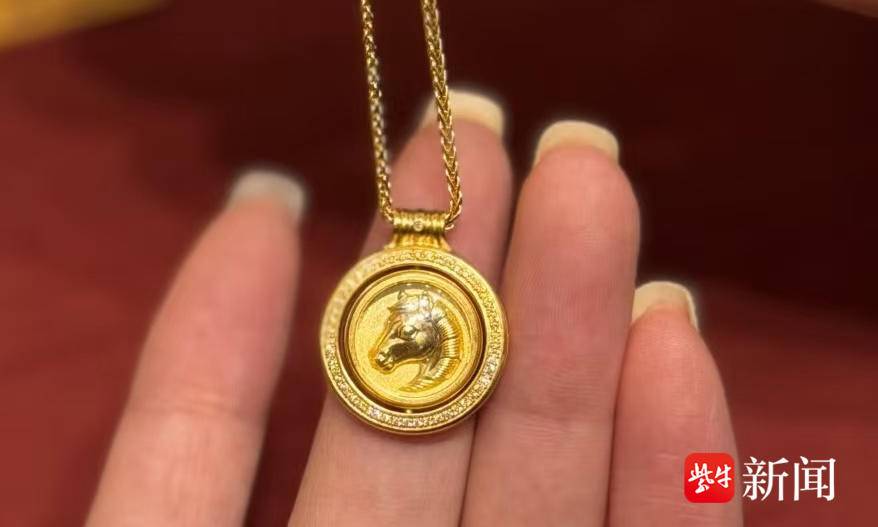
Core Insights - The article highlights the early onset of consumer festivities in Nanjing as luxury brands and local high-end gold and trendy toy brands prepare for the upcoming Lunar New Year, indicating a shift in marketing strategies towards preemptive engagement with consumers [3][4]. Group 1: Marketing Strategies - The marketing campaigns for the Lunar New Year have evolved from last-minute efforts to a well-planned strategy with fixed timelines, starting as early as January [4]. - International brands like Prada and Loewe have launched their New Year-themed activities in early January, strategically positioning themselves to capture consumer attention right after New Year's Day [4]. - The focus of these marketing efforts is to create high-quality content and experiences that define the festive atmosphere well before the peak shopping period [4]. Group 2: Emerging Consumer Trends - The structure of Lunar New Year consumption is changing, with high-end gold and trendy toys emerging as significant growth sectors alongside traditional luxury goods [6]. - Nanjing's Deji Plaza is becoming a battleground for high-end gold brands, with new entrants like Lin Chao Jewelry, which emphasizes traditional craftsmanship and limited edition pieces, indicating a shift towards collectible and artistic gold items [6]. - The trendy toy market is also thriving, with brands like Pop Mart opening large stores to enhance consumer experience and attract younger shoppers, transforming toy buying into a social and entertainment activity [8]. Group 3: Brand Differentiation - Different brands are employing distinct strategies for the same Lunar New Year theme, with luxury brands focusing on cultural symbolism and craftsmanship to reinforce their high-end positioning [10]. - Collaborations like CASETiFY and My Little Pony exemplify emotional resonance, making festive greetings accessible and personalized through everyday products [12]. - Sports and trendy brands emphasize functionality and immediate emotional connections, as seen in Descente's "Bingwu Fire Horse" series, which integrates traditional elements with practical features for outdoor activities during the holiday [13].

Jimmy Choo Growth & Versace Sale Lift Capri Holdings' Q3 Earnings Beat
ZACKS· 2026-02-04 14:40
Core Insights - Capri Holdings Limited (CPRI) reported better-than-expected third-quarter fiscal 2026 results, with revenues and earnings exceeding the Zacks Consensus Estimate, despite a year-over-year decline in top line [1][12] Financial Performance - Adjusted earnings were 81 cents per share, surpassing the Zacks Consensus Estimate of 78 cents, and increased from 63 cents in the prior year [2] - Total revenues reached $1,025 million, exceeding the Zacks Consensus Estimate of $998 million, but declined 4% year over year on a reported basis and 5.9% on a constant-currency basis [3] - Gross profit decreased to $623 million from $674 million in the year-ago quarter, with gross margin contracting 230 basis points to 60.8% [4] - Operating income rose to $46 million from $26 million a year ago, with the operating margin improving 210 basis points to 4.5% [4] Segment Performance - Revenues from Michael Kors declined 5.6% year over year to $858 million, but were better than the Zacks Consensus Estimate of $846 million, with operating income at $119 million [5] - Jimmy Choo's revenues increased 5% year over year to $167 million, surpassing the Zacks Consensus Estimate of $152 million, with an operating income of $3 million [6] Financial Health - Capri Holdings ended the quarter with cash and cash equivalents of $154 million and total borrowings of $234 million, resulting in net debt of $80 million, a significant improvement from $1.17 billion a year earlier [7] - Operating cash flow for the quarter was $271 million, leading to robust free cash flow of $252 million [7] Strategic Developments - The company completed the sale of its Versace business to Prada, focusing on core brands Michael Kors and Jimmy Choo, using proceeds to reduce debt and enhance financial flexibility [8][9] Outlook - For fiscal 2026, Capri Holdings expects total revenues between $3.45 and $3.475 billion, with adjusted earnings projected in the range of $1.30-$1.40 per share [10] - Revenues for Michael Kors are projected between $2.86-$2.875 billion, while Jimmy Choo revenues are expected in the range of $590-$600 million [11]


Capri Cleans Up Balance Sheet With Versace Sale
Yahoo Finance· 2026-02-03 12:43
Core Insights - Capri Holdings exceeded Wall Street's earnings estimates for the third quarter and matched revenue expectations, with significant improvements in its balance sheet [1][2] Financial Performance - Capri's net income reached $57 million, while adjusted profits increased by 32% to $79 million, or 81 cents per share, surpassing analysts' projections of 78 cents [4] - Revenues for the quarter ending December 27 fell by 4% to $1 billion, with a 5.9% decline in constant currencies [5] - Adjusted operating margins decreased to 7.7% from 9.1% year-over-year [5] Debt Management - The sale of Versace for approximately $1.5 billion significantly reduced Capri's net debt to $80 million from $1.6 billion at the end of September, providing more flexibility for growth in its Michael Kors and Jimmy Choo divisions [2] Strategic Outlook - CEO John Idol indicated that the company aims to return to growth in fiscal 2027, starting at the end of March [3] - The company is focusing on enhancing brand desirability through compelling storytelling and luxury product offerings, supported by advanced data analytics and consumer insights [4] Brand Performance - Michael Kors' revenues decreased by 5.6% to $858 million, with a 7.3% decline in constant currencies, while Jimmy Choo's revenues increased by 5% to $167 million, or 1.9% in constant currencies [5] - The company acknowledged that some strategies are exerting near-term pressure on revenue but are intended to build a stronger foundation for future growth [6]
Prada ‘zero tolerance’ supply chain probe results in axing of 200 suppliers
Yahoo Finance· 2026-02-03 12:07
Core Insights - The Milan-based company has conducted over 850 inspections of its Italian suppliers and subcontractors since 2020, resulting in more than a quarter of these inspections leading to terminations [1][4] - The audits revealed serious labor law violations, including dormitories within factories, but more common issues were inadequate health and safety measures and waste handling problems [2] - The luxury fashion industry in Italy is facing scrutiny due to investigations into labor abuses, with notable cases involving other brands like Tod's and LVMH [3][4] Company Actions - Prada has approximately 1000 suppliers and subcontractors and has implemented a "zero tolerance" approach to compliance, which has led to a decrease in termination rates over time [2][5] - In the previous year, Prada conducted 188 inspections, resulting in 43 dismissals, indicating a proactive stance on supply chain management [4][5] - The company’s initial audits in 2020 had a much higher termination rate, with over half of the 143 inspections resulting in contract terminations [5] Industry Context - The Italian luxury fashion sector is under investigation for labor exploitation, prompting discussions about potential certification schemes for compliance [3][4] - The Milan Public Prosecutor's Office has been active in addressing labor issues, as seen in the case of Tod's and the scrutiny faced by LVMH's Loro Piana brand [3][4]
李宁、安踏,打响奥运营销战丨消费参考
2 1 Shi Ji Jing Ji Bao Dao· 2026-02-03 02:25
Group 1 - Anta has officially announced its partnership with the Greek Olympic Committee, providing professional sportswear for the Greek sports delegation at major international events [1] - The collaboration with the Greek Olympic Committee comes after Li Ning secured the partnership with the Chinese Olympic Committee for the 2025-2028 period [2] - Anta will continue to support 13 Chinese national teams, providing equipment for 10 teams competing in various winter sports [3] Group 2 - Anta's strategy includes a three-step plan aimed at enhancing its global presence, starting with establishing a strong international brand in China, followed by expanding globally, and ultimately promoting the Anta brand worldwide [4][5] - The investment in Olympic marketing reflects the confidence of major players in the sports market despite fluctuations [6]


运动鞋的下一个故事灵感,从“向上爬”里找
3 6 Ke· 2026-02-02 23:26
Core Insights - The sneaker market is shifting focus towards niche segments, particularly climbing, as mainstream trends become saturated [1] - Climbing is transitioning from a niche sport to a popular business, significantly driven by its inclusion in the Olympics and growing market data [1] - In China, the climbing industry is projected to grow from under 1 billion yuan in 2020 to approximately 4 billion yuan by 2024, with a 27.5% increase in commercial climbing gyms expected by 2025 [1] Industry Trends - Professional outdoor brands like La Sportiva, Scarpa, and Evolv are diversifying their product lines to cater to a larger beginner market while maintaining their high-performance offerings [2][3] - La Sportiva has introduced a new "indoor climbing" series emphasizing comfort, targeting beginners who are new to the sport [6] - Scarpa is also focusing on quicker break-in times for their products to encourage new climbers to engage with the sport [6] Market Dynamics - Luxury brands like Prada and Loewe are entering the climbing shoe market, enhancing public awareness and acceptance of climbing-inspired designs [8] - The KEEN JASPER series and Japanese brand Village PM are examples of brands that have successfully integrated climbing shoe aesthetics into everyday wear [10] - The ongoing popularity of outdoor styles is prompting mainstream brands to adopt climbing shoe design elements, reflecting a broader consumer demand for multifunctional gear [10] Challenges and Innovations - Converting climbing shoes, designed for vertical performance, into comfortable everyday footwear presents engineering and experiential challenges [11] - Brands face the challenge of balancing performance, comfort, and cost while ensuring a positive consumer experience [12] - The market currently sees cautious experimentation with climbing shoe features, but no mainstream brand has yet launched a shoe explicitly marketed as "everyday climbing shoes" [12] Future Outlook - The evolution of climbing shoes may not lead to immediate streetwear hits but could inspire a new product innovation path for brands seeking differentiation [12][13] - The ultimate goal is to adapt the precise design philosophy of climbing shoes into everyday footwear, marking a significant step forward in the sneaker market [13]

千场活动焕新年味,“来浦东 过大年”活动启动
Guo Ji Jin Rong Bao· 2026-02-02 04:45
Core Viewpoint - The "Come to Pudong for the New Year" series of activities aims to enhance the festive atmosphere and promote cultural engagement during the Spring Festival, with a focus on high-quality cultural offerings and consumer engagement in Pudong [1][9]. Group 1: Event Overview - Pudong will launch thousands of New Year-themed activities, emphasizing a vibrant cultural supply to enhance the festive spirit [1]. - The theme "Everywhere is Chinese Red, Everywhere is Full of Chinese Style" will be used to create a celebratory atmosphere throughout the district [1]. - The activities will be coordinated with the previously initiated "Pudong Spring Festival Carnival" to maximize impact and attract visitors during the extended holiday [1]. Group 2: Decorations and Atmosphere - The city will be adorned with decorations including red lanterns and Chinese knots across 500 municipal roads, 89 pocket parks, and 103 urban parks [3]. - 600 key public transport stops will feature festive promotional displays, while 50 commercial districts and scenic spots will showcase outdoor screens with New Year-themed content [3]. - Various local activities will be organized in parks, squares, and shopping malls to integrate the festive spirit into daily life [3]. Group 3: Cultural Exhibitions - Major cultural venues in Pudong will present significant exhibitions during the Spring Festival, showcasing rare treasures and artworks from renowned artists [7]. - Notable exhibitions include the "Cloud Collection for a Thousand Years" at the Shanghai Art Museum and a collaboration with the Metropolitan Museum of Art featuring ancient Chinese bronzes [7]. - The Pudong Museum will host exhibitions in partnership with the Louvre and the Picasso Museum, creating a cultural feast for visitors [7]. Group 4: Attractions and Activities - Shanghai Disneyland will create a "Winter Wonderland" experience, while other attractions like the Haichang Ocean Park and Shanghai Wild Animal Park will offer unique New Year experiences [8]. - The launch event for the "Come to Pudong for the New Year" series included the announcement of a promotional video and the awarding of certificates to quality partners in tourism and commerce [8]. - The activities will continue until March, aiming to stimulate consumer spending through a blend of traditional culture and modern urban experiences [8]. Group 5: Economic Impact - The initiative aims to combine the promotion of traditional Chinese culture with consumer spending to drive economic growth and enhance the value of new consumption [9].